
North America Genealogy Products and Services Market - Outlook 2020-2034
North America Genealogy Products and Services Market is segmented by Type (DNA Testing Kits, Family Tree Software, Genealogy Research Services, Archival Access Services, Online Databases), Application (Personal Use, Academic Research, Legal and Forensic, Healthcare, Educational Institutions), Deployment Model (Cloud-based Solutions, On-premise Software, Hybrid Models), Service Type (Subscription Services, One-time Access Services, Consulting and Research Services), and Geography (United States, Canada, Mexico)
Pricing
Report Overview
Executive Summary
- •The North America Genealogy Products and Services market involves a diverse array of offerings such as DNA testing kits, family tree software, genealogy research services, archival access services, and online databases that facilitate ancestry and heritage exploration for personal, academic, forensic, and healthcare applications. This market leverages technological advancements including genetic sequencing, AI-driven data analysis, and cloud computing to enhance research accuracy and accessibility.
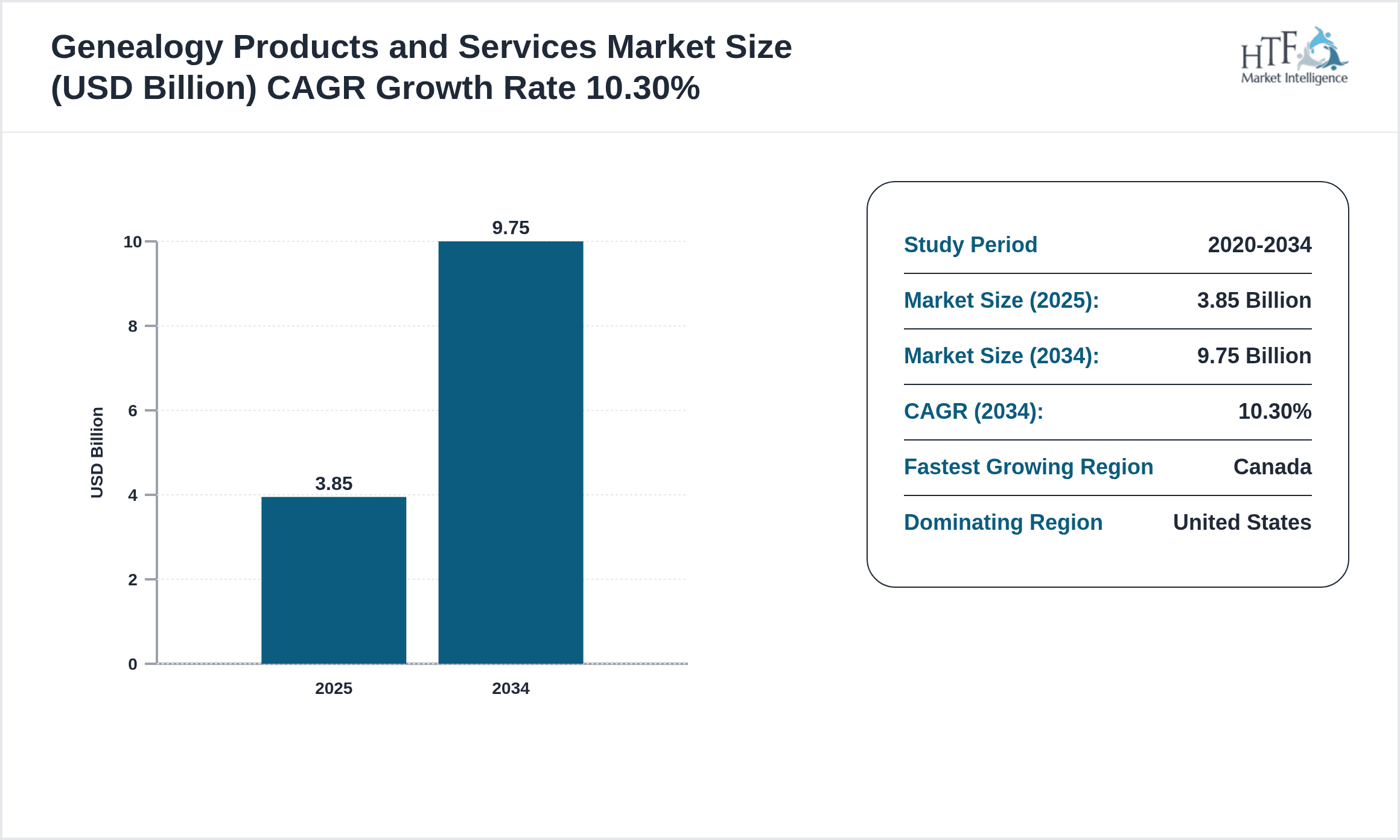
- •Key market highlights include a robust CAGR of 10.3% from 2025 to 2034, with DNA testing kits leading in market share due to consumer interest in personal ancestry. The United States dominates the region's market with a 65% share, while Canada is the fastest growing country with a CAGR of 12.1%, driven by rising adoption of online genealogical databases.
- •The market’s strategic importance lies in enabling individuals and institutions to uncover genealogical insights that support identity discovery, legal and forensic processes, and healthcare research. This fosters a personalized approach to heritage and medical history, offering value across multiple sectors including education and legal industries.
Competitive Landscape
The competitive landscape of the North America Genealogy Products and Services market is characterized by intense rivalry among established DNA testing companies, software developers, and archival service providers. Market players focus on innovation through integration of AI and cloud technologies to enhance data accuracy and user experience. Strategic partnerships, mergers, and acquisitions are common to expand database access and technological capabilities. Companies differentiate through pricing strategies, subscription models, and customized service offerings. Distribution channels include online platforms, retail, and direct-to-consumer sales. The region’s regulatory environment and data privacy considerations pose challenges while also fostering trust and compliance. Overall, competition drives continuous product enhancement and market expansion, aiming to capture diverse consumer segments and institutional users.
Leading Companies in Genealogy Products and Services Market
- •Ancestry.com LLC (United States)
- •23andMe, Inc. (United States)
- •MyHeritage Ltd. (United States)
- •FamilyTreeDNA (United States)
- •Living DNA Ltd. (United States)
- •Findmypast (United States)
- •GenealogyBank (United States)
- •Archives.com (United States)
- •Legacy Family Tree (United States)
- •RootsMagic, Inc. (United States)
- •Geneanet (United States)
- •DNA Tribes (United States)
- •FamilySearch (United States)
- •HeritageQuest Online (United States)
- •Geni, Inc. (United States)
- •Genographic Project (United States)
- •DNA Solutions (United States)
- •ProGenealogists (United States)
- •Legacy Tree Genealogists (United States)
- •Genealogy.com (United States)
- •FamilyLink (United States)
- •American Ancestors (United States)
- •My Family Tree (United States)
- •GEDmatch (United States)
- •Family ChartMasters (United States)
Market Breakdown
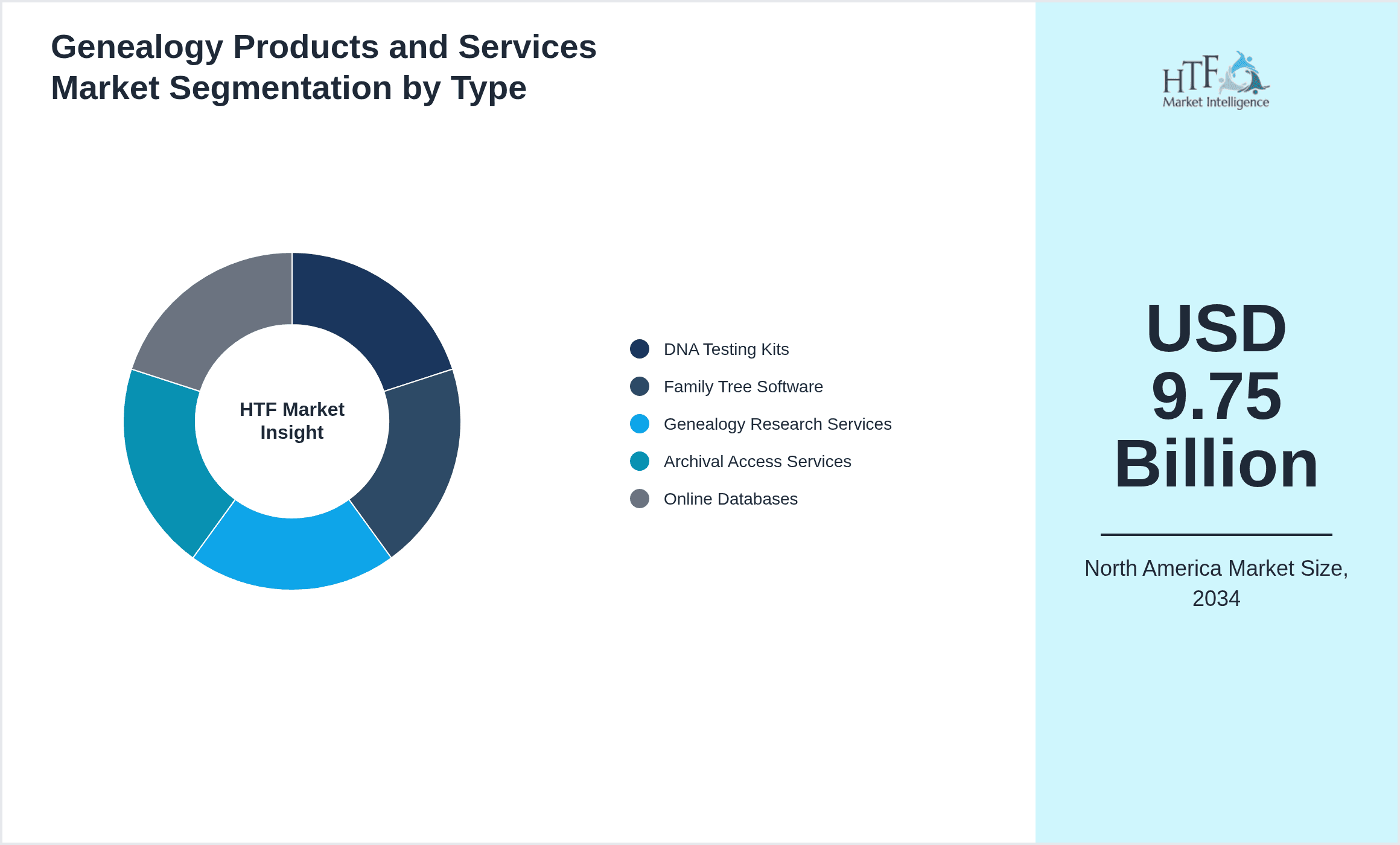
- •By Type
- ◦DNA Testing Kits
- ◦Family Tree Software
- ◦Genealogy Research Services
- ◦Archival Access Services
- ◦Online Databases
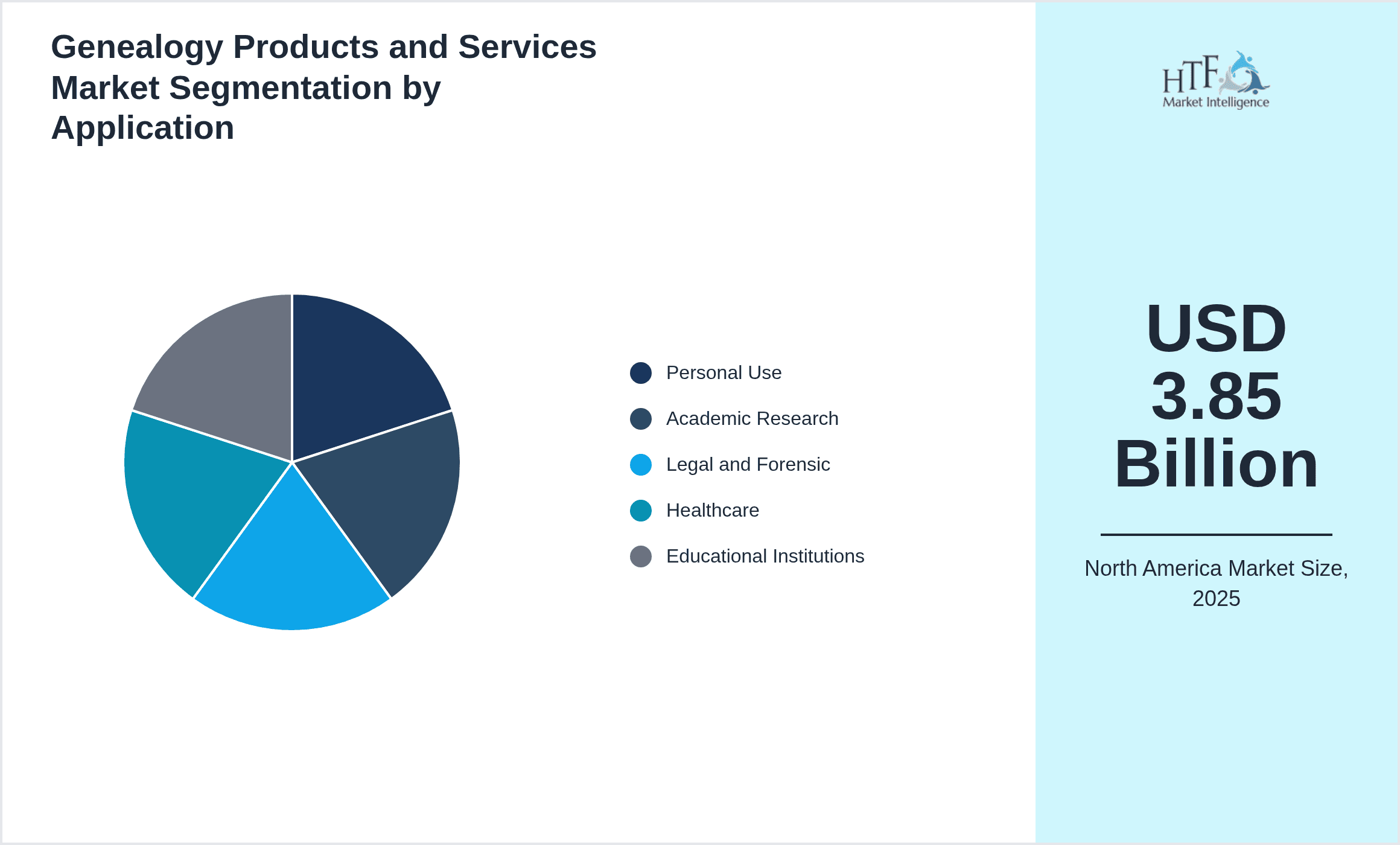
- •By Application
- ◦Personal Use
- ◦Academic Research
- ◦Legal and Forensic
- ◦Healthcare
- ◦Educational Institutions
- •By Deployment Model
- ◦Cloud-based Solutions
- ◦On-premise Software
- ◦Hybrid Models
- •By Service Type
- ◦Subscription Services
- ◦One-time Access Services
- ◦Consulting and Research Services
Growth Dynamics
The North America genealogy market growth is driven by increasing consumer interest in personal heritage and ancestry discovery, facilitated by affordable DNA testing kits and expanding online databases. Technological innovations such as AI-powered data matching and cloud storage enhance service offerings, attracting diverse users from individuals to academic and legal professionals. The rise in healthcare applications leveraging genetic insights for personalized medicine also propels market expansion. Moreover, partnerships between genealogy firms and healthcare providers broaden market reach. The growing availability of digitized historical records and government initiatives to preserve public archives further support growth. Rising disposable incomes and awareness about genetic health risks encourage adoption, while social media platforms amplify interest in ancestry sharing, creating a positive feedback loop sustaining market momentum.
Market Trends
The market is witnessing a shift toward integrated platforms combining genetic testing with comprehensive archival access and AI-enhanced genealogical research tools. Subscription-based models are gaining traction, offering continuous data updates and personalized insights. Increasing collaborations between genealogy service providers and healthcare companies enable expanded applications in medical research and personalized health management. Additionally, privacy and data security concerns are shaping product development, leading to enhanced encryption and user control features. The use of mobile applications for genealogy research is growing, increasing accessibility and engagement among younger demographics.

Market Opportunities
Significant opportunities exist in expanding online database offerings with enhanced AI-driven search capabilities, catering to academic and legal sectors requiring precise genealogical data. The rising demand for personalized healthcare solutions based on genetic history presents new avenues for integrating genealogy products with medical diagnostics. Geographic expansion into underserved segments within North America, such as indigenous communities and immigrant populations, offers untapped potential. Additionally, developing multilingual platforms and mobile-friendly applications can broaden user base. Strategic partnerships with educational institutions for curriculum integration can also drive sustained growth.
Market Challenges
The market faces challenges including stringent data privacy regulations that complicate genetic data collection and sharing. High costs of advanced DNA testing limit accessibility for some consumer segments. Additionally, fragmented archival records and inconsistent data quality hamper comprehensive research outcomes. Resistance from certain cultural groups regarding genetic testing and heritage disclosure may restrict market penetration. Competition from free or low-cost genealogy resources also pressures pricing models. Furthermore, integrating diverse data sources into unified platforms remains technically complex, requiring continuous investment in technology and expertise.
Regulatory Framework
- •Between 2020 and 2025, North America saw the implementation of multiple data protection regulations affecting genealogy products and services. The United States expanded the Genetic Information Nondiscrimination Act (GINA) enforcement to prevent misuse of genetic data in employment and insurance. The Health Insurance Portability and Accountability Act (HIPAA) continues to regulate health-related genetic information, impacting healthcare-linked genealogy services. Canada introduced the Personal Information Protection and Electronic Documents Act (PIPEDA) amendments strengthening consent protocols for genetic data usage. Regulatory scrutiny on consumer consent and data storage security has intensified, with guidelines mandating transparent privacy policies and breach notification requirements. These frameworks have raised compliance costs but enhanced consumer trust, fostering responsible innovation in genealogy solutions.
- •Regulatory bodies also focus on standardizing laboratory certifications for DNA testing to ensure accuracy and reliability. The Food and Drug Administration (FDA) in the US monitors direct-to-consumer genetic testing kits for safety and labeling compliance. State-level privacy laws, such as the California Consumer Privacy Act (CCPA), introduce additional layers of regulation, especially concerning data portability and consumer rights. These evolving policies require genealogy companies to adopt robust data governance frameworks. Overall, regulatory landscape promotes ethical data handling while balancing innovation incentives in the North American genealogy market.
Market Intelligence
- •15th January 2025, Ancestry.com LLC launched an AI-powered genealogy research platform integrating machine learning algorithms to enhance accuracy in matching historical records with DNA data. The platform targets both individual consumers and academic researchers, providing personalized ancestry insights and expanded database access. This strategic initiative aims to strengthen Ancestry.com’s market leadership and address growing demand for sophisticated genealogical analytics. The product features enhanced data privacy controls and subscription flexibility, positioning it competitively in the evolving North American market. Source: Ancestry official press release.
- •10th March 2025, 23andMe, Inc. introduced a new health-focused genetic testing service combining ancestry and wellness reports. The product incorporates advanced genomic sequencing and personalized health risk assessments, catering to consumers interested in both genealogy and medical information. This launch marks 23andMe’s strategic expansion into integrated genetic health services, leveraging its existing customer base. The initiative is expected to drive market growth by bridging genealogy with healthcare applications, enhancing consumer value propositions. Source: 23andMe corporate announcement.
- •28th May 2025, MyHeritage Ltd. announced a partnership with academic institutions to digitize and integrate historical records from Canadian archives into its online database. This collaboration expands MyHeritage’s data repository and supports research initiatives targeting Canadian ancestry. The move strengthens the company’s regional presence and enhances service offerings with localized content. It also reflects a broader industry trend of combining archival and genetic data for comprehensive genealogical research. Source: MyHeritage press release.
- •Recent market developments and strategic initiatives are continuously tracked through industry publications, company announcements, and regulatory filings. For the most current information, stakeholders are advised to monitor official corporate communications and recognized market intelligence platforms.
Regional Outlook
The United States currently holds a significant share of the market, primarily due to several key factors: increasing consumption rates, a burgeoning population, and robust economic momentum. These elements collectively drive demand, positioning this region as a leader in the market. On the other hand, Canada is rapidly emerging as the fastest-growing area within the industry. This remarkable growth can be attributed to swift infrastructure development, the expansion of various industrial sectors, and a marked increase in consumer demand. These dynamics make this region a crucial player in shaping future market growth.
In our report, we cover a comprehensive analysis of the following regions and countries:
- United States
- Canada
- Mexico
| Feature | Details |
|---|---|
| Base Year Market Size | USD 3.85 Billion |
| Forecast Year Market Size | USD 9.75 Billion |
| CAGR | 10.3% |
| Forecast Period | 2026 to 2033 |
| YoY Growth | 10% |
| Scope of Report | Market is segmented by Type (DNA Testing Kits, Family Tree Software, Genealogy Research Services, Archival Access Services, Online Databases), Application (Personal Use, Academic Research, Legal and Forensic, Healthcare, Educational Institutions), Deployment Model (Cloud-based Solutions, On-premise Software, Hybrid Models), Service Type (Subscription Services, One-time Access Services, Consulting and Research Services) |
| Regions Covered | United States, Canada, Mexico |
| Key Companies | Ancestry.com LLC (United States), 23andMe, Inc. (United States), MyHeritage Ltd. (United States), FamilyTreeDNA (United States), Living DNA Ltd. (United States), Findmypast (United States), GenealogyBank (United States), Archives.com (United States), Legacy Family Tree (United States), RootsMagic, Inc. (United States), Geneanet (United States), DNA Tribes (United States), FamilySearch (United States), HeritageQuest Online (United States), Geni, Inc. (United States), Genographic Project (United States), DNA Solutions (United States), ProGenealogists (United States), Legacy Tree Genealogists (United States), Genealogy.com (United States), FamilyLink (United States), American Ancestors (United States), My Family Tree (United States), GEDmatch (United States), Family ChartMasters (United States) |
North America Genealogy Products and Services Market - Outlook 2020-2034 - Table of Contents
Frequently Asked Questions (FAQ):
The Compact Track Loaders market is expected to see value worth 5.3 Billion in 2025.
North America currently leads the market with approximately 45% market share, followed by Europe at 28% and Asia-Pacific at 22%. The remaining regions account for 5% of the global market.
Key growth drivers include increasing construction activities, rising demand for versatile equipment in agriculture, technological advancements in track loader design, and growing preference for compact equipment in urban construction projects.