
Global Staphylococcal Infection Treatment Market Size, Growth & Revenue 2025-2034
Global Staphylococcal Infection Treatment Market is segmented by Type (Antibiotics, Immunoglobulins, Vaccines, Antiseptics, Others), Application (Hospital Care, Outpatient Care, Home Healthcare, Diagnostic Centers, Pharmaceutical Research), Treatment Approach (Monotherapy, Combination Therapy, Supportive Care), Delivery Mode (Oral, Intravenous, Topical), and Geography (North America, LATAM, West Europe, Central & Eastern Europe, Northern Europe, Southern Europe, East Asia, Southeast Asia, South Asia, Central Asia, Oceania, MEA)
Pricing
Report Overview
Executive Summary
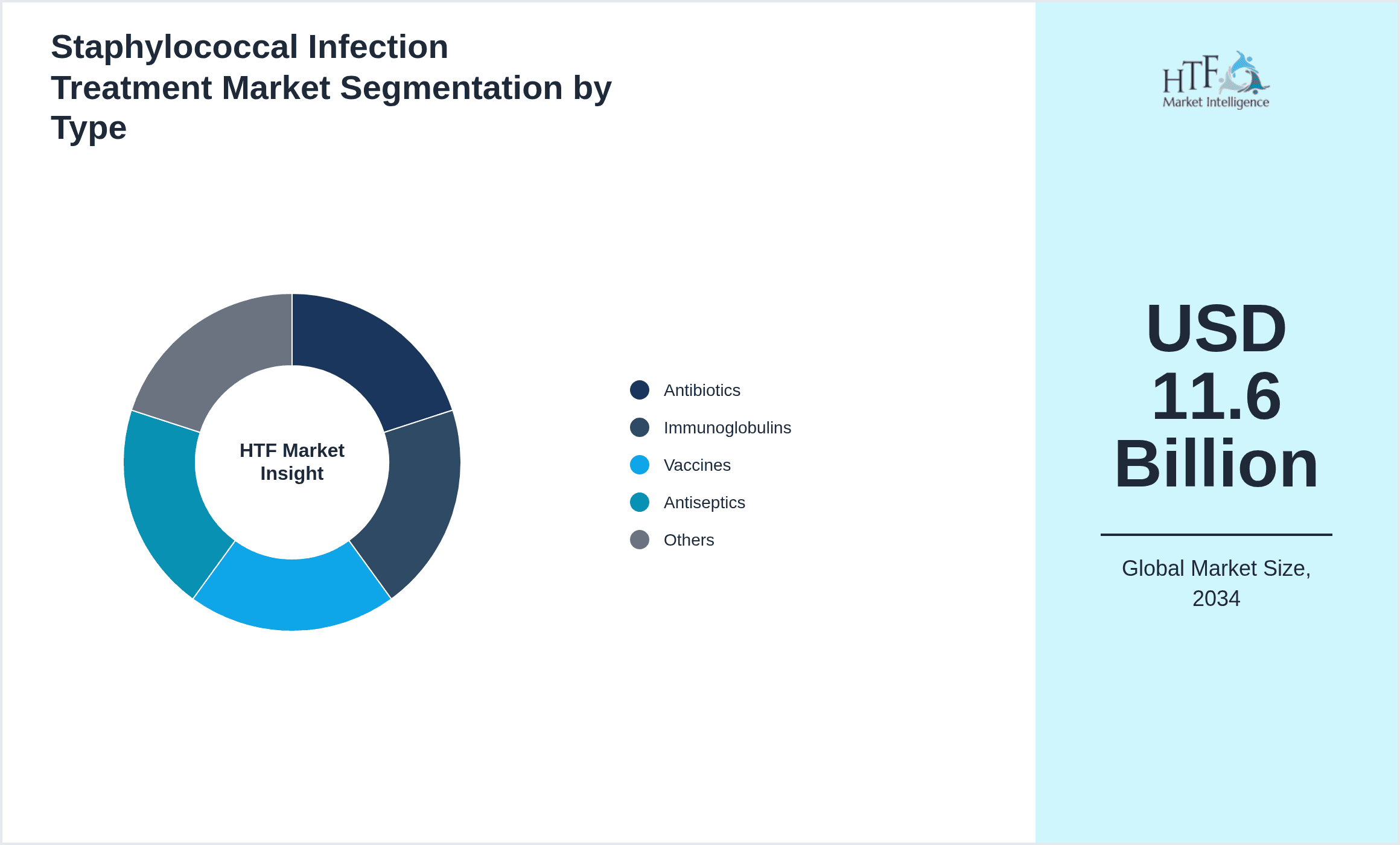
- •The Global Staphylococcal Infection Treatment market comprises therapeutic interventions including antibiotics, immunoglobulins, vaccines, and antiseptics addressing infections caused by Staphylococcus bacteria across hospital, outpatient, home healthcare, and research settings. This market is critical due to rising antibiotic resistance and increasing infection prevalence worldwide.
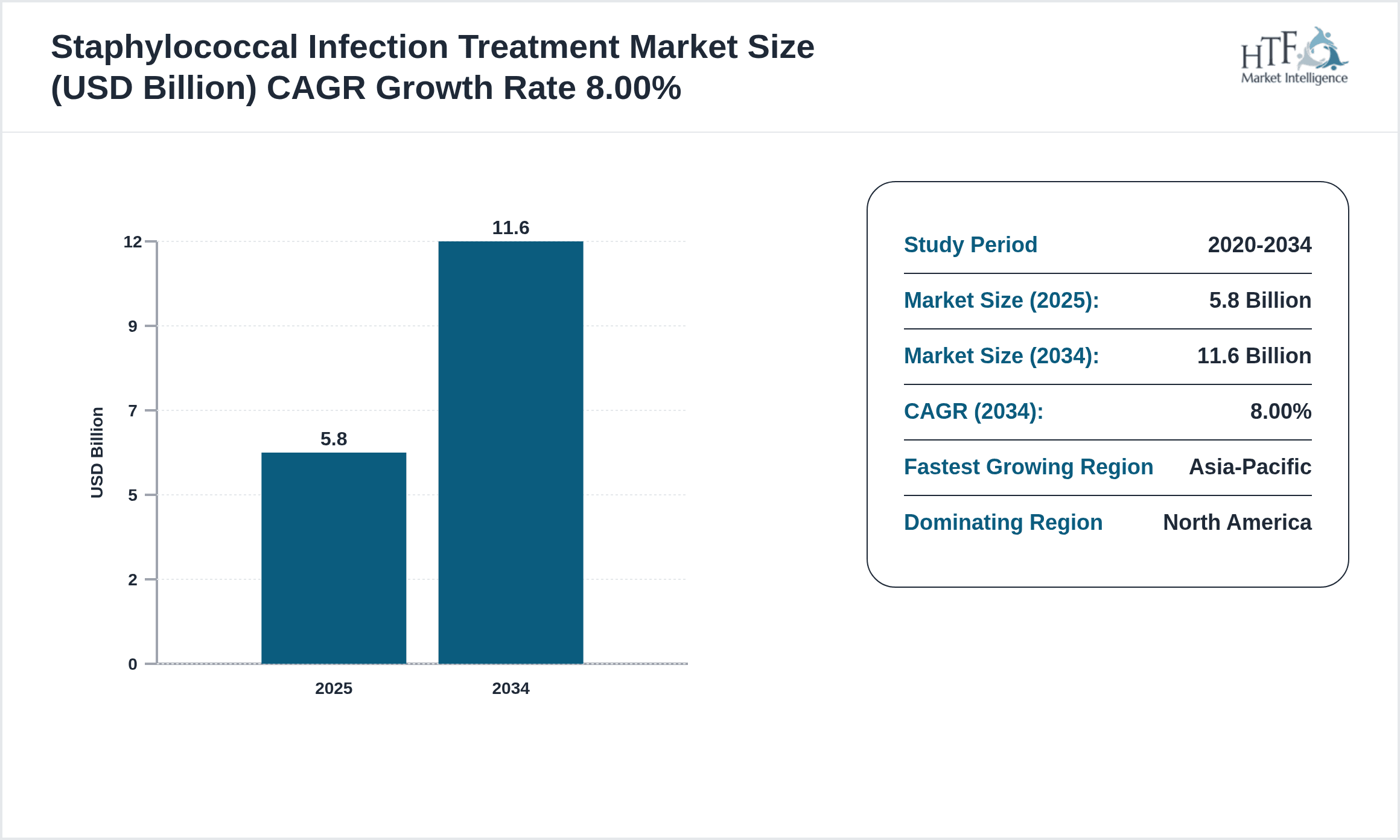
- •Key highlights include a base market size of USD 5.8 Billion in 2025, forecasted to reach USD 11.6 Billion by 2034, registering a CAGR of 8.0%. North America dominates with a 34% market share while Asia-Pacific exhibits the fastest growth at 11.5% CAGR.
- •The market holds strategic importance for healthcare providers, pharmaceutical companies, and governments aiming to combat rising antimicrobial resistance and improve patient care through innovative treatment solutions and expanding application areas.
Competitive Landscape
Companies in the Global Staphylococcal Infection Treatment market employ diverse strategies to maintain and enhance their market presence. These include strategic partnerships with research institutions to accelerate drug development, global expansion into emerging markets to capture growing demand, continuous product innovation focusing on antibiotic resistance solutions, and adoption of advanced technologies such as biologics and targeted therapies. Firms invest heavily in clinical trials and regulatory approvals to ensure market access and differentiation. Moreover, mergers and acquisitions facilitate portfolio expansion and consolidation, enabling competitive positioning. Distribution channel enhancement and collaboration with healthcare providers optimize market reach and patient access. Sustainability initiatives and digital health integration also form part of competitive tactics to meet evolving healthcare needs and regulatory requirements.
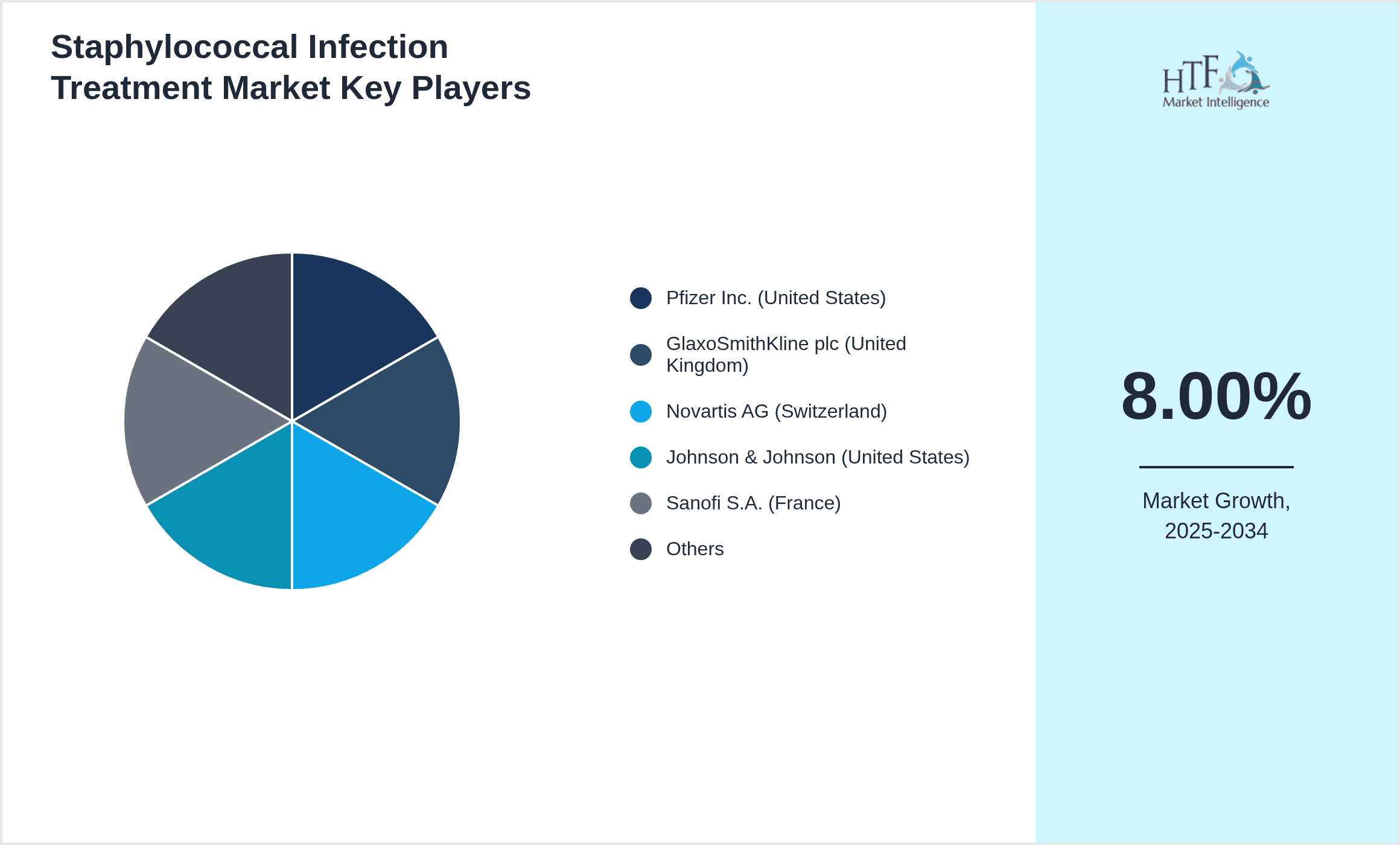
Leading Companies in Staphylococcal Infection Treatment Market
- •Pfizer Inc. (United States)
- •GlaxoSmithKline plc (United Kingdom)
- •Novartis AG (Switzerland)
- •Johnson & Johnson (United States)
- •Sanofi S.A. (France)
- •Merck & Co., Inc. (United States)
- •AstraZeneca plc (United Kingdom)
- •Bayer AG (Germany)
- •Roche Holding AG (Switzerland)
- •Gilead Sciences, Inc. (United States)
- •AbbVie Inc. (United States)
- •Takeda Pharmaceutical Company Limited (Japan)
- •Bristol-Myers Squibb Company (United States)
- •Eli Lilly and Company (United States)
- •Fresenius SE & Co. KGaA (Germany)
- •Regeneron Pharmaceuticals, Inc. (United States)
- •Shionogi & Co., Ltd. (Japan)
- •Biogen Inc. (United States)
- •Hoffmann-La Roche (Switzerland)
- •GlaxoSmithKline plc (United Kingdom)

Market Breakdown
- •By Type
- ◦Antibiotics
- ◦Immunoglobulins
- ◦Vaccines
- ◦Antiseptics
- ◦Others
- •By Application
- ◦Hospital Care
- ◦Outpatient Care
- ◦Home Healthcare
- ◦Diagnostic Centers
- ◦Pharmaceutical Research
- •By Treatment Approach
- ◦Monotherapy
- ◦Combination Therapy
- ◦Supportive Care
- •By Delivery Mode
- ◦Oral
- ◦Intravenous
- ◦Topical
Growth Dynamics
Rising incidence of antibiotic-resistant Staphylococcus aureus strains such as MRSA drives demand for novel treatment options globally. Increasing hospital-acquired infections and longer patient hospital stays emphasize the need for effective therapies. Technological advancements in biologics and vaccine development enable targeted treatment approaches, expanding therapeutic pipelines. Growing awareness among healthcare providers and patients about infection prevention boosts adoption rates. Government initiatives promoting antimicrobial stewardship and funding for research enhance market growth. Additionally, expanding geriatric population prone to infections and increasing outpatient care facilities contribute significantly. For instance, Pfizer’s recent development of an advanced antibiotic for resistant strains exemplifies innovation fueling market expansion.
Market Trends
Emerging trends include integration of precision medicine in treatment protocols, enabling personalized therapies targeting specific bacterial strains. Increased adoption of vaccine-based prophylaxis is reducing infection rates in vulnerable populations. Digital health technologies facilitate remote monitoring and adherence tracking for treatment regimens. Pharmaceutical companies invest in novel drug delivery systems improving efficacy and patient compliance. Collaborations between biotech firms and academic institutions accelerate R&D breakthroughs. For example, GSK’s recent partnership with a biotech startup to develop a next-generation vaccine demonstrates this trend. Rising focus on sustainable manufacturing practices and reducing environmental impact also influences market dynamics. These trends collectively enhance therapeutic effectiveness and patient outcomes in the staphylococcal infection treatment landscape.
Market Opportunities
Expanding opportunities arise from unmet medical needs in emerging markets with increasing infection rates and limited access to advanced treatments. Development of novel vaccines targeting resistant strains offers significant growth potential. Investment in rapid diagnostic tools complements therapeutic solutions by enabling timely and accurate treatment decisions. Expansion of home healthcare and telemedicine services creates new channels for treatment delivery. Collaborations between pharmaceutical companies and government agencies facilitate market penetration and funding. Recent advancements in immunotherapy provide scope for innovative therapies addressing complex infections. For instance, ongoing clinical trials of vaccine candidates targeting MRSA infections present promising market entry points. These opportunities encourage innovation and broaden patient access globally.
Market Challenges
Significant challenges include the rapid emergence of multidrug-resistant Staphylococcus strains limiting treatment efficacy. High research and development costs coupled with stringent regulatory requirements delay product launches. Market fragmentation due to diverse healthcare infrastructure across regions complicates distribution and adoption. Pricing pressures and reimbursement uncertainties hinder profitability for pharmaceutical companies. Lack of awareness and inconsistent antimicrobial stewardship practices contribute to suboptimal treatment outcomes. For example, delays in regulatory approvals in certain regions have impacted timely availability of new antibiotics. Supply chain disruptions during the COVID-19 pandemic highlighted vulnerabilities affecting drug availability. Addressing these challenges requires coordinated industry efforts and policy support to ensure sustainable market growth.
Regulatory Framework
Recent regulatory frameworks emphasize accelerated approval pathways for antibiotics targeting resistant pathogens, including Staphylococcus aureus. The FDA’s Limited Population Pathway for Antibacterial and Antifungal Drugs encourages development of treatments for serious infections with unmet needs. The European Medicines Agency has implemented adaptive licensing to expedite access. Compliance with stringent safety, efficacy, and manufacturing standards remains mandatory. Regulatory bodies also promote post-market surveillance to monitor resistance patterns and adverse effects. These evolving regulations facilitate innovation while ensuring patient safety and effective infection control globally.
Market Intelligence
- •Recent market developments and strategic initiatives are continuously tracked through industry publications, company announcements, and regulatory filings. For the most current information, stakeholders are advised to monitor official corporate communications and recognized market intelligence platforms.
- •Recent market developments and strategic initiatives are continuously tracked through industry publications, company announcements, and regulatory filings. For the most current information, stakeholders are advised to monitor official corporate communications and recognized market intelligence platforms.
- •Recent market developments and strategic initiatives are continuously tracked through industry publications, company announcements, and regulatory filings. For the most current information, stakeholders are advised to monitor official corporate communications and recognized market intelligence platforms.
- •Recent market developments and strategic initiatives are continuously tracked through industry publications, company announcements, and regulatory filings. For the most current information, stakeholders are advised to monitor official corporate communications and recognized market intelligence platforms.
- •Recent market developments and strategic initiatives are continuously tracked through industry publications, company announcements, and regulatory filings. For the most current information, stakeholders are advised to monitor official corporate communications and recognized market intelligence platforms.
Regional Outlook
The North America currently holds a significant share of the market, primarily due to several key factors: increasing consumption rates, a burgeoning population, and robust economic momentum. These elements collectively drive demand, positioning this region as a leader in the market. On the other hand, Asia-Pacific is rapidly emerging as the fastest-growing area within the industry. This remarkable growth can be attributed to swift infrastructure development, the expansion of various industrial sectors, and a marked increase in consumer demand. These dynamics make this region a crucial player in shaping future market growth.
In our report, we cover a comprehensive analysis of the following regions and countries:
- North America
- LATAM
- West Europe
- Central & Eastern Europe
- Northern Europe
- Southern Europe
- East Asia
- Southeast Asia
- South Asia
- Central Asia
- Oceania
- MEA
| Feature | Details |
|---|---|
| Base Year Market Size | USD 5.8 Billion |
| Forecast Year Market Size | USD 11.6 Billion |
| CAGR | 8% |
| Forecast Period | 2026 to 2033 |
| YoY Growth | 7.5% |
| Scope of Report | Market is segmented by Type (Antibiotics, Immunoglobulins, Vaccines, Antiseptics, Others), Application (Hospital Care, Outpatient Care, Home Healthcare, Diagnostic Centers, Pharmaceutical Research), Treatment Approach (Monotherapy, Combination Therapy, Supportive Care), Delivery Mode (Oral, Intravenous, Topical) |
| Regions Covered | North America, LATAM, West Europe, Central & Eastern Europe, Northern Europe, Southern Europe, East Asia, Southeast Asia, South Asia, Central Asia, Oceania, MEA |
| Key Companies | Pfizer Inc. (United States), GlaxoSmithKline plc (United Kingdom), Novartis AG (Switzerland), Johnson & Johnson (United States), Sanofi S.A. (France), Merck & Co., Inc. (United States), AstraZeneca plc (United Kingdom), Bayer AG (Germany), Roche Holding AG (Switzerland), Gilead Sciences, Inc. (United States), AbbVie Inc. (United States), Takeda Pharmaceutical Company Limited (Japan), Bristol-Myers Squibb Company (United States), Eli Lilly and Company (United States), Fresenius SE & Co. KGaA (Germany), Regeneron Pharmaceuticals, Inc. (United States), Shionogi & Co., Ltd. (Japan), Biogen Inc. (United States), Hoffmann-La Roche (Switzerland), GlaxoSmithKline plc (United Kingdom) |
Global Staphylococcal Infection Treatment Market Size, Growth & Revenue 2025-2034 - Table of Contents
Frequently Asked Questions (FAQ):
The Compact Track Loaders market is expected to see value worth 5.3 Billion in 2025.
North America currently leads the market with approximately 45% market share, followed by Europe at 28% and Asia-Pacific at 22%. The remaining regions account for 5% of the global market.
Key growth drivers include increasing construction activities, rising demand for versatile equipment in agriculture, technological advancements in track loader design, and growing preference for compact equipment in urban construction projects.