
EMEA Wind and Solar Hybrid Systems Market Size, Growth & Revenue 2024-2034
EMEA Wind and Solar Hybrid Systems Market is segmented by Application (Residential, Commercial, Industrial, Rural Electrification, Utility-Scale), Type (On-Grid Hybrid Systems, Off-Grid Hybrid Systems, Standalone Wind Systems, Standalone Solar Systems), and Geography (Germany, France, Italy, United Kingdom, Nordics, Rest of Europe, South Africa, Egypt, Turkey, United Arab Emirates, Israel, Saudi Arabia, Rest of EMEA)
Pricing
Report Overview
Executive Summary
- •The EMEA Wind and Solar Hybrid Systems market blends wind and solar technologies to deliver integrated renewable energy solutions tailored for on-grid and off-grid applications, spanning residential to utility-scale deployments.
- •Market growth is driven by rising energy demand, government incentives, and technological advancements, with significant adoption in Germany, France, and the UAE reflecting regional commitment to decarbonization and energy security.
- •These hybrid systems offer enhanced reliability and cost efficiency while supporting EMEA's sustainability goals, making them vital for stakeholders including utilities, commercial enterprises, and rural communities.
Competitive Landscape
The EMEA Wind and Solar Hybrid Systems market features intense competition marked by technological innovation, strategic partnerships, and regional market penetration. Leading players focus on R&D to improve system efficiency and integration with smart grid technologies. Competition also revolves around cost optimization, project scalability, and after-sales services. The rivalry is intensified by new entrants leveraging niche applications such as rural electrification and industrial microgrids. Market positioning is often defined by the ability to customize hybrid solutions to diverse climatic and regulatory conditions across EMEA. Collaborative ventures and joint ventures are common strategic approaches to expand geographical reach and technological capabilities. Pricing strategies vary with project scale and deployment model, while regional competition is influenced by local policy incentives and infrastructure readiness. The competitive landscape is expected to evolve with increasing adoption of hybrid storage technologies and digital monitoring platforms, creating differentiation opportunities.
Leading Companies in EMEA Wind and Solar Hybrid Systems Market
- •Siemens Gamesa Renewable Energy (Germany)
- •Vestas Wind Systems A/S (Denmark)
- •Enel Green Power (Italy)
- •Nordex SE (Germany)
- •Schneider Electric (France)
- •ABB Ltd (Switzerland)
- •Senvion GmbH (Germany)
- •EDF Renewables (France)
- •GE Renewable Energy (France)
- •Alfanar Company (Saudi Arabia)
- •Masdar (UAE)
- •Acciona Energia (Spain)
- •TÜV SÜD (Germany)
- •Solarwatt GmbH (Germany)
- •JinkoSolar (EMEA Operations - China HQ)
- •TotalEnergies Renewables (France)
- •Canadian Solar (EMEA Operations - Canada HQ)
- •Siemens Energy (Germany)
- •BayWa r.e. Renewable Energy (Germany)
- •SMA Solar Technology (Germany)
- •Gamesa Electric (Spain)
- •Nordex Acciona Windpower (Germany-Spain)
- •Phoenix Solar AG (Germany)
- •Voltalia (France)
- •Engie (France)
Market Breakdown
- •By Type
- ◦On-Grid Hybrid Systems
- ◦Off-Grid Hybrid Systems
- ◦Standalone Wind Systems
- ◦Standalone Solar Systems
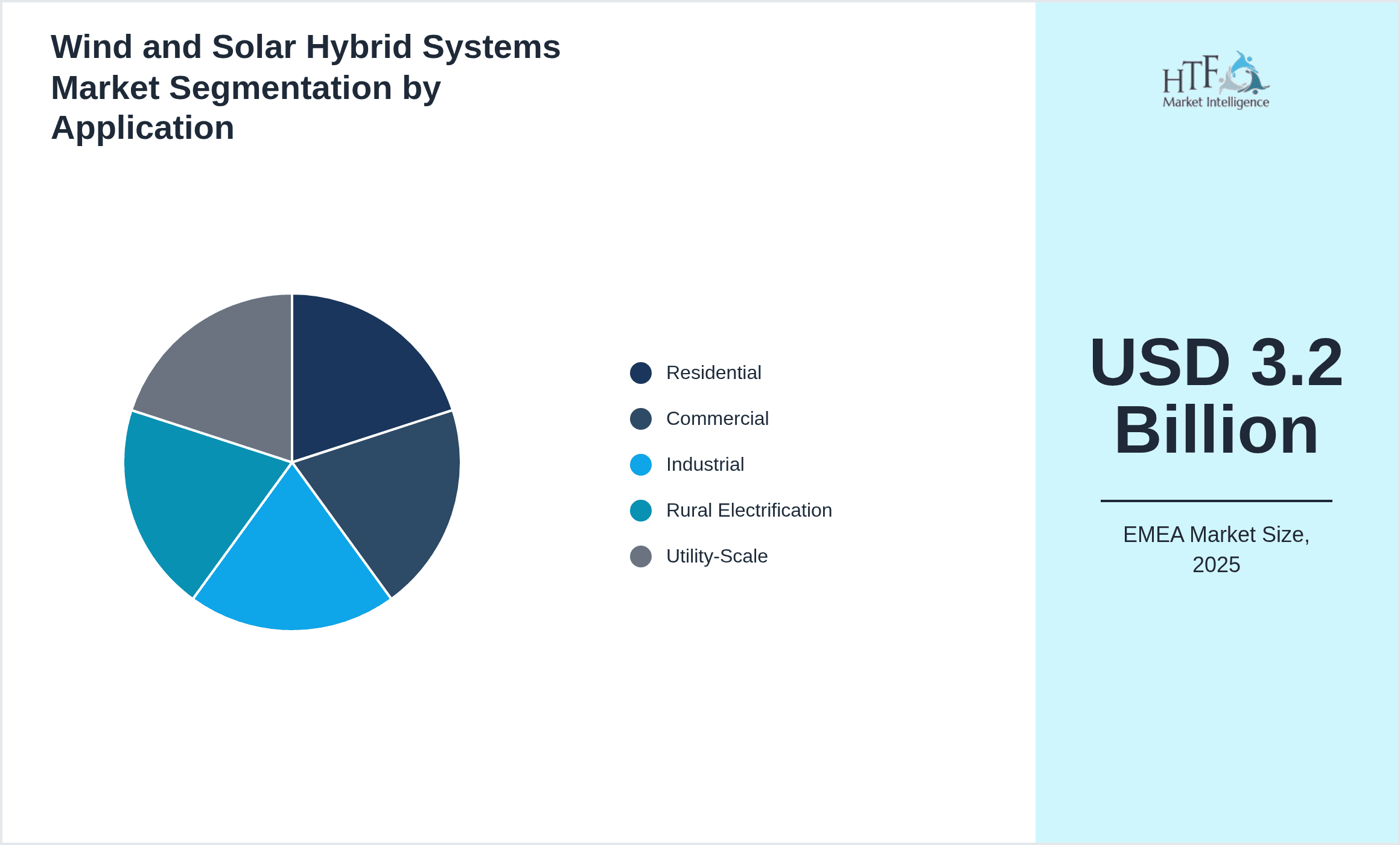
- •By Application
- ◦Residential
- ◦Commercial
- ◦Industrial
- ◦Rural Electrification
- ◦Utility-Scale
- •By End User
- ◦Private Households
- ◦Small and Medium Enterprises (SMEs)
- ◦Large Industrial Users
- ◦Government and Public Sector
- •By Technology
- ◦Battery Energy Storage Systems
- ◦Smart Grid Integration
- ◦Power Electronics and Inverters
- ◦Hybrid Controllers and Management Systems
Growth Drivers
- •Increasing demand for reliable and clean energy in EMEA, driven by government mandates for renewable adoption and carbon neutrality commitments, propels market expansion.
- •Technological advancements in hybrid system integration and energy storage improve efficiency and reduce operational costs, fostering adoption across sectors.
- •Rising electricity costs and grid instability in emerging EMEA economies stimulate investment in off-grid hybrid solutions for rural and remote applications.
- •Subsidies, tax incentives, and favorable financing options from regional authorities encourage capital inflow and project development in wind and solar hybrid systems.
- •Growing corporate sustainability initiatives and consumer awareness about environmental impact increase demand for hybrid renewable energy solutions.

Market Trends
- •Integration of AI and IoT for predictive maintenance and real-time performance optimization is gaining traction among EMEA hybrid system providers.
- •Hybrid microgrid projects combining wind, solar, and battery storage are expanding rapidly in remote and island regions within EMEA, enhancing energy access.
- •Modular and scalable hybrid systems tailored for commercial and industrial users are becoming prevalent, allowing flexible deployment and cost management.
- •Collaborations between technology firms and energy utilities are fostering innovation in smart grid integration and hybrid system interoperability.
- •Sustainability certifications and green financing mechanisms are increasingly influencing project approvals and investment decisions in the region.

Market Restraints
- •High initial capital expenditure for hybrid system installation limits adoption, especially among small-scale users and developing economies within EMEA.
- •Grid infrastructure limitations and regulatory heterogeneity across EMEA countries create challenges for large-scale hybrid system integration.
- •Intermittency of wind and solar resources necessitates advanced storage solutions, which remain costly and technologically complex.
- •Lack of skilled workforce and technical expertise in some regions impedes timely deployment and maintenance of hybrid systems.
- •Complex permitting processes and lengthy approval timelines delay project execution, affecting market momentum.
Market Opportunities
- •Expanding rural electrification programs in Africa and the Middle East present significant growth avenues for off-grid hybrid systems addressing energy poverty.
- •Emerging technologies such as green hydrogen production integrated with wind and solar hybrids offer new business models and revenue streams.
- •Retrofit and upgrade projects for existing renewable installations can boost market penetration through hybrid system enhancements.
- •Increasing cross-border energy trade initiatives within EMEA support hybrid system deployment in grid-interconnected zones, optimizing resource sharing.
- •Public-private partnerships and international funding programs enhance capital availability for innovative hybrid energy projects.
Market Challenges
- •Navigating diverse regulatory frameworks and compliance requirements across EMEA countries complicates market entry and expansion strategies.
- •Securing long-term financing for hybrid system projects remains difficult due to perceived risks and market volatility in certain EMEA regions.
- •Competition from rapidly declining costs of standalone solar PV and wind installations pressures hybrid system pricing and margins.
- •Supply chain disruptions and material cost fluctuations impact project timelines and overall system affordability.
- •Integration challenges with existing grid infrastructure require advanced technical solutions and coordination with utility providers.
Regulatory Overview
- •Between 2020 and 2024, EMEA governments have instituted progressive renewable energy mandates, including the EU’s Green Deal aiming for net zero by 2050, directly benefiting hybrid system adoption.
- •New incentive schemes such as feed-in tariffs, tax rebates, and grants specifically target hybrid wind-solar projects to stimulate private sector investments.
- •Updated grid codes require enhanced system interoperability and storage integration, influencing design standards for hybrid solutions.
- •Middle Eastern countries have introduced streamlined permitting processes for renewable projects, reducing administrative barriers for hybrid system deployment.
- •Regional cooperation frameworks promote cross-border renewable energy trading, facilitating hybrid system investments in interconnected markets.
Industry Insights
- •In March 2024, Siemens Gamesa launched an advanced hybrid inverter platform tailored for EMEA markets, enhancing grid flexibility and enabling seamless integration of wind and solar assets. This innovation supports higher penetration of renewable energy by improving system reliability and reducing maintenance costs across utility-scale projects.
- •In November 2023, Masdar announced a strategic partnership with a leading battery manufacturer to develop off-grid hybrid systems for remote communities in North Africa and the Middle East. The collaboration aims to accelerate rural electrification with scalable, cost-effective solutions that reduce carbon footprints and energy costs.
Mergers & Acquisitions
- •In July 2023, Vestas Wind Systems acquired a regional solar hybrid technology firm specializing in off-grid solutions across EMEA. This acquisition enhances Vestas’ product portfolio, enabling comprehensive hybrid offerings and strengthening market presence in emerging economies with growing energy access needs.
- •In January 2024, Schneider Electric completed the acquisition of a smart grid software company focused on hybrid system management and optimization. This move bolsters Schneider’s capabilities in energy management systems, supporting the growing demand for integrated renewable solutions and digitalization in the EMEA market.
Recent Industry News
- •15th January 2025, GE Renewable Energy announced the launch of a next-generation hybrid turbine system combining wind and solar technologies optimized for the EMEA region’s climatic conditions. This product enhances energy yield by 15% compared to previous models and supports grid stabilization efforts in Europe. The launch includes strategic collaborations with local utilities to pilot projects in Germany and Spain. Source: GE Official Press Release
- •10th March 2025, Acciona Energia expanded its hybrid project portfolio by securing contracts for multiple off-grid installations in rural Morocco. These projects aim to provide clean electricity to underserved communities, leveraging modular hybrid systems that integrate energy storage for continuous power supply. The expansion aligns with Morocco’s renewable energy targets and international development goals. Source: Acciona Corporate Website
- •22nd May 2025, TotalEnergies Renewables formed a partnership with a leading battery storage manufacturer to co-develop hybrid microgrid solutions targeting industrial clients in the UAE and Saudi Arabia. The collaboration focuses on enhancing energy resilience and reducing carbon emissions through customized hybrid configurations and digital monitoring technologies. Source: Industry Newswire
- •8th August 2025, Siemens Energy announced a contract win for a large-scale on-grid hybrid wind and solar project in Italy, valued at USD 150 million. The project includes innovative energy management systems to optimize output and integrate storage solutions, supporting Italy’s renewable energy expansion plans. The contract reinforces Siemens Energy’s leadership in the EMEA hybrid systems market. Source: Siemens Energy Press Release
Market Statistics
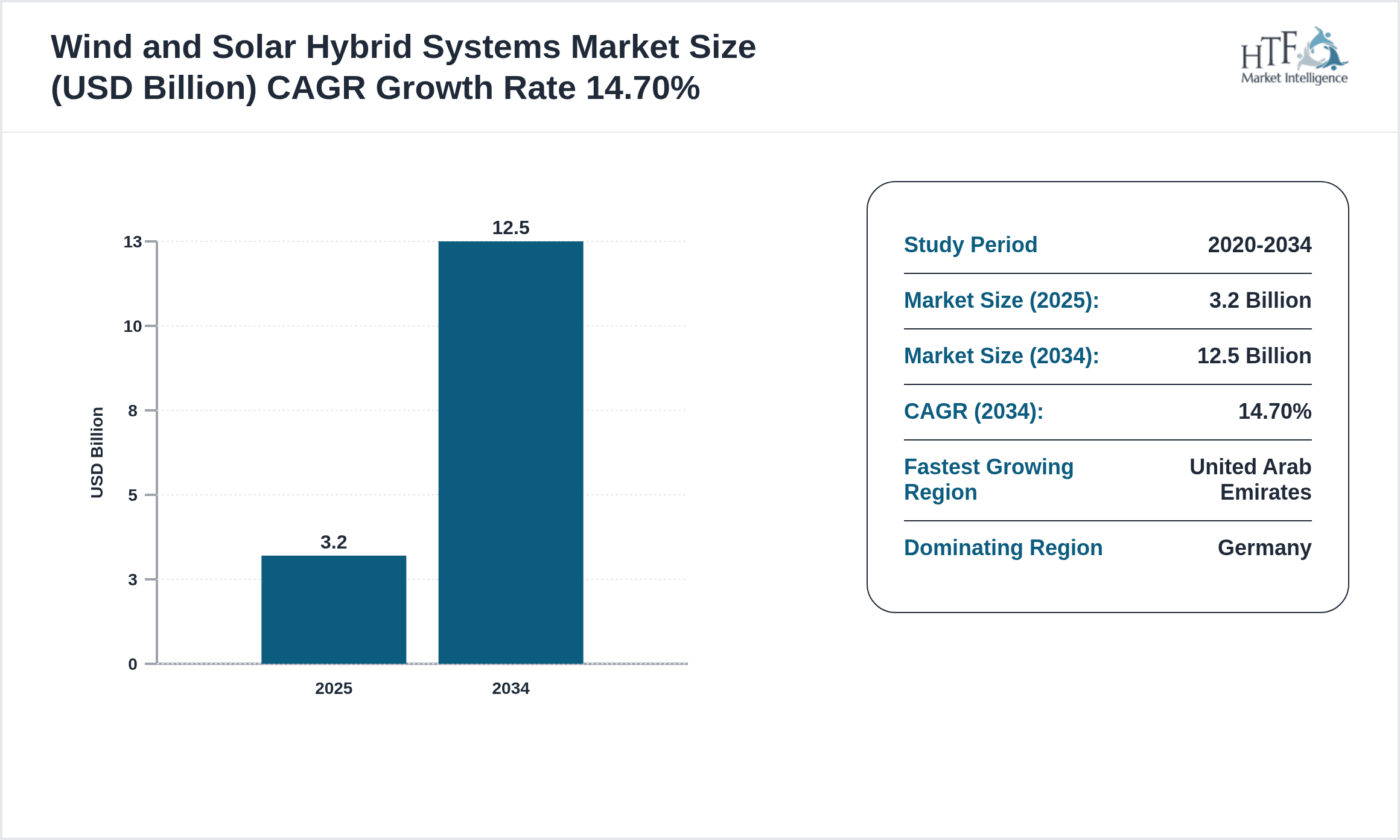
- •CAGR by 2034: 14.7%
- •Market Size by 2034: USD 12.5 Billion
- •Market Size in 2025: USD 3.5 Billion
- •Dominating Type: On-Grid Hybrid Systems
- •Next-Following Type: Off-Grid Hybrid Systems
- •Dominating Application: Utility-Scale
- •Next-Following Application: Residential
- •Dominating Region: Germany
- •Second-Leading Region: France
- •Region with Highest Growth Rate: United Arab Emirates
- •Dominating Country: Germany
Market Share Table
- •Market Share (%) by Type: On-Grid Hybrid Systems 52%, Off-Grid Hybrid Systems 28%
- •Market Share (%) by Application: Utility-Scale 45%, Residential 25%
- •Growth Rate (%) by Type: On-Grid Hybrid Systems 12.5%, Off-Grid Hybrid Systems 18.7%
- •Growth Rate (%) by Application: Utility-Scale 13.2%, Residential 16.5%
Top 5 Global Players
- •Siemens Gamesa Renewable Energy (Germany)
- •Vestas Wind Systems A/S (Denmark)
- •Enel Green Power (Italy)
- •Schneider Electric (France)
- •ABB Ltd (Switzerland)
Regional Outlook
The Germany currently holds a significant share of the market, primarily due to several key factors: increasing consumption rates, a burgeoning population, and robust economic momentum. These elements collectively drive demand, positioning this region as a leader in the market. On the other hand, United Arab Emirates is rapidly emerging as the fastest-growing area within the industry. This remarkable growth can be attributed to swift infrastructure development, the expansion of various industrial sectors, and a marked increase in consumer demand. These dynamics make this region a crucial player in shaping future market growth.
In our report, we cover a comprehensive analysis of the following regions and countries:
- Germany
- France
- Italy
- United Kingdom
- Nordics
- Rest of Europe
- South Africa
- Egypt
- Turkey
- United Arab Emirates
- Israel
- Saudi Arabia
- Rest of EMEA
| Feature | Details |
|---|---|
| Base Year Market Size | USD 3.2 Billion |
| Forecast Year Market Size | USD 12.5 Billion |
| CAGR | 14.7% |
| Forecast Period | 2026 to 2033 |
| YoY Growth | 13.1% |
| Regions Covered | Germany, France, Italy, United Kingdom, Nordics, Rest of Europe, South Africa, Egypt, Turkey, United Arab Emirates, Israel, Saudi Arabia, Rest of EMEA |
| Key Companies | Siemens Gamesa Renewable Energy (Germany), Vestas Wind Systems A/S (Denmark), Enel Green Power (Italy), Nordex SE (Germany), Schneider Electric (France), ABB Ltd (Switzerland), Senvion GmbH (Germany), EDF Renewables (France), GE Renewable Energy (France), Alfanar Company (Saudi Arabia), Masdar (UAE), Acciona Energia (Spain), TÜV SÜD (Germany), Solarwatt GmbH (Germany), JinkoSolar (EMEA Operations - China HQ), TotalEnergies Renewables (France), Canadian Solar (EMEA Operations - Canada HQ), Siemens Energy (Germany), BayWa r.e. Renewable Energy (Germany), SMA Solar Technology (Germany), Gamesa Electric (Spain), Nordex Acciona Windpower (Germany-Spain), Phoenix Solar AG (Germany), Voltalia (France), Engie (France) |
EMEA Wind and Solar Hybrid Systems Market Size, Growth & Revenue 2024-2034 - Table of Contents
Frequently Asked Questions (FAQ):
The Compact Track Loaders market is expected to see value worth 5.3 Billion in 2025.
North America currently leads the market with approximately 45% market share, followed by Europe at 28% and Asia-Pacific at 22%. The remaining regions account for 5% of the global market.
Key growth drivers include increasing construction activities, rising demand for versatile equipment in agriculture, technological advancements in track loader design, and growing preference for compact equipment in urban construction projects.