
EMEA Skidder Tire Chain Market - Europe Size & Outlook 2024-2034
EMEA Skidder Tire Chain Market is segmented by Application (Forestry Operations, Construction, Agriculture, Logging, Mining), Type (Standard Skidder Tire Chains, Heavy-Duty Chains, Lightweight Chains, Self-Tensioning Chains, Studded Chains), and Geography (Germany, France, Italy, United Kingdom, Nordics, Rest of Europe, South Africa, Egypt, Turkey, United Arab Emirates, Israel, Saudi Arabia, Rest of EMEA)
Pricing
Report Overview
Executive Summary
- •The EMEA Skidder Tire Chain market comprises specialized tire chains designed to improve performance and safety for skidders operating in forestry, mining, agriculture, and construction sectors across Europe, the Middle East, and Africa. These chains enhance traction and durability on challenging terrains, enabling efficient operation in adverse weather and ground conditions.
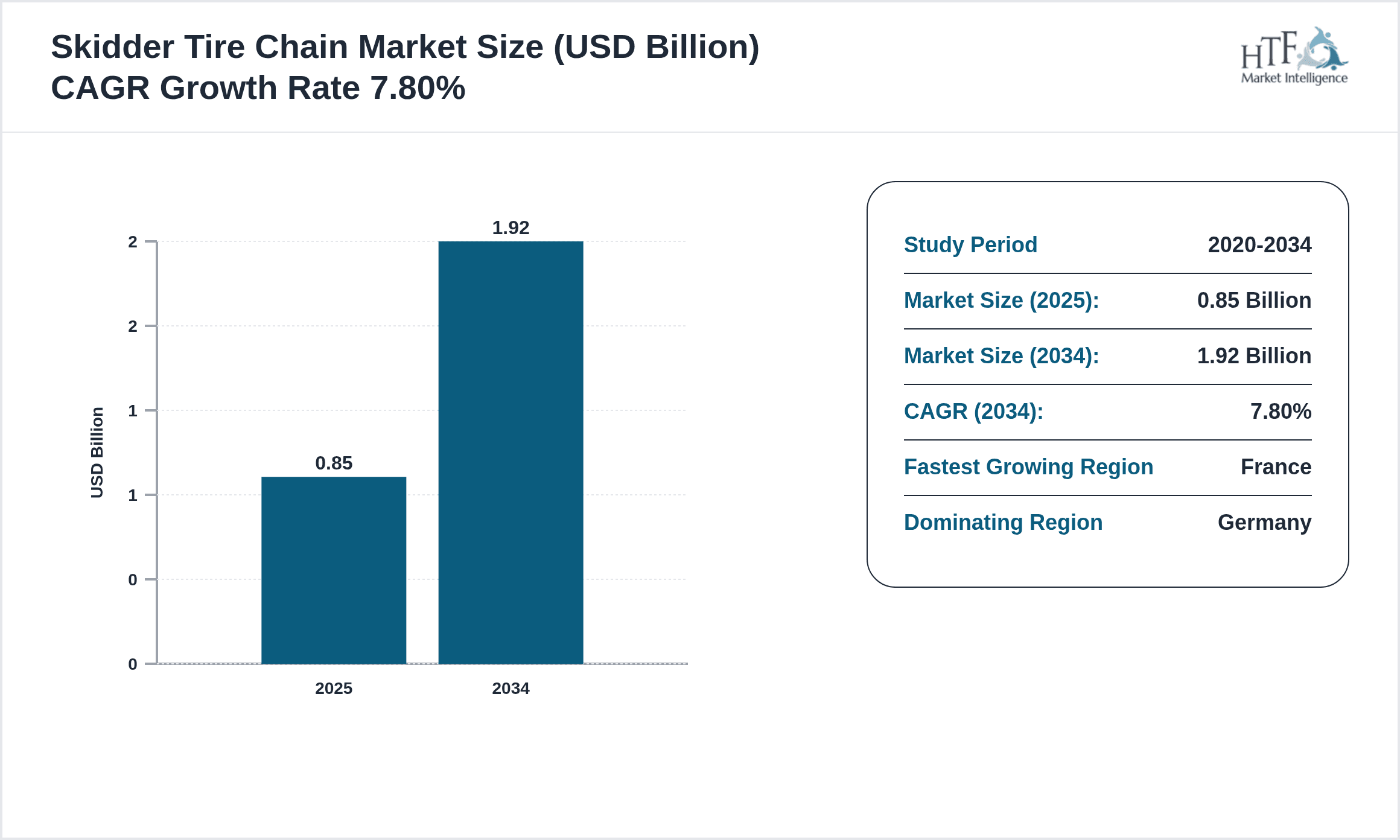
- •Key market highlights include a projected CAGR of 7.8% from 2024 to 2034, driven by increasing mechanization in forestry and growing infrastructure projects in the region. Heavy-duty chains currently dominate the product segment, supported by rising demand for robust skidder equipment.
- •The market offers strategic importance by providing critical equipment accessories that extend skidder tire life, reduce operational downtime, and ensure compliance with environmental and safety regulations, thus supporting sustainable industrial growth in EMEA.
Competitive Landscape
The EMEA Skidder Tire Chain market competition is characterized by a mix of established global manufacturers and regional specialists focusing on innovation and product differentiation. Companies compete through technology advancements such as self-tensioning systems and studded designs that enhance durability and ease of installation. Strategic partnerships and investments in R&D are common to improve product performance and address regulatory compliance. Market rivalry is intense, with players targeting growth through expanded distribution networks and customized solutions for diverse applications across forestry and construction industries. Competitive positioning also involves pricing strategies and after-sales services to retain customer loyalty. The evolving landscape is influenced by increasing demand for eco-friendly materials and chains that reduce environmental impact, pushing manufacturers toward sustainable innovation and market consolidation trends.
Leading Companies in EMEA Skidder Tire Chain Market
- •Trelleborg AB (Sweden)
- •Michelin Group (France)
- •Konig Fasteners GmbH (Germany)
- •Pewag Austria GmbH (Austria)
- •Regina Chain Group (Italy)
- •RUD Ketten Rieger & Dietz GmbH (Germany)
- •König GmbH (Germany)
- •Tsubaki Group (United Kingdom)
- •Camoplast Solideal (France)
- •Kenda Rubber Industrial Co., Ltd. (Taiwan)
- •Bridgestone Corporation (Japan)
- •Carl Stahl GmbH (Germany)
- •ABS Wheel Systems (Netherlands)
- •Gates Corporation (Belgium)
- •Eaton Corporation (Ireland)
- •SKF Group (Sweden)
- •Goodyear Tire & Rubber Company (Luxembourg)
- •Intermercato (Italy)
- •Caterpillar Inc. (United Kingdom)
- •Bekaert NV (Belgium)
- •Veyance Technologies (Germany)
- •Apollo Vredestein B.V. (Netherlands)
- •Hutchinson SA (France)
- •Nokian Tyres plc (Finland)
- •Continental AG (Germany)
Market Breakdown
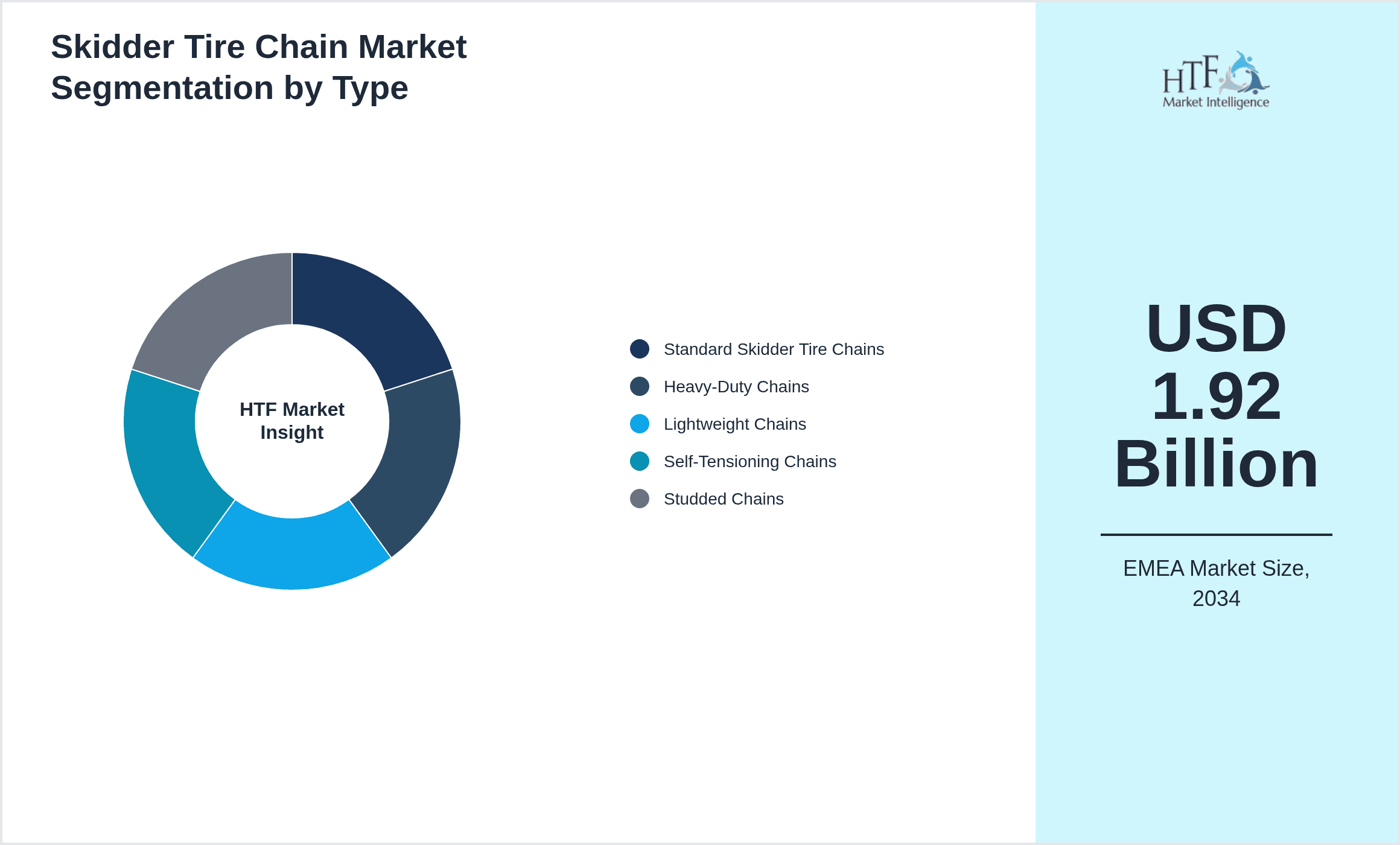
- •By Type
- ◦Standard Skidder Tire Chains
- ◦Heavy-Duty Chains
- ◦Lightweight Chains
- ◦Self-Tensioning Chains
- ◦Studded Chains
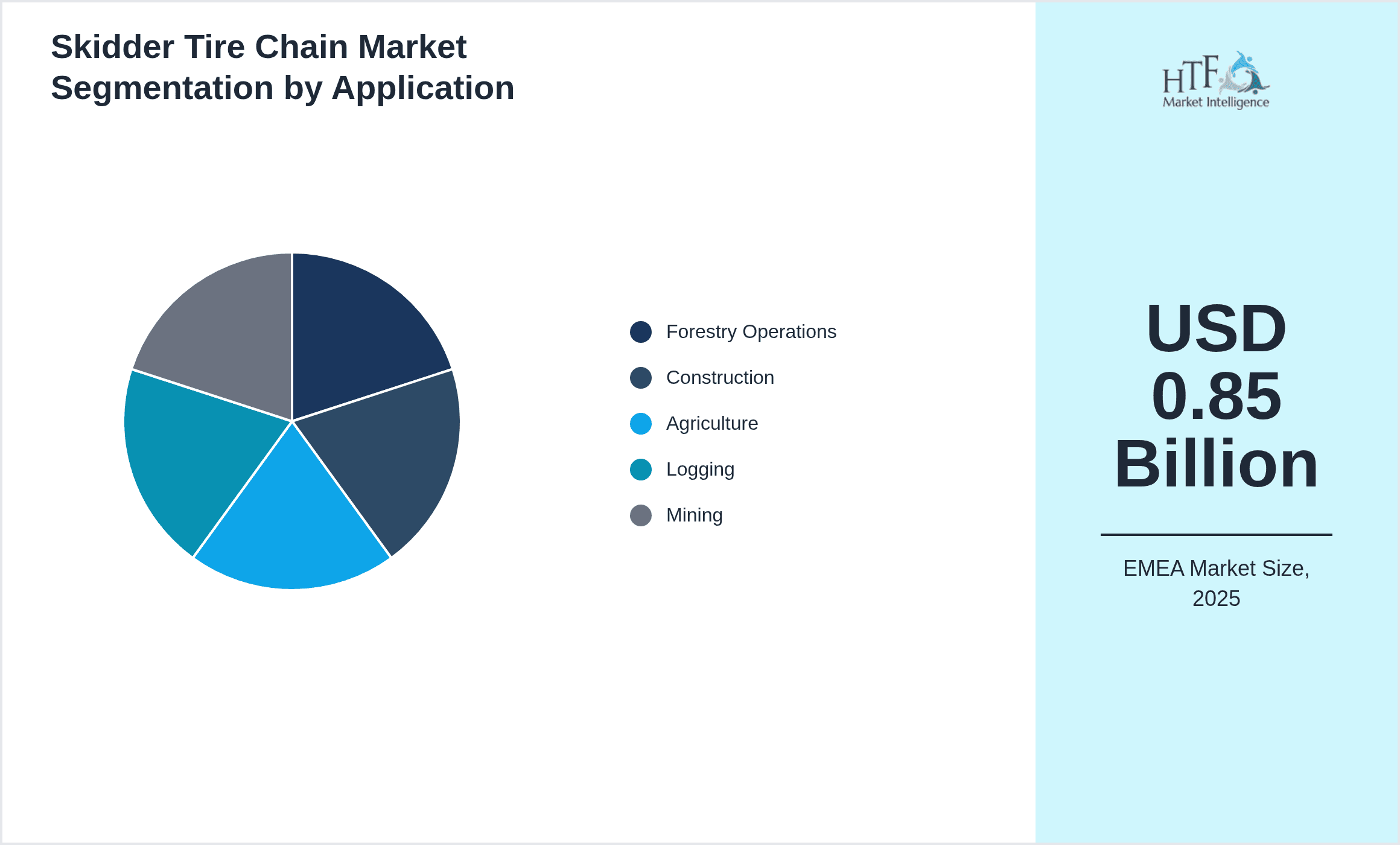
- •By Application
- ◦Forestry Operations
- ◦Construction
- ◦Agriculture
- ◦Logging
- ◦Mining
- •By End User
- ◦Commercial Forestry Companies
- ◦Construction Firms
- ◦Agricultural Enterprises
- ◦Mining Corporations
- •By Distribution Channel
- ◦Direct Sales
- ◦Dealerships and Distributors
- ◦Online Retail
- ◦Aftermarket Services
Growth Drivers
The EMEA Skidder Tire Chain market growth is primarily driven by expanding forestry and construction activities across Europe and the Middle East, requiring enhanced traction solutions to optimize equipment performance on challenging terrains. Increasing mechanization and modernization of forestry equipment boost demand for durable tire chains. Additionally, rising awareness about operational safety and environmental regulations encouraging eco-friendly and efficient chains propel market expansion. Infrastructure development projects in emerging EMEA economies further stimulate the need for skidder tire chains. Technological advancements such as self-tensioning chain systems reduce installation time and improve operational efficiency, attracting industry adoption. The trend towards sustainable forestry practices also drives demand for chains that minimize soil disturbance and tire wear, supporting long-term market growth.
Market Trends
Recent trends in the EMEA Skidder Tire Chain market include growing adoption of self-tensioning and studded tire chains that enhance safety and traction in harsh winter conditions. Manufacturers are focusing on lightweight materials to reduce fuel consumption and improve machine maneuverability. Integration of eco-friendly coatings and recyclable components aligns with sustainability goals prevalent in European regulations. Digitalization efforts with smart chain monitoring systems are emerging, enabling real-time performance tracking and predictive maintenance. Collaborative innovation between equipment manufacturers and chain producers fosters customized solutions tailored to specific applications, such as mining or agriculture. The market is also witnessing increased demand for aftermarket services and quick replacement chains, reflecting a shift toward reducing operational downtime.
Market Restraints
The market faces restraints from high manufacturing costs associated with advanced materials and technology-integrated chains, limiting affordability for smaller enterprises. Volatility in raw material prices, especially steel, impacts production costs and pricing strategies. Complex installation requirements for certain chain types may deter adoption among users lacking technical expertise. Regulatory compliance costs and varying standards across EMEA countries create operational challenges for manufacturers. Additionally, the seasonal nature of skidder chain usage in forestry and agriculture limits consistent demand, affecting revenue stability. The presence of low-cost imports from non-EMEA regions also exerts pricing pressure on local producers, affecting profit margins and market competitiveness.
Market Opportunities
Emerging opportunities in the EMEA Skidder Tire Chain market stem from increasing mechanization in African forestry and construction sectors, where demand for durable chains is rising. Innovation in self-tensioning chain technologies offers potential for product differentiation and premium pricing. Expansion into aftermarket and service segments, including rental and maintenance, presents recurring revenue streams. Growing emphasis on sustainability encourages development of eco-friendly chains and materials, opening new market niches. Digital technology integration with IoT-enabled condition monitoring can enhance customer value propositions. Strategic partnerships with equipment manufacturers to co-develop customized solutions also offer growth avenues. Expanding distribution networks through e-commerce platforms in underserved regions can further accelerate market penetration.
Market Challenges
Key challenges include intense competition from established global players and local manufacturers offering low-cost alternatives, leading to price wars and margin erosion. Complex regulatory environments with differing safety and environmental standards across EMEA countries complicate market entry and compliance. Supply chain disruptions affecting raw material availability and lead times increase operational risk. Technical challenges in designing chains that balance durability, weight, and ease of installation persist. Limited awareness and technical expertise among end users in emerging EMEA markets hinder adoption of advanced chain technologies. Additionally, fluctuations in forestry and construction activity due to economic cycles introduce demand unpredictability, complicating production planning and inventory management.
Regulatory Framework
From 2020 to 2024, EMEA regulations have increasingly emphasized environmental sustainability and safety in forestry and construction equipment accessories, impacting skidder tire chain manufacturing standards. The EU Machinery Directive and REACH regulations mandate use of non-toxic, recyclable materials and restrict hazardous substances, requiring manufacturers to innovate eco-friendly chains. Countries like Germany and France have introduced stricter operational safety guidelines for skidder equipment, including mandatory use of high-performance tire chains in certain conditions. Compliance with ISO standards for chain durability and performance is enforced regionally. Additionally, import-export regulations within the EMEA economic zones influence supply chain logistics and market accessibility for manufacturers. These evolving regulatory requirements necessitate continuous product development and certification efforts, shaping industry competitiveness and market dynamics.
Market Intelligence
- •In November 2023, Pewag Austria GmbH launched an innovative self-tensioning skidder tire chain designed specifically for the European forestry market. The chain features advanced materials that reduce installation time by 30% and enhance traction in icy conditions, addressing key operational challenges faced by forestry companies in the EMEA region. This product aims to improve safety and equipment uptime, positioning Pewag as a technology leader. Source: Pewag Official Press Release.
- •In March 2024, Trelleborg AB introduced a lightweight skidder tire chain variant that reduces overall machine weight and fuel consumption. This development targets sustainability goals and aligns with stringent European emission regulations. The new chain is compatible with a wide range of skidder models used in construction and mining applications across EMEA. Source: Trelleborg Corporate News.
Mergers & Acquisitions
- •In September 2023, RUD Ketten Rieger & Dietz GmbH acquired a regional tire chain manufacturer in Eastern Europe to strengthen its market presence and expand product offerings in the EMEA region. This acquisition enhances RUD's distribution network and enables the integration of innovative chain technologies tailored to local forestry and construction applications, supporting the company’s growth strategy in emerging markets.
- •In June 2022, Michelin Group completed the acquisition of a leading aftermarket skidder chain distributor in Germany. This strategic move aims to consolidate Michelin's supply chain, improve customer service responsiveness, and enhance its product portfolio in the EMEA skidder tire chain market, leveraging strong regional brand recognition and technical expertise.
Recent Industry News
- •In October 2023, Konig Fasteners GmbH announced a strategic partnership with a major forestry equipment manufacturer to co-develop custom skidder tire chains incorporating smart sensors for real-time wear monitoring. This collaboration aims to increase operational efficiency and reduce maintenance costs for forestry operators across EMEA. Source: Industry Today.
- •In February 2024, Camoplast Solideal expanded its manufacturing facility in France to increase production capacity for heavy-duty skidder tire chains, responding to rising demand from the European construction sector. This expansion includes the adoption of automation technologies to enhance quality and reduce lead times. Source: Camoplast Official News.
- •In August 2021, Regina Chain Group launched a new line of studded skidder tire chains designed for extreme winter forestry operations, providing superior grip and durability. The product was introduced across key markets in Northern Europe and the Middle East, targeting enhanced safety compliance. Source: Regina Group Press Release.
- •In April 2022, Continental AG entered a distribution agreement with a leading aftermarket supplier in the UK to widen availability of their skidder tire chains, focusing on quick delivery and service support for forestry and mining clients. This move strengthens Continental's presence in the EMEA aftermarket segment. Source: Continental Corporate News.
Market Statistics
- •CAGR by 2034: 7.8%
- •Market Size by 2034: USD 1.92 Billion
- •Market Size in 2025: USD 0.91 Billion
- •Dominating Type: Heavy-Duty Chains
- •Next-Following Type: Self-Tensioning Chains
- •Dominating Application: Forestry Operations
- •Next-Following Application: Construction
- •Dominating Region: Germany
- •Second-Leading Region: France
- •Region with Highest Growth Rate: France (9.4%)
- •Dominating Country: Germany
Market Share Table
- •Market Share (%) of Dominating vs Followed Type
- ◦Heavy-Duty Chains: 45%
- ◦Self-Tensioning Chains: 25%
- •Market Share (%) of Dominating vs Followed Application
- ◦Forestry Operations: 50%
- ◦Construction: 30%
- •Growth Rate (%) of Dominating vs Followed Type
- ◦Heavy-Duty Chains: 7.2%
- ◦Self-Tensioning Chains: 10.1%
- •Growth Rate (%) of Dominating vs Followed Application
- ◦Forestry Operations: 7.5%
- ◦Construction: 8.3%
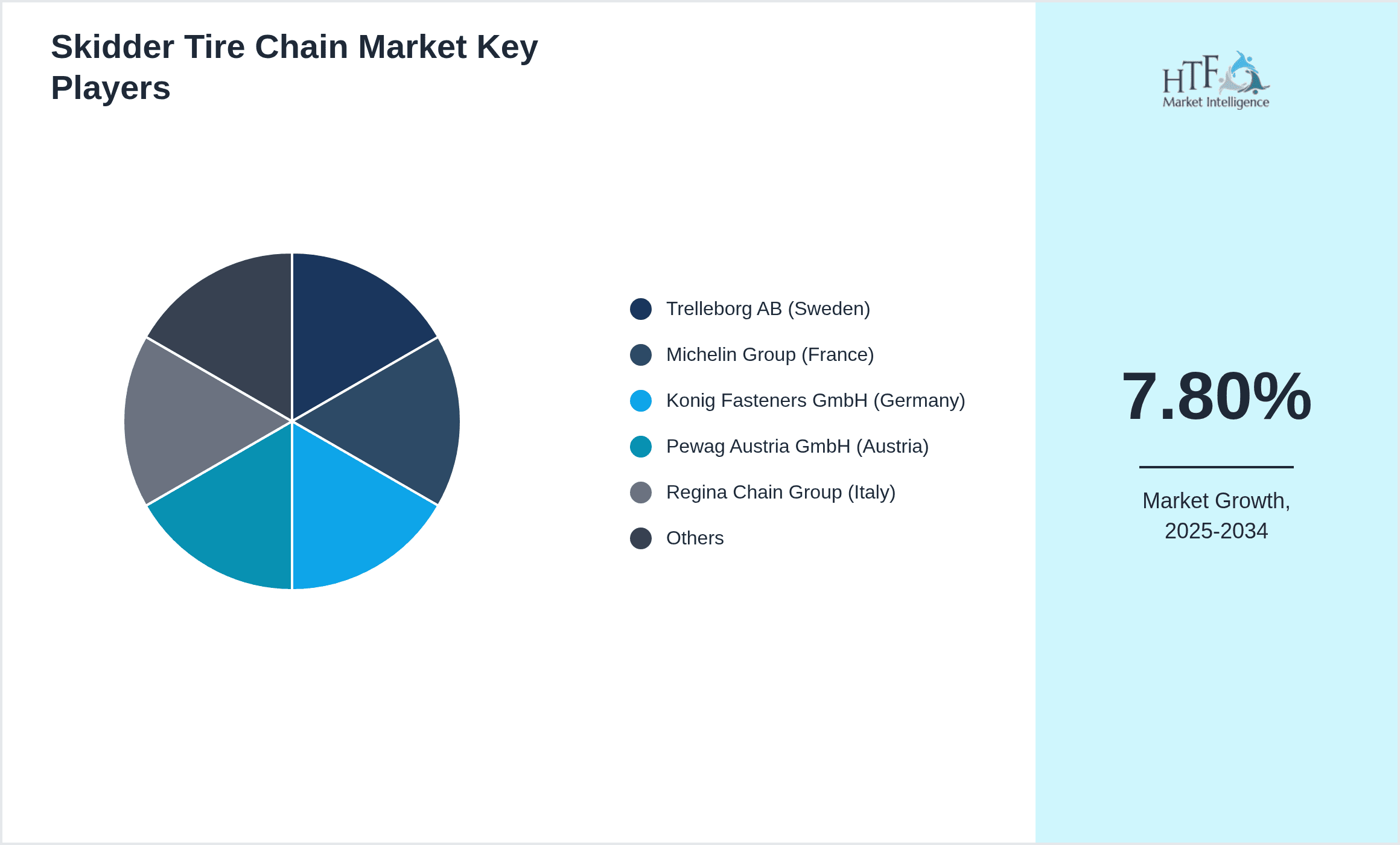
Top 5 Global Players
- •Trelleborg AB (Sweden)
- •Michelin Group (France)
- •Konig Fasteners GmbH (Germany)
- •Pewag Austria GmbH (Austria)
- •Regina Chain Group (Italy)
Regional Outlook
The Germany currently holds a significant share of the market, primarily due to several key factors: increasing consumption rates, a burgeoning population, and robust economic momentum. These elements collectively drive demand, positioning this region as a leader in the market. On the other hand, France is rapidly emerging as the fastest-growing area within the industry. This remarkable growth can be attributed to swift infrastructure development, the expansion of various industrial sectors, and a marked increase in consumer demand. These dynamics make this region a crucial player in shaping future market growth.
In our report, we cover a comprehensive analysis of the following regions and countries:
- Germany
- France
- Italy
- United Kingdom
- Nordics
- Rest of Europe
- South Africa
- Egypt
- Turkey
- United Arab Emirates
- Israel
- Saudi Arabia
- Rest of EMEA
| Feature | Details |
|---|---|
| Base Year Market Size | USD 0.85 Billion |
| Forecast Year Market Size | USD 1.92 Billion |
| CAGR | 7.8% |
| Forecast Period | 2026 to 2033 |
| YoY Growth | 7.5% |
| Regions Covered | Germany, France, Italy, United Kingdom, Nordics, Rest of Europe, South Africa, Egypt, Turkey, United Arab Emirates, Israel, Saudi Arabia, Rest of EMEA |
| Key Companies | Trelleborg AB (Sweden), Michelin Group (France), Konig Fasteners GmbH (Germany), Pewag Austria GmbH (Austria), Regina Chain Group (Italy), RUD Ketten Rieger & Dietz GmbH (Germany), König GmbH (Germany), Tsubaki Group (United Kingdom), Camoplast Solideal (France), Kenda Rubber Industrial Co., Ltd. (Taiwan), Bridgestone Corporation (Japan), Carl Stahl GmbH (Germany), ABS Wheel Systems (Netherlands), Gates Corporation (Belgium), Eaton Corporation (Ireland), SKF Group (Sweden), Goodyear Tire & Rubber Company (Luxembourg), Intermercato (Italy), Caterpillar Inc. (United Kingdom), Bekaert NV (Belgium), Veyance Technologies (Germany), Apollo Vredestein B.V. (Netherlands), Hutchinson SA (France), Nokian Tyres plc (Finland), Continental AG (Germany) |
EMEA Skidder Tire Chain Market - Europe Size & Outlook 2024-2034 - Table of Contents
Multidisciplinary researcher with 10+ years of experience uncovering insights across diverse domains focused on uncovering insights that drive informed decisions.
Frequently Asked Questions (FAQ):
The Compact Track Loaders market is expected to see value worth 5.3 Billion in 2025.
North America currently leads the market with approximately 45% market share, followed by Europe at 28% and Asia-Pacific at 22%. The remaining regions account for 5% of the global market.
Key growth drivers include increasing construction activities, rising demand for versatile equipment in agriculture, technological advancements in track loader design, and growing preference for compact equipment in urban construction projects.