
Europe Food Temperature Controlled Packaging Market Size, Growth & Revenue 2024-2034
Europe Food Temperature Controlled Packaging Market is segmented by Type (Insulated Boxes, Refrigerated Containers, Gel Packs, Vacuum Insulated Panels, Phase Change Materials), Application (Frozen Food, Fresh Produce, Dairy Products, Meat & Seafood, Bakery Products), Distribution Channel (Direct Sales, Distributors, Online Retail, Cold Chain Logistics Providers), Technology (Active Temperature Control, Passive Temperature Control, Smart Packaging Technologies), and Geography (Germany, France, The United Kingdom, BeNeLux, Spain, Italy, NORDIC, CEE, Others)
Pricing
Report Overview
Executive Summary
- •The Europe Food Temperature Controlled Packaging market includes advanced packaging solutions designed to maintain specific temperature ranges vital for preserving food quality and safety. This market covers insulated boxes, refrigerated containers, gel packs, vacuum insulated panels, and phase change materials, applied across frozen food, fresh produce, dairy products, meat & seafood, and bakery goods. The industry scope extends to manufacturers, distributors, and logistics providers ensuring cold chain integrity across Europe. Increasing demand for fresh and frozen foods, coupled with regulatory compliance and sustainability trends, drives market expansion.
- •Key market highlights include a forecasted CAGR of 7.4% from 2024 to 2034, with the market size expected to grow from USD 2.6 Billion in 2023 to USD 5.8 Billion by 2034. Germany dominates the market with a 25% share, while France is the fastest growing country at a CAGR of 9.2%. Insulated boxes lead product types, and frozen food remains the top application segment.
- •The market holds strategic importance for Europe's food supply chain, enhancing food safety, reducing waste, and supporting sustainability goals. Adoption of innovative materials and technologies presents growth avenues for stakeholders including packaging manufacturers, cold chain logistics firms, and food retailers.

Competitive Landscape
The Europe Food Temperature Controlled Packaging market is characterized by intense competition among established global and regional players focusing on innovation, sustainability, and service excellence. Companies adopt strategies such as product differentiation through advanced insulation technologies and eco-friendly materials to gain competitive advantage. Market rivalry is intensified by increasing consumer demand for high-quality temperature-controlled packaging and stringent regulatory standards mandating compliance. Strategic partnerships and collaborations within the cold chain ecosystem enhance market positioning. Continuous investment in R&D to improve thermal performance and reduce environmental impact is a key competitive approach. Additionally, pricing strategies and robust distribution networks are critical factors shaping market dynamics. Emerging players leverage niche innovations, while dominant firms capitalize on scale and brand recognition, creating a balanced yet competitive environment that drives overall market growth and technological advancement.
Leading Companies in Europe Food Temperature Controlled Packaging Market
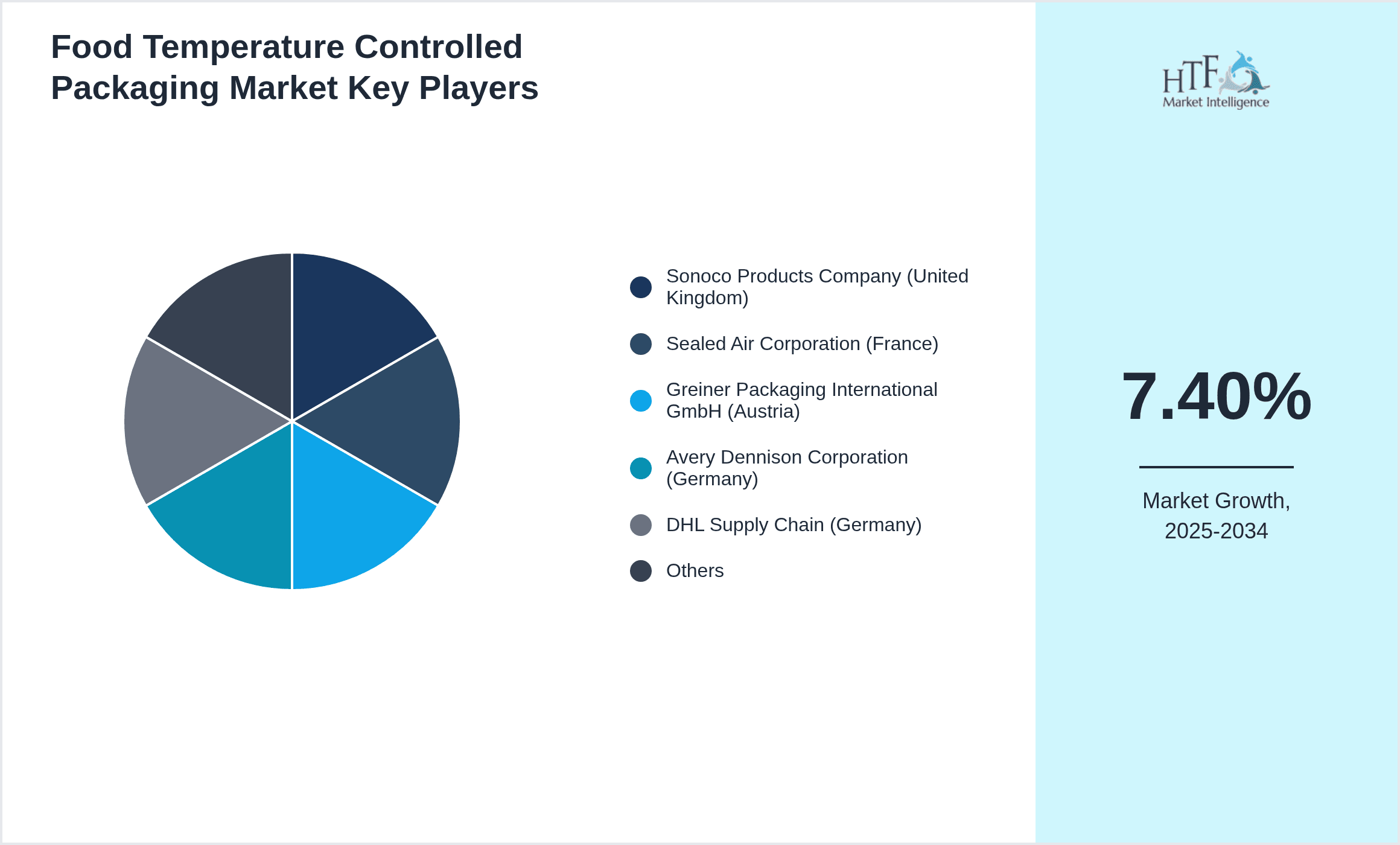
- •Sonoco Products Company (United Kingdom)
- •Sealed Air Corporation (France)
- •Greiner Packaging International GmbH (Austria)
- •Avery Dennison Corporation (Germany)
- •DHL Supply Chain (Germany)
- •Cryopak (France)
- •Thermo King (Sweden)
- •Va-Q-Tec AG (Germany)
- •Amcor plc (Switzerland)
- •Multicase Group (Italy)
- •Cold Chain Technologies (United Kingdom)
- •Pelican BioThermal (Germany)
- •Refresco Group (Netherlands)
- •Rondo Food Packaging (Germany)
- •Dometic Group (Sweden)
- •Coveris Holdings S.A. (Austria)
- •Logistex Ltd. (United Kingdom)
- •Euro Pool System International (Netherlands)
- •Huhtamaki Oyj (Finland)
- •RPC Group Plc (United Kingdom)
- •BillerudKorsnäs AB (Sweden)
- •All Weather Insulated Packaging (France)
- •Cold Chain Packaging Solutions (Germany)
- •Peli Products, S.L. (Spain)
- •Cryoport, Inc. (United Kingdom)

Market Breakdown
- •By Type
- ◦Insulated Boxes
- ◦Refrigerated Containers
- ◦Gel Packs
- ◦Vacuum Insulated Panels
- ◦Phase Change Materials
- •By Application
- ◦Frozen Food
- ◦Fresh Produce
- ◦Dairy Products
- ◦Meat & Seafood
- ◦Bakery Products
- •By Distribution Channel
- ◦Direct Sales
- ◦Distributors
- ◦Online Retail
- ◦Cold Chain Logistics Providers
- •By Technology
- ◦Active Temperature Control
- ◦Passive Temperature Control
- ◦Smart Packaging Technologies
Growth Drivers
Increasing consumer preference for fresh and frozen food products across Europe is a primary driver propelling demand for temperature controlled packaging. Rising awareness about food safety and quality compels manufacturers and retailers to adopt advanced packaging solutions that maintain optimal temperature throughout the supply chain, minimizing spoilage and waste. Additionally, stringent European Union regulations on food safety and transportation standards enforce the use of certified temperature-controlled packaging. Expansion of cold chain infrastructure, particularly in emerging European markets, facilitates wider distribution of perishable goods, further boosting market growth. Technological advancements such as phase change materials and vacuum insulated panels improve thermal efficiency, attracting investment from packaging companies. Growing e-commerce penetration for perishable foods accelerates demand for reliable temperature-controlled solutions that ensure product integrity during last-mile delivery, enhancing overall market expansion.

Market Trends
Sustainability is a dominant trend in the Europe Food Temperature Controlled Packaging market, with companies increasingly adopting recyclable, biodegradable, and reusable materials to address environmental concerns and comply with EU directives. Innovations in smart packaging technologies featuring IoT-enabled temperature sensors provide real-time monitoring and enhance cold chain visibility, improving supply chain transparency. The integration of bio-based phase change materials is gaining traction as an eco-friendly alternative to conventional gels. Collaborative initiatives between packaging manufacturers and logistics providers aim to develop integrated solutions that optimize thermal performance and reduce carbon footprint. Additionally, the rise of e-commerce grocery platforms drives demand for compact, efficient packaging tailored for home deliveries, fostering innovation in packaging design and functionality.
Market Restraints
High costs associated with advanced temperature controlled packaging materials and technologies pose a significant barrier to widespread adoption, especially among small and medium-sized enterprises. The complexity of cold chain logistics and maintenance increases operational expenses, which can limit market penetration in price-sensitive segments. Additionally, variability in regional infrastructure quality across Europe affects the consistent performance of temperature-controlled packaging solutions. Regulatory compliance requirements, while essential, introduce additional certification and testing costs. Challenges in recycling multi-layered or composite packaging materials hinder sustainability goals, creating resistance among environmentally conscious stakeholders. Furthermore, limited consumer awareness in certain regions about the benefits of temperature controlled packaging restricts demand growth, necessitating focused educational initiatives to overcome market hesitancy.
Market Opportunities
The growing demand for sustainable and bio-based temperature controlled packaging materials offers significant growth opportunities for manufacturers investing in research and development. Expansion of online grocery retail and cold chain logistics services across Europe creates new application areas for innovative packaging solutions tailored to last-mile delivery challenges. Emerging markets within Europe, such as Central and Eastern European countries, present untapped potential due to developing cold storage infrastructure and increasing consumer purchasing power. Strategic collaborations between packaging firms and technology providers to integrate smart sensors and data analytics into packaging can enhance supply chain efficiency and product traceability. Additionally, government incentives promoting eco-friendly packaging and waste reduction further encourage market players to adopt green technologies, driving long-term sustainable growth.
Market Challenges
Ensuring consistent temperature control throughout the complex cold chain network remains a critical challenge, with packaging often subjected to varying environmental conditions that can compromise efficacy. The fragmented nature of the European market, with diverse regulations and infrastructure standards across countries, complicates the development of unified packaging solutions. Supply chain disruptions caused by geopolitical events or pandemics expose vulnerabilities in temperature-controlled logistics, affecting packaging demand and performance. High raw material prices and dependency on petrochemical-based components increase production costs and affect pricing competitiveness. Additionally, balancing thermal performance with environmental sustainability demands innovation in material science, which requires significant investment and time. Overcoming consumer skepticism regarding new packaging technologies and ensuring regulatory compliance across multiple jurisdictions further complicate market growth.
Regulatory Framework
From 2020 to 2023, Europe has implemented stringent regulations emphasizing food safety and environmental sustainability that impact the temperature controlled packaging market. The EU's Packaging and Packaging Waste Directive mandates increased use of recyclable and reusable packaging materials, pushing manufacturers toward eco-friendly solutions. Regulations such as the Food Information to Consumers Regulation require packaging to maintain food integrity and safety throughout distribution. Additionally, the EU’s Circular Economy Action Plan promotes reduction of packaging waste and supports innovation in sustainable packaging technologies. Compliance with REACH (Registration, Evaluation, Authorization, and Restriction of Chemicals) ensures that all materials used are safe for consumers and the environment. These regulatory frameworks necessitate rigorous testing, certification, and documentation processes, influencing packaging design and material choices across the European market.
Market Intelligence
- •In March 2024, Sonoco Products Company launched an innovative sustainable insulated box designed specifically for fresh produce transportation, featuring 100% recyclable materials and enhanced thermal insulation properties. This product aims to reduce environmental impact while ensuring optimal temperature control across the cold chain, targeting European retailers focusing on sustainability.
- •In November 2023, Va-Q-Tec AG introduced a new line of vacuum insulated panels incorporating phase change materials to extend temperature maintenance duration. This advancement supports pharmaceutical and food cold chain logistics, offering lightweight, high-performance packaging solutions that meet strict EU regulatory requirements.
- •Recent market developments and strategic initiatives are continuously tracked through industry publications, company announcements, and regulatory filings. For the most current information, stakeholders are advised to monitor official corporate communications and recognized market intelligence platforms.
Mergers & Acquisitions
- •In September 2023, Sealed Air Corporation acquired Cold Chain Technologies’ European operations to strengthen its foothold in the temperature controlled packaging segment. This strategic move expanded Sealed Air’s product portfolio in insulated packaging and enhanced its cold chain logistics capabilities across multiple European markets, aiming to deliver more comprehensive solutions to food and pharmaceutical clients.
- •In May 2022, Amcor plc completed the acquisition of Multicase Group, an Italian manufacturer specializing in insulated packaging solutions. This acquisition broadened Amcor’s presence in Southern Europe and accelerated its innovation pipeline in sustainable temperature controlled packaging technologies, supporting the growing demand for eco-friendly food packaging.
Recent Industry News
- •In January 2025, Cryopak announced a partnership with DHL Supply Chain to develop next-generation temperature controlled packaging designed for e-commerce grocery deliveries. The collaboration focuses on integrating smart sensors for real-time temperature monitoring, enhancing cold chain transparency and reducing spoilage during last-mile distribution. This initiative aims to meet the increasing demand for fresh food delivery services across Europe. Source: Industry Newswire
- •In July 2024, Greiner Packaging International GmbH expanded its manufacturing facility in Austria to increase production capacity for gel packs and insulated boxes. The investment supports growing customer demand driven by expanding frozen food retail and pharmaceutical cold chain sectors in Europe, positioning the company for sustained growth. Source: Corporate Press Release
- •In October 2023, Pelican BioThermal launched a range of reusable refrigerated containers incorporating phase change materials designed for European food logistics providers. These containers offer enhanced durability and thermal performance while aligning with EU sustainability targets, promoting circular economy principles in packaging. Source: Market Update Report
- •In March 2022, Avery Dennison Corporation introduced smart temperature labels featuring IoT connectivity for food packaging applications. These labels enable continuous monitoring of product conditions throughout the supply chain, improving compliance with European food safety regulations and reducing waste. Source: Technology Journal
Market Statistics
- •CAGR by 2034: 7.4%
- •Market Size by 2034: USD 5.8 Billion
- •Market Size in 2025: USD 2.8 Billion
- •Dominating Type: Insulated Boxes
- •Next-Following Type: Refrigerated Containers
- •Dominating Application: Frozen Food
- •Next-Following Application: Fresh Produce
- •Dominating Region: Germany
- •Second-Leading Region: France
- •Region with Highest Growth Rate: France
- •Dominating Country: Germany
Market Share Table
- •Market Share (%) by Type: Insulated Boxes (40%), Refrigerated Containers (25%)
- •Market Share (%) by Application: Frozen Food (45%), Fresh Produce (30%)
- •Growth Rate (%) by Type: Insulated Boxes (6.5%), Refrigerated Containers (5.8%)
- •Growth Rate (%) by Application: Frozen Food (7.0%), Fresh Produce (6.2%)
Top 5 Global Players
- •Sonoco Products Company (United Kingdom)
- •Sealed Air Corporation (France)
- •Greiner Packaging International GmbH (Austria)
- •Avery Dennison Corporation (Germany)
- •Va-Q-Tec AG (Germany)
Regional Outlook
The Germany currently holds a significant share of the market, primarily due to several key factors: increasing consumption rates, a burgeoning population, and robust economic momentum. These elements collectively drive demand, positioning this region as a leader in the market. On the other hand, France is rapidly emerging as the fastest-growing area within the industry. This remarkable growth can be attributed to swift infrastructure development, the expansion of various industrial sectors, and a marked increase in consumer demand. These dynamics make this region a crucial player in shaping future market growth.
In our report, we cover a comprehensive analysis of the following regions and countries:
- Germany
- France
- The United Kingdom
- BeNeLux
- Spain
- Italy
- NORDIC
- CEE
- Others
| Feature | Details |
|---|---|
| Base Year Market Size | USD 2.6 Billion |
| Forecast Year Market Size | USD 5.8 Billion |
| CAGR | 7.4% |
| Forecast Period | 2026 to 2033 |
| YoY Growth | 7.1% |
| Scope of Report | Market is segmented by Type (Insulated Boxes, Refrigerated Containers, Gel Packs, Vacuum Insulated Panels, Phase Change Materials), Application (Frozen Food, Fresh Produce, Dairy Products, Meat & Seafood, Bakery Products), Distribution Channel (Direct Sales, Distributors, Online Retail, Cold Chain Logistics Providers), Technology (Active Temperature Control, Passive Temperature Control, Smart Packaging Technologies) |
| Regions Covered | Germany, France, The United Kingdom, BeNeLux, Spain, Italy, NORDIC, CEE, Others |
| Key Companies | Sonoco Products Company (United Kingdom), Sealed Air Corporation (France), Greiner Packaging International GmbH (Austria), Avery Dennison Corporation (Germany), DHL Supply Chain (Germany), Cryopak (France), Thermo King (Sweden), Va-Q-Tec AG (Germany), Amcor plc (Switzerland), Multicase Group (Italy), Cold Chain Technologies (United Kingdom), Pelican BioThermal (Germany), Refresco Group (Netherlands), Rondo Food Packaging (Germany), Dometic Group (Sweden), Coveris Holdings S.A. (Austria), Logistex Ltd. (United Kingdom), Euro Pool System International (Netherlands), Huhtamaki Oyj (Finland), RPC Group Plc (United Kingdom), BillerudKorsnäs AB (Sweden), All Weather Insulated Packaging (France), Cold Chain Packaging Solutions (Germany), Peli Products, S.L. (Spain), Cryoport, Inc. (United Kingdom) |
Europe Food Temperature Controlled Packaging Market Size, Growth & Revenue 2024-2034 - Table of Contents
Frequently Asked Questions (FAQ):
The Compact Track Loaders market is expected to see value worth 5.3 Billion in 2025.
North America currently leads the market with approximately 45% market share, followed by Europe at 28% and Asia-Pacific at 22%. The remaining regions account for 5% of the global market.
Key growth drivers include increasing construction activities, rising demand for versatile equipment in agriculture, technological advancements in track loader design, and growing preference for compact equipment in urban construction projects.