
Japan High-throughput Drug Screening Instrument Market - Japan Industry Size & Growth Analysis 2025-2034
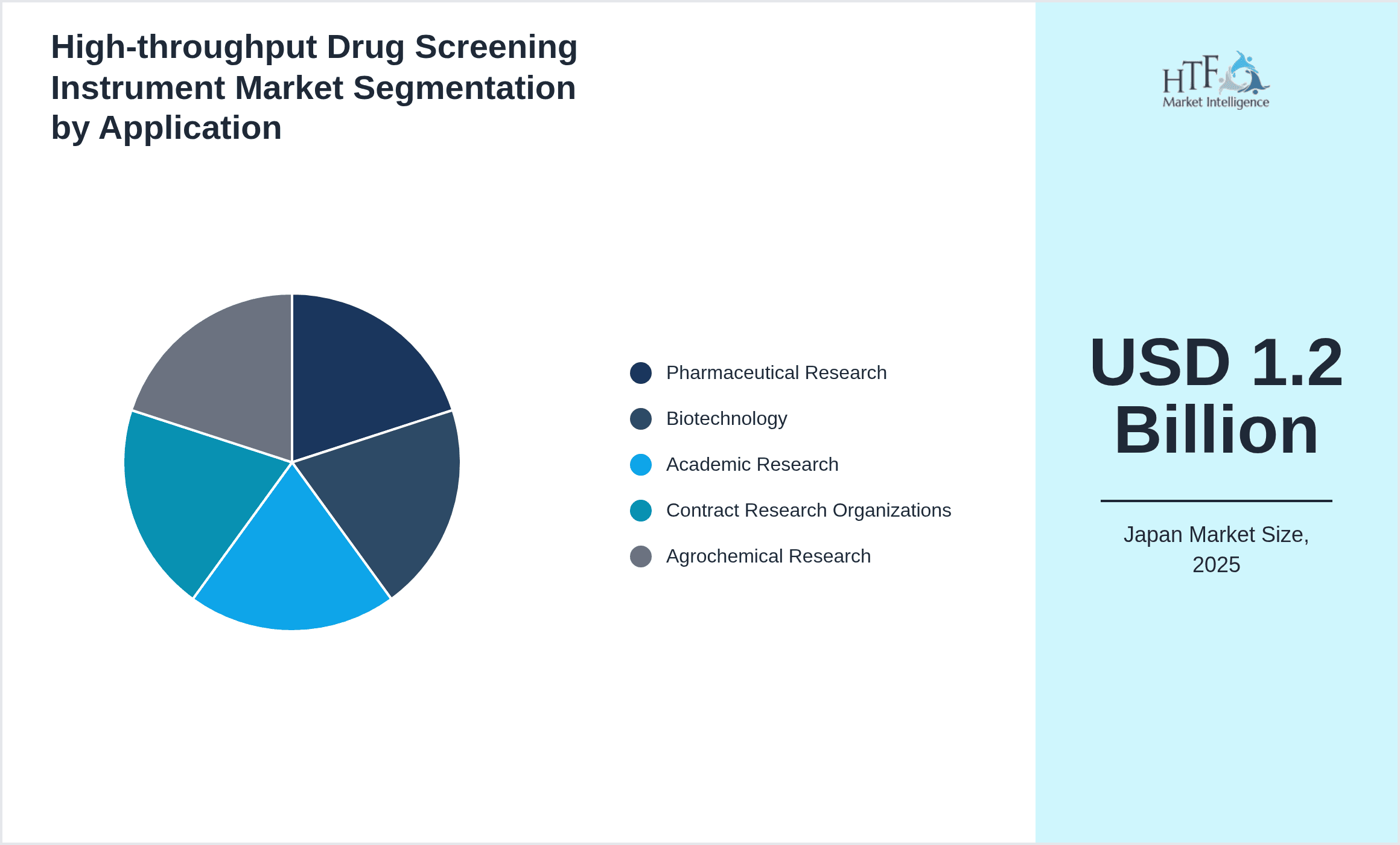
Japan High-throughput Drug Screening Instrument Market is segmented by Type (Automated Screening Systems, Label-Free Screening Systems, Microplate Readers, Imaging Systems, Liquid Handling Systems), Application (Pharmaceutical Research, Biotechnology, Academic Research, Contract Research Organizations, Agrochemical Research), Technology Integration (AI-Enabled Screening, Cloud-Based Data Management, Microfluidics, Multiplexing Technologies), End-User (Pharmaceutical Companies, Biotech Firms, Academic Institutions, Government Research Labs), Deployment Model (On-Premise Systems, Cloud-Integrated Systems), and Geography (Hokkaido, Tohoku, Kanto, Chubu, Kansai, Chugoku, Shikoku, Kyushu)
Pricing
Report Overview
Executive Summary
- •The Japan High-throughput Drug Screening Instrument Market includes sophisticated devices and systems designed to automate and expedite drug discovery processes. This market covers automated screening systems, label-free screening, microplate readers, imaging, and liquid handling systems used by pharmaceutical and biotechnology sectors. These instruments enhance testing throughput, accuracy, and reproducibility, addressing the increasing complexity of drug development. The market is critical for supporting Japan's pharmaceutical innovation, facilitating rapid identification of therapeutic candidates, and optimizing research workflows across academic and commercial settings.
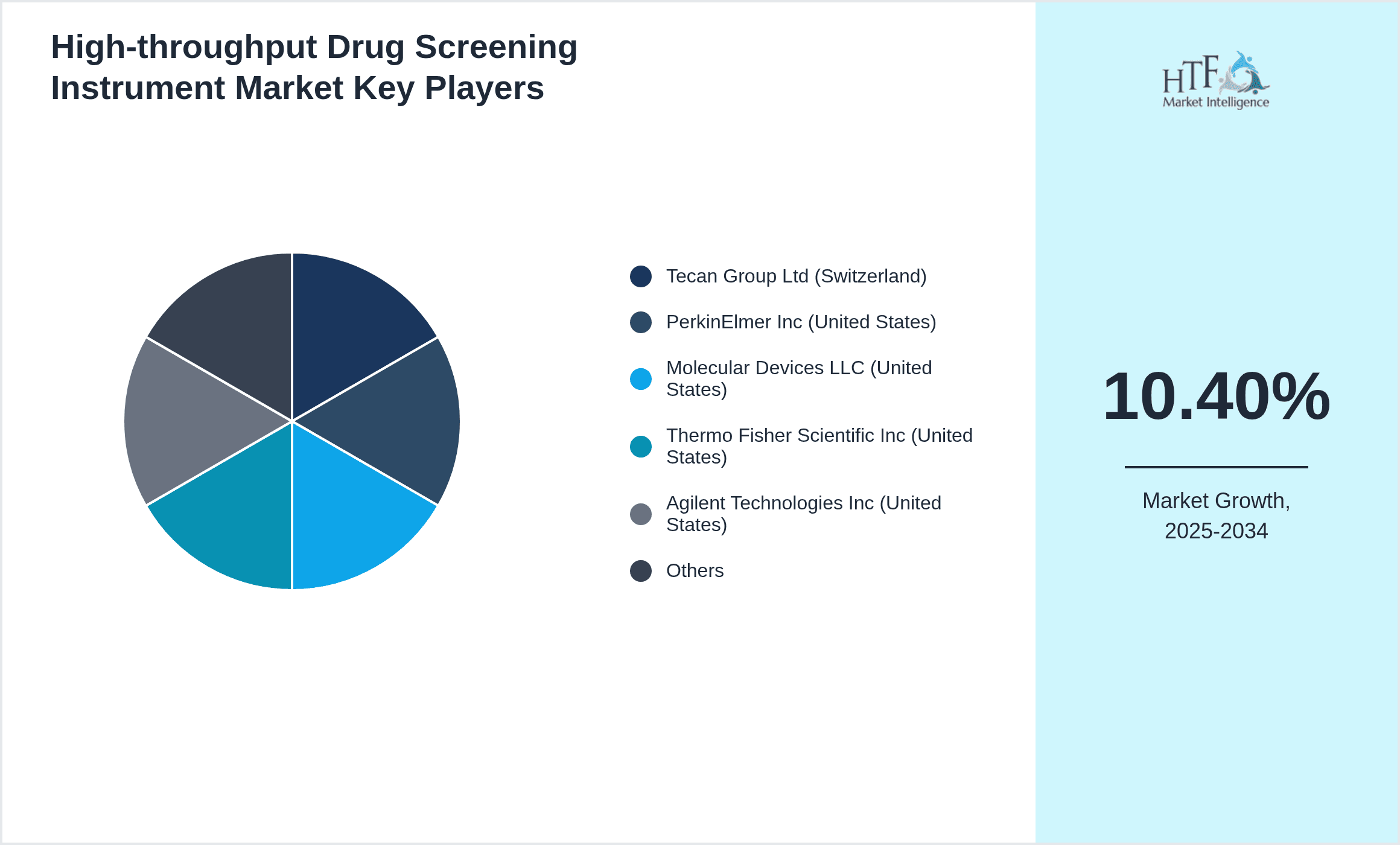
- •Key market highlights include a base market size of USD 1.2 billion in 2025, a forecast to reach USD 2.9 billion by 2034, representing a CAGR of 10.4%. Dominance of automated screening systems with 45% market share and strong growth of label-free systems at 14% CAGR define product trends. The Kanto region leads with 38% market share, while Kyushu & Okinawa show fastest growth at 12.5%. Increasing R&D investments and technological innovation underpin market expansion.
- •The strategic importance of the Japan High-throughput Drug Screening Instrument Market lies in its role in accelerating drug discovery, reducing time-to-market, and increasing efficiency for pharmaceutical and biotech companies. These instruments support precision medicine development and foster collaborations among research institutions, industry stakeholders, and government agencies, enhancing Japan’s position as a global biotechnology hub.

Competitive Landscape
Companies in the Japan High-throughput Drug Screening Instrument industry pursue growth through strategic partnerships with research institutions and technology providers to enhance product capabilities. Emphasis on innovation leads to frequent launches of next-generation automated and label-free screening instruments with improved sensitivity and throughput. Global expansion is achieved by establishing local offices and collaboration with domestic distributors to address Japan’s unique regulatory and market needs. Firms invest in AI and machine learning integration to optimize data analysis and predictive screening. Competitive strategies include acquiring smaller specialized technology firms to consolidate product portfolios and expanding service offerings such as maintenance and custom solutions. Adoption of cloud-based platforms for remote monitoring and data management signifies technological advancement in the sector. These approaches support companies in maintaining strong market presence and responding swiftly to evolving customer demands in Japan’s dynamic drug discovery landscape.
Leading Companies in High-throughput Drug Screening Instrument Market
- •Tecan Group Ltd (Switzerland)
- •PerkinElmer Inc (United States)
- •Molecular Devices LLC (United States)
- •Thermo Fisher Scientific Inc (United States)
- •Agilent Technologies Inc (United States)
- •Sartorius AG (Germany)
- •Beckman Coulter Inc (United States)
- •BioTek Instruments Inc (United States)
- •PerkinElmer Japan K.K. (Japan)
- •Shimadzu Corporation (Japan)
- •Hitachi High-Technologies Corporation (Japan)
- •Yokogawa Electric Corporation (Japan)
- •Nikon Corporation (Japan)
- •Eppendorf AG (Germany)
- •Hamilton Company (Switzerland)
- •Danaher Corporation (United States)
- •Bruker Corporation (United States)
- •Bio-Rad Laboratories Inc (United States)
- •Cytiva (United States)
- •Labcyte Inc (United States)
Market Breakdown
- •By Type
- ◦Automated Screening Systems
- ◦Label-Free Screening Systems
- ◦Microplate Readers
- ◦Imaging Systems
- ◦Liquid Handling Systems
- •By Application
- ◦Pharmaceutical Research
- ◦Biotechnology
- ◦Academic Research
- ◦Contract Research Organizations
- ◦Agrochemical Research
- •By Technology Integration
- ◦AI-Enabled Screening
- ◦Cloud-Based Data Management
- ◦Microfluidics
- ◦Multiplexing Technologies
- •By End-User
- ◦Pharmaceutical Companies
- ◦Biotech Firms
- ◦Academic Institutions
- ◦Government Research Labs
- •By Deployment Model
- ◦On-Premise Systems
- ◦Cloud-Integrated Systems
Market Drivers
Rising pharmaceutical R&D expenditure in Japan propels demand for high-throughput drug screening instruments, enabling accelerated drug discovery cycles. Industry leaders like Takeda Pharmaceutical and Astellas Pharma intensify investment in automated screening technologies to enhance pipeline productivity. Recent government initiatives supporting innovation in biotechnology further stimulate market growth. Technological advancements such as AI-based predictive analytics and label-free detection improve screening accuracy while reducing costs. The surge in biologics and personalized medicine development drives adoption of sophisticated instruments that allow complex target screening. Integration of microfluidics and multiplexing technologies supports miniaturized, efficient assays, meeting growing demand for high-throughput capabilities. The COVID-19 pandemic underscored the need for rapid drug discovery tools, leading to accelerated deployment of screening platforms in academic and contract research organizations. These factors collectively fuel the expansion of Japan's high-throughput drug screening instrument market.

Market Trends
Emerging trends in Japan's high-throughput drug screening instrument market include the integration of artificial intelligence and machine learning algorithms to enhance data interpretation and predictive modeling, significantly improving screening efficiency. Increasing adoption of label-free screening technologies allows real-time, non-invasive analysis of molecular interactions, gaining traction among research institutions. The rise of microfluidic-based platforms enables miniaturized assays with reduced reagent consumption and higher throughput. Collaborative initiatives between instrument manufacturers and pharmaceutical companies foster co-development of customized solutions tailored to specific drug discovery pipelines. The expansion of contract research organizations offering high-throughput screening as a service drives market accessibility. Sustainability considerations prompt development of energy-efficient instruments with reduced waste generation. Furthermore, advancements in cloud computing facilitate remote monitoring and data sharing, contributing to decentralized research environments. These trends position Japan at the forefront of innovative drug screening technologies, supporting its global pharmaceutical leadership.
Market Opportunities
Growing demand for precision medicine in Japan creates opportunities for advanced high-throughput screening instruments capable of analyzing complex biological targets with high specificity. Expansion of biopharmaceutical and cell therapy sectors necessitates instruments adaptable to diverse assay formats and sample types. Increasing government funding for regenerative medicine and rare disease research stimulates instrument adoption in academic and clinical research settings. Integration of AI-driven analytics and automation opens avenues for developing turnkey solutions that streamline workflows and reduce human error. Collaboration opportunities arise for instrument manufacturers to partner with software developers to enhance data management and visualization capabilities. Export potential exists for Japanese firms to supply innovative screening platforms to Asia-Pacific neighbors. Additionally, rising awareness regarding drug safety and efficacy supports demand for label-free and multiplexed screening technologies. These prospects position the market for sustained growth, driven by technological innovation and evolving research priorities.
Market Challenges
High capital investment requirements for acquiring and maintaining advanced high-throughput drug screening instruments restrain market growth in Japan, particularly among smaller research institutions. Complexity in integrating diverse technologies such as AI, microfluidics, and multiplexing demands specialized technical expertise, limiting widespread adoption. Regulatory compliance involving data integrity and quality standards introduces operational challenges and increases time-to-market for new instrument models. Supply chain disruptions caused by global semiconductor shortages impact production timelines and availability of critical components. Competitive pressure from low-cost imports challenges domestic manufacturers to maintain pricing power while investing in innovation. Additionally, the fragmented nature of end-users with varying requirements complicates customization and after-sales service delivery. Instances of delayed project implementations due to skill shortages have been reported within academic laboratories. These challenges necessitate strategic investments in training, partnerships, and regulatory navigation to sustain market momentum.
Regulatory Framework
The Pharmaceutical and Medical Device Act in Japan, updated within the last five years, mandates stringent quality and safety standards for medical and laboratory instruments, including high-throughput drug screening devices. Compliance with the Ministry of Health, Labour and Welfare’s guidelines ensures instruments meet performance, reliability, and data integrity requirements essential for drug discovery applications. The Act enforces certification processes for device manufacturers and distributors, emphasizing traceability and post-market surveillance. Additionally, Japan's Act on the Protection of Personal Information impacts data handling practices for cloud-integrated screening systems. These regulatory frameworks ensure that high-throughput screening instruments operate within strict safety and efficacy parameters, fostering user confidence and supporting innovation while safeguarding public health.
Recent Industry Insights
Recent market developments and strategic initiatives are continuously tracked through industry publications, company announcements, and regulatory filings. For the most current information, stakeholders are advised to monitor official corporate communications and recognized market intelligence platforms.
Recent Merger and Acquisition
Recent market developments and strategic initiatives are continuously tracked through industry publications, company announcements, and regulatory filings. For the most current information, stakeholders are advised to monitor official corporate communications and recognized market intelligence platforms.
Regional Outlook
The Kanto currently holds a significant share of the market, primarily due to several key factors: increasing consumption rates, a burgeoning population, and robust economic momentum. These elements collectively drive demand, positioning this region as a leader in the market. On the other hand, Kyushu & Okinawa is rapidly emerging as the fastest-growing area within the industry. This remarkable growth can be attributed to swift infrastructure development, the expansion of various industrial sectors, and a marked increase in consumer demand. These dynamics make this region a crucial player in shaping future market growth.
In our report, we cover a comprehensive analysis of the following regions and countries:
- Hokkaido
- Tohoku
- Kanto
- Chubu
- Kansai
- Chugoku
- Shikoku
- Kyushu
| Feature | Details |
|---|---|
| Base Year Market Size | USD 1.2 Billion |
| Forecast Year Market Size | USD 2.9 Billion |
| CAGR | 10.4% |
| Forecast Period | 2026 to 2033 |
| YoY Growth | 10% |
| Scope of Report | Market is segmented by Type (Automated Screening Systems, Label-Free Screening Systems, Microplate Readers, Imaging Systems, Liquid Handling Systems), Application (Pharmaceutical Research, Biotechnology, Academic Research, Contract Research Organizations, Agrochemical Research), Technology Integration (AI-Enabled Screening, Cloud-Based Data Management, Microfluidics, Multiplexing Technologies), End-User (Pharmaceutical Companies, Biotech Firms, Academic Institutions, Government Research Labs), Deployment Model (On-Premise Systems, Cloud-Integrated Systems) |
| Regions Covered | Hokkaido, Tohoku, Kanto, Chubu, Kansai, Chugoku, Shikoku, Kyushu |
| Key Companies | Tecan Group Ltd (Switzerland), PerkinElmer Inc (United States), Molecular Devices LLC (United States), Thermo Fisher Scientific Inc (United States), Agilent Technologies Inc (United States), Sartorius AG (Germany), Beckman Coulter Inc (United States), BioTek Instruments Inc (United States), PerkinElmer Japan K.K. (Japan), Shimadzu Corporation (Japan), Hitachi High-Technologies Corporation (Japan), Yokogawa Electric Corporation (Japan), Nikon Corporation (Japan), Eppendorf AG (Germany), Hamilton Company (Switzerland), Danaher Corporation (United States), Bruker Corporation (United States), Bio-Rad Laboratories Inc (United States), Cytiva (United States), Labcyte Inc (United States) |
Japan High-throughput Drug Screening Instrument Market - Japan Industry Size & Growth Analysis 2025-2034 - Table of Contents
Frequently Asked Questions (FAQ):
The Compact Track Loaders market is projected to grow at a CAGR of 6.8% from 2025 to 2030, driven by increasing demand in construction and agricultural sectors.
North America currently leads the market with approximately 45% market share, followed by Europe at 28% and Asia-Pacific at 22%. The remaining regions account for 5% of the global market.
Key growth drivers include increasing construction activities, rising demand for versatile equipment in agriculture, technological advancements in track loader design, and growing preference for compact equipment in urban construction projects.