
Asia-Pacific Compound Mannitol Injection Market Size, Growth & Revenue 2024-2034
Asia-Pacific Compound Mannitol Injection Market is segmented by Type (Compound Mannitol Injection 10%, Compound Mannitol Injection 20%, Compound Mannitol Injection 25%, Compound Mannitol Injection 30%, Other Concentrations), Application (Neurological Disorders, Renal Failure, Cardiovascular Treatments, Ophthalmic Procedures, Others), End User (Hospitals, Clinics, Specialty Healthcare Centers, Ambulatory Surgical Centers), Distribution Channel (Hospital Pharmacies, Retail Pharmacies, Online Pharmacies, Direct Sales), and Geography (Aisa-Pacific)
Pricing
Report Overview
Executive Summary
- •The Asia-Pacific Compound Mannitol Injection Market focuses on the production and application of compound mannitol injections, primarily used in treating neurological disorders, renal failure, cardiovascular diseases, and ophthalmic conditions. It includes various concentration formulations such as 10%, 20%, 25%, and 30%, catering to diverse healthcare needs across the region. The market spans leading countries including China, India, Japan, and South Korea, with growing healthcare infrastructure and increasing disease prevalence driving demand.
- •Market growth is propelled by rising incidences of neurological and renal conditions, increased healthcare expenditure, and technological advancements in drug formulations. The Compound Mannitol Injection 20% formulation leads the market by volume and revenue, while 30% concentration exhibits the highest growth potential due to its specialized clinical applications. China dominates the regional landscape, whereas India is the fastest-growing market, reflecting expanding healthcare access and rising patient awareness.
- •The market offers significant value propositions through improved patient outcomes, advanced therapeutic options, and strategic collaborations among pharmaceutical companies and healthcare providers. It plays a critical role in the Asia-Pacific healthcare ecosystem, supporting treatment protocols and contributing to overall healthcare quality enhancement.

Competitive Landscape
The competitive environment of the Asia-Pacific Compound Mannitol Injection Market is characterized by a mix of established pharmaceutical giants and emerging regional players emphasizing innovation, quality assurance, and regulatory compliance. Companies focus on developing advanced formulations with enhanced efficacy and safety profiles to differentiate their offerings. Strategic alliances, R&D investments, and expanded distribution networks are common competitive strategies to capture market share. Intense rivalry exists as companies strive for leadership through product diversification, cost optimization, and geographic expansion. Innovation in drug delivery systems and adherence to stringent regulatory standards elevate market competition. Market entry barriers include regulatory approvals and quality certifications, while established brand presence and extensive clinical data provide competitive advantages. Regional competition varies, with China and India hosting numerous key players, driving localized innovation and cost-effective production. Overall, the market exhibits dynamic competitive activities shaped by healthcare demands, technological progress, and evolving patient needs.
Leading Companies in Asia-Pacific Compound Mannitol Injection Market
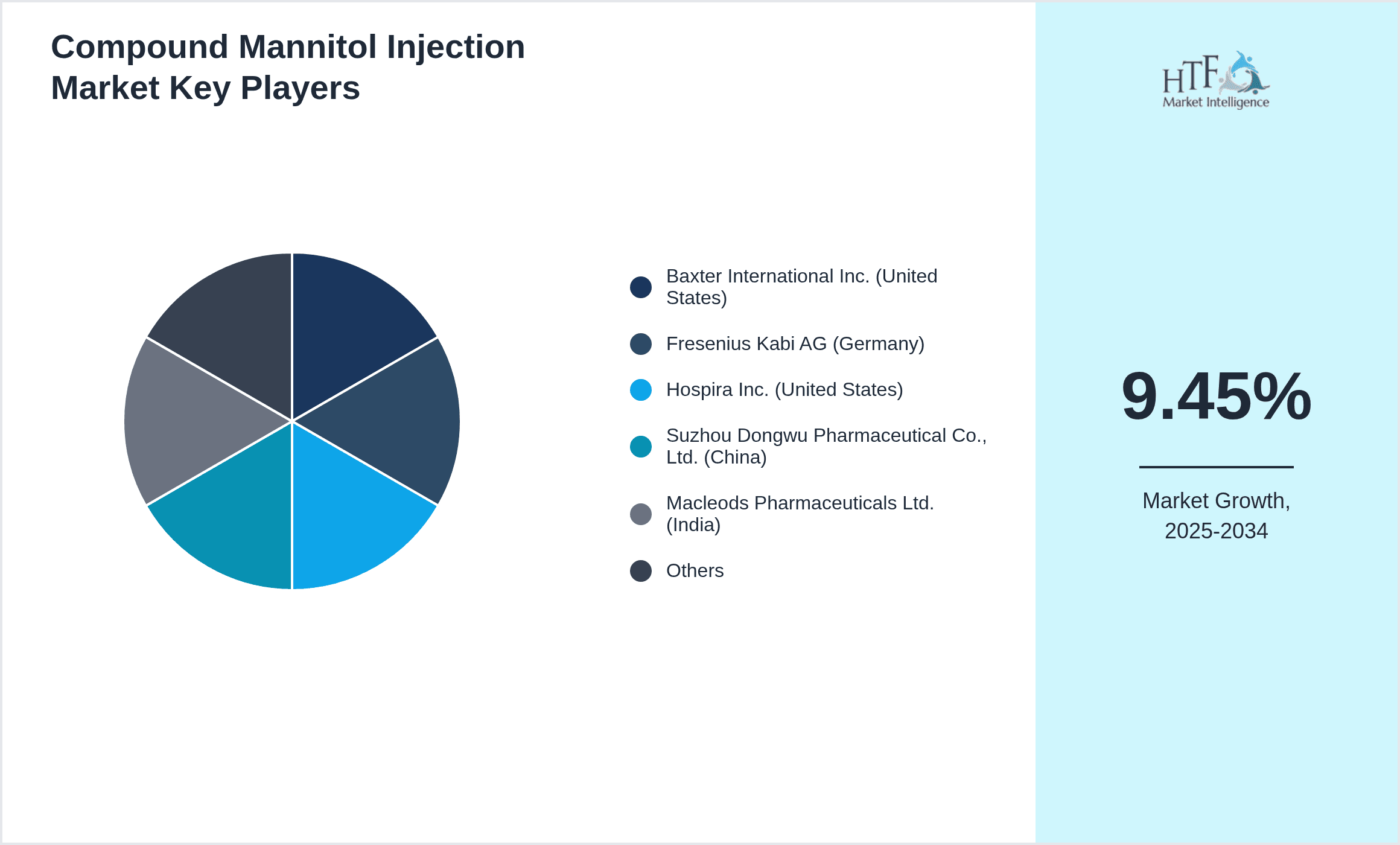
- •Baxter International Inc. (United States)
- •Fresenius Kabi AG (Germany)
- •Hospira Inc. (United States)
- •Suzhou Dongwu Pharmaceutical Co., Ltd. (China)
- •Macleods Pharmaceuticals Ltd. (India)
- •Hubei Biocause Pharmaceutical Co., Ltd. (China)
- •Shanghai Pharmaceuticals Holding Co., Ltd. (China)
- •Pfizer Inc. (United States)
- •Sanofi S.A. (France)
- •Tianjin Chase Sun Pharmaceutical Co., Ltd. (China)
- •Jiangsu Hengrui Medicine Co., Ltd. (China)
- •Zhejiang Hisun Pharmaceutical Co., Ltd. (China)
- •Sun Pharmaceutical Industries Ltd. (India)
- •Cipla Limited (India)
- •Mundipharma Pharmaceuticals Pvt. Ltd. (India)
- •Terumo Corporation (Japan)
- •Nipro Corporation (Japan)
- •Aspen Pharmacare Holdings Limited (Australia)
- •Hospira Australia Pty Ltd. (Australia)
- •Medi Pharma Co., Ltd. (South Korea)
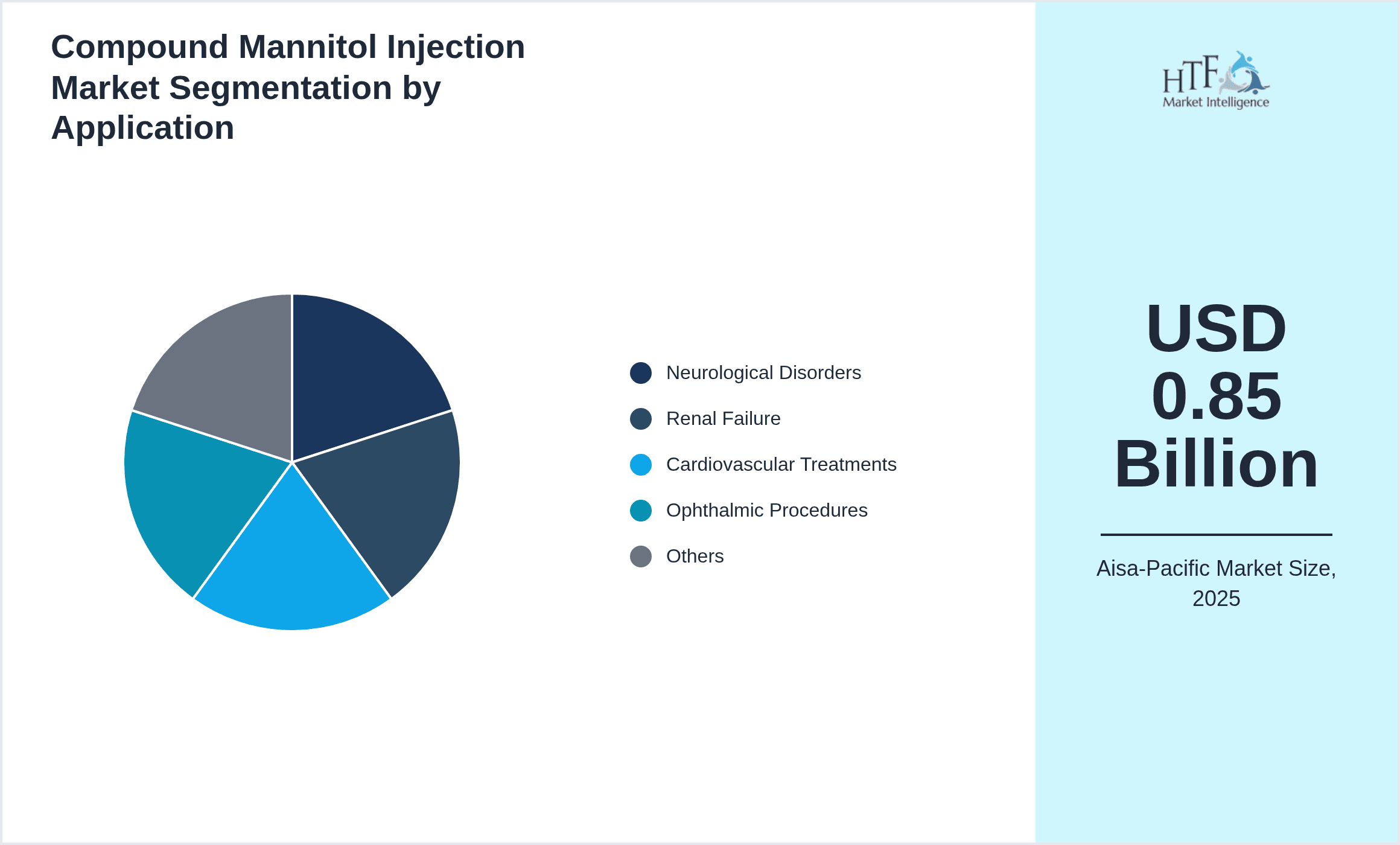
Market Breakdown
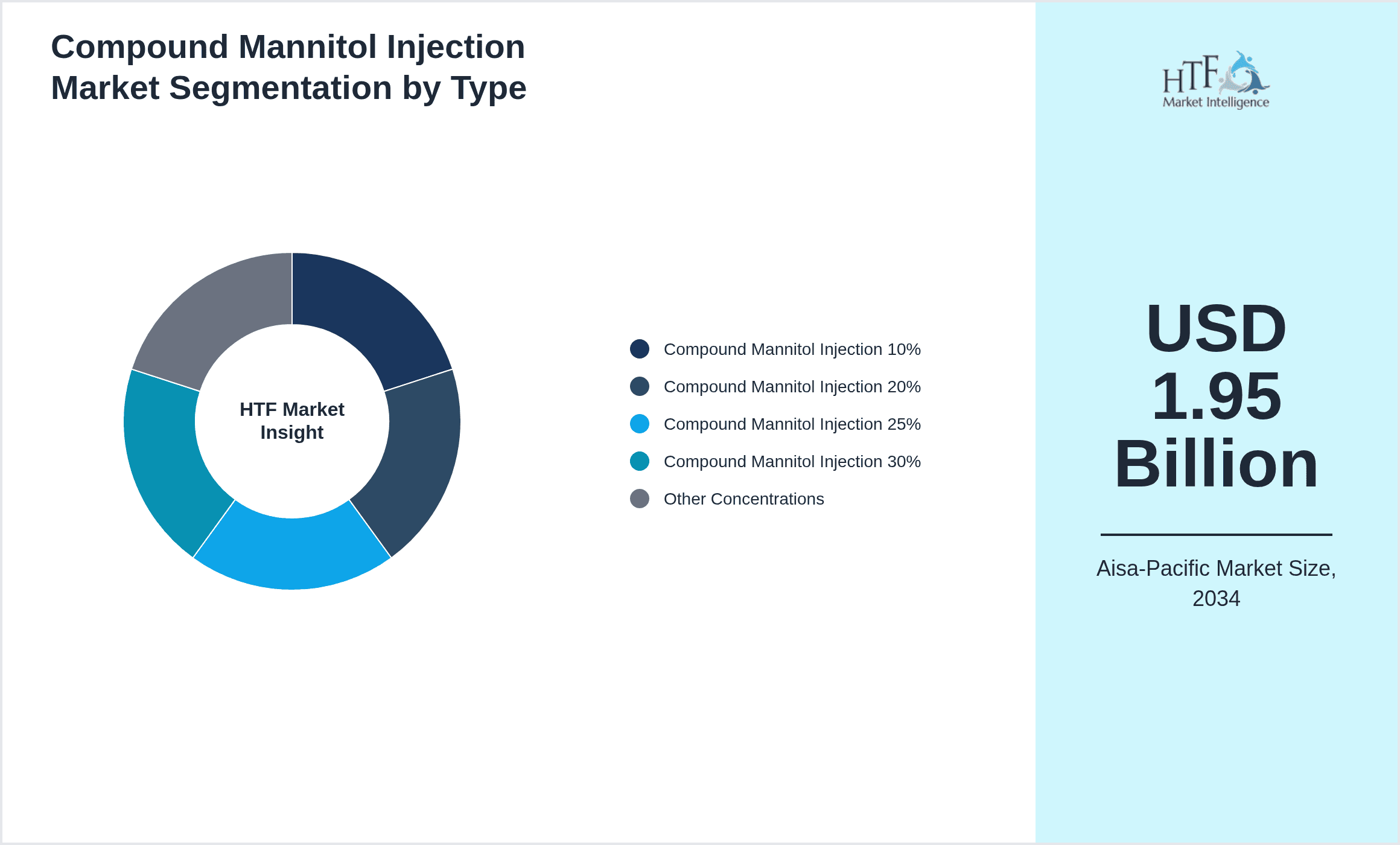
- •By Type
- ◦Compound Mannitol Injection 10%
- ◦Compound Mannitol Injection 20%
- ◦Compound Mannitol Injection 25%
- ◦Compound Mannitol Injection 30%
- ◦Other Concentrations
- •By Application
- ◦Neurological Disorders
- ◦Renal Failure
- ◦Cardiovascular Treatments
- ◦Ophthalmic Procedures
- ◦Others
- •By End User
- ◦Hospitals
- ◦Clinics
- ◦Specialty Healthcare Centers
- ◦Ambulatory Surgical Centers
- •By Distribution Channel
- ◦Hospital Pharmacies
- ◦Retail Pharmacies
- ◦Online Pharmacies
- ◦Direct Sales
Growth Dynamics
- •The Asia-Pacific Compound Mannitol Injection Market growth is primarily driven by an increasing prevalence of neurological disorders such as traumatic brain injuries and stroke, which require osmotic diuretics for intracranial pressure management. Expanding geriatric population and rising incidence of renal failure cases contribute substantially to market demand. Additionally, enhanced healthcare infrastructure and government initiatives to improve access to quality medicines in emerging economies like India and Southeast Asia stimulate growth. Pharmaceutical companies’ focus on innovative formulations and expanding product pipelines further accelerates market expansion. Rising awareness among healthcare practitioners regarding the benefits of compound mannitol injections in cardiovascular and ophthalmic procedures is also fostering adoption. The growing number of hospital beds and increasing surgical procedures in the region underpin steady market growth.
- •Market trends indicate a shift towards higher concentration formulations such as 25% and 30% compound mannitol injections due to their efficacy in severe clinical conditions. Integration of advanced drug delivery technologies aimed at minimizing side effects and enhancing patient compliance is gaining traction. Increased collaborations between pharmaceutical companies and healthcare institutions to foster research and clinical trials are notable. The regional market also observes growing investment in local manufacturing capacities to reduce dependency on imports and meet rising demand. Digitalization of supply chains and expanding telemedicine platforms are influencing distribution channels, enabling broader reach to remote areas. Sustainability initiatives focusing on eco-friendly packaging and ethical sourcing are emerging as additional trends shaping the market landscape.
- •Key restraints include stringent regulatory requirements across countries in the Asia-Pacific region, which can delay product approvals and increase compliance costs. Price sensitivity in emerging markets poses challenges to profitability, with generic competition exerting downward pressure on pricing. Supply chain disruptions due to geopolitical tensions and raw material shortages impact manufacturing continuity. Moreover, adverse side effects associated with mannitol injections, such as electrolyte imbalance and renal toxicity, necessitate cautious use, potentially limiting market penetration. Limited awareness among healthcare providers in rural areas and high treatment costs are further barriers. Additionally, disparities in healthcare infrastructure and reimbursement policies across countries create inconsistent market growth patterns.
- •Significant market opportunities exist in expanding compound mannitol injection applications beyond traditional neurological and renal indications into emerging therapeutic areas such as critical care and oncology supportive treatment. Increasing government funding for healthcare modernization in countries like India and Southeast Asia opens avenues for market penetration. Innovation in formulation technologies, including preservative-free and ready-to-use injections, presents potential for enhanced patient safety and convenience. Strategic partnerships and mergers among pharmaceutical companies facilitate portfolio diversification and geographic expansion. Furthermore, rising health awareness and growing private healthcare expenditure in urban centers offer lucrative growth prospects. Digital marketing and e-commerce platforms also present opportunities to improve market accessibility and customer engagement.
- •Major challenges involve navigating complex and varied regulatory frameworks across Asia-Pacific countries, requiring substantial resources for compliance and documentation. Intense competition from cost-effective generics and biosimilars exerts pressure on market share and pricing strategies. Managing supply chain complexities, particularly in remote and underserved regions, remains difficult. Variability in healthcare reimbursement policies affects product adoption rates. Additionally, the necessity for continuous clinical data to support efficacy and safety claims demands sustained investment in research. Addressing adverse drug reactions and improving patient education to mitigate risks is essential. Finally, geopolitical uncertainties and economic fluctuations may disrupt market stability and investor confidence.
Market Trends
- •Emerging preference for higher concentration compound mannitol injections such as 25% and 30% reflects clinical demand for enhanced osmotic efficacy in managing severe neurological conditions. This shift underscores innovation in formulation development tailored to complex treatment protocols.
- •The integration of advanced drug delivery systems, including preservative-free and ready-to-use injection formats, facilitates improved patient safety, reduced administration errors, and enhanced healthcare provider convenience, contributing to market differentiation.
- •Growing collaborations between pharmaceutical manufacturers and healthcare providers in Asia-Pacific focus on clinical trials and research initiatives to validate compound mannitol injection efficacy, accelerating evidence-based adoption and regulatory approvals.
- •Expansion of local manufacturing capabilities in emerging economies reduces import dependency, lowers production costs, and shortens supply chains, bolstering market resilience and responsiveness to regional demand fluctuations.
- •Digitalization trends in pharmaceutical distribution and telemedicine are transforming market access, enabling expanded reach to rural and underserved populations through online pharmacies and remote healthcare delivery platforms.
Market Opportunities
- •The broadening of therapeutic applications for compound mannitol injections into critical care and oncology supportive therapies creates new demand pockets, leveraging the drug’s osmotic properties for diverse clinical benefits.
- •Government healthcare modernization programs and increased healthcare budgets in India, Southeast Asia, and Australia present conducive environments for market expansion and product introduction in public healthcare facilities.
- •Innovations in preservative-free and ready-to-use injection formulations offer enhanced safety profiles, reducing contamination risks and improving patient compliance, thereby attracting healthcare providers’ preference.
- •Strategic mergers, acquisitions, and partnerships among pharmaceutical players facilitate portfolio diversification, geographic expansion, and enhanced distribution capabilities across the Asia-Pacific region.
- •The rise of digital marketing and e-commerce pharmacy platforms enables companies to tap into fast-growing online healthcare segments, increasing product visibility and accessibility to end-users.
Market Challenges
- •Stringent and heterogeneous regulatory environments across Asia-Pacific countries impose complex compliance requirements, leading to delayed product approvals and increased operational costs for manufacturers.
- •Price sensitivity and prevalence of generic alternatives in emerging markets challenge profitability and market share retention, compelling companies to adopt competitive pricing and differentiation strategies.
- •Supply chain disruptions caused by geopolitical tensions and raw material shortages affect consistent product availability and raise manufacturing expenses.
- •Adverse side effects associated with compound mannitol injections, including electrolyte imbalance and renal toxicity, necessitate careful clinical use and patient monitoring, limiting widespread adoption.
- •Disparities in healthcare infrastructure and reimbursement mechanisms lead to inconsistent market penetration and uneven access to compound mannitol injections across different Asia-Pacific countries.
Regulatory Framework
- •Between 2020 and 2025, Asia-Pacific countries including China, India, and Japan enhanced regulatory standards for injectable pharmaceuticals, emphasizing stringent quality control, sterility assurance, and clinical efficacy documentation to safeguard patient safety.
- •Regulatory agencies have mandated updated Good Manufacturing Practices (GMP) certifications and introduced accelerated approval pathways for essential medicines like compound mannitol injections to improve timely market access.
- •New pharmacovigilance requirements have been enforced, requiring robust post-marketing surveillance and adverse event reporting systems to monitor compound mannitol injection safety profiles effectively.
- •Several countries implemented harmonized labeling and packaging regulations to ensure compliance with international standards and facilitate cross-border pharmaceutical trade within the Asia-Pacific region.
- •Government initiatives promoting domestic pharmaceutical manufacturing have provided regulatory incentives, including tax benefits and streamlined approval processes, to boost local production capacities for injectable drugs.
Market Intelligence
- •15th March 2024, Suzhou Dongwu Pharmaceutical Co., Ltd. launched an innovative preservative-free 30% compound mannitol injection designed for enhanced safety and efficacy in neurological applications. This product addresses growing clinical demand for high-concentration formulations with improved patient tolerability and reduced contamination risks. The launch reflects the company’s commitment to innovation and expansion in the Asia-Pacific injectable drugs market, aiming to capture a larger share by meeting evolving therapeutic needs. The new formulation received positive feedback from healthcare professionals during initial clinical evaluations, bolstering its market entry prospects. Source: Official Company Press Release
- •22nd November 2023, Macleods Pharmaceuticals Ltd. announced a strategic partnership with a leading hospital network in India to enhance distribution and clinical adoption of its compound mannitol injection portfolio. The collaboration focuses on clinical education, supply chain optimization, and expanding reach into tier-2 and tier-3 cities, addressing unmet medical needs in renal failure and neurological care. This initiative is expected to strengthen Macleods’ market position in the competitive Asia-Pacific landscape by leveraging localized insights and improving patient access. Source: Industry Publication
- •Recent market developments and strategic initiatives are continuously tracked through industry publications, company announcements, and regulatory filings. For the most current information, stakeholders are advised to monitor official corporate communications and recognized market intelligence platforms.
- •Recent market developments and strategic initiatives are continuously tracked through industry publications, company announcements, and regulatory filings. For the most current information, stakeholders are advised to monitor official corporate communications and recognized market intelligence platforms.
Regional Outlook
The China currently holds a significant share of the market, primarily due to several key factors: increasing consumption rates, a burgeoning population, and robust economic momentum. These elements collectively drive demand, positioning this region as a leader in the market. On the other hand, India is rapidly emerging as the fastest-growing area within the industry. This remarkable growth can be attributed to swift infrastructure development, the expansion of various industrial sectors, and a marked increase in consumer demand. These dynamics make this region a crucial player in shaping future market growth.
In our report, we cover a comprehensive analysis of the following regions and countries:
| Feature | Details |
|---|---|
| Base Year Market Size | USD 0.85 Billion |
| Forecast Year Market Size | USD 1.95 Billion |
| CAGR | 9.45% |
| Forecast Period | 2026 to 2033 |
| YoY Growth | 9.06% |
| Scope of Report | Market is segmented by Type (Compound Mannitol Injection 10%, Compound Mannitol Injection 20%, Compound Mannitol Injection 25%, Compound Mannitol Injection 30%, Other Concentrations), Application (Neurological Disorders, Renal Failure, Cardiovascular Treatments, Ophthalmic Procedures, Others), End User (Hospitals, Clinics, Specialty Healthcare Centers, Ambulatory Surgical Centers), Distribution Channel (Hospital Pharmacies, Retail Pharmacies, Online Pharmacies, Direct Sales) |
| Key Companies | Baxter International Inc. (United States), Fresenius Kabi AG (Germany), Hospira Inc. (United States), Suzhou Dongwu Pharmaceutical Co., Ltd. (China), Macleods Pharmaceuticals Ltd. (India), Hubei Biocause Pharmaceutical Co., Ltd. (China), Shanghai Pharmaceuticals Holding Co., Ltd. (China), Pfizer Inc. (United States), Sanofi S.A. (France), Tianjin Chase Sun Pharmaceutical Co., Ltd. (China), Jiangsu Hengrui Medicine Co., Ltd. (China), Zhejiang Hisun Pharmaceutical Co., Ltd. (China), Sun Pharmaceutical Industries Ltd. (India), Cipla Limited (India), Mundipharma Pharmaceuticals Pvt. Ltd. (India), Terumo Corporation (Japan), Nipro Corporation (Japan), Aspen Pharmacare Holdings Limited (Australia), Hospira Australia Pty Ltd. (Australia), Medi Pharma Co., Ltd. (South Korea) |
Asia-Pacific Compound Mannitol Injection Market Size, Growth & Revenue 2024-2034 - Table of Contents
Frequently Asked Questions (FAQ):
The Compact Track Loaders market is expected to see value worth 5.3 Billion in 2025.
North America currently leads the market with approximately 45% market share, followed by Europe at 28% and Asia-Pacific at 22%. The remaining regions account for 5% of the global market.
Key growth drivers include increasing construction activities, rising demand for versatile equipment in agriculture, technological advancements in track loader design, and growing preference for compact equipment in urban construction projects.