
China Amino Acid Surfactants Market Size, Growth & Revenue 2024-2034
China Amino Acid Surfactants Market is segmented by Type (Sodium Cocoyl Glutamate, Sodium Lauroyl Sarcosinate, Sodium Cocoyl Glycinate, Sodium Lauroyl Glutamate, Sodium Cocoyl Alaninate), Application (Personal Care, Household Detergents, Industrial Cleaners, Agrochemicals, Food & Beverages), End User (Consumer Goods Manufacturers, Industrial Manufacturing, Agricultural Sector, Food Processing Companies), Distribution Channel (Direct Sales, Distributors & Wholesalers, Online Retail, Chemical Traders), and Geography (North China, Northeast China, East China, South Central China, Southwest China, Northwest China)
Pricing
Report Overview
Executive Summary
- •The China Amino Acid Surfactants market involves the manufacture and use of biodegradable surfactants derived from amino acids, serving industries such as personal care, household detergents, agrochemicals, and food processing. These surfactants offer mildness, biodegradability, and excellent performance, fulfilling China's demand for sustainable and environmentally friendly chemical products.
- •Key market highlights include a base market size of USD 0.85 Billion in 2024 and an expected growth to USD 2.35 Billion by 2034, reflecting a CAGR of 10.45%. The market is led by Sodium Cocoyl Glutamate, with East China dominating regional consumption and production.
- •The market’s strategic importance lies in its alignment with China's regulatory push towards green chemistry and rising consumer preference for natural and safe ingredients, making amino acid surfactants critical for personal care and cleaning product innovation.

Competitive Landscape
Competition in the China Amino Acid Surfactants market is intense, driven by both domestic manufacturers and global players. Companies are focusing on innovation in formulation technologies to improve surfactant performance and biodegradability. Strategic partnerships and investments in R&D are common to enhance product differentiation. The rivalry is characterized by efforts to expand production capacities in East and South China to capitalize on growing demand. Price competitiveness and adherence to environmental regulations further influence market positioning. The market's fragmented nature encourages mergers and acquisitions as a consolidation strategy for market share expansion.
Leading Companies in China Amino Acid Surfactants Market
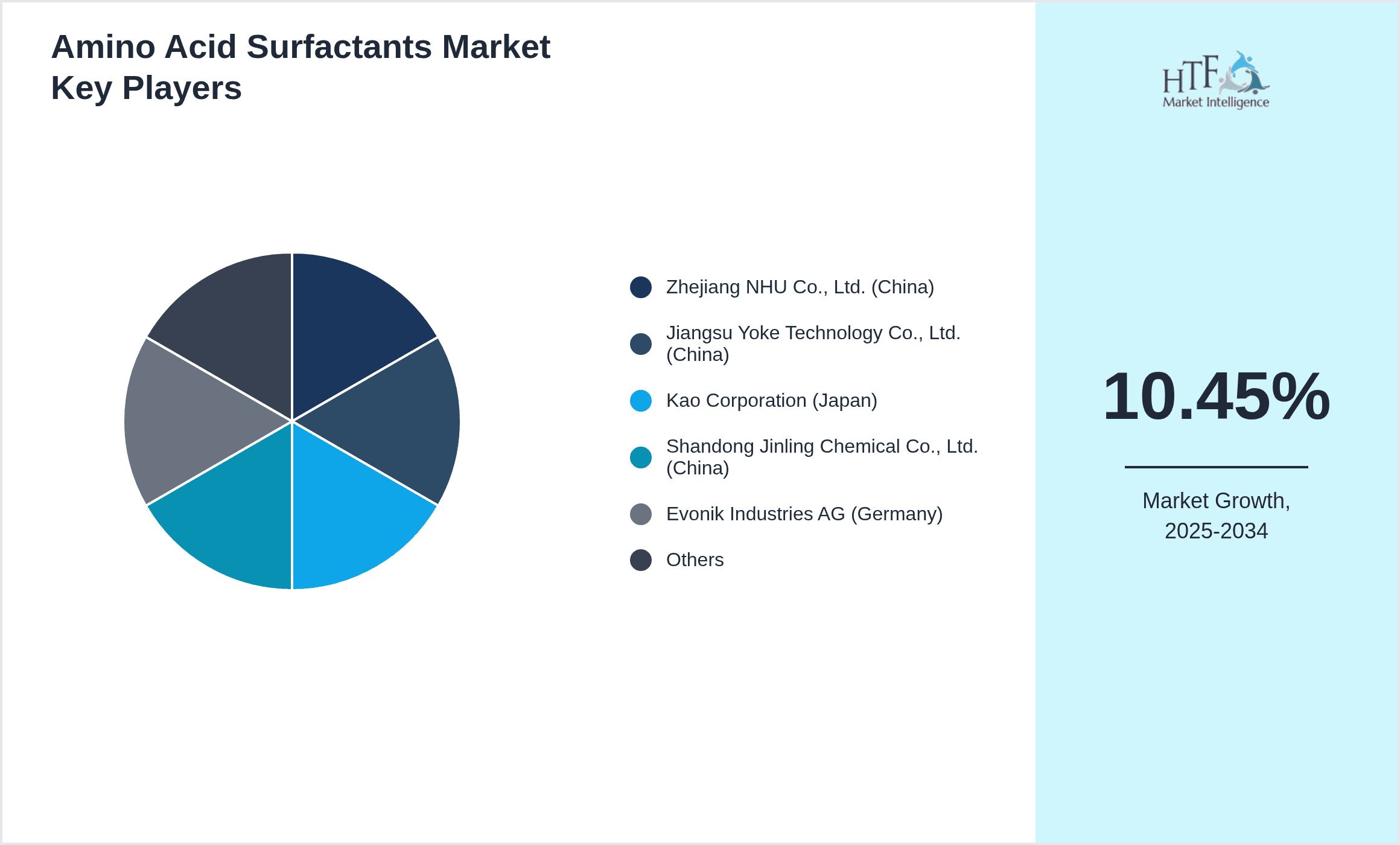
- •Zhejiang NHU Co., Ltd. (China)
- •Jiangsu Yoke Technology Co., Ltd. (China)
- •Kao Corporation (Japan)
- •Shandong Jinling Chemical Co., Ltd. (China)
- •Evonik Industries AG (Germany)
- •Clariant AG (Switzerland)
- •Croda International Plc (United Kingdom)
- •Nouryon (Netherlands)
- •Mitsubishi Chemical Corporation (Japan)
- •BASF SE (Germany)
- •Sinopec Shanghai Petrochemical Co., Ltd. (China)
- •Jiangsu Guotai International Group Guomao Co., Ltd. (China)
- •Solvay S.A. (Belgium)
- •The Dow Chemical Company (United States)
- •Wacker Chemie AG (Germany)
- •Zhejiang Sanmei Chemical Industry Co., Ltd. (China)
- •Tianjin Bohai Chemical Industry Group Co., Ltd. (China)
- •Innospec Inc. (United States)
- •Kraton Corporation (United States)
- •Arkema S.A. (France)
- •Shandong Hualu-Hengsheng Chemical Co., Ltd. (China)
- •Lamberti S.p.A. (Italy)
- •Clorox Company (United States)
- •Miranol AG (Switzerland)
- •P&G Chemicals (United States)
Market Breakdown
- •By Type
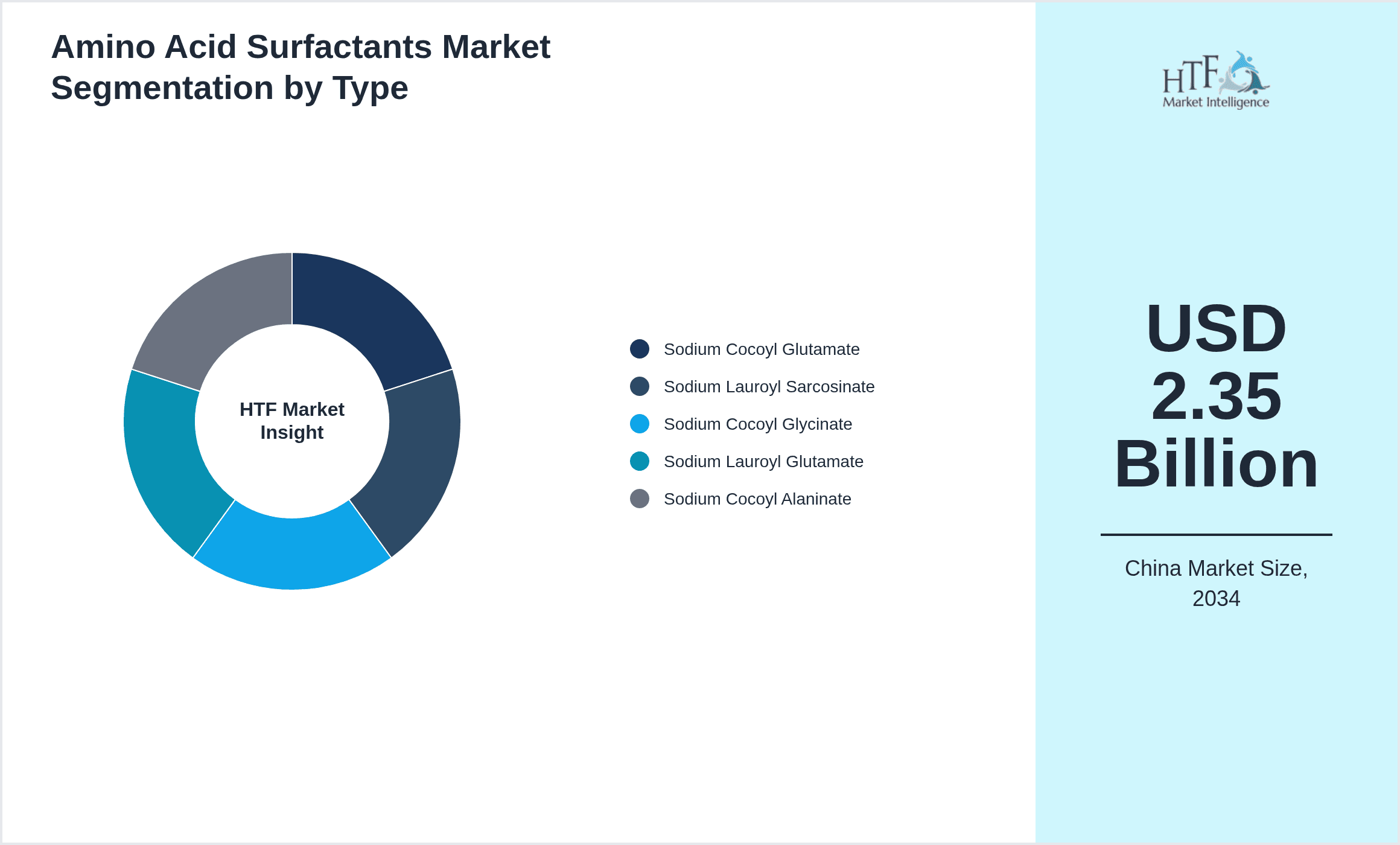
- ◦Sodium Cocoyl Glutamate
- ◦Sodium Lauroyl Sarcosinate
- ◦Sodium Cocoyl Glycinate
- ◦Sodium Lauroyl Glutamate
- ◦Sodium Cocoyl Alaninate
- •By Application
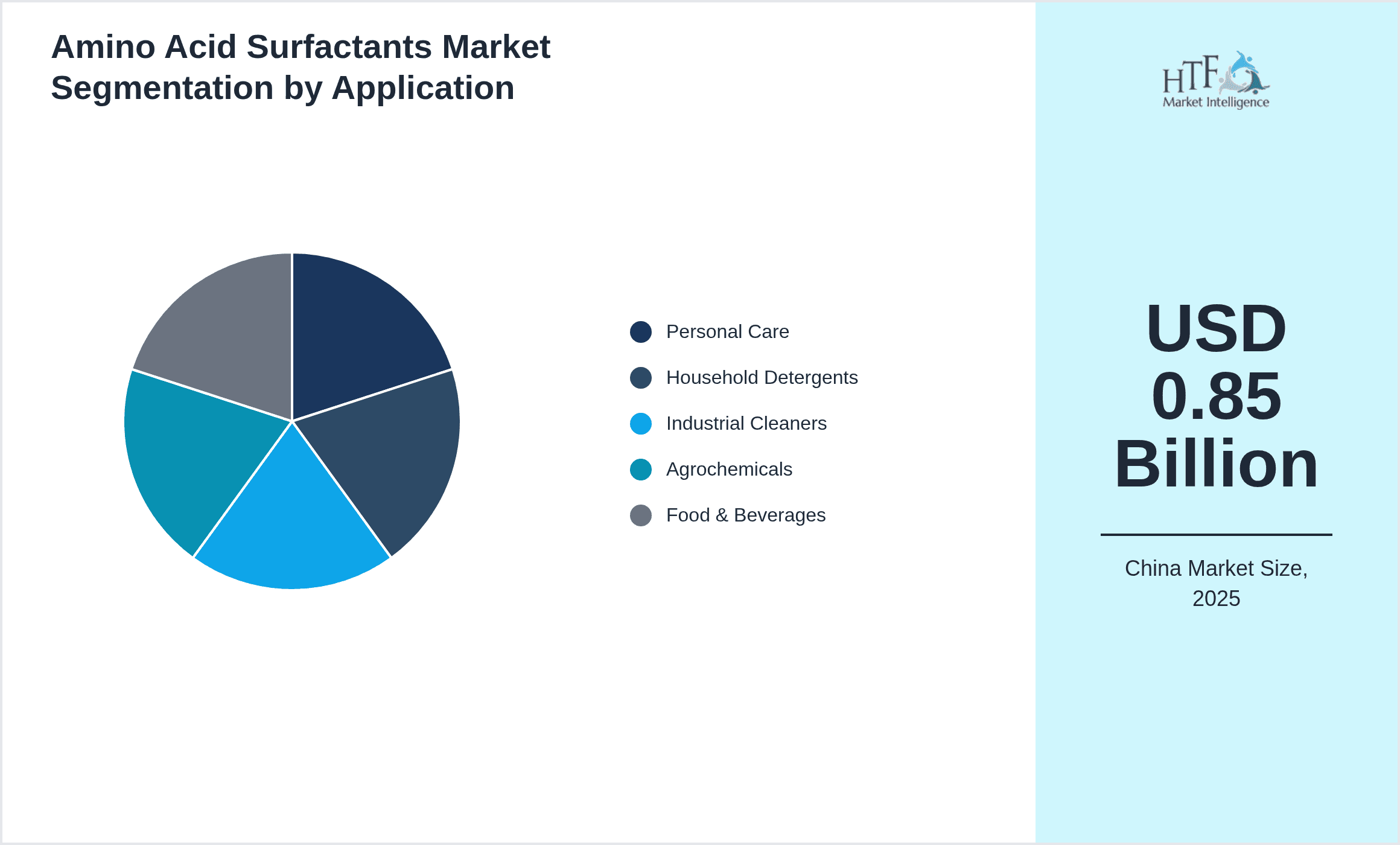
- ◦Personal Care
- ◦Household Detergents
- ◦Industrial Cleaners
- ◦Agrochemicals
- ◦Food & Beverages
- •By End User
- ◦Consumer Goods Manufacturers
- ◦Industrial Manufacturing
- ◦Agricultural Sector
- ◦Food Processing Companies
- •By Distribution Channel
- ◦Direct Sales
- ◦Distributors & Wholesalers
- ◦Online Retail
- ◦Chemical Traders
Growth Drivers
- •Rising demand for eco-friendly and biodegradable surfactants in personal care products is fueling market growth, driven by increasing consumer awareness and government regulations promoting green chemistry.
- •Expansion of the household detergents and industrial cleaning sectors in China is boosting amino acid surfactants consumption, as manufacturers seek mild yet effective cleaning agents.
- •Growing agricultural activities coupled with the need for environmentally safe agrochemical formulations are increasing the use of amino acid surfactants as adjuvants and dispersants.
- •Technological advancements in production processes enabling cost-effective and high-quality amino acid surfactants are attracting new applications across food and beverage industries.
- •Government incentives and stricter regulations on chemical safety and biodegradability are encouraging manufacturers to adopt amino acid surfactants over traditional synthetic surfactants.
Market Trends
- •Increasing incorporation of amino acid surfactants in sulfate-free and mild formulations for personal care products is a significant trend, reflecting consumer preference for gentle, skin-friendly ingredients.
- •Sustainability-driven innovation is prompting companies to develop novel blends combining amino acid surfactants with natural extracts to enhance product efficacy and environmental profile.
- •Digitalization of supply chains and e-commerce platforms is enhancing the reach of amino acid surfactants, especially among small and medium-sized enterprises in China.
- •Collaborations between chemical manufacturers and research institutes are accelerating the development of next-generation amino acid surfactants with improved performance under diverse conditions.
- •Rising trend of localized production hubs in South China and East China is optimizing cost structures and reducing lead times for domestic and export markets.
Market Opportunities
- •Untapped potential in the agrochemical sector for amino acid surfactants as safer adjuvants presents a lucrative growth opportunity due to rising organic farming practices in China.
- •Expansion into niche personal care segments such as baby care and sensitive skin products can drive amino acid surfactants adoption given their mildness and biodegradability.
- •R&D investment focused on tailoring amino acid surfactants for food-grade applications offers scope for market penetration in food processing and preservation industries.
- •Increasing environmental regulations open doors for new product lines meeting stringent biodegradability and toxicity standards, positioning amino acid surfactants as preferred alternatives.
- •Strategic partnerships with multinational consumer goods companies can facilitate technology transfer and scale-up of amino acid surfactant production in China.
Market Challenges
- •High production costs compared to conventional synthetic surfactants limit widespread adoption, especially in price-sensitive segments within China’s detergent market.
- •Raw material supply volatility, especially amino acid feedstocks derived from agricultural sources, poses risks to consistent manufacturing and pricing.
- •Technical challenges in achieving desired performance characteristics for specific industrial applications require ongoing formulation innovation and testing.
- •Regulatory compliance complexity with evolving environmental and safety standards demands substantial investment in quality control and certification.
- •Competition from well-established synthetic surfactants with entrenched supply chains and customer loyalty creates market entry barriers for new amino acid surfactant producers.
Regulatory Framework
- •Between 2023 and 2024, China implemented stricter environmental regulations mandating enhanced biodegradability and toxicity testing for surfactants used in consumer products, impacting amino acid surfactant formulations.
- •The government has introduced new labeling requirements for chemical safety and environmental impact disclosures effective from 2024, increasing transparency for amino acid surfactant manufacturers and end-users.
- •Regulatory incentives promoting green chemistry development have been expanded, encouraging investment in amino acid surfactant R&D and production capacity growth.
- •Specific restrictions on phosphates and other harmful chemical additives in detergents have driven demand for amino acid surfactants as safer alternatives in household cleaning products.
- •Ongoing updates to occupational health and safety regulations require enhanced workplace standards in chemical manufacturing plants, affecting amino acid surfactant producers’ operational protocols.
Industry Insights
- •In March 2024, Zhejiang NHU Co., Ltd. launched a new line of sustainable sodium cocoyl glutamate surfactants targeting the personal care industry, emphasizing improved skin compatibility and environmental safety. This launch reflects the company's strategic focus on innovation aligned with China's green chemistry policies and growing consumer demand for natural ingredients.
- •In November 2023, Jiangsu Yoke Technology Co., Ltd. announced the expansion of its production facility in East China, increasing amino acid surfactant manufacturing capacity by 30% to meet rising industrial and household detergent demand. This move underlines the regional growth focus and competitive positioning within the China market.
Mergers & Acquisitions
- •In August 2024, Shandong Jinling Chemical Co., Ltd. acquired a majority stake in a local amino acid surfactant producer to expand its product portfolio and strengthen its foothold in the personal care and household cleaning sectors. The acquisition enables enhanced R&D capabilities and access to a broader customer base within China’s growing eco-friendly surfactant market.
- •In January 2025, Evonik Industries AG completed the acquisition of a Chinese specialty chemical firm specializing in amino acid surfactants, aiming to leverage local market knowledge and accelerate innovation in biodegradable surfactant solutions. This strategic move aligns with Evonik’s global sustainability goals and expands its presence in the Asia-Pacific region.
Recent Industry News
- •15th January 2025, Zhejiang NHU Co., Ltd. entered a strategic partnership with a leading Chinese personal care brand to co-develop amino acid surfactants optimized for sensitive skin formulations. This collaboration aims to combine NHU's surfactant technology with the brand's consumer insights to accelerate product launches and capture market share. Source: Zhejiang NHU Official Press Release
- •28th February 2025, Clariant AG expanded its amino acid surfactant production capacity in its Shanghai facility by 25%, addressing increasing demand from household detergent manufacturers. The expansion includes implementation of energy-efficient processes reducing carbon footprint. Source: Clariant Corporate News
- •7th March 2025, Jiangsu Yoke Technology Co., Ltd. launched an innovative sodium lauroyl sarcosinate product line with enhanced foaming and biodegradability properties, targeting both industrial cleaners and personal care markets. The product received positive feedback in initial commercial trials. Source: Jiangsu Yoke Technology Announcement
- •22nd April 2025, BASF SE announced a joint venture with a Chinese chemical manufacturer to produce amino acid surfactants locally, aiming to leverage regional supply chains and meet stringent environmental regulations. The venture is expected to start operations by late 2025. Source: BASF Newsroom
Market Statistics
- •Compound Annual Growth Rate (CAGR) by 2034: 10.45%
- •Market Size by 2034: USD 2.35 Billion
- •Market Size in 2025: USD 0.93 Billion
- •Dominating Type: Sodium Cocoyl Glutamate; Next-Following Type: Sodium Lauroyl Sarcosinate
- •Dominating Application: Personal Care; Next-Following Application: Household Detergents
- •Dominating Region: East China; Second-Leading Region: South China
- •Region with Highest Growth Rate: Southwest China
- •Dominating Country: China
Market Share Table
- •Market Share (%) of Dominating vs Followed Type
- ◦Sodium Cocoyl Glutamate: 42%
- ◦Sodium Lauroyl Sarcosinate: 28%
- •Market Share (%) of Dominating vs Followed Application
- ◦Personal Care: 45%
- ◦Household Detergents: 30%
- •Growth Rate (%) of Dominating vs Followed Type
- ◦Sodium Cocoyl Glutamate: 9.6%
- ◦Sodium Lauroyl Sarcosinate: 12.8%
- •Growth Rate (%) of Dominating vs Followed Application
- ◦Personal Care: 10.1%
- ◦Household Detergents: 9.4%
Top Companies Profiled in China Amino Acid Surfactants Market
- •Zhejiang NHU Co., Ltd. (China)
- •Jiangsu Yoke Technology Co., Ltd. (China)
- •Kao Corporation (Japan)
- •Shandong Jinling Chemical Co., Ltd. (China)
- •Evonik Industries AG (Germany)
Regional Outlook
The East China currently holds a significant share of the market, primarily due to several key factors: increasing consumption rates, a burgeoning population, and robust economic momentum. These elements collectively drive demand, positioning this region as a leader in the market. On the other hand, Southwest China is rapidly emerging as the fastest-growing area within the industry. This remarkable growth can be attributed to swift infrastructure development, the expansion of various industrial sectors, and a marked increase in consumer demand. These dynamics make this region a crucial player in shaping future market growth.
In our report, we cover a comprehensive analysis of the following regions and countries:
- North China
- Northeast China
- East China
- South Central China
- Southwest China
- Northwest China
| Feature | Details |
|---|---|
| Base Year Market Size | USD 0.85 Billion |
| Forecast Year Market Size | USD 2.35 Billion |
| CAGR | 10.45% |
| Forecast Period | 2026 to 2033 |
| YoY Growth | 10% |
| Scope of Report | Market is segmented by Type (Sodium Cocoyl Glutamate, Sodium Lauroyl Sarcosinate, Sodium Cocoyl Glycinate, Sodium Lauroyl Glutamate, Sodium Cocoyl Alaninate), Application (Personal Care, Household Detergents, Industrial Cleaners, Agrochemicals, Food & Beverages), End User (Consumer Goods Manufacturers, Industrial Manufacturing, Agricultural Sector, Food Processing Companies), Distribution Channel (Direct Sales, Distributors & Wholesalers, Online Retail, Chemical Traders) |
| Regions Covered | North China, Northeast China, East China, South Central China, Southwest China, Northwest China |
| Key Companies | Zhejiang NHU Co., Ltd. (China), Jiangsu Yoke Technology Co., Ltd. (China), Kao Corporation (Japan), Shandong Jinling Chemical Co., Ltd. (China), Evonik Industries AG (Germany), Clariant AG (Switzerland), Croda International Plc (United Kingdom), Nouryon (Netherlands), Mitsubishi Chemical Corporation (Japan), BASF SE (Germany), Sinopec Shanghai Petrochemical Co., Ltd. (China), Jiangsu Guotai International Group Guomao Co., Ltd. (China), Solvay S.A. (Belgium), The Dow Chemical Company (United States), Wacker Chemie AG (Germany), Zhejiang Sanmei Chemical Industry Co., Ltd. (China), Tianjin Bohai Chemical Industry Group Co., Ltd. (China), Innospec Inc. (United States), Kraton Corporation (United States), Arkema S.A. (France), Shandong Hualu-Hengsheng Chemical Co., Ltd. (China), Lamberti S.p.A. (Italy), Clorox Company (United States), Miranol AG (Switzerland), P&G Chemicals (United States) |
China Amino Acid Surfactants Market Size, Growth & Revenue 2024-2034 - Table of Contents
Frequently Asked Questions (FAQ):
The Compact Track Loaders market is projected to grow at a CAGR of 6.8% from 2025 to 2030, driven by increasing demand in construction and agricultural sectors.
North America currently leads the market with approximately 45% market share, followed by Europe at 28% and Asia-Pacific at 22%. The remaining regions account for 5% of the global market.
Key growth drivers include increasing construction activities, rising demand for versatile equipment in agriculture, technological advancements in track loader design, and growing preference for compact equipment in urban construction projects.