
Europe Vertical Grinding Machine Market - Outlook 2025-2034
Europe Vertical Grinding Machine Market is segmented by Application (Automotive, Aerospace, General Engineering, Tool & Die, Energy), Type (Plain Vertical Grinding Machines, Universal Vertical Grinding Machines, CNC Vertical Grinding Machines, Special Purpose Vertical Grinding Machines), and Geography (Germany, France, The United Kingdom, BeNeLux, Spain, Italy, NORDIC, CEE, Others)
Pricing
Report Overview
Executive Summary
- •The Europe Vertical Grinding Machine market includes machines designed for vertical orientation grinding used in precision industries like automotive, aerospace, and energy. It covers various types including CNC and special purpose machines, focusing on high accuracy and automation.
- •Market growth is propelled by Europe’s industrial modernization, rising demand for automation, and advancements in CNC technologies, with notable expansion in Germany and France.
- •The market’s strategic importance lies in supporting Europe’s manufacturing competitiveness by enabling efficient production, precision engineering, and technological innovation across critical industrial sectors.
Competitive Landscape
Competition in the Europe Vertical Grinding Machine market is intense with a mix of legacy manufacturers and innovative new entrants. Companies emphasize technological innovation, such as CNC integration and automation, to differentiate offerings. Strategic partnerships and customization services are common to meet diverse industrial needs. Market rivalry drives continuous improvements in precision, energy efficiency, and user-friendly controls. Strong regional players maintain dominance through extensive service networks and product portfolios tailored for Europe’s advanced manufacturing sectors. The competitive environment also sees consolidation attempts to expand capabilities and geographical reach, intensifying market dynamics and fostering innovation-led growth.
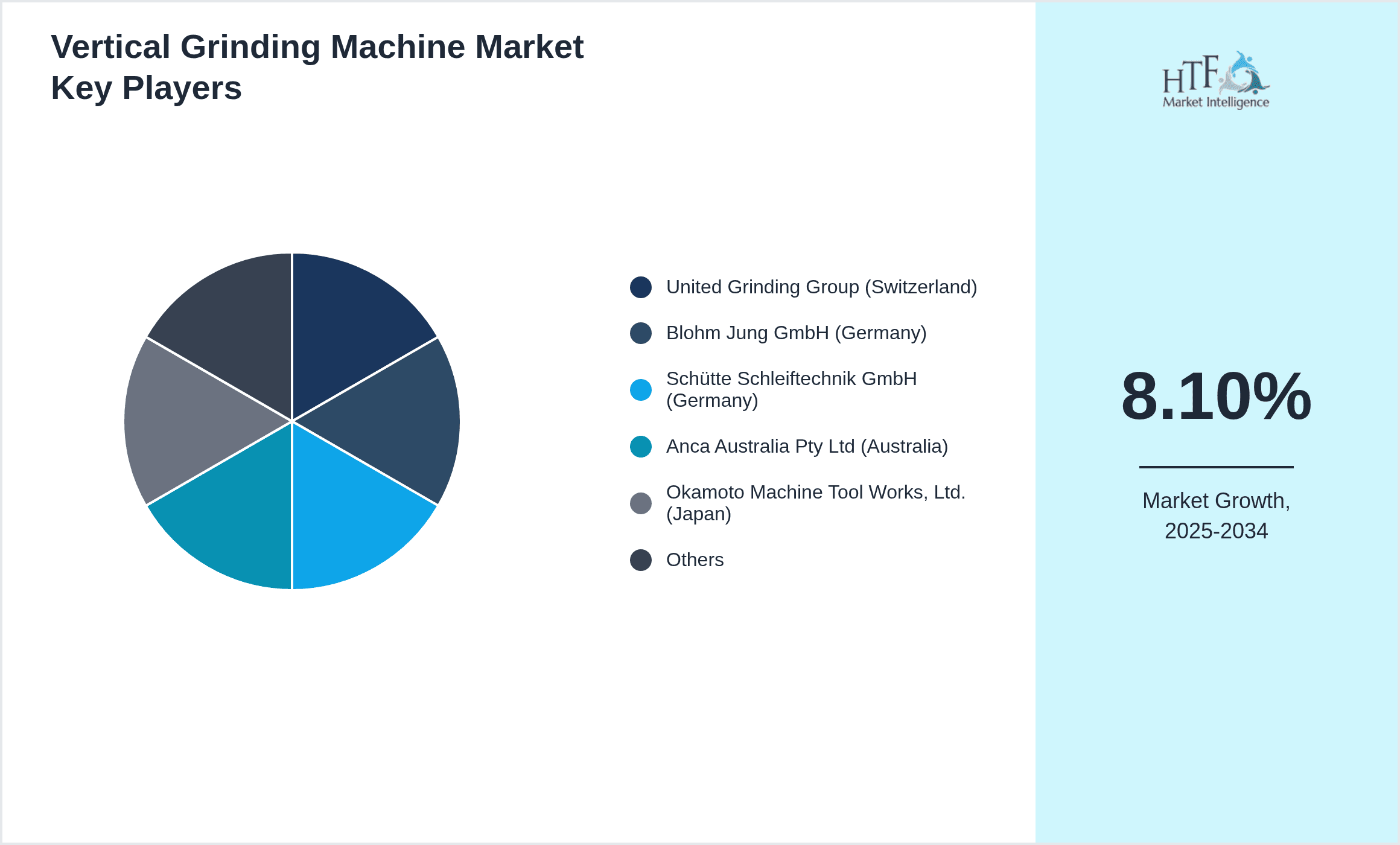
Leading Companies in Europe Vertical Grinding Machine Market
- •United Grinding Group (Switzerland)
- •Blohm Jung GmbH (Germany)
- •Schütte Schleiftechnik GmbH (Germany)
- •Anca Australia Pty Ltd (Australia)
- •Okamoto Machine Tool Works, Ltd. (Japan)
- •Jung GmbH & Co. KG (Germany)
- •Studer (Switzerland)
- •Kellenberger AG (Switzerland)
- •Mägerle AG (Switzerland)
- •Tornos SA (Switzerland)
- •Walter Maschinenbau GmbH (Germany)
- •Koyo Machinery USA Corporation (USA)
- •Toyoda Machinery USA Manufacturing, Inc. (Japan)
- •Fritz Studer AG (Switzerland)
- •Heimatec AG (Switzerland)
- •Toshiba Machine Co., Ltd. (Japan)
- •Nakamura-Tome Precision Industry Co., Ltd. (Japan)
- •Harig Machine Co., Inc. (USA)
- •Kellenberger AG (Switzerland)
- •Magnetic Analysis Corporation (USA)
- •Schaudt Mikrosa (Germany)
- •Mikrosa AG (Switzerland)
- •Exeron Maschinenbau GmbH (Germany)
- •Emag GmbH & Co. KG (Germany)
- •Mikron Group (Switzerland)
Market Breakdown
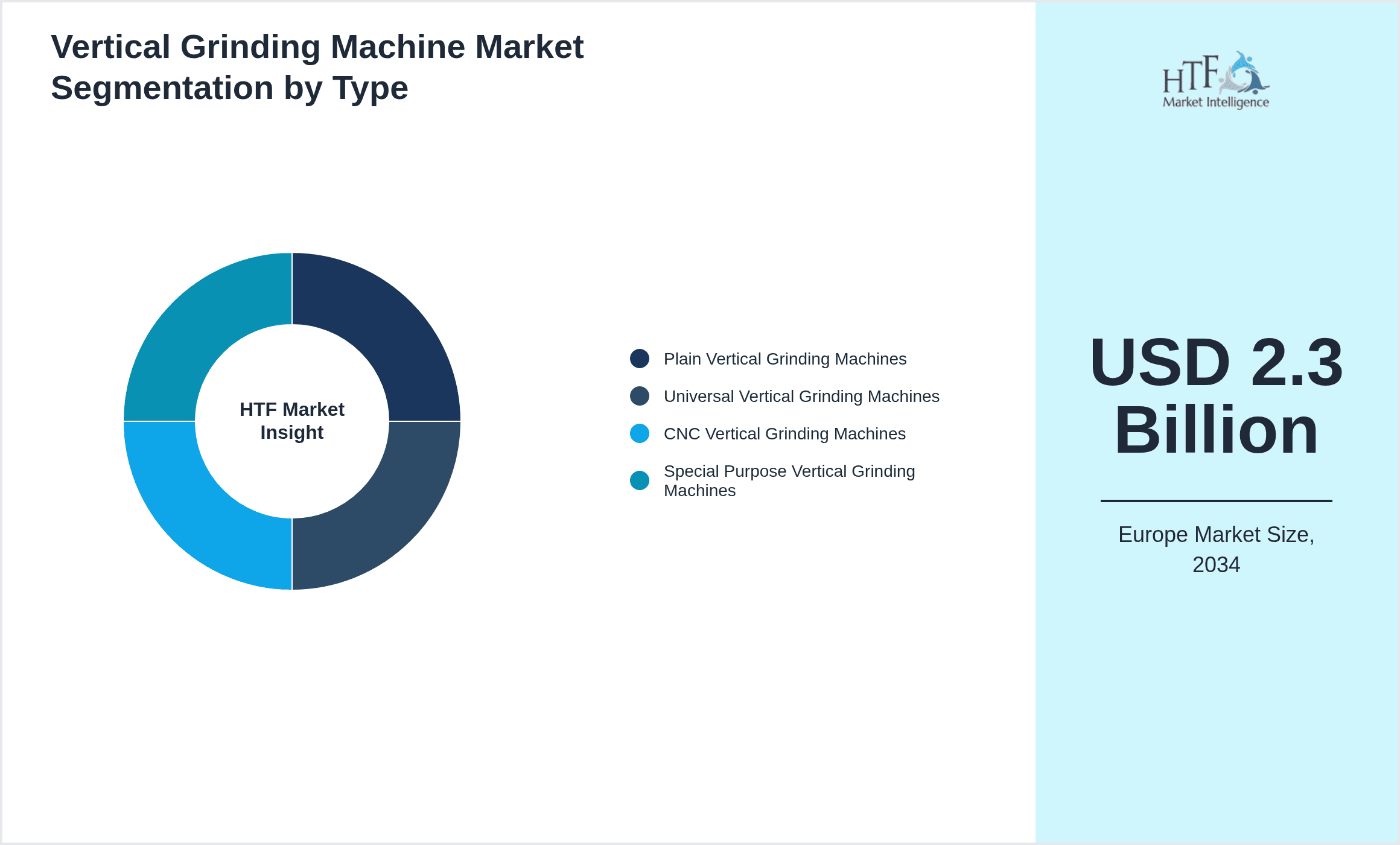
- •By Type
- ◦Plain Vertical Grinding Machines
- ◦Universal Vertical Grinding Machines
- ◦CNC Vertical Grinding Machines
- ◦Special Purpose Vertical Grinding Machines
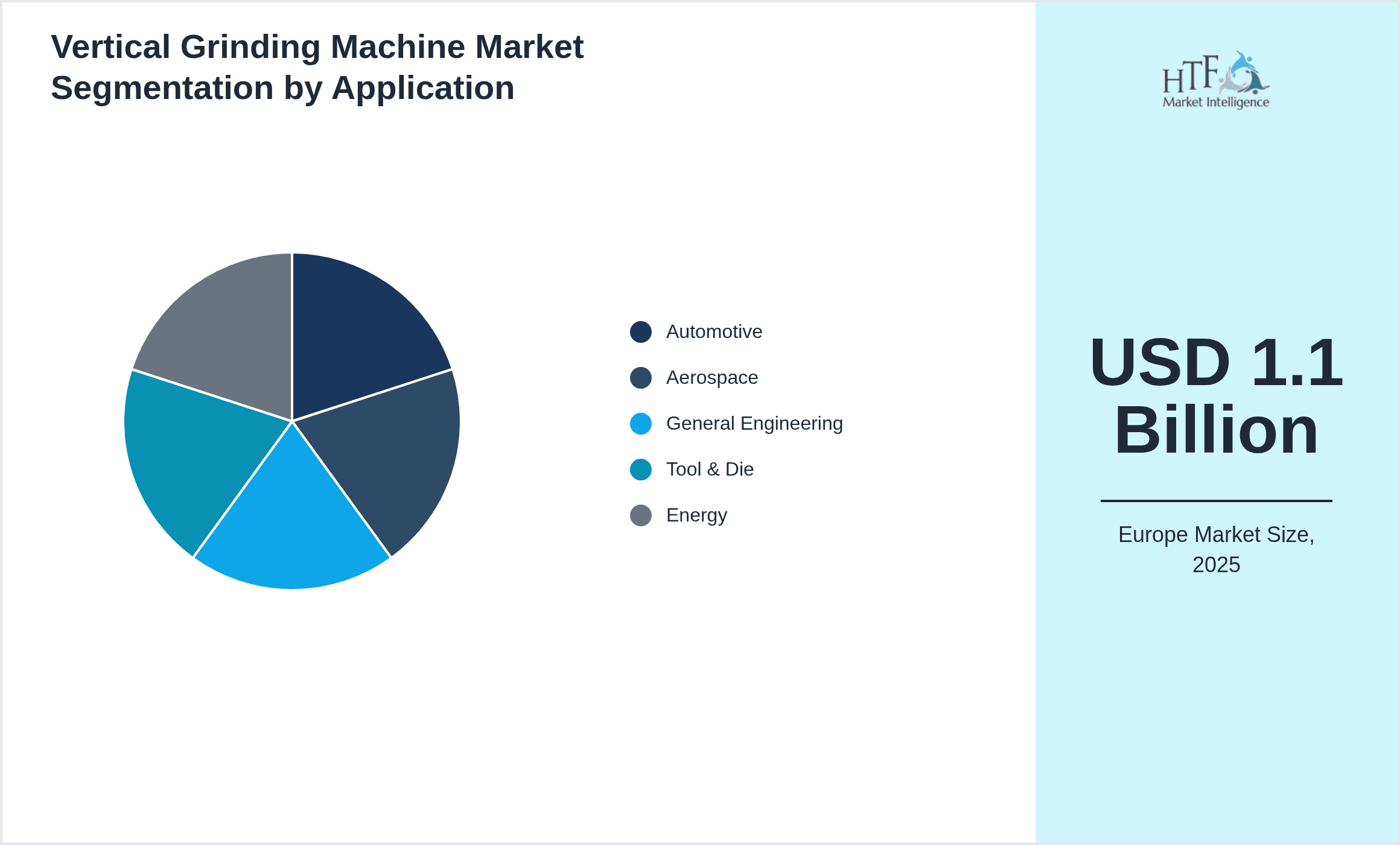
- •By Application
- ◦Automotive
- ◦Aerospace
- ◦General Engineering
- ◦Tool & Die
- ◦Energy
- •By End User
- ◦OEM Manufacturing
- ◦Aftermarket Services
- ◦Contract Machining
- ◦Maintenance and Repair
- •By Distribution Channel
- ◦Direct Sales
- ◦Dealerships and Distributors
- ◦Online Sales
Growth Drivers
- •Increasing adoption of CNC vertical grinding machines is driving precision and automation, enabling manufacturers to achieve tighter tolerances and higher throughput across automotive and aerospace sectors.
- •Europe’s focus on advanced manufacturing and Industry 4.0 initiatives fuels demand for technologically advanced vertical grinding machines, integrating digital controls and automation.
- •Rising need for energy-efficient and environmentally friendly grinding machines aligns with Europe’s stringent environmental regulations, encouraging adoption of newer machine types.
- •Growth in automotive production, especially electric vehicles, requires precision machining capabilities that vertical grinding machines provide, boosting overall market demand.
- •Expansion of aerospace manufacturing hubs in Germany, France, and the UK increases demand for specialized vertical grinding machines capable of handling complex components.
Market Trends
- •Integration of IoT and smart sensors in vertical grinding machines is enhancing predictive maintenance and operational efficiency across European manufacturing plants.
- •Shift towards CNC and special purpose vertical grinding machines reflects increasing demand for customization and flexibility in machining complex geometries.
- •Sustainability trends are leading manufacturers to develop machines with reduced energy consumption and eco-friendly coolants, aligning with European Green Deal objectives.
- •Collaborations between machine tool manufacturers and software providers are fostering the development of integrated digital machining ecosystems, improving process control.
- •Growing preference for automation and robotic loading systems with vertical grinding machines is improving cycle times and reducing labor dependency.
Market Opportunities
- •Emerging demand for special purpose vertical grinding machines in aerospace and energy sectors offers growth avenues through niche product development and customization.
- •Expansion into Eastern European manufacturing hubs presents untapped markets with increasing industrialization and investment in machining infrastructure.
- •Digital transformation of legacy grinding machines through retrofitting with CNC controls and IoT connectivity enables market players to offer value-added services.
- •Collaborations with automotive OEMs to develop vertical grinding solutions tailored for electric vehicle components can boost market penetration.
- •Increasing aftermarket services demand for maintenance and upgrades of existing vertical grinding machines opens recurring revenue streams.
Market Challenges
- •High capital expenditure requirements for advanced vertical grinding machines limit adoption by small and medium-sized enterprises across Europe.
- •Complexity in integrating vertical grinding machines into existing production lines poses operational challenges and requires skilled labor.
- •Supply chain disruptions, including semiconductor shortages for CNC controls, intermittently affect machine availability and delivery timelines.
- •Stringent regulatory compliance related to machine safety, emissions, and energy efficiency increases development and certification costs for manufacturers.
- •Competition from low-cost machine imports challenges pricing strategies of European manufacturers focusing on quality and precision.
Regulatory Framework
- •Between 2020 and 2025, the EU Machinery Directive 2006/42/EC underwent updates to strengthen safety requirements, impacting vertical grinding machine design and certification processes.
- •The EU’s Ecodesign Directive introduced mandatory energy efficiency standards for industrial machinery, pressuring manufacturers to innovate low-consumption vertical grinders.
- •REACH regulations continue to restrict hazardous substances in machine components and fluids, necessitating reformulation of coolants and materials used in grinding machines.
- •Country-specific regulations, particularly in Germany and France, enforce noise emission limits and workplace safety standards that affect vertical grinding machine deployment.
- •Government incentives in several European countries promote adoption of Industry 4.0 compliant machinery, supporting investments in CNC and automated vertical grinding machines.
Industry Insights
- •In February 2024, United Grinding Group launched an advanced CNC vertical grinding machine featuring enhanced automation and IoT integration, aimed at boosting productivity in automotive manufacturing. The machine offers real-time monitoring and predictive maintenance capabilities, supporting Industry 4.0 adoption in Europe’s manufacturing hubs. This launch underscores the increasing demand for digitally connected precision machining equipment.
- •In August 2023, Blohm Jung GmbH introduced a special purpose vertical grinding machine tailored for aerospace component machining, featuring improved surface finish and reduced cycle times. The innovation targets the growing aerospace manufacturing market in Germany and neighboring countries, emphasizing high precision and operational efficiency.
Mergers & Acquisitions
- •In April 2024, United Grinding Group completed the acquisition of a Swiss-based CNC controls technology provider, enhancing its vertical grinding machine portfolio with advanced digital capabilities. This strategic move aims to strengthen its position in Europe by integrating cutting-edge automation and IoT features, meeting rising demand for smart manufacturing solutions.
- •In November 2023, Schütte Schleiftechnik GmbH acquired a German tooling specialist to expand its service and customization offerings for vertical grinding machines. This acquisition enables tailored machining solutions for key industries like automotive and aerospace, reinforcing Schütte’s competitive stance in the European market.
Recent Industry News
- •15th January 2025, United Grinding Group announced a strategic partnership with a leading European automation firm to develop integrated robotic loading systems for vertical grinding machines. This collaboration aims to enhance production efficiency and reduce labor costs for automotive manufacturers. The pilot projects started in Germany and are expected to expand across Europe throughout 2025. Source: United Grinding Official Press Release
- •22nd March 2025, Blohm Jung GmbH expanded its manufacturing facility in Bavaria, Germany, increasing its production capacity for CNC vertical grinding machines by 30%. This expansion responds to growing orders from aerospace and energy sectors, ensuring faster delivery and improved customization capabilities. The company also plans to launch training programs for skilled operators. Source: Blohm Jung Corporate News
- •10th May 2025, Schütte Schleiftechnik GmbH launched a new line of eco-friendly vertical grinding machines featuring advanced coolant recycling systems and energy-saving drives. The product launch aligns with Europe’s environmental policies and targets manufacturers seeking sustainable machining solutions. Early adopters include several automotive tier-1 suppliers. Source: Schütte Schleiftechnik Product Announcement
- •5th July 2025, Emag GmbH & Co. KG secured a multi-year contract with a major European aerospace manufacturer to supply special purpose vertical grinding machines customized for turbine blade production. This deal strengthens Emag’s footprint in the high-precision aerospace machining market and showcases its engineering capabilities. Source: Emag Corporate Communications
Regional Outlook
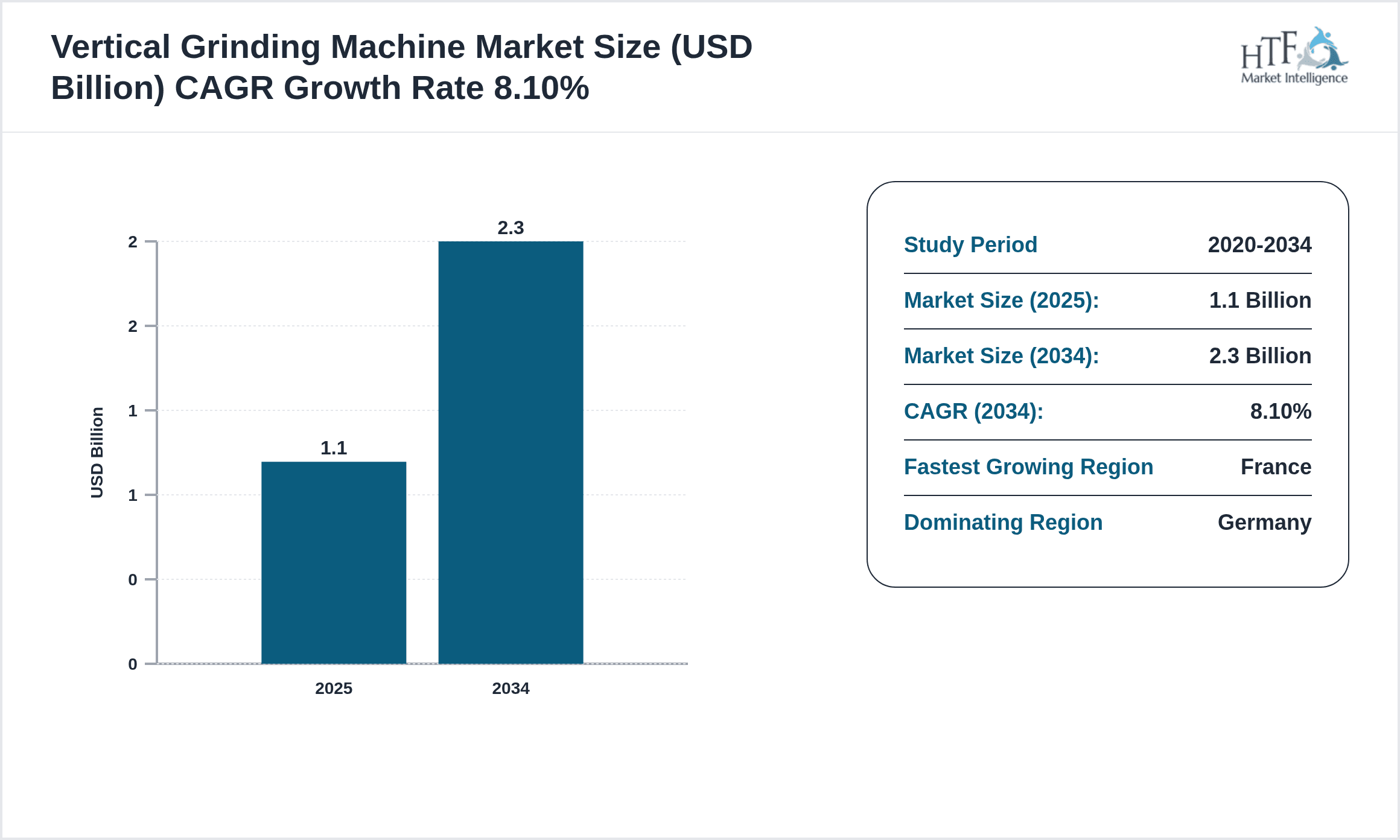
The Germany currently holds a significant share of the market, primarily due to several key factors: increasing consumption rates, a burgeoning population, and robust economic momentum. These elements collectively drive demand, positioning this region as a leader in the market. On the other hand, France is rapidly emerging as the fastest-growing area within the industry. This remarkable growth can be attributed to swift infrastructure development, the expansion of various industrial sectors, and a marked increase in consumer demand. These dynamics make this region a crucial player in shaping future market growth.
In our report, we cover a comprehensive analysis of the following regions and countries:
- Germany
- France
- The United Kingdom
- BeNeLux
- Spain
- Italy
- NORDIC
- CEE
- Others
| Feature | Details |
|---|---|
| Base Year Market Size | USD 1.1 Billion |
| Forecast Year Market Size | USD 2.3 Billion |
| CAGR | 8.1% |
| Forecast Period | 2026 to 2033 |
| YoY Growth | 8% |
| Regions Covered | Germany, France, The United Kingdom, BeNeLux, Spain, Italy, NORDIC, CEE, Others |
| Key Companies | United Grinding Group (Switzerland), Blohm Jung GmbH (Germany), Schütte Schleiftechnik GmbH (Germany), Anca Australia Pty Ltd (Australia), Okamoto Machine Tool Works, Ltd. (Japan), Jung GmbH & Co. KG (Germany), Studer (Switzerland), Kellenberger AG (Switzerland), Mägerle AG (Switzerland), Tornos SA (Switzerland), Walter Maschinenbau GmbH (Germany), Koyo Machinery USA Corporation (USA), Toyoda Machinery USA Manufacturing, Inc. (Japan), Fritz Studer AG (Switzerland), Heimatec AG (Switzerland), Toshiba Machine Co., Ltd. (Japan), Nakamura-Tome Precision Industry Co., Ltd. (Japan), Harig Machine Co., Inc. (USA), Kellenberger AG (Switzerland), Magnetic Analysis Corporation (USA), Schaudt Mikrosa (Germany), Mikrosa AG (Switzerland), Exeron Maschinenbau GmbH (Germany), Emag GmbH & Co. KG (Germany), Mikron Group (Switzerland) |
Europe Vertical Grinding Machine Market - Outlook 2025-2034 - Table of Contents
Frequently Asked Questions (FAQ):
The Compact Track Loaders market is projected to grow at a CAGR of 6.8% from 2025 to 2030, driven by increasing demand in construction and agricultural sectors.
North America currently leads the market with approximately 45% market share, followed by Europe at 28% and Asia-Pacific at 22%. The remaining regions account for 5% of the global market.
Key growth drivers include increasing construction activities, rising demand for versatile equipment in agriculture, technological advancements in track loader design, and growing preference for compact equipment in urban construction projects.