
South America Spoil Detection-Based Smart Label Market Size, Growth & Revenue 2024-2034
South America Spoil Detection-Based Smart Label Market is segmented by Type (Time-Temperature Indicators, Gas Sensors, Chemical Sensors, Optical Sensors), Application (Food Packaging, Pharmaceutical Packaging, Logistics and Cold Chain, Retail), and Geography (Brazil, Argentina, Chile, Peru, Colombia, Rest of South America)
Pricing
Report Overview
Executive Summary
- •The South America spoil detection-based smart label market includes sensor-embedded labels designed to monitor freshness of food and pharmaceuticals, ensuring quality and safety across supply chains.
- •Key highlights include rapid adoption of time-temperature indicators and gas sensors, driven by food safety regulations and demand for cold chain transparency.
- •Strategically, these smart labels offer value by reducing spoilage waste, enhancing consumer trust, and enabling real-time supply chain monitoring for stakeholders across South America.
Competitive Landscape
The South America spoil detection-based smart label market is characterized by moderate competition with key players focusing on innovation in sensor accuracy and label integration. Market leaders differentiate through advanced technology partnerships and regional distribution networks. Competition intensifies as companies invest in R&D for multi-functional labels combining spoilage detection with authentication features. Strategic collaborations and localized manufacturing provide competitive advantages, while emerging startups introduce niche innovations. The rivalry fosters continuous product enhancements, cost optimization, and scalability to meet diverse application needs. Market positioning hinges on regulatory compliance, pricing strategies, and after-sales support, with regional adaptation playing a vital role in capturing expanding demand across varied South American countries.
Leading Companies in South America Spoil Detection-Based Smart Label Market
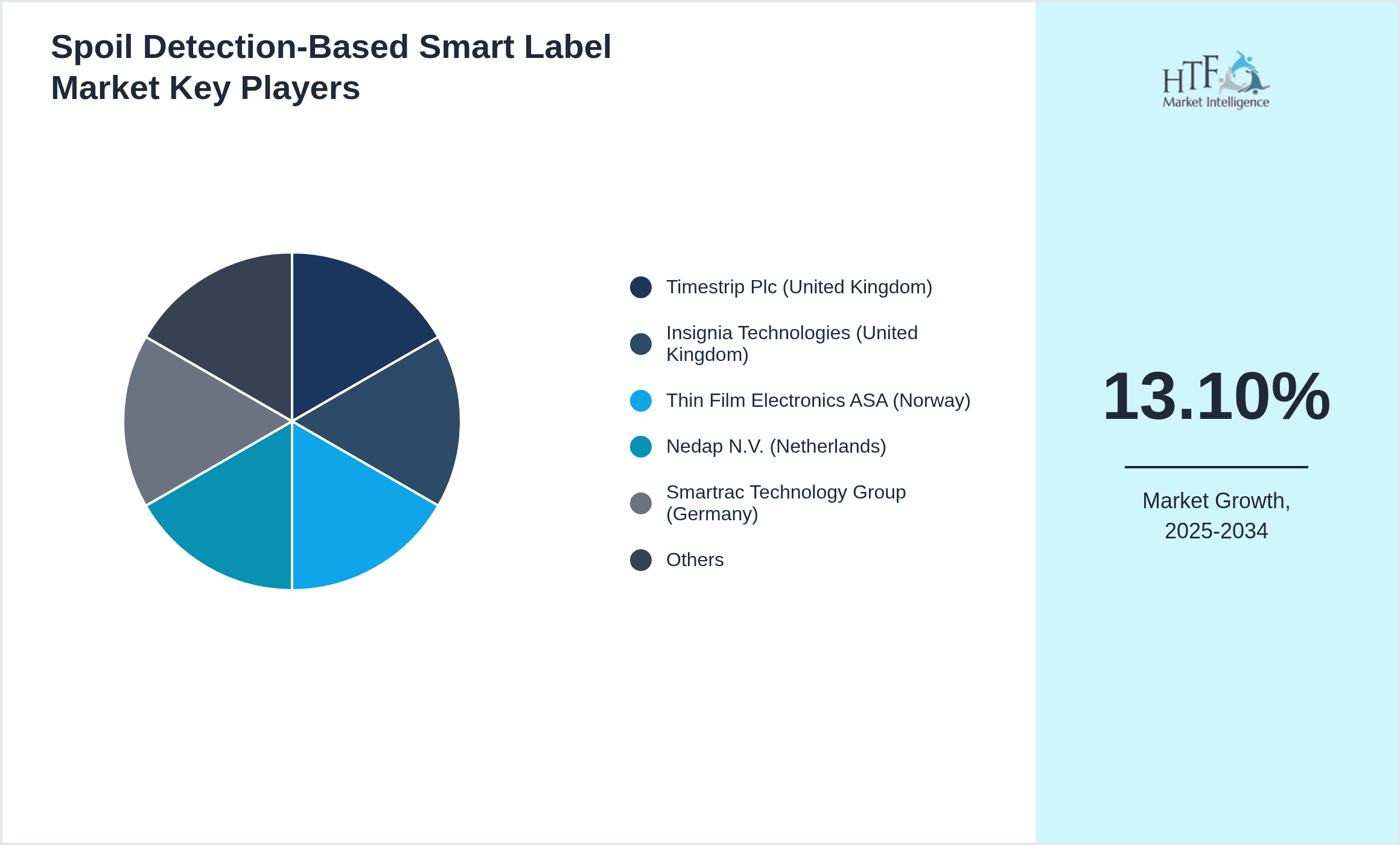
- •Timestrip Plc (United Kingdom)
- •Insignia Technologies (United Kingdom)
- •Thin Film Electronics ASA (Norway)
- •Nedap N.V. (Netherlands)
- •Smartrac Technology Group (Germany)
- •BlakBear (Brazil)
- •TagSense (Chile)
- •Sensitech Inc. (United States)
- •Hibou Corp. (Argentina)
- •Checkpoint Systems Inc. (United States)
- •Monnit Corporation (United States)
- •Thin Film Electronics ASA (Norway)
- •FreshPoint Technologies (Brazil)
- •Cold Chain Technologies (United States)
- •C-Therm Technologies Ltd. (Canada)
- •Zebra Technologies Corporation (United States)
- •Evigence Sensors (United States)
- •Smart Label Solutions (Argentina)
- •Avery Dennison Corporation (United States)
- •Thin Film Electronics ASA (Norway)
- •OptoCeutics, Inc. (United States)
- •SensorUp, Inc. (Canada)
- •TSC Auto ID Technology Co., Ltd. (Taiwan)
- •Amcor plc (Australia)
- •Honeywell International Inc. (United States)
Market Breakdown
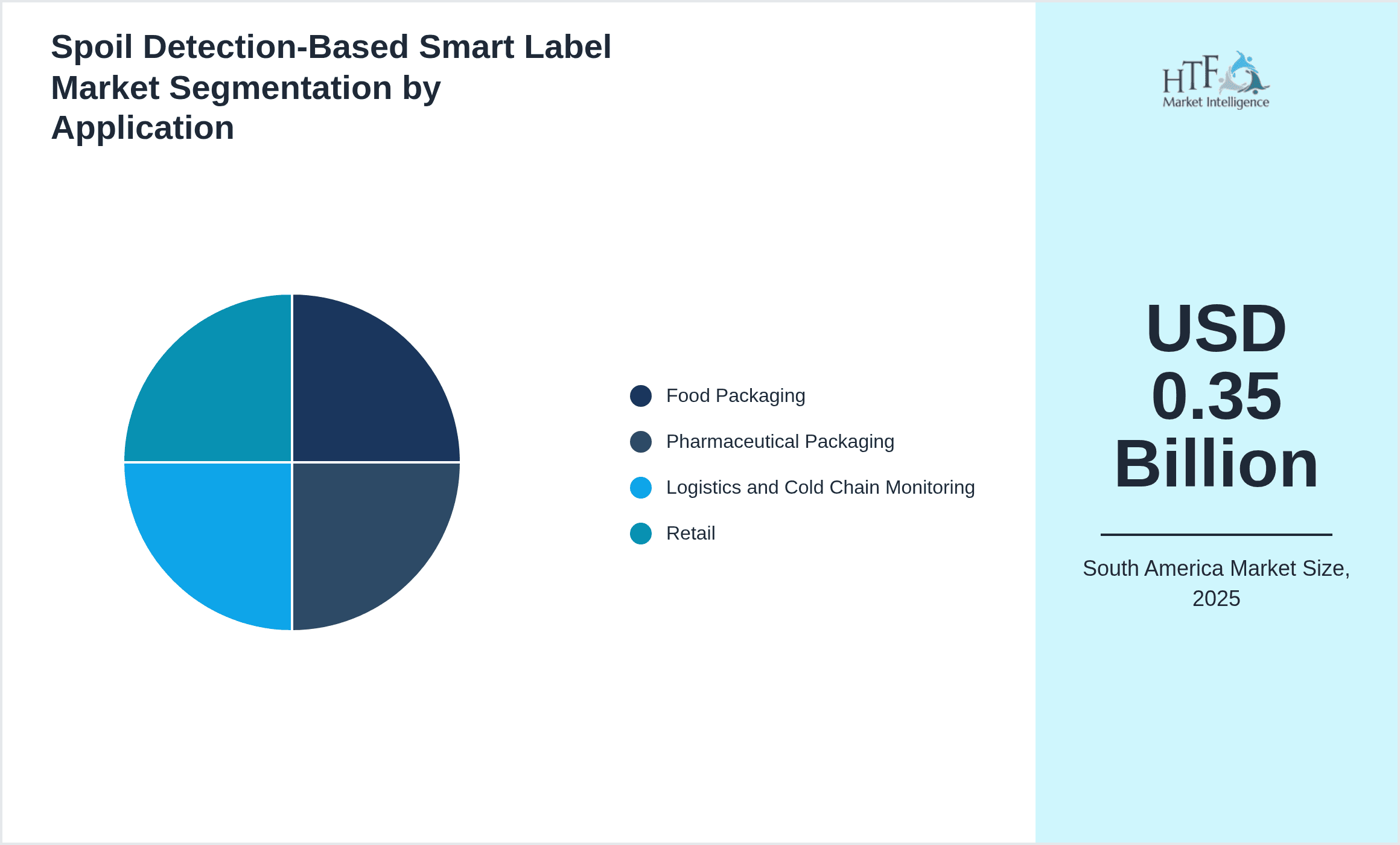
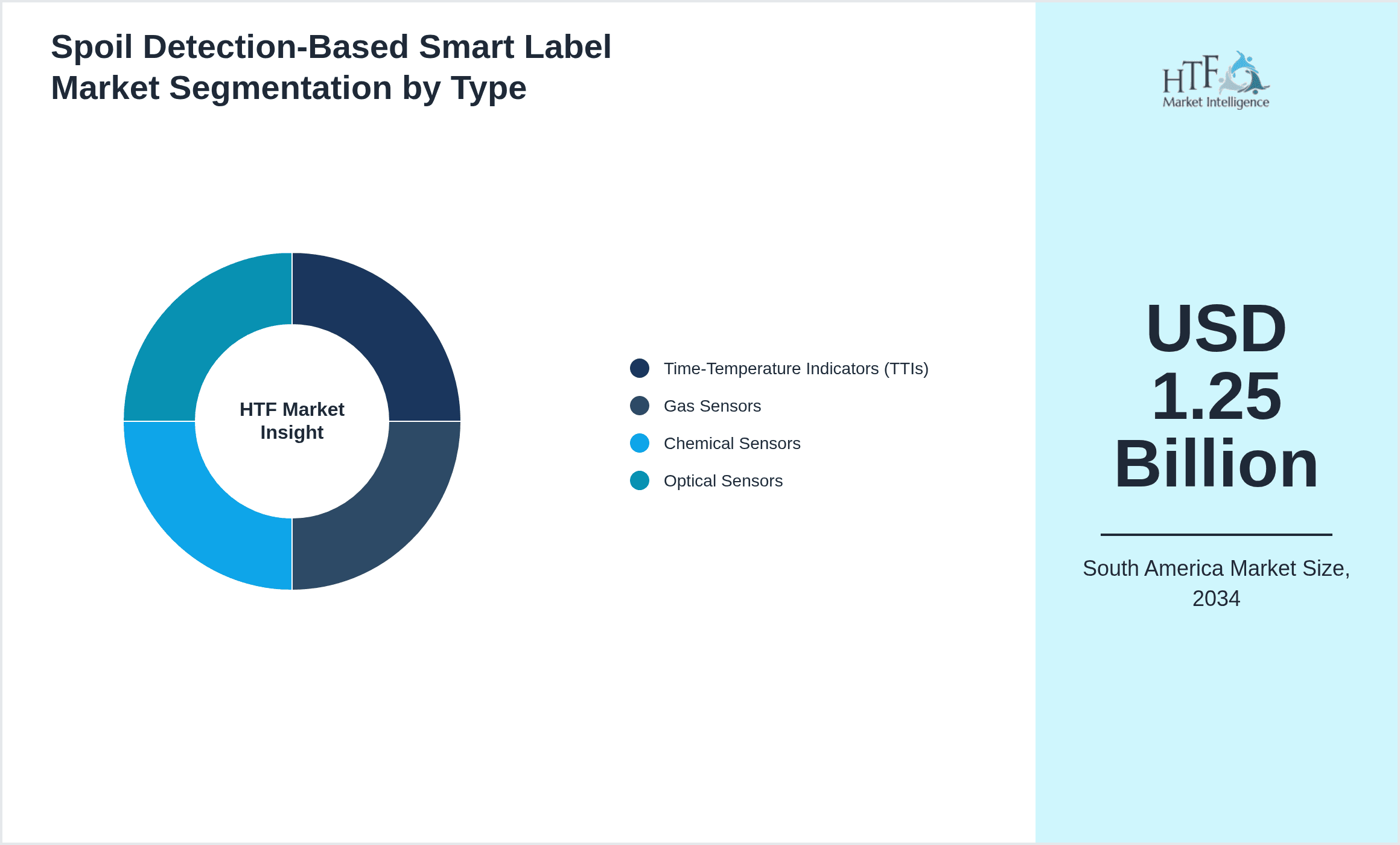
- •By Type
- ◦Time-Temperature Indicators (TTIs)
- ◦Gas Sensors
- ◦Chemical Sensors
- ◦Optical Sensors
- •By Application
- ◦Food Packaging
- ◦Pharmaceutical Packaging
- ◦Logistics and Cold Chain Monitoring
- ◦Retail
- •By End User
- ◦Food Manufacturers
- ◦Pharmaceutical Companies
- ◦Cold Chain Logistics Providers
- ◦Retail Chains
- •By Distribution Channel
- ◦Direct Sales
- ◦Distributors
- ◦Online Platforms
Growth Drivers
- •Increasing demand for food safety and quality assurance across South America drives adoption of spoil detection smart labels, especially in perishable food sectors like meat and dairy.
- •Stringent government regulations in Brazil and Argentina mandating cold chain monitoring promote market growth by enforcing compliance with freshness and spoilage standards.
- •Rising pharmaceutical exports from South America necessitate advanced packaging solutions with spoil detection to ensure drug efficacy during transport and storage.
- •Technological advancements in sensor miniaturization and cost reductions enable wider integration of smart labels in various packaging formats.
- •Increased consumer awareness about food spoilage and demand for transparency encourage retailers to implement smart labeling solutions to build trust.
Market Trends
- •Integration of IoT connectivity with spoil detection labels is emerging, enabling real-time remote monitoring and data analytics for supply chain optimization.
- •Biodegradable and eco-friendly smart labels are gaining traction in South America, aligning with sustainability goals of food and pharmaceutical industries.
- •Collaboration between sensor manufacturers and packaging companies is accelerating product innovation to offer multi-functional labels combining spoilage detection and anti-counterfeiting.
- •Adoption of AI-driven predictive models linked with sensor data improves spoilage forecasting and inventory management efficiency.
- •Expansion of cold chain infrastructure in urban and rural areas supports higher smart label uptake to maintain product integrity during transit.
Market Opportunities
- •Untapped potential in small and medium-sized food producers in countries like Peru and Colombia offers scope for tailored smart label solutions suited to local supply chains.
- •Rising e-commerce of perishables in South America creates demand for advanced spoil detection labels integrated with digital tracking systems.
- •Partnerships with cold chain logistics companies can enable bundled offerings combining temperature-controlled transport and smart labeling services.
- •Innovation in multi-parameter sensors capable of detecting multiple spoilage indicators simultaneously can open new application segments in pharmaceuticals and food.
- •Government incentives promoting food waste reduction support adoption of smart labels as an effective tool for monitoring product freshness and reducing losses.
Market Challenges
- •High initial costs of smart label implementation deter adoption among small-scale producers and retailers with limited budgets.
- •Lack of standardized regulations across South American countries creates complexity in compliance and limits cross-border market expansion.
- •Technical challenges in sensor durability and reliability in harsh environmental conditions affect label performance consistency.
- •Limited awareness and education regarding benefits and usage of spoil detection smart labels among end users restrict market penetration.
- •Integration issues with existing supply chain IT systems and lack of interoperability hinder seamless adoption of smart label technologies.
Regulatory Framework
- •Between 2020 and 2024, Brazil implemented ANVISA guidelines mandating temperature monitoring for cold chain pharmaceuticals, fostering smart label adoption for compliance.
- •Argentina's SENASA introduced stricter food safety regulations in 2022 requiring traceability and freshness monitoring for perishable exports, boosting market demand.
- •Chile enacted environmental standards in 2023 promoting biodegradable packaging solutions, encouraging development of eco-friendly smart labels.
- •Regional trade agreements in Mercosur emphasize harmonization of quality control standards, facilitating cross-border acceptance of spoil detection technologies.
- •Government incentives in Peru for reducing food waste through advanced packaging technologies support market growth and innovation.
Industry Insights
The South America spoil detection-based smart label market is witnessing rapid innovation with companies focusing on integrating multi-sensor capabilities to enhance spoilage accuracy. In March 2024, TagSense launched a new gas sensor label tailored for tropical climates prevalent in the region, improving detection sensitivity. Additionally, in November 2023, BlakBear introduced biodegradable time-temperature indicator labels for meat packaging that align with sustainability trends while maintaining product safety standards. These advancements reflect the market's drive towards combining environmental concerns with technological efficiency, supporting supply chain transparency and regulatory compliance across South America.
Mergers & Acquisitions
- •In August 2024, Sensitech Inc. completed the acquisition of FreshPoint Technologies, a Brazil-based smart label innovator specializing in chemical sensors for food packaging. This strategic move enhances Sensitech's footprint in South America and expands its product portfolio with regionally adapted sensor technology, facilitating broader adoption of spoil detection labels in the food supply chain. The acquisition is expected to accelerate R&D and improve service capabilities in key markets such as Brazil and Argentina.
- •In February 2025, Thin Film Electronics ASA acquired a majority stake in Smart Label Solutions, an Argentina-based company specializing in optical sensor smart labels for pharmaceuticals. This acquisition strengthens Thin Film's position in the South American pharmaceutical packaging sector by integrating advanced optical sensing technology, enabling more precise spoilage detection and compliance with stringent regulatory requirements. The deal supports Thin Film's expansion strategy focused on emerging markets.
Recent Industry News
- •15th January 2025, Timestrip Plc announced the launch of a next-generation time-temperature indicator smart label designed specifically for tropical climates in South America. This label features enhanced adhesive properties and improved sensor accuracy, ensuring reliable spoilage detection in high humidity conditions. The product aims to reduce food waste and improve cold chain transparency, targeting major food producers and retailers in Brazil and Chile. Source: Timestrip Plc Official Website.
- •10th March 2025, Insignia Technologies partnered with Cold Chain Technologies to integrate gas sensor smart labels into pharmaceutical cold chain logistics across Argentina and Peru. The collaboration focuses on real-time monitoring and data analytics to ensure drug safety during transport, aligning with new government regulations. This partnership is expected to improve supply chain visibility and reduce product loss. Source: Industry Publication.
- •20th May 2025, BlakBear expanded its manufacturing facility in Brazil to increase production capacity of biodegradable spoil detection-based smart labels. The expansion supports rising demand from food packaging companies and aligns with environmental regulations promoting sustainable packaging. The company also announced plans to develop new multi-sensor labels for the pharmaceutical sector. Source: BlakBear Press Release.
- •5th July 2025, TagSense unveiled a cloud-connected spoil detection smart label platform integrating IoT capabilities for real-time monitoring across South American cold chains. The system enables predictive spoilage alerts and inventory optimization for retailers and logistics providers. This innovation represents a significant step towards digital transformation in the region's packaging industry. Source: TagSense Official Announcement.
Regional Outlook
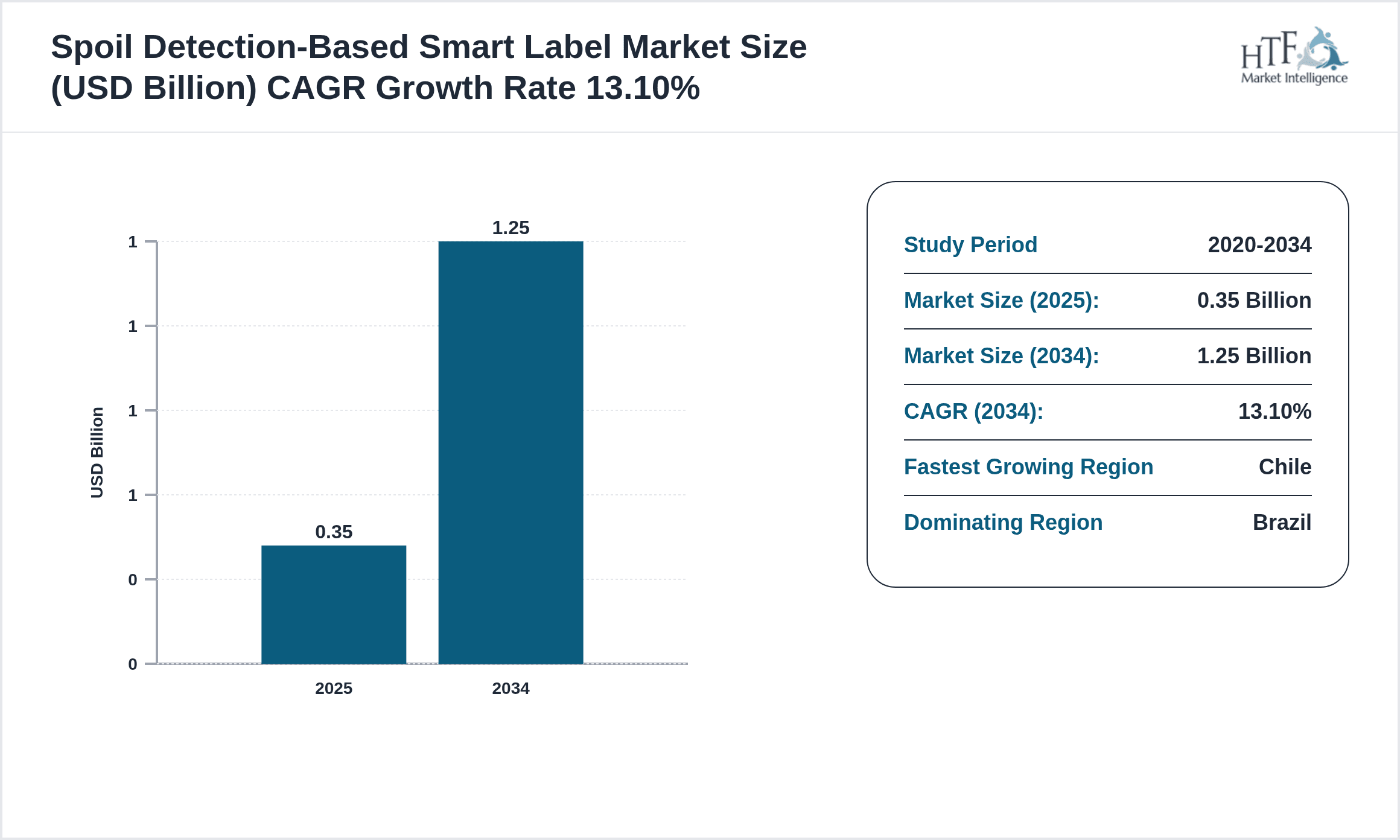
The Brazil currently holds a significant share of the market, primarily due to several key factors: increasing consumption rates, a burgeoning population, and robust economic momentum. These elements collectively drive demand, positioning this region as a leader in the market. On the other hand, Chile is rapidly emerging as the fastest-growing area within the industry. This remarkable growth can be attributed to swift infrastructure development, the expansion of various industrial sectors, and a marked increase in consumer demand. These dynamics make this region a crucial player in shaping future market growth.
In our report, we cover a comprehensive analysis of the following regions and countries:
- Brazil
- Argentina
- Chile
- Peru
- Colombia
- Rest of South America
| Feature | Details |
|---|---|
| Base Year Market Size | USD 0.35 Billion |
| Forecast Year Market Size | USD 1.25 Billion |
| CAGR | 13.1% |
| Forecast Period | 2026 to 2033 |
| YoY Growth | 12.4% |
| Regions Covered | Brazil, Argentina, Chile, Peru, Colombia, Rest of South America |
| Key Companies | Timestrip Plc (United Kingdom), Insignia Technologies (United Kingdom), Thin Film Electronics ASA (Norway), Nedap N.V. (Netherlands), Smartrac Technology Group (Germany), BlakBear (Brazil), TagSense (Chile), Sensitech Inc. (United States), Hibou Corp. (Argentina), Checkpoint Systems Inc. (United States), Monnit Corporation (United States), Thin Film Electronics ASA (Norway), FreshPoint Technologies (Brazil), Cold Chain Technologies (United States), C-Therm Technologies Ltd. (Canada) , Zebra Technologies Corporation (United States), Evigence Sensors (United States), Smart Label Solutions (Argentina), Avery Dennison Corporation (United States), Thin Film Electronics ASA (Norway), OptoCeutics, Inc. (United States), SensorUp, Inc. (Canada), TSC Auto ID Technology Co., Ltd. (Taiwan), Amcor plc (Australia), Honeywell International Inc. (United States) |
South America Spoil Detection-Based Smart Label Market Size, Growth & Revenue 2024-2034 - Table of Contents
Frequently Asked Questions (FAQ):
The Compact Track Loaders market is projected to grow at a CAGR of 6.8% from 2025 to 2030, driven by increasing demand in construction and agricultural sectors.
North America currently leads the market with approximately 45% market share, followed by Europe at 28% and Asia-Pacific at 22%. The remaining regions account for 5% of the global market.
Key growth drivers include increasing construction activities, rising demand for versatile equipment in agriculture, technological advancements in track loader design, and growing preference for compact equipment in urban construction projects.