
Latin America Laundry Cleaning Detergents Market Size, Growth & Revenue 2025-2034
Latin America Laundry Cleaning Detergents Market is segmented by Type (Powder Detergents, Liquid Detergents, Pods & Tablets, Bar Detergents, Concentrated Detergents), Application (Household, Commercial Laundry, Industrial Laundry, Hospitality, Healthcare), and Geography (Brazil, Argentina, Chile, Peru, Colombia, Rest of South America)
Pricing
Report Overview
Market Definition
- •The Latin America Laundry Cleaning Detergents market consists of various types of detergents formulated for fabric cleaning in residential, commercial, and industrial environments. Key product types include powders, liquids, pods & tablets, bar detergents, and concentrated formulations. These products serve diverse applications such as household laundry, commercial laundries, hospitality, healthcare, and industrial laundry services. The market is influenced by growing consumer demand for effective, convenient, and environmentally friendly detergents, alongside increasing urbanization and rising disposable incomes. Advances in detergent technology focus on enhanced stain removal, fabric care, and biodegradability. Distribution channels span supermarkets, online retail, and specialty stores across Latin America. The market is shaped by regional regulatory standards, import-export dynamics, and competitive strategies of multinational and local players. This market definition highlights the scope, key characteristics, and primary uses of laundry detergents specific to Latin America, reflecting socio-economic and cultural factors influencing consumption and product development.
- •By Type
- ◦Powder Detergents
- ◦Liquid Detergents
- ◦Pods & Tablets
- ◦Bar Detergents
- ◦Concentrated Detergents
- •By Application
- ◦Household Laundry
- ◦Commercial Laundry
- ◦Industrial Laundry
- ◦Hospitality
- ◦Healthcare Laundry
- •By Distribution Channel
- ◦Supermarkets & Hypermarkets
- ◦Online Retail
- ◦Specialty Stores
- ◦Wholesale Distributors
- •By Consumer Preference
- ◦Eco-friendly/Biodegradable Detergents
- ◦Fragrance-based Detergents
- ◦Hypoallergenic Detergents
- ◦High-Efficiency Detergents
Growth Dynamics
The Latin America laundry cleaning detergents market growth is primarily driven by rising urbanization and increasing disposable incomes across key countries such as Brazil and Argentina, which boost household consumption. The expanding hospitality and healthcare sectors amplify demand for commercial and industrial detergents with specialized cleaning properties. Additionally, growing consumer awareness regarding hygiene and fabric care encourages adoption of advanced detergent products such as pods and eco-friendly formulations. Technological innovations focusing on concentrated detergents and multifunctional cleaning enhance market prospects. Furthermore, expanding modern retail and e-commerce channels facilitate wider product availability and consumer reach, driving revenue growth. Government initiatives promoting environmental sustainability also stimulate demand for biodegradable and phosphate-free detergents. These factors collectively contribute to a steady CAGR of 6.3% over the forecast period.
Market Trends
Current trends in the Latin America laundry detergents market include a shift towards eco-friendly and sustainable products, driven by increasing environmental regulations and consumer preferences. There is rising popularity of pods and tablets due to convenience and precise dosing, reducing waste. Additionally, manufacturers are focusing on fragrance innovations and hypoallergenic options to cater to sensitive consumer groups. The adoption of digital marketing and online retail platforms is reshaping distribution strategies, enhancing consumer engagement. Furthermore, there is an emergence of multifunctional detergents that combine stain removal, fabric care, and color protection, reflecting evolving consumer demands for premium products.
Market Opportunities
The Latin America market offers significant opportunities in developing concentrated and eco-friendly detergent formulations aligned with growing environmental awareness. Expansion into untapped rural and semi-urban regions with affordable, efficient products can drive volume growth. Further, increasing commercial laundry demand in hospitality and healthcare sectors opens avenues for specialized, high-performance detergents. Investment in e-commerce and digital sales channels represents a promising growth avenue, enabling wider consumer reach. Collaborations for R&D and innovation in biodegradable ingredients and sustainable packaging provide differentiation opportunities. Additionally, government incentives promoting green products can be leveraged to introduce new product lines catering to regulatory compliance and consumer expectations.
Market Challenges
The Latin America laundry detergents market faces challenges including fluctuating raw material prices impacting production costs and profitability. Regulatory compliance across countries with varied environmental standards increases operational complexity. Intense competition from both multinational and local brands pressures pricing and margins. Limited consumer awareness in rural areas about advanced detergent benefits restricts market penetration. Supply chain disruptions and distribution inefficiencies in remote regions further constrain growth. Additionally, counterfeit and low-quality products pose risks to brand reputation and consumer trust. Addressing these challenges requires strategic investments in supply chain optimization, consumer education, and compliance management.
Market Entropy
The Latin America laundry detergents market exhibits moderate entropy characterized by diverse consumer preferences, fragmented distribution channels, and varying regulatory frameworks across countries. Market players face challenges in standardizing products due to cultural and economic heterogeneity. Innovation cycles are accelerating, yet adoption rates differ regionally, creating dynamic competitive conditions. The entry of new players with niche eco-friendly products adds complexity to market dynamics. Furthermore, shifts in trade policies and import tariffs contribute to supply-side uncertainties. This entropy demands agile strategies from manufacturers and distributors, emphasizing localization, flexible supply chains, and continuous market intelligence to maintain competitive advantage.
Merger & Acquisition News
Recent market developments and strategic initiatives are continuously tracked through industry publications, company announcements, and regulatory filings. For the most current information, stakeholders are advised to monitor official corporate communications and recognized market intelligence platforms.
Regional Analysis
Brazil dominates the Latin America laundry detergents market due to its large population, expanding urban middle class, and well-developed retail infrastructure. Argentina and Colombia hold significant shares driven by growing commercial laundry demand and rising consumer spending. Chile is identified as the fastest growing country, benefiting from increasing environmental awareness and adoption of premium detergent products. Peru and the Rest of South America exhibit steady growth attributed to improving economic conditions and expanding hospitality sectors. Regional disparities in income levels and regulatory environments influence product preferences and market penetration strategies. Cross-border trade within Mercosur facilitates market expansion for leading brands, while localized marketing and distribution remain critical for success in diverse Latin American markets.
Regulatory Landscape
The Latin America laundry detergents market is governed by a complex regulatory framework aimed at ensuring environmental protection, consumer safety, and product quality. Between 2020 and 2025, key regulations include restrictions on phosphates and harmful chemicals in formulations, promoting biodegradable and eco-friendly detergents. Countries such as Brazil and Chile have enacted stringent labeling and packaging standards to enhance transparency and reduce environmental impact. Import tariffs and trade policies affect market entry and pricing dynamics, with regional trade agreements like Mercosur influencing compliance requirements. Enforcement mechanisms involve periodic inspections, certifications, and penalties for non-compliance, encouraging manufacturers to adopt sustainable practices. Additionally, government incentives for green products foster innovation and investment in environmentally responsible detergents. Navigating these regulations is essential for market players to maintain competitiveness and meet consumer expectations across the Latin American region.
Investment and Funding Scenario
Recent market developments and strategic initiatives are continuously tracked through industry publications, company announcements, and regulatory filings. For the most current information, stakeholders are advised to monitor official corporate communications and recognized market intelligence platforms.
Competitive Innovation Radar
Innovation in the Latin America laundry detergents market focuses on sustainable formulations, including biodegradable ingredients and phosphate-free products. Companies are developing concentrated detergents and pods to enhance convenience and reduce packaging waste. Fragrance technology advancements cater to consumer preferences for long-lasting scents and hypoallergenic options. Digital transformation in marketing and distribution channels is also prominent, with increased emphasis on e-commerce platforms and direct-to-consumer engagement. Additionally, product differentiation through multifunctional detergents addressing stain removal, fabric care, and color protection is gaining traction. Competitive players invest substantially in R&D to align with evolving regulatory standards and consumer trends, positioning themselves for long-term growth in the region.
Market Size & Growth Table for Latin America Laundry Cleaning Detergents
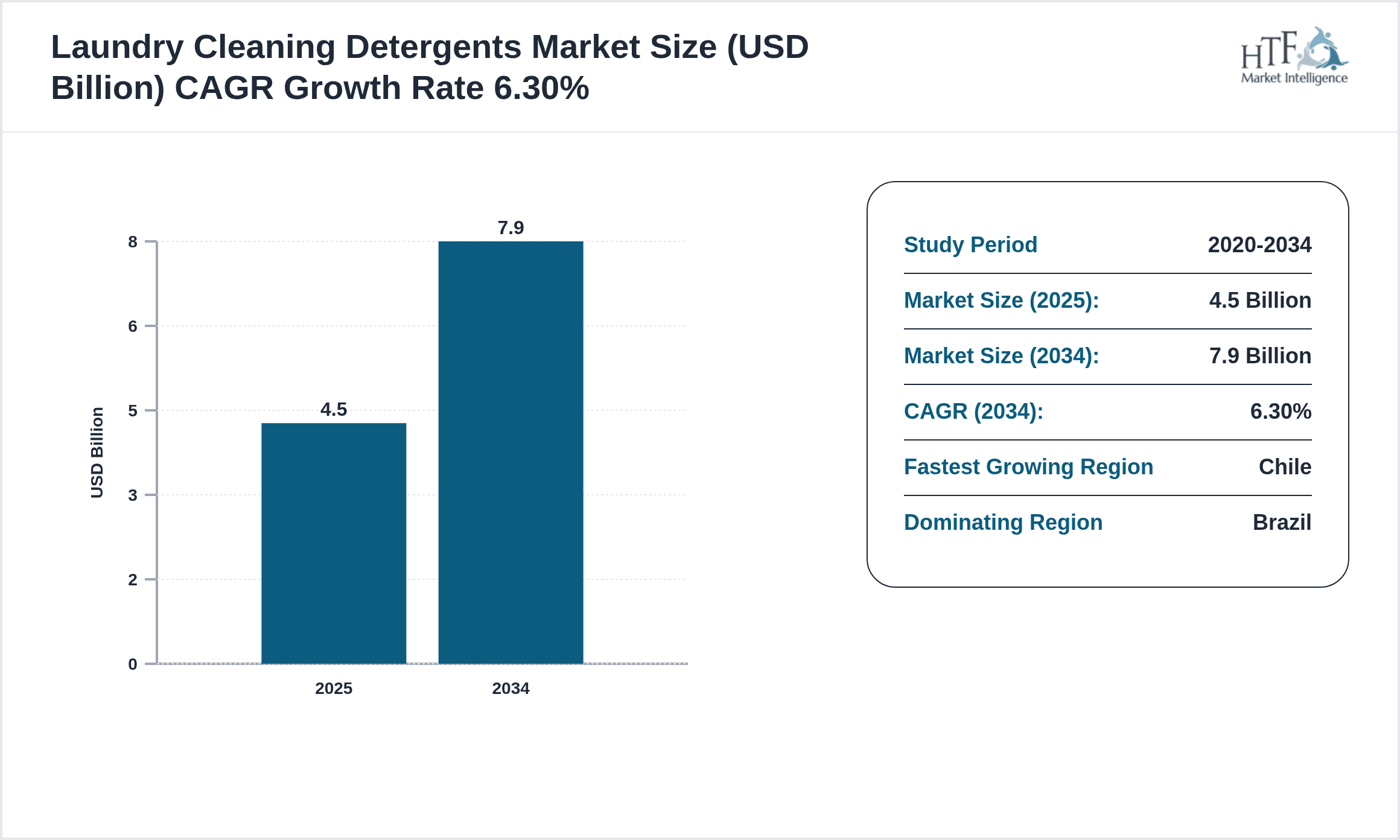
- •2020 Market Size: USD 3.4 Billion
- •2025 Market Size: USD 4.5 Billion
- •2034 Market Size: USD 7.9 Billion
- •Compound Annual Growth Rate (CAGR): 6.3%
- •Year-on-Year Growth: 6.15%
Regional Performance Analysis
- •Dominating Country: Brazil
- •Fastest Growing Country: Chile
Leading Companies in Latin America Laundry Cleaning Detergents Market
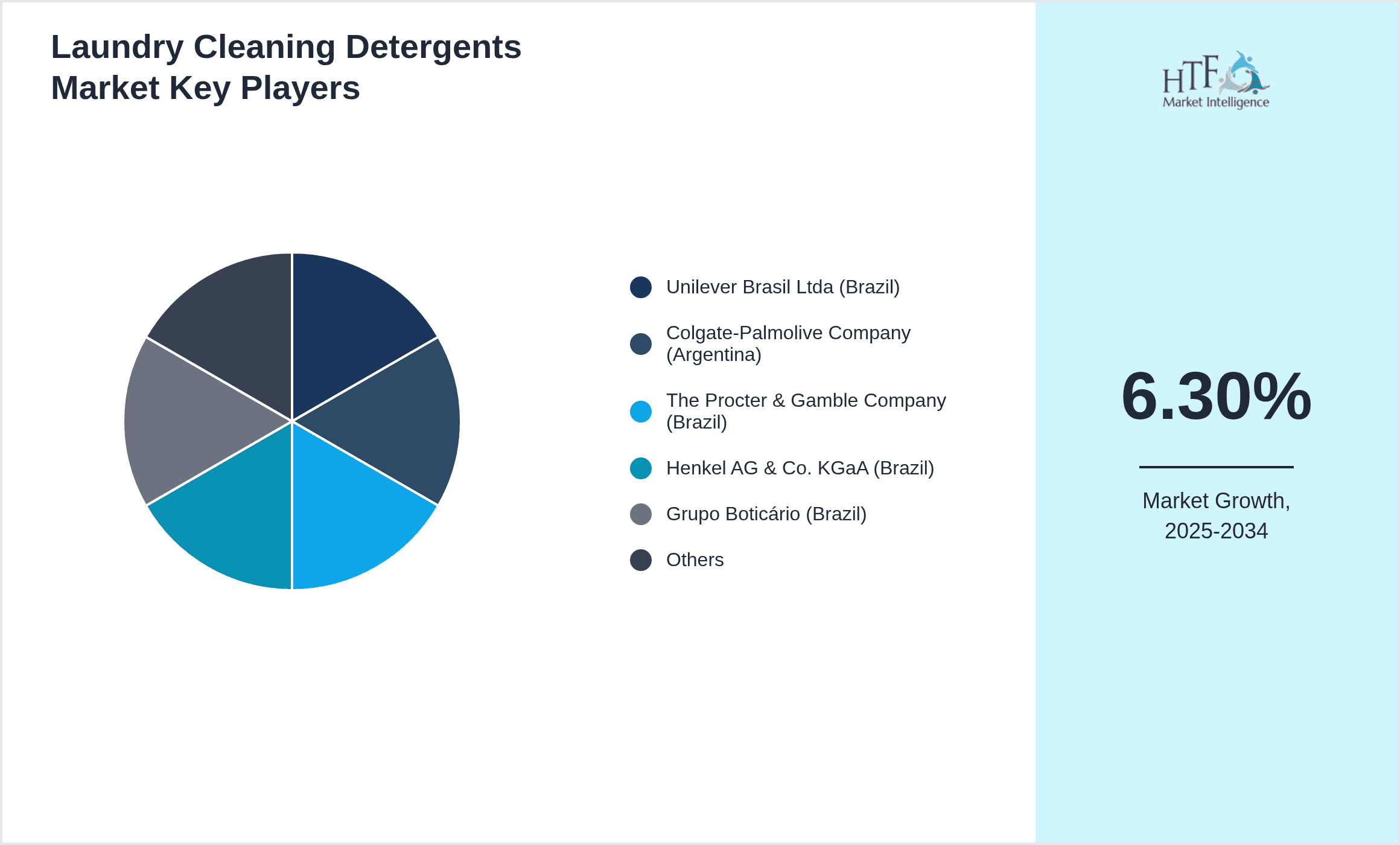
- •Unilever Brasil Ltda (Brazil)
- •Colgate-Palmolive Company (Argentina)
- •The Procter & Gamble Company (Brazil)
- •Henkel AG & Co. KGaA (Brazil)
- •Grupo Boticário (Brazil)
- •Química Amparo S.A. (Argentina)
- •Ypê Produtos de Limpeza S.A. (Brazil)
- •LG Household & Health Care Ltd. (Chile)
- •Natura &Co Holding S.A. (Brazil)
- •Clorox Company (Argentina)
- •Sodimac Colombia S.A. (Colombia)
- •Kimberly-Clark de México (Mexico)
- •SC Johnson & Son, Inc. (Brazil)
- •BASF SE (Brazil)
- •Grupo Familia (Colombia)
- •Fábrica de Jabón La Corona (Colombia)
- •Bayer S.A. (Argentina)
- •Henkel Argentina S.A. (Argentina)
- •Johnson & Johnson de Argentina S.A.C.I. (Argentina)
- •Clariant Corporation (Brazil)
- •Proquimia S.A. (Chile)
- •Sancela S.A. (Chile)
- •Quimica Universal S.A. (Peru)
- •Industrias Alen S.A. (Mexico)
- •Feminina S.A. (Brazil)
Competitive Analysis
The Latin America laundry cleaning detergents market is characterized by a mix of multinational corporations and strong regional players competing through product innovation, price competitiveness, and distribution reach. Leading companies invest heavily in R&D to develop eco-friendly, high-efficiency detergents that comply with evolving regulations and meet diverse consumer needs. Strategic partnerships and localized manufacturing enable rapid market penetration and cost optimization. Digital transformation and e-commerce adoption enhance customer engagement and sales channels. Price sensitivity among consumers drives frequent promotions and private label expansions. Market players also focus on sustainable packaging and corporate social responsibility to strengthen brand loyalty. Competitive pressures necessitate continuous innovation and adaptation to regional preferences, regulatory landscapes, and supply chain dynamics to maintain market leadership.
Regional Outlook
The Brazil currently holds a significant share of the market, primarily due to several key factors: increasing consumption rates, a burgeoning population, and robust economic momentum. These elements collectively drive demand, positioning this region as a leader in the market. On the other hand, Chile is rapidly emerging as the fastest-growing area within the industry. This remarkable growth can be attributed to swift infrastructure development, the expansion of various industrial sectors, and a marked increase in consumer demand. These dynamics make this region a crucial player in shaping future market growth.
In our report, we cover a comprehensive analysis of the following regions and countries:
- Brazil
- Argentina
- Chile
- Peru
- Colombia
- Rest of South America
| Feature | Details |
|---|---|
| Base Year Market Size | USD 4.5 Billion |
| Forecast Year Market Size | USD 7.9 Billion |
| CAGR | 6.3% |
| Forecast Period | 2026 to 2033 |
| YoY Growth | 6.15% |
| Regions Covered | Brazil, Argentina, Chile, Peru, Colombia, Rest of South America |
| Key Companies | The Latin America market offers significant opportunities in developing concentrated and eco-friendly detergent formulations aligned with growing environmental awareness. Expansion into untapped rural and semi-urban regions with affordable, efficient products can drive volume growth. Further, increasing commercial laundry demand in hospitality and healthcare sectors opens avenues for specialized, high-performance detergents. Investment in e-commerce and digital sales channels represents a promising growth avenue, enabling wider consumer reach. Collaborations for R&D and innovation in biodegradable ingredients and sustainable packaging provide differentiation opportunities. Additionally, government incentives promoting green products can be leveraged to introduce new product lines catering to regulatory compliance and consumer expectations. |
Latin America Laundry Cleaning Detergents Market Size, Growth & Revenue 2025-2034 - Table of Contents
Frequently Asked Questions (FAQ):
The Compact Track Loaders market is expected to see value worth 5.3 Billion in 2025.
North America currently leads the market with approximately 45% market share, followed by Europe at 28% and Asia-Pacific at 22%. The remaining regions account for 5% of the global market.
Key growth drivers include increasing construction activities, rising demand for versatile equipment in agriculture, technological advancements in track loader design, and growing preference for compact equipment in urban construction projects.