
Asia-Pacific EMS Sculpting Machine Market Size, Growth & Revenue 2025-2034
Asia-Pacific EMS Sculpting Machine Market is segmented by Type (High-Intensity EMS Machines, Low-Intensity EMS Machines, Portable EMS Devices, Multi-Functional EMS Systems, Professional EMS Equipment), Application (Body Contouring, Muscle Building, Fat Reduction, Physical Therapy, Aesthetic Clinics), Deployment Model (Clinic-based Devices, Home-use Devices, Mobile EMS Services), End-User (Aesthetic Clinics, Rehabilitation Centers, Fitness Centers, Home Users), and Geography (Japan, China, Southeast Asia, India, Australia, South Korea, Others)
Pricing
Report Overview
Executive Summary
- •The Asia-Pacific EMS Sculpting Machine market includes devices using Electrical Muscle Stimulation technology designed to enhance muscle tone, aid fat reduction, and support physical therapy and aesthetic applications. The market consists of various product types such as high-intensity EMS machines, low-intensity devices, portable units, multi-functional systems, and professional equipment deployed across aesthetic clinics, rehabilitation centers, and home use. This market is driven by increasing consumer awareness of non-invasive body contouring methods, technological advancements in EMS devices, and expanding healthcare infrastructure.
- •Key market highlights include a base market size of USD 1.15 Billion in 2025, forecasted to reach USD 3.52 Billion by 2034, exhibiting a robust CAGR of 12.3%. China dominates the market with a 34% share, while India is the fastest growing country with a CAGR of 15.8%. High-intensity EMS machines lead product adoption, whereas portable EMS devices represent the fastest growing segment.
- •The market offers significant value propositions to stakeholders by delivering innovative, non-invasive body sculpting solutions that cater to rising aesthetic and rehabilitation demands across Asia-Pacific. Increasing investments, regional regulatory support, and consumer preference for advanced EMS technologies underscore its strategic importance.

Competitive Landscape
The Asia-Pacific EMS Sculpting Machine market is characterized by intense competition among global and regional players focusing on product innovation, strategic partnerships, and expansion of distribution networks. Companies invest heavily in R&D to enhance device efficacy, safety, and user experience. Competitive strategies include launching portable and multi-functional devices, leveraging technological advancements such as AI integration, and targeting emerging markets within the region. Market entry barriers include regulatory compliance, high capital expenditure for advanced device development, and establishing brand trust. Regional competition is particularly strong in China, India, and Japan, driven by growing consumer demand and expanding medical aesthetics sectors. Future trends indicate increased consolidation through mergers and acquisitions, strategic collaborations, and focus on personalized EMS solutions to maintain competitive advantage.
Leading Companies in Asia-Pacific EMS Sculpting Machine Market
- •BTL Industries Ltd. (South Korea)
- •Zimmer MedizinSysteme GmbH (Germany)
- •Cynosure, Inc. (United States)
- •Hugel, Inc. (South Korea)
- •Jeisys Medical Inc. (South Korea)
- •Syneron Medical Ltd. (Israel)
- •Lumenis Ltd. (Israel)
- •BTL Aesthetics (South Korea)
- •Venus Concept Inc. (Canada)
- •Medtronic plc (Ireland)
- •Koninklijke Philips N.V. (Netherlands)
- •Bison Medical Co., Ltd. (China)
- •Shanghai Yinuo Medical Instruments Co., Ltd. (China)
- •Kanghong Medical Group Co., Ltd. (China)
- •Beijing Zhonglian Taiji Technology Co., Ltd. (China)
- •Seoul Viosys Co., Ltd. (South Korea)
- •Shenzhen DTC Technology Co., Ltd. (China)
- •InBody Co., Ltd. (South Korea)
- •InnoCare Pharma Limited (Hong Kong)
- •Medica Group (India)
- •Aesthetic Technologies Pvt. Ltd. (India)
- •Medica Instrument Co., Ltd. (China)
- •Wellness Innovations Co., Ltd. (Japan)
- •Tokai Medical Products, Inc. (Japan)
- •Fujifilm Holdings Corporation (Japan)
Market Breakdown
- •By Type
- ◦High-Intensity EMS Machines
- ◦Low-Intensity EMS Machines
- ◦Portable EMS Devices
- ◦Multi-Functional EMS Systems
- ◦Professional EMS Equipment
- •By Application
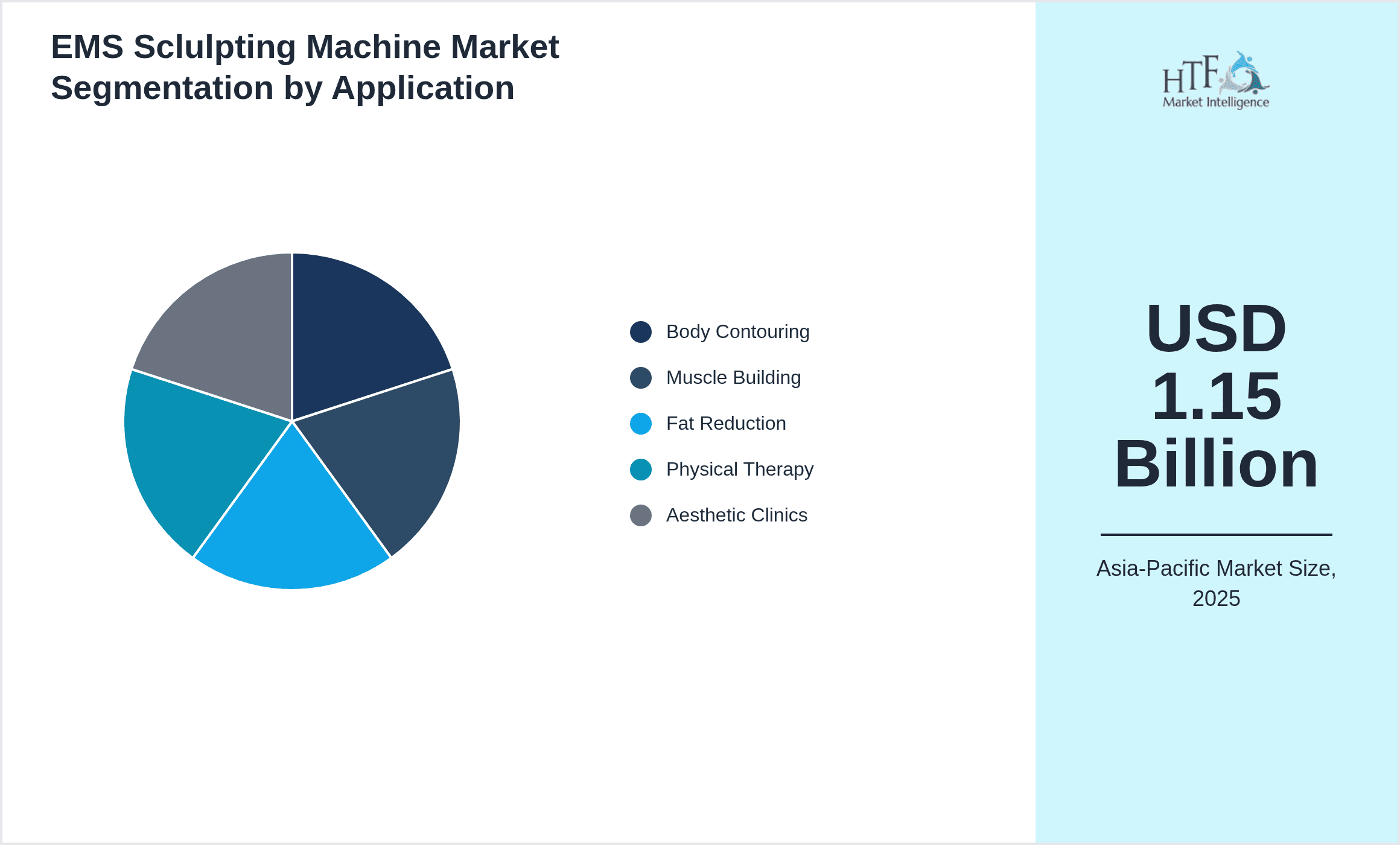
- ◦Body Contouring
- ◦Muscle Building
- ◦Fat Reduction
- ◦Physical Therapy
- ◦Aesthetic Clinics
- •By Deployment Model
- ◦Clinic-based Devices
- ◦Home-use Devices
- ◦Mobile EMS Services
- •By End-User
- ◦Aesthetic Clinics
- ◦Rehabilitation Centers
- ◦Fitness Centers
- ◦Home Users
Growth Dynamics
The Asia-Pacific EMS Sculpting Machine market growth is propelled by increasing consumer preference for non-invasive body contouring solutions due to rising aesthetic consciousness and wellness trends. Technological advancements in EMS devices, such as integration with AI and improved portability, enhance user experience and adoption rates. The expanding middle-class population with disposable income in countries like China and India fuels demand. Moreover, growing usage of EMS machines in physical therapy and rehabilitation centers contributes to market expansion. Government initiatives promoting healthcare infrastructure development and rising investments in medical aesthetics further drive growth. The surge in fitness awareness and adoption of EMS devices for muscle toning also supports robust market expansion.

Market Trends
Emerging trends in the Asia-Pacific EMS Sculpting Machine market include increased demand for portable and home-use EMS devices driven by consumer convenience and remote wellness trends accelerated by the COVID-19 pandemic. There is a noticeable shift towards multi-functional EMS systems combining fat reduction and muscle strengthening therapies to offer comprehensive solutions. Companies are focusing on product miniaturization and user-friendly interfaces to appeal to tech-savvy consumers. Additionally, collaborations between device manufacturers and fitness centers are becoming prevalent, promoting EMS adoption beyond clinical settings. The market also witnesses rising integration of EMS technology with digital health monitoring for personalized treatment plans, enhancing effectiveness and customer engagement.

Market Opportunities
Significant opportunities exist in untapped markets within Southeast Asia and emerging economies such as India, where increasing urbanization and disposable incomes support growth in aesthetic and fitness device demand. There is a rising need for cost-effective, portable EMS devices for home use, presenting product development potential. Expansion of physical therapy and rehabilitation sectors opens avenues for EMS device application beyond aesthetics. Integration of AI and IoT technologies into EMS machines offers innovation prospects to enhance device capabilities and user experience. Strategic partnerships with healthcare providers and fitness chains can accelerate market penetration. Additionally, increasing regulatory support for non-invasive medical devices in Asia-Pacific countries facilitates smoother product approvals.
Market Challenges
Key challenges include stringent regulatory compliance requirements across diverse Asia-Pacific countries that complicate product approvals and market entry. Variations in healthcare infrastructure and consumer awareness levels cause uneven market penetration. High costs associated with advanced EMS technologies limit affordability among price-sensitive consumers, especially in developing economies. There is also competition from alternative body contouring and muscle stimulation treatments such as cryolipolysis and radiofrequency devices. Limited reimbursement policies for EMS therapies in some countries restrict adoption in clinical settings. Furthermore, lack of standardized safety and efficacy guidelines for EMS devices creates hesitancy among practitioners and users. Supply chain disruptions and component shortages pose additional obstacles to consistent product availability.
Regulatory Framework
- •Between 2020 and 2025, Asia-Pacific countries have strengthened regulatory frameworks for EMS sculpting machines to ensure safety, efficacy, and quality compliance. China’s National Medical Products Administration (NMPA) updated device classification and approval processes, requiring rigorous clinical data submission. India’s Central Drugs Standard Control Organization (CDSCO) introduced specific guidelines for non-invasive aesthetic devices, enhancing market surveillance. Japan’s Pharmaceuticals and Medical Devices Agency (PMDA) enforces strict pre-market approval and post-market vigilance for EMS devices. South Korea’s Ministry of Food and Drug Safety (MFDS) mandates certification for electrical safety and biocompatibility. Australia’s Therapeutic Goods Administration (TGA) classifies EMS machines under medical devices requiring conformity assessment. These regulations impact product development cycles, market entry timelines, and cost structures. Companies must navigate diverse country-specific standards while aligning with international guidelines such as ISO and IEC for device manufacturing and testing.
- •Regulatory compliance enhances consumer confidence but introduces complexities in harmonizing approvals across the Asia-Pacific region. Ongoing updates in safety standards and labeling requirements necessitate continuous monitoring and adaptation by manufacturers. Government initiatives to streamline approval processes and encourage innovation in medical aesthetic devices are emerging, offering support to compliant companies. Intellectual property protection frameworks also influence competitive positioning. Overall, the evolving regulatory landscape shapes product innovation, market access, and competitive dynamics within the Asia-Pacific EMS sculpting machine market.
Market Intelligence
- •15th February 2025, BTL Industries Ltd. announced the launch of its new portable EMS sculpting device designed for home use in Asia-Pacific markets. The device incorporates AI-driven muscle stimulation protocols tailored to individual user profiles, offering enhanced efficacy and convenience. Targeting urban consumers seeking non-invasive body contouring solutions, the product features wireless connectivity and a user-friendly mobile app interface. BTL aims to capitalize on rising demand for portable aesthetic devices and expand its presence in India, China, and Southeast Asia. This launch is expected to strengthen BTL’s competitive position and drive revenue growth in the region. Source: Official BTL Industries press release.
- •10th July 2025, Jeisys Medical Inc. introduced a multi-functional EMS sculpting system integrating fat reduction and muscle toning therapies with real-time digital monitoring. The system is designed for professional aesthetic clinics across Asia-Pacific, featuring advanced safety mechanisms and customizable treatment protocols. This innovation aligns with increasing clinic demand for comprehensive, efficient body sculpting solutions. Jeisys Medical’s strategic focus on technology integration and clinical effectiveness positions it to capture a larger market share. The company also announced partnerships with leading rehabilitation centers in South Korea and Japan to broaden application scope. Source: Jeisys Medical official website.
- •5th November 2025, Cynosure, Inc. completed acquisition of a regional EMS device manufacturer in India, aiming to strengthen its footprint in the fast-growing Indian aesthetic devices market. The acquisition includes proprietary EMS technology and an established distribution network across South Asia. This strategic move enables Cynosure to offer localized product variants and accelerate go-to-market strategies. The deal also brings synergies in R&D and marketing capabilities. Industry analysts view this consolidation as a significant step toward addressing diverse consumer needs and regulatory challenges in Asia-Pacific. Source: Industry publication on medical device M&A.
- •Recent market developments and strategic initiatives are continuously tracked through industry publications, company announcements, and regulatory filings. For the most current information, stakeholders are advised to monitor official corporate communications and recognized market intelligence platforms.
Regional Outlook
The China currently holds a significant share of the market, primarily due to several key factors: increasing consumption rates, a burgeoning population, and robust economic momentum. These elements collectively drive demand, positioning this region as a leader in the market. On the other hand, India is rapidly emerging as the fastest-growing area within the industry. This remarkable growth can be attributed to swift infrastructure development, the expansion of various industrial sectors, and a marked increase in consumer demand. These dynamics make this region a crucial player in shaping future market growth.
In our report, we cover a comprehensive analysis of the following regions and countries:
- Japan
- China
- Southeast Asia
- India
- Australia
- South Korea
- Others
| Feature | Details |
|---|---|
| Base Year Market Size | USD 1.15 Billion |
| Forecast Year Market Size | USD 3.52 Billion |
| CAGR | 12.3% |
| Forecast Period | 2026 to 2033 |
| YoY Growth | 11.6% |
| Scope of Report | Market is segmented by Type (High-Intensity EMS Machines, Low-Intensity EMS Machines, Portable EMS Devices, Multi-Functional EMS Systems, Professional EMS Equipment), Application (Body Contouring, Muscle Building, Fat Reduction, Physical Therapy, Aesthetic Clinics), Deployment Model (Clinic-based Devices, Home-use Devices, Mobile EMS Services), End-User (Aesthetic Clinics, Rehabilitation Centers, Fitness Centers, Home Users) |
| Regions Covered | Japan, China, Southeast Asia, India, Australia, South Korea, Others |
| Key Companies | BTL Industries Ltd. (South Korea), Zimmer MedizinSysteme GmbH (Germany), Cynosure, Inc. (United States), Hugel, Inc. (South Korea), Jeisys Medical Inc. (South Korea), Syneron Medical Ltd. (Israel), Lumenis Ltd. (Israel), BTL Aesthetics (South Korea), Venus Concept Inc. (Canada), Medtronic plc (Ireland), Koninklijke Philips N.V. (Netherlands), Bison Medical Co., Ltd. (China), Shanghai Yinuo Medical Instruments Co., Ltd. (China), Kanghong Medical Group Co., Ltd. (China), Beijing Zhonglian Taiji Technology Co., Ltd. (China), Seoul Viosys Co., Ltd. (South Korea), Shenzhen DTC Technology Co., Ltd. (China), InBody Co., Ltd. (South Korea), InnoCare Pharma Limited (Hong Kong), Medica Group (India), Aesthetic Technologies Pvt. Ltd. (India), Medica Instrument Co., Ltd. (China), Wellness Innovations Co., Ltd. (Japan), Tokai Medical Products, Inc. (Japan), Fujifilm Holdings Corporation (Japan) |
Asia-Pacific EMS Sculpting Machine Market Size, Growth & Revenue 2025-2034 - Table of Contents
Frequently Asked Questions (FAQ):
The Compact Track Loaders market is projected to grow at a CAGR of 6.8% from 2025 to 2030, driven by increasing demand in construction and agricultural sectors.
North America currently leads the market with approximately 45% market share, followed by Europe at 28% and Asia-Pacific at 22%. The remaining regions account for 5% of the global market.
Key growth drivers include increasing construction activities, rising demand for versatile equipment in agriculture, technological advancements in track loader design, and growing preference for compact equipment in urban construction projects.