
Global Industrial Tunnel Inspection Robot Market - Outlook 2025-2034
Global Industrial Tunnel Inspection Robot Market is segmented by Type (Crawler Robots, Wheeled Robots, Tracked Robots, Hybrid Robots, Aerial Drones), Application (Structural Inspection, Maintenance, Safety Monitoring, Environmental Assessment, Emergency Response), End User (Transportation Authorities, Mining Companies, Utility Providers, Construction Firms, Government Agencies), Technology (Autonomous Navigation, Remote Control, AI-based Anomaly Detection, Sensor Fusion, Cloud Data Integration), and Geography (North America, LATAM, West Europe, Central & Eastern Europe, Northern Europe, Southern Europe, East Asia, Southeast Asia, South Asia, Central Asia, Oceania, MEA)
Pricing
Report Overview
Executive Summary
- •The Global Industrial Tunnel Inspection Robot market comprises robotic solutions specialized in inspecting and maintaining tunnels across transportation, mining, and utility sectors. These robots employ advanced AI, sensors, and autonomous capabilities to enhance safety and operational efficiency by providing precise structural analysis and real-time monitoring.
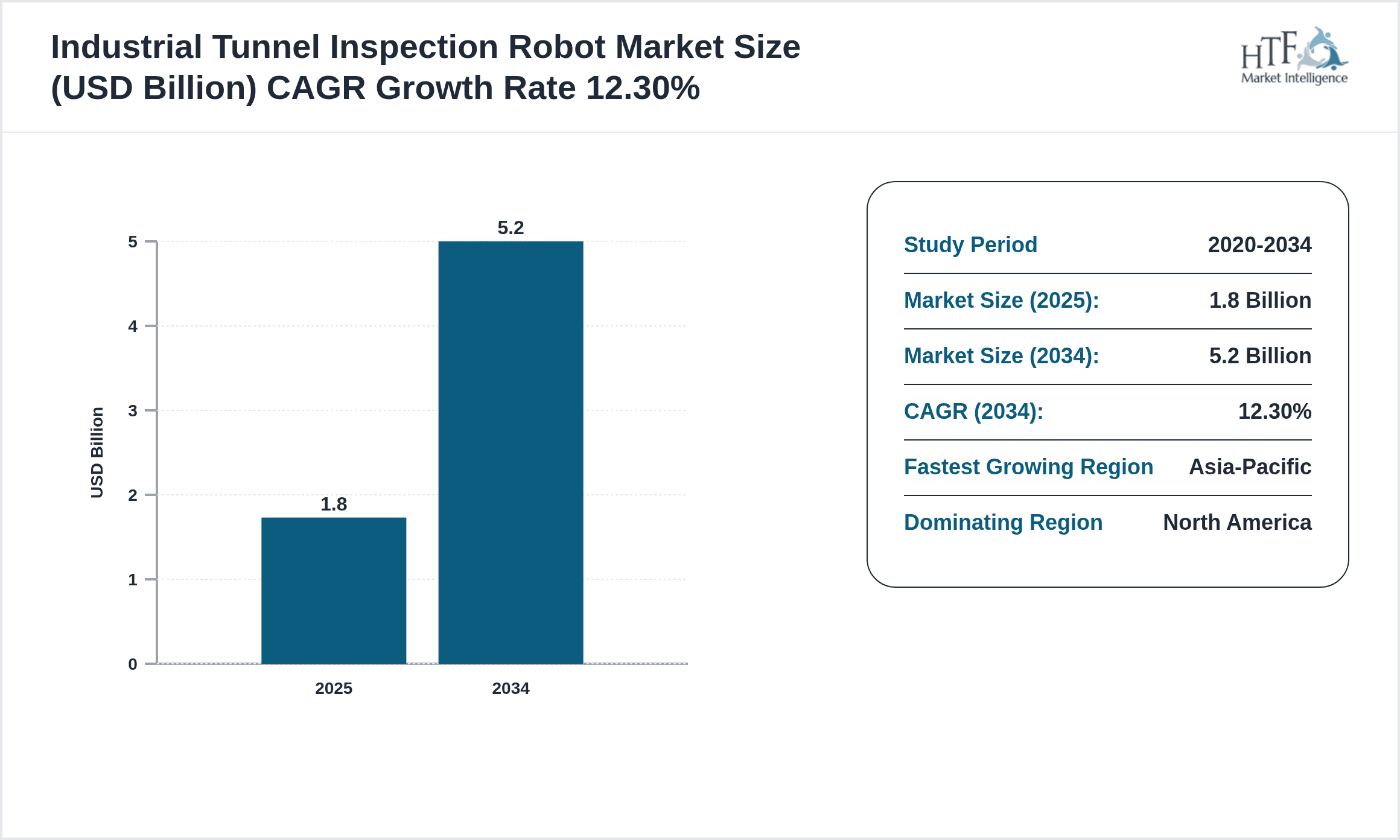
- •Key highlights include rapid adoption of aerial drones for complex inspections, significant investments in AI-driven anomaly detection, and expanding applications in environmental and emergency monitoring, driving market growth with a CAGR of 12.3% through 2034.
- •The market offers substantial value to infrastructure operators by reducing inspection risks, lowering maintenance costs, and ensuring regulatory compliance, making it indispensable in modern tunnel management worldwide.
Competitive Landscape
The competitive environment of the Global Industrial Tunnel Inspection Robot market is characterized by intense rivalry among established robotics manufacturers and technology innovators focusing on enhancing autonomous navigation, sensor integration, and AI capabilities. Companies are leveraging strategic partnerships, R&D investments, and product differentiation to capture market share. Innovation in aerial drone technology and hybrid robot designs is intensifying competition, while firms also focus on expanding service offerings and regional presence to address diverse tunnel inspection needs. The market dynamics emphasize continuous technological advancement, strategic collaborations, and scalability of solutions to maintain competitive positioning across global regions.
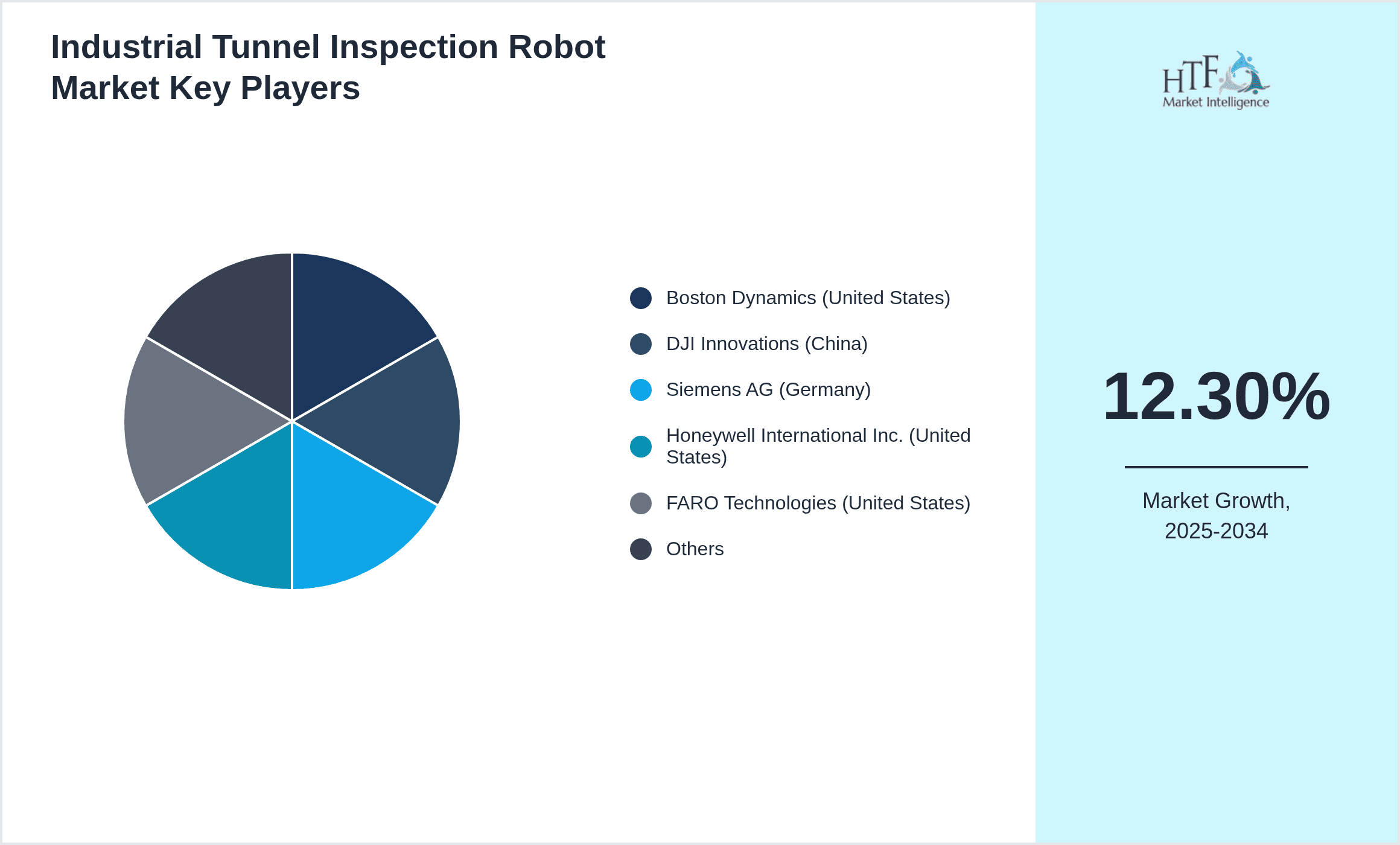
Leading Companies in Industrial Tunnel Inspection Robot Market
- •Boston Dynamics (United States)
- •DJI Innovations (China)
- •Siemens AG (Germany)
- •Honeywell International Inc. (United States)
- •FARO Technologies (United States)
- •Hitachi Construction Machinery (Japan)
- •Kawasaki Heavy Industries (Japan)
- •InfraRed Integrated Systems (United Kingdom)
- •ABB Ltd (Switzerland)
- •Robotics Design Inc. (Canada)
- •Makita Corporation (Japan)
- •Telerob Gesellschaft für Fernhantierungstechnik mbH (Germany)
- •ECA Group (France)
- •Cyberhawk Innovations (United Kingdom)
- •L3Harris Technologies (United States)
- •Yokogawa Electric Corporation (Japan)
- •Trimble Inc. (United States)
- •Bluefin Robotics (United States)
- •Robotic Vision Technologies (USA)
- •Aerovironment Inc. (United States)
- •Clearpath Robotics (Canada)
- •Parrot SA (France)
- •Autonomous Solutions Inc. (United States)
- •Liebherr Group (Germany)
- •DJI Enterprise (China)
Market Breakdown
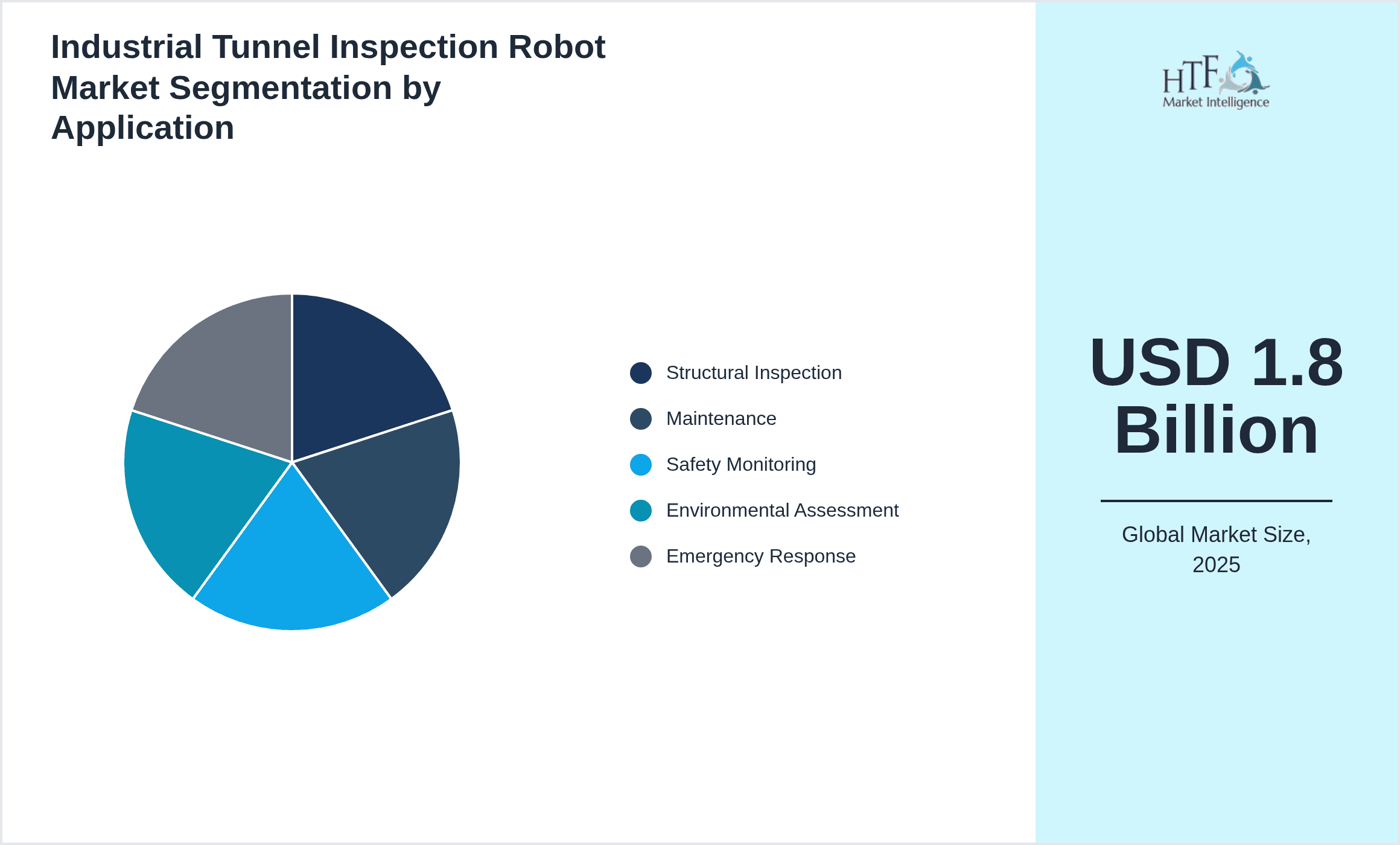
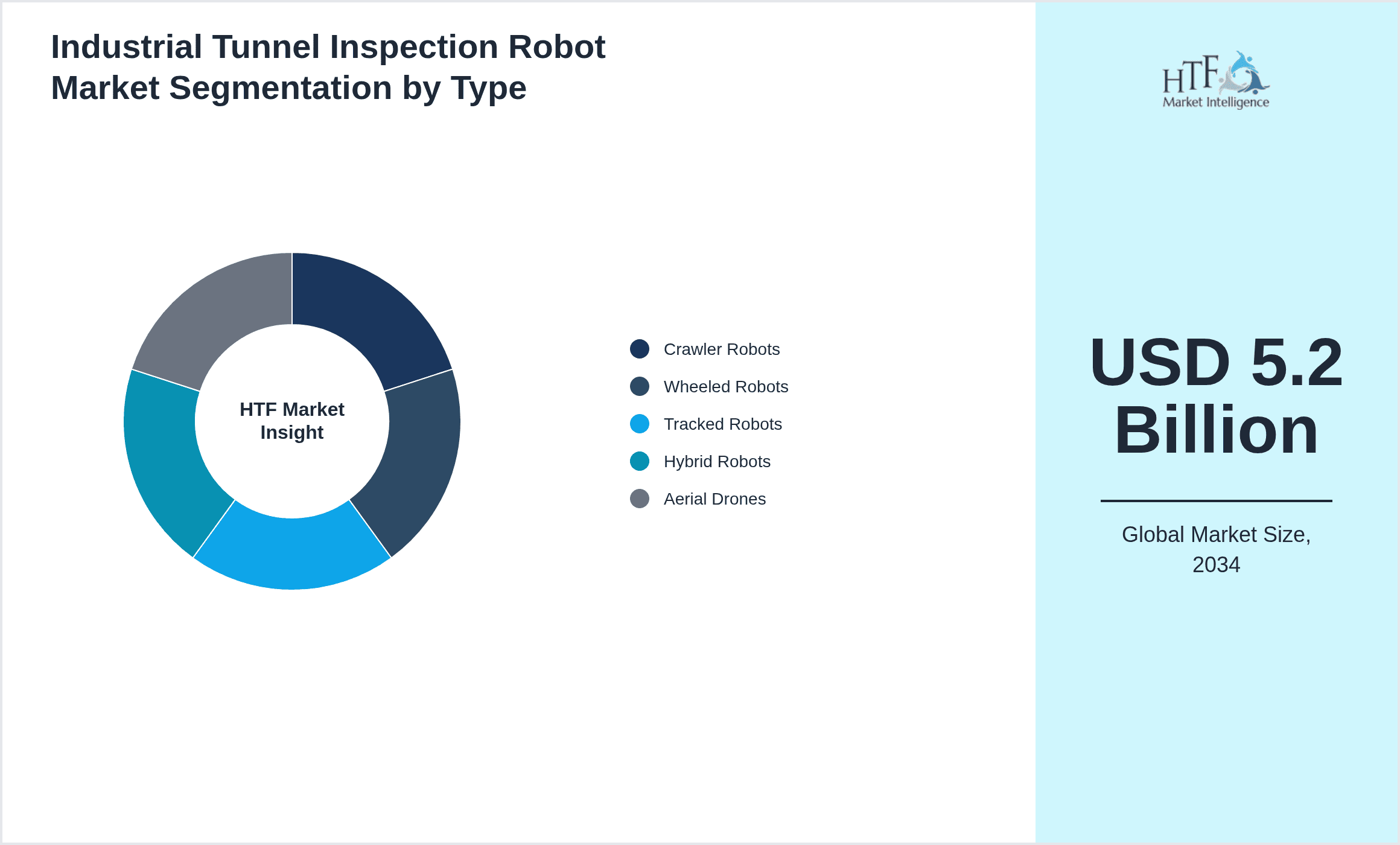
- •By Type
- ◦Crawler Robots
- ◦Wheeled Robots
- ◦Tracked Robots
- ◦Hybrid Robots
- ◦Aerial Drones
- •By Application
- ◦Structural Inspection
- ◦Maintenance
- ◦Safety Monitoring
- ◦Environmental Assessment
- ◦Emergency Response
- •By End User
- ◦Transportation Authorities
- ◦Mining Companies
- ◦Utility Providers
- ◦Construction Firms
- ◦Government Agencies
- •By Technology
- ◦Autonomous Navigation
- ◦Remote Control
- ◦AI-based Anomaly Detection
- ◦Sensor Fusion
- ◦Cloud Data Integration
Growth Dynamics
- •The increasing need for enhanced safety and reduced human exposure in hazardous tunnel environments drives adoption of industrial tunnel inspection robots, especially in mining and transportation sectors deploying crawler and aerial drone technologies.
- •Advancements in AI and sensor fusion technologies enable robots to deliver precise structural assessments and predictive maintenance insights, fueling market expansion and customer trust globally.
- •Growing investments by governments in infrastructure modernization and stringent safety regulations compel utility providers and construction firms to deploy robotic inspection solutions.
- •Integration of cloud-based data analytics with robotic systems facilitates real-time monitoring and enhanced decision-making, attracting stakeholders seeking operational efficiency.
- •Rising demand for unmanned aerial vehicles (UAVs) or drones for tunnel inspection, especially in complex and inaccessible areas, supports rapid market growth in Asia-Pacific and North America.
Market Trends
- •Increasing deployment of hybrid robots combining wheeled and tracked mobility to enhance versatility across varied tunnel terrains is a prominent trend shaping the market landscape.
- •Adoption of AI-powered anomaly detection algorithms is revolutionizing inspection accuracy, enabling early fault identification and reducing maintenance costs significantly.
- •Collaborations between robotics firms and infrastructure service providers are becoming more frequent to co-develop tailored inspection solutions for specific tunnel environments.
- •Sustainability initiatives drive demand for environmentally friendly inspection robots with lower energy consumption and reduced emissions in tunnel maintenance activities.
- •Integration of augmented reality (AR) with robotic inspection data is emerging, helping operators visualize tunnel conditions remotely and enhancing operational efficiency.
Market Opportunities
- •Expanding tunnel infrastructure in emerging economies presents untapped markets for industrial tunnel inspection robots, especially in Asia-Pacific and Latin America regions.
- •Growing demand for retrofit solutions to upgrade aging tunnels with robotic inspection capabilities offers significant growth potential for technology providers.
- •Advancements in drone technology open new avenues for aerial inspection services in narrow and inaccessible tunnels, creating niche market segments.
- •Strategic partnerships between robotics manufacturers and cloud service providers can enable integrated inspection and data analytics platforms, enhancing market penetration.
- •Increasing government funding for smart city initiatives supports the adoption of automated tunnel inspection solutions to ensure infrastructure resilience and safety.
Market Challenges
- •High initial investment and maintenance costs of advanced industrial tunnel inspection robots restrict adoption among small and medium-sized enterprises in developing regions.
- •Technical challenges related to robot navigation in complex tunnel geometries and harsh environmental conditions limit operational efficiency and reliability.
- •Lack of standardized regulations and interoperability protocols across regions hinders seamless integration of robotic systems with existing infrastructure management platforms.
- •Shortage of skilled personnel to operate and maintain sophisticated robotic inspection equipment constrains market growth in certain geographic areas.
- •Cybersecurity concerns associated with data transmission and cloud integration pose risks to sensitive infrastructure inspection information.
Regulatory Framework
- •Between 2023 and 2025, international standards for robotic safety and operational protocols were updated to include autonomous inspection systems, ensuring compliance with safety norms in industrial tunnels.
- •New regulations mandating regular structural health assessments for critical tunnel infrastructure have increased demand for automated inspection technologies globally.
- •Environmental guidelines introduced in 2024 emphasize low-emission robotic solutions for tunnel maintenance, promoting eco-friendly technology adoption.
- •Data privacy and cybersecurity regulations enacted in key markets require secure data handling and transmission protocols for robotic inspection systems.
- •Government incentives for smart infrastructure projects have facilitated funding and subsidies for deploying advanced tunnel inspection robots in public projects.
Market Intelligence
- •15th February 2024, Boston Dynamics launched its Spot X robot equipped with enhanced AI-based tunnel inspection capabilities targeting mining and transportation sectors. The product features autonomous navigation and real-time data analytics, aiming to reduce inspection time and improve safety protocols. This launch positions the company as a leader in intelligent industrial inspection solutions.
- •10th August 2024, DJI Innovations introduced the Matrice 350 RTK drone tailored for complex tunnel environments. It integrates advanced LIDAR sensors and AI-powered obstacle avoidance, enabling detailed aerial inspections in confined spaces. This innovation expands UAV adoption in tunnel monitoring, particularly in Asia-Pacific and Europe.
- •22nd January 2025, Siemens AG announced a strategic partnership with Cyberhawk Innovations to co-develop integrated robotic inspection platforms combining ground and aerial robotics with cloud-based monitoring systems. The collaboration aims to enhance inspection accuracy and operational efficiency across global infrastructure projects.
- •5th May 2025, Honeywell International Inc. completed the acquisition of Robotics Design Inc., expanding its portfolio in industrial inspection robotics and strengthening its presence in North America and Europe. The merger is expected to accelerate innovation and broaden service offerings in tunnel inspection automation.
- •Source: Company press releases, Industry publications
Regional Outlook
The North America currently holds a significant share of the market, primarily due to several key factors: increasing consumption rates, a burgeoning population, and robust economic momentum. These elements collectively drive demand, positioning this region as a leader in the market. On the other hand, Asia-Pacific is rapidly emerging as the fastest-growing area within the industry. This remarkable growth can be attributed to swift infrastructure development, the expansion of various industrial sectors, and a marked increase in consumer demand. These dynamics make this region a crucial player in shaping future market growth.
In our report, we cover a comprehensive analysis of the following regions and countries:
- North America
- LATAM
- West Europe
- Central & Eastern Europe
- Northern Europe
- Southern Europe
- East Asia
- Southeast Asia
- South Asia
- Central Asia
- Oceania
- MEA
| Feature | Details |
|---|---|
| Base Year Market Size | USD 1.8 Billion |
| Forecast Year Market Size | USD 5.2 Billion |
| CAGR | 12.3% |
| Forecast Period | 2026 to 2033 |
| YoY Growth | 12.1% |
| Scope of Report | Market is segmented by Type (Crawler Robots, Wheeled Robots, Tracked Robots, Hybrid Robots, Aerial Drones), Application (Structural Inspection, Maintenance, Safety Monitoring, Environmental Assessment, Emergency Response), End User (Transportation Authorities, Mining Companies, Utility Providers, Construction Firms, Government Agencies), Technology (Autonomous Navigation, Remote Control, AI-based Anomaly Detection, Sensor Fusion, Cloud Data Integration) |
| Regions Covered | North America, LATAM, West Europe, Central & Eastern Europe, Northern Europe, Southern Europe, East Asia, Southeast Asia, South Asia, Central Asia, Oceania, MEA |
| Key Companies | Boston Dynamics (United States), DJI Innovations (China), Siemens AG (Germany), Honeywell International Inc. (United States), FARO Technologies (United States), Hitachi Construction Machinery (Japan), Kawasaki Heavy Industries (Japan), InfraRed Integrated Systems (United Kingdom), ABB Ltd (Switzerland), Robotics Design Inc. (Canada), Makita Corporation (Japan), Telerob Gesellschaft für Fernhantierungstechnik mbH (Germany), ECA Group (France), Cyberhawk Innovations (United Kingdom), L3Harris Technologies (United States), Yokogawa Electric Corporation (Japan), Trimble Inc. (United States), Bluefin Robotics (United States), Robotic Vision Technologies (USA), Aerovironment Inc. (United States), Clearpath Robotics (Canada), Parrot SA (France), Autonomous Solutions Inc. (United States), Liebherr Group (Germany), DJI Enterprise (China) |
Global Industrial Tunnel Inspection Robot Market - Outlook 2025-2034 - Table of Contents
Frequently Asked Questions (FAQ):
The Compact Track Loaders market is projected to grow at a CAGR of 6.8% from 2025 to 2030, driven by increasing demand in construction and agricultural sectors.
North America currently leads the market with approximately 45% market share, followed by Europe at 28% and Asia-Pacific at 22%. The remaining regions account for 5% of the global market.
Key growth drivers include increasing construction activities, rising demand for versatile equipment in agriculture, technological advancements in track loader design, and growing preference for compact equipment in urban construction projects.