
United Kingdom Commercial Telematics Market Size, Growth & Revenue 2025-2034
United Kingdom Commercial Telematics Market is segmented by Type (Fleet Management, Asset Tracking, Driver Behavior Monitoring, Vehicle Diagnostics, Route Optimization), Application (Logistics, Public Transport, Construction, Delivery Services, Emergency Services), By Service Model (Subscription-based, Pay-per-use), By Deployment (Cloud-based, On-premise), and Geography (England, Scotland, Wales, Northern Ireland)
Pricing
Report Overview
Market Definition & Scope
- •The United Kingdom Commercial Telematics Market integrates telecommunications and informatics for vehicle fleet and asset management across industries such as logistics, public transport, and construction.
- •It involves real-time tracking, driver behavior monitoring, route optimization, and vehicle diagnostics using GPS, IoT devices, and cloud-based analytics.
- •Market scope includes service models like subscription and pay-per-use with deployment options spanning cloud and on-premise platforms, facilitating operational efficiency and regulatory compliance.
- •The industry supports sustainability and connectivity efforts in key UK regions, addressing the evolving transportation demands of commercial fleets.

The Future of Revolutionising Commercial Transport with Telematics
Industry Challenges in United Kingdom Commercial Telematics
- •High initial investment and infrastructure costs limit widespread adoption among smaller fleet operators.
- •Fragmented legacy systems and lack of standardized data protocols create integration difficulties.
- •Concerns over data privacy and regulatory compliance slow market uptake in sensitive sectors.
Telematics Technology: The Game Changer
- •Enables real-time vehicle monitoring, improving fleet utilization and safety through data-driven insights.
- •Reduces operational costs by optimizing routes, lowering fuel consumption, and minimizing downtime.
- •Enhances driver accountability and compliance with UK transport regulations, boosting operational efficiency.
Market Segmentation
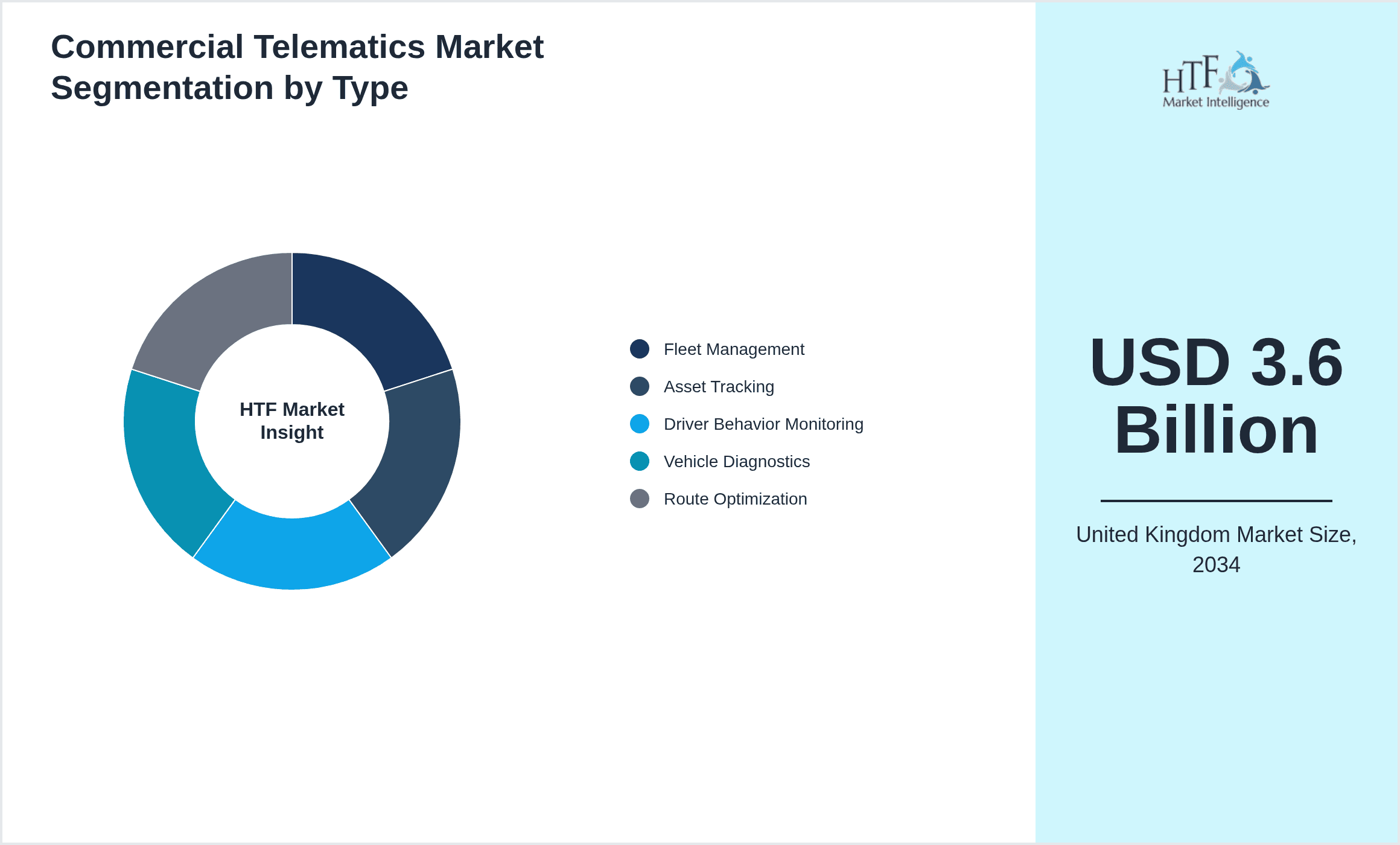
- •By Type
- ◦Fleet Management
- ◦Asset Tracking
- ◦Driver Behavior Monitoring
- ◦Vehicle Diagnostics
- ◦Route Optimization
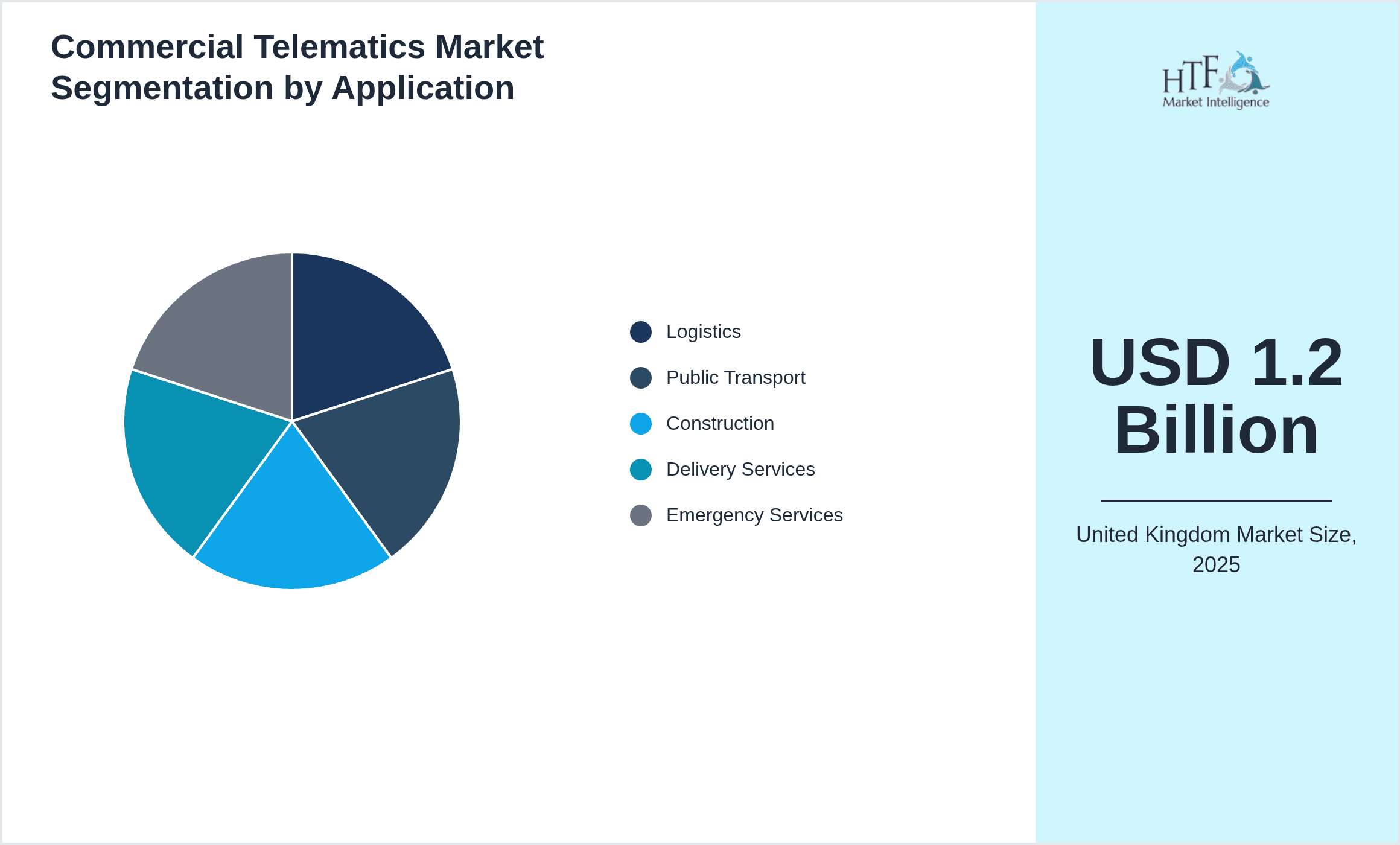
- •By Application
- ◦Logistics
- ◦Public Transport
- ◦Construction
- ◦Delivery Services
- ◦Emergency Services
- •By Service Model
- ◦Subscription-based
- ◦Pay-per-use
- •By Deployment
- ◦Cloud-based
- ◦On-premise
Market Explosion: A Rapidly Growing Sector
- •The United Kingdom Commercial Telematics Market is valued at USD 1.2 billion in 2025.
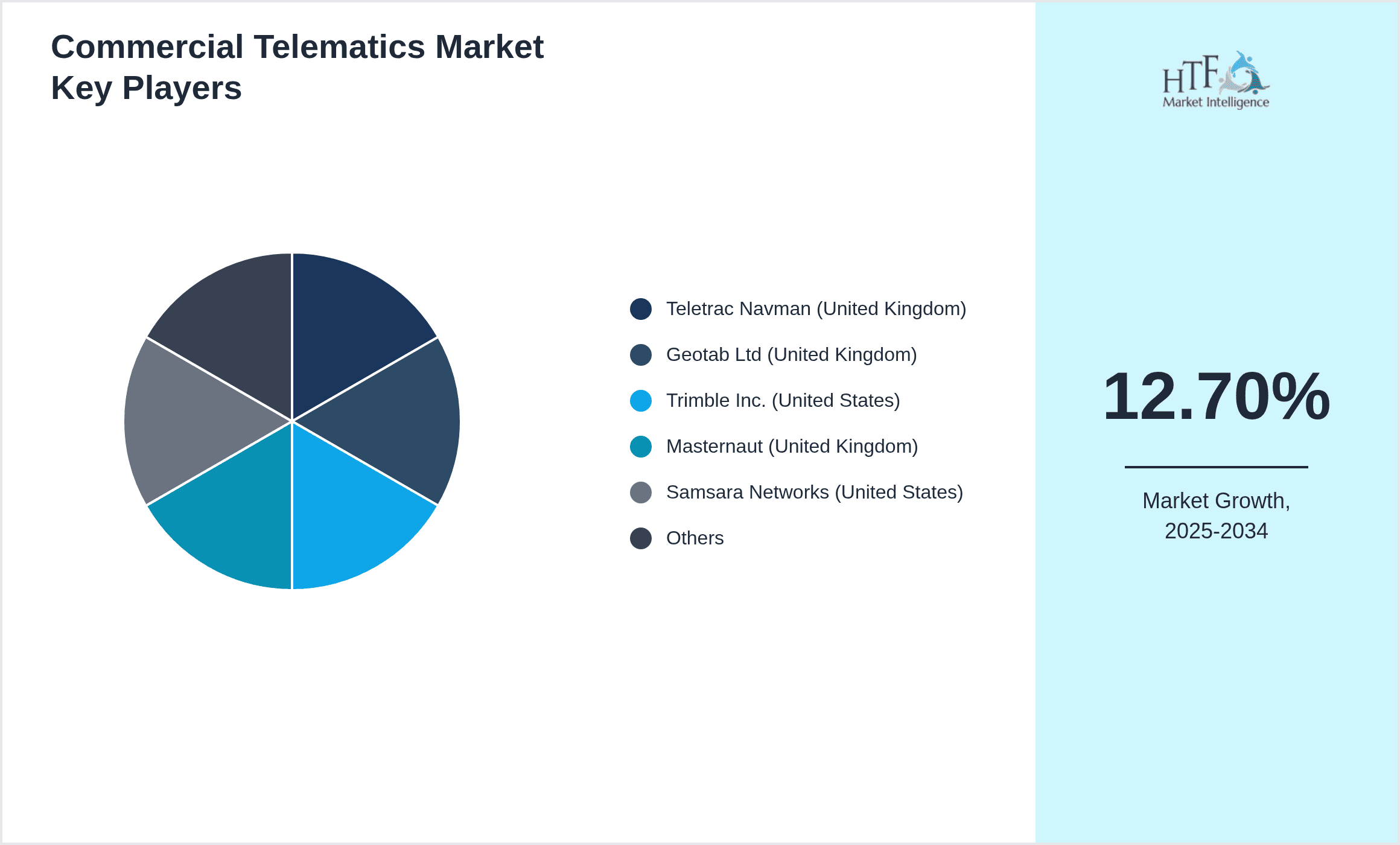
- •Forecast to reach USD 3.6 billion by 2034, registering a CAGR of 12.7%.
- •Year-over-year growth consistently near 12%, driven by digital transformation in transport sectors.
Key Drivers of Growth
- •Government initiatives promoting smart transport infrastructure and emissions reduction fuel telematics adoption.
- •Strategic partnerships between telematics providers and fleet operators accelerate solution deployment.
- •Advances in AI, IoT, and cloud computing enhance analytics capabilities and service flexibility.
Dominant Segments
- •Fleet Management leads product segments with the highest adoption across UK commercial fleets.
- •Subscription-based service models dominate due to scalability and cost-effectiveness.
Leading the Charge: Key Players and Innovations
- •Teletrac Navman (United Kingdom): Pioneering AI-driven fleet analytics for predictive maintenance.
- •Geotab Ltd (United Kingdom): Expanding cloud-based telematics with enhanced driver safety modules.
- •Trimble Inc. (United States): Introducing integrated route optimization tools tailored to UK logistics.
- •Masternaut (United Kingdom): Deploying real-time asset tracking with IoT sensor integration.
- •Samsara Networks (United States): Scaling pay-per-use telematics services for SME fleet operators.
- •Fleetmatics (United Kingdom): Innovating mobile-enabled driver behavior monitoring solutions.
- •Trimble Transportation (United Kingdom): Enhancing vehicle diagnostics with AI-powered alerts.
- •Quartix (United Kingdom): Expanding telematics adoption in public transport with advanced data analytics.
- •Zonar Systems (United States): Developing cloud-native telematics platforms with regulatory compliance focus.
Competitive Landscape
The UK commercial telematics market features intense competition among global technology leaders and agile local players. Companies compete through innovation in AI, IoT integration, and cloud services to enhance fleet efficiency and safety. Market rivalry drives rapid product development and strategic partnerships, fostering ecosystem expansion. Differentiation is largely based on service flexibility, data analytics sophistication, and regulatory compliance support. Pricing strategies vary from subscription to usage-based models, targeting diverse fleet sizes. Regional competition centers on customization for UK-specific transport regulations and infrastructure. Future trends indicate consolidation through mergers and acquisitions, with an increasing focus on sustainability and connected vehicle technologies.
Future Outlook: A Connected and Sustainable Ecosystem
- •Expansion anticipated in electric vehicle telematics and integrated smart city transport solutions.
- •Greater London remains the dominant commercial telematics hub, leveraging advanced infrastructure and high fleet density.
- •Long-term transformation driven by AI-enabled predictive maintenance and full connectivity across commercial fleets.
The Road Ahead: Embrace the Telematics Revolution
- •The United Kingdom commercial telematics industry is poised for transformative growth, reshaping fleet management through digital innovation and sustainability.
- •Adopting telematics solutions will be critical for operational excellence, regulatory compliance, and competitive advantage in the evolving transport landscape.
Regional Outlook
The Greater London currently holds a significant share of the market, primarily due to several key factors: increasing consumption rates, a burgeoning population, and robust economic momentum. These elements collectively drive demand, positioning this region as a leader in the market. On the other hand, South East England is rapidly emerging as the fastest-growing area within the industry. This remarkable growth can be attributed to swift infrastructure development, the expansion of various industrial sectors, and a marked increase in consumer demand. These dynamics make this region a crucial player in shaping future market growth.
In our report, we cover a comprehensive analysis of the following regions and countries:
- England
- Scotland
- Wales
- Northern Ireland
| Feature | Details |
|---|---|
| Base Year Market Size | USD 1.2 Billion |
| Forecast Year Market Size | USD 3.6 Billion |
| CAGR | 12.7% |
| Forecast Period | 2026 to 2033 |
| YoY Growth | 12% |
| Regions Covered | England, Scotland, Wales, Northern Ireland |
| Key Companies | Teletrac Navman (United Kingdom), Geotab Ltd (United Kingdom), Trimble Inc. (United States), Masternaut (United Kingdom), Samsara Networks (United States), Fleetmatics (United Kingdom), Trimble Transportation (United Kingdom), Quartix (United Kingdom), Zonar Systems (United States) |
United Kingdom Commercial Telematics Market Size, Growth & Revenue 2025-2034 - Table of Contents
Frequently Asked Questions (FAQ):
The Compact Track Loaders market is projected to grow at a CAGR of 6.8% from 2025 to 2030, driven by increasing demand in construction and agricultural sectors.
North America currently leads the market with approximately 45% market share, followed by Europe at 28% and Asia-Pacific at 22%. The remaining regions account for 5% of the global market.
Key growth drivers include increasing construction activities, rising demand for versatile equipment in agriculture, technological advancements in track loader design, and growing preference for compact equipment in urban construction projects.