
Asia-Pacific Shark Chondroitin Sulfate Market Size, Growth & Revenue 2024-2034
Asia-Pacific Shark Chondroitin Sulfate Market is segmented by Type (Pharmaceutical Grade, Food Grade, Cosmetic Grade, Nutraceutical Grade, Industrial Grade), Application (Dietary Supplements, Pharmaceuticals, Cosmetics, Animal Feed, Others), and Geography (Japan, China, Southeast Asia, India, Australia, South Korea, Others)
Pricing
Report Overview
Executive Summary
- •The Asia-Pacific Shark Chondroitin Sulfate market involves the extraction and supply of chondroitin sulfate from shark cartilage utilized across pharmaceutical, nutraceutical, cosmetic, and animal feed sectors. This market covers multiple product grades, including pharmaceutical and food grade, serving a varied application spectrum within key Asia-Pacific countries such as China, India, and Japan.
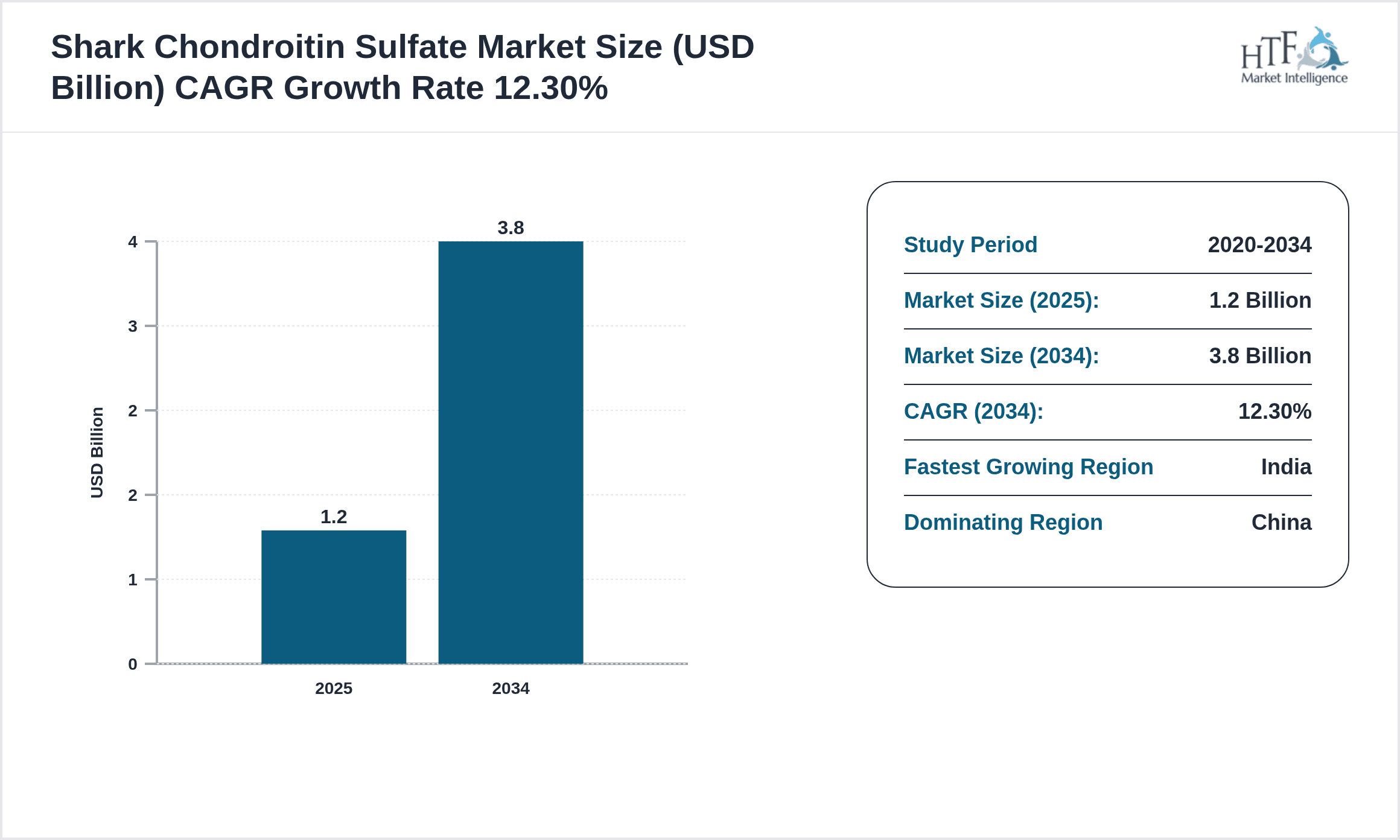
- •Market growth is driven by rising health consciousness, increasing arthritis and joint disorder cases, and demand for natural supplements. The market size was USD 1.2 Billion in 2024 and is forecasted to reach USD 3.8 Billion by 2034, reflecting a CAGR of 12.3%. The pharmaceutical grade segment dominates, while nutraceutical grade shows the fastest growth.
- •Strategically, the market is vital for pharmaceutical manufacturers, supplement producers, and cosmetic companies aiming to capitalize on Asia-Pacific’s expanding health and wellness industry. Continuous innovation, regulatory adherence, and regional expansion present valuable opportunities for stakeholders.
Competitive Landscape
Competition in the Asia-Pacific Shark Chondroitin Sulfate market is intense, characterized by a mix of multinational corporations and regional players focusing on product innovation, cost-efficiency, and strategic partnerships. Companies compete by enhancing extraction technologies to improve purity and yield, investing in R&D for novel applications, and expanding distribution networks across emerging markets. Market leaders leverage integrated supply chains and regulatory compliance to sustain competitive advantages. Rivalry is also shaped by sustainability considerations and adherence to evolving environmental standards. Emerging players adopt differentiation strategies through niche product formulations targeting specific applications such as nutraceuticals and cosmetics. Overall, the market exhibits dynamic competition with continuous innovation, consolidation activities, and aggressive regional expansions shaping its future trajectory.
Leading Companies in Shark Chondroitin Sulfate Market
- •Kuwait Flour Mills & Bakeries (Kuwait)
- •Seawin Biotech Group (China)
- •Bioiberica SAU (Spain)
- •IBSA Institut Biochimique SA (Switzerland)
- •Nitta Gelatin Inc. (Japan)
- •Cargill Incorporated (United States)
- •Pharma Marine AS (Norway)
- •Fengyuan Biology Technology Co., Ltd. (China)
- •Zhejiang NHU Co., Ltd. (China)
- •Rottapharm|Madaus GmbH (Germany)
- •Vinnolit GmbH & Co. KG (Germany)
- •Tianjin Zhongxin Pharm Co., Ltd. (China)
- •Mitsubishi Corporation Life Sciences Limited (Japan)
- •Weishardt International (France)
- •Kewpie Corporation (Japan)
- •Hangzhou J&B Import & Export Co., Ltd. (China)
- •Sichuan Guoguang Pharmaceutical Co., Ltd. (China)
- •Qingdao Vland Biotech Group (China)
- •Shanghai Kaiqi Pharmaceutical Co., Ltd. (China)
- •Dongying Hongjiu Chemical Co., Ltd. (China)
- •Shandong Freda Pharmaceutical Co., Ltd. (China)
- •Sunshine Biopharma Corp. (China)
- •Zhejiang Tianyuan New Materials Co., Ltd. (China)
- •Hainan Orient Bio-pharmaceutical Co., Ltd. (China)
- •Chongqing Zhifei Biological Products Co., Ltd. (China)
Market Breakdown
- •By Type
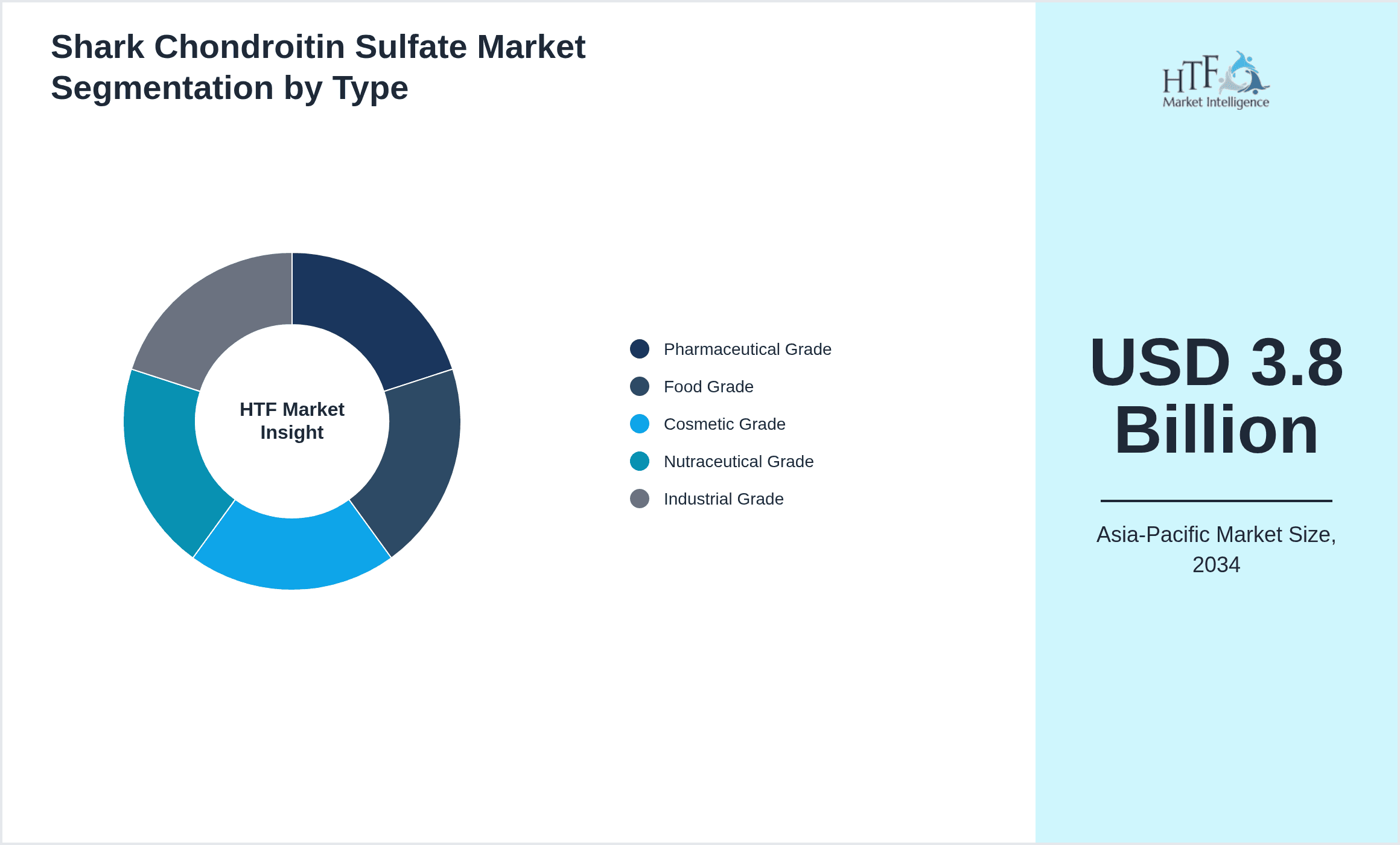
- ◦Pharmaceutical Grade
- ◦Food Grade
- ◦Cosmetic Grade
- ◦Nutraceutical Grade
- ◦Industrial Grade
- •By Application
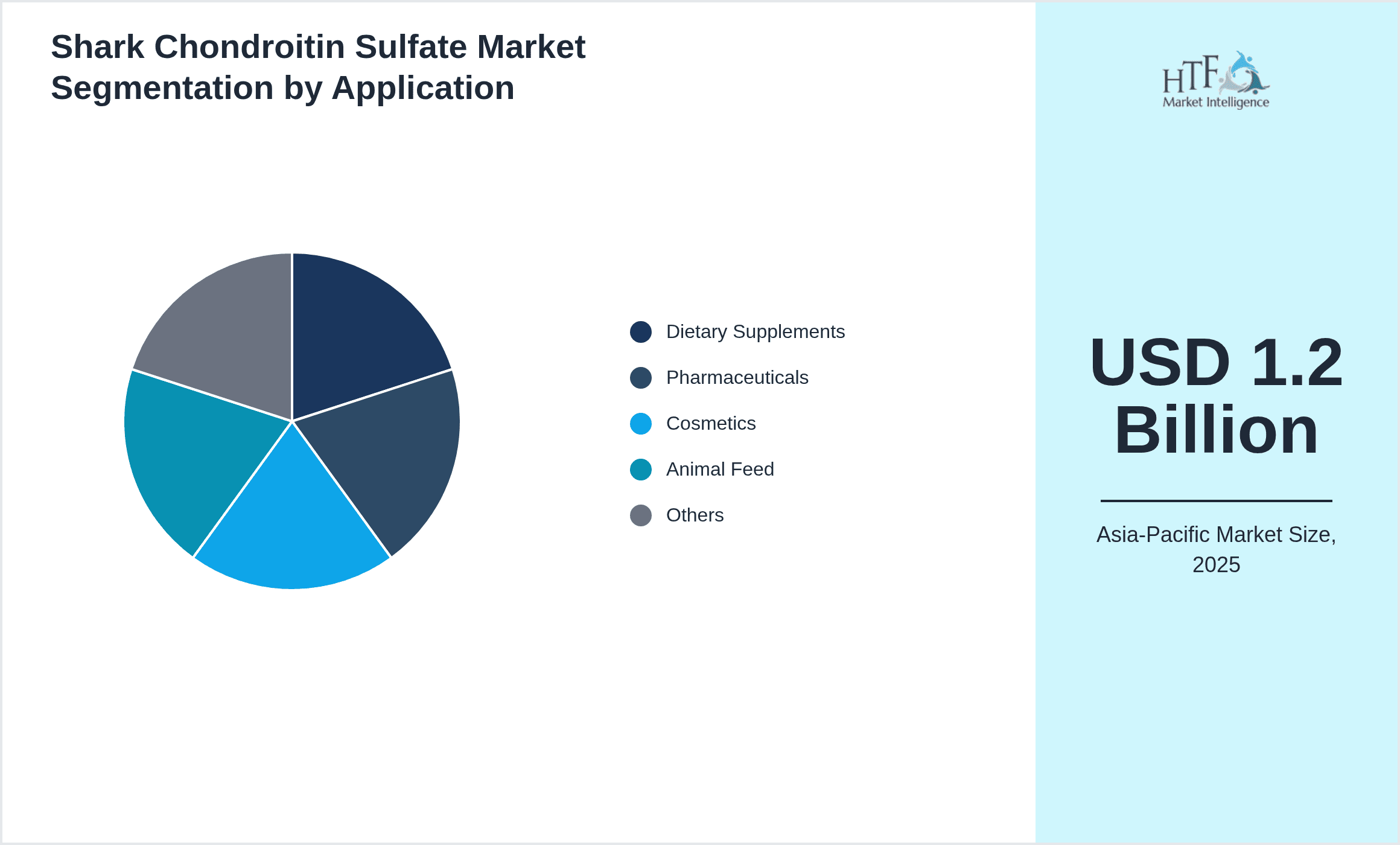
- ◦Dietary Supplements
- ◦Pharmaceuticals
- ◦Cosmetics
- ◦Animal Feed
- ◦Others
- •By End User
- ◦Pharmaceutical Companies
- ◦Nutraceutical Manufacturers
- ◦Cosmetic Producers
- ◦Animal Feed Manufacturers
- •By Distribution Channel
- ◦Direct Sales
- ◦Distributors
- ◦Online Retail
- ◦Pharmacies
Growth Drivers
The Asia-Pacific Shark Chondroitin Sulfate market is propelled by increasing prevalence of osteoarthritis and joint-related ailments, encouraging demand for natural and effective supplements. Rising consumer health awareness and preference for organic ingredients in pharmaceuticals and cosmetics further stimulate growth. Expansion of fitness and wellness industries in countries like China and India drives uptake of dietary supplements containing shark chondroitin sulfate. Additionally, advancements in extraction technologies improve product quality and reduce costs, enabling broader accessibility. Government support for health supplement industries and growing investments by key players in research and development also contribute significantly to sustained market expansion.
Market Trends
A notable trend is the integration of shark chondroitin sulfate in innovative nutraceutical formulations combining multiple bioactive compounds to enhance efficacy. Increasing consumer inclination towards clean-label and sustainable products has led to adoption of eco-friendly extraction methods and certification standards. The cosmetic industry is leveraging chondroitin sulfate’s anti-aging and skin hydration properties, leading to new product launches. Digital marketing and e-commerce platforms have expanded market reach, especially in urban Asia-Pacific hubs. Collaborations between pharmaceutical companies and biotech firms to develop advanced drug delivery systems utilizing shark chondroitin sulfate reflect ongoing innovation. These trends collectively shape the evolving market landscape.

Market Restraints
Market growth faces challenges due to regulatory complexities and variations across Asia-Pacific countries, causing delays in product approvals and compliance costs. Ethical concerns regarding shark cartilage harvesting raise sustainability and environmental impact issues, potentially restricting raw material availability. High cost of purified pharmaceutical-grade chondroitin sulfate limits adoption in price-sensitive segments. Additionally, competition from synthetic and alternative natural sources of chondroitin sulfate dampens market penetration. Supply chain disruptions, exacerbated by geopolitical tensions and pandemic aftermaths, also constrain consistent raw material procurement and distribution efficiency across the region.
Market Opportunities
Opportunities abound in expanding applications within veterinary and animal feed sectors, where shark chondroitin sulfate can improve joint health in livestock and pets. Untapped markets in Southeast Asia and Australia present growth potential due to rising disposable incomes and health awareness. Innovations in formulation technologies enabling enhanced bioavailability and multi-functional products can attract new consumer segments. Strategic collaborations, mergers, and acquisitions offer pathways for market expansion and portfolio diversification. Regulatory harmonization efforts across Asia-Pacific could streamline approvals, facilitating faster market entry. Furthermore, increasing demand for natural cosmetic ingredients opens avenues for product development tailored to regional skincare needs.
Market Challenges
The market grapples with challenges including fluctuating raw material supply due to environmental regulations and overfishing restrictions impacting shark populations. Quality consistency remains a concern given variability in extraction and processing techniques among manufacturers. Intellectual property issues and lack of standardized testing protocols hinder innovation and product differentiation. Penetrating fragmented retail channels across diverse Asia-Pacific markets requires significant investment in localized marketing and distribution. Additionally, competition from synthetic alternatives and consumer skepticism about marine-sourced ingredients limit adoption. Navigating complex regulatory landscapes with varying safety and labeling requirements further complicates market operations and increases compliance costs.
Regulatory Framework
Between 2020 and 2024, Asia-Pacific regulatory authorities have updated guidelines focusing on the safety, sourcing, and labeling of shark-derived ingredients. China’s National Medical Products Administration (NMPA) introduced stricter purity and documentation requirements for pharmaceutical-grade chondroitin sulfate to ensure quality and traceability. India’s Food Safety and Standards Authority (FSSAI) implemented new regulations mandating certification for dietary supplements, impacting market entry timelines. Japan’s Ministry of Health, Labour and Welfare reinforced environmental sustainability criteria for shark cartilage sourcing, promoting ethical harvesting practices. These regulatory developments necessitate increased compliance efforts by manufacturers and encourage investments in sustainable supply chains, shaping market accessibility and consumer trust.
Industry Insights
In April 2023, Seawin Biotech Group launched a high-purity nutraceutical-grade shark chondroitin sulfate product optimized for joint health supplements, targeting growing demand in China and Southeast Asia. The product features advanced extraction technology enhancing absorption and stability. Additionally, in November 2022, Zhejiang NHU Co., Ltd. announced a strategic partnership with a leading pharmaceutical firm to develop innovative drug formulations incorporating shark chondroitin sulfate, aiming to address osteoarthritis treatment gaps. These developments highlight ongoing innovation and strategic collaboration within the Asia-Pacific market, underscoring the focus on quality enhancement and application diversification.
Mergers & Acquisitions
- •In August 2023, Bioiberica SAU completed the acquisition of a Chinese shark cartilage extraction company to strengthen its raw material supply chain and expand its footprint in the Asia-Pacific nutraceutical market. This acquisition allows Bioiberica to leverage local expertise and increase production capacity, enhancing competitiveness in pharmaceutical and dietary supplement segments.
- •In February 2022, Nitta Gelatin Inc. announced acquisition of a Japanese biotech startup specializing in advanced purification technologies for marine-derived compounds including shark chondroitin sulfate. This strategic move aims to accelerate innovation and improve product quality, positioning Nitta Gelatin as a technology leader in Asia-Pacific’s bioactive ingredients market.
Recent Industry News
- •15th March 2024, Seawin Biotech Group unveiled a new line of shark chondroitin sulfate-based dietary supplements designed for enhanced joint mobility, utilizing proprietary extraction technology that improves bioavailability by 25%. The launch targets rapidly growing markets in China and Southeast Asia, supported by digital marketing campaigns. Source: Seawin Official Press Release.
- •10th November 2023, Zhejiang NHU Co., Ltd. entered into a strategic partnership with a major pharmaceutical company in India to co-develop formulations combining shark chondroitin sulfate with other bioactive compounds for osteoarthritis treatment. The collaboration aims to leverage regional market expertise and accelerate product commercialization. Source: Zhejiang NHU Corporate Announcement.
- •22nd July 2022, Bioiberica SAU expanded its manufacturing capacity in China by opening a new extraction facility certified for pharmaceutical-grade shark chondroitin sulfate, enhancing supply chain resilience and meeting rising demand across Asia-Pacific. Source: Bioiberica Annual Report.
- •5th January 2021, Nitta Gelatin Inc. launched a cosmetic-grade shark chondroitin sulfate ingredient line in Japan, focusing on anti-aging skincare products. The new offerings feature improved purity and compatibility with natural formulations, addressing consumer demand for sustainable beauty solutions. Source: Nitta Gelatin Press Release.
Regional Outlook
The China currently holds a significant share of the market, primarily due to several key factors: increasing consumption rates, a burgeoning population, and robust economic momentum. These elements collectively drive demand, positioning this region as a leader in the market. On the other hand, India is rapidly emerging as the fastest-growing area within the industry. This remarkable growth can be attributed to swift infrastructure development, the expansion of various industrial sectors, and a marked increase in consumer demand. These dynamics make this region a crucial player in shaping future market growth.
In our report, we cover a comprehensive analysis of the following regions and countries:
- Japan
- China
- Southeast Asia
- India
- Australia
- South Korea
- Others
| Feature | Details |
|---|---|
| Base Year Market Size | USD 1.2 Billion |
| Forecast Year Market Size | USD 3.8 Billion |
| CAGR | 12.3% |
| Forecast Period | 2026 to 2033 |
| YoY Growth | 12.3% |
| Regions Covered | Japan, China, Southeast Asia, India, Australia, South Korea, Others |
| Key Companies | Kuwait Flour Mills & Bakeries (Kuwait), Seawin Biotech Group (China), Bioiberica SAU (Spain), IBSA Institut Biochimique SA (Switzerland), Nitta Gelatin Inc. (Japan), Cargill Incorporated (United States), Pharma Marine AS (Norway), Fengyuan Biology Technology Co., Ltd. (China), Zhejiang NHU Co., Ltd. (China), Rottapharm|Madaus GmbH (Germany), Vinnolit GmbH & Co. KG (Germany), Tianjin Zhongxin Pharm Co., Ltd. (China), Mitsubishi Corporation Life Sciences Limited (Japan), Weishardt International (France), Kewpie Corporation (Japan), Hangzhou J&B Import & Export Co., Ltd. (China), Sichuan Guoguang Pharmaceutical Co., Ltd. (China), Qingdao Vland Biotech Group (China), Shanghai Kaiqi Pharmaceutical Co., Ltd. (China), Dongying Hongjiu Chemical Co., Ltd. (China), Shandong Freda Pharmaceutical Co., Ltd. (China), Sunshine Biopharma Corp. (China), Zhejiang Tianyuan New Materials Co., Ltd. (China), Hainan Orient Bio-pharmaceutical Co., Ltd. (China), Chongqing Zhifei Biological Products Co., Ltd. (China) |
Asia-Pacific Shark Chondroitin Sulfate Market Size, Growth & Revenue 2024-2034 - Table of Contents
Frequently Asked Questions (FAQ):
The Compact Track Loaders market is expected to see value worth 5.3 Billion in 2025.
North America currently leads the market with approximately 45% market share, followed by Europe at 28% and Asia-Pacific at 22%. The remaining regions account for 5% of the global market.
Key growth drivers include increasing construction activities, rising demand for versatile equipment in agriculture, technological advancements in track loader design, and growing preference for compact equipment in urban construction projects.