
United Kingdom Secondary Tickets Market Size, Growth & Revenue 2025-2034
United Kingdom Secondary Tickets Market is segmented by Type (Paper Tickets, Electronic Tickets, Mobile Tickets, RFID Tickets), Application (Concerts, Sports Events, Theatre & Arts, Festivals, Conferences), and Geography (England, Scotland, Wales, Northern Ireland)
Pricing
Report Overview
Market Definition & Scope
- •The United Kingdom Secondary Tickets Market involves the resale of event tickets across multiple formats including paper, electronic, mobile, and RFID-enabled options, addressing demand beyond primary sales.
- •It covers diverse applications such as concerts, sports, theatre, festivals, and conferences, serving as a vital platform for consumers seeking flexible access to sold-out or discounted events.
- •The market operates through authorized digital marketplaces, peer-to-peer platforms, and brokers, underpinned by regulatory frameworks that aim to prevent fraud and unfair pricing.
- •Innovations in mobile ticketing and RFID technology enhance transaction security and convenience, enabling efficient ticket transfer and validation, thus broadening market reach and consumer trust.
The Future of Revolutionising Event Access with Digital Ticketing
- •Digital ticketing technologies are transforming secondary ticket platforms by enhancing security and user experience, enabling real-time ticket transfers and verification.
- •The integration of mobile and RFID tickets is driving transparency and reducing counterfeit risks, fostering consumer confidence in the secondary market.
- •Innovative marketplace models are expanding consumer reach while aligning with regulatory compliance, positioning the UK as a leader in secondary ticketing innovation.
Industry Challenges in the United Kingdom Secondary Tickets Market
- •Prevalence of ticket scalping and counterfeit tickets undermines consumer trust and complicates regulatory enforcement.
- •High infrastructure costs for secure digital platforms limit entry for smaller players and restrict market competitiveness.
- •Consumer adoption barriers persist due to concerns over ticket authenticity and complex resale policies.

Digital Ticketing Innovation: The Game Changer
- •Mobile and RFID ticketing technologies offer enhanced security, reducing fraud and enabling seamless event entry.
- •These innovations lower operational costs by automating ticket validation and minimizing manual checks.
- •User experience improves through instant ticket transfers and real-time updates, increasing market accessibility.
Market Segmentation
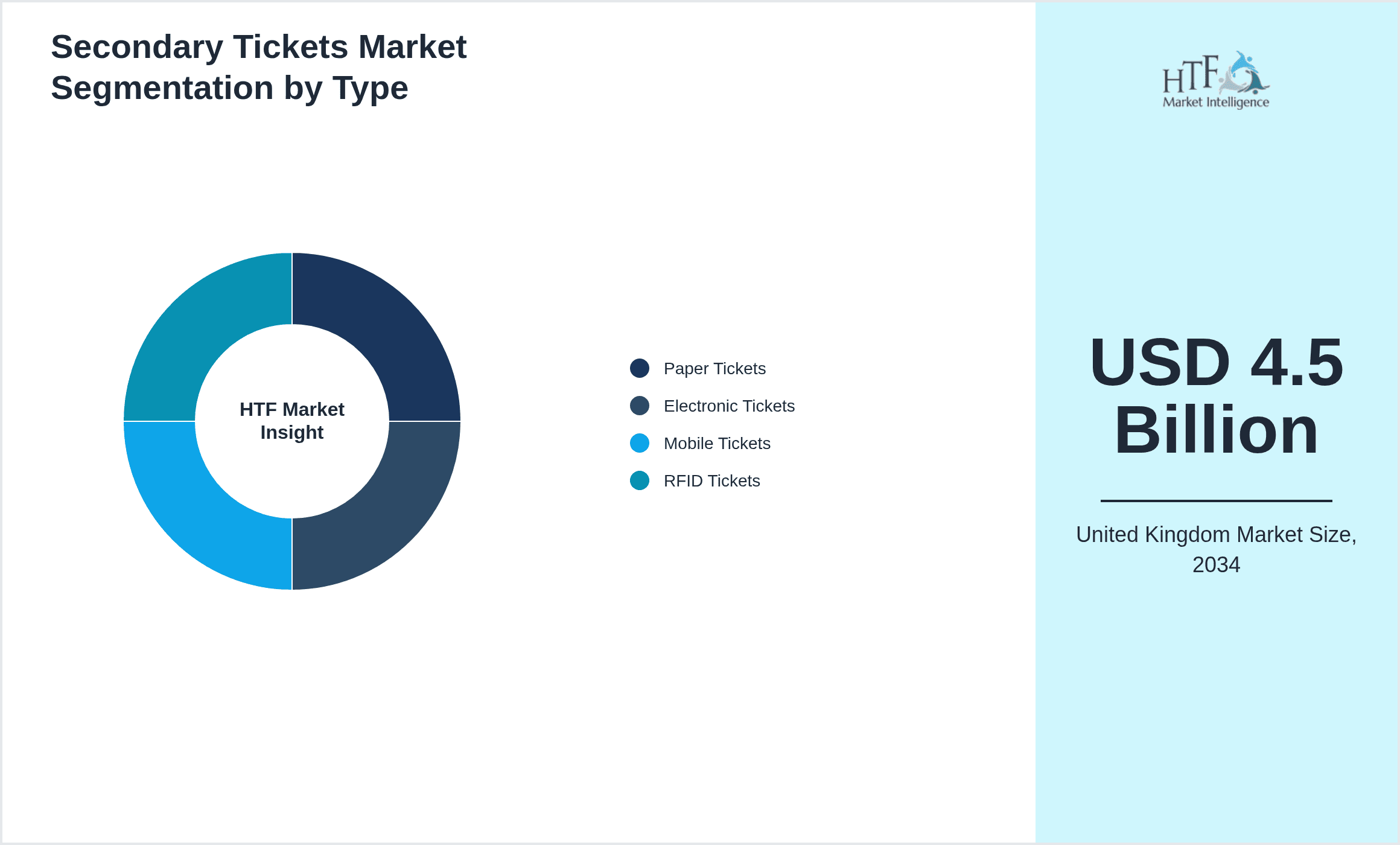
- •By Type
- ◦Paper Tickets
- ◦Electronic Tickets
- ◦Mobile Tickets
- ◦RFID Tickets
- •By Application
- ◦Concerts
- ◦Sports Events
- ◦Theatre & Arts
- ◦Festivals
- ◦Conferences
- •By Distribution Channel
- ◦Online Marketplaces
- ◦Peer-to-Peer Platforms
- ◦Broker Services
- •By Regional Zones
- ◦Northeast England
- ◦Southeast England
- ◦Midlands
- ◦Scotland
- ◦Wales
Market Explosion: A Rapidly Growing Sector
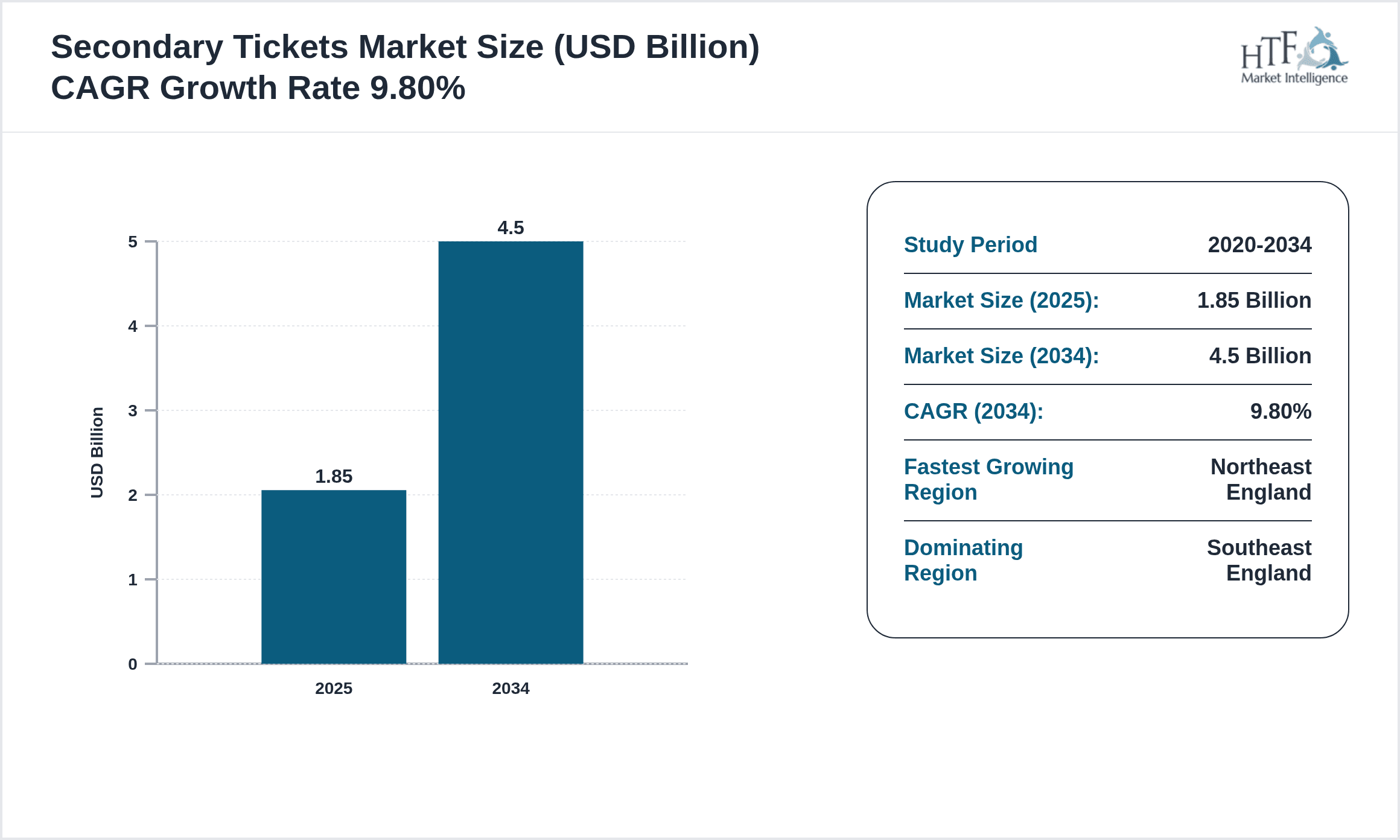
- •The market is valued at USD 1.85 billion in 2025, reflecting robust consumer demand for secondary tickets across the UK.
- •Forecasts project growth to USD 4.5 billion by 2034, driven by digital adoption and regulatory reforms.
- •The sector is expected to expand at a CAGR of 9.8%, with Northeast England emerging as the fastest growing sub-region.
- •Southeast England remains the dominating region, contributing 38% market share with steady 8.7% CAGR.

Key Drivers of Growth
- •Government initiatives promoting transparent ticket resale regulations foster market legitimacy and consumer protection.
- •Strategic partnerships between event organizers and secondary platforms enhance ticket availability and integrated services.
- •Technological advancements in mobile ticketing and RFID systems drive operational efficiency and user engagement.
Dominant Segments
- •Mobile Tickets lead the market in adoption due to convenience and enhanced security features.
- •Online Marketplaces dominate the distribution channel by offering broad reach and user-friendly interfaces.
Leading the Charge: Key Players and Innovations
- •Viagogo (United Kingdom) pioneers real-time mobile ticket transfers with integrated fraud detection technologies.
- •StubHub (United Kingdom) advances user experience via AI-driven personalized recommendations and dynamic pricing models.
- •Ticketmaster Resale (United Kingdom) expands digital RFID ticket offerings to streamline event entry validation.
- •Seatwave (United Kingdom) enhances peer-to-peer platform security through blockchain-enabled ticket authentication.
- •Twickets (United Kingdom) broadens market reach with a focus on fan-to-fan fair pricing and transparent transactions.
- •GetMeIn (United Kingdom) leads in mobile app innovations for instant ticket resale and seamless payment integration.
- •FanFair (United Kingdom) innovates with AI-powered fraud prevention and customer support automation.
- •ZepTales (United Kingdom) expands via partnerships with sports clubs to offer official secondary ticket services.
- •Dice (United Kingdom) drives growth through blockchain-based ticketing and enhanced event discovery features.
Competitive Landscape
Competition in the UK secondary tickets market revolves around enhancing platform security, user experience, and regulatory compliance. Market leaders differentiate themselves through adoption of cutting-edge technologies like RFID and blockchain, strategic partnerships with event organizers, and robust anti-fraud measures. Rivalry is intense with emerging players leveraging AI and mobile innovations to capture market share. Pricing strategies focus on fair resale to maintain consumer trust, while distribution channels emphasize digital convenience and broad accessibility. The market exhibits moderate entry barriers due to technology investment and regulatory complexity, fostering competition primarily among established and technologically advanced companies. Future competition will increasingly center on ecosystem integration and sustainability of ticket resale practices.
Future Outlook: A Connected and Sustainable Ecosystem
- •Expansion is expected into immersive virtual event tickets and enhanced RFID-enabled experiences, driving new revenue streams.
- •Southeast England will maintain dominance due to dense event infrastructure and high consumer engagement.
- •Long-term industry transformation will focus on sustainability, transparency, and integrated digital ecosystems linking primary and secondary markets.
The Road Ahead: Embrace the Digital Ticketing Revolution
- •The UK secondary tickets market is set to be transformed by digital innovations, fostering a secure, transparent, and consumer-friendly ecosystem that reshapes event access.
- •Sustained technology adoption and regulatory clarity will drive long-term growth and industry-wide transformation, enabling seamless and equitable ticket distribution.
Regional Outlook
The Southeast England currently holds a significant share of the market, primarily due to several key factors: increasing consumption rates, a burgeoning population, and robust economic momentum. These elements collectively drive demand, positioning this region as a leader in the market. On the other hand, Northeast England is rapidly emerging as the fastest-growing area within the industry. This remarkable growth can be attributed to swift infrastructure development, the expansion of various industrial sectors, and a marked increase in consumer demand. These dynamics make this region a crucial player in shaping future market growth.
In our report, we cover a comprehensive analysis of the following regions and countries:
- England
- Scotland
- Wales
- Northern Ireland
| Feature | Details |
|---|---|
| Base Year Market Size | USD 1.85 Billion |
| Forecast Year Market Size | USD 4.5 Billion |
| CAGR | 9.8% |
| Forecast Period | 2026 to 2033 |
| YoY Growth | 9.4% |
| Regions Covered | England, Scotland, Wales, Northern Ireland |
| Key Companies | Viagogo (United Kingdom) pioneers real-time mobile ticket transfers with integrated fraud detection technologies., StubHub (United Kingdom) advances user experience via AI-driven personalized recommendations and dynamic pricing models., Ticketmaster Resale (United Kingdom) expands digital RFID ticket offerings to streamline event entry validation., Seatwave (United Kingdom) enhances peer-to-peer platform security through blockchain-enabled ticket authentication., Twickets (United Kingdom) broadens market reach with a focus on fan-to-fan fair pricing and transparent transactions., GetMeIn (United Kingdom) leads in mobile app innovations for instant ticket resale and seamless payment integration., FanFair (United Kingdom) innovates with AI-powered fraud prevention and customer support automation., ZepTales (United Kingdom) expands via partnerships with sports clubs to offer official secondary ticket services., Dice (United Kingdom) drives growth through blockchain-based ticketing and enhanced event discovery features. |
United Kingdom Secondary Tickets Market Size, Growth & Revenue 2025-2034 - Table of Contents
Frequently Asked Questions (FAQ):
The Compact Track Loaders market is projected to grow at a CAGR of 6.8% from 2025 to 2030, driven by increasing demand in construction and agricultural sectors.
North America currently leads the market with approximately 45% market share, followed by Europe at 28% and Asia-Pacific at 22%. The remaining regions account for 5% of the global market.
Key growth drivers include increasing construction activities, rising demand for versatile equipment in agriculture, technological advancements in track loader design, and growing preference for compact equipment in urban construction projects.