
Benelux Re-Commerce Retailing Market Size, Growth & Revenue 2024-2034
Benelux Re-Commerce Retailing Market is segmented by Application (Online Marketplaces, Physical Stores, B2B Sales, Mobile Platforms, Subscription Services), Type (Electronics, Fashion & Apparel, Home Goods, Books & Media, Sporting Goods), and Geography (Belgium, Netherlands, Luxembourg)
Pricing
Report Overview
Executive Summary
- •The Benelux Re-Commerce Retailing market involves the resale of pre-owned products through diverse channels including online marketplaces, physical stores, and mobile platforms, promoting sustainability and circular economy practices within Belgium, Netherlands, and Luxembourg.
- •Key market highlights include a robust CAGR of 12.9% forecasted between 2024 and 2034, driven by rising consumer awareness of environmental impact and cost savings, with the electronics and fashion segments leading demand.
- •The market's value proposition lies in providing affordable, quality-checked secondhand goods, leveraging technological innovation in e-commerce and logistics to meet evolving consumer preferences and regulatory incentives in the Benelux region.

Competitive Landscape
Competition in the Benelux Re-Commerce Retailing market is characterized by a blend of established e-commerce specialists and emerging niche players leveraging technological innovation and sustainability credentials. Market leaders differentiate themselves through seamless online user experiences, robust quality assurance procedures, and extensive product assortments across electronics, fashion, and home goods. Rivalry intensifies around customer acquisition via mobile platforms and subscription models, while strategic partnerships with logistics providers enhance delivery efficiency. Innovation focuses on integrating AI-driven product recommendations and secure payment systems to build consumer trust. The competitive environment also features consolidation trends, with some players pursuing mergers to expand geographic reach and service offerings. Sustainability commitments and compliance with evolving European regulations underpin the market positioning, creating barriers for new entrants and fostering customer loyalty. Future competition will likely emphasize circular economy integration and enhanced after-sales services to maintain growth momentum.
Leading Companies in Benelux Re-Commerce Retailing Market
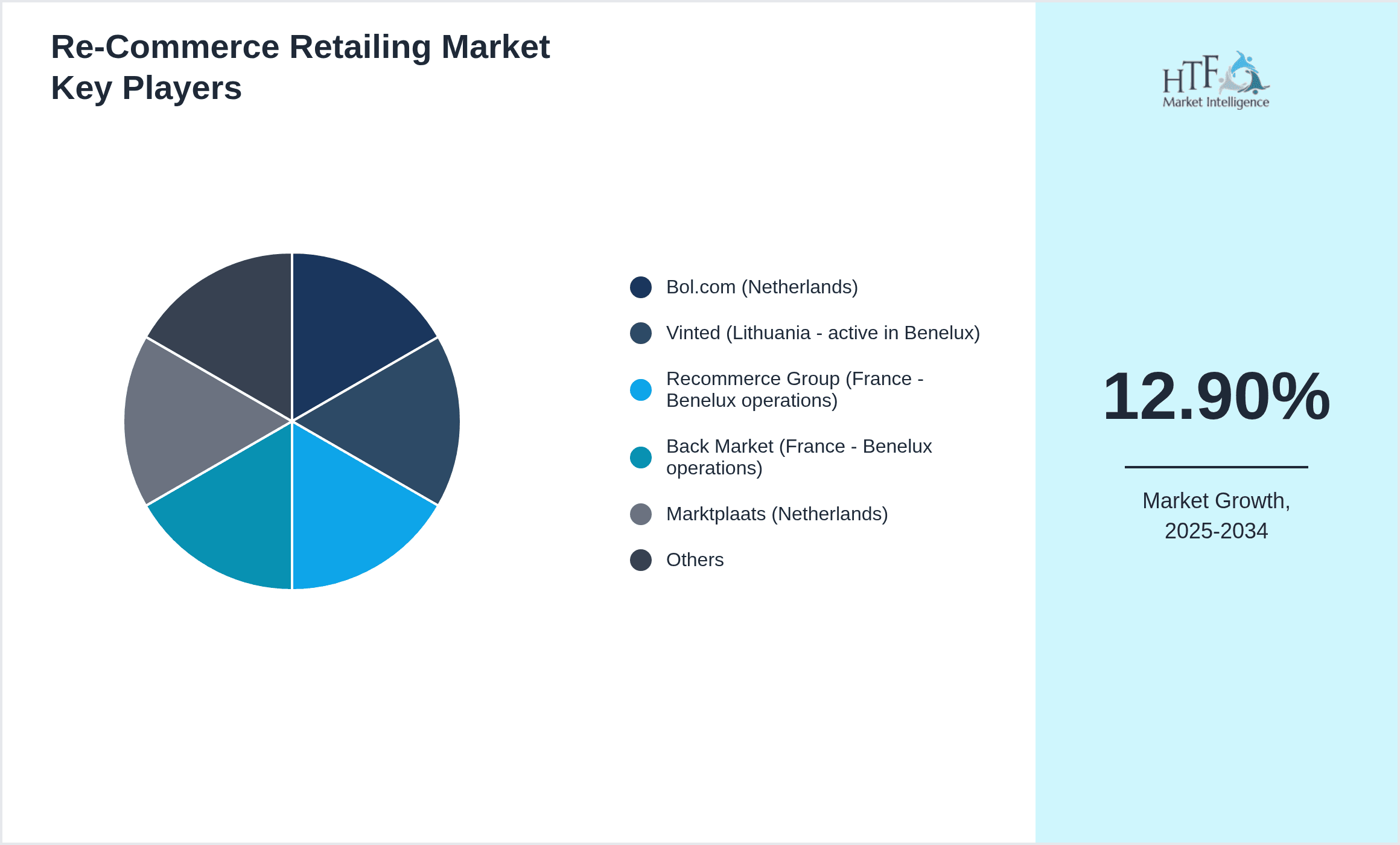
- •Bol.com (Netherlands)
- •Vinted (Lithuania - active in Benelux)
- •Recommerce Group (France - Benelux operations)
- •Back Market (France - Benelux operations)
- •Marktplaats (Netherlands)
- •Wehkamp (Netherlands)
- •Refurbished.nl (Netherlands)
- •Swapfiets (Netherlands)
- •United Wardrobe (Netherlands)
- •Boloo (Belgium)
- •2dehands.be (Belgium)
- •Circl (Netherlands)
- •The Next Closet (Netherlands)
- •Re-Use (Belgium)
- •Refurbished Store (Belgium)
- •TradeTracker (Belgium)
- •Cluse (Netherlands)
- •Vesta (Luxembourg)
- •Resell Group (Belgium)
- •Coolblue (Netherlands)
- •Zalando Pre-Owned (Germany - Benelux market)
- •Cash Converters (International - Benelux presence)
- •Gandalf Group (Belgium)
- •Second Life (Netherlands)
- •Rebound (Netherlands)
Market Breakdown
- •By Type
- ◦Electronics
- ◦Fashion & Apparel
- ◦Home Goods
- ◦Books & Media
- ◦Sporting Goods
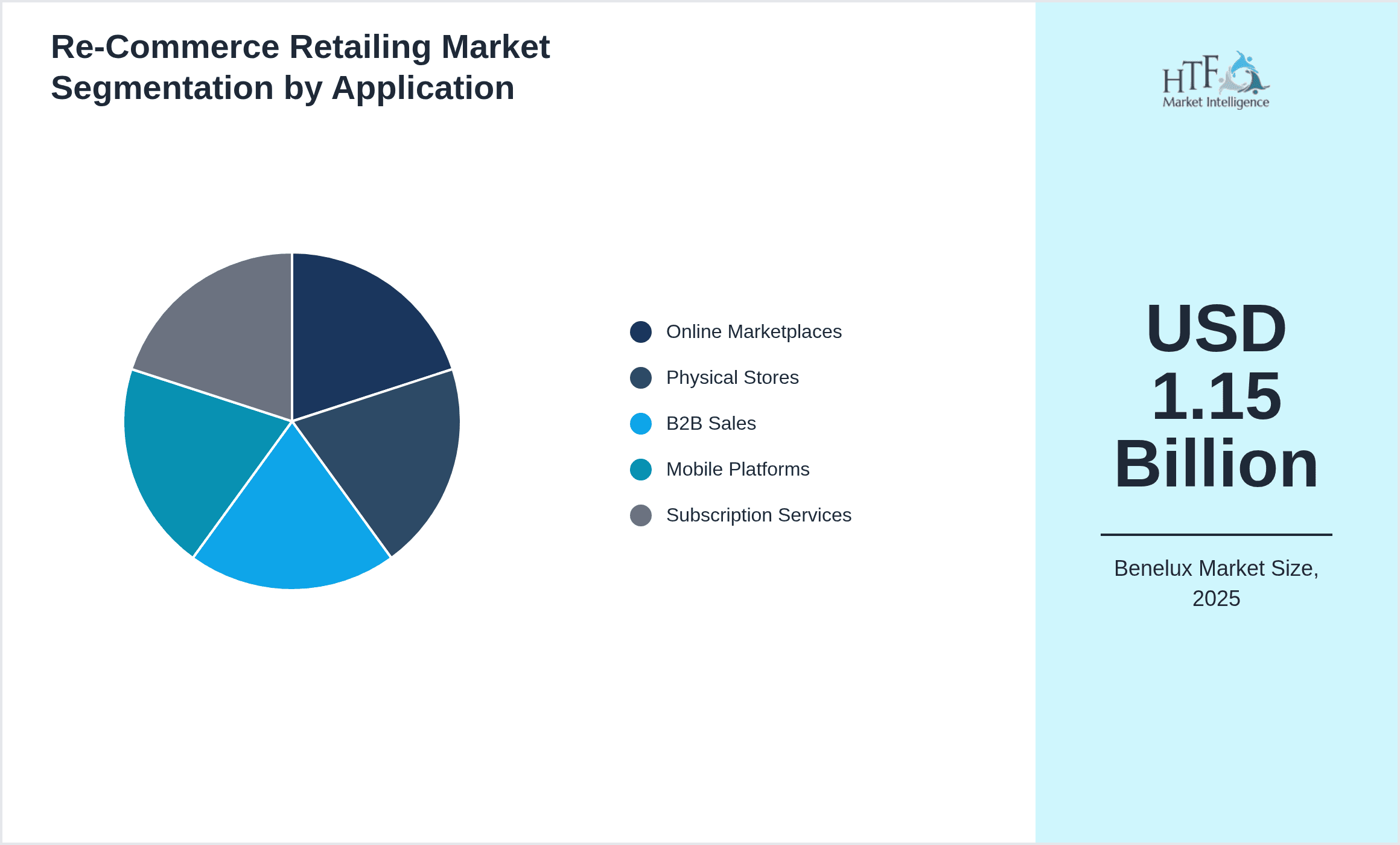
- •By Application
- ◦Online Marketplaces
- ◦Physical Stores
- ◦B2B Sales
- ◦Mobile Platforms
- ◦Subscription Services
- •By Distribution Channel
- ◦Direct-to-Consumer
- ◦Third-Party Retailers
- ◦Consignment Shops
- ◦Pop-Up Stores
- •By Technology Integration
- ◦AI-Powered Recommendations
- ◦Mobile Apps
- ◦Blockchain for Authenticity
- ◦Refurbishment Technology
Growth Drivers
- •Increasing environmental awareness among Benelux consumers is a primary growth driver for the re-commerce retailing market. With rising concerns over waste reduction and sustainability, consumers prefer purchasing pre-owned goods, especially in electronics and fashion sectors, encouraging market expansion.
- •Government incentives and EU regulations promoting circular economy practices have catalyzed investments and innovation in re-commerce platforms, fostering a supportive ecosystem for market players in Belgium, Netherlands, and Luxembourg.
- •Technological advancements such as AI-driven personalization, secure payment gateways, and efficient logistics networks have enhanced customer experience and operational efficiency, driving higher adoption rates of re-commerce retail channels.
- •The growing digital literacy and smartphone penetration across the Benelux region have expanded the reach of mobile resale platforms and subscription-based models, increasing market accessibility and consumer engagement.
- •Economic factors, including cost-conscious consumer behavior post-pandemic, have fueled demand for affordable, quality-certified secondhand products, boosting re-commerce retailing growth.

Market Trends
- •The Benelux market is witnessing a notable shift towards omnichannel re-commerce strategies, integrating online marketplaces with physical stores to provide seamless customer experiences and broaden reach.
- •Subscription models offering curated secondhand goods on a rental or membership basis are gaining traction, particularly in the fashion segment, reflecting evolving consumer preferences for flexibility and sustainability.
- •Blockchain technology is increasingly deployed to verify product authenticity and trace ownership history, enhancing consumer trust in high-value categories like electronics and designer apparel.
- •Collaborations between re-commerce platforms and traditional retailers are emerging, blending resale offerings with new product lines to capture broader market segments.
- •Sustainability certifications and eco-labels are becoming standard practices within the Benelux re-commerce market, influencing purchasing decisions and brand positioning.
Market Restraints
- •Consumer skepticism regarding product quality and authenticity remains a significant restraint, limiting wider adoption of re-commerce retailing, particularly for high-value electronics and luxury fashion items.
- •Complex logistics and reverse supply chain challenges increase operational costs and delivery times, impacting profit margins and customer satisfaction in the Benelux region.
- •Regulatory ambiguities related to warranty, liability, and product safety for secondhand goods create compliance challenges for market operators.
- •Market fragmentation with numerous small players leads to inconsistent service quality and limited scalability for some re-commerce businesses.
- •Competition from fast fashion and discount new goods retailers exerts pricing pressure, reducing the perceived value proposition of re-commerce offerings.
Market Opportunities
- •Expanding B2B resale channels offer untapped potential, enabling businesses to resell surplus inventory and returned goods, thus opening new revenue streams within the Benelux re-commerce space.
- •Integration of advanced refurbishment technologies can improve product quality and lifecycle, attracting quality-conscious consumers and increasing market penetration.
- •Partnerships with logistics startups specializing in eco-friendly delivery solutions could enhance supply chain sustainability and operational efficiency.
- •Growing awareness campaigns and educational initiatives can overcome consumer hesitation by highlighting benefits and quality assurances of re-commerce products.
- •Expansion into niche product categories such as vintage collectibles or high-end sporting goods can diversify offerings and attract specialized customer segments.
Market Challenges
- •Ensuring consistent quality control across a diverse range of product categories remains a major challenge, requiring significant investment in inspection and certification processes.
- •Building scalable and cost-effective reverse logistics networks is difficult due to fragmented supply chains and variable product conditions, impacting profitability.
- •Addressing regulatory compliance in multiple Benelux countries with differing consumer protection laws complicates market entry and operational standardization.
- •Combating counterfeit and fraudulent listings requires sophisticated verification systems, which increase operational complexity and costs.
- •Maintaining competitive pricing while investing in technology, marketing, and customer service challenges smaller re-commerce enterprises' sustainability.
Regulatory Framework
- •Between 2020 and 2024, the EU Circular Economy Action Plan reinforced regulations requiring extended producer responsibility, mandating sellers in Benelux to ensure product reuse and recycling, directly impacting re-commerce retail practices.
- •New consumer protection laws enacted in Benelux countries during 2022-2024 emphasize warranty provisions and return policies for secondhand goods, increasing compliance requirements for re-commerce platforms.
- •Data privacy regulations such as GDPR continue to influence customer data handling by re-commerce retailers, necessitating stringent security and consent mechanisms.
- •Environmental labeling mandates introduced in 2023 require transparency on product lifecycle and sustainability claims, affecting marketing and disclosure practices within the market.
- •Government grants and subsidies to promote circular business models have been available since 2021, encouraging investment and innovation in the Benelux re-commerce sector.
Market Intelligence
- •In March 2023, Vinted expanded its Benelux operations by launching a localized mobile app featuring AI-driven sizing recommendations and enhanced fraud detection, aiming to increase user engagement and trust in the secondhand fashion segment. This expansion positions Vinted as a leading player in the region’s re-commerce retailing market.
- •In November 2022, Bol.com introduced a certified refurbished electronics program in the Netherlands and Belgium, partnering with leading refurbishment specialists to offer warranty-backed pre-owned devices through its online marketplace, thereby strengthening consumer confidence and boosting market demand.
- •Recent market developments and strategic initiatives are continuously tracked through industry publications, company announcements, and regulatory filings. For the most current information, stakeholders are advised to monitor official corporate communications and recognized market intelligence platforms.
- •Recent market developments and strategic initiatives are continuously tracked through industry publications, company announcements, and regulatory filings. For the most current information, stakeholders are advised to monitor official corporate communications and recognized market intelligence platforms.
Mergers & Acquisitions
- •In August 2023, Back Market acquired Refurbished.nl, a Dutch refurbishment specialist, to consolidate its presence in the Benelux re-commerce retailing market. This strategic acquisition enhances Back Market’s supply chain capabilities and broadens its certified pre-owned electronics offerings, strengthening its competitive position regionally.
- •In February 2022, United Wardrobe merged with Vinted’s Benelux operations, combining resources to accelerate market penetration and technological innovation in secondhand fashion resale. The merger resulted in a unified platform with expanded user base and improved service efficiency.
Recent Industry News
- •In May 2024, Swapfiets launched a new subscription service in Belgium, offering refurbished bicycles with maintenance included. The initiative targets urban consumers seeking sustainable mobility solutions and aligns with Benelux’s green transport policies. Source: Swapfiets Official Newsroom.
- •In January 2023, The Next Closet expanded its luxury secondhand fashion platform into Luxembourg, partnering with local boutiques to offer authenticated items. This move diversifies the market and caters to high-end consumers seeking sustainable alternatives. Source: The Next Closet Press Release.
- •In October 2021, Bol.com introduced a trade-in program for used books and media in the Netherlands, incentivizing consumers to resell items easily through its platform, thus stimulating circular consumption habits. Source: Bol.com Corporate Communications.
- •In July 2020, 2dehands.be upgraded its mobile application with AI-based personalized recommendations and enhanced seller verification features, improving user experience and trust in the Belgian resale market. Source: 2dehands.be Press Center.
Market Statistics
- •CAGR by 2034: 12.9%
- •Market Size by 2034: USD 3.85 Billion
- •Market Size in 2025: USD 1.30 Billion
- •Dominating Type: Electronics; Next-Following Type: Fashion & Apparel
- •Dominating Application: Online Marketplaces; Next-Following Application: Physical Stores
- •Dominating Region: Netherlands; Second-Leading Region: Belgium
- •Region with Highest Growth Rate: Belgium
- •Dominating Country: Netherlands
Market Share Table
- •Market Share (%) of Dominating vs Followed Type: Electronics 40%, Fashion & Apparel 28%
- •Market Share (%) of Dominating vs Followed Application: Online Marketplaces 52%, Physical Stores 30%
- •Growth Rate (%) of Dominating vs Followed Type: Electronics 11.8%, Fashion & Apparel 14.7%
- •Growth Rate (%) of Dominating vs Followed Application: Online Marketplaces 12.4%, Physical Stores 10.1%
Top 5 Global Players
- •Bol.com (Netherlands)
- •Vinted (Lithuania - Benelux operations)
- •Back Market (France - Benelux operations)
- •Marktplaats (Netherlands)
- •Coolblue (Netherlands)
Regional Outlook
The Netherlands currently holds a significant share of the market, primarily due to several key factors: increasing consumption rates, a burgeoning population, and robust economic momentum. These elements collectively drive demand, positioning this region as a leader in the market. On the other hand, Belgium is rapidly emerging as the fastest-growing area within the industry. This remarkable growth can be attributed to swift infrastructure development, the expansion of various industrial sectors, and a marked increase in consumer demand. These dynamics make this region a crucial player in shaping future market growth.
In our report, we cover a comprehensive analysis of the following regions and countries:
- Belgium
- Netherlands
- Luxembourg
| Feature | Details |
|---|---|
| Base Year Market Size | USD 1.15 Billion |
| Forecast Year Market Size | USD 3.85 Billion |
| CAGR | 12.9% |
| Forecast Period | 2026 to 2033 |
| YoY Growth | 12.2% |
| Regions Covered | Belgium, Netherlands, Luxembourg |
| Key Companies | Bol.com (Netherlands), Vinted (Lithuania - active in Benelux), Recommerce Group (France - Benelux operations), Back Market (France - Benelux operations), Marktplaats (Netherlands), Wehkamp (Netherlands), Refurbished.nl (Netherlands), Swapfiets (Netherlands), United Wardrobe (Netherlands), Boloo (Belgium), 2dehands.be (Belgium), Circl (Netherlands), The Next Closet (Netherlands), Re-Use (Belgium), Refurbished Store (Belgium), TradeTracker (Belgium), Cluse (Netherlands), Vesta (Luxembourg), Resell Group (Belgium), Coolblue (Netherlands), Zalando Pre-Owned (Germany - Benelux market), Cash Converters (International - Benelux presence), Gandalf Group (Belgium), Second Life (Netherlands), Rebound (Netherlands) |
Benelux Re-Commerce Retailing Market Size, Growth & Revenue 2024-2034 - Table of Contents
Frequently Asked Questions (FAQ):
The Compact Track Loaders market is projected to grow at a CAGR of 6.8% from 2025 to 2030, driven by increasing demand in construction and agricultural sectors.
North America currently leads the market with approximately 45% market share, followed by Europe at 28% and Asia-Pacific at 22%. The remaining regions account for 5% of the global market.
Key growth drivers include increasing construction activities, rising demand for versatile equipment in agriculture, technological advancements in track loader design, and growing preference for compact equipment in urban construction projects.