
China Negative Pressure Wound Therapy Market Size, Growth & Revenue 2024-2034
China Negative Pressure Wound Therapy Market is segmented by Type (Portable NPWT Devices, Stationary NPWT Devices, Disposable NPWT Devices, Single-use NPWT Systems, Reusable NPWT Systems), Application (Chronic Wounds, Acute Wounds, Surgical Wounds, Burn Wounds, Diabetic Foot Ulcers), End User (Hospitals, Outpatient Clinics, Home Healthcare, Specialty Wound Care Centers), Distribution Channel (Direct Sales, Distributors, Online Retail, Medical Device Stores), and Geography (North China, Northeast China, East China, South Central China, Southwest China, Northwest China)
Pricing
Report Overview
Executive Summary
- •The China Negative Pressure Wound Therapy market encompasses medical devices designed to accelerate wound healing by applying controlled vacuum pressure. It includes portable, stationary, disposable, single-use, and reusable NPWT systems, supporting treatment of chronic wounds, surgical wounds, burns, and diabetic foot ulcers. These advanced therapies significantly improve patient outcomes by enhancing tissue repair, reducing infection risks, and managing wound exudate, serving hospitals and home care alike.
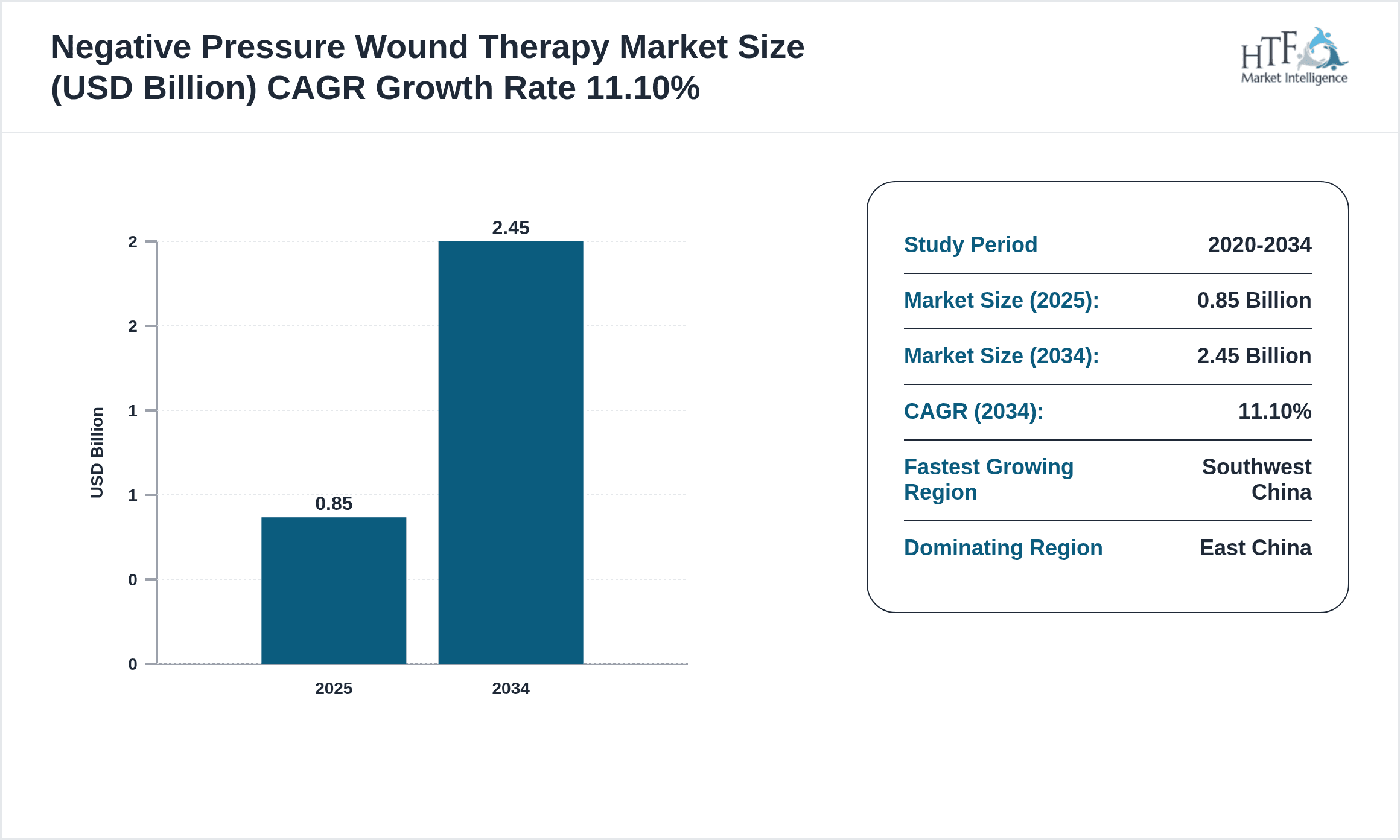
- •The market size stood at approximately USD 0.85 Billion in 2024, with a forecast to reach USD 2.45 Billion by 2034, growing at an 11.1% CAGR. Key drivers include an aging population, rising incidence of diabetes and chronic wounds, and expanding healthcare infrastructure in China’s major regional zones.
- •Strategically, the China NPWT market is critical for healthcare providers focused on improving wound care efficacy and reducing hospitalization time. The integration of portable and disposable devices is enhancing accessibility and patient compliance, making NPWT an essential component in China’s evolving wound management landscape.
Competitive Landscape
The China Negative Pressure Wound Therapy market features intense competition characterized by rapid innovation, diversified product portfolios, and strategic partnerships. Leading players focus on developing portable and disposable NPWT devices with enhanced usability and cost efficiency to capture growing home healthcare segments. Market rivalry is also driven by localized manufacturing and government incentives promoting advanced medical devices. Companies leverage technology advancements such as smart sensors and IoT integration to differentiate their offerings. Pricing strategies balance affordability and quality to appeal to both urban hospitals and rural clinics. The competitive environment is further shaped by regulatory compliance and intellectual property protections. Overall, market positioning hinges on continuous product innovation, regional distribution expansion, and collaboration with healthcare institutions to sustain leadership within China’s dynamic NPWT sector.
Leading Companies in China Negative Pressure Wound Therapy Market
- •Smith & Nephew (United Kingdom)
- •3M Company (United States)
- •Mölnlycke Health Care (Sweden)
- •ConvaTec Group PLC (United Kingdom)
- •Cardinal Health (United States)
- •Acelity L.P. Inc. (United States)
- •Kinetic Concepts, Inc. (KCI) (United States)
- •Beijing Easmon Medical Devices (China)
- •Shanghai Sangrui Medical Technology (China)
- •Zhejiang Blue Sail Medical Co., Ltd. (China)
- •Wuxi Clean Biotech (China)
- •Hangzhou NWD Medical Device (China)
- •Yuwell-Jiangsu Yuyue Medical Equipment & Supply Co., Ltd. (China)
- •Shenzhen Xinkang Medical Technology (China)
- •Lohmann & Rauscher GmbH & Co. KG (Germany)
- •Hollister Incorporated (United States)
- •B. Braun Melsungen AG (Germany)
- •Integra LifeSciences Holdings Corporation (United States)
- •Medela AG (Switzerland)
- •Paul Hartmann AG (Germany)
- •JIANGSU YUYUE MEDICAL EQUIPMENT & SUPPLY CO., LTD (China)
- •Suzhou Geyi Medical Device Co., Ltd. (China)
- •Beijing Chuangjing Technology Development Co., Ltd. (China)
- •Ningbo David Medical Device Co., Ltd. (China)
- •Medtronic PLC (United States)
Market Breakdown
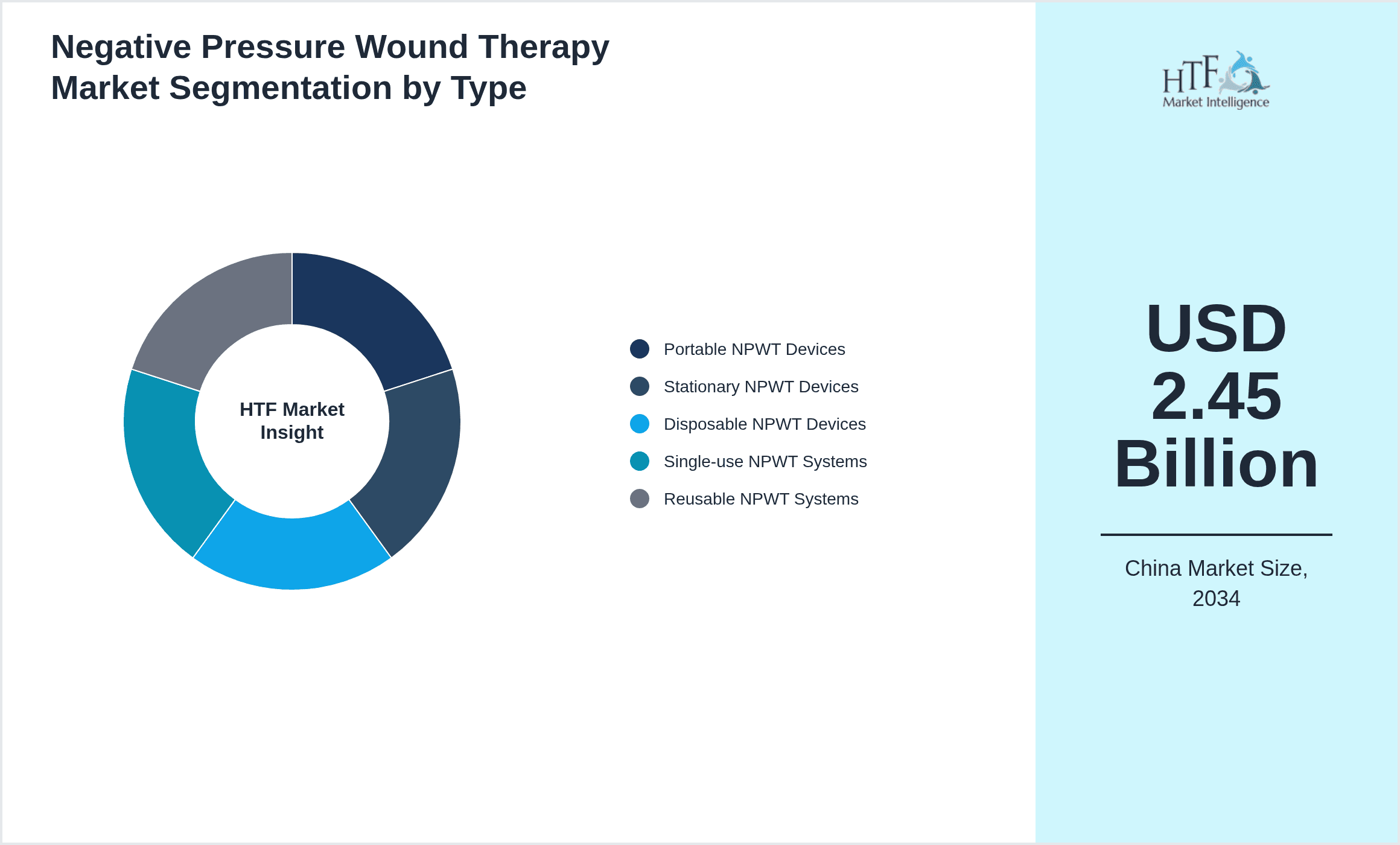
- •By Type
- ◦Portable NPWT Devices
- ◦Stationary NPWT Devices
- ◦Disposable NPWT Devices
- ◦Single-use NPWT Systems
- ◦Reusable NPWT Systems
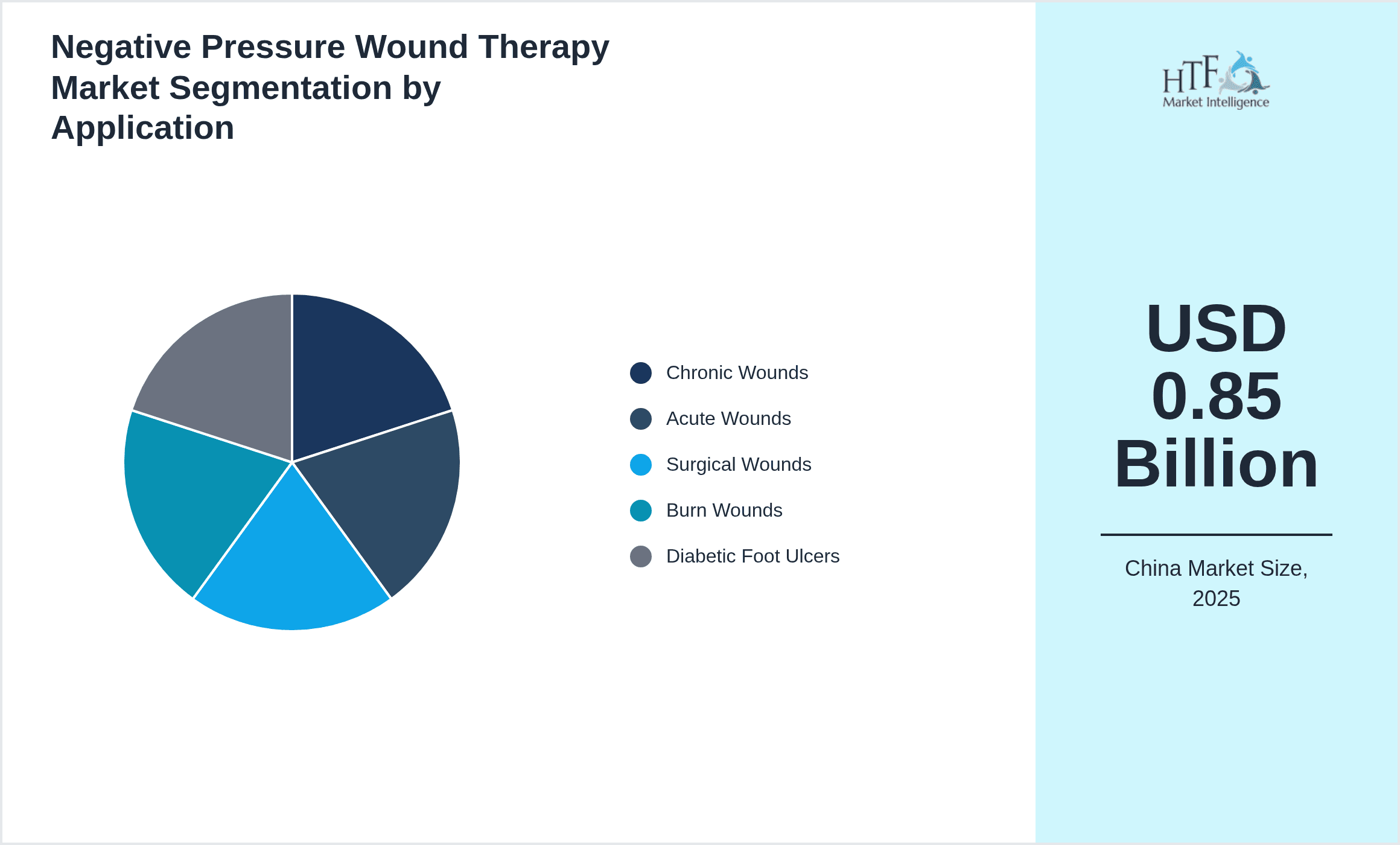
- •By Application
- ◦Chronic Wounds
- ◦Acute Wounds
- ◦Surgical Wounds
- ◦Burn Wounds
- ◦Diabetic Foot Ulcers
- •By End User
- ◦Hospitals
- ◦Outpatient Clinics
- ◦Home Healthcare
- ◦Specialty Wound Care Centers
- •By Distribution Channel
- ◦Direct Sales
- ◦Distributors
- ◦Online Retail
- ◦Medical Device Stores
Growth Drivers
The China Negative Pressure Wound Therapy market is propelled by a rising incidence of chronic wounds linked to an aging population and growing diabetes prevalence. Advanced wound care solutions like NPWT are increasingly adopted by hospitals and home care settings to enhance healing outcomes and reduce infection risks. Government initiatives to upgrade healthcare infrastructure and increase accessibility to innovative medical devices further stimulate demand. Technological innovations in portable and disposable NPWT devices improve patient compliance and ease of use, expanding the market reach. Additionally, increasing awareness among healthcare professionals about the efficacy of NPWT in managing complex wounds accelerates market growth, positioning China as a leading adopter in the wound care segment.
Market Trends
Emerging trends in the China NPWT market include the integration of smart technology such as IoT-enabled devices that allow real-time monitoring and remote wound management. There is growing preference for single-use and disposable NPWT systems due to infection control and convenience, especially in home healthcare. Local manufacturers are increasingly investing in R&D to develop cost-effective NPWT solutions tailored to regional patient needs. Partnerships between global NPWT companies and Chinese distributors are expanding market penetration in tier 2 and 3 cities. Additionally, rising telemedicine adoption complements NPWT usage by enabling virtual consultations and follow-ups, further driving market transformation in China’s wound therapy landscape.
Restraints
High device costs and limited reimbursement policies in certain Chinese provinces constrain NPWT adoption, particularly in rural areas. Lack of awareness and training among some healthcare providers impedes widespread utilization. Complex regulatory approval processes can delay product launches, restraining market pace. In addition, competition from alternative advanced wound care therapies such as bioengineered tissue and hyperbaric oxygen treatment challenges NPWT’s market share. Supply chain disruptions and raw material price volatility also present challenges for manufacturers. These factors collectively slow down the market expansion despite growing clinical demand.
Market Opportunities
There is significant opportunity for growth in China’s home healthcare segment as aging demographics drive demand for convenient wound care solutions. Development of cost-effective disposable NPWT devices tailored to regional market needs can unlock underserved areas. Expanding telehealth infrastructure enables integration of NPWT with remote patient monitoring, creating innovative care models. Collaborations between domestic manufacturers and international technology providers offer pathways for product innovation and market expansion. Additionally, increasing government focus on chronic disease management and wound care reimbursement reforms present strategic openings for stakeholders to accelerate penetration and adoption.
Market Challenges
Key challenges include navigating stringent regulatory frameworks that vary across Chinese provinces, complicating product registration and market entry. Fragmented healthcare infrastructure with disparities between urban and rural regions limits uniform NPWT adoption. Pricing pressures from both local and international competitors challenge profitability margins. There is also a shortage of skilled healthcare professionals trained in advanced wound care techniques, slowing treatment standardization. Intellectual property concerns and counterfeiting risks pose business risks for innovators. Lastly, patient compliance issues due to device complexity or discomfort affect treatment outcomes and market trust.
Regulatory Framework
Between 2020 and 2024, the China National Medical Products Administration (NMPA) has tightened regulatory requirements for negative pressure wound therapy devices, emphasizing stringent clinical evaluation and quality control standards. The updated regulations mandate comprehensive risk assessments and post-market surveillance to ensure patient safety. Regional regulatory bodies have introduced faster review pathways for innovative medical devices, facilitating quicker market access while maintaining compliance. Additionally, new guidelines promoting domestic innovation and encouraging local manufacturing have been implemented, providing incentives for Chinese NPWT producers. These regulatory developments impact product approval timelines, pricing structures, and competitive dynamics within China, shaping the strategic approaches of both multinational and domestic NPWT companies.
Market Intelligence
- •In February 2024, Beijing Easmon Medical Devices launched a new portable NPWT system featuring integrated IoT capabilities for remote wound monitoring, targeting home healthcare patients. This innovation aims to improve patient adherence and reduce hospital visits, positioning the company as a technology leader in China’s NPWT market. The device includes real-time alerts and data analytics to assist clinicians in optimizing therapy protocols.
- •In August 2023, Smith & Nephew expanded its distribution partnership with Shanghai Sangrui Medical Technology to increase market penetration in China’s tier 2 and 3 cities. The collaboration focuses on deploying cost-effective disposable NPWT systems tailored to local needs, enhancing accessibility in underserved regions and strengthening the companies’ competitive positions.
- •Recent market developments and strategic initiatives are continuously tracked through industry publications, company announcements, and regulatory filings. For the most current information, stakeholders are advised to monitor official corporate communications and recognized market intelligence platforms.
Mergers & Acquisitions
- •In October 2023, 3M Company acquired a majority stake in Zhejiang Blue Sail Medical Co., Ltd., a leading Chinese manufacturer of disposable NPWT devices. This strategic acquisition aims to combine 3M’s global technology expertise with Blue Sail’s local manufacturing capabilities to accelerate innovation and expand market reach in China’s growing NPWT sector.
- •In June 2022, Cardinal Health completed the acquisition of Hangzhou NWD Medical Device, enhancing its product portfolio with advanced portable NPWT systems tailored for the Chinese market. This move supports Cardinal Health’s expansion strategy in Asia, leveraging NWD’s established distribution network and regulatory approvals.
Recent Industry News
- •In March 2024, Medtronic PLC launched a next-generation single-use NPWT system in China featuring enhanced battery life and user-friendly interfaces. The product aims to improve patient mobility and compliance in outpatient wound care, supporting China’s shift toward home-based treatment models. Source: Medtronic Official Press Release
- •In November 2023, Shanghai Sangrui Medical Technology announced a strategic partnership with Yuwell-Jiangsu Yuyue Medical Equipment to co-develop portable NPWT devices for diabetic foot ulcer treatment, targeting rapid market penetration in South China. Source: Industry Newswire
- •In July 2022, Smith & Nephew unveiled an AI-powered wound assessment software integrated with its NPWT devices to provide clinicians in China with predictive healing analytics, enhancing personalized treatment plans and clinical outcomes. Source: Company Website
- •In January 2021, Beijing Easmon Medical Devices expanded its manufacturing facility to increase production capacity for disposable NPWT systems, anticipating rising demand driven by aging demographics and chronic disease prevalence. Source: Official Company Announcement
Market Statistics
- •CAGR by 2034: 11.1%
- •Market Size by 2034: USD 2.45 Billion
- •Market Size in 2025: USD 0.92 Billion
- •Dominating Type: Portable NPWT Devices; Next-following Type: Disposable NPWT Devices
- •Dominating Application: Chronic Wounds; Next-following Application: Surgical Wounds
- •Dominating Region: East China; Second-leading Region: North China
- •Region with Highest Growth Rate: Southwest China
- •Dominating Country: China
Market Share Table
- •Market Share (%) of Dominating vs Followed Type
- ◦Portable NPWT Devices: 38%
- ◦Disposable NPWT Devices: 22%
- •Market Share (%) of Dominating vs Followed Application
- ◦Chronic Wounds: 40%
- ◦Surgical Wounds: 25%
- •Growth Rate (%) of Dominating vs Followed Type
- ◦Portable NPWT Devices: 10.5%
- ◦Disposable NPWT Devices: 13.2%
- •Growth Rate (%) of Dominating vs Followed Application
- ◦Chronic Wounds: 11.0%
- ◦Surgical Wounds: 10.1%
Top 5 Global Players
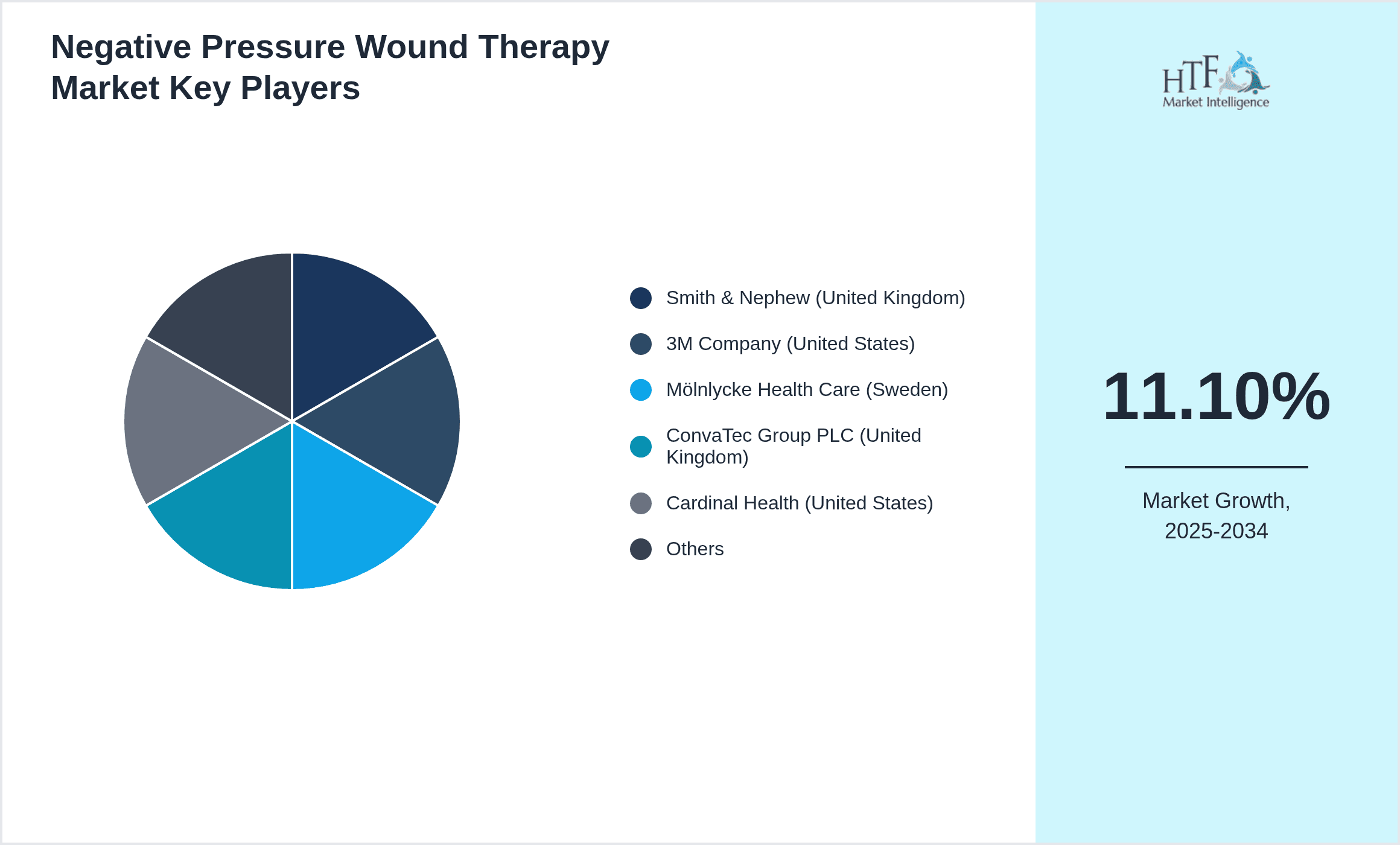
- •Smith & Nephew (United Kingdom)
- •3M Company (United States)
- •Mölnlycke Health Care (Sweden)
- •ConvaTec Group PLC (United Kingdom)
- •Cardinal Health (United States)
Regional Outlook
The East China currently holds a significant share of the market, primarily due to several key factors: increasing consumption rates, a burgeoning population, and robust economic momentum. These elements collectively drive demand, positioning this region as a leader in the market. On the other hand, Southwest China is rapidly emerging as the fastest-growing area within the industry. This remarkable growth can be attributed to swift infrastructure development, the expansion of various industrial sectors, and a marked increase in consumer demand. These dynamics make this region a crucial player in shaping future market growth.
In our report, we cover a comprehensive analysis of the following regions and countries:
- North China
- Northeast China
- East China
- South Central China
- Southwest China
- Northwest China
| Feature | Details |
|---|---|
| Base Year Market Size | USD 0.85 Billion |
| Forecast Year Market Size | USD 2.45 Billion |
| CAGR | 11.1% |
| Forecast Period | 2026 to 2033 |
| YoY Growth | 11.1% |
| Regions Covered | North China, Northeast China, East China, South Central China, Southwest China, Northwest China |
| Key Companies | Smith & Nephew (United Kingdom), 3M Company (United States), Mölnlycke Health Care (Sweden), ConvaTec Group PLC (United Kingdom), Cardinal Health (United States), Acelity L.P. Inc. (United States), Kinetic Concepts, Inc. (KCI) (United States), Beijing Easmon Medical Devices (China), Shanghai Sangrui Medical Technology (China), Zhejiang Blue Sail Medical Co., Ltd. (China), Wuxi Clean Biotech (China), Hangzhou NWD Medical Device (China), Yuwell-Jiangsu Yuyue Medical Equipment & Supply Co., Ltd. (China), Shenzhen Xinkang Medical Technology (China), Lohmann & Rauscher GmbH & Co. KG (Germany), Hollister Incorporated (United States), B. Braun Melsungen AG (Germany), Integra LifeSciences Holdings Corporation (United States), Medela AG (Switzerland), Paul Hartmann AG (Germany), JIANGSU YUYUE MEDICAL EQUIPMENT & SUPPLY CO., LTD (China), Suzhou Geyi Medical Device Co., Ltd. (China), Beijing Chuangjing Technology Development Co., Ltd. (China), Ningbo David Medical Device Co., Ltd. (China), Medtronic PLC (United States) |
China Negative Pressure Wound Therapy Market Size, Growth & Revenue 2024-2034 - Table of Contents
Frequently Asked Questions (FAQ):
The Compact Track Loaders market is expected to see value worth 5.3 Billion in 2025.
North America currently leads the market with approximately 45% market share, followed by Europe at 28% and Asia-Pacific at 22%. The remaining regions account for 5% of the global market.
Key growth drivers include increasing construction activities, rising demand for versatile equipment in agriculture, technological advancements in track loader design, and growing preference for compact equipment in urban construction projects.