
Japan Facial Skincare Market Size, Growth & Revenue 2024-2034
Japan Facial Skincare Market is segmented by Application (Daily Skincare, Anti-Aging, Acne Treatment, Sun Protection, Sensitive Skin), Type (Creams & Lotions, Serums, Cleansers, Masks & Peels, Sunscreens), and Geography (Hokkaido, Tohoku, Kanto, Chubu, Kansai, Chugoku, Shikoku, Kyushu)
Pricing
Report Overview
Executive Summary
- •The Japan Facial Skincare market includes diverse product categories such as creams, serums, cleansers, masks, and sunscreens, targeting facial skin concerns like aging, acne, and sensitivity. It spans daily routines to specialized treatments with a focus on natural and technologically advanced formulations tailored to Japanese consumer preferences.
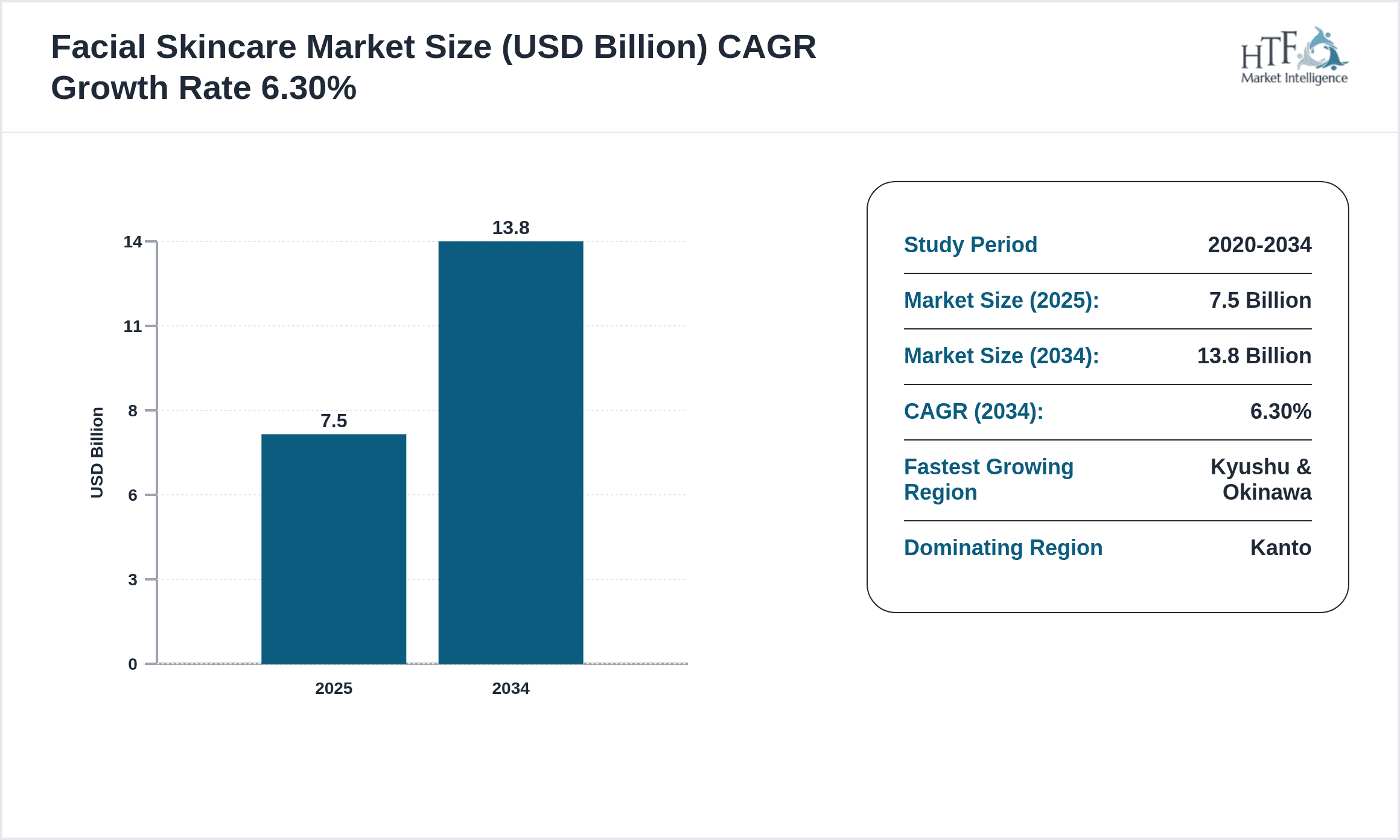
- •The market is valued at USD 7.5 Billion in 2024 and is projected to reach USD 13.8 Billion by 2034, growing at a CAGR of 6.3%. Key growth drivers include rising skincare awareness, aging population, and innovation in product delivery systems.
- •Strategic importance lies in meeting evolving consumer demands for efficacy, safety, and natural ingredients, with strong distribution networks across retail and e-commerce channels shaping competitive dynamics.
Competitive Landscape
Competition in the Japan Facial Skincare market is intense, driven by product innovation, brand loyalty, and marketing strategies tailored to Japanese beauty standards. Leading companies focus on R&D to develop advanced formulations with natural and functional ingredients. The market sees rivalry between established domestic brands and international entrants leveraging local consumer insights and distribution partnerships. Strategic collaborations, sustainability initiatives, and digital engagement are critical for differentiation. Pricing strategies balance premium positioning with accessibility. Companies invest heavily in product efficacy validation and regulatory compliance. Regional consumer preferences across zones like Kanto and Kansai influence product offerings. Competitive advantages stem from innovation in anti-aging, sensitive skin solutions, and multifunctional products. Market entry barriers include high regulatory standards and strong incumbent presence, fostering continuous product evolution and customer-centric marketing approaches.
Leading Companies in Japan Facial Skincare Market
- •Shiseido Company, Limited (Japan)
- •Kao Corporation (Japan)
- •POLA Orbis Holdings Inc. (Japan)
- •KOSÉ Corporation (Japan)
- •Fancl Corporation (Japan)
- •DHC Corporation (Japan)
- •SK-II (Japan)
- •Kanebo Cosmetics Inc. (Japan)
- •Cure Natural Aqua Gel (Japan)
- •Utena, Inc. (Japan)
- •Hada Labo (Japan)
- •Albion Co., Ltd. (Japan)
- •Meishoku Co., Ltd. (Japan)
- •Mandom Corporation (Japan)
- •NatureLab Tokyo (Japan)
- •Daiso Industries Co., Ltd. (Japan)
- •Muji (Japan)
- •Cosmetex Roland, Inc. (Japan)
- •Tatcha Inc. (Japan)
- •Hada Senka (Japan)
- •Curel (Japan)
- •Lululun (Japan)
- •KireiKirei (Japan)
- •Sekkisei (Japan)
- •Ipsa (Japan)

Market Breakdown
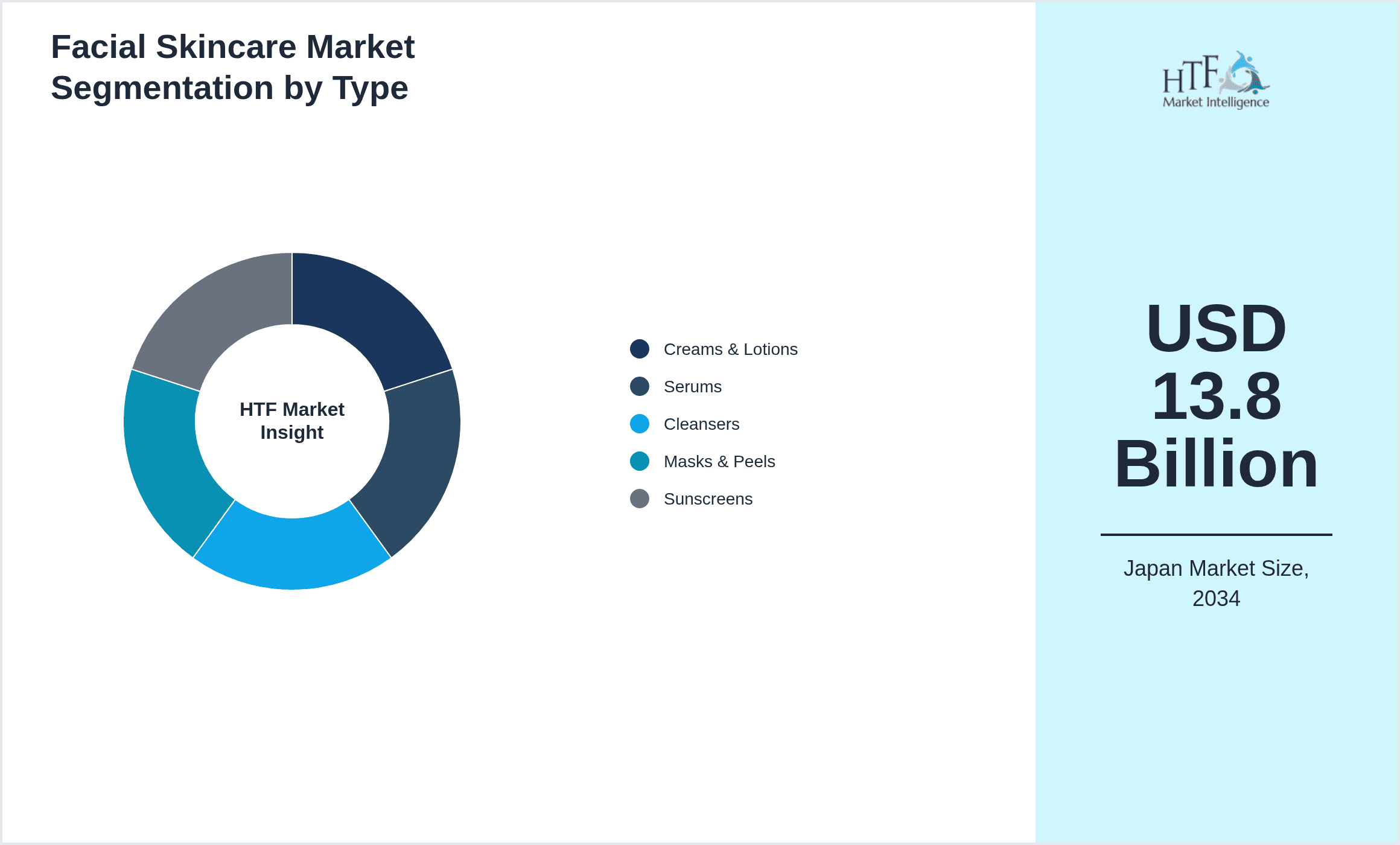
- •By Type
- ◦Creams & Lotions
- ◦Serums
- ◦Cleansers
- ◦Masks & Peels
- ◦Sunscreens
- •By Application
- ◦Daily Skincare
- ◦Anti-Aging
- ◦Acne Treatment
- ◦Sun Protection
- ◦Sensitive Skin
- •By Distribution Channel
- ◦Department Stores
- ◦Specialty Retailers
- ◦E-commerce
- ◦Pharmacies & Drugstores
- •By Consumer Age Group
- ◦Youth (18-25)
- ◦Adults (26-45)
- ◦Middle-aged (46-65)
- ◦Seniors (65+)
Growth Drivers
The Japan Facial Skincare market growth is propelled by increasing consumer awareness around skin health, driven by aging population demographics demanding effective anti-aging products. Rising disposable incomes empower consumers to invest in premium and innovative skincare solutions. Technological advancements in product formulations, such as incorporation of natural botanicals and biotechnology ingredients, enhance product efficacy and attract health-conscious buyers. Expansion of e-commerce platforms facilitates convenient access to diverse skincare products, boosting sales across urban and rural zones. Additionally, growing interest in personalized skincare regimens tailored to specific skin concerns fosters market expansion. Government initiatives promoting beauty and wellness tourism also contribute positively. The cultural emphasis on flawless skin further stimulates demand for multifunctional and high-performance facial skincare offerings, reinforcing steady market growth over the forecast period.
Market Trends
Emerging trends in the Japan Facial Skincare market include heightened consumer preference for clean, organic, and cruelty-free products reflecting global sustainability movements. There is a notable rise in multifunctional skincare items combining hydration, sun protection, and anti-aging benefits to simplify routines. Innovative delivery systems such as microcapsules and liposomes improve ingredient penetration and efficacy. Digital skincare consultations and AI-driven personalized product recommendations are gaining traction, enhancing consumer engagement. Collaboration between traditional Japanese botanicals and modern biotech ingredients is shaping product development. Furthermore, male skincare is witnessing significant growth, expanding the market scope. Seasonal and regional product variations addressing climatic and cultural factors reflect nuanced marketing strategies. These trends collectively influence product innovation, brand positioning, and consumer loyalty dynamics within the market.
Restraints
Market growth faces challenges from stringent regulatory requirements in Japan governing product safety, ingredient disclosure, and advertising claims, which can delay product launches and increase compliance costs. High competition from both domestic and international brands intensifies price pressures and margin constraints. Consumer skepticism regarding product efficacy, especially with proliferating new entrants, affects brand trust. Additionally, demographic shifts such as declining birth rates reduce younger consumer base expansion. Economic uncertainties may constrain discretionary spending on premium skincare products. Supply chain disruptions and rising raw material costs, particularly for natural ingredients, impact production expenses. Limited awareness in rural sub-regions and slower adoption of e-commerce among older demographics also restrict market penetration. These factors collectively temper the pace of market expansion.
Market Opportunities
Opportunities abound in developing personalized skincare solutions leveraging AI and skin diagnostics to cater to Japan’s diverse consumer profiles across regional zones like Kansai and Chubu. Growing male skincare adoption presents a lucrative segment for tailored product lines. Expansion of online retail platforms and social commerce offers scalable distribution and marketing channels. Incorporating traditional Japanese ingredients with clinically proven benefits can differentiate products in a crowded market. Collaborations between skincare brands and technology firms to innovate delivery systems and formulations are promising. Increasing health consciousness post-pandemic fuels demand for products with added wellness benefits such as stress relief and pollution defense. Additionally, targeting aging populations with multifunctional anti-aging and regenerative skincare products can capture unmet needs. Export potential to neighboring Asian markets leveraging Japan’s skincare reputation is also significant.
Market Challenges
Key challenges include navigating Japan’s complex regulatory environment which requires rigorous safety and efficacy validation, often lengthening product development cycles. The saturated market with numerous well-established domestic players creates high entry barriers for new brands. Consumer loyalty to traditional legacy brands limits market share growth for newer entrants. Rapidly evolving consumer preferences demand continuous innovation, increasing R&D expenditure. Supply chain vulnerabilities, including dependency on imported raw materials and logistics constraints within sub-regions such as Tohoku and Shikoku, pose risks. Price sensitivity among certain demographic groups restricts premium product adoption. Moreover, increasing awareness of ingredient transparency pressures manufacturers to adapt formulations swiftly. The need to balance product efficacy with natural ingredient sourcing also complicates product development strategies.
Regulatory Framework
Recent regulatory updates in Japan’s Facial Skincare market emphasize stricter ingredient safety assessments and transparent labeling requirements enforced by the Ministry of Health, Labour and Welfare between 2020 and 2024. Amendments to the Pharmaceutical and Medical Device Act (PMD Act) have increased scrutiny over claims related to product efficacy, necessitating robust clinical evidence. Environmental regulations have promoted restrictions on certain synthetic ingredients, encouraging natural alternatives. The Consumer Affairs Agency has introduced enhanced guidelines on advertising practices to prevent misleading claims. Additionally, Japan’s Cosmetics Good Manufacturing Practice (GMP) standards have been updated to ensure higher quality control and traceability throughout the supply chain. These regulations collectively impact product development timelines, compliance costs, and marketing strategies, driving industry-wide emphasis on safety, transparency, and sustainability.
Industry Insights
In March 2023, Shiseido launched an innovative serum combining traditional Japanese botanical extracts with advanced peptide technology, targeting aging and hydration, reinforcing its market leadership. In November 2022, Kao Corporation expanded its e-commerce presence with an AI-driven personalized skincare consultation platform, enhancing customer engagement and boosting online sales amid rising digital adoption. These developments exemplify the Japan Facial Skincare market’s commitment to blending heritage with cutting-edge innovation to meet evolving consumer needs.
Mergers & Acquisitions
- •In October 2023, Kao Corporation acquired a controlling stake in a Japanese biotech startup specializing in natural ingredient extraction technologies. This strategic move enhances Kao’s R&D capabilities and product innovation pipeline in facial skincare, aiming to accelerate development of high-efficacy, natural formulations tailored to Japanese consumers' preferences.
- •In June 2022, Shiseido Company, Limited completed the acquisition of a domestic niche luxury skincare brand known for its anti-aging serums. The acquisition expands Shiseido’s premium portfolio and strengthens its position in the high-growth anti-aging segment within Japan’s facial skincare market.
Recent Industry News
- •15th April 2024, POLA Orbis Holdings Inc. unveiled a new facial mask series incorporating rare Okinawan seaweed extracts, designed to target sensitive skin and environmental stress. The launch received positive consumer feedback for its gentle formulation and effective hydration, boosting POLA’s market share in the sensitive skin segment. Source: Official POLA press release
- •10th January 2023, Fancl Corporation expanded its distribution network by partnering with major e-commerce platforms in Japan to offer exclusive skincare bundles. This strategic collaboration aims to capture younger digital-savvy consumers and enhance brand accessibility beyond traditional retail outlets. Source: Industry publication
- •28th November 2022, KOSÉ Corporation introduced an AI-powered skin analysis app integrated with its product line, offering personalized skincare recommendations. The innovation leverages machine learning to improve consumer satisfaction and drive sales through tailored product suggestions. Source: KOSÉ corporate website
- •5th June 2021, Shiseido launched a sustainability initiative focusing on biodegradable packaging for its facial skincare products in Japan. This move aligns with growing consumer demand for environmentally responsible products and strengthens Shiseido’s corporate social responsibility profile. Source: Official company announcement
Market Statistics
- •CAGR by 2034: 6.3%
- •Market Size by 2034: USD 13.8 Billion
- •Market Size in 2025: USD 7.8 Billion
- •Dominating Type: Creams & Lotions; Next-Following Type: Serums
- •Dominating Application: Daily Skincare; Next-Following Application: Anti-Aging
- •Dominating Region: Kanto; Second-Leading Region: Kansai
- •Region with Highest Growth Rate: Kyushu & Okinawa
- •Dominating Country: Japan
Market Share Table
- •Market Share (%) - Dominating Type (Creams & Lotions): 38%; Followed Type (Serums): 26%
- •Market Share (%) - Dominating Application (Daily Skincare): 42%; Followed Application (Anti-Aging): 28%
- •Growth Rate (%) - Dominating Type (Creams & Lotions): 5.5%; Followed Type (Serums): 8.1%
- •Growth Rate (%) - Dominating Application (Daily Skincare): 5.7%; Followed Application (Anti-Aging): 7.3%
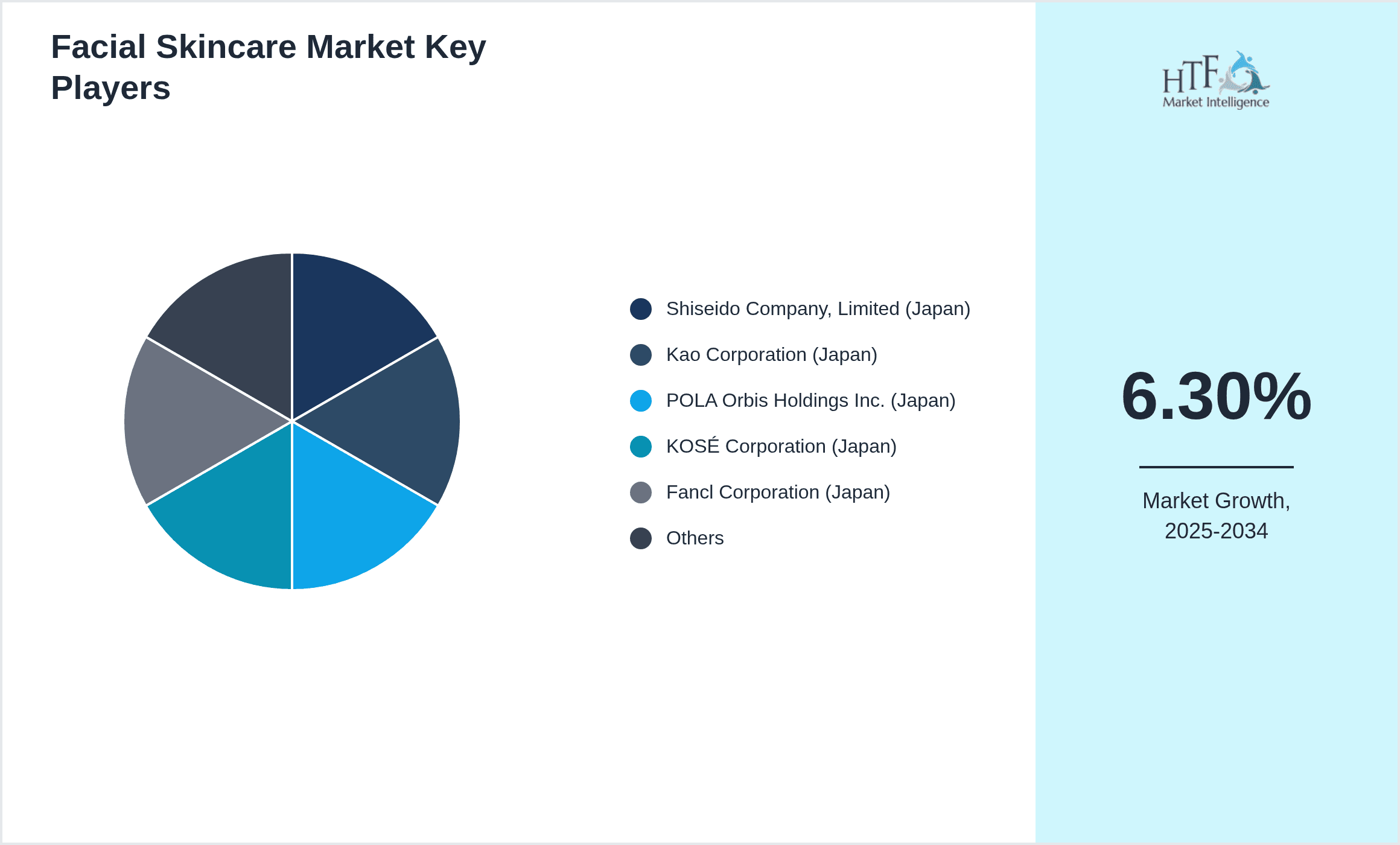
Top 5 Global Players
- •Shiseido Company, Limited (Japan)
- •Kao Corporation (Japan)
- •POLA Orbis Holdings Inc. (Japan)
- •KOSÉ Corporation (Japan)
- •Fancl Corporation (Japan)
Regional Outlook
The Kanto currently holds a significant share of the market, primarily due to several key factors: increasing consumption rates, a burgeoning population, and robust economic momentum. These elements collectively drive demand, positioning this region as a leader in the market. On the other hand, Kyushu & Okinawa is rapidly emerging as the fastest-growing area within the industry. This remarkable growth can be attributed to swift infrastructure development, the expansion of various industrial sectors, and a marked increase in consumer demand. These dynamics make this region a crucial player in shaping future market growth.
In our report, we cover a comprehensive analysis of the following regions and countries:
- Hokkaido
- Tohoku
- Kanto
- Chubu
- Kansai
- Chugoku
- Shikoku
- Kyushu
| Feature | Details |
|---|---|
| Base Year Market Size | USD 7.5 Billion |
| Forecast Year Market Size | USD 13.8 Billion |
| CAGR | 6.3% |
| Forecast Period | 2026 to 2033 |
| YoY Growth | 6.1% |
| Regions Covered | Hokkaido, Tohoku, Kanto, Chubu, Kansai, Chugoku, Shikoku, Kyushu |
| Key Companies | Shiseido Company, Limited (Japan), Kao Corporation (Japan), POLA Orbis Holdings Inc. (Japan), KOSÉ Corporation (Japan), Fancl Corporation (Japan), DHC Corporation (Japan), SK-II (Japan), Kanebo Cosmetics Inc. (Japan), Cure Natural Aqua Gel (Japan), Utena, Inc. (Japan), Hada Labo (Japan), Albion Co., Ltd. (Japan), Meishoku Co., Ltd. (Japan), Mandom Corporation (Japan), NatureLab Tokyo (Japan), Daiso Industries Co., Ltd. (Japan), Muji (Japan), Cosmetex Roland, Inc. (Japan), Tatcha Inc. (Japan), Hada Senka (Japan), Curel (Japan), Lululun (Japan), KireiKirei (Japan), Sekkisei (Japan), Ipsa (Japan) |
Japan Facial Skincare Market Size, Growth & Revenue 2024-2034 - Table of Contents
Frequently Asked Questions (FAQ):
The Compact Track Loaders market is projected to grow at a CAGR of 6.8% from 2025 to 2030, driven by increasing demand in construction and agricultural sectors.
North America currently leads the market with approximately 45% market share, followed by Europe at 28% and Asia-Pacific at 22%. The remaining regions account for 5% of the global market.
Key growth drivers include increasing construction activities, rising demand for versatile equipment in agriculture, technological advancements in track loader design, and growing preference for compact equipment in urban construction projects.