
Middle East Natural Grass & Hybrid Sports Turf Market Size, Growth & Revenue 2025-2034
Middle East Natural Grass & Hybrid Sports Turf Market is segmented by Type (Natural Grass Turf, Hybrid Turf), Application (Stadiums, Training Grounds, Recreational Parks, Residential Landscaping, Commercial Landscaping), Maintenance Service (Irrigation Management, Fertilization, Pest Control, Aeration and Renovation), Installation Method (In-situ Installation, Pre-grown Turf Installation, Modular Turf Systems), and Geography (Turkey, Egypt, United Arab Emirates, Saudi Arabia, Israel, Others)
Pricing
Report Overview
Executive Summary
- •The Middle East Natural Grass & Hybrid Sports Turf market is defined by the cultivation, installation, and upkeep of natural and hybrid turf systems tailored for sports and recreational uses, addressing regional climatic challenges and performance demands.
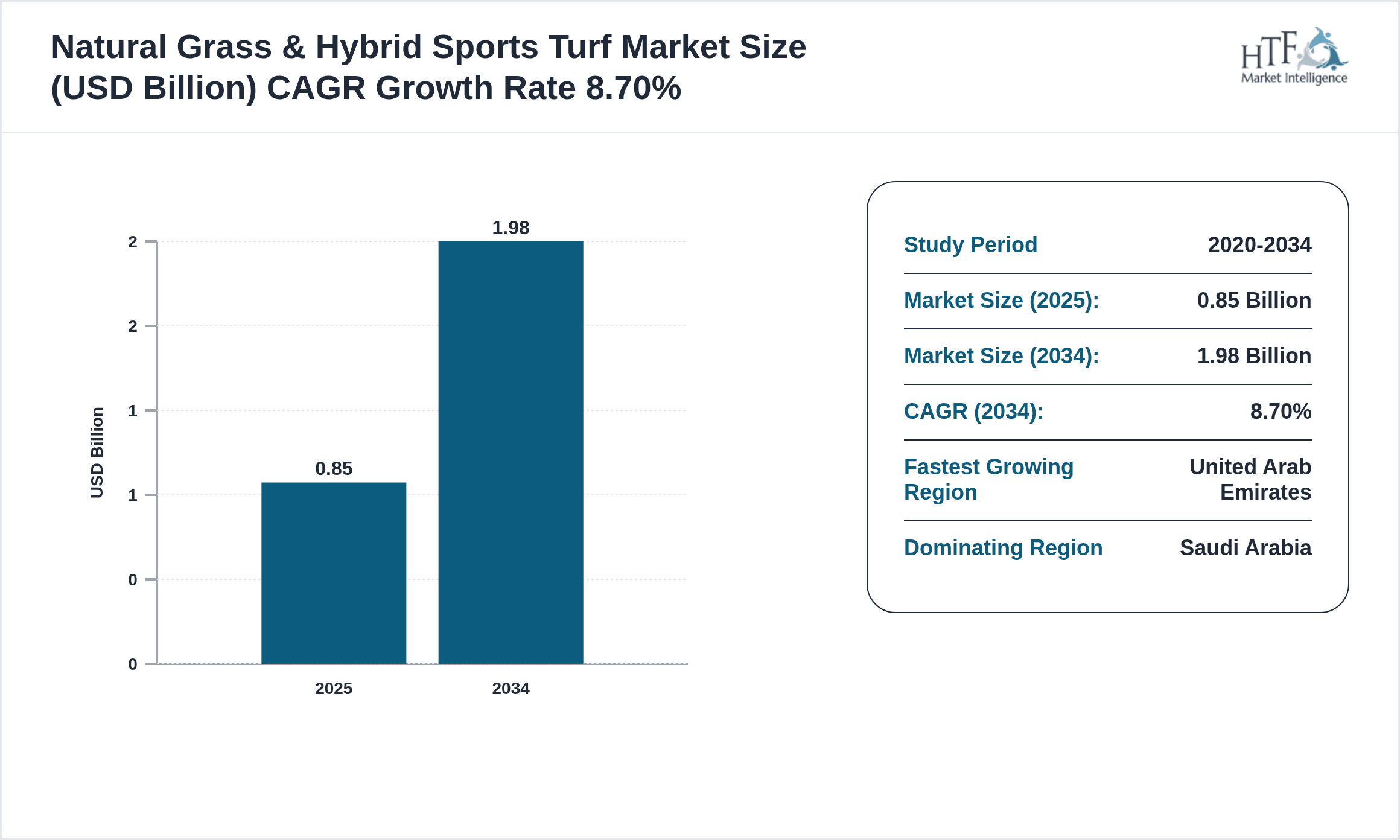
- •Key market highlights include a base market size of USD 0.85 Billion in 2025 with a forecast to reach USD 1.98 Billion by 2034, driven by growing sports infrastructure investments and urban recreational developments.
- •The market’s strategic importance lies in supporting sports events, enhancing urban green spaces, and providing sustainable landscaping solutions amid environmental constraints prevalent in the Middle East.
Competitive Landscape
The Middle East Natural Grass & Hybrid Sports Turf market is characterized by a competitive environment where companies leverage innovation in turf technology, sustainable irrigation, and hybrid blends to gain market share. Strategic partnerships and regional expansions are common, while pricing strategies vary to meet diverse client needs. Market entrants face barriers including climatic adaptation and high installation costs. Leading players focus on product differentiation through durable, low-maintenance turf offerings and eco-friendly solutions. Distribution channels are expanding via specialized landscaping firms and direct contracts with sports authorities. The competitive landscape is evolving with increased emphasis on digital turf management and climate-resilient products, fostering growth and attracting investments in this niche segment.
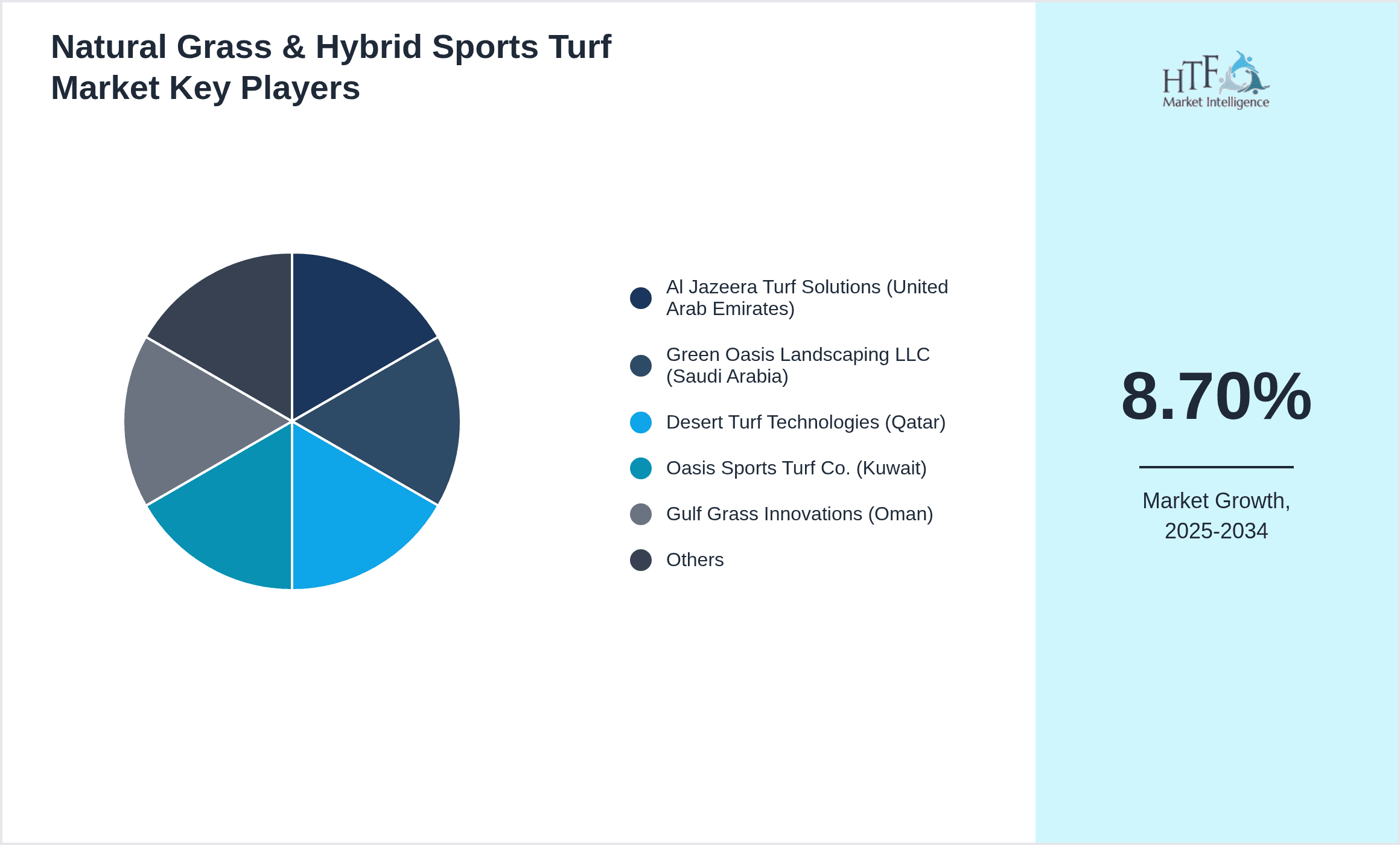
Leading Companies in Natural Grass & Hybrid Sports Turf Market
- •Al Jazeera Turf Solutions (United Arab Emirates)
- •Green Oasis Landscaping LLC (Saudi Arabia)
- •Desert Turf Technologies (Qatar)
- •Oasis Sports Turf Co. (Kuwait)
- •Gulf Grass Innovations (Oman)
- •Emirates Green Fields (United Arab Emirates)
- •Riyadh Turf Experts (Saudi Arabia)
- •Al Khor Turf Services (Qatar)
- •Kuwait Sports Turf Solutions (Kuwait)
- •Oman Natural Turf Co. (Oman)
- •Middle East Turf Masters (United Arab Emirates)
- •Saudi Green Sports Solutions (Saudi Arabia)
- •Qatar Green Turf Systems (Qatar)
- •Kuwait GreenScape Technologies (Kuwait)
- •Oman Hybrid Turf Providers (Oman)
Market Breakdown
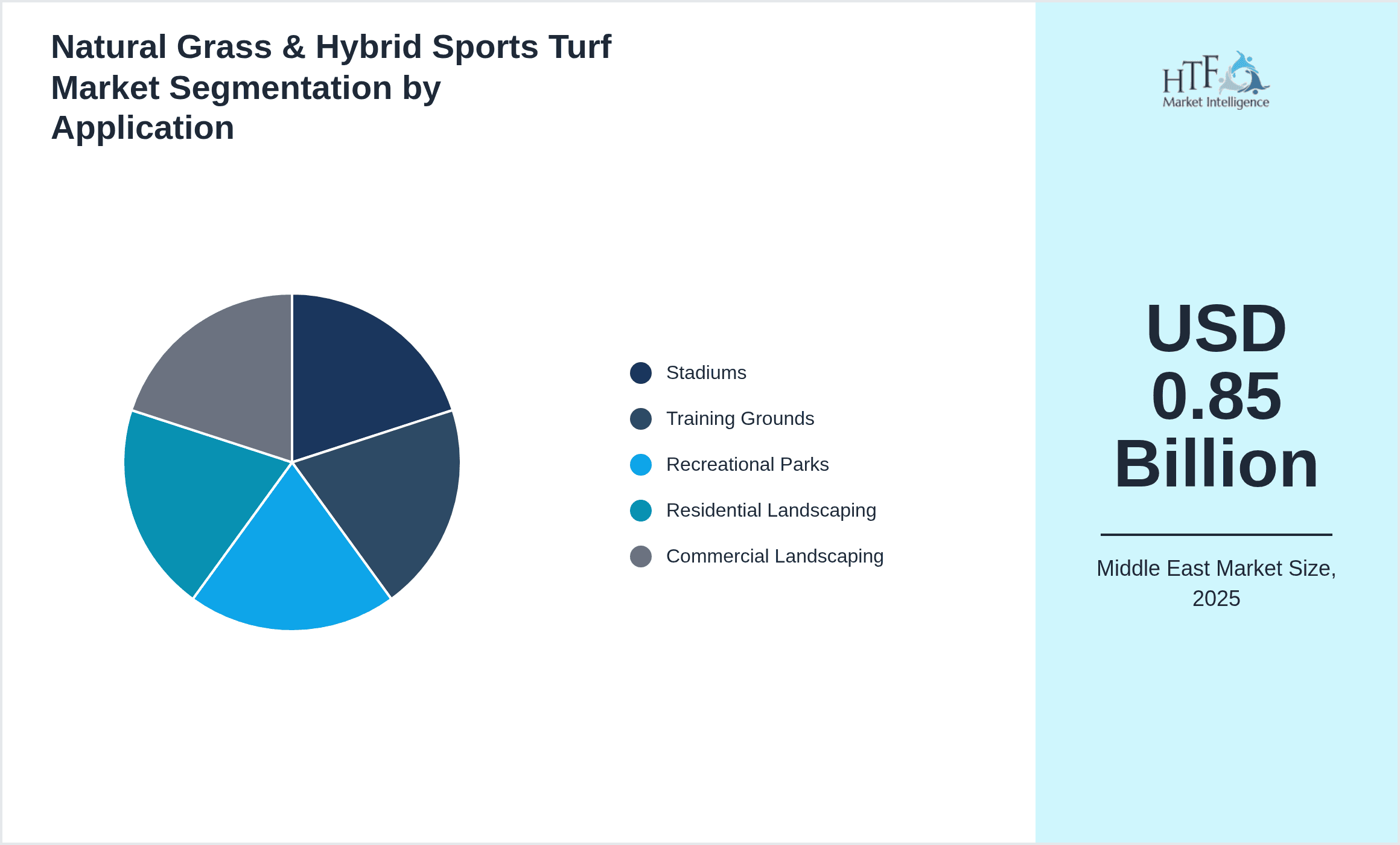
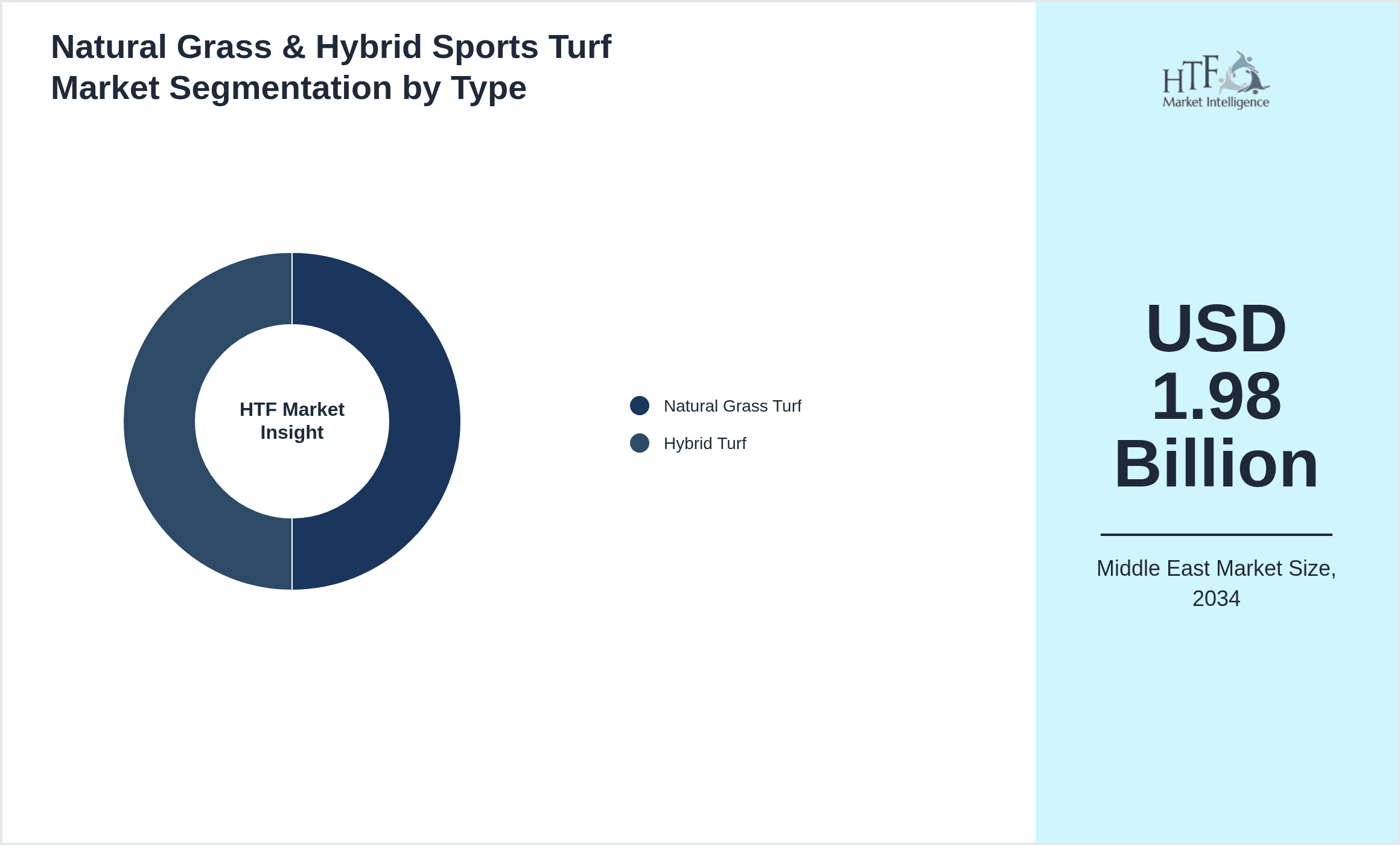
- •By Type
- ◦Natural Grass Turf
- ◦Hybrid Turf
- •By Application
- ◦Stadiums
- ◦Training Grounds
- ◦Recreational Parks
- ◦Residential Landscaping
- ◦Commercial Landscaping
- •By Maintenance Service
- ◦Irrigation Management
- ◦Fertilization
- ◦Pest Control
- ◦Aeration and Renovation
- •By Installation Method
- ◦In-situ Installation
- ◦Pre-grown Turf Installation
- ◦Modular Turf Systems
Growth Dynamics
- •The Middle East market growth is driven by increased investments in sports infrastructure motivated by hosting international events and government initiatives to promote sports and tourism, enhancing demand for premium turf systems.
- •Technological advancements in hybrid turf that improve durability and reduce water consumption are stimulating adoption, aligning with the region’s sustainability goals amid water scarcity challenges.
- •Urbanization and rising awareness about environmental benefits of green spaces are boosting demand for natural and hybrid turfs in residential and commercial landscaping projects.
- •Public-private partnerships and increased focus on recreational facilities development are supporting market expansion by enabling large-scale turf installations across the region.
- •Innovations in turf maintenance services, including automated irrigation and soil health monitoring, are enhancing turf lifespan and performance, driving market growth.
Market Trends
- •The adoption of hybrid turf combining synthetic fibers with natural grass is increasing due to its resilience under extreme weather and heavy usage, offering a sustainable alternative to traditional turf.
- •Integration of smart irrigation technologies using IoT sensors is becoming prevalent to optimize water usage in turf maintenance, aligning with regional water conservation efforts.
- •Growing preference for eco-friendly fertilizers and organic pest control methods reflects environmental consciousness among end-users and regulatory encouragement.
- •Expansion of multi-purpose sports complexes with modular turf systems supports diversified sports and recreational activities, responding to evolving consumer needs.
Market Opportunities
- •Rising demand for hybrid turf solutions in newly developed stadiums and training facilities presents significant growth potential, especially in countries preparing for international sporting events.
- •Expansion into residential and commercial landscaping sectors offers opportunities to diversify product portfolios and capture untapped customer segments.
- •Partnerships with local governments for urban green space projects can facilitate market penetration and promote sustainable turf adoption.
- •Technological innovations in drought-resistant turf varieties and water-efficient maintenance services can address regional environmental constraints and boost market appeal.
Market Challenges
- •Harsh climatic conditions and limited water resources present significant challenges for natural grass turf cultivation and maintenance in the Middle East, increasing operational costs.
- •High initial investment and installation costs for hybrid turf systems can deter small-scale customers and limit rapid market adoption.
- •Lack of skilled labor and expertise in turf installation and maintenance affects quality and sustainability of turf solutions offered in the region.
- •Regulatory complexities and varying standards across Middle Eastern countries may impede uniform market growth and increase compliance burdens for companies.
Regulatory Framework
- •Between 2020 and 2025, several Middle Eastern countries introduced water conservation regulations mandating efficient irrigation practices in landscaping, significantly impacting turf maintenance protocols.
- •Environmental regulations focusing on the reduction of chemical fertilizers and pesticides usage have led to increased adoption of eco-friendly turf care products and organic maintenance standards.
- •Standards for sports turf quality and safety have been established in key markets like Saudi Arabia and UAE, requiring compliance from suppliers and service providers to ensure player safety and surface durability.
- •Government incentives for green infrastructure projects encourage investments in sustainable turf solutions, influencing market growth and innovation in the sector.
- •Cross-border trade regulations and import duties affect the availability and pricing of hybrid turf components, with some countries offering tariff exemptions for environmental technology imports.
Market Intelligence
- •15th February 2025, Al Jazeera Turf Solutions launched their new hybrid turf product line designed specifically for arid climates, incorporating advanced water retention technology and enhanced fiber durability to meet regional demand. This innovation aims to reduce water consumption by up to 40% while maintaining high performance under heavy sports usage. The launch aligns with Middle Eastern sustainability goals and caters to upcoming international sports events in the region. Source: Al Jazeera Turf Solutions official press release.
- •10th April 2025, Green Oasis Landscaping LLC announced a strategic partnership with a European turf technology firm to introduce smart irrigation systems integrated with IoT sensors across their turf maintenance services. This partnership enhances precision watering techniques, promoting resource efficiency and reducing operational costs for clients. The initiative supports government environmental policies and positions the company as a leader in sustainable turf solutions. Source: Green Oasis Landscaping LLC corporate announcement.
- •22nd June 2025, Desert Turf Technologies completed the acquisition of a local landscaping firm specializing in natural grass turf installation, expanding its footprint in Saudi Arabia and Qatar. This move strengthens Desert Turf’s service capabilities and market presence, enabling faster deployment of hybrid turf projects in the region. The acquisition is part of a broader strategy to consolidate expertise and improve operational efficiency. Source: Industry publication Turf Today Middle East.
- •Recent market developments and strategic initiatives are continuously tracked through industry publications, company announcements, and regulatory filings. For the most current information, stakeholders are advised to monitor official corporate communications and recognized market intelligence platforms.
Regional Outlook
The Saudi Arabia currently holds a significant share of the market, primarily due to several key factors: increasing consumption rates, a burgeoning population, and robust economic momentum. These elements collectively drive demand, positioning this region as a leader in the market. On the other hand, United Arab Emirates is rapidly emerging as the fastest-growing area within the industry. This remarkable growth can be attributed to swift infrastructure development, the expansion of various industrial sectors, and a marked increase in consumer demand. These dynamics make this region a crucial player in shaping future market growth.
In our report, we cover a comprehensive analysis of the following regions and countries:
- Turkey
- Egypt
- United Arab Emirates
- Saudi Arabia
- Israel
- Others
| Feature | Details |
|---|---|
| Base Year Market Size | USD 0.85 Billion |
| Forecast Year Market Size | USD 1.98 Billion |
| CAGR | 8.7% |
| Forecast Period | 2026 to 2033 |
| YoY Growth | 8.3% |
| Scope of Report | Market is segmented by Type (Natural Grass Turf, Hybrid Turf), Application (Stadiums, Training Grounds, Recreational Parks, Residential Landscaping, Commercial Landscaping), Maintenance Service (Irrigation Management, Fertilization, Pest Control, Aeration and Renovation), Installation Method (In-situ Installation, Pre-grown Turf Installation, Modular Turf Systems) |
| Regions Covered | Turkey, Egypt, United Arab Emirates, Saudi Arabia, Israel, Others |
| Key Companies | Al Jazeera Turf Solutions (United Arab Emirates), Green Oasis Landscaping LLC (Saudi Arabia), Desert Turf Technologies (Qatar), Oasis Sports Turf Co. (Kuwait), Gulf Grass Innovations (Oman), Emirates Green Fields (United Arab Emirates), Riyadh Turf Experts (Saudi Arabia), Al Khor Turf Services (Qatar), Kuwait Sports Turf Solutions (Kuwait), Oman Natural Turf Co. (Oman), Middle East Turf Masters (United Arab Emirates), Saudi Green Sports Solutions (Saudi Arabia), Qatar Green Turf Systems (Qatar), Kuwait GreenScape Technologies (Kuwait), Oman Hybrid Turf Providers (Oman) |
Middle East Natural Grass & Hybrid Sports Turf Market Size, Growth & Revenue 2025-2034 - Table of Contents
Frequently Asked Questions (FAQ):
The Compact Track Loaders market is projected to grow at a CAGR of 6.8% from 2025 to 2030, driven by increasing demand in construction and agricultural sectors.
North America currently leads the market with approximately 45% market share, followed by Europe at 28% and Asia-Pacific at 22%. The remaining regions account for 5% of the global market.
Key growth drivers include increasing construction activities, rising demand for versatile equipment in agriculture, technological advancements in track loader design, and growing preference for compact equipment in urban construction projects.