
China Rail Infrastructure Construction Market Size, Growth & Revenue 2024-2034
China Rail Infrastructure Construction Market is segmented by Type (Track Construction, Bridge & Tunnel Construction, Signaling Systems, Electrification Systems, Station Development), Application (High-Speed Rail, Urban Transit, Freight Rail, Commuter Rail, Maintenance Services), End User (Government Rail Authorities, Private Rail Operators, Industrial Freight Companies, Urban Development Corporations), Technology (Digital Signaling Technology, Electrification Technology, Tunnel Boring Technology, Automated Track Laying Equipment), and Geography (North China, Northeast China, East China, South Central China, Southwest China, Northwest China)
Pricing
Report Overview
Executive Summary
- •The China Rail Infrastructure Construction market involves comprehensive activities in building and upgrading rail networks, including track laying, bridge and tunnel construction, signaling, electrification, and station development, supporting diverse applications such as high-speed rail and urban transit.
- •Driven by China's rapid urbanization, government investments, and technological advancements, the market is projected to grow at a CAGR of 8.3% from 2024 to 2034, reaching USD 189.7 Billion.
- •This market is vital for enhancing transportation efficiency, regional connectivity, and economic development, offering significant opportunities for domestic and international stakeholders.

Competitive Landscape
The China Rail Infrastructure Construction market is characterized by intense competition among large state-owned enterprises and private firms focusing on innovation, technology integration, and strategic partnerships. Companies leverage advanced construction technologies, digital signaling, and electrification solutions to differentiate themselves. Market rivalry centers on project scale, technical expertise, and government contracts, with a strong emphasis on safety standards and sustainability. Firms also pursue mergers and acquisitions to expand capabilities and geographic reach. The competitive environment encourages continuous R&D investment and adoption of smart infrastructure technologies, positioning players to meet evolving regulatory requirements and customer demands across China's diverse regional zones.
Leading Companies in China Rail Infrastructure Construction Market
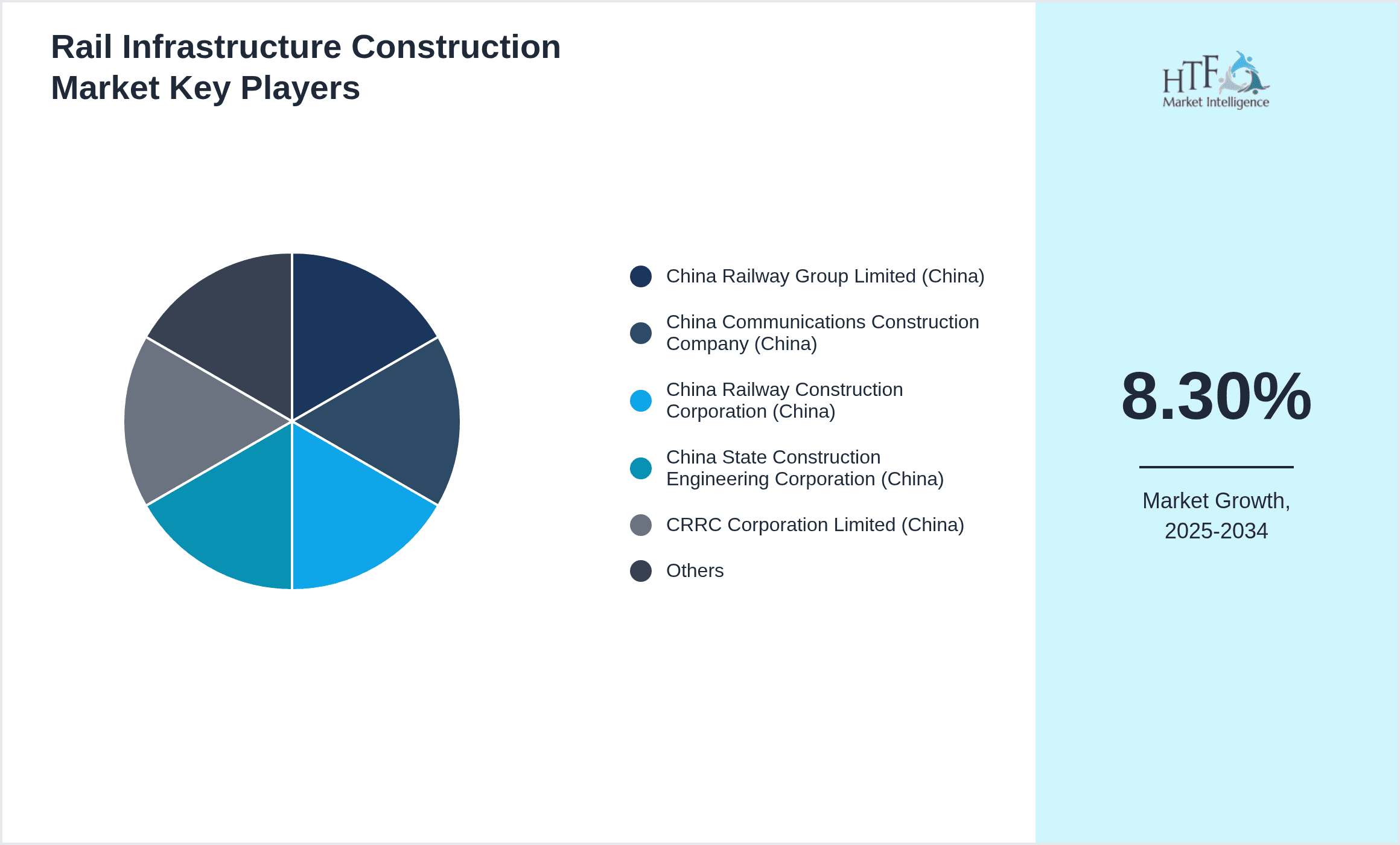
- •China Railway Group Limited (China)
- •China Communications Construction Company (China)
- •China Railway Construction Corporation (China)
- •China State Construction Engineering Corporation (China)
- •CRRC Corporation Limited (China)
- •Shanghai Tunnel Engineering Co., Ltd. (China)
- •China National Machinery Industry Corporation (China)
- •China Railway Signal & Communication Corporation (China)
- •China Railway Materials Group Co., Ltd. (China)
- •China Railway Electrification Engineering Group (China)

Market Breakdown
- •By Type
- ◦Track Construction
- ◦Bridge & Tunnel Construction
- ◦Signaling Systems
- ◦Electrification Systems
- ◦Station Development
- •By Application
- ◦High-Speed Rail
- ◦Urban Transit
- ◦Freight Rail
- ◦Commuter Rail
- ◦Maintenance Services
- •By End User
- ◦Government Rail Authorities
- ◦Private Rail Operators
- ◦Industrial Freight Companies
- ◦Urban Development Corporations
- •By Technology
- ◦Digital Signaling Technology
- ◦Electrification Technology
- ◦Tunnel Boring Technology
- ◦Automated Track Laying Equipment
Growth Drivers
- •Robust government investments in expanding high-speed and urban rail networks to support China’s urbanization and economic growth are key growth drivers, with multiple large-scale infrastructure projects underway.
- •Technological advancements such as digital signaling and electrification enhance efficiency and safety, driving demand for modern rail infrastructure solutions across regions like East and South China.
- •Rising freight transport needs due to China’s growing manufacturing sector and Belt and Road Initiative expansion stimulate investments in dedicated freight rail infrastructure.
- •Government policies promoting green transportation support electrification and sustainable rail construction, increasing market opportunities for eco-friendly infrastructure technologies.
- •Increasing urban population density generates demand for expanded urban transit systems, particularly metro and commuter rail, accelerating infrastructure construction in metropolitan zones.

Market Trends
- •Adoption of smart rail infrastructure technologies, including IoT-enabled signaling and predictive maintenance systems, is transforming construction and operational efficiencies in the China rail market.
- •Integration of digital twin technology for project planning and monitoring enhances accuracy and reduces construction delays in complex rail infrastructure projects.
- •Rising preference for modular and prefabricated construction methods accelerates project timelines and reduces costs, gaining traction among leading Chinese rail infrastructure firms.
- •Expansion of urban transit systems in Tier 2 and Tier 3 cities reflects shifting focus from mega-city projects to broader regional connectivity improvement.
- •Increased collaboration between domestic companies and international technology providers drives innovation and enhances competitive positioning in signaling and electrification sectors.
Market Opportunities
- •Significant growth potential exists in upgrading aging rail infrastructure with advanced signaling and electrification systems, especially in North and Central China regions.
- •The Belt and Road Initiative offers opportunities for Chinese firms to export rail construction expertise and technology, expanding market reach beyond domestic confines.
- •Development of high-speed freight corridors presents untapped segments requiring specialized infrastructure solutions, attracting investments from key market players.
- •Increasing demand for green and energy-efficient rail systems aligns with government sustainability goals, fostering innovation in electrification and renewable energy integration.
- •Public-private partnerships offer new financing models and project pipelines, enabling faster deployment of rail infrastructure across diverse geographic zones.
Market Challenges
- •High initial capital expenditure and long project gestation periods pose financing challenges, limiting smaller firms’ participation in large-scale rail infrastructure developments.
- •Complex regulatory approvals and lengthy environmental assessments delay project initiation, impacting overall market agility and responsiveness.
- •Technical difficulties in constructing rail infrastructure in mountainous and remote regions such as Southwest China increase costs and extend timelines.
- •Shortage of skilled labor and specialized engineering talent constrains the pace of infrastructure development and quality assurance.
- •Competitive pricing pressures from multiple state-owned enterprises compress profit margins, limiting reinvestment in innovation.
Regulatory Framework
- •Recent regulations introduced between 2020 and 2024 emphasize stricter safety and environmental standards for rail infrastructure projects, mandating enhanced compliance and reporting.
- •The Ministry of Transport and National Railway Administration have enforced guidelines to accelerate approval processes for high-speed rail expansions while ensuring risk mitigation.
- •Policies encouraging the use of green construction materials and renewable energy integration in rail projects support China’s carbon neutrality commitments.
- •Increased focus on digital infrastructure compliance requires companies to adopt cybersecurity measures for signaling and communication systems.
- •Government incentives for public-private partnerships stimulate private sector participation in rail infrastructure development, fostering innovation and investment.
Industry Insights
The China Rail Infrastructure Construction market continues to evolve with a heightened focus on digital transformation and sustainability. In May 2024, China Railway Signal & Communication Corporation launched an advanced IoT-enabled signaling system designed to enhance real-time monitoring and safety. This innovation is expected to reduce operational costs and improve network reliability significantly. Additionally, in November 2023, China Railway Group Limited introduced a new modular bridge construction technology that accelerates project timelines and reduces environmental impact, positioning the company as a leader in green infrastructure. These developments underscore the market’s commitment to leveraging technology and sustainability to meet growing rail transport demands in China’s diverse regions.
Mergers & Acquisitions
- •In July 2024, China Railway Construction Corporation completed the acquisition of a leading digital rail signaling startup, enhancing its technology portfolio to include AI-driven predictive maintenance and automated control systems. This strategic move strengthens the company’s competitive edge in the signaling systems segment and accelerates innovation adoption across its rail infrastructure projects nationwide.
- •In February 2023, China Communications Construction Company acquired a regional tunnel engineering firm specializing in complex mountainous terrain projects. This acquisition expands its capabilities in Southwest China and supports the company’s strategic objective of leading high-complexity rail infrastructure developments in challenging geographic zones.
Recent Industry News
- •15th January 2025, China Railway Electrification Engineering Group partnered with a global renewable energy firm to develop solar-powered electrification systems for rail lines in North China. This collaboration aims to reduce carbon emissions and operational costs, aligning with China’s sustainability goals. Source: Official company press release.
- •22nd March 2025, CRRC Corporation Limited launched a next-generation smart train signaling platform incorporating AI and 5G connectivity, enhancing safety and efficiency on high-speed rail networks. The product targets expanding urban transit systems across East China. Source: Industry publication report.
- •10th June 2025, China Railway Group Limited announced the expansion of its modular track construction technology to urban transit projects, reducing build times by 30%. This innovation supports rapid metro system growth in Central China. Source: Company website update.
- •5th September 2025, Shanghai Tunnel Engineering Co., Ltd. secured a major contract to build a new rail tunnel in Southwest China’s mountainous region, deploying advanced tunnel boring machines to overcome geological challenges. This project highlights increasing infrastructure investments in less developed regions. Source: Industry news release.
Regional Outlook
The East China currently holds a significant share of the market, primarily due to several key factors: increasing consumption rates, a burgeoning population, and robust economic momentum. These elements collectively drive demand, positioning this region as a leader in the market. On the other hand, Southwest China is rapidly emerging as the fastest-growing area within the industry. This remarkable growth can be attributed to swift infrastructure development, the expansion of various industrial sectors, and a marked increase in consumer demand. These dynamics make this region a crucial player in shaping future market growth.
In our report, we cover a comprehensive analysis of the following regions and countries:
- North China
- Northeast China
- East China
- South Central China
- Southwest China
- Northwest China
| Feature | Details |
|---|---|
| Base Year Market Size | USD 82.5 Billion |
| Forecast Year Market Size | USD 189.7 Billion |
| CAGR | 8.3% |
| Forecast Period | 2026 to 2033 |
| YoY Growth | 8% |
| Scope of Report | Market is segmented by Type (Track Construction, Bridge & Tunnel Construction, Signaling Systems, Electrification Systems, Station Development), Application (High-Speed Rail, Urban Transit, Freight Rail, Commuter Rail, Maintenance Services), End User (Government Rail Authorities, Private Rail Operators, Industrial Freight Companies, Urban Development Corporations), Technology (Digital Signaling Technology, Electrification Technology, Tunnel Boring Technology, Automated Track Laying Equipment) |
| Regions Covered | North China, Northeast China, East China, South Central China, Southwest China, Northwest China |
| Key Companies | China Railway Group Limited (China), China Communications Construction Company (China), China Railway Construction Corporation (China), China State Construction Engineering Corporation (China), CRRC Corporation Limited (China), Shanghai Tunnel Engineering Co., Ltd. (China), China National Machinery Industry Corporation (China), China Railway Signal & Communication Corporation (China), China Railway Materials Group Co., Ltd. (China), China Railway Electrification Engineering Group (China) |
China Rail Infrastructure Construction Market Size, Growth & Revenue 2024-2034 - Table of Contents
Frequently Asked Questions (FAQ):
The Compact Track Loaders market is projected to grow at a CAGR of 6.8% from 2025 to 2030, driven by increasing demand in construction and agricultural sectors.
North America currently leads the market with approximately 45% market share, followed by Europe at 28% and Asia-Pacific at 22%. The remaining regions account for 5% of the global market.
Key growth drivers include increasing construction activities, rising demand for versatile equipment in agriculture, technological advancements in track loader design, and growing preference for compact equipment in urban construction projects.