
Nordic Shrink Fit Machine Market - Europe Size & Outlook 2025-2034
Nordic Shrink Fit Machine Market is segmented by Type (Hydraulic Shrink Fit Machines, Electric Shrink Fit Machines, Pneumatic Shrink Fit Machines, Manual Shrink Fit Machines), Application (Automotive, Aerospace, Heavy Machinery, Electronics, Energy), End User (OEM Manufacturers, Maintenance & Repair Operations (MRO), Contract Manufacturing), Distribution Channel (Direct Sales, Distributors, Aftermarket Services), and Geography (Finland, Sweden, Denmark, Norway, Iceland)
Pricing
Report Overview
Executive Summary
- •The Nordic Shrink Fit Machine Market involves manufacturing equipment used for assembling mechanical components through precision thermal expansion techniques, supporting industries like automotive, aerospace, and heavy machinery.
- •Key market drivers include increasing automation, demand for high-precision assembly, and growth in Nordic manufacturing sectors focused on sustainable and efficient processes.
- •The market offers strategic value by enabling clean, fast, and reliable mechanical assembly, reducing downtime and improving product quality across multiple industrial applications in the Nordic region.
Competitive Landscape
Competition in the Nordic Shrink Fit Machine Market is characterized by a blend of global technology leaders and specialized regional manufacturers focusing on product innovation, customization, and service excellence. Companies compete by enhancing machine precision, energy efficiency, and integration with Industry 4.0 technologies such as IoT and automation controls. Market rivalry is intensified by continuous investments in R&D to develop electric and pneumatic variants that offer environmental benefits and operational cost savings. Strategic partnerships and localized manufacturing capabilities provide competitive advantages, enabling firms to meet stringent Nordic regulatory standards and customer expectations for durability and performance. Pricing strategies are balanced with quality and after-sales support, while digital transformation and smart factory initiatives drive differentiation. The competitive environment also reflects a robust focus on sustainability and compliance, which are critical in the Nordic region, shaping future growth trajectories and innovation pipelines.
Leading Companies in Nordic Shrink Fit Machine Market
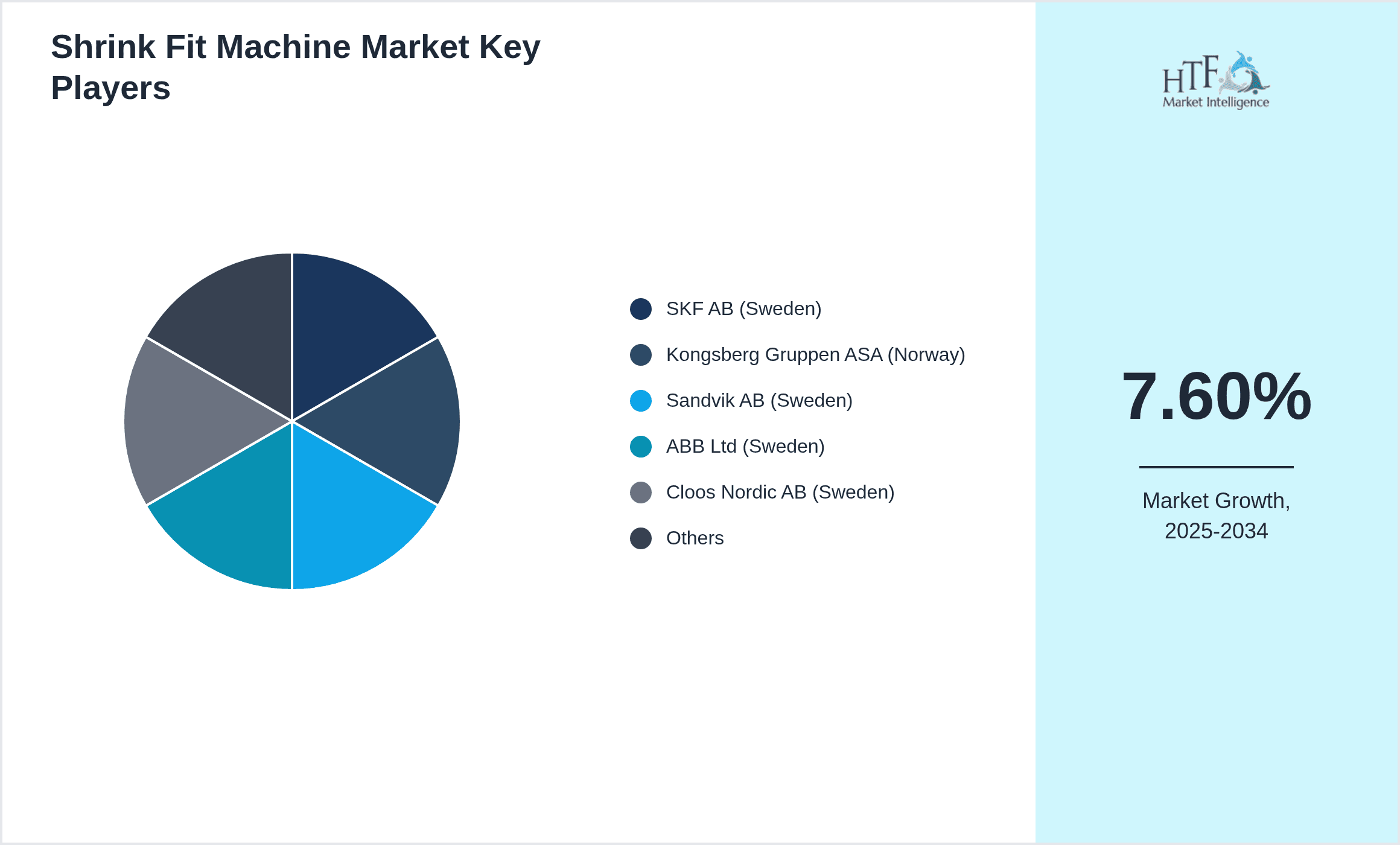
- •SKF AB (Sweden)
- •Kongsberg Gruppen ASA (Norway)
- •Sandvik AB (Sweden)
- •ABB Ltd (Sweden)
- •Cloos Nordic AB (Sweden)
- •Bosch Rexroth Nordic (Denmark)
- •EFD Induction AB (Sweden)
- •Neles Oyj (Finland)
- •Metso Outotec (Finland)
- •Atlas Copco AB (Sweden)
- •Noreco AS (Norway)
- •Valmet Oyj (Finland)
- •Konecranes Oyj (Finland)
- •Husqvarna Group (Sweden)
- •SSAB AB (Sweden)
- •Vestas Wind Systems A/S (Denmark)
- •Kemppi Oy (Finland)
- •Sandvik Coromant (Sweden)
- •Lindab AB (Sweden)
- •Raufoss Technology AS (Norway)

Market Breakdown
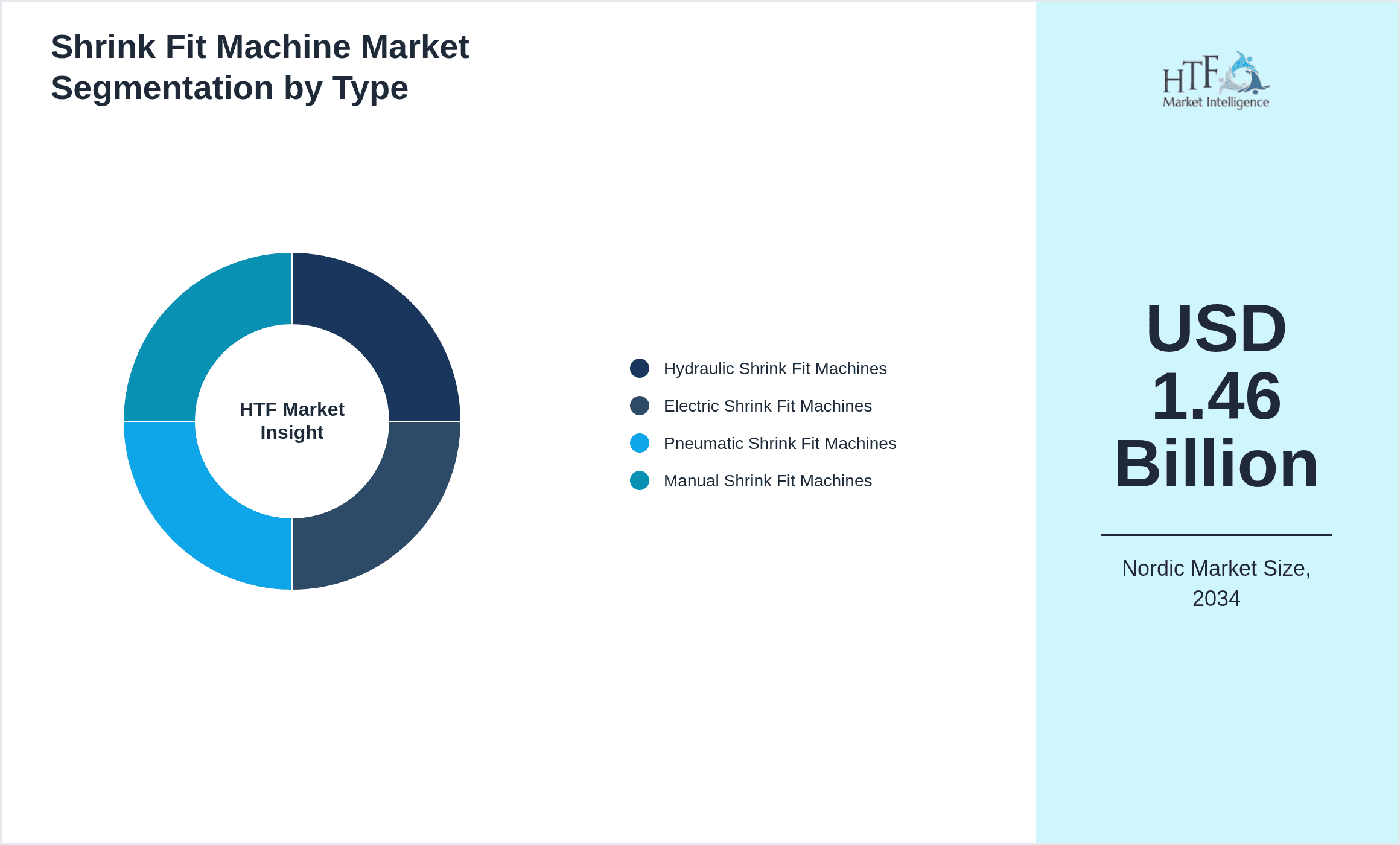
- •By Type
- ◦Hydraulic Shrink Fit Machines
- ◦Electric Shrink Fit Machines
- ◦Pneumatic Shrink Fit Machines
- ◦Manual Shrink Fit Machines
- •By Application
- ◦Automotive
- ◦Aerospace
- ◦Heavy Machinery
- ◦Electronics
- ◦Energy
- •By End User
- ◦OEM Manufacturers
- ◦Maintenance & Repair Operations (MRO)
- ◦Contract Manufacturing
- •By Distribution Channel
- ◦Direct Sales
- ◦Distributors
- ◦Aftermarket Services
Growth Dynamics
- •Rising demand for automation in the Nordic manufacturing industries is a primary growth driver, enabling faster and more precise assembly processes with shrink fit machines.
- •Increasing adoption of electric shrink fit machines driven by energy efficiency goals and regulatory pressure to reduce carbon footprints is accelerating market growth.
- •The growth in automotive and aerospace sectors within the Nordic countries, emphasizing lightweight and durable component assembly, fuels demand for advanced shrink fit technologies.
- •Government incentives supporting innovation and sustainable manufacturing practices provide financial and regulatory support encouraging market expansion.
- •Rising investments in smart factory solutions and Industry 4.0 integration are enhancing operational efficiency and driving shrink fit machine adoption.
Market Trends
- •Integration of IoT-enabled monitoring systems in shrink fit machines is becoming widespread, allowing real-time performance tracking and predictive maintenance.
- •Electric shrink fit machines are gaining traction due to quieter operation, lower energy consumption, and reduced environmental impact compared to hydraulic counterparts.
- •Customization and modular machine designs are trending to meet specific industry requirements, improving versatility and user experience.
- •Collaborations between shrink fit machine manufacturers and software developers are fostering innovation in automated control systems and data analytics.
- •Emphasis on sustainability is driving the development of eco-friendly materials and energy-efficient manufacturing practices within the market.
Market Opportunities
- •Expanding the use of shrink fit machines in emerging Nordic renewable energy projects presents significant growth potential due to demand for reliable assembly methods.
- •Digital transformation initiatives in the Nordic manufacturing sector open opportunities for smart and connected shrink fit machinery with advanced diagnostics.
- •Growing aftermarket services and maintenance contracts within Nordic countries offer opportunities for service-based revenue streams alongside machine sales.
- •Targeting small and medium-sized enterprises (SMEs) within the Nordic region can unlock untapped demand through affordable and scalable shrink fit solutions.
- •Collaborations with research institutes and universities in the Nordics for R&D can accelerate innovation and market penetration.
Market Challenges
- •High initial capital expenditure for advanced shrink fit machines limits adoption among smaller Nordic manufacturers with restricted budgets.
- •Technical skill shortages in operating and maintaining sophisticated shrink fit machinery constrain market growth in certain Nordic regions.
- •Stringent regulatory compliance requirements in the Nordic countries increase product development costs and extend time-to-market for new machines.
- •Competition from alternative assembly technologies, such as press fitting and adhesive bonding, poses a challenge to market expansion.
- •Supply chain disruptions affecting component availability and raw materials can delay manufacturing and delivery schedules.
Regulatory Framework
- •Between 2022 and 2025, the Nordic countries have implemented enhanced energy efficiency standards requiring shrink fit machines to meet strict power consumption limits, encouraging electric machine adoption.
- •New workplace safety regulations mandate improved guarding and automation in shrink fit machine designs to reduce operator risks, impacting product development.
- •Environmental directives focused on reducing industrial carbon emissions influence manufacturers to innovate eco-friendly machine technologies and sustainable materials.
- •Data protection and cybersecurity regulations affect IoT-enabled shrink fit machines, requiring secure communication protocols and compliance verification.
- •Government incentives and grants for digitalization and smart manufacturing have been introduced across Nordic countries to accelerate technology adoption in production equipment.
Industry Insights
The Nordic shrink fit machine market has seen accelerated innovation driven by the integration of Industry 4.0 technologies. In June 2024, EFD Induction AB launched its latest electric shrink fit machine model featuring IoT connectivity and energy-optimized heating systems, aiming to reduce operational costs and environmental impact significantly. This product exemplifies the market’s shift toward energy-efficient and digitally connected equipment tailored for automotive and aerospace applications. Additionally, in September 2023, ABB Ltd expanded its Nordic manufacturing footprint by opening a new R&D center in Sweden focused on automation solutions for mechanical assembly processes, including shrink fit technology, signaling rising investments in localized innovation hubs to meet regional demand.
Mergers & Acquisitions
- •In March 2024, SKF AB completed the acquisition of a specialized Pneumatic Shrink Fit Machine manufacturer based in Denmark, enhancing SKF’s portfolio with advanced pneumatic technologies tailored for the Nordic heavy machinery sector. This strategic move strengthens SKF’s market position by expanding its product range and enabling cross-selling opportunities within its established client base, fostering innovation and operational synergies focused on sustainability and precision assembly.
- •In November 2023, Metso Outotec finalized the acquisition of a Swedish electric shrink fit machine innovator, aiming to integrate cutting-edge electric heating solutions into its existing product lineup. This acquisition is expected to accelerate Metso Outotec’s development of energy-efficient and smart assembly machines targeted at the aerospace and automotive industries, reinforcing its competitive edge in the Nordic market through enhanced R&D capabilities and regional market penetration.
Recent Industry News
- •15th January 2025, ABB Ltd announced a strategic partnership with a leading Nordic aerospace manufacturer to co-develop next-generation electric shrink fit machines featuring AI-enabled quality control systems. This collaboration is set to enhance precision and reduce assembly errors significantly, positioning ABB as a pioneer in smart manufacturing within the region. Source: ABB Official Press Release
- •7th March 2025, Sandvik AB launched its latest hydraulic shrink fit machine designed for heavy machinery applications with improved energy efficiency and faster cycle times. The new model targets Nordic construction and mining equipment manufacturers aiming to reduce operational costs and environmental impact. Source: Sandvik Corporate News
- •22nd May 2025, Kongsberg Gruppen ASA expanded its distribution network across Finland and Norway, enhancing after-sales services for pneumatic shrink fit machines. This expansion aims to improve customer support and machine uptime, reinforcing Kongsberg’s market presence in the Nordic industrial equipment sector. Source: Kongsberg Group News
- •30th August 2025, Bosch Rexroth Nordic unveiled a modular manual shrink fit machine with customizable configurations, targeting SMEs in the Nordic manufacturing ecosystem. The product launch reflects growing demand for flexible and cost-effective assembly solutions tailored to smaller-scale production. Source: Bosch Rexroth Nordic Press Release
Market Statistics
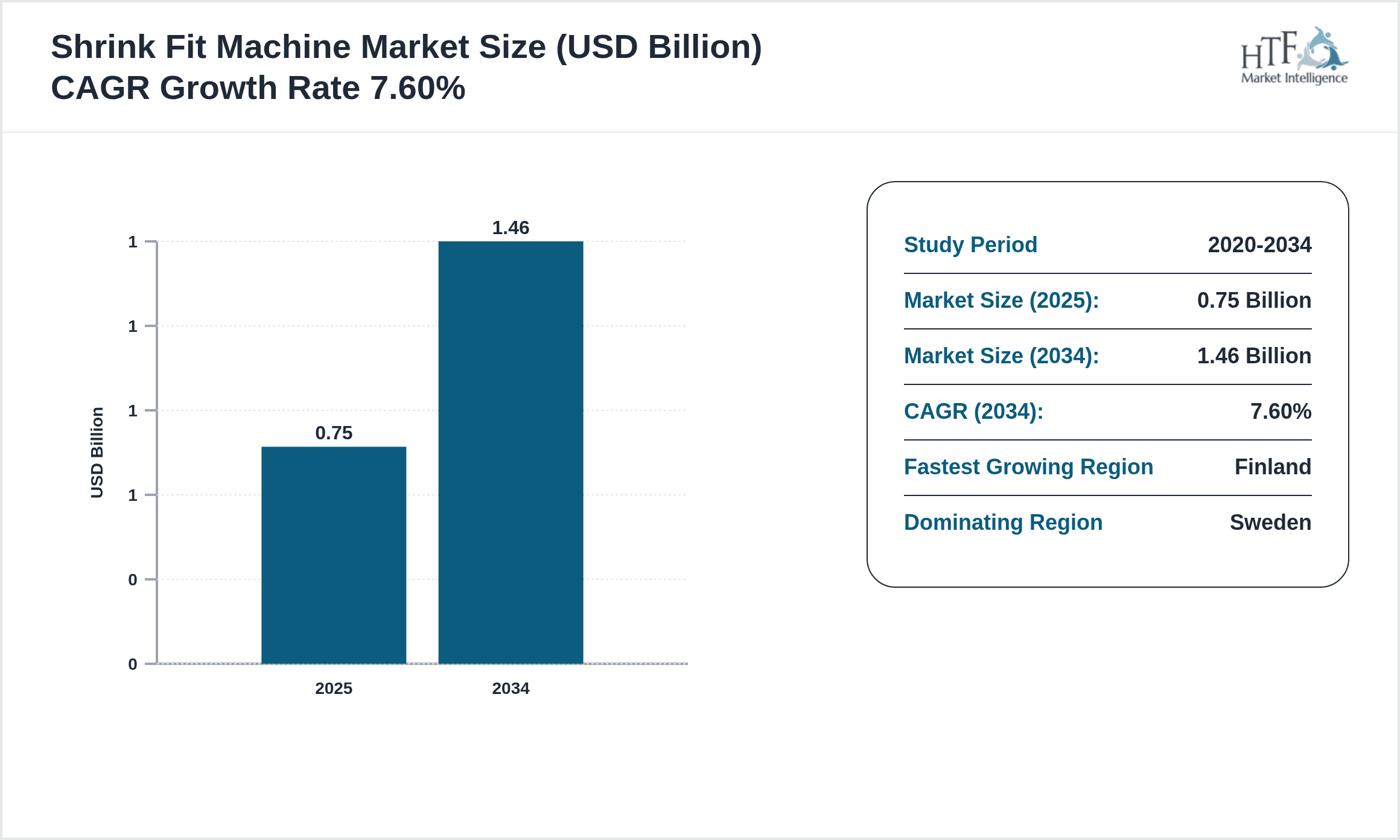
- •CAGR by 2034: 7.6%
- •Market Size by 2034: USD 1.46 Billion
- •Market Size in 2025: USD 0.75 Billion
- •Dominating Type: Hydraulic Shrink Fit Machines
- •Next-Following Type: Electric Shrink Fit Machines
- •Dominating Application: Automotive
- •Next-Following Application: Aerospace
- •Dominating Region: Sweden
- •Second-Leading Region: Denmark
- •Region with Highest Growth Rate: Finland
- •Dominating Country: Sweden
Market Share Table
- •Market Share (%) of Dominating vs Followed Type: Hydraulic (45%) vs Electric (30%)
- •Market Share (%) of Dominating vs Followed Application: Automotive (38%) vs Aerospace (25%)
- •Growth Rate (%) of Dominating vs Followed Type: Hydraulic (6.8%) vs Electric (9.1%)
- •Growth Rate (%) of Dominating vs Followed Application: Automotive (7.0%) vs Aerospace (8.3%)
Top Companies Profiled in Nordic Shrink Fit Machine Market
- •SKF AB (Sweden)
- •ABB Ltd (Sweden)
- •Sandvik AB (Sweden)
- •Kongsberg Gruppen ASA (Norway)
- •Metso Outotec (Finland)
Regional Outlook
The Sweden currently holds a significant share of the market, primarily due to several key factors: increasing consumption rates, a burgeoning population, and robust economic momentum. These elements collectively drive demand, positioning this region as a leader in the market. On the other hand, Finland is rapidly emerging as the fastest-growing area within the industry. This remarkable growth can be attributed to swift infrastructure development, the expansion of various industrial sectors, and a marked increase in consumer demand. These dynamics make this region a crucial player in shaping future market growth.
In our report, we cover a comprehensive analysis of the following regions and countries:
- Finland
- Sweden
- Denmark
- Norway
- Iceland
| Feature | Details |
|---|---|
| Base Year Market Size | USD 0.75 Billion |
| Forecast Year Market Size | USD 1.46 Billion |
| CAGR | 7.6% |
| Forecast Period | 2026 to 2033 |
| YoY Growth | 7.4% |
| Scope of Report | Market is segmented by Type (Hydraulic Shrink Fit Machines, Electric Shrink Fit Machines, Pneumatic Shrink Fit Machines, Manual Shrink Fit Machines), Application (Automotive, Aerospace, Heavy Machinery, Electronics, Energy), End User (OEM Manufacturers, Maintenance & Repair Operations (MRO), Contract Manufacturing), Distribution Channel (Direct Sales, Distributors, Aftermarket Services) |
| Regions Covered | Finland, Sweden, Denmark, Norway, Iceland |
| Key Companies | SKF AB (Sweden), Kongsberg Gruppen ASA (Norway), Sandvik AB (Sweden), ABB Ltd (Sweden), Cloos Nordic AB (Sweden), Bosch Rexroth Nordic (Denmark), EFD Induction AB (Sweden), Neles Oyj (Finland), Metso Outotec (Finland), Atlas Copco AB (Sweden), Noreco AS (Norway), Valmet Oyj (Finland), Konecranes Oyj (Finland), Husqvarna Group (Sweden), SSAB AB (Sweden), Vestas Wind Systems A/S (Denmark), Kemppi Oy (Finland), Sandvik Coromant (Sweden), Lindab AB (Sweden), Raufoss Technology AS (Norway) |
Nordic Shrink Fit Machine Market - Europe Size & Outlook 2025-2034 - Table of Contents
Frequently Asked Questions (FAQ):
The Compact Track Loaders market is projected to grow at a CAGR of 6.8% from 2025 to 2030, driven by increasing demand in construction and agricultural sectors.
North America currently leads the market with approximately 45% market share, followed by Europe at 28% and Asia-Pacific at 22%. The remaining regions account for 5% of the global market.
Key growth drivers include increasing construction activities, rising demand for versatile equipment in agriculture, technological advancements in track loader design, and growing preference for compact equipment in urban construction projects.