
Africa Aesthetics Laser And Energy Device Market Size, Growth & Revenue 2024-2034
Africa Aesthetics Laser And Energy Device Market is segmented by Type (Diode Laser Devices, Alexandrite Laser Devices, CO2 Laser Devices, Nd:YAG Laser Devices, Intense Pulsed Light (IPL) Devices), Application (Hair Removal, Skin Rejuvenation, Body Contouring, Tattoo Removal, Acne Treatment), End User (Dermatology Clinics, Medical Spas, Hospitals, Beauty Salons), Distribution Channel (Direct Sales, Distributors/Resellers, Online Platforms), and Geography (South Africa, Nigeria, Kenya, Algeria, Zambia, Morocco, Ethiopia, Others)
Pricing
Report Overview
Executive Summary
- •The Africa Aesthetics Laser And Energy Device Market comprises advanced laser and energy-based technologies used in medical and cosmetic procedures including hair removal, skin rejuvenation, body contouring, tattoo removal, and acne treatment. It spans multiple device types such as diode, alexandrite, CO2, Nd:YAG lasers, and IPL devices, serving clinics, hospitals, spas, and beauty salons across Africa.
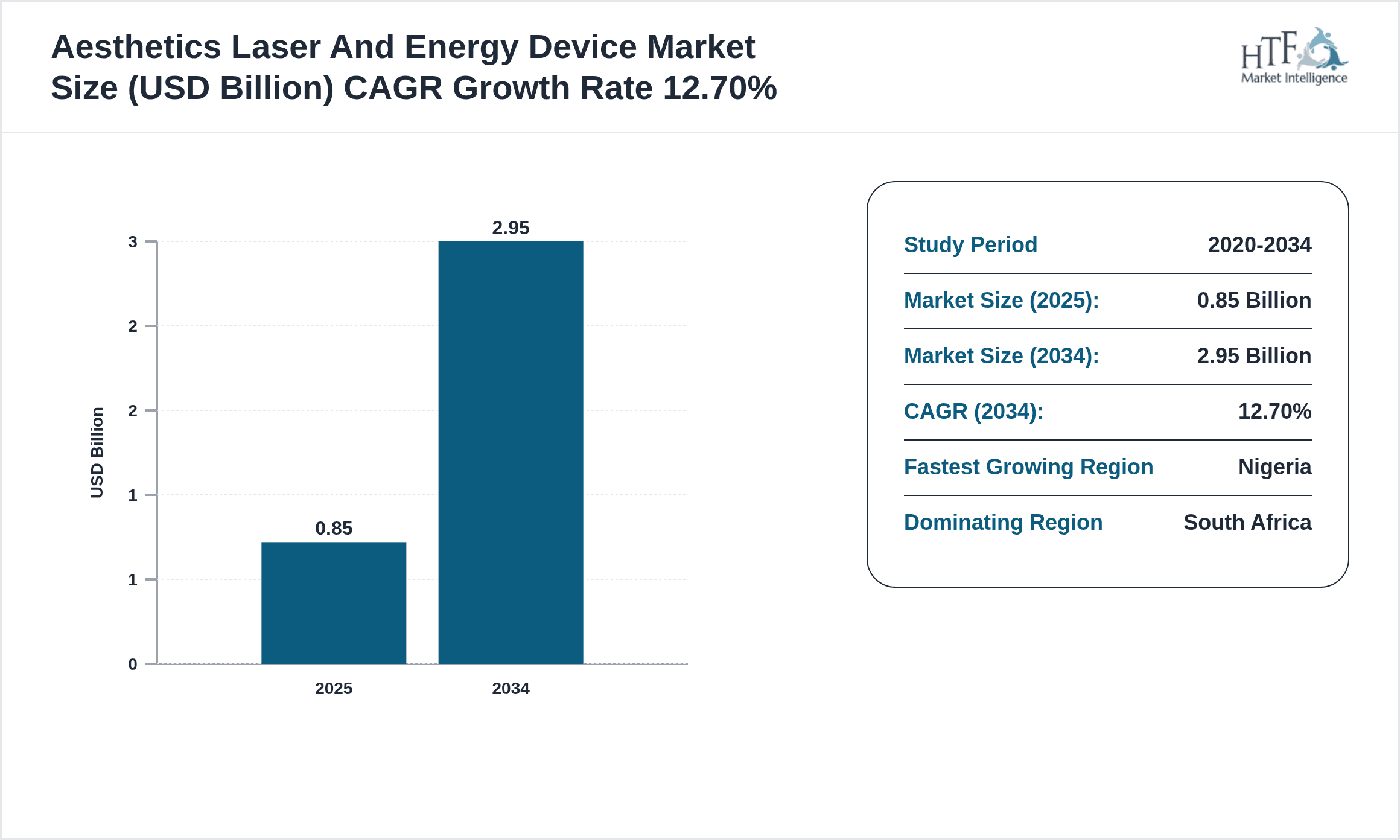
- •Market growth is propelled by increasing aesthetic awareness, rising disposable incomes, and urbanization in key African countries like South Africa, Nigeria, and Egypt. The market size is projected to grow from USD 0.85 Billion in 2024 to USD 2.95 Billion by 2034, reflecting a CAGR of 12.7%.
- •This market presents significant opportunities for device manufacturers and service providers aiming to capitalize on the expanding demand for non-invasive cosmetic treatments, supported by technological innovation and improving regulatory frameworks.
Competitive Landscape
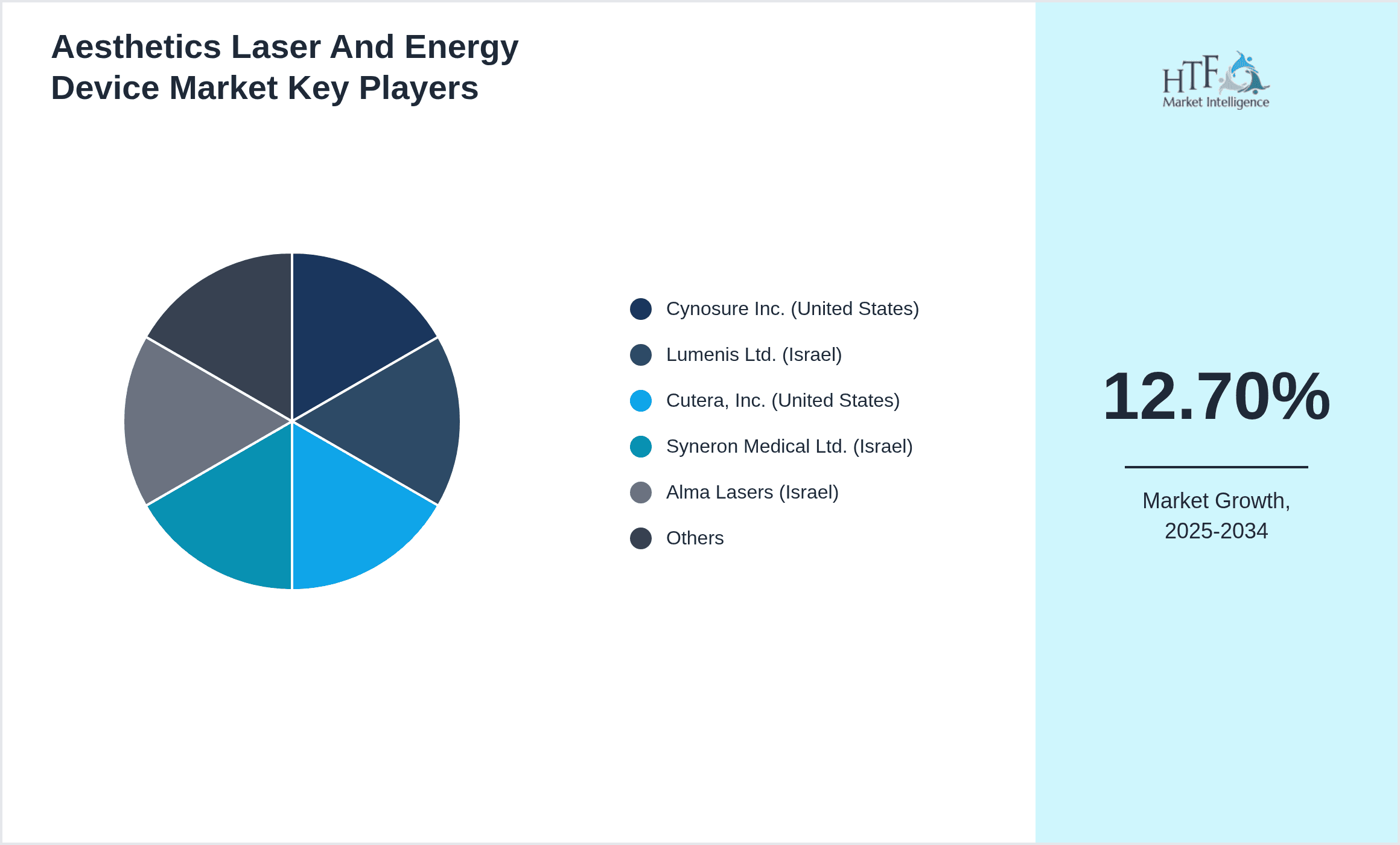
The Africa Aesthetics Laser And Energy Device Market is characterized by moderate competition with a mix of global leaders and regional players. Companies differentiate through innovation in device technology, focusing on safety, efficacy, and multi-functionality to address diverse skin types prevalent in Africa. Competitive strategies include strategic partnerships with local distributors, after-sales service enhancements, and tailored marketing to emerging urban populations. The market exhibits rivalry driven by product differentiation and pricing strategies to penetrate cost-sensitive yet rapidly growing African economies. Innovation pipelines emphasize integration of AI-based treatment planning and portable devices to boost accessibility. Entry barriers include high initial investment and regulatory compliance challenges. Regional competition is strongest in South Africa and Nigeria, with emerging markets in Egypt and Kenya attracting increasing attention. Future trends point towards consolidation through mergers and acquisitions to leverage distribution networks and technological synergies, enhancing competitive positioning across the continent.
Leading Companies in Africa Aesthetics Laser And Energy Device Market
- •Cynosure Inc. (United States)
- •Lumenis Ltd. (Israel)
- •Cutera, Inc. (United States)
- •Syneron Medical Ltd. (Israel)
- •Alma Lasers (Israel)
- •Fotona d.o.o. (Slovenia)
- •Sciton, Inc. (United States)
- •Bison Medical Company (United States)
- •Mediostar (Germany)
- •Quanta System S.p.A. (Italy)
- •Asclepion Laser Technologies GmbH (Germany)
- •Venus Concept Inc. (Canada)
- •Jeisys Medical Inc. (South Korea)
- •Hugel, Inc. (South Korea)
- •Cocoon Medical (Australia)
- •Fotomedic Ltd. (South Africa)
- •Lumibird Group (France)
- •Almedis Medical (South Africa)
- •Cutis Medical Laser Technologies (South Africa)
- •Meditech Group (Kenya)

Market Breakdown
- •By Type
- ◦Diode Laser Devices
- ◦Alexandrite Laser Devices
- ◦CO2 Laser Devices
- ◦Nd:YAG Laser Devices
- ◦Intense Pulsed Light (IPL) Devices
- •By Application
- ◦Hair Removal
- ◦Skin Rejuvenation
- ◦Body Contouring
- ◦Tattoo Removal
- ◦Acne Treatment
- •By End User
- ◦Dermatology Clinics
- ◦Medical Spas
- ◦Hospitals
- ◦Beauty Salons
- •By Distribution Channel
- ◦Direct Sales
- ◦Distributors/Resellers
- ◦Online Platforms
Growth Dynamics
- •Rising disposable incomes and increasing urbanization in major African economies such as South Africa and Nigeria fuel demand for advanced aesthetic treatments, driving market expansion for laser and energy devices.
- •Growing awareness of non-invasive cosmetic procedures and increased acceptance among younger demographics contribute to accelerated adoption of aesthetics laser and energy devices across clinics and spas.
- •Technological advancements in multi-functional devices offering combined treatments enhance operational efficiency and patient outcomes, positively impacting market growth.
- •Expansion of medical tourism in countries like Egypt and Morocco attracts international clientele seeking aesthetic procedures, increasing demand for state-of-the-art laser and energy devices.
- •Government initiatives aimed at modernizing healthcare infrastructure improve access to advanced aesthetic technologies, supporting market development.

Market Trends
- •Shift towards portable and user-friendly laser devices enables wider adoption in smaller clinics and beauty salons, expanding market reach beyond major urban centers.
- •Integration of artificial intelligence for personalized treatment planning is emerging, optimizing efficacy and patient satisfaction in aesthetic procedures.
- •Sustainability trends influence manufacturers to develop energy-efficient devices with reduced environmental impact, aligning with global eco-conscious standards.
- •Collaborations between device manufacturers and local distributors enhance market penetration through localized marketing and after-sales support.
- •Increasing demand for multi-technology platforms capable of performing various treatments with a single device gains traction among practitioners for cost-effectiveness.
Market Opportunities
- •Emerging middle-class populations in Nigeria and Kenya present untapped demand for aesthetic treatments, offering growth potential for laser and energy device providers.
- •Product innovation focusing on skin types prevalent in Africa can differentiate offerings and capture niche market segments effectively.
- •Expansion of e-commerce channels enables direct-to-consumer sales and wider device accessibility, creating new revenue streams.
- •Strategic partnerships with dermatology associations and training programs can enhance device adoption through professional endorsements.
- •Growing demand for male aesthetic treatments opens a new segment for specialized laser and energy devices targeting male consumers.
Market Challenges
- •High initial investment costs for advanced laser and energy devices limit adoption among small-scale clinics and beauty salons in price-sensitive markets.
- •Lack of standardized training and skilled professionals in some regions hinders optimal device utilization and customer satisfaction.
- •Regulatory complexities and inconsistent enforcement across African countries create barriers for market entry and product approval.
- •Competition from low-cost counterfeit or substandard devices poses risks to market credibility and patient safety.
- •Economic volatility and currency fluctuations in key markets impact purchasing power and investment capacity of end users.
Regulatory Framework
- •Between 2019 and 2024, several African countries including South Africa and Egypt have updated medical device regulations to enhance safety standards, requiring rigorous clinical evaluations and certification for aesthetics laser devices.
- •New regulations mandate compliance with international quality standards such as ISO 13485 and IEC 60601, increasing market entry hurdles but ensuring device reliability and patient safety.
- •Government agencies have introduced registration requirements and post-market surveillance programs to monitor device performance and adverse events, strengthening regulatory oversight.
- •Regulatory harmonization efforts across regional economic communities like the African Union aim to streamline approval processes and facilitate intra-regional trade of aesthetic devices.
- •Incentives and support programs for local manufacturing and innovation in medical aesthetics technologies are being introduced to reduce dependency on imports and boost domestic industry growth.
Industry Insights
- •In March 2024, Lumenis Ltd. launched a next-generation diode laser platform optimized for diverse African skin tones, featuring enhanced cooling technology and AI-assisted treatment customization to improve safety and efficacy. This innovation is expected to accelerate adoption in dermatology clinics across South Africa and Nigeria, supporting market growth through improved clinical outcomes and patient comfort.
- •In November 2023, Alma Lasers expanded its footprint by partnering with a leading South African distributor to increase availability of its multi-technology aesthetic platforms. The collaboration focuses on strengthening after-sales service networks and training programs, addressing key adoption barriers and enhancing user confidence in high-end laser devices.
Mergers & Acquisitions
- •In August 2024, Cutera, Inc. acquired a prominent South African medical device distributor specializing in aesthetics laser equipment, aiming to consolidate its market position and enhance direct access to fast-growing African markets including Nigeria and Egypt. This strategic acquisition enables Cutera to leverage established distribution networks and local expertise, accelerating product rollout and customer support services.
- •In February 2023, Cynosure Inc. completed the acquisition of a regional laser device manufacturer in Kenya, expanding its product portfolio with cost-effective solutions tailored for emerging African markets. This deal facilitates increased manufacturing capacity and localized R&D, positioning Cynosure to capitalize on rising demand for affordable, high-quality aesthetic devices in the continent.
Recent Industry News
- •15th January 2025, Lumenis Ltd. announced the launch of a new IPL device specifically designed for African skin types, featuring adaptive wavelength technology to reduce treatment risks. This launch targets dermatology clinics in South Africa and Nigeria, aiming to enhance patient safety and treatment efficacy. Source: Lumenis Official Press Release.
- •22nd March 2025, Fotomedic Ltd., a South African aesthetics device manufacturer, partnered with a leading Nigerian distributor to expand its reach across West Africa. The partnership includes joint training programs and marketing campaigns to boost awareness and device adoption. Source: Company Website.
- •10th April 2025, Cynosure Inc. unveiled a portable Nd:YAG laser platform at a major African dermatology conference, emphasizing ease of use in remote clinics. The device gained positive feedback for versatility and affordability, expected to drive growth in emerging markets. Source: Industry Publication.
- •28th May 2025, Alma Lasers inaugurated a new service and training center in Nairobi, Kenya, to support device users across East Africa. The facility aims to improve after-sales services and professional education, enhancing market confidence and product reliability. Source: Alma Lasers Corporate News.
Regional Outlook
The South Africa currently holds a significant share of the market, primarily due to several key factors: increasing consumption rates, a burgeoning population, and robust economic momentum. These elements collectively drive demand, positioning this region as a leader in the market. On the other hand, Nigeria is rapidly emerging as the fastest-growing area within the industry. This remarkable growth can be attributed to swift infrastructure development, the expansion of various industrial sectors, and a marked increase in consumer demand. These dynamics make this region a crucial player in shaping future market growth.
In our report, we cover a comprehensive analysis of the following regions and countries:
- South Africa
- Nigeria
- Kenya
- Algeria
- Zambia
- Morocco
- Ethiopia
- Others
| Feature | Details |
|---|---|
| Base Year Market Size | USD 0.85 Billion |
| Forecast Year Market Size | USD 2.95 Billion |
| CAGR | 12.7% |
| Forecast Period | 2026 to 2033 |
| YoY Growth | 12% |
| Scope of Report | Market is segmented by Type (Diode Laser Devices, Alexandrite Laser Devices, CO2 Laser Devices, Nd:YAG Laser Devices, Intense Pulsed Light (IPL) Devices), Application (Hair Removal, Skin Rejuvenation, Body Contouring, Tattoo Removal, Acne Treatment), End User (Dermatology Clinics, Medical Spas, Hospitals, Beauty Salons), Distribution Channel (Direct Sales, Distributors/Resellers, Online Platforms) |
| Regions Covered | South Africa, Nigeria, Kenya, Algeria, Zambia, Morocco, Ethiopia, Others |
| Key Companies | Cynosure Inc. (United States), Lumenis Ltd. (Israel), Cutera, Inc. (United States), Syneron Medical Ltd. (Israel), Alma Lasers (Israel), Fotona d.o.o. (Slovenia), Sciton, Inc. (United States), Bison Medical Company (United States), Mediostar (Germany), Quanta System S.p.A. (Italy), Asclepion Laser Technologies GmbH (Germany), Venus Concept Inc. (Canada), Jeisys Medical Inc. (South Korea), Hugel, Inc. (South Korea), Cocoon Medical (Australia), Fotomedic Ltd. (South Africa), Lumibird Group (France), Almedis Medical (South Africa), Cutis Medical Laser Technologies (South Africa), Meditech Group (Kenya) |
Africa Aesthetics Laser And Energy Device Market Size, Growth & Revenue 2024-2034 - Table of Contents
Frequently Asked Questions (FAQ):
The Compact Track Loaders market is projected to grow at a CAGR of 6.8% from 2025 to 2030, driven by increasing demand in construction and agricultural sectors.
North America currently leads the market with approximately 45% market share, followed by Europe at 28% and Asia-Pacific at 22%. The remaining regions account for 5% of the global market.
Key growth drivers include increasing construction activities, rising demand for versatile equipment in agriculture, technological advancements in track loader design, and growing preference for compact equipment in urban construction projects.