
United States Pharmacopoeia Grade Methylene Blue Market Size, Growth & Revenue 2024-2034
United States Pharmacopoeia Grade Methylene Blue Market is segmented by Type (USP Grade A Methylene Blue, USP Grade B Methylene Blue, USP Grade C Methylene Blue, USP Grade D Methylene Blue), Application (Pharmaceuticals, Diagnostics, Water Treatment, Food Industry, Research & Development), End-User (Hospitals & Clinics, Biotechnology Labs, Water Treatment Facilities, Food Processing Companies), Distribution Channel (Direct Sales, Distributors & Wholesalers, Online Retail, Pharmaceutical Supply Chains), and Geography (Northeast, Southwest, The South, The Midwest)
Pricing
Report Overview
Executive Summary
- •The United States Pharmacopoeia Grade Methylene Blue market includes high-purity methylene blue products conforming to USP standards, used primarily in pharmaceuticals, diagnostics, water treatment, and food industries. This market is defined by rigorous quality controls, diverse applications, and a focus on safety and efficacy.
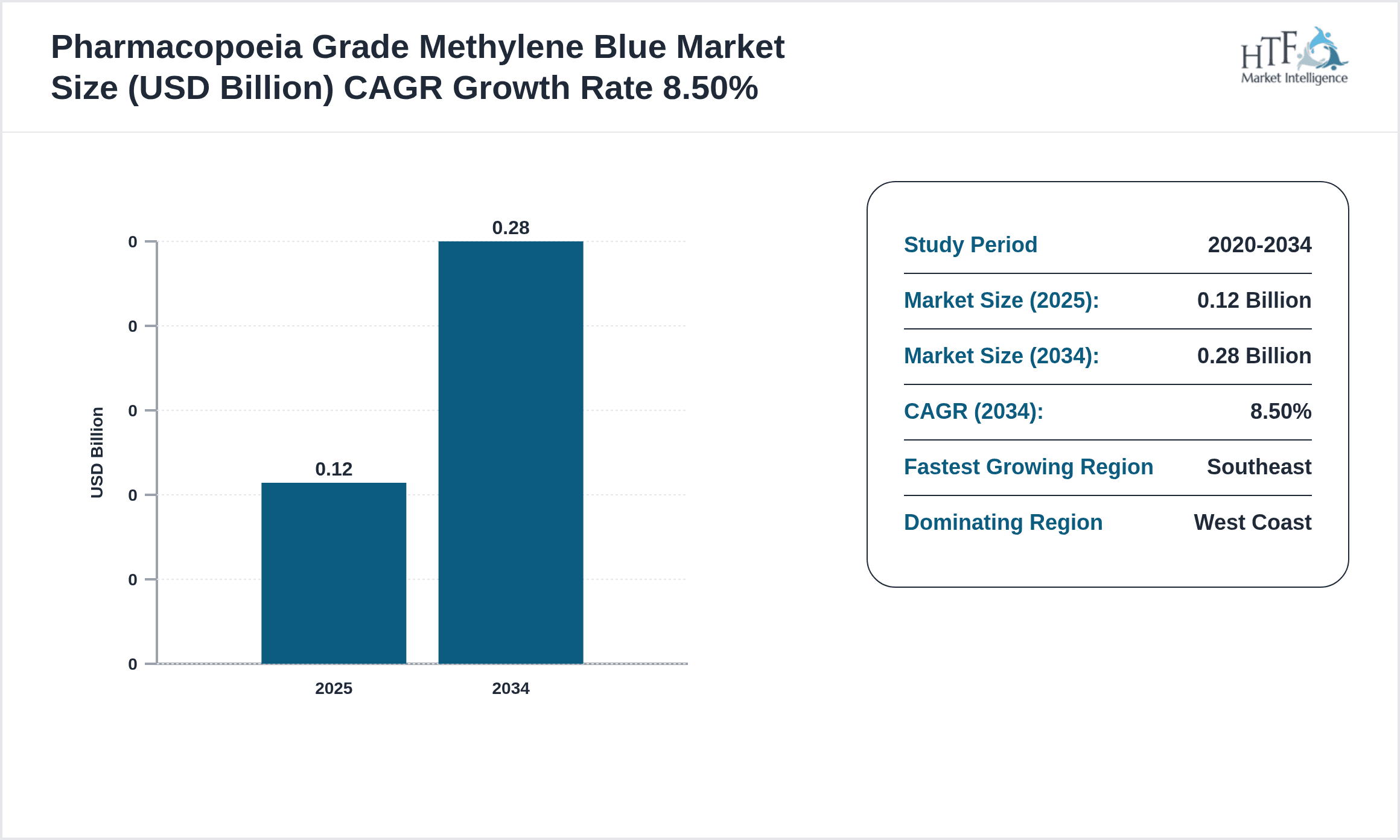
- •Key market highlights include an estimated base market size of USD 120 Million in 2024, forecasted to reach USD 280 Million by 2034, driven by increasing pharmaceutical and diagnostic applications, with a CAGR of 8.5%.
- •The market provides essential value in medical treatments such as methemoglobinemia antidotes, diagnostic staining, and environmental solutions, making it strategically important for healthcare providers, environmental agencies, and research institutions.
Competitive Landscape
The United States Pharmacopoeia Grade Methylene Blue market is characterized by moderate competition with several established chemical and pharmaceutical companies vying for market share. Competition revolves around product quality, regulatory compliance, pricing strategies, and innovation in application methods. Market leaders invest heavily in R&D to enhance product purity and explore novel uses in diagnostics and therapeutics. Strategic partnerships and distribution network expansion are common to improve market penetration. The competitive environment also includes emerging regional players focusing on niche applications and cost-effective production techniques. Barriers to entry are significant due to strict regulatory requirements and the need for USP certification, limiting new entrants. Innovation in sustainable production and enhanced functional formulations is expected to shape future competitive dynamics.
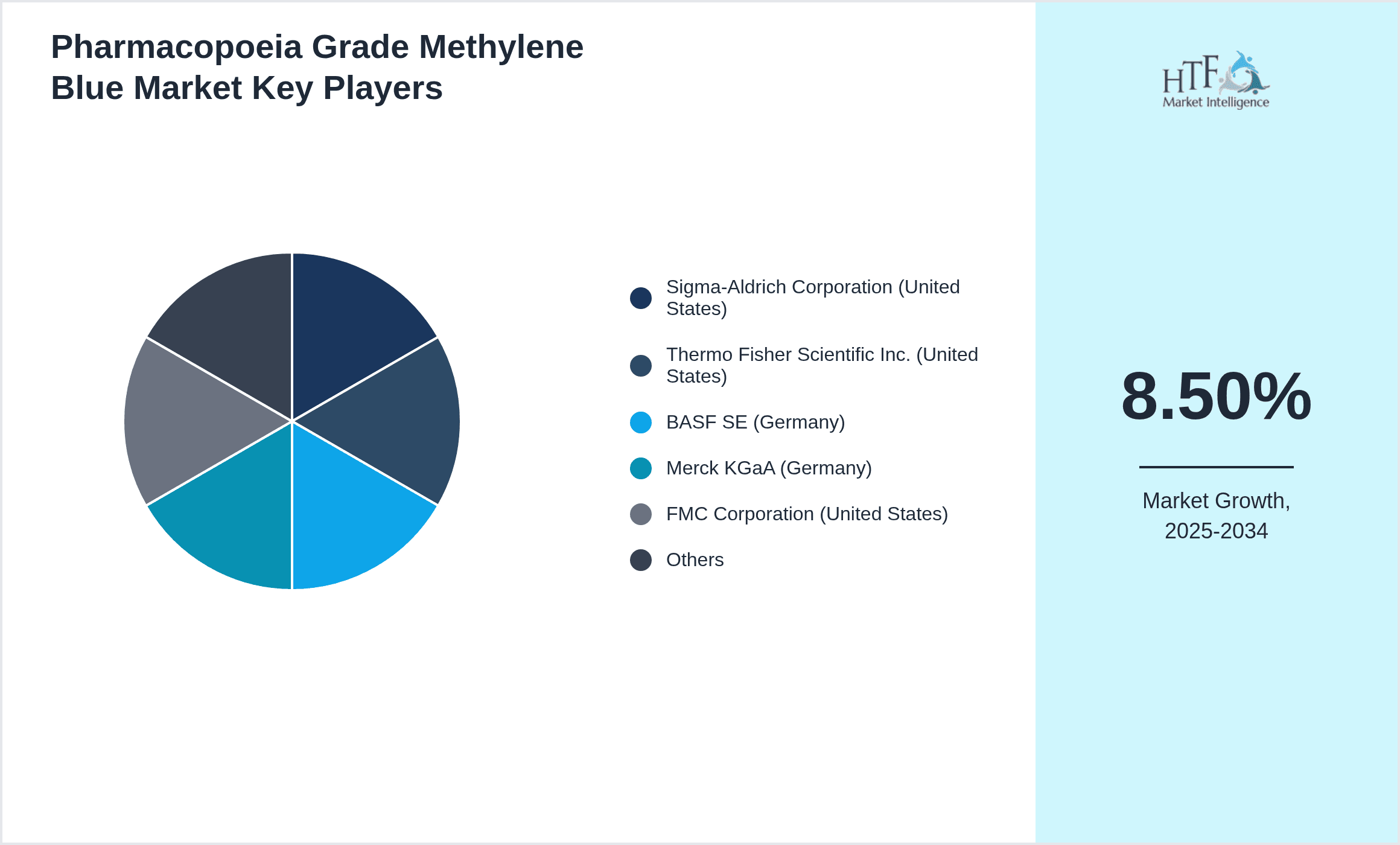
Leading Companies in Pharmacopoeia Grade Methylene Blue Market
- •Sigma-Aldrich Corporation (United States)
- •Thermo Fisher Scientific Inc. (United States)
- •BASF SE (Germany)
- •Merck KGaA (Germany)
- •FMC Corporation (United States)
- •TCI America (United States)
- •Acros Organics (United States)
- •Avantor, Inc. (United States)
- •Alfa Aesar (United States)
- •Spectrum Chemical Manufacturing Corp. (United States)
- •Tokyo Chemical Industry Co., Ltd. (Japan)
- •Honeywell International Inc. (United States)
- •Jungbunzlauer Suisse AG (Switzerland)
- •Loba Chemie Pvt. Ltd. (India)
- •VWR International, LLC (United States)
- •Chemat Technology Inc. (United States)
- •Tocris Bioscience (United States)
- •Santa Cruz Biotechnology, Inc. (United States)
- •Acme Chemicals (United States)
- •Maybridge Chemicals Ltd. (United Kingdom)

Market Breakdown
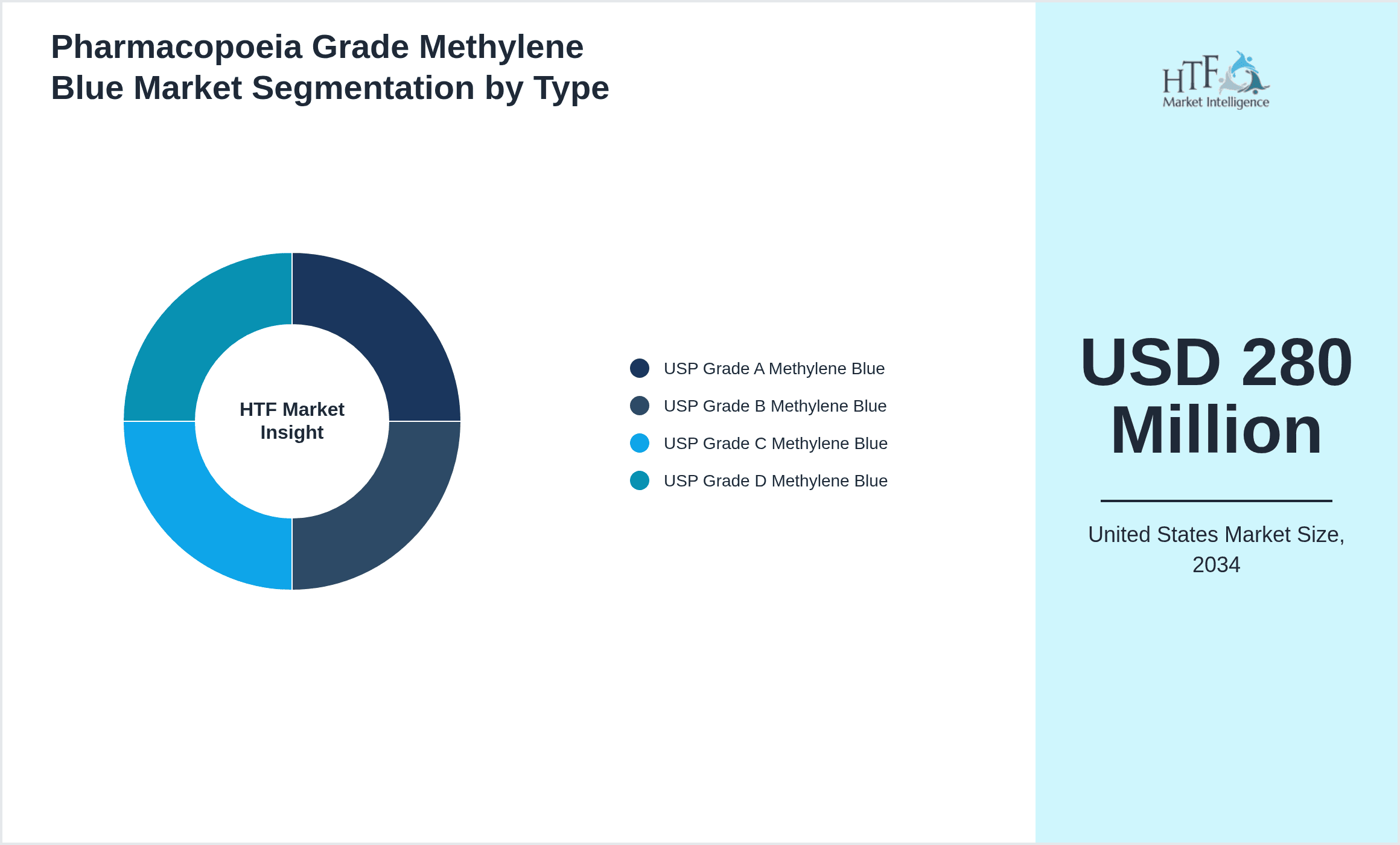
- •By Type
- ◦USP Grade A Methylene Blue
- ◦USP Grade B Methylene Blue
- ◦USP Grade C Methylene Blue
- ◦USP Grade D Methylene Blue
- •By Application
- ◦Pharmaceuticals
- ◦Diagnostics
- ◦Water Treatment
- ◦Food Industry
- ◦Research & Development
- •By End-User
- ◦Hospitals & Clinics
- ◦Biotechnology Labs
- ◦Water Treatment Facilities
- ◦Food Processing Companies
- •By Distribution Channel
- ◦Direct Sales
- ◦Distributors & Wholesalers
- ◦Online Retail
- ◦Pharmaceutical Supply Chains
Growth Drivers
The increasing prevalence of methemoglobinemia and other blood-related disorders has escalated demand for USP-grade methylene blue as an effective antidote, driving pharmaceutical sector growth. Additionally, growing investments in diagnostic applications, such as staining in histology and microbiology, are expanding usage. Regulatory emphasis on drug purity and safety bolsters market trust. Expansion of water treatment programs using methylene blue as a dye tracer and contaminant indicator further supports demand. Moreover, rising R&D activities in biotech and food safety testing create new avenues for application, with manufacturers investing in advanced product formulations to meet stringent USP standards, boosting overall market expansion.
Market Trends
The United States market is observing a trend towards eco-friendly and sustainable production processes for methylene blue, driven by environmental regulations. Integration of methylene blue in innovative diagnostic kits and point-of-care testing is gaining traction. Digitalization and automation in pharmaceutical manufacturing are enhancing product quality and traceability. Collaborative efforts between chemical manufacturers and healthcare providers are fostering product customization to specific clinical needs. Additionally, the rise of online procurement channels is improving accessibility for smaller research facilities and niche end-users, reshaping distribution paradigms in the market.
Restraints
High production costs associated with maintaining USP-grade purity and compliance limit market accessibility for smaller manufacturers. Stringent regulatory approvals and lengthy certification processes create entry barriers and slow product launches. The availability of alternative dyes and treatments in diagnostics and water treatment presents competitive pressure. Additionally, fluctuations in raw material prices and supply chain disruptions, especially for specialty chemicals, pose challenges. Limited awareness among end-users about the specific benefits of USP-grade methylene blue compared to non-pharmacopoeial grades also restrains broader adoption in certain segments.
Opportunities
Emerging applications in photodynamic therapy and antimicrobial treatments offer substantial growth potential for USP-grade methylene blue. Expansion into personalized medicine and companion diagnostics presents new market segments. Geographic expansion within the United States, especially in rapidly developing healthcare hubs in the Southeast and Midwest, offers untapped demand. Innovations in formulation stability and delivery mechanisms can enhance product differentiation. Strategic collaborations with biotech firms and academic research institutions open pathways for novel uses and co-development projects. Increasing demand in the food industry for safe colorants and preservatives also creates diversification opportunities.
Challenges
Maintaining consistent quality while scaling production poses significant operational challenges. Regulatory compliance costs and evolving standards require ongoing investment in quality assurance. Competition from generic and lower-grade methylene blue products exerts pricing pressure. The complex supply chain for raw materials can lead to volatility in availability and costs. Additionally, educating end-users on the distinct advantages of USP-grade methylene blue remains difficult, limiting market penetration in some industries. Intellectual property issues and patent expirations in related applications may affect competitive positioning and innovation incentives.
Regulatory Overview
Recent regulatory updates in the United States have reinforced the importance of compliance with the United States Pharmacopeia (USP) standards for methylene blue, emphasizing purity, safety, and manufacturing process control. The FDA continues to monitor pharmaceutical-grade chemicals closely, mandating rigorous quality audits and batch testing. Additionally, environmental regulations governing chemical discharge impact manufacturing practices. Recent changes also include enhanced labeling requirements and stricter import inspections to prevent substandard product entry. These regulatory frameworks ensure high product quality but also increase compliance costs and time-to-market for new products.
Industry Insights
In March 2023, Thermo Fisher Scientific Inc. launched a new line of USP Grade A methylene blue products optimized for diagnostic applications, featuring enhanced purity levels and improved solubility for faster staining processes. This innovation targets clinical laboratories seeking reliable reagents and reflects the company's commitment to quality and regulatory compliance, expected to strengthen its market share significantly. In November 2022, Sigma-Aldrich Corporation expanded its manufacturing facility in the United States to increase production capacity of USP Grade B methylene blue, addressing rising demand from pharmaceutical manufacturers and water treatment sectors. This strategic move enhances supply chain resilience and supports growing application requirements across multiple industries.
Mergers & Acquisitions
- •In July 2023, FMC Corporation completed the acquisition of a specialty chemical producer focused on high-purity dyes, including USP-grade methylene blue formulations. This acquisition aims to expand FMC’s product portfolio in pharmaceutical and industrial sectors, leveraging advanced manufacturing technologies to improve product quality and market reach across the United States. The strategic move is expected to foster innovation and streamline distribution channels, positioning FMC as a stronger competitor in the methylene blue market.
- •In January 2024, Avantor, Inc. acquired a regional supplier specializing in pharmaceutical-grade chemicals, including USP methylene blue products. This merger enhances Avantor’s supply chain capabilities and broadens its customer base in the healthcare and research sectors. The integration is anticipated to increase operational efficiency, expand product offerings, and accelerate growth by capitalizing on emerging applications and increasing demand in the United States.
Recent Industry News
- •15th April 2023, Sigma-Aldrich Corporation announced a partnership with a leading biotechnology firm to develop novel diagnostic assays utilizing USP-grade methylene blue, targeting rapid infectious disease detection. This collaboration aims to accelerate innovation and enhance diagnostic accuracy in clinical settings. Source: Official Press Release Sigma-Aldrich
- •10th September 2022, BASF SE expanded its production facility in the United States to increase availability of USP-grade methylene blue for pharmaceutical applications, responding to growing market demand and supply chain challenges. Source: BASF Corporate Communications
- •22nd February 2024, Thermo Fisher Scientific Inc. launched an e-commerce platform to facilitate direct sales of high-purity methylene blue products to research institutions and healthcare providers, improving accessibility and delivery speed. Source: Thermo Fisher Official Website
- •30th November 2021, Merck KGaA introduced an innovative formulation of USP-grade methylene blue designed for enhanced stability in water treatment applications, aiming to reduce environmental impact and improve efficacy. Source: Merck KGaA Industry Update
Regional Outlook
The West Coast currently holds a significant share of the market, primarily due to several key factors: increasing consumption rates, a burgeoning population, and robust economic momentum. These elements collectively drive demand, positioning this region as a leader in the market. On the other hand, Southeast is rapidly emerging as the fastest-growing area within the industry. This remarkable growth can be attributed to swift infrastructure development, the expansion of various industrial sectors, and a marked increase in consumer demand. These dynamics make this region a crucial player in shaping future market growth.
In our report, we cover a comprehensive analysis of the following regions and countries:
- Northeast
- Southwest
- The South
- The Midwest
| Feature | Details |
|---|---|
| Base Year Market Size | USD 120 Million |
| Forecast Year Market Size | USD 280 Million |
| CAGR | 8.5% |
| Forecast Period | 2026 to 2033 |
| Scope of Report | Market is segmented by Type (USP Grade A Methylene Blue, USP Grade B Methylene Blue, USP Grade C Methylene Blue, USP Grade D Methylene Blue), Application (Pharmaceuticals, Diagnostics, Water Treatment, Food Industry, Research & Development), End-User (Hospitals & Clinics, Biotechnology Labs, Water Treatment Facilities, Food Processing Companies), Distribution Channel (Direct Sales, Distributors & Wholesalers, Online Retail, Pharmaceutical Supply Chains) |
| Regions Covered | Northeast, Southwest, The South, The Midwest |
| Key Companies | Sigma-Aldrich Corporation (United States), Thermo Fisher Scientific Inc. (United States), BASF SE (Germany), Merck KGaA (Germany), FMC Corporation (United States) |
United States Pharmacopoeia Grade Methylene Blue Market Size, Growth & Revenue 2024-2034 - Table of Contents
Frequently Asked Questions (FAQ):
The Compact Track Loaders market is expected to see value worth 5.3 Billion in 2025.
North America currently leads the market with approximately 45% market share, followed by Europe at 28% and Asia-Pacific at 22%. The remaining regions account for 5% of the global market.
Key growth drivers include increasing construction activities, rising demand for versatile equipment in agriculture, technological advancements in track loader design, and growing preference for compact equipment in urban construction projects.