
United Kingdom Foam Polystyrene EPS Sandwich Panel Market Size, Growth & Revenue 2025-2034
United Kingdom Foam Polystyrene EPS Sandwich Panel Market is segmented by Application (Wall Panels, Roofing Panels, Cold Storage, Clean Rooms, Industrial Buildings), Type (Standard EPS Panels, Fire-Resistant EPS Panels, High-Density EPS Panels, Coated EPS Panels, Composite EPS Panels), Coating Material (Metal Faced, Polymer Faced, Aluminum Foil Faced, Bituminous Coated), Installation Method (Prefabricated Panels, On-site Assembly, Modular Systems), and Geography (England, Scotland, Wales, Northern Ireland)
Pricing
Report Overview
Market Definition
- •Foam Polystyrene EPS sandwich panels in the UK are composite building materials featuring a core of expanded polystyrene foam sandwiched between protective facings usually made of metal or polymer sheets. They serve primarily as insulation and structural elements for walls, roofs, and specialized industrial environments. The market scope includes various panel types such as standard, fire-resistant, and high-density EPS panels, each tailored for specific performance needs and regulatory compliance.
- •Applications stretch across residential and commercial construction, cold storage warehouses, clean rooms, and industrial buildings requiring thermal efficiency and lightweight structural solutions. End users range from construction firms to cold chain logistics companies, reflecting diverse demand drivers and market dynamics across sectors.
- •The value chain covers raw material suppliers providing polystyrene beads and coatings, manufacturers assembling and treating panels, distributors managing logistics, and end users deploying panels in building projects. Regional variations in the UK affect supply and demand, with South England dominating due to dense urban construction, while northern regions show faster adoption of advanced fire-resistant types.
- •Regulatory influences and energy efficiency standards shape product specifications and innovation, driving shifts towards more fire-safe and environmentally sustainable EPS panels. However, adoption patterns can be uneven, with some regions lagging due to cost sensitivity or supply chain disruptions. The market’s complexity lies in balancing performance, regulatory demands, and practical construction realities across the UK.
Competitive Landscape
The competitive environment for foam polystyrene EPS sandwich panels in the UK is marked by a mix of established manufacturers and newer entrants focusing on innovation and compliance with evolving regulations. Companies compete on product differentiation, such as enhanced fire resistance and sustainability credentials, as well as pricing strategies adapted to volatile raw material costs. Strategic partnerships with construction firms and distributors are common, aiming to secure supply chains and market access. Regional competition is notable, with stronger presence in urbanized southern zones and emerging players in northern and midlands areas. Innovation is increasingly focused on integrating eco-friendly materials and improving panel performance under UK-specific building regulations. Market entry barriers include capital intensity and regulatory approvals, but demand growth encourages new product launches and local manufacturing expansions, influencing competitive positioning and consolidation trends.
Leading Companies in Foam Polystyrene EPS Sandwich Panel Market
- •Kingspan Group plc (United Kingdom)
- •Celotex Limited (United Kingdom)
- •Joris Ide Group (Belgium)
- •BASF SE (Germany)
- •Armacell International S.A. (Luxembourg)
- •Recticel NV (Belgium)
- •Dow Chemical Company (United States)
- •3A Composites GmbH (Germany)
- •Huntsman Corporation (United States)
- •Kingspan Insulation Ltd (United Kingdom)
- •Saint-Gobain S.A. (France)
- •Metecno Group SpA (Italy)
- •Eurofoam Group (Austria)
- •Linde AG (Germany)
- •Owens Corning (United States)
- •Kingspan Environmental Ltd (United Kingdom)
- •Wienerberger AG (Austria)
- •Recticel Insulation UK Ltd (United Kingdom)
- •Xtratherm UK Ltd (United Kingdom)
- •Kingspan Structural Insulated Panels (United Kingdom)
- •Armacell UK Limited (United Kingdom)
- •Polypipe Group plc (United Kingdom)
- •Kingspan Light + Air (United Kingdom)
- •Recticel Foam Corporation (United States)
- •BASF UK Limited (United Kingdom)
Market Breakdown
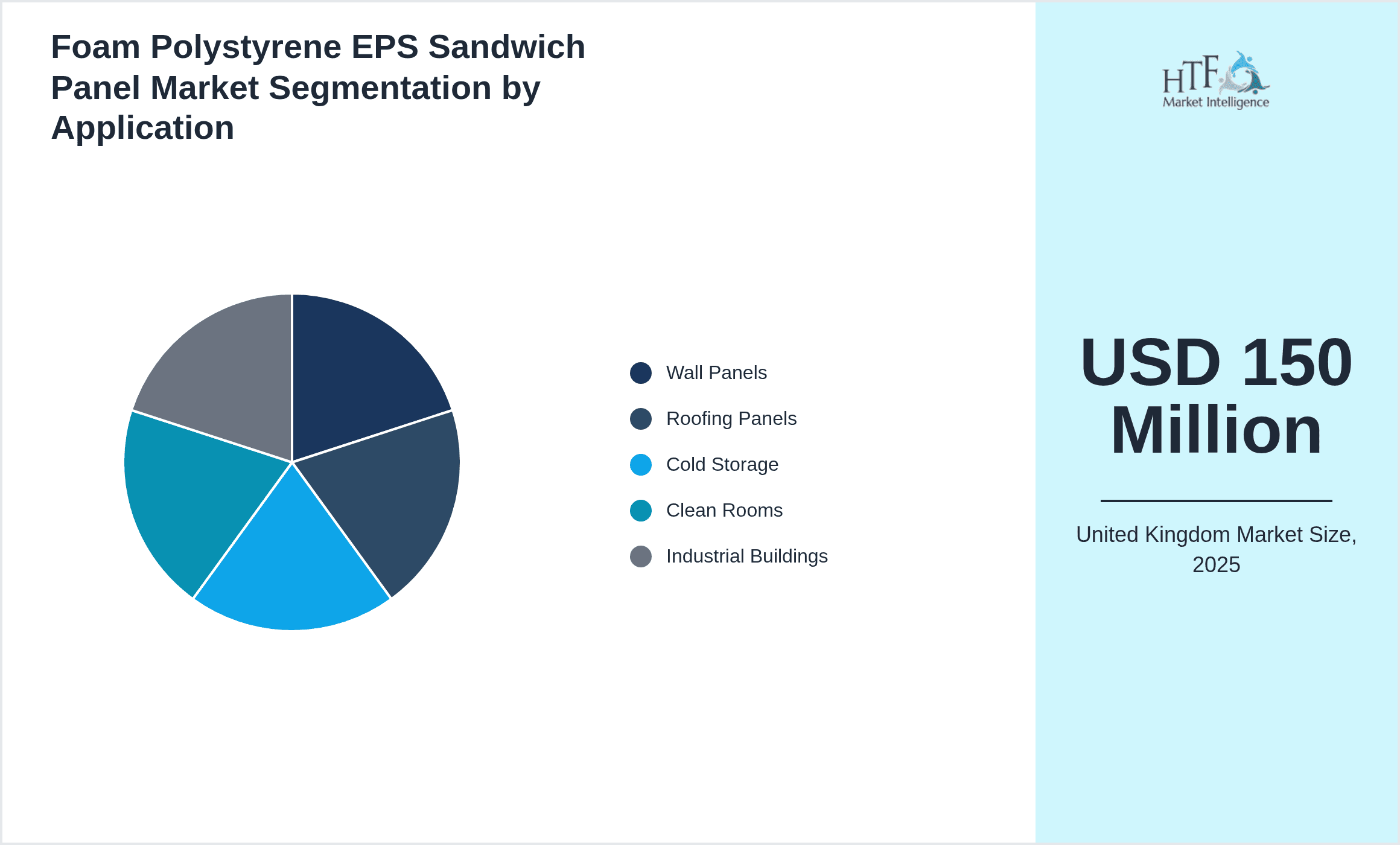
- •By Application
- ◦Wall Panels
- ◦Roofing Panels
- ◦Cold Storage
- ◦Clean Rooms
- ◦Industrial Buildings
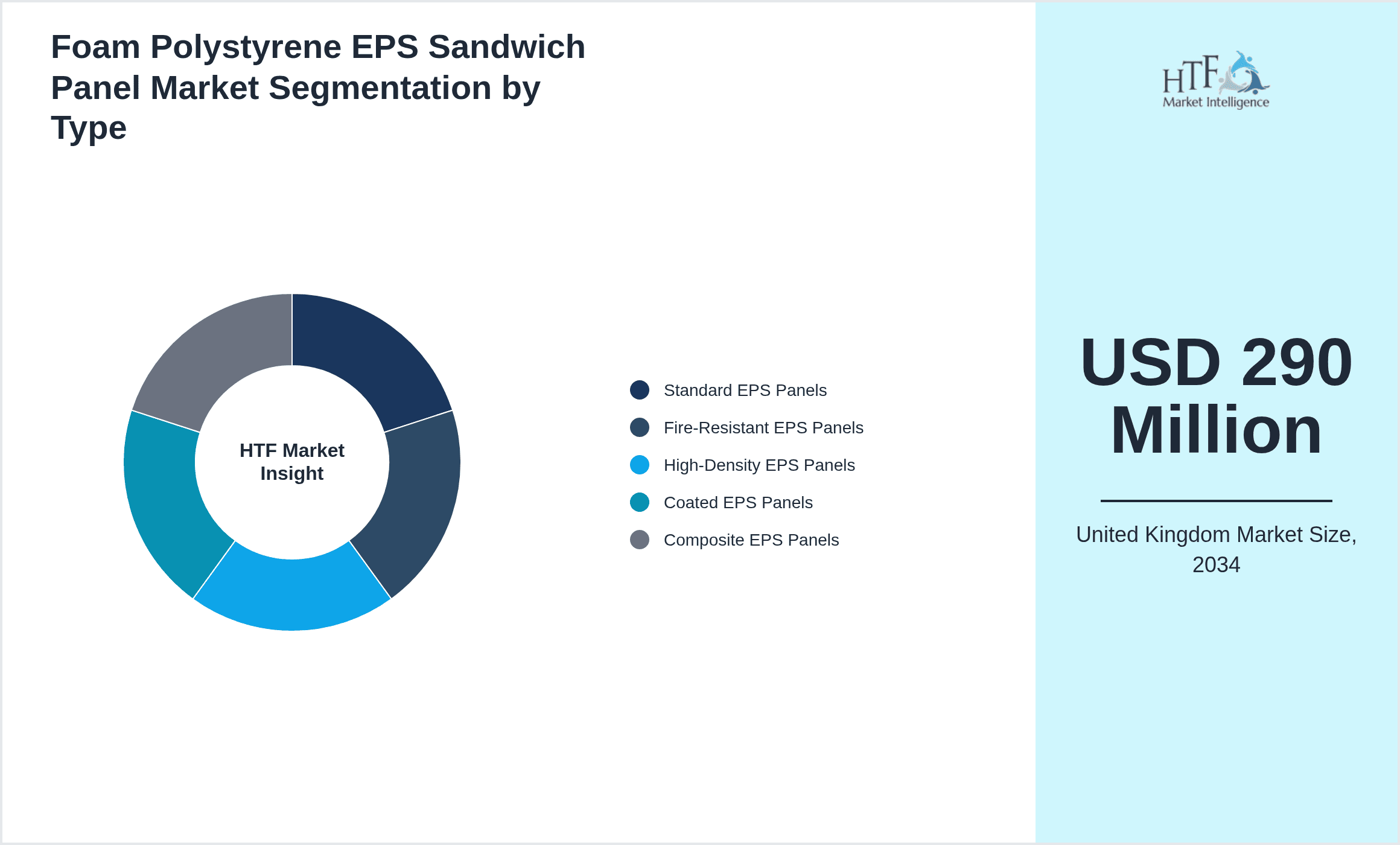
- •By Type
- ◦Standard EPS Panels
- ◦Fire-Resistant EPS Panels
- ◦High-Density EPS Panels
- ◦Coated EPS Panels
- ◦Composite EPS Panels
- •By Coating Material
- ◦Metal Faced
- ◦Polymer Faced
- ◦Aluminum Foil Faced
- ◦Bituminous Coated
- •By Installation Method
- ◦Prefabricated Panels
- ◦On-site Assembly
- ◦Modular Systems
Growth Dynamics
- •Increasing demand for energy-efficient building materials in the UK, driven by tightening regulations around carbon emissions and insulation standards, significantly propels EPS sandwich panel adoption. Builders and developers seek materials that meet stricter thermal performance criteria, creating steady growth momentum.
- •Urban redevelopment projects in South England and Midlands stimulate demand, though adoption rates vary regionally due to differing economic activity and construction volumes. In some northern areas, slower uptake reflects cost sensitivity and supply chain inconsistencies.
- •Rising awareness around fire safety post regulatory updates drives interest in fire-resistant EPS panels, which are gaining traction despite somewhat higher costs. This segment shows the fastest growth, although actual deployment can lag due to approval processes and contractor familiarity.
- •Technological improvements in EPS panel coatings and composite designs boost product durability and performance, encouraging replacement of older materials. However, fragmented supplier bases sometimes slow standardization and wider market penetration.
Market Trends
- •Sustainability trends push manufacturers to innovate with recyclable and lower carbon footprint EPS materials, though balancing cost and eco-friendly attributes remains challenging for many suppliers.
- •Integration of smart construction technologies with sandwich panels, such as embedded sensors for structural monitoring, is emerging but still at an early stage in the UK market.
- •Modular and prefabricated construction methods increasingly incorporate EPS sandwich panels, accelerating installation speed and reducing onsite labor, but regional skill gaps sometimes hinder seamless adoption.
- •Fluctuating raw material costs, especially polystyrene prices linked to oil markets, cause pricing volatility, impacting procurement strategies and contract negotiations across projects.
Market Opportunities
- •Expanding retrofit and renovation activities in older UK buildings represent a sizable opportunity for EPS sandwich panels to replace inefficient insulation materials and improve energy performance.
- •Growing cold chain logistics infrastructure with UK’s expanding e-commerce and food distribution sectors demands advanced thermal panels, opening new application segments beyond traditional construction.
- •Government incentives for low-carbon construction and green building certifications could accelerate EPS panel adoption if aligned with clearer guidelines and subsidy programs.
- •Innovations in fire-resistant and composite EPS panels offer differentiation potential for manufacturers to capture premium market segments and meet stricter safety norms.
Market Challenges
- •Complex and evolving UK building regulations create compliance uncertainties and approval delays, especially for newer EPS panel types, slowing market penetration despite demand.
- •Price sensitivity among construction contractors and developers often leads to preference for cheaper alternatives or traditional insulation, limiting EPS panel market share in some regions.
- •Supply chain disruptions and raw material cost volatility impact manufacturing consistency and delivery timelines, complicating project planning and increasing risk for panel suppliers.
- •Limited awareness and technical expertise regarding EPS sandwich panel installation in certain UK sub-regions impede broader uptake and can result in inconsistent quality outcomes.
Market Entropy
The UK's foam polystyrene EPS sandwich panel market shows some unpredictable behavior. While regulation pushes for better insulation and fire safety, adoption doesn’t always follow smoothly. In some areas, especially outside South England, uptake slows due to cost concerns or logistical challenges. Supply chains occasionally hiccup, raw material costs swing with oil prices, and that throws schedules off. Some contractors shy away from newer, more expensive panel types despite their benefits, sticking to familiar materials. Innovation is visible but fragmented, with no clear industry leader driving consistent standards or market education. This messiness means growth is patchy, with pockets of rapid expansion but also slow zones. It’s not a straightforward market; real-world factors like workforce skill levels and regional economic health muddle the picture. So, while the outlook is positive overall, expect unevenness and some bumps along the way.
Merger & Acquisition News
Regional Analysis
Within the UK, South England dominates the foam polystyrene EPS sandwich panel market, driven by higher construction activity, including residential, commercial, and infrastructure projects. The Midlands follow closely, supported by industrial and logistics developments. North England emerges as the fastest growing region, buoyed by increasing urban regeneration and adoption of advanced fire-resistant panel types, although growth here is uneven and occasionally hampered by supply chain bottlenecks. Scotland and Wales exhibit modest but steady growth, influenced by regional policies and public sector construction programs. Regional disparities reflect economic diversity, regulatory enforcement levels, and contractor expertise, making tailored strategies essential for market players targeting UK sub-markets.
Regulatory Landscape
- •UK building regulations from 2020 through 2025 have increasingly tightened thermal insulation requirements, compelling higher performance standards for EPS sandwich panels. The updated Part L of the Building Regulations enforces stricter U-values, leading to greater demand for higher-density and fire-resistant EPS products.
- •Fire safety standards, especially post-Grenfell, have reshaped market expectations. Regulations such as BS 476 and the introduction of enhanced fire testing protocols require EPS panels to meet more rigorous combustibility and smoke emission criteria, affecting product development and market acceptance.
- •Environmental regulations encourage use of recyclable and low-carbon footprint materials. The UK government’s net-zero targets and sustainability frameworks drive innovation in EPS panel formulations, though balancing cost and compliance remains challenging for manufacturers.
- •Product certification and testing requirements have become more stringent, increasing time-to-market for new EPS sandwich panel variants. Compliance costs and regulatory complexity create barriers, particularly for smaller suppliers.
Investment and Funding Scenario
Competitive Innovation Radar
Innovation in the UK foam polystyrene EPS sandwich panel market is focused on enhancing fire resistance and environmental sustainability. Manufacturers invest in developing composite panels with advanced coatings that improve durability and thermal performance while meeting stricter fire safety codes. There’s a trend toward integrating recycled polystyrene content to reduce carbon footprint, though this sometimes results in trade-offs on material strength. Some companies pioneer smart panels embedded with sensors for real-time structural health monitoring, yet these remain niche due to cost and market familiarity. The fragmented supplier landscape means innovation diffusion is uneven, with leading players like Kingspan pushing boundaries, but smaller firms lagging behind. Investment in R&D targets balancing regulatory compliance with cost-effectiveness, aiming to capture growing retrofit and cold chain logistics segments. Overall, innovation is active but not uniform, reflecting diverse market pressures and regional adoption rates.
Market Size & Growth Table of United Kingdom Foam Polystyrene EPS Sandwich Panel
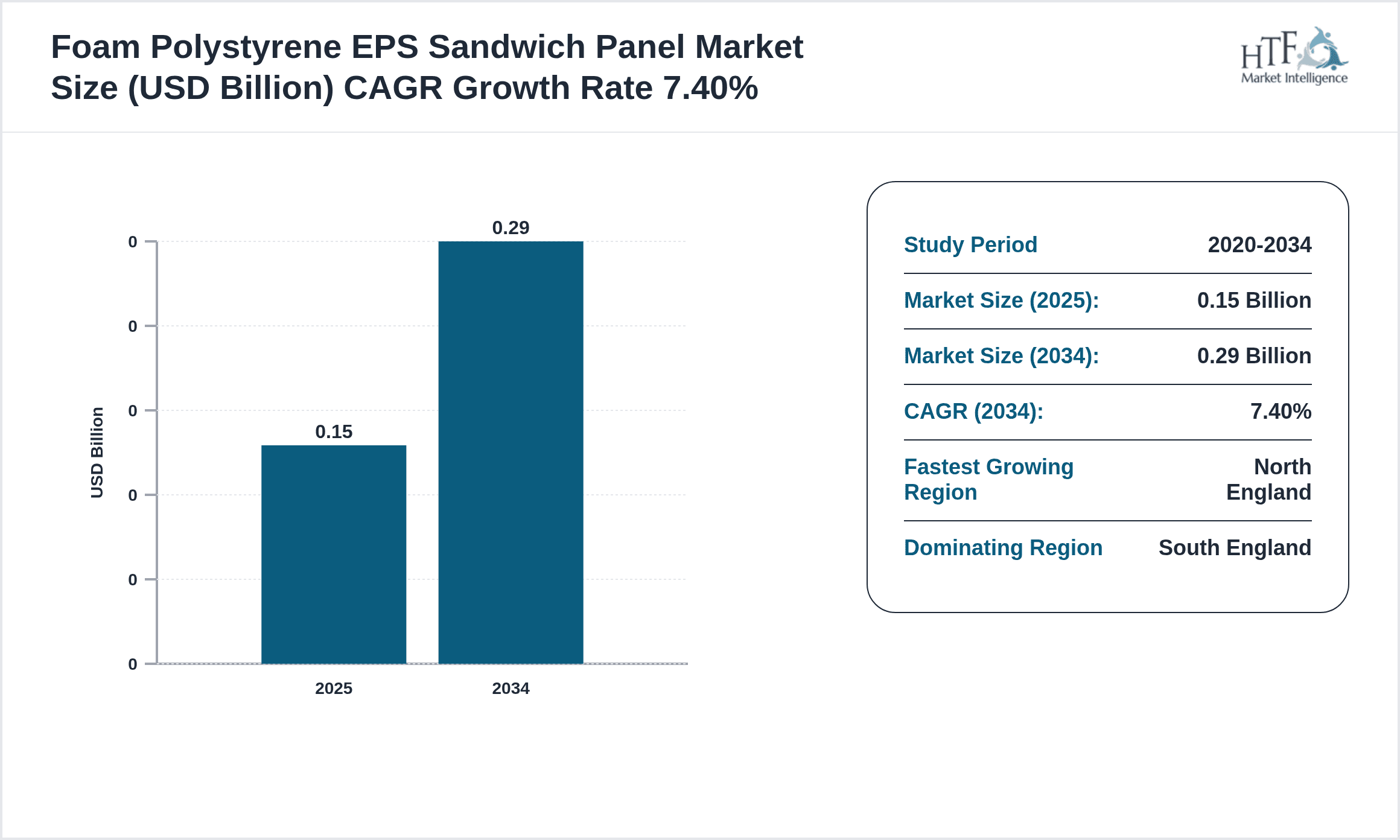
- •Base Year Market Size: USD 150 Million
- •Historical Year Market Size (2020): USD 100 Million
- •Forecast Year Market Size (2034): USD 290 Million
- •Compound Annual Growth Rate (CAGR): 7.4%
- •Year-on-Year Growth: 7.1%
Regional Performance Analysis
- •Dominating Region: South England
- •Fastest Growing Region: North England
Regional Outlook
The South England currently holds a significant share of the market, primarily due to several key factors: increasing consumption rates, a burgeoning population, and robust economic momentum. These elements collectively drive demand, positioning this region as a leader in the market. On the other hand, North England is rapidly emerging as the fastest-growing area within the industry. This remarkable growth can be attributed to swift infrastructure development, the expansion of various industrial sectors, and a marked increase in consumer demand. These dynamics make this region a crucial player in shaping future market growth.
In our report, we cover a comprehensive analysis of the following regions and countries:
- England
- Scotland
- Wales
- Northern Ireland
| Feature | Details |
|---|---|
| Base Year Market Size | USD 150 Million |
| Forecast Year Market Size | USD 290 Million |
| CAGR | 7.4% |
| Forecast Period | 2026 to 2033 |
| YoY Growth | 7.1% |
| Scope of Report | Market is segmented by Application (Wall Panels, Roofing Panels, Cold Storage, Clean Rooms, Industrial Buildings), Type (Standard EPS Panels, Fire-Resistant EPS Panels, High-Density EPS Panels, Coated EPS Panels, Composite EPS Panels), Coating Material (Metal Faced, Polymer Faced, Aluminum Foil Faced, Bituminous Coated), Installation Method (Prefabricated Panels, On-site Assembly, Modular Systems) |
| Regions Covered | England, Scotland, Wales, Northern Ireland |
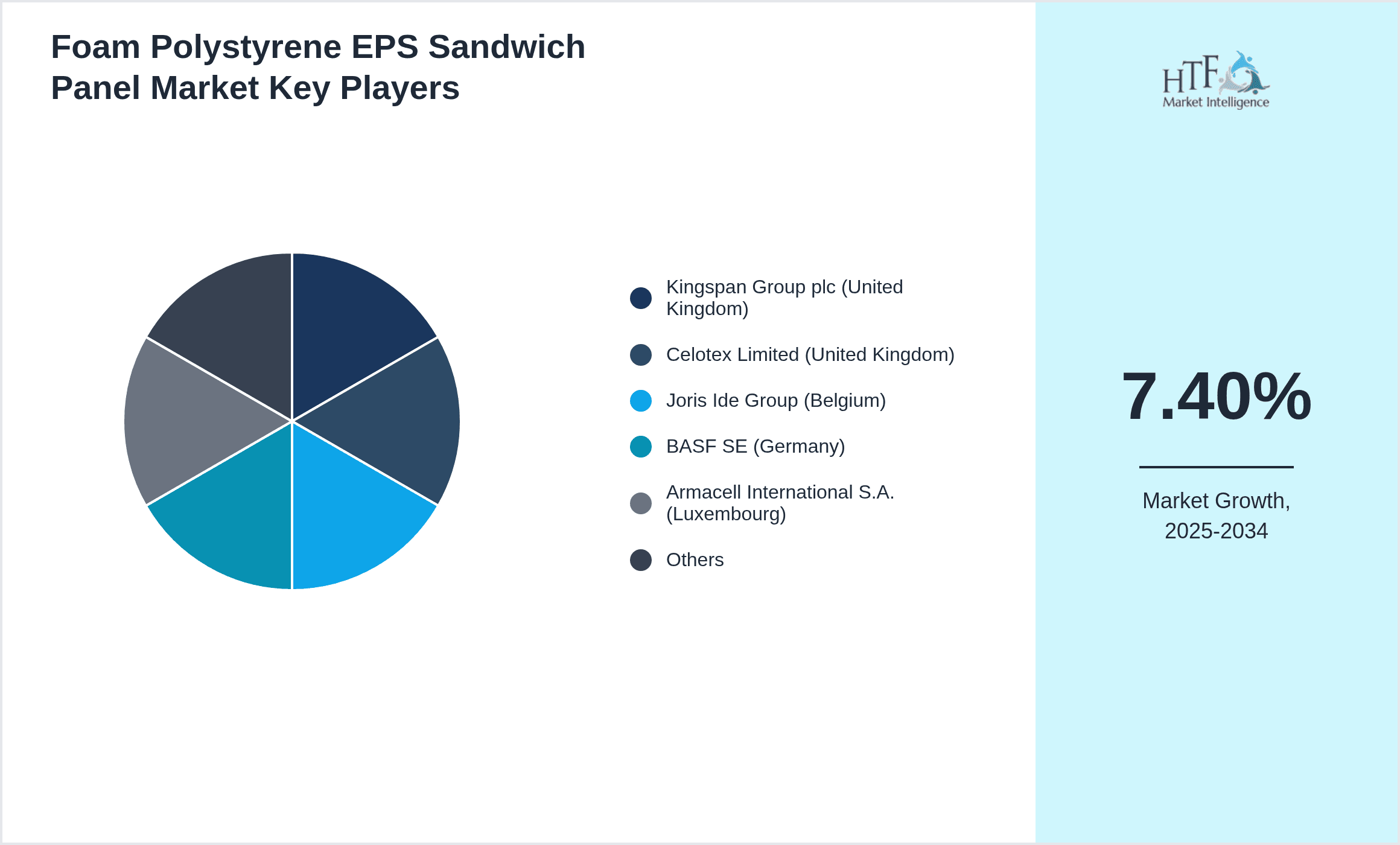
| Key Companies | Kingspan Group plc (United Kingdom), Celotex Limited (United Kingdom), Joris Ide Group (Belgium), BASF SE (Germany), Armacell International S.A. (Luxembourg) |
United Kingdom Foam Polystyrene EPS Sandwich Panel Market Size, Growth & Revenue 2025-2034 - Table of Contents
Frequently Asked Questions (FAQ):
The Compact Track Loaders market is projected to grow at a CAGR of 6.8% from 2025 to 2030, driven by increasing demand in construction and agricultural sectors.
North America currently leads the market with approximately 45% market share, followed by Europe at 28% and Asia-Pacific at 22%. The remaining regions account for 5% of the global market.
Key growth drivers include increasing construction activities, rising demand for versatile equipment in agriculture, technological advancements in track loader design, and growing preference for compact equipment in urban construction projects.