
China Travel WiFi and SIM Card Market Scope & Changing Dynamics 2025-2034
China Travel WiFi and SIM Card Market is segmented by Type (Prepaid SIM Cards, Postpaid SIM Cards, Travel WiFi Devices, eSIM, Others), Application (Leisure Travel, Business Travel, Education Travel, Medical Tourism, Others), Distribution Channel (Airport Kiosks, Online Platforms, Retail Outlets, Telecom Stores), Technology (4G LTE, 5G, WiFi 6, IoT Enabled Devices), and Geography (North China, Northeast China, East China, South Central China, Southwest China, Northwest China)
Pricing
Report Overview
Executive Summary
- •China Travel WiFi and SIM Card market includes portable internet connectivity solutions such as prepaid and postpaid SIM cards, travel WiFi devices, and eSIMs tailored for travelers within China for leisure, business, education, and medical tourism applications.
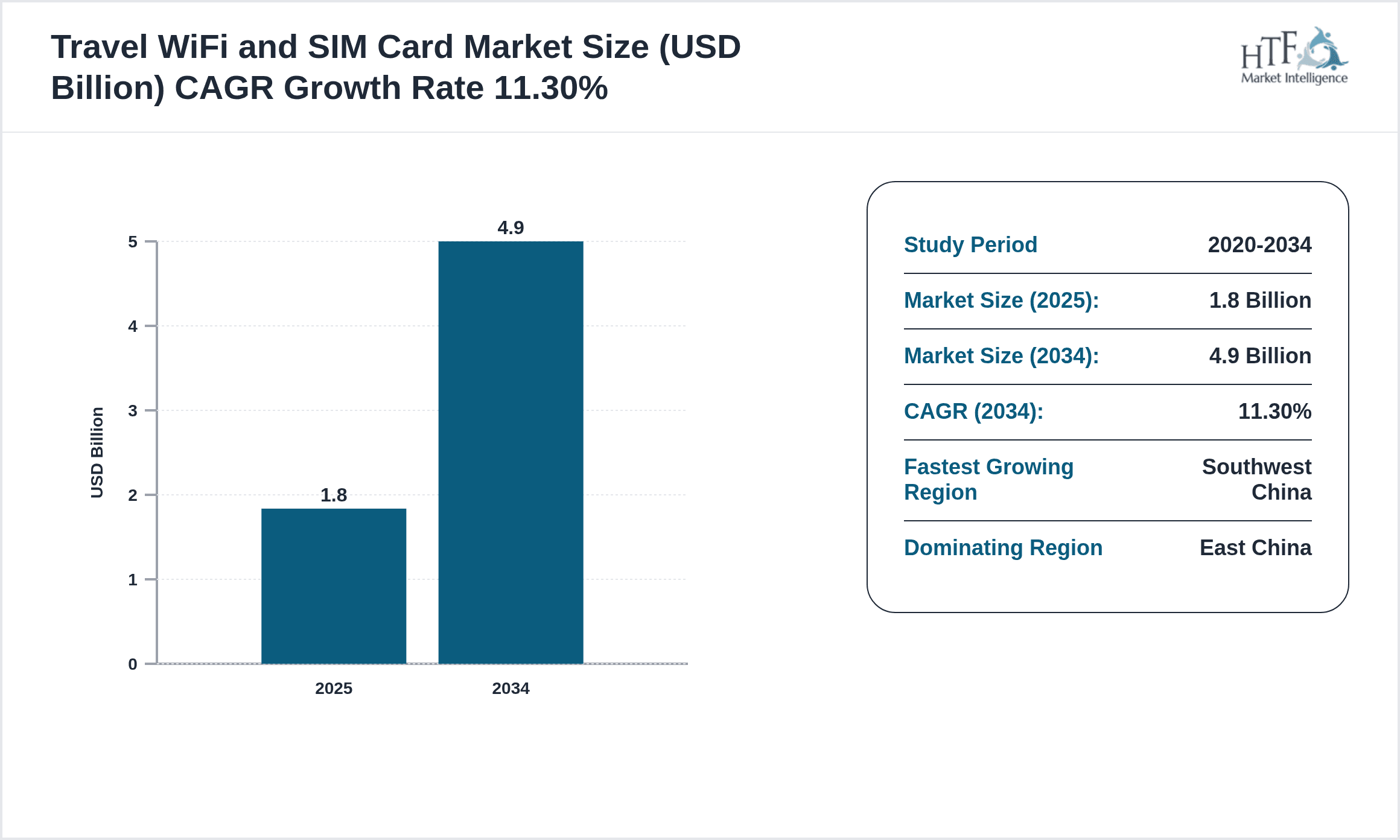
- •The market witnessed a base size of USD 1.8 Billion in 2025 and projects robust growth driven by rising domestic and international travel, digital adoption, and enhanced telecom infrastructure.
- •This market is strategically vital for enabling seamless online access during travel, supporting navigation, communication, social media, and emergency services across key Chinese regions.
Competitive Landscape
Companies in the China Travel WiFi and SIM Card market employ multi-pronged strategies including forming partnerships with local telecom operators to ensure network coverage and service reliability. Global expansion is pursued through collaborations with international travel agencies and online platforms, enhancing accessibility to foreign tourists. Product innovation focuses on integrating eSIM technology and IoT-enabled WiFi devices that offer higher bandwidth and lower latency. Technological adoption includes leveraging 5G networks and cloud-based management systems to optimize user experience. Firms focus on strategic pricing and bundling to capture diverse customer segments. Distribution optimization through online sales, airport kiosks, and retail chains increases market penetration. Sustainability efforts and customer service enhancements also contribute to brand loyalty. These strategies collectively enable companies to maintain competitive advantages and adapt swiftly to evolving traveler demands and regulatory environments within China.
Leading Companies in China Travel WiFi and SIM Card Market
- •China Unicom (China)
- •China Mobile (China)
- •China Telecom (China)
- •TravelWiFi (China)
- •Skyroam (United States)
- •GlocalMe (China)
- •TPG Telecom (Australia)
- •iVideo (China)
- •Keepgo (United States)
- •SimOptions (United Kingdom)
- •OneSimCard (United States)
- •GigSky (United States)
- •Yota Devices (Russia)
- •Telecom Square (Japan)
- •China Travel Service (China)
- •ChinaNetCenter (China)
- •China Mobile International (China)
- •China Telecom Global (China)
- •China Unicom Global (China)
- •Alibaba Cloud (China)
Market Breakdown
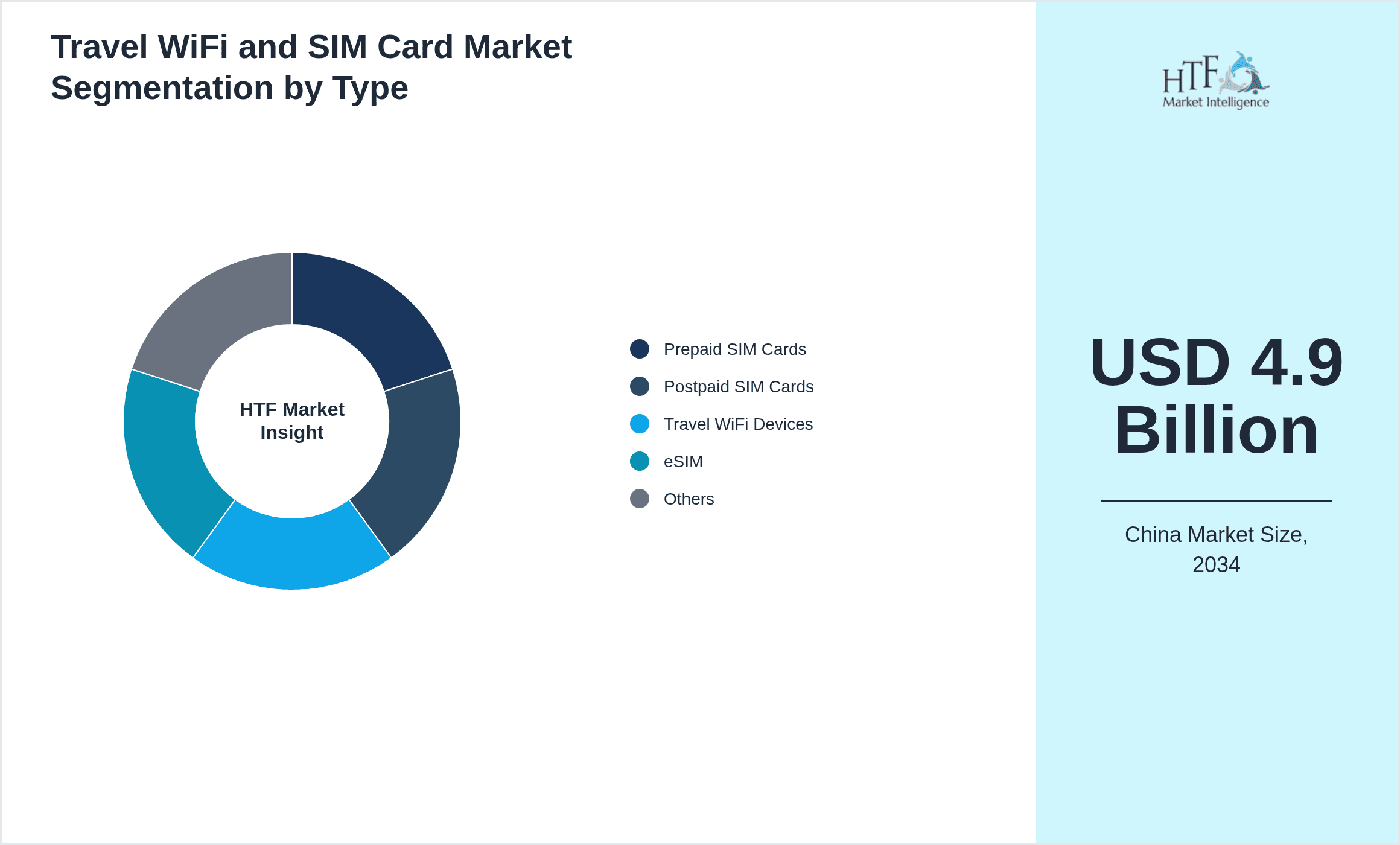
- •By Type
- ◦Prepaid SIM Cards
- ◦Postpaid SIM Cards
- ◦Travel WiFi Devices
- ◦eSIM
- ◦Others
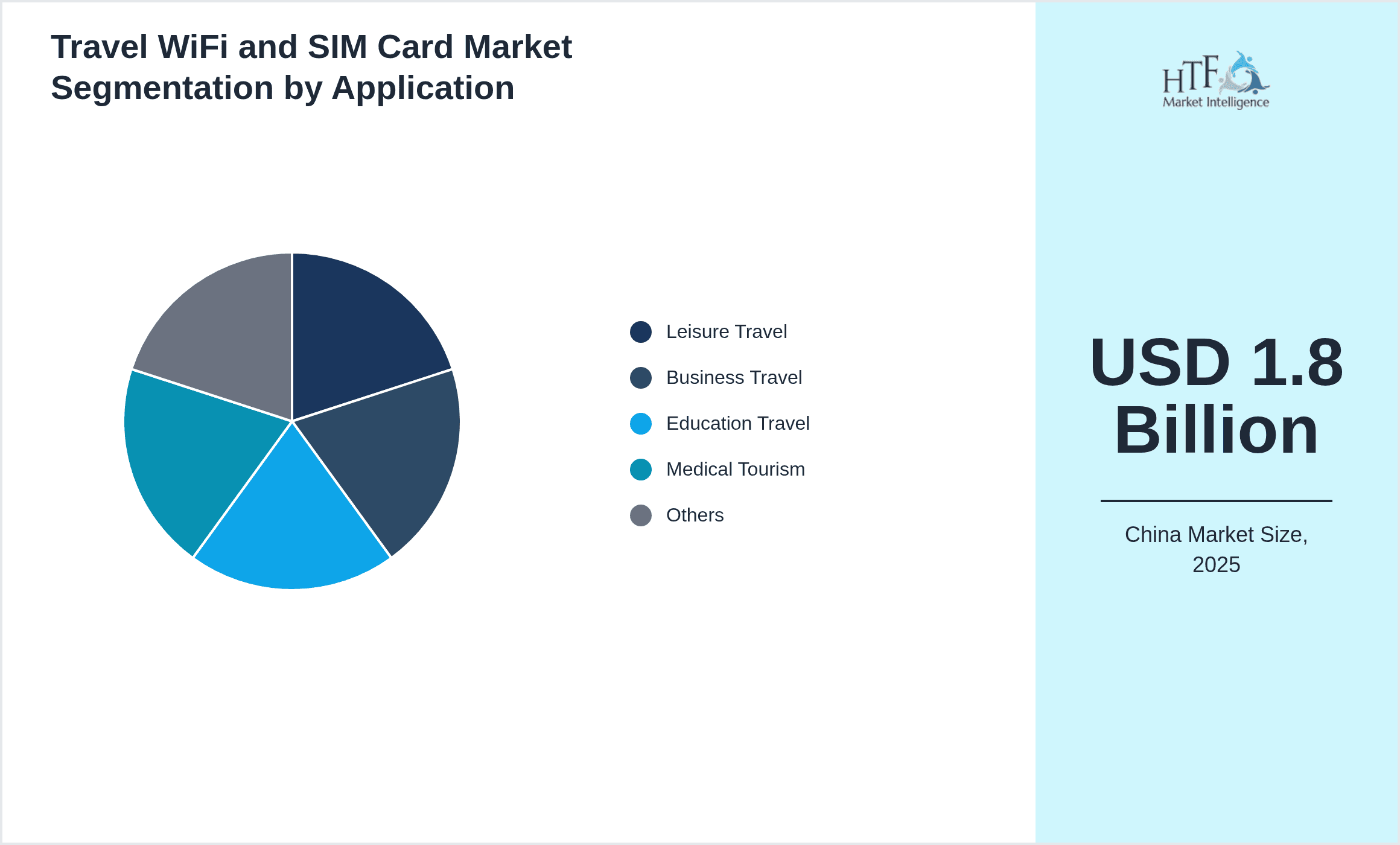
- •By Application
- ◦Leisure Travel
- ◦Business Travel
- ◦Education Travel
- ◦Medical Tourism
- ◦Others
- •By Distribution Channel
- ◦Airport Kiosks
- ◦Online Platforms
- ◦Retail Outlets
- ◦Telecom Stores
- •By Technology
- ◦4G LTE
- ◦5G
- ◦WiFi 6
- ◦IoT Enabled Devices
Market Drivers
Rapid growth in domestic and inbound tourism fuels demand for reliable travel connectivity solutions across China. The easing of COVID-19 restrictions since 2023 has led to a surge in leisure and business travel, with government statistics reporting a 35% year-on-year increase in domestic trips in 2024. The rising penetration of smartphones and mobile internet, currently exceeding 70% of the population, expands the user base for travel SIM and WiFi services. Integration of 5G technology by leading telecom operators China Mobile and China Unicom enhances network speed and coverage, improving service quality. Recent launches of eSIM-enabled devices by GlocalMe and TravelWiFi have simplified user experience by eliminating physical SIM swaps. Partnerships between telecom providers and travel agencies have streamlined distribution channels, increasing accessibility for tourists. Moreover, the rising trend of remote work during travel increases the necessity for continuous internet connectivity, bolstering market growth. These factors collectively drive the China Travel WiFi and SIM Card market expansion.
Market Trends
The China Travel WiFi and SIM Card market is evolving with the accelerated adoption of eSIM technology that offers instant activation and enhanced flexibility for travelers. This trend aligns with the increasing availability of eSIM-compatible smartphones and devices, supported by telecom giants such as China Telecom and China Unicom, which launched nationwide eSIM services in 2024. Another prevailing trend is the integration of IoT-enabled WiFi devices providing multi-user connectivity with optimized battery life, catering to group travelers and business delegations. Digital platforms and mobile apps offering seamless SIM card purchase and activation experience have gained traction, enhancing customer convenience. Additionally, the rising preference for bundled travel packages that include connectivity solutions reflects changing consumer behavior. Growing environmental concerns also push providers to develop sustainable packaging and device recycling programs. The trend towards 5G network expansion further improves speed and reliability, positioning China’s travel connectivity market for substantial growth in coming years.

Market Opportunities
Untapped potential exists in expanding travel connectivity services to second-tier and emerging cities within China, where increasing tourism and business activities are observed. Telecom operators and service providers can leverage regional infrastructure investments, especially in Southwest and Northwest China, to capture growing traveler volumes. The rising trend of digital nomads and remote working travelers offers opportunities to create specialized high-bandwidth, secure WiFi packages tailored for prolonged stays. Collaborations with international travel agencies and airlines to embed connectivity solutions into travel itineraries can boost adoption rates. Development of multilingual support and localized content within connectivity apps enhances user experience for foreign visitors. Integration of AI-driven customer service and real-time network optimization can differentiate providers. Furthermore, expansion of eSIM technology into IoT and wearable devices for travelers presents innovative growth avenues. Government initiatives promoting smart tourism and digital infrastructure development support these opportunities, making the China Travel WiFi and SIM Card market ripe for strategic investments.
Market Challenges
Complex regulatory requirements governing telecommunications and data security in China impose significant compliance challenges for foreign and domestic players. Recent tightening of cybersecurity laws since 2021 mandates stringent data localization and user privacy protections, increasing operational costs and limiting cross-border data flow. Network coverage disparities remain pronounced in remote and mountainous regions, hindering consistent connectivity for travelers in those areas. The prevalence of counterfeit SIM cards and unauthorized resellers undermines market integrity and consumer trust. Language barriers and lack of localized customer support pose difficulties for international visitors, impacting service adoption. High competition among established telecom operators and new entrants exerts pricing pressure, compressing profit margins. Additionally, technological obsolescence requires continuous investment in next-generation devices and infrastructure. The COVID-19 pandemic’s impact on international travel fluctuations also creates demand uncertainty. These challenges necessitate robust strategies and regulatory adherence for sustained growth in China’s Travel WiFi and SIM Card market.
Regulatory Framework
China has implemented several key regulations since 2020 shaping the travel connectivity market. The Cybersecurity Law enacted in 2021 imposes strict data protection and network security requirements, mandating that telecom operators localize user data and undergo security assessments. The Ministry of Industry and Information Technology (MIIT) enforces licensing and operational standards for SIM card providers, ensuring compliance with identity verification protocols to prevent misuse. Recent guidelines issued in 2023 emphasize enhanced supervision of eSIM services, requiring transparency in user consent and data handling. These regulations impact market players by increasing compliance obligations but also enhance consumer trust and network security. Providers must maintain regulatory alignment to operate legally and competitively within China’s evolving telecommunications landscape.
Recent Industry Insights
Recent market developments and strategic initiatives are continuously tracked through industry publications, company announcements, and regulatory filings. For the most current information, stakeholders are advised to monitor official corporate communications and recognized market intelligence platforms.
Recent Merger and Acquisition
Recent market developments and strategic initiatives are continuously tracked through industry publications, company announcements, and regulatory filings. For the most current information, stakeholders are advised to monitor official corporate communications and recognized market intelligence platforms.
Regional Outlook
The East China currently holds a significant share of the market, primarily due to several key factors: increasing consumption rates, a burgeoning population, and robust economic momentum. These elements collectively drive demand, positioning this region as a leader in the market. On the other hand, Southwest China is rapidly emerging as the fastest-growing area within the industry. This remarkable growth can be attributed to swift infrastructure development, the expansion of various industrial sectors, and a marked increase in consumer demand. These dynamics make this region a crucial player in shaping future market growth.
In our report, we cover a comprehensive analysis of the following regions and countries:
- North China
- Northeast China
- East China
- South Central China
- Southwest China
- Northwest China
| Feature | Details |
|---|---|
| Base Year Market Size | USD 1.8 Billion |
| Forecast Year Market Size | USD 4.9 Billion |
| CAGR | 11.3% |
| Forecast Period | 2026 to 2033 |
| YoY Growth | 11.4% |
| Scope of Report | Market is segmented by Type (Prepaid SIM Cards, Postpaid SIM Cards, Travel WiFi Devices, eSIM, Others), Application (Leisure Travel, Business Travel, Education Travel, Medical Tourism, Others), Distribution Channel (Airport Kiosks, Online Platforms, Retail Outlets, Telecom Stores), Technology (4G LTE, 5G, WiFi 6, IoT Enabled Devices) |
| Regions Covered | North China, Northeast China, East China, South Central China, Southwest China, Northwest China |
| Key Companies | China Unicom (China), China Mobile (China), China Telecom (China), TravelWiFi (China), Skyroam (United States) |
China Travel WiFi and SIM Card Market Scope & Changing Dynamics 2025-2034 - Table of Contents
Frequently Asked Questions (FAQ):
The Compact Track Loaders market is expected to see value worth 5.3 Billion in 2025.
North America currently leads the market with approximately 45% market share, followed by Europe at 28% and Asia-Pacific at 22%. The remaining regions account for 5% of the global market.
Key growth drivers include increasing construction activities, rising demand for versatile equipment in agriculture, technological advancements in track loader design, and growing preference for compact equipment in urban construction projects.