
Nordic Workforce Management Software in Healthcare Market - Outlook 2025-2034
Nordic Workforce Management Software in Healthcare Market is segmented by Type (Cloud-Based Workforce Management Software, On-Premise Workforce Management Software, Hybrid Workforce Management Software), Application (Staff Scheduling, Time and Attendance Tracking, Payroll Management, Compliance Monitoring, Employee Self-Service Portals), Healthcare Facility Type (Hospitals, Clinics, Nursing Homes, Rehabilitation Centers, Home Healthcare Providers), Deployment Model (SaaS (Software as a Service), Licensed Software, Managed Services), and Geography (Finland, Sweden, Denmark, Norway, Iceland)
Pricing
Report Overview
Executive Summary
- •The Nordic Workforce Management (WFM) Software in Healthcare market includes software solutions that streamline workforce scheduling, attendance, payroll, and compliance management for healthcare providers in Denmark, Finland, Norway, Sweden, and Iceland. These products support hospital and clinic operations by enhancing workforce utilization and patient service quality.
- •Key market highlights include steady adoption of cloud-based WFM platforms, a projected CAGR of 11.0% from 2025 to 2034, and increasing regulatory pressures driving demand for compliance-centric features. Sweden leads the regional market in size and share, while Finland exhibits the fastest growth rate at 13.5% CAGR.
- •The market holds strategic importance as healthcare providers seek digitization to optimize labor costs and improve care delivery. Advanced features such as AI-driven scheduling and mobile access are becoming critical value propositions for stakeholders across the Nordic healthcare ecosystem.

Competitive Landscape
The Nordic Workforce Management Software in Healthcare market is characterized by intense competition among global SaaS providers and regional specialists. Market participants differentiate through technological innovation, integration capabilities with electronic health records (EHR), and customer-centric service models. Competitive strategies include partnerships with healthcare institutions, focus on cloud migration, and investment in AI-powered workforce analytics. Pricing models range from subscription-based to customized enterprise agreements. The rivalry fosters continuous product enhancements, driving adoption of hybrid deployment models that balance security and accessibility. Regional players leverage local healthcare regulations and language support to gain market share, while international vendors capitalize on scalability and multi-country deployment experience. Future competition is expected to intensify as digital transformation accelerates and demand for predictive workforce management solutions grows, prompting mergers, acquisitions, and strategic alliances to consolidate market positions.
Leading Companies in Nordic Workforce Management Software in Healthcare Market
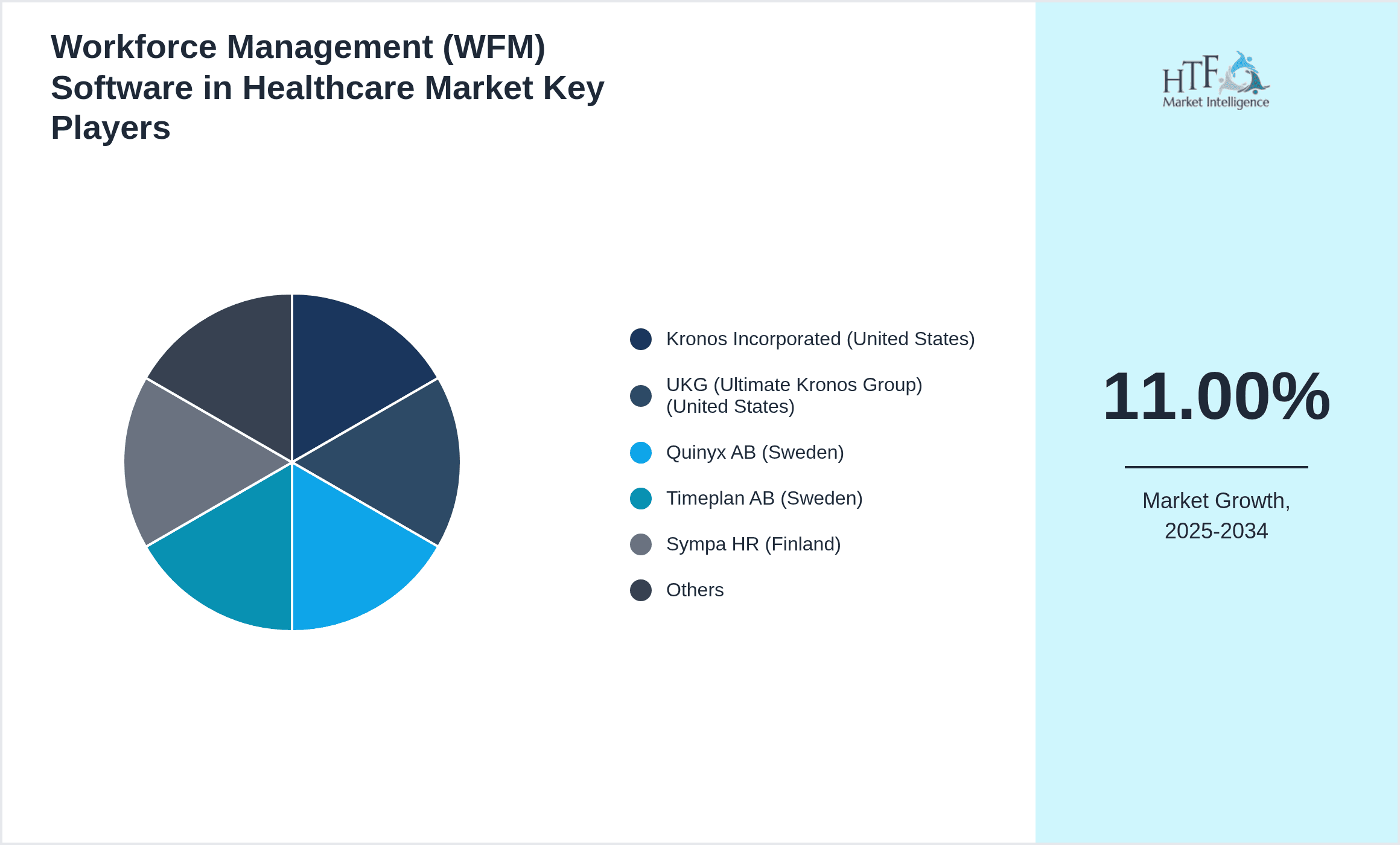
- •Kronos Incorporated (United States)
- •UKG (Ultimate Kronos Group) (United States)
- •Quinyx AB (Sweden)
- •Timeplan AB (Sweden)
- •Sympa HR (Finland)
- •Visma Enterprise (Norway)
- •Infor (United States)
- •Shiftbase (Netherlands)
- •Planday (Denmark)
- •Personio (Germany)
- •Reflexis Systems (United States)
- •Adp Workforce Now (United States)
- •Workday, Inc. (United States)
- •Cezanne HR (United Kingdom)
- •Emply (Norway)
- •e-conomic (Denmark)
- •Mirro (Norway)
- •Agendrix (Canada)
- •Deputy (Australia)
- •BeeBole Timesheets (Belgium)
Market Breakdown
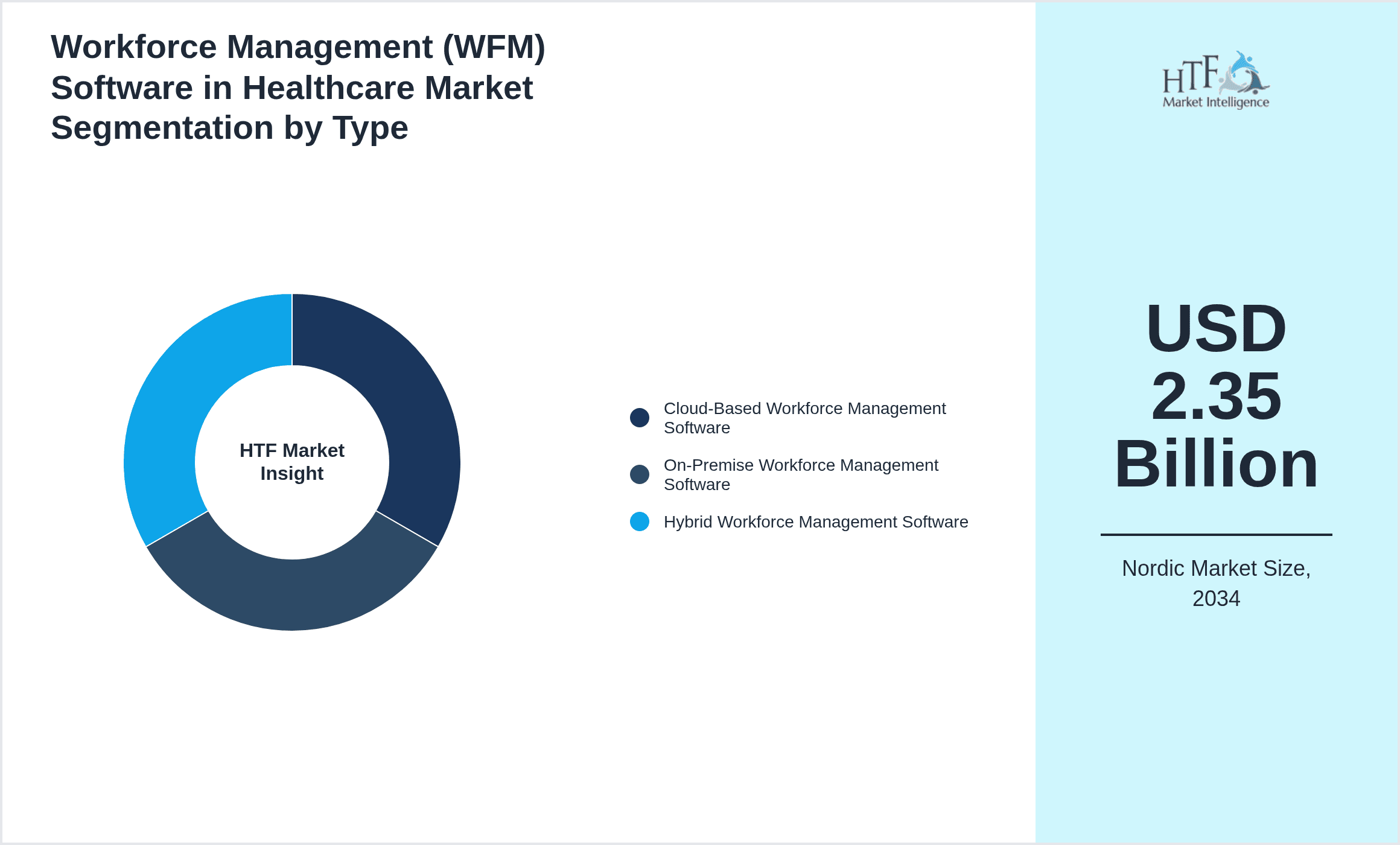
- •By Type
- ◦Cloud-Based Workforce Management Software
- ◦On-Premise Workforce Management Software
- ◦Hybrid Workforce Management Software
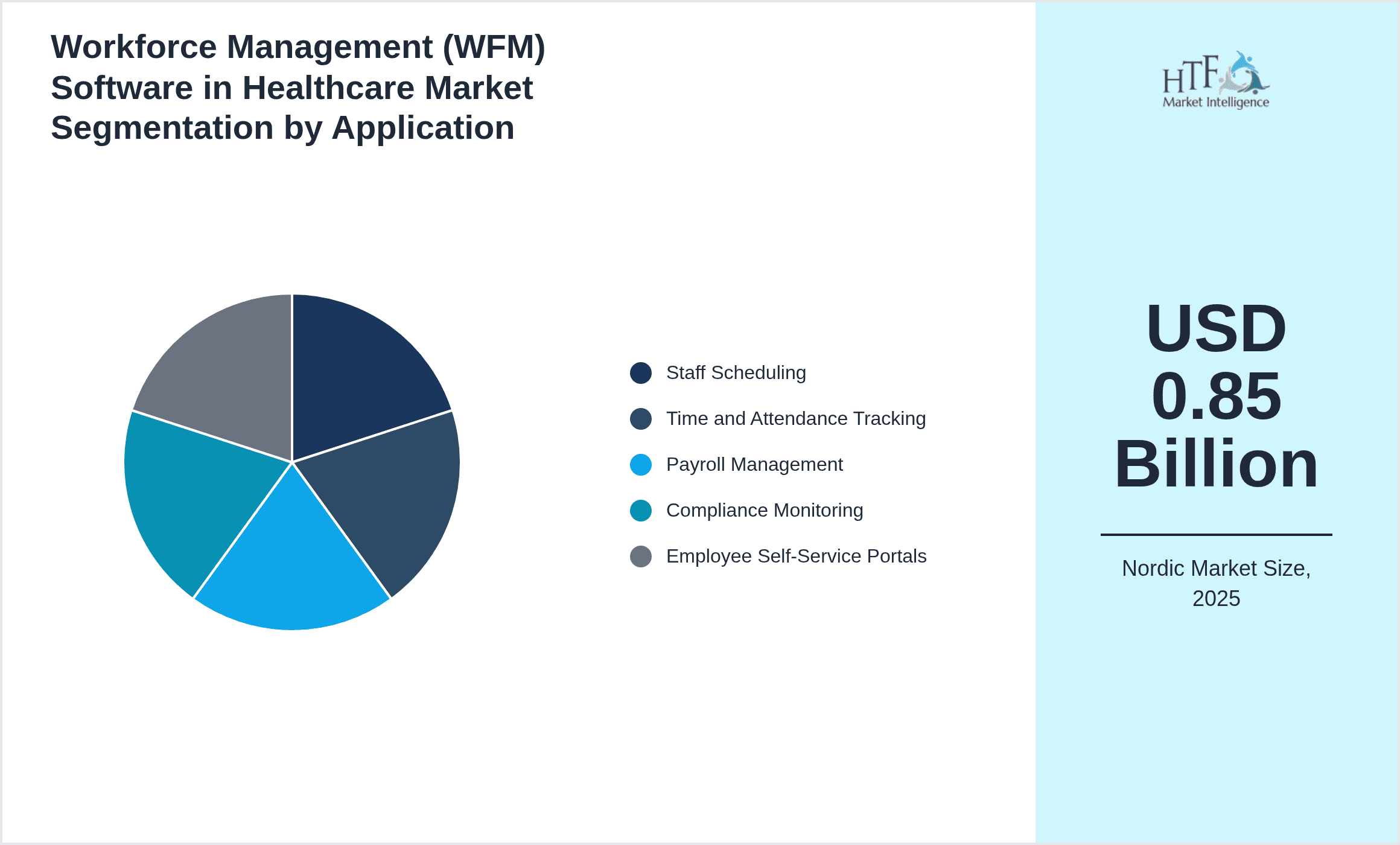
- •By Application
- ◦Staff Scheduling
- ◦Time and Attendance Tracking
- ◦Payroll Management
- ◦Compliance Monitoring
- ◦Employee Self-Service Portals
- •By Healthcare Facility Type
- ◦Hospitals
- ◦Clinics
- ◦Nursing Homes
- ◦Rehabilitation Centers
- ◦Home Healthcare Providers
- •By Deployment Model
- ◦SaaS (Software as a Service)
- ◦Licensed Software
- ◦Managed Services
Growth Drivers
- •Increasing demand for operational efficiency and cost optimization in healthcare facilities across Nordic countries drives adoption of workforce management software. These tools enable precise staff scheduling and reduce overtime costs, improving overall financial performance.
- •Government mandates enforcing labor law compliance and working hour regulations propel healthcare providers to implement automated compliance monitoring features, ensuring adherence to strict Nordic labor standards.
- •The rise of digital transformation initiatives in healthcare systems encourages integration of WFM software with electronic health records (EHR) and other healthcare IT systems, streamlining staff workflows and data management.
- •Growing preference for cloud-based solutions driven by scalability, remote accessibility, and lower upfront costs accelerates WFM software deployment, especially among smaller and mid-sized healthcare providers.
- •Increasing workforce complexity with diverse shift patterns and multi-location staffing needs in Nordic healthcare institutions creates a pressing need for sophisticated scheduling and real-time attendance tracking capabilities.
Market Trends
- •Adoption of AI and machine learning algorithms in WFM software is transforming staff scheduling by predicting demand fluctuations and optimizing workforce allocation based on historical data and patient influx patterns.
- •Mobile-enabled workforce management platforms gain traction, empowering healthcare staff with real-time schedule updates, shift swapping, and self-service functionality, enhancing employee engagement and satisfaction.
- •Integration of workforce management with telehealth and remote care services expands the application scope, facilitating effective management of off-site and home-based healthcare personnel.
- •Sustainability initiatives influence WFM software to incorporate energy-efficient data processing and promote paperless scheduling, aligning with Nordic countries’ environmental goals.
- •Rising emphasis on data security and GDPR compliance leads vendors to enhance privacy controls and secure data storage, critical for patient confidentiality and workforce data protection.
Market Opportunities
- •Expanding telemedicine and home healthcare services in Nordic countries present opportunities for WFM software to develop specialized modules addressing remote workforce coordination and compliance.
- •Untapped small and medium-sized healthcare facilities offer growth potential for affordable, scalable cloud-based WFM solutions tailored to their unique operational needs and budget constraints.
- •Partnerships with regional healthcare technology providers and EHR vendors can enable seamless integration, enhancing product value and accelerating market penetration.
- •Emerging technologies such as blockchain for secure workforce data management and smart contracts for automated labor agreements could create new product differentiation avenues.
- •Government digitalization initiatives and funding support in Nordic countries encourage healthcare providers to invest in advanced workforce management systems, boosting market demand.
Market Challenges
- •High integration complexity with existing healthcare IT infrastructure and legacy systems poses implementation challenges, requiring significant customization and technical expertise.
- •Reluctance among some healthcare staff to adopt new digital tools due to change resistance and lack of technical proficiency can hinder effective utilization of WFM software.
- •Stringent data privacy regulations in Nordic countries necessitate robust compliance frameworks, increasing development costs and prolonging time-to-market for new software releases.
- •Intense competition from global and local vendors drives pricing pressures, potentially impacting profit margins and slowing investment in innovation.
- •Limited availability of skilled IT professionals specializing in healthcare workforce management technology restricts rapid deployment and support services in certain Nordic regions.
Regulatory Framework
- •Between 2020 and 2025, Nordic healthcare workforce management software providers have had to comply with GDPR mandates requiring stringent data privacy, secure data processing, and transparent consent management impacting software design and deployment.
- •Labor laws in Nordic countries have seen increased enforcement on working hour limits, overtime compensation, and mandatory rest periods, requiring WFM software to incorporate detailed compliance monitoring functionalities.
- •Country-specific healthcare regulations mandate accurate timekeeping and reporting for funded healthcare services, pushing providers to adopt automated workforce management systems with audit capabilities.
- •Government initiatives promoting digital health transformation provide regulatory support and incentives for healthcare providers adopting advanced workforce management solutions to enhance operational efficiency.
- •Recent regulations focus on interoperability standards to enable seamless data exchange between workforce management software and electronic health records (EHR) systems across Nordic healthcare institutions.
Industry Insights
- •In March 2024, Quinyx AB launched an AI-powered scheduling module tailored for healthcare providers in the Nordic region, enabling predictive workforce planning based on patient inflow analytics and staff availability. This innovation enhances operational efficiency by reducing overtime and improving staff satisfaction through optimized shift allocation. The product also integrates with existing EHR systems, facilitating seamless workflow management across hospital departments.
- •In September 2023, Visma Enterprise expanded its healthcare workforce management portfolio in Norway with the acquisition of Emply, a local HR software provider specializing in recruitment and employee engagement tools. This strategic move strengthens Visma’s market position by offering a comprehensive cloud-based WFM and HR solution bundle, addressing the growing demand for integrated workforce solutions in Nordic healthcare facilities.
Mergers & Acquisitions
- •In September 2023, Visma Enterprise completed the acquisition of Emply, a Norway-based HR software firm known for its robust employee engagement and recruitment platforms. This acquisition enables Visma to integrate Emply’s solutions into its existing workforce management offerings, creating a unified cloud-based platform tailored for the Nordic healthcare market. The strategic synergy aims to enhance customer value through streamlined HR and workforce management processes, expanding Visma’s footprint in the region’s healthcare IT segment.
- •In July 2022, UKG (Ultimate Kronos Group) acquired a Nordic-focused healthcare scheduling software startup to strengthen its presence in the region. The acquisition brings advanced AI-driven scheduling capabilities tailored to the complex shift patterns of Nordic healthcare providers. This move supports UKG’s strategy to deepen regional market penetration by offering specialized solutions that meet local compliance and operational requirements, thereby consolidating its competitive advantage in the Nordic WFM healthcare sector.
Recent Industry News
- •15th March 2024, Quinyx AB announced the launch of a next-generation AI-based workforce scheduling module designed for Nordic healthcare providers. The new solution predicts staffing needs based on patient volume trends and automates shift assignments to optimize labor costs and enhance caregiver satisfaction. This innovation is expected to accelerate digital transformation in Nordic hospitals by improving operational agility. Source: Quinyx Official Press Release
- •12th November 2023, Visma Enterprise expanded its Nordic healthcare portfolio by acquiring Emply, a specialized HR software provider in Norway. The acquisition aims to deliver integrated workforce and human resource management solutions, enabling healthcare clients to streamline recruitment, scheduling, and compliance management under one platform. This strategic move strengthens Visma’s competitive position across the Nordic region. Source: Visma Corporate Website
- •28th January 2022, Kronos Incorporated launched a cloud-based WFM platform upgrade featuring mobile self-service apps for healthcare workers in Sweden and Denmark. The upgrade enhances real-time communication, shift swapping, and attendance tracking capabilities, improving employee engagement and operational transparency in healthcare settings. Source: Kronos Press Release
- •10th June 2021, UKG announced the integration of its workforce management software with leading Nordic electronic health record systems, enabling seamless data exchange and joint analytics for healthcare providers. This integration facilitates compliance reporting and enhances scheduling accuracy tailored to local regulatory requirements. Source: UKG Official Announcement
Regional Outlook
The Sweden currently holds a significant share of the market, primarily due to several key factors: increasing consumption rates, a burgeoning population, and robust economic momentum. These elements collectively drive demand, positioning this region as a leader in the market. On the other hand, Finland is rapidly emerging as the fastest-growing area within the industry. This remarkable growth can be attributed to swift infrastructure development, the expansion of various industrial sectors, and a marked increase in consumer demand. These dynamics make this region a crucial player in shaping future market growth.
In our report, we cover a comprehensive analysis of the following regions and countries:
- Finland
- Sweden
- Denmark
- Norway
- Iceland
| Feature | Details |
|---|---|
| Base Year Market Size | USD 0.85 Billion |
| Forecast Year Market Size | USD 2.35 Billion |
| CAGR | 11% |
| Forecast Period | 2026 to 2033 |
| YoY Growth | 11% |
| Scope of Report | Market is segmented by Type (Cloud-Based Workforce Management Software, On-Premise Workforce Management Software, Hybrid Workforce Management Software), Application (Staff Scheduling, Time and Attendance Tracking, Payroll Management, Compliance Monitoring, Employee Self-Service Portals), Healthcare Facility Type (Hospitals, Clinics, Nursing Homes, Rehabilitation Centers, Home Healthcare Providers), Deployment Model (SaaS (Software as a Service), Licensed Software, Managed Services) |
| Regions Covered | Finland, Sweden, Denmark, Norway, Iceland |
| Key Companies | Kronos Incorporated (United States), UKG (Ultimate Kronos Group) (United States), Quinyx AB (Sweden), Timeplan AB (Sweden), Sympa HR (Finland), Visma Enterprise (Norway), Infor (United States), Shiftbase (Netherlands), Planday (Denmark), Personio (Germany), Reflexis Systems (United States), Adp Workforce Now (United States), Workday, Inc. (United States), Cezanne HR (United Kingdom), Emply (Norway), e-conomic (Denmark), Mirro (Norway), Agendrix (Canada), Deputy (Australia), BeeBole Timesheets (Belgium) |
Nordic Workforce Management Software in Healthcare Market - Outlook 2025-2034 - Table of Contents
Frequently Asked Questions (FAQ):
The Compact Track Loaders market is projected to grow at a CAGR of 6.8% from 2025 to 2030, driven by increasing demand in construction and agricultural sectors.
North America currently leads the market with approximately 45% market share, followed by Europe at 28% and Asia-Pacific at 22%. The remaining regions account for 5% of the global market.
Key growth drivers include increasing construction activities, rising demand for versatile equipment in agriculture, technological advancements in track loader design, and growing preference for compact equipment in urban construction projects.