
South America Medium Displacement Motorcycle Market Size, Growth & Revenue 2025-2034
South America Medium Displacement Motorcycle Market is segmented by Type (400cc, 450cc, 500cc, 550cc, 600cc), Application (Commuting, Recreational Riding, Delivery and Courier Services, Sports, Touring), Fuel Type (Petrol, Electric, Hybrid), Transmission Type (Manual, Automatic, Semi-automatic), Sales Channel (Authorized Dealerships, Online Retail, Used Vehicle Market), and Geography (Brazil, Argentina, Chile, Peru, Colombia, Rest of South America)
Pricing
Report Overview
Executive Summary
- •The South America Medium Displacement Motorcycle market focuses on motorcycles with engine capacities between 400cc and 600cc, serving applications such as commuting, recreational riding, delivery services, sports, and touring. This segment addresses a critical transportation need driven by urbanization and rising consumer purchasing power across South American countries including Brazil, Argentina, Chile, Peru, and Colombia.
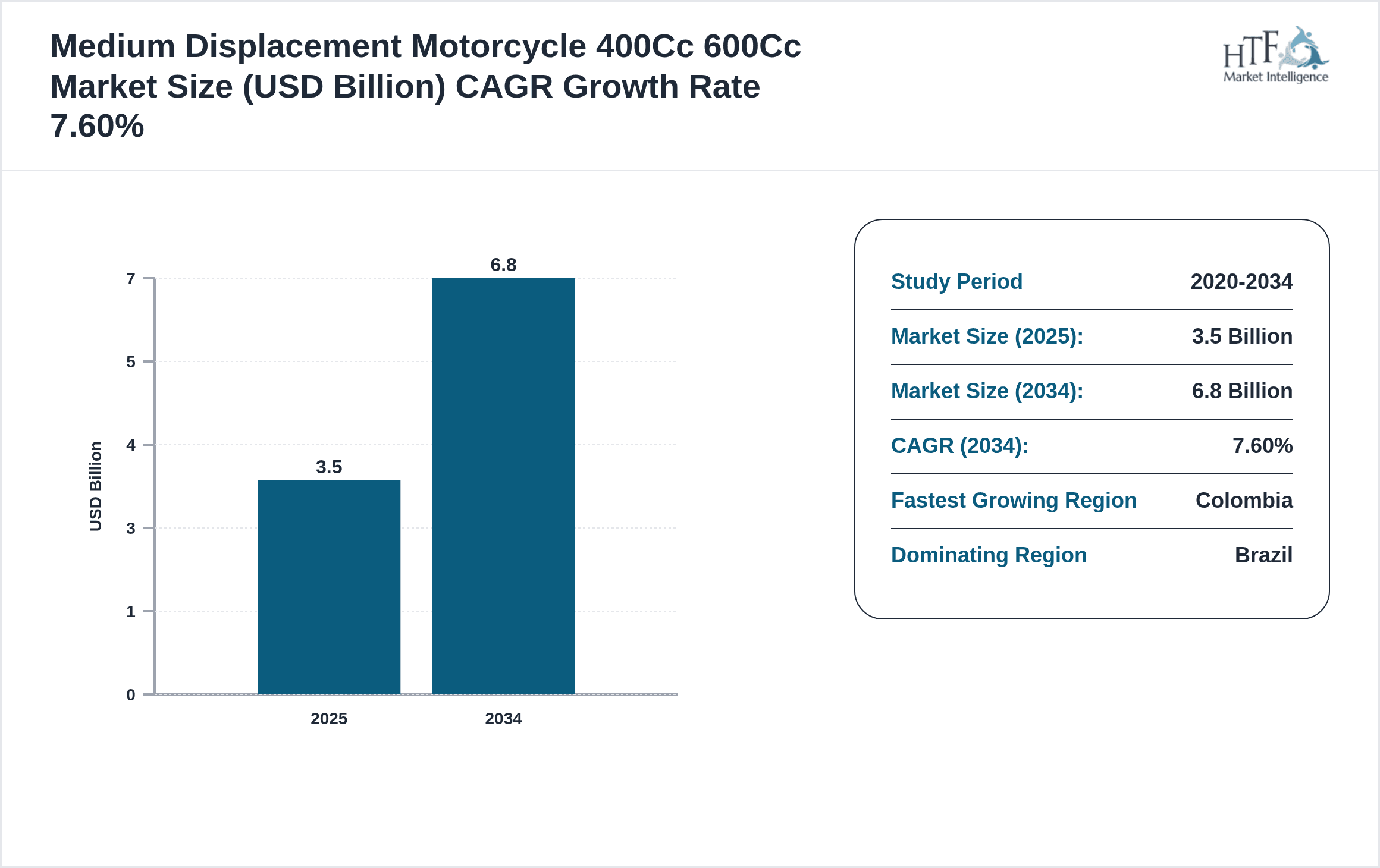
- •Market highlights include a base market size of USD 3.5 Billion in 2025 with a forecasted growth to USD 6.8 Billion by 2034, reflecting a CAGR of 7.6%. Brazil dominates the market with a 38% share, while Colombia exhibits the fastest growth rate at 9.2% CAGR, signaling increasing motorcycle adoption in emerging markets within the region.
- •The market offers significant value through enhanced mobility solutions, cost-effective transport options, and supports economic activities such as courier services. Emerging technological advancements and regulatory compliance further strengthen the market’s strategic importance to manufacturers and stakeholders in South America.
Competitive Landscape
Companies operating in the South America Medium Displacement Motorcycle market adopt multifaceted strategies including product innovation focused on fuel efficiency and emission compliance, strategic partnerships for distribution expansion, and technology integration such as advanced engine systems and digital connectivity. Global expansion efforts target emerging South American economies to capitalize on increasing demand, while regional players emphasize localized manufacturing and after-sales service networks. Competitive pricing strategies and customization according to local preferences strengthen market positioning. Investment in electric and hybrid motorcycle variants reflects a forward-looking approach to sustainability. Collaborative ventures with financial institutions to offer consumer financing solutions improve market penetration. Continuous enhancement in dealer and service infrastructure supports customer retention and brand loyalty. Market players also engage in digital marketing and e-commerce platforms to reach broader consumer bases amid shifting purchase behaviors.
Leading Companies in Medium Displacement Motorcycle Market
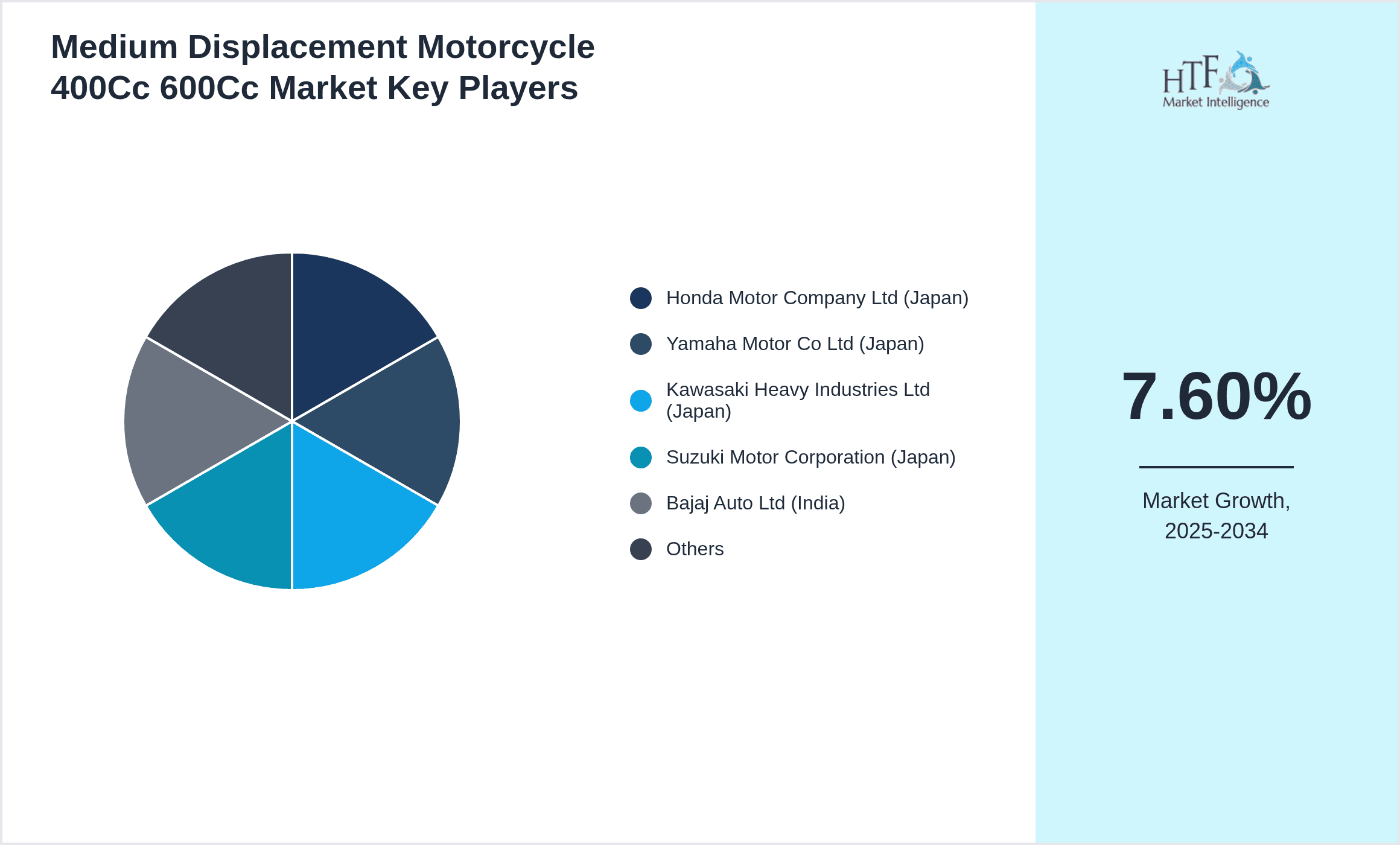
- •Honda Motor Company Ltd (Japan)
- •Yamaha Motor Co Ltd (Japan)
- •Kawasaki Heavy Industries Ltd (Japan)
- •Suzuki Motor Corporation (Japan)
- •Bajaj Auto Ltd (India)
- •Hero MotoCorp Ltd (India)
- •TVS Motor Company Ltd (India)
- •Ducati Motor Holding S.p.A (Italy)
- •Royal Enfield (India)
- •CFMOTO (China)
- •KTM AG (Austria)
- •Harley-Davidson, Inc. (United States)
- •SYM Motors (Taiwan)
- •Benelli Q.J. (China)
- •Lifan Industry (China)
- •CFMoto South America (Brazil)
- •Kasinski Motos (Brazil)
- •Shineray Group (China)
- •Italika (Mexico)
- •Yadea Group (China)
Market Breakdown
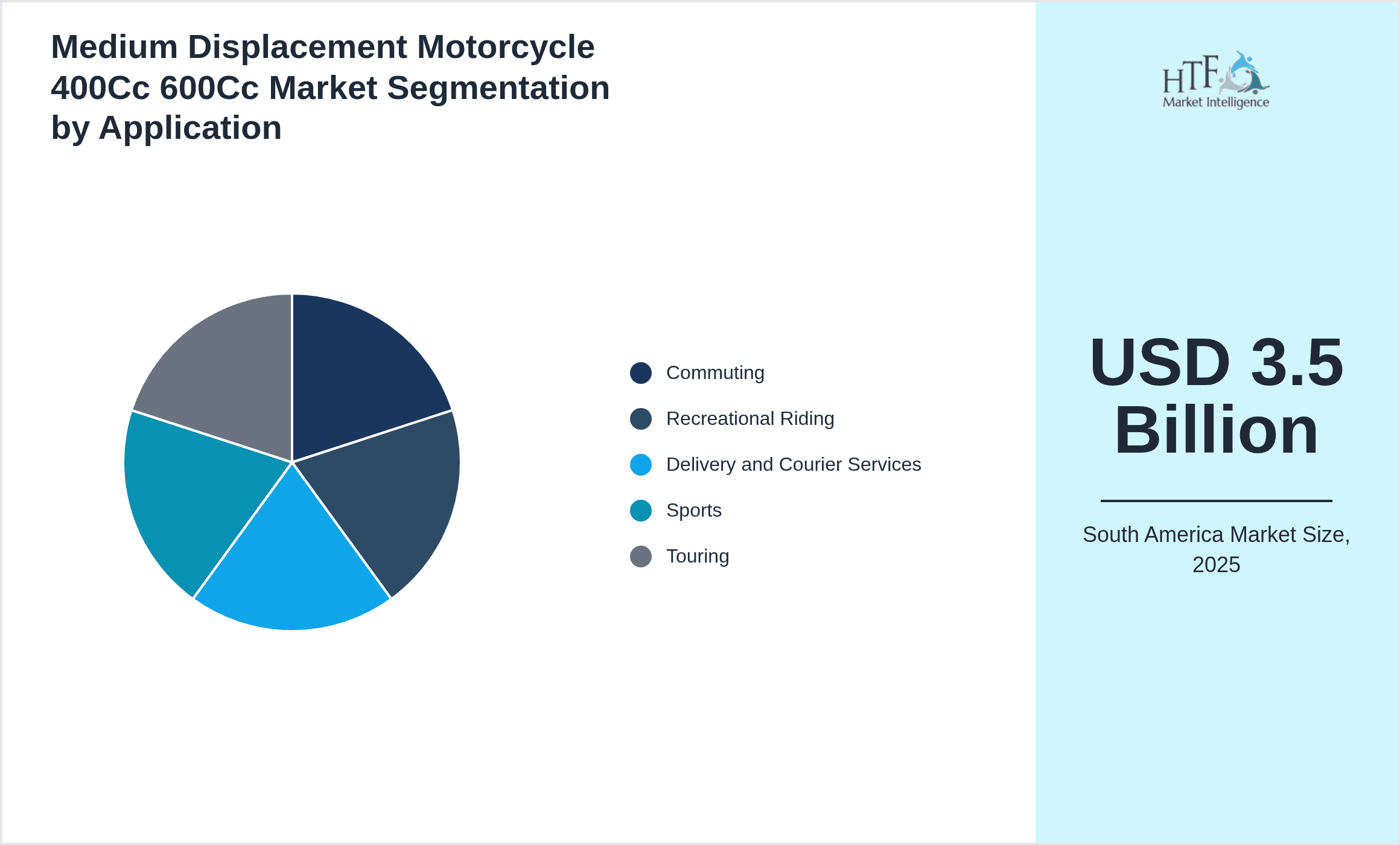
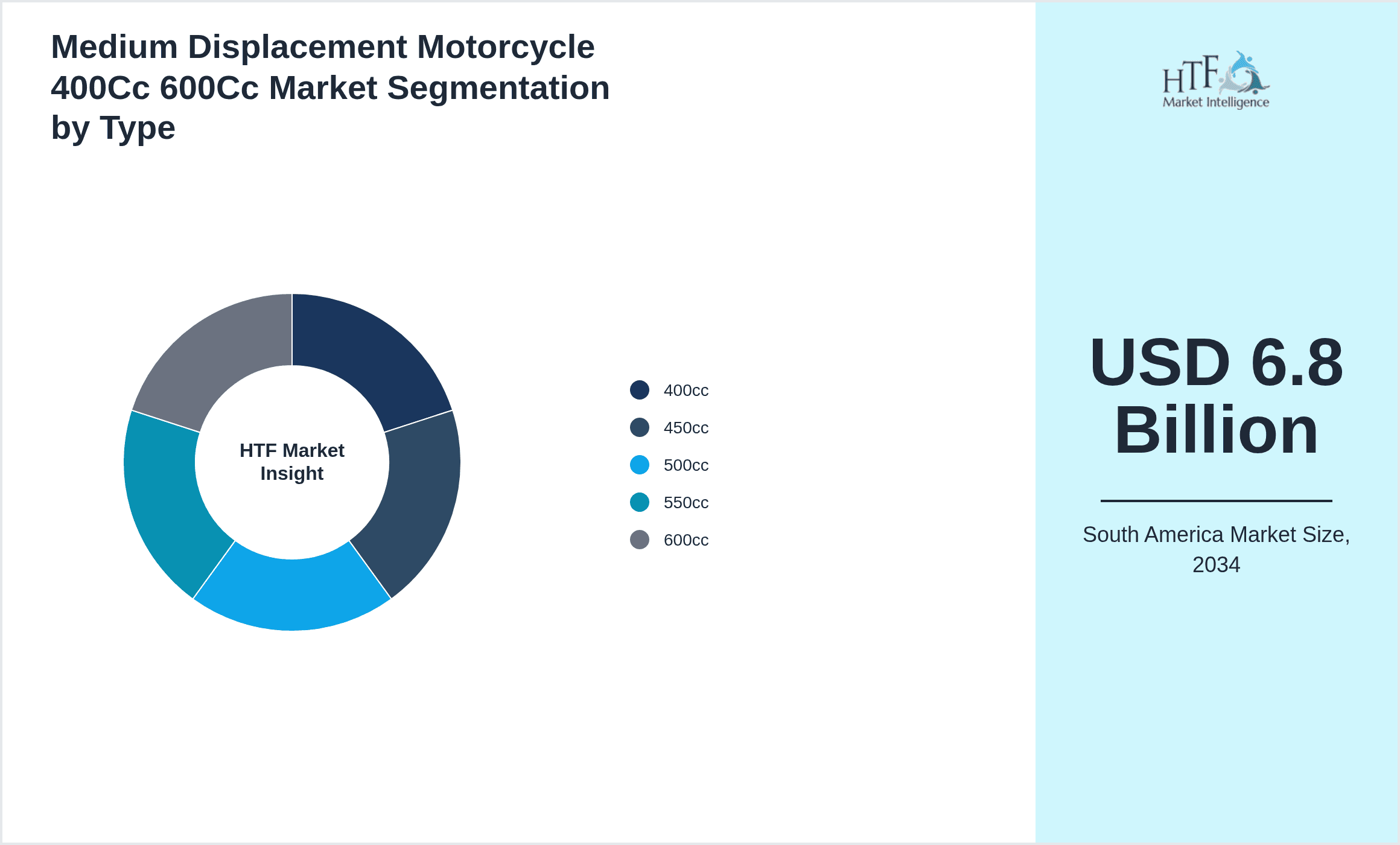
- •By Type
- ◦400cc
- ◦450cc
- ◦500cc
- ◦550cc
- ◦600cc
- •By Application
- ◦Commuting
- ◦Recreational Riding
- ◦Delivery and Courier Services
- ◦Sports
- ◦Touring
- •By Fuel Type
- ◦Petrol
- ◦Electric
- ◦Hybrid
- •By Transmission Type
- ◦Manual
- ◦Automatic
- ◦Semi-automatic
- •By Sales Channel
- ◦Authorized Dealerships
- ◦Online Retail
- ◦Used Vehicle Market
Market Drivers
Rising urbanization across South America fuels demand for medium displacement motorcycles offering efficient and affordable mobility solutions. Increased traffic congestion in major cities such as São Paulo and Buenos Aires prompts consumers to adopt motorcycles that offer maneuverability and time-saving benefits. Economic recovery and growing disposable incomes enable middle-class consumers to invest in mid-range motorcycles. Government initiatives promoting safer and more fuel-efficient vehicles contribute to growth, exemplified by Brazil’s national automotive policy encouraging cleaner technologies. The expansion of delivery and courier services, especially accelerated by e-commerce growth, increases commercial demand for motorcycles in cities like Bogotá and Lima. Honda’s launch of fuel-efficient 500cc models tailored for South American roads in early 2025 illustrates manufacturers’ response to evolving market needs. Additionally, rising fuel prices incentivize buyers to prefer motorcycles with moderate engine capacities balancing power and fuel economy, further propelling market expansion.
Market Trends
The South America Medium Displacement Motorcycle market trends indicate a shift towards electric and hybrid powertrains as environmental regulations tighten and consumer awareness rises. Manufacturers introduce models with improved battery ranges and charging infrastructure collaborations, such as Yamaha’s pilot electric motorcycle program initiated in Brazil in 2025. Digital connectivity integration with smart dashboards and mobile apps enhances rider experience and vehicle management. Customization trends gain traction, with consumers seeking motorcycles tailored for both urban commuting and off-road recreational use. Collaborative efforts between manufacturers and financial institutions offer flexible financing options, expanding affordability. The increasing role of online sales channels complements traditional dealerships, adapting to changing purchase behaviors. Additionally, the rise of motorcycle ride-sharing platforms in metropolitan areas encourages demand for versatile medium displacement motorcycles, supporting urban mobility and sustainability objectives.
Market Opportunities
The South America Medium Displacement Motorcycle market offers substantial opportunities in expanding electric motorcycle segments due to rising environmental concerns and government incentives. Brazil’s recent subsidy programs for electric vehicles open avenues for manufacturers to introduce 400cc to 600cc electric models. Emerging markets such as Colombia and Peru exhibit increasing motorcycle adoption driven by improving road infrastructure and urban expansion. Developing after-sales service networks and parts availability enhances consumer confidence and brand loyalty, presenting investment prospects. Innovations in lightweight materials and fuel management technologies improve motorcycle performance and appeal. Partnerships with e-commerce and delivery companies provide growth channels for commercial motorcycle usage. Additionally, the growing tourism sector in countries like Chile creates demand for touring motorcycles with mid-range engines, enabling diversification of product offerings and market penetration.
Market Challenges
High import tariffs and fluctuating currency exchange rates in South American countries limit affordability and increase costs for manufacturers and consumers. Infrastructure challenges such as inadequate road quality and traffic safety concerns hinder optimal motorcycle usage, especially in rural areas. Regulatory fragmentation across countries complicates compliance for multinational companies. Recent supply chain disruptions due to geopolitical tensions have delayed component deliveries, impacting production schedules. The dominance of low-displacement motorcycles below 400cc in some markets creates competitive pressure on medium displacement segments. Additionally, limited consumer financing options in certain regions restrict market growth. Incidents of motorcycle theft and insurance complexities also deter potential buyers. For example, in Argentina, recent legislative delays in emission norm updates have held back the introduction of newer, cleaner motorcycle models, constraining market modernization.
Regulatory Framework
South American countries have progressively implemented emission and safety standards aligned with global norms to regulate medium displacement motorcycles. Brazil’s RenovaBio program launched in 2021 incentivizes biofuel usage and lower emissions in motorcycles. Argentina updated its vehicular emission standards in 2023, mandating Euro 4 compliance for new motorcycles to reduce air pollution. Colombia introduced stricter noise and safety regulations in 2022, requiring manufacturers to enhance product designs accordingly. These regulations impact product development cycles and compel manufacturers to invest in cleaner technologies and safety features. Tax incentives and subsidies for electric motorcycle adoption are increasingly common, facilitating market transition towards sustainable mobility. Regulatory harmonization efforts among Mercosur countries aim to streamline compliance processes and encourage regional manufacturing collaborations.
Recent Industry Insights
Recent market developments and strategic initiatives are continuously tracked through industry publications, company announcements, and regulatory filings. For the most current information, stakeholders are advised to monitor official corporate communications and recognized market intelligence platforms.
Recent Merger and Acquisition
Recent market developments and strategic initiatives are continuously tracked through industry publications, company announcements, and regulatory filings. For the most current information, stakeholders are advised to monitor official corporate communications and recognized market intelligence platforms.
Regional Outlook
The Brazil currently holds a significant share of the market, primarily due to several key factors: increasing consumption rates, a burgeoning population, and robust economic momentum. These elements collectively drive demand, positioning this region as a leader in the market. On the other hand, Colombia is rapidly emerging as the fastest-growing area within the industry. This remarkable growth can be attributed to swift infrastructure development, the expansion of various industrial sectors, and a marked increase in consumer demand. These dynamics make this region a crucial player in shaping future market growth.
In our report, we cover a comprehensive analysis of the following regions and countries:
- Brazil
- Argentina
- Chile
- Peru
- Colombia
- Rest of South America
| Feature | Details |
|---|---|
| Base Year Market Size | USD 3.5 Billion |
| Forecast Year Market Size | USD 6.8 Billion |
| CAGR | 7.6% |
| Forecast Period | 2026 to 2033 |
| YoY Growth | 7.3% |
| Scope of Report | Market is segmented by Type (400cc, 450cc, 500cc, 550cc, 600cc), Application (Commuting, Recreational Riding, Delivery and Courier Services, Sports, Touring), Fuel Type (Petrol, Electric, Hybrid), Transmission Type (Manual, Automatic, Semi-automatic), Sales Channel (Authorized Dealerships, Online Retail, Used Vehicle Market) |
| Regions Covered | Brazil, Argentina, Chile, Peru, Colombia, Rest of South America |
| Key Companies | Honda Motor Company Ltd (Japan), Yamaha Motor Co Ltd (Japan), Kawasaki Heavy Industries Ltd (Japan), Suzuki Motor Corporation (Japan), Bajaj Auto Ltd (India), Hero MotoCorp Ltd (India), TVS Motor Company Ltd (India), Ducati Motor Holding S.p.A (Italy), Royal Enfield (India), CFMOTO (China), KTM AG (Austria), Harley-Davidson, Inc. (United States), SYM Motors (Taiwan), Benelli Q.J. (China), Lifan Industry (China), CFMoto South America (Brazil), Kasinski Motos (Brazil), Shineray Group (China), Italika (Mexico), Yadea Group (China) |
South America Medium Displacement Motorcycle Market Size, Growth & Revenue 2025-2034 - Table of Contents
Frequently Asked Questions (FAQ):
The Compact Track Loaders market is projected to grow at a CAGR of 6.8% from 2025 to 2030, driven by increasing demand in construction and agricultural sectors.
North America currently leads the market with approximately 45% market share, followed by Europe at 28% and Asia-Pacific at 22%. The remaining regions account for 5% of the global market.
Key growth drivers include increasing construction activities, rising demand for versatile equipment in agriculture, technological advancements in track loader design, and growing preference for compact equipment in urban construction projects.