
Africa Motorcycle Parts And Accessories Market Size, Growth & Revenue 2024-2034
Africa Motorcycle Parts And Accessories Market is segmented by Type (Engine Components, Brake Systems, Electrical Components, Suspension Parts, Tires & Tubes), Application (Aftermarket, Original Equipment Manufacturer (OEM), Repair & Maintenance, Customization, Racing), Distribution Channel (Authorized Dealers, Independent Retailers, Online Sales, Informal Market), End User (Individual Consumers, Fleet Operators, Repair Workshops, Racing Teams), and Geography (South Africa, Nigeria, Kenya, Algeria, Zambia, Morocco, Ethiopia, Others)
Pricing
Report Overview
Executive Summary
- •The Africa Motorcycle Parts And Accessories market is about the components and add-ons that keep motorcycles running or looking better. It spans engine bits, brakes, electrics, tires, and more, covering OEM supplies and aftermarket sales. It’s a mix of repair parts, custom gear, and racing accessories, all wrapped up in a market shaped by local economic shifts and infrastructure realities.
- •Market growth is driven by rising motorcycle use in urban and rural areas, but adoption is patchy—some places see strong aftermarket sales, others stick mostly to OEM parts. The mix of informal and formal market channels creates a bit of unpredictability in demand and supply.
- •The industry is key for affordable transportation and job creation in Africa’s growing economies. Stakeholders range from small local shops to multinational suppliers, with opportunities tied to infrastructure improvements and rising disposable incomes.

Competitive Landscape
Competition in Africa’s motorcycle parts and accessories market is a blend of local manufacturers, assemblers, and international brands. Many players focus on affordability and availability rather than cutting-edge innovation, though some niche segments like electrical components see more tech-driven competition. Price sensitivity dominates, with companies jockeying to secure distribution in urban hubs while informal markets remain strong in rural zones. Partnerships and local assembly are common strategies to reduce costs and bypass import tariffs. Rivalry is intense on price and distribution reach rather than product differentiation, though premium segments are slowly emerging. The competitive environment is fragmented, with significant regional variations in market share and consumer preferences shaping player strategies.
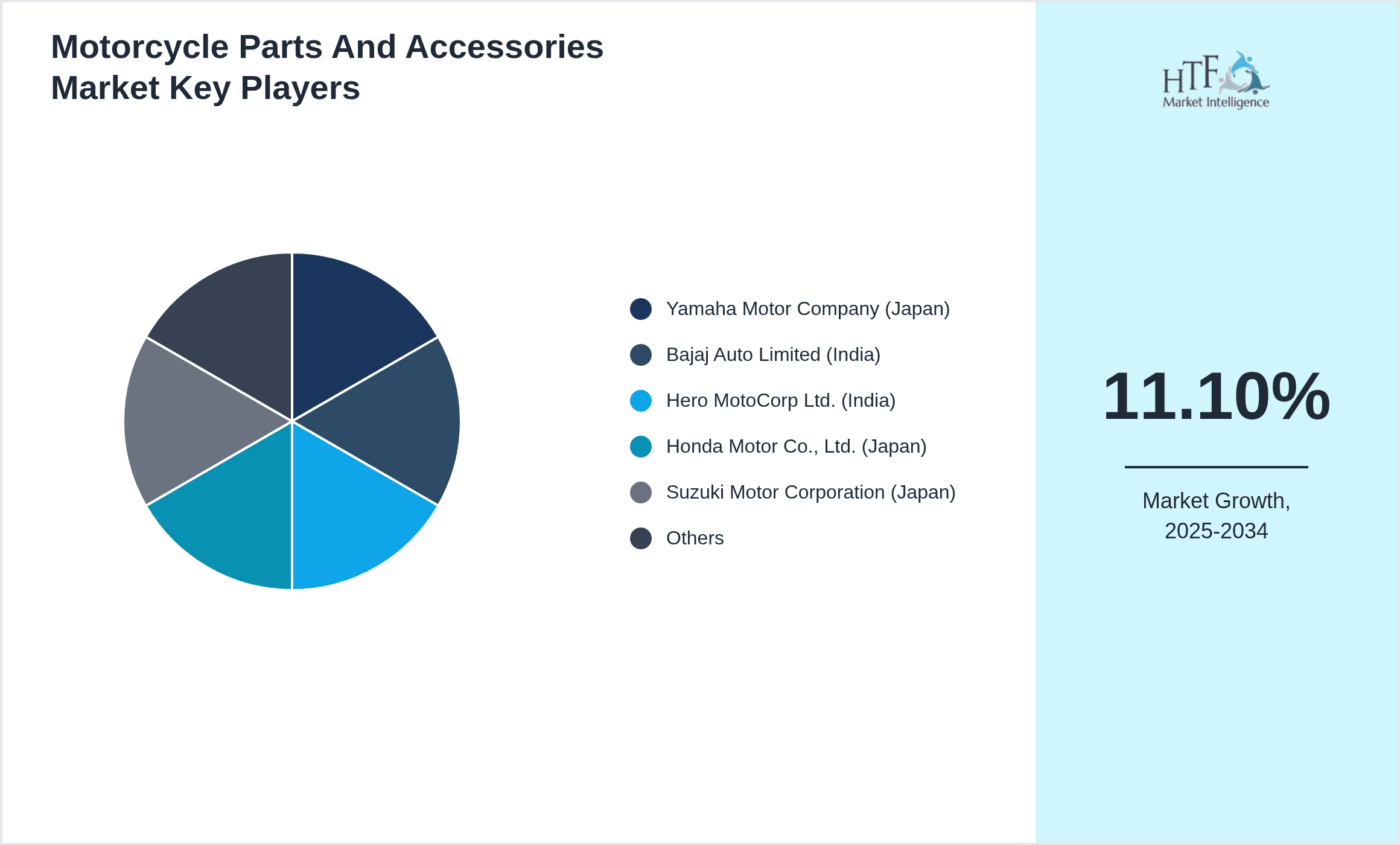
Leading Companies in Africa Motorcycle Parts And Accessories Market
- •Yamaha Motor Company (Japan)
- •Bajaj Auto Limited (India)
- •Hero MotoCorp Ltd. (India)
- •Honda Motor Co., Ltd. (Japan)
- •Suzuki Motor Corporation (Japan)
- •TVS Motor Company (India)
- •Continental AG (Germany)
- •Bosch (Germany)
- •Denso Corporation (Japan)
- •Exide Industries Ltd. (India)
- •Mahindra Two Wheelers (India)
- •Sundiro Honda Motorcycle Co. Ltd. (China)
- •TVS Srichakra Limited (India)
- •Metzeler Reifen GmbH (Germany)
- •Zhejiang Qianjiang Motorcycle Co., Ltd. (China)
- •Mitas Tires (Czech Republic)
- •Maxxis International (Taiwan)
- •Ishikawa Iron Works Co., Ltd. (Japan)
- •Federal-Mogul Corporation (USA)
- •Dayco Products, LLC (USA)
- •MOTUL (France)
- •NGK Spark Plug Co., Ltd. (Japan)
- •SKF Group (Sweden)
- •Bridgestone Corporation (Japan)
- •Motul Africa (South Africa)

Market Breakdown
- •By Type
- ◦Engine Components
- ◦Brake Systems
- ◦Electrical Components
- ◦Suspension Parts
- ◦Tires & Tubes
- •By Application
- ◦Aftermarket
- ◦Original Equipment Manufacturer (OEM)
- ◦Repair & Maintenance
- ◦Customization
- ◦Racing
- •By Distribution Channel
- ◦Authorized Dealers
- ◦Independent Retailers
- ◦Online Sales
- ◦Informal Market
- •By End User
- ◦Individual Consumers
- ◦Fleet Operators
- ◦Repair Workshops
- ◦Racing Teams
Growth Drivers
- •Rapid urbanization and increasing demand for affordable personal transport pushes motorcycle sales, which in turn drives parts and accessories demand. Growing middle-class populations in Nigeria and Kenya especially boost aftermarket purchases.
- •Government initiatives encouraging motorcycle taxis as last-mile transport solutions expand the fleet size, increasing demand for maintenance and replacement parts, though policies vary by country affecting uniform growth.
- •Rising awareness of safety and performance upgrades encourages customization and purchase of premium accessories, especially in more developed urban centers like Johannesburg and Lagos.
- •Expansion of online retail platforms facilitates easier access to parts across remote regions, reducing the dominance of informal markets and improving availability.
- •Increasing local assembly and manufacturing efforts reduce costs and improve parts availability, helping to meet the growing motorcycle fleet needs across Africa.

Market Trends
- •A shift toward electric motorcycles in select African cities is slowly influencing parts demand, with electrical components seeing rising interest, though adoption remains limited and inconsistent across regions.
- •Customization culture is growing, with more riders investing in performance and aesthetic upgrades, but this trend is fragmented and concentrated in wealthier urban pockets.
- •Informal markets still dominate many rural areas, limiting formal sector growth and creating challenges for quality control and brand penetration.
- •OEMs are strengthening local partnerships with suppliers to mitigate import delays and tariffs, enhancing supply chain resilience and market responsiveness.
- •Digital platforms and mobile commerce are increasingly critical, though inconsistent internet access and payment infrastructure slow full market penetration.
Market Restraints
- •High import duties and taxes on motorcycle parts inflate prices, making quality parts less accessible to many consumers and encouraging informal imports.
- •Poor road conditions accelerate wear and tear, but also increase maintenance costs, pushing some users to delay repairs or opt for cheaper, lower-quality parts.
- •Lack of standardization in parts quality and counterfeit products undermine consumer trust and hurt legitimate market players.
- •Limited local manufacturing capacity and dependency on imports create supply chain vulnerabilities and price volatility.
- •Fragmented market with many small informal sellers complicates regulation and integration of the value chain.
Market Opportunities
- •Growing interest in electric motorcycles opens avenues for specialized electrical parts suppliers and service providers in urban African markets.
- •Expanding online retail and digital marketing can tap underserved rural customers, offering wider access to authentic parts and accessories.
- •Government-backed infrastructure projects aimed at improving road quality could increase motorcycle usage, thereby boosting parts demand.
- •Partnerships between global OEMs and local assemblers can create more cost-efficient supply chains and better product customization for African needs.
- •Rising motorcycle racing and sports culture in Africa fosters demand for high-performance aftermarket parts and accessories.
Market Challenges
- •Counterfeit and low-quality parts flood informal markets, hurting genuine manufacturers and risking rider safety, making regulation enforcement difficult.
- •Inconsistent infrastructure and logistics networks lead to supply delays and erratic inventory levels for dealers and workshops.
- •Price sensitivity among consumers limits adoption of premium parts and slows market shift toward higher-margin accessories.
- •Fragmented regulatory landscape across African countries complicates compliance and market entry strategies for international players.
- •Lack of skilled mechanics and technical know-how in some regions limits after-sales service growth and parts utilization efficiency.
Regulatory Framework
- •Between 2019 and 2024, several African countries introduced stricter import regulations and quality standards for motorcycle parts to combat counterfeit products and improve safety.
- •Nigeria implemented enhanced certification requirements for aftermarket parts in 2022, requiring suppliers to meet local testing standards to access the market.
- •South Africa updated vehicle inspection policies in 2023 mandating periodic checks on motorcycle component integrity, influencing parts replacement cycles.
- •Kenya's government launched an initiative in 2021 incentivizing local assembly and manufacturing of motorcycle parts to reduce import dependency.
- •Regional economic communities like ECOWAS have begun harmonizing trade policies affecting parts tariffs, aiming to ease cross-border component movement by 2025.
Industry Insights
- •In August 2024, Bajaj Auto launched a new line of fuel-efficient engine components tailored for African road conditions, aiming to reduce maintenance frequency and costs. This move targets growing demand in urban areas battling poor fuel quality and traffic congestion. The product rollout includes localized support centers in Nigeria and Kenya to enhance customer service.
- •By November 2023, Motul Africa expanded its lubricant portfolio with eco-friendly motorcycle oils designed for the African market, responding to rising environmental awareness. The company collaborated with local distributors to improve penetration in South Africa and East Africa, focusing on racing and performance segments where premium oil demand is rising.
Mergers & Acquisitions
- •In March 2024, Hero MotoCorp acquired a majority stake in a Kenyan motorcycle parts distributor, aiming to strengthen its supply chain and aftermarket presence across East Africa. This strategic move enhances Hero’s ability to offer authentic parts with improved delivery timelines, addressing longstanding availability issues prevalent in the region.
- •In September 2023, Continental AG finalized the acquisition of a South African brake components manufacturer to expand its footprint in sub-Saharan Africa. This acquisition accelerates Continental’s access to emerging markets and leverages local manufacturing capabilities to reduce costs and improve component customization for African motorcyclists.
Recent Industry News
- •On 15th January 2025, Suzuki Motor Corporation announced a joint venture with a Nigerian local manufacturer to produce affordable suspension parts tailored for African road conditions. The partnership aims to localize production and reduce import costs, enhancing supply chain efficiency and supporting local employment. This aligns with rising demand for durable motorcycle components in West Africa. Source: Suzuki official press release
- •On 22nd February 2025, Bosch launched a new line of advanced electrical components designed specifically for African motorcycles, focusing on improved battery life and reliability under harsh climate conditions. The launch includes training programs for local technicians in South Africa and Kenya to boost after-sales service quality. Source: Bosch corporate announcement
- •On 10th March 2025, Yamaha Motor Company expanded its dealer network across East Africa with a focus on authorized parts distribution centers in Kenya and Tanzania. This expansion is expected to improve parts availability and reduce reliance on informal markets, aiming to boost brand loyalty among local riders. Source: Yamaha Africa press release
- •On 5th April 2025, Denso Corporation inaugurated a new regional hub for motorcycle component distribution in Johannesburg, South Africa. This facility is geared toward faster delivery and better inventory management across Southern Africa, supporting growing demand in both OEM and aftermarket segments. Source: Denso official news
Market Statistics
- •CAGR by 2034: 11.1%
- •Market Size by 2034: USD 3.5 Billion
- •Market Size in 2025: USD 1.35 Billion
- •Dominating Type: Engine Components; Next-Following Type: Electrical Components
- •Dominating Application: Aftermarket; Next-Following Application: OEM
- •Dominating Region: Nigeria; Second-Leading Region: South Africa
- •Region with Highest Growth Rate: Kenya
- •Dominating Country: Nigeria
Market Share Table
- •Market Share (%) of Dominating vs Followed Type
- ◦Engine Components: 35%
- ◦Electrical Components: 22%
- •Market Share (%) of Dominating vs Followed Application
- ◦Aftermarket: 45%
- ◦OEM: 30%
- •Growth Rate (%) of Dominating vs Followed Type
- ◦Engine Components: 10.5%
- ◦Electrical Components: 14.3%
- •Growth Rate (%) of Dominating vs Followed Application
- ◦Aftermarket: 11.7%
- ◦OEM: 9.8%
Top 5 Global Players
- •Yamaha Motor Company (Japan)
- •Bajaj Auto Limited (India)
- •Hero MotoCorp Ltd. (India)
- •Honda Motor Co., Ltd. (Japan)
- •Suzuki Motor Corporation (Japan)
Regional Outlook
The Nigeria currently holds a significant share of the market, primarily due to several key factors: increasing consumption rates, a burgeoning population, and robust economic momentum. These elements collectively drive demand, positioning this region as a leader in the market. On the other hand, Kenya is rapidly emerging as the fastest-growing area within the industry. This remarkable growth can be attributed to swift infrastructure development, the expansion of various industrial sectors, and a marked increase in consumer demand. These dynamics make this region a crucial player in shaping future market growth.
In our report, we cover a comprehensive analysis of the following regions and countries:
- South Africa
- Nigeria
- Kenya
- Algeria
- Zambia
- Morocco
- Ethiopia
- Others
| Feature | Details |
|---|---|
| Base Year Market Size | USD 1.2 Billion |
| Forecast Year Market Size | USD 3.5 Billion |
| CAGR | 11.1% |
| Forecast Period | 2026 to 2033 |
| YoY Growth | 11.1% |
| Regions Covered | South Africa, Nigeria, Kenya, Algeria, Zambia, Morocco, Ethiopia, Others |
| Key Companies | Yamaha Motor Company (Japan), Bajaj Auto Limited (India), Hero MotoCorp Ltd. (India), Honda Motor Co., Ltd. (Japan), Suzuki Motor Corporation (Japan), TVS Motor Company (India), Continental AG (Germany), Bosch (Germany), Denso Corporation (Japan), Exide Industries Ltd. (India), Mahindra Two Wheelers (India), Sundiro Honda Motorcycle Co. Ltd. (China), TVS Srichakra Limited (India), Metzeler Reifen GmbH (Germany), Zhejiang Qianjiang Motorcycle Co., Ltd. (China), Mitas Tires (Czech Republic), Maxxis International (Taiwan), Ishikawa Iron Works Co., Ltd. (Japan), Federal-Mogul Corporation (USA), Dayco Products, LLC (USA), MOTUL (France), NGK Spark Plug Co., Ltd. (Japan), SKF Group (Sweden), Bridgestone Corporation (Japan), Motul Africa (South Africa) |
Africa Motorcycle Parts And Accessories Market Size, Growth & Revenue 2024-2034 - Table of Contents
Frequently Asked Questions (FAQ):
The Compact Track Loaders market is expected to see value worth 5.3 Billion in 2025.
North America currently leads the market with approximately 45% market share, followed by Europe at 28% and Asia-Pacific at 22%. The remaining regions account for 5% of the global market.
Key growth drivers include increasing construction activities, rising demand for versatile equipment in agriculture, technological advancements in track loader design, and growing preference for compact equipment in urban construction projects.