
Latin America Large Displacement Motorcycle Market - Outlook 2024-2034
Latin America Large Displacement Motorcycle Market is segmented by Type (Cruiser Motorcycles, Sportbikes, Touring Motorcycles, Adventure Motorcycles, Standard Motorcycles), Application (Commuting, Recreational Riding, Racing, Touring, Commercial Use), Distribution Channel (Authorized Dealerships, Online Sales, Direct Sales, Multi-brand Retailers), End User (Individual Consumers, Fleet Operators, Rental Services, Government & Defense), and Geography (Brazil, Argentina, Chile, Peru, Colombia, Rest of South America)
Pricing
Report Overview
Executive Summary
- •The Latin America Large Displacement Motorcycle market focuses on motorcycles exceeding 500cc displacement, catering to applications including commuting, recreational riding, racing, touring, and commercial use. It features key types such as cruisers, sportbikes, touring, adventure, and standard motorcycles, covering major countries like Brazil, Argentina, Chile, Peru, and Colombia.
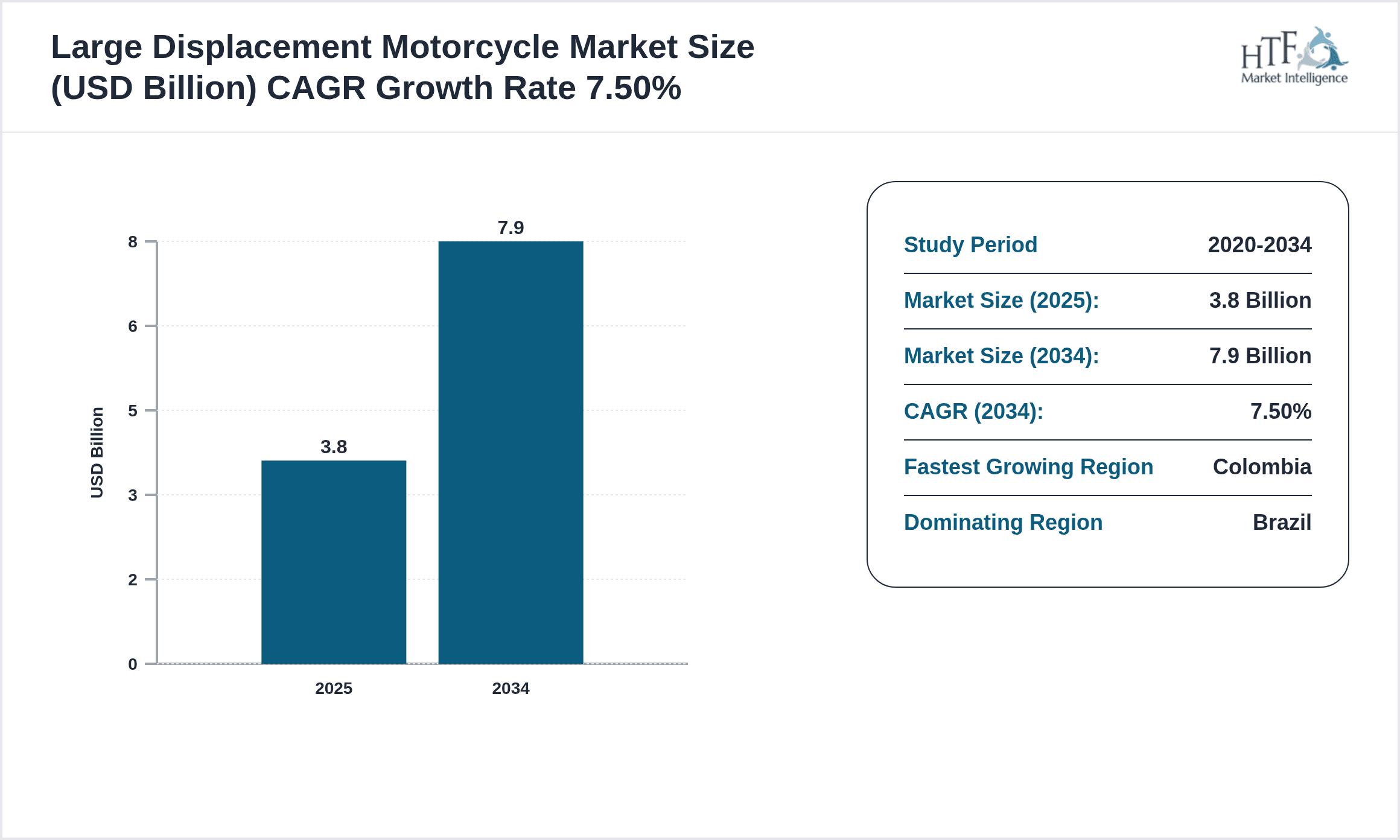
- •The market is projected to grow from USD 3.8 Billion in 2024 to USD 7.9 Billion by 2034, driven by rising urbanization, increasing disposable incomes, and growing preference for premium motorcycles. Brazil dominates the market with 38% share, while Colombia exhibits the fastest growth at a CAGR of 9.2%.
- •Strategic importance lies in the market’s contribution to regional transportation, lifestyle enhancement, and commercial logistics. Innovations in motorcycle technology and supportive regulatory frameworks further enhance market appeal to manufacturers and consumers alike.
Competitive Landscape
Competition in the Latin America Large Displacement Motorcycle market is intense, marked by the presence of global manufacturers and regional players striving to capture market share. Companies focus on product innovation, including engine performance, safety technologies, and rider comfort, to differentiate their offerings. Strategic partnerships and localized production have become key competitive strategies to address regional preferences and regulatory requirements. Pricing strategies are adapted to balance affordability with premium features, while expanding distribution networks enhance market penetration. The rivalry intensifies with growing consumer demand for versatile motorcycles suited for both urban and off-road conditions. Market entrants face substantial barriers including capital investment, regulatory compliance, and brand loyalty among established competitors. Future trends indicate increasing digital integration in motorcycles and rising adoption of electric variants, which will further shape competitive dynamics.
Leading Companies in Latin America Large Displacement Motorcycle Market
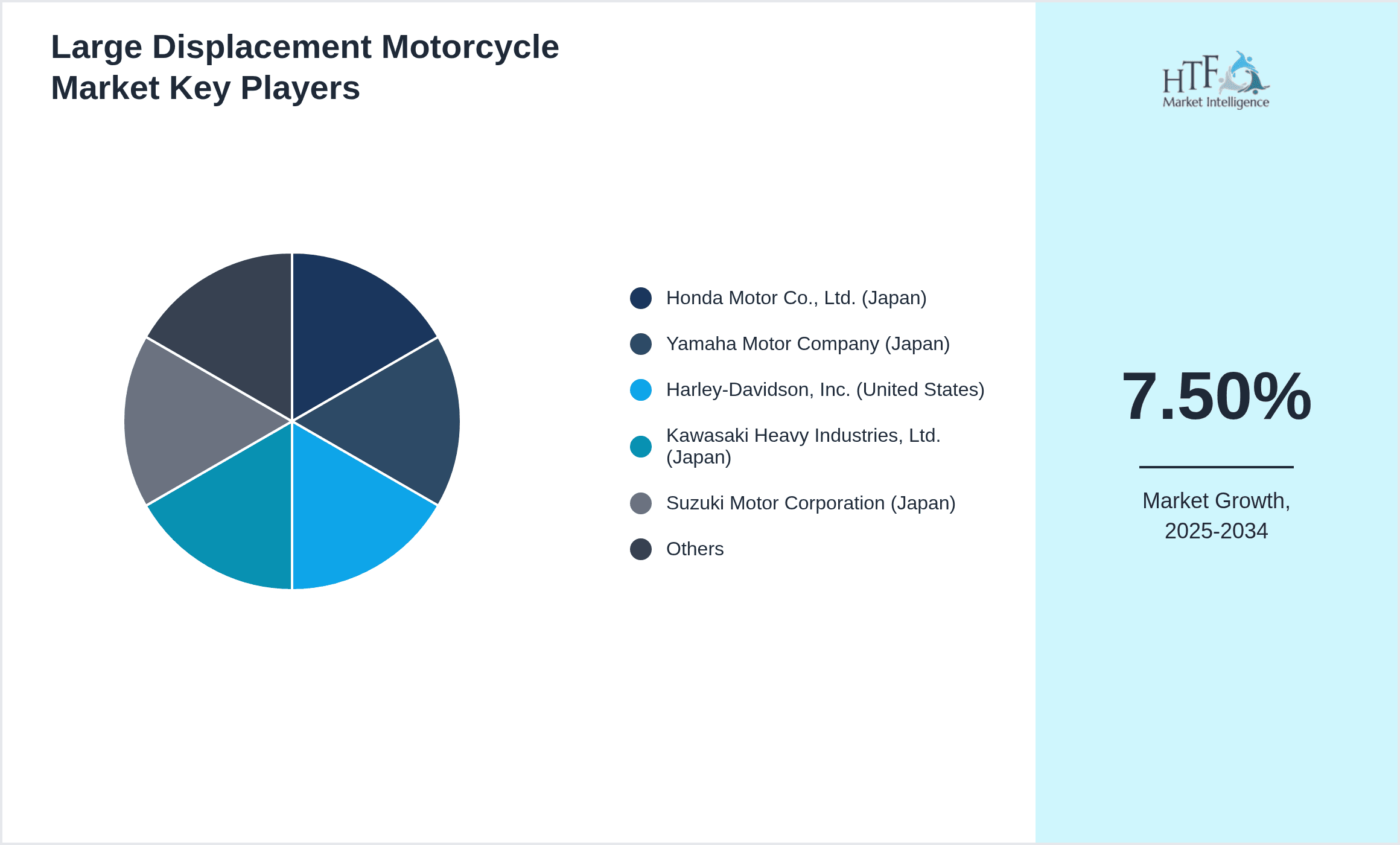
- •Honda Motor Co., Ltd. (Japan)
- •Yamaha Motor Company (Japan)
- •Harley-Davidson, Inc. (United States)
- •Kawasaki Heavy Industries, Ltd. (Japan)
- •Suzuki Motor Corporation (Japan)
- •BMW Motorrad (Germany)
- •Ducati Motor Holding S.p.A. (Italy)
- •Royal Enfield (India)
- •TVS Motor Company (India)
- •CFMOTO (China)
- •Hero MotoCorp Ltd. (India)
- •Benelli (Italy)
- •Triumph Motorcycles Ltd. (United Kingdom)
- •KTM AG (Austria)
- •Bajaj Auto Ltd. (India)
- •CFMOTO Latin America (Brazil)
- •AKT Motos (Colombia)
- •Italika (Mexico)
- •Jawa Moto (Czech Republic)
- •Vento Moto (Mexico)

Market Breakdown
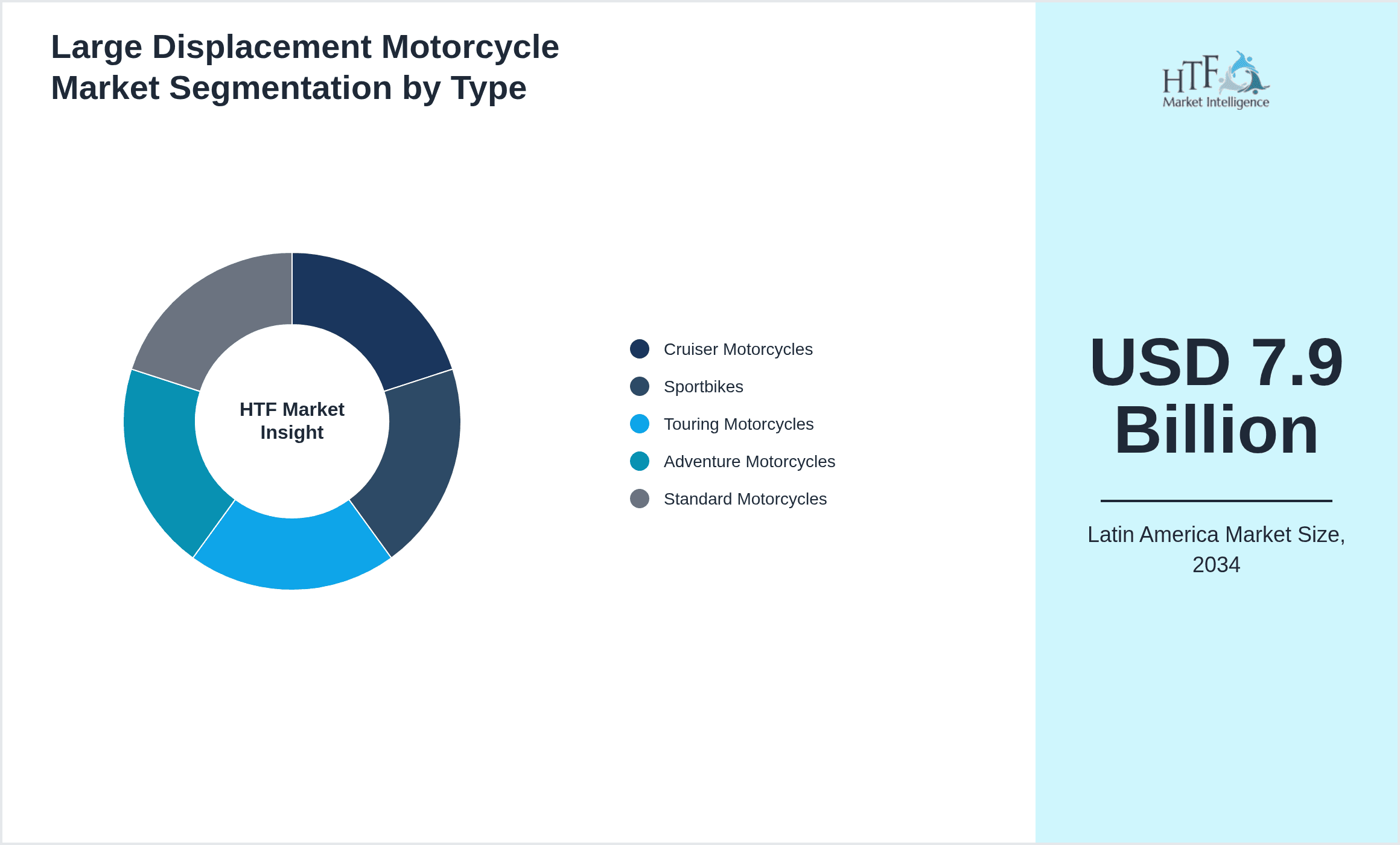
- •By Type
- ◦Cruiser Motorcycles
- ◦Sportbikes
- ◦Touring Motorcycles
- ◦Adventure Motorcycles
- ◦Standard Motorcycles
- •By Application
- ◦Commuting
- ◦Recreational Riding
- ◦Racing
- ◦Touring
- ◦Commercial Use
- •By Distribution Channel
- ◦Authorized Dealerships
- ◦Online Sales
- ◦Direct Sales
- ◦Multi-brand Retailers
- •By End User
- ◦Individual Consumers
- ◦Fleet Operators
- ◦Rental Services
- ◦Government & Defense
Growth Drivers
- •Rising urbanization and improving road infrastructure across Latin America have significantly increased the demand for large displacement motorcycles, offering efficient and flexible transportation solutions in congested city environments as well as rural areas.
- •Increasing disposable incomes and growing middle-class populations enable consumers to invest in premium motorcycles, with a preference for types such as cruisers and adventure motorcycles that offer enhanced performance and lifestyle appeal.
- •Government incentives aimed at reducing carbon emissions and promoting fuel-efficient vehicles indirectly boost demand for modern motorcycles equipped with advanced engine technologies, creating opportunities for manufacturers.
- •A surge in recreational motorcycling culture and motorcycle tourism has expanded market applications, driving demand for touring and sportbike categories, supported by events and community engagement.
- •Technological advancements such as ABS, digital dashboards, and smart connectivity improve safety and user experience, attracting tech-savvy customers and encouraging market penetration.
Market Trends
- •The Latin America market is witnessing a shift towards adventure motorcycles, reflecting consumer interest in versatile bikes capable of on-road and off-road use, supported by increased outdoor recreational activities.
- •Electric and hybrid large displacement motorcycles are emerging, driven by environmental concerns and regulatory pushes, although adoption remains nascent due to infrastructure limitations.
- •Digitalization trends include integration of GPS, smartphone connectivity, and rider assistance systems, enhancing the overall riding experience and safety.
- •Manufacturers increasingly adopt localized production and assembly in Latin America to reduce costs, comply with regulations, and better adapt products to regional preferences.
- •Collaborations between motorcycle manufacturers and technology companies to develop advanced features and smart helmets are gaining traction, signaling a move towards connected mobility solutions.
Market Restraints
- •High import tariffs and taxes in several Latin American countries increase the retail prices of large displacement motorcycles, limiting affordability and slowing market growth.
- •Inadequate road infrastructure in rural and semi-urban areas restricts the usability of larger motorcycles, leading to consumer preference for smaller displacement options in some regions.
- •Strict emission standards and regulatory compliance costs pose challenges for manufacturers, especially in updating legacy models and maintaining competitive pricing.
- •Limited availability of spare parts and qualified service centers in remote areas reduces consumer confidence and after-sales support, impacting market expansion.
- •Economic volatility and currency fluctuations in Latin American countries create uncertainties affecting investment decisions and consumer purchasing power.
Market Opportunities
- •Expanding motorcycle tourism and adventure sports in Latin America present opportunities for growth in adventure and touring motorcycle segments, leveraging natural landscapes and cultural attractions.
- •Rising demand for premium and customized motorcycles opens avenues for niche players and aftermarket service providers to offer tailored products and experiences.
- •Growth in e-commerce and online sales channels facilitates wider reach and improved customer engagement, especially among younger demographics.
- •Increasing government focus on sustainable mobility encourages investments in electric large displacement motorcycles and related infrastructure development.
- •Strategic partnerships between global manufacturers and local firms can enhance technology transfer, reduce costs, and improve market penetration.
Market Challenges
- •Balancing cost competitiveness while integrating advanced technologies remains a challenge, particularly for manufacturers targeting price-sensitive Latin American consumers.
- •Addressing varied regulatory requirements across different countries complicates product standardization and market entry strategies.
- •Competition from small displacement motorcycles and alternative mobility solutions such as scooters and ride-sharing services impacts market share growth for large displacement motorcycles.
- •Ensuring robust after-sales service networks and availability of genuine spare parts across vast and diverse geographies is a persistent operational challenge.
- •Consumer safety concerns and accident rates necessitate continuous improvement in safety features and rider education programs.
Regulatory Framework
- •Between 2020 and 2024, several Latin American countries implemented tighter emission norms aligned with Euro 4 and Euro 5 standards, requiring manufacturers to upgrade engine technologies to reduce pollutants.
- •Mandatory installation of anti-lock braking systems (ABS) on motorcycles above 500cc has been introduced in Brazil and Argentina since 2022, enhancing rider safety and influencing product designs.
- •Regulations on noise pollution have been enforced in urban centers, pushing manufacturers to develop quieter exhaust systems and comply with local ordinances.
- •Government incentives promoting electric vehicles include subsidies and tax reductions, though these are more focused on passenger cars, with gradual inclusion of electric motorcycles emerging.
- •Import tariffs remain high in some countries, but regional trade agreements such as Mercosur facilitate tariff reductions for locally produced motorcycles, encouraging domestic assembly.
Market Intelligence
- •In March 2023, Honda Motor Co., Ltd. launched the CB500X Adventure model in Brazil, featuring upgraded engine performance and enhanced connectivity features targeted at young adventure riders. This launch aims to capitalize on the growing demand for versatile motorcycles suitable for both urban and off-road environments, strengthening Honda's position in the Latin American adventure motorcycle segment. The model's introduction was supported by an extensive marketing campaign emphasizing safety, fuel efficiency, and digital integration. Source: Honda Latin America Official Press Release
- •In August 2024, Yamaha Motor Company unveiled a new line of sportbikes with advanced ABS and traction control systems tailored for Latin American markets, focusing on improved rider safety and performance. The initiative included partnerships with local dealerships across Brazil and Colombia to enhance customer access and after-sales services. Yamaha's strategy reflects growing consumer interest in sport motorcycles and regulatory demands for safety features, aiming to boost market share through innovation and localized offerings. Source: Yamaha Motor Latin America News
- •Recent market developments and strategic initiatives are continuously tracked through industry publications, company announcements, and regulatory filings. For the most current information, stakeholders are advised to monitor official corporate communications and recognized market intelligence platforms.
Regional Outlook
The Brazil currently holds a significant share of the market, primarily due to several key factors: increasing consumption rates, a burgeoning population, and robust economic momentum. These elements collectively drive demand, positioning this region as a leader in the market. On the other hand, Colombia is rapidly emerging as the fastest-growing area within the industry. This remarkable growth can be attributed to swift infrastructure development, the expansion of various industrial sectors, and a marked increase in consumer demand. These dynamics make this region a crucial player in shaping future market growth.
In our report, we cover a comprehensive analysis of the following regions and countries:
- Brazil
- Argentina
- Chile
- Peru
- Colombia
- Rest of South America
| Feature | Details |
|---|---|
| Base Year Market Size | USD 3.8 Billion |
| Forecast Year Market Size | USD 7.9 Billion |
| CAGR | 7.5% |
| Forecast Period | 2026 to 2033 |
| YoY Growth | 7.3% |
| Regions Covered | Brazil, Argentina, Chile, Peru, Colombia, Rest of South America |
| Key Companies | Honda Motor Co., Ltd. (Japan), Yamaha Motor Company (Japan), Harley-Davidson, Inc. (United States), Kawasaki Heavy Industries, Ltd. (Japan), Suzuki Motor Corporation (Japan), BMW Motorrad (Germany), Ducati Motor Holding S.p.A. (Italy), Royal Enfield (India), TVS Motor Company (India), CFMOTO (China), Hero MotoCorp Ltd. (India), Benelli (Italy), Triumph Motorcycles Ltd. (United Kingdom), KTM AG (Austria), Bajaj Auto Ltd. (India), CFMOTO Latin America (Brazil), AKT Motos (Colombia), Italika (Mexico), Jawa Moto (Czech Republic), Vento Moto (Mexico) |
Latin America Large Displacement Motorcycle Market - Outlook 2024-2034 - Table of Contents
Frequently Asked Questions (FAQ):
The Compact Track Loaders market is projected to grow at a CAGR of 6.8% from 2025 to 2030, driven by increasing demand in construction and agricultural sectors.
North America currently leads the market with approximately 45% market share, followed by Europe at 28% and Asia-Pacific at 22%. The remaining regions account for 5% of the global market.
Key growth drivers include increasing construction activities, rising demand for versatile equipment in agriculture, technological advancements in track loader design, and growing preference for compact equipment in urban construction projects.