
Europe Time Series Intelligence Software Market - Outlook 2025-2034
Europe Time Series Intelligence Software Market is segmented by Type (Statistical Software, Machine Learning Platforms, Visualization Tools, Data Integration Software, Forecasting Solutions), Application (Financial Services, Manufacturing, Energy & Utilities, Healthcare, Retail), and Geography (Germany, France, The United Kingdom, BeNeLux, Spain, Italy, NORDIC, CEE, Others)
Pricing
Report Overview
Executive Summary
- •Europe Time Series Intelligence Software refers to software tools and platforms that analyze data points collected over time to identify trends, patterns, and forecasts. The market includes statistical tools, machine learning algorithms, and visualization software designed to handle temporal datasets across sectors like finance, manufacturing, and healthcare. The scope covers solutions enabling predictive analytics, anomaly detection, and decision support based on time-dependent data streams within European enterprises.
- •The market is growing steadily, driven by increased data availability and the need for real-time insights. Adoption varies, with financial institutions leading but manufacturing and energy sectors catching up, though sometimes slower than expected due to integration complexities. The landscape is fragmented with a mix of global and regional players competing on technology innovation and customization.
- •Time Series Intelligence Software offers value by improving forecasting accuracy, operational efficiency, and risk mitigation. However, challenges like data quality, heterogeneous IT environments, and regulatory compliance impact deployment. The market’s strategic importance grows as businesses embrace digital transformation and seek competitive advantage through temporal data insights.
Competitive Landscape
The European Time Series Intelligence Software market is competitive with a mix of established global vendors and innovative regional firms. Competition revolves around algorithm sophistication, ease of integration with existing infrastructures, and industry-specific customization. Companies focus on continuous R&D, strategic partnerships, and cloud-enabled offerings to differentiate. Pricing strategies vary widely, and smaller players sometimes gain niche footholds through specialization. Market rivalry is intense but fragmented, with no single dominant player holding overwhelming market share. Innovation cycles are frequent, and collaboration with academic institutions and open-source projects influences product evolution. Regional preferences and regulatory compliance also shape competitive dynamics, making agility and localized support critical.
Leading Companies in Europe Time Series Intelligence Software Market
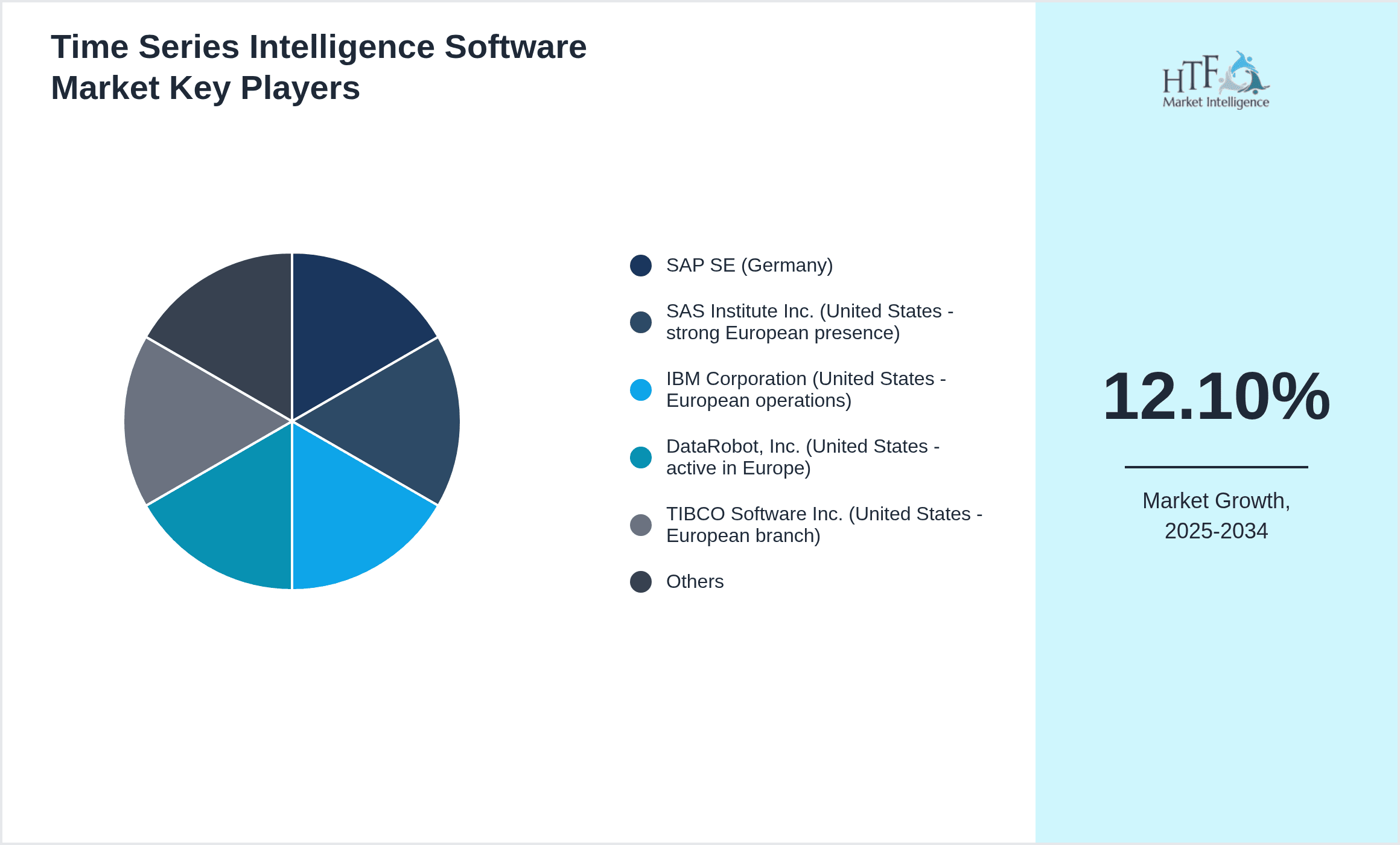
- •SAP SE (Germany)
- •SAS Institute Inc. (United States - strong European presence)
- •IBM Corporation (United States - European operations)
- •DataRobot, Inc. (United States - active in Europe)
- •TIBCO Software Inc. (United States - European branch)
- •MathWorks (United States - European subsidiaries)
- •Alteryx, Inc. (United States - European market)
- •KNIME AG (Switzerland)
- •RapidMiner, Inc. (United States - European operations)
- •Oracle Corporation (United States - European offices)
- •Microsoft Corporation (United States - European presence)
- •FICO (United States - Europe focus)
- •QlikTech International AB (Sweden)
- •Sisense Inc. (United States - Europe operations)
- •ThoughtSpot, Inc. (United States - active in Europe)
Market Breakdown
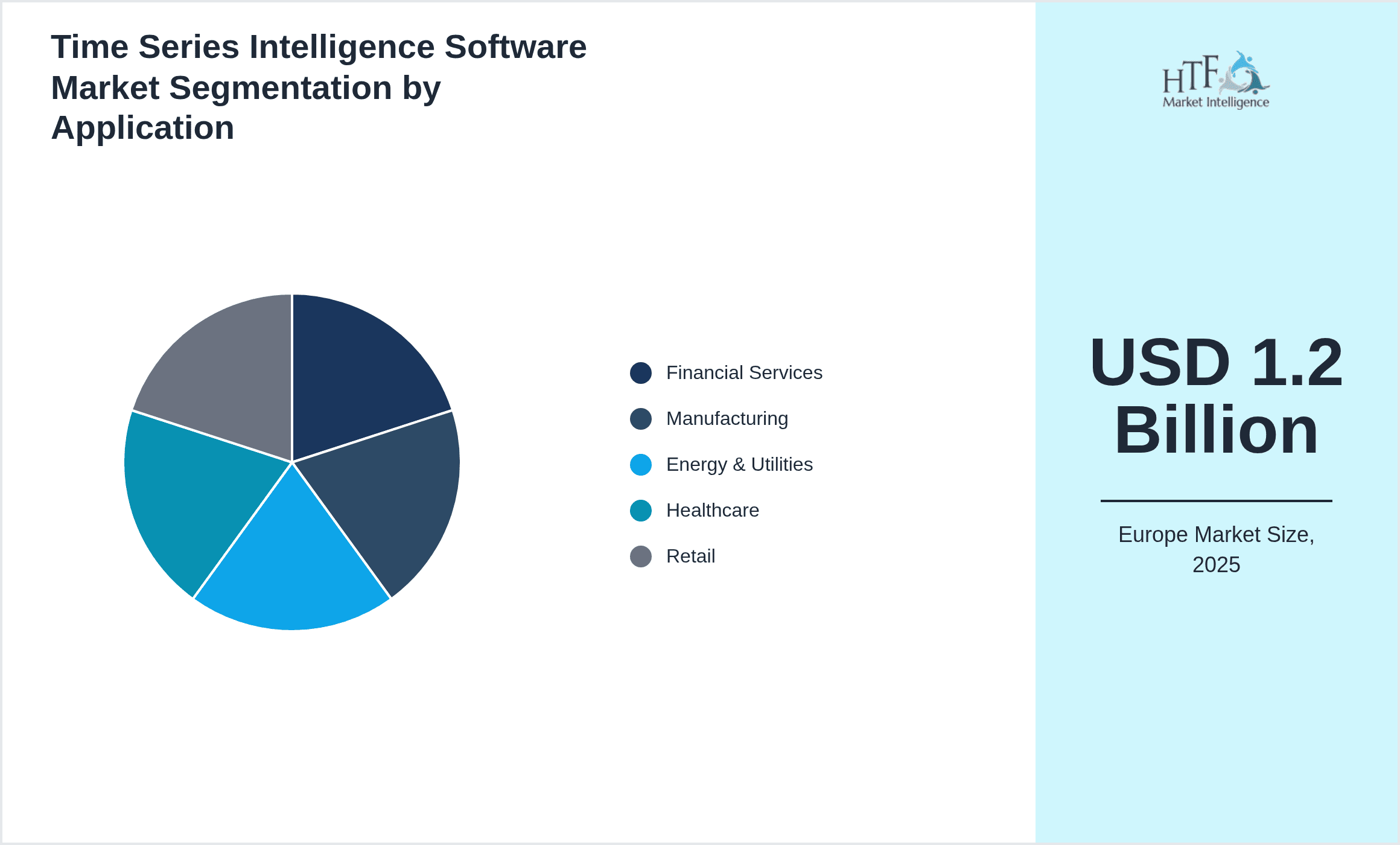
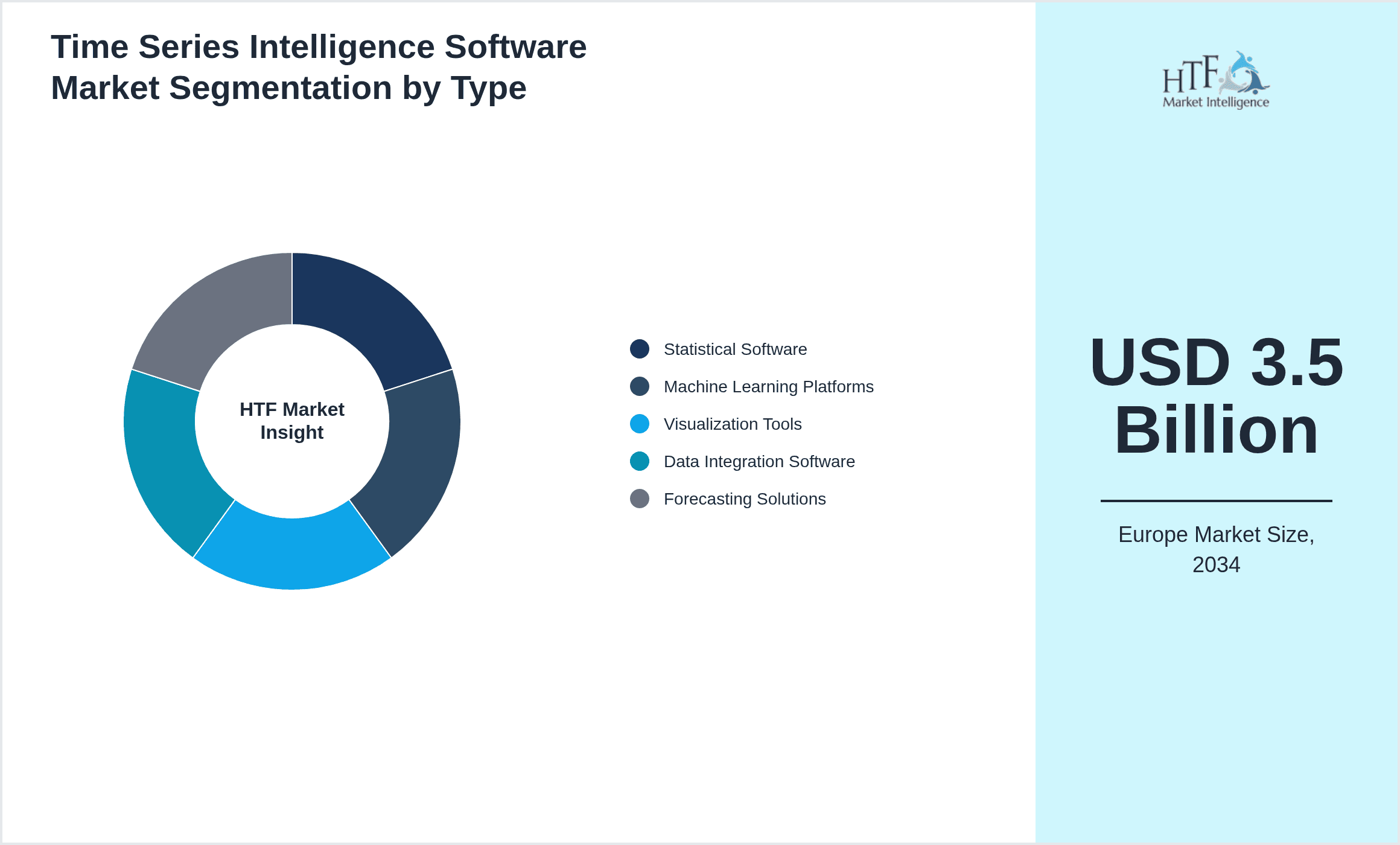
- •By Type
- ◦Statistical Software
- ◦Machine Learning Platforms
- ◦Visualization Tools
- ◦Data Integration Software
- ◦Forecasting Solutions
- •By Application
- ◦Financial Services
- ◦Manufacturing
- ◦Energy & Utilities
- ◦Healthcare
- ◦Retail
- •By Deployment Model
- ◦Cloud-based
- ◦On-premise
- ◦Hybrid
- •By End User
- ◦Large Enterprises
- ◦SMEs
- ◦Government Organizations
Market Growth Drivers
- •Rising demand for predictive analytics in finance and manufacturing fuels adoption; companies seek to enhance decision-making based on time-dependent data, though some hesitate due to integration costs and complexity.
- •Increased availability of IoT and sensor data across industries provides vast temporal datasets, pushing the need for sophisticated time series intelligence tools to process and analyze these streams effectively.
- •Growing cloud adoption in Europe enables scalable deployment of time series software, though compliance with data sovereignty laws sometimes slows cloud migration, creating mixed adoption patterns.
- •Regulatory pressures for accurate forecasting and risk management in sectors like energy and finance incentivize investment in advanced time series solutions despite challenges in legacy system compatibility.
- •Digital transformation initiatives across European enterprises drive modernization of analytics capabilities, with time series intelligence positioned as a key enabler, though adoption speed varies widely across countries.
Market Trends
- •Increasing integration of machine learning models with traditional statistical time series software reflects a hybrid approach favored by many European firms to balance interpretability and accuracy.
- •Visualization tools tailored for temporal data are gaining traction, especially in sectors with complex operational data like energy and manufacturing, though user adoption sometimes lags due to training requirements.
- •Some organizations adopt open-source platforms for time series analysis to reduce costs, but concerns about support and scalability lead others to prefer commercial solutions with enterprise backing.
- •Cloud deployment is the norm for new projects, yet a significant share of legacy systems remain on-premise, creating a fragmented market where hybrid models are often the practical compromise.
- •Time series intelligence is increasingly incorporated into broader AI and big data ecosystems, though integration complexity and data quality inconsistencies slow seamless workflows in real-world settings.
Market Restraints
- •Legacy IT infrastructure incompatibility slows adoption, especially in manufacturing and utilities sectors where modernization is gradual and costly.
- •Data quality and preprocessing challenges remain a bottleneck, as time series data often contains irregularities, missing points, and noise that complicate analysis.
- •Regulatory compliance, particularly GDPR, imposes constraints on data usage and cross-border processing, impacting cloud-based time series intelligence deployments.
- •Shortage of skilled data scientists familiar with both time series methodologies and domain expertise limits effective implementation in several industries.
- •High cost of advanced solutions deters SMEs despite growing awareness of benefits, leading to uneven market penetration across enterprise sizes.
Market Opportunities
- •Expansion in renewable energy forecasting offers new use cases for time series intelligence to optimize grid management and supply-demand balancing.
- •Healthcare sector’s increasing reliance on temporal patient data analytics opens pathways for specialized time series software tailored to clinical and operational needs.
- •SME-focused, cost-effective cloud solutions could unlock untapped demand, especially in emerging European markets where digital maturity is rising.
- •Partnerships between software vendors and consulting firms to deliver integrated analytics-as-a-service models present scalable adoption routes.
- •Advances in explainable AI for time series models can address skepticism among decision-makers, fostering broader enterprise acceptance.
Market Challenges
- •Heterogeneity of time series data types across industries complicates development of one-size-fits-all solutions, forcing vendors to customize extensively.
- •Interoperability issues with existing enterprise systems and data silos hinder smooth integration and limit real-time analytics potential.
- •Rapid pace of technology change pressures companies to continuously upgrade solutions, creating budgetary and operational strain.
- •Varying levels of digital literacy among end-users lead to inconsistent adoption and underutilization of advanced features in deployed software.
- •Data privacy concerns and evolving regulations require constant vigilance and adaptation, increasing compliance costs and complexity.
Regulatory Framework
- •The General Data Protection Regulation (GDPR) remains central, mandating strict controls on personal data handling and cross-border transfers, affecting cloud-based time series deployments (2018-2025).
- •The European Union’s Digital Services Act (2022) introduces new responsibilities for data transparency and algorithmic accountability, influencing time series software providers’ operational models.
- •Emerging AI Act proposals in the EU emphasize risk management for AI systems, including time series intelligence tools, requiring certification and compliance readiness.
- •Sector-specific guidelines, such as MiFID II in financial services, enforce rigorous data recording and analysis standards, driving demand for compliant time series solutions.
- •National cybersecurity strategies in Germany, France, and the UK emphasize secure data processing and infrastructure resilience, impacting software design and deployment choices.
Industry Insights
In March 2024, SAP SE unveiled an enhanced time series analytics module within its cloud platform, focusing on real-time data processing and machine learning integration to boost forecasting accuracy for manufacturing clients. This launch underscores the growing trend of blending statistical and AI-driven methods tailored for European industrial needs. Meanwhile, in September 2023, KNIME AG expanded its open-source platform capabilities to better support hybrid deployments, addressing customer demand for flexible, scalable time series analytics across research and commercial applications.
Mergers & Acquisitions
- •In August 2023, DataRobot acquired a European startup specializing in time series anomaly detection software to strengthen its AI-driven forecasting solutions. The acquisition aimed to enhance DataRobot’s platform with niche capabilities, particularly for financial and energy clients in Europe, accelerating product innovation and market penetration.
- •In February 2024, IBM completed the acquisition of a German machine learning firm focused on industrial time series analytics. This strategic move expanded IBM’s European footprint and complemented its hybrid cloud offerings by incorporating advanced predictive maintenance and operational intelligence tools tailored for manufacturing and utilities.
Recent Industry News
- •15th January 2025, Microsoft announced a partnership with major European utilities to deploy its Azure Time Series Insights platform, aiming to optimize energy grid operations through advanced forecasting and anomaly detection. This collaboration is expected to accelerate digital transformation efforts across energy providers in Germany, France, and the UK, fostering smarter infrastructure management. Source: Microsoft Official Press Release
- •7th March 2025, Oracle launched a new time series forecasting module within its cloud analytics suite, featuring enhanced AI integration and user-friendly dashboards designed for retail and financial sectors. The update focuses on improving forecasting accuracy and operational insights, targeting European enterprises adapting to volatile market conditions. Source: Oracle Newsroom
- •22nd May 2025, SAS Institute introduced a time series anomaly detection tool tailored for healthcare providers to monitor patient data trends and identify irregularities rapidly. This offering responds to rising demand for data-driven healthcare analytics in Europe, particularly amid growing telemedicine adoption. Source: SAS Corporate Website
- •18th July 2025, TIBCO Software expanded its European operations with a new data science center in France, focusing on advancing time series intelligence solutions for manufacturing and energy clients. The center will accelerate local innovation and foster collaborations with regional academic institutions. Source: TIBCO Press Release
Market Statistics
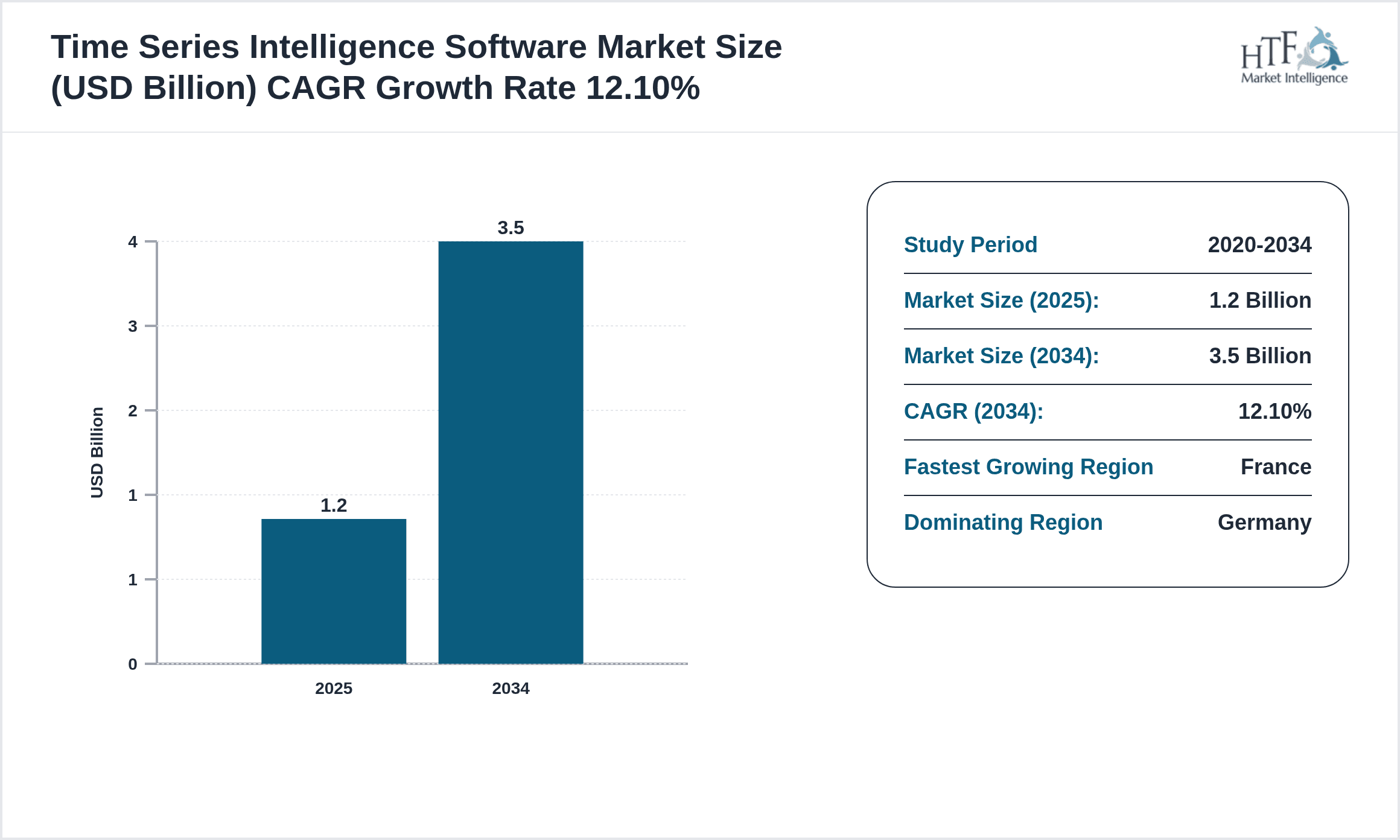
- •CAGR by 2034: 12.1%
- •Market Size by 2034: USD 3.5 Billion
- •Market Size in 2025: USD 1.2 Billion
- •Dominating Type: Statistical Software
- •Next-following Type: Machine Learning Platforms
- •Dominating Application: Financial Services
- •Next-following Application: Manufacturing
- •Dominating Region: Germany
- •Second-leading Region: United Kingdom
- •Region with Highest Growth Rate: France
- •Dominating Country: Germany
Market Share Table
- •Market Share Comparison (%)
- ◦Statistical Software: 40%
- ◦Machine Learning Platforms: 30%
- •Application Market Share (%)
- ◦Financial Services: 35%
- ◦Manufacturing: 25%
- •Growth Rate Comparison (%)
- ◦Statistical Software: 11.8%
- ◦Machine Learning Platforms: 15.3%
- •Application Growth Rate (%)
- ◦Financial Services: 12.0%
- ◦Manufacturing: 13.5%
Top 5 Global Players
- •SAP SE (Germany)
- •SAS Institute Inc. (United States)
- •IBM Corporation (United States)
- •DataRobot, Inc. (United States)
- •TIBCO Software Inc. (United States)
Regional Outlook
The Germany currently holds a significant share of the market, primarily due to several key factors: increasing consumption rates, a burgeoning population, and robust economic momentum. These elements collectively drive demand, positioning this region as a leader in the market. On the other hand, France is rapidly emerging as the fastest-growing area within the industry. This remarkable growth can be attributed to swift infrastructure development, the expansion of various industrial sectors, and a marked increase in consumer demand. These dynamics make this region a crucial player in shaping future market growth.
In our report, we cover a comprehensive analysis of the following regions and countries:
- Germany
- France
- The United Kingdom
- BeNeLux
- Spain
- Italy
- NORDIC
- CEE
- Others
| Feature | Details |
|---|---|
| Base Year Market Size | USD 1.2 Billion |
| Forecast Year Market Size | USD 3.5 Billion |
| CAGR | 12.1% |
| Forecast Period | 2026 to 2033 |
| YoY Growth | 11.5% |
| Regions Covered | Germany, France, The United Kingdom, BeNeLux, Spain, Italy, NORDIC, CEE, Others |
| Key Companies | SAP SE (Germany), SAS Institute Inc. (United States - strong European presence), IBM Corporation (United States - European operations), DataRobot, Inc. (United States - active in Europe), TIBCO Software Inc. (United States - European branch), MathWorks (United States - European subsidiaries), Alteryx, Inc. (United States - European market), KNIME AG (Switzerland), RapidMiner, Inc. (United States - European operations), Oracle Corporation (United States - European offices), Microsoft Corporation (United States - European presence), FICO (United States - Europe focus), QlikTech International AB (Sweden), Sisense Inc. (United States - Europe operations), ThoughtSpot, Inc. (United States - active in Europe) |
Europe Time Series Intelligence Software Market - Outlook 2025-2034 - Table of Contents
Frequently Asked Questions (FAQ):
The Compact Track Loaders market is projected to grow at a CAGR of 6.8% from 2025 to 2030, driven by increasing demand in construction and agricultural sectors.
North America currently leads the market with approximately 45% market share, followed by Europe at 28% and Asia-Pacific at 22%. The remaining regions account for 5% of the global market.
Key growth drivers include increasing construction activities, rising demand for versatile equipment in agriculture, technological advancements in track loader design, and growing preference for compact equipment in urban construction projects.