
Asia-Pacific Whey Protein Micronization System Market - Outlook 2025-2034
Asia-Pacific Whey Protein Micronization System Market is segmented by Type (Jet Mill Systems, Air Classifier Mill Systems, Ball Mill Systems, Hammer Mill Systems, Pin Mill Systems), Application (Nutritional Supplements, Functional Foods, Pharmaceuticals, Animal Feed, Sports Nutrition), End User (Food & Beverage Manufacturers, Pharmaceutical Companies, Animal Feed Producers, Contract Manufacturing Organizations), Distribution Channel (Direct Sales, OEM Partnerships, Distributors, Online Platforms), and Geography (Japan, China, Southeast Asia, India, Australia, South Korea, Others)
Pricing
Report Overview
Executive Summary
- •The Asia-Pacific Whey Protein Micronization System Market comprises machinery engineered to finely mill whey protein powders enhancing their performance in nutritional supplements, functional foods, pharmaceuticals, animal feed, and sports nutrition. These systems employ technologies such as jet milling, air classification, and ball milling to improve protein solubility, texture, and bioavailability across the food and pharmaceutical industries.
- •Market growth is propelled by increasing demand for high-protein diets, expanding sports nutrition sectors, and growing pharmaceutical applications in Asia-Pacific countries like China, India, and Japan. Technological advancements in micronization equipment and rising consumer health consciousness contribute significantly to market expansion.
- •The sector offers strategic value by enabling manufacturers to deliver enhanced quality whey protein products that meet stringent regulatory standards, addressing the needs of both domestic and export markets in the Asia-Pacific region.
Competitive Landscape
Competition within the Asia-Pacific Whey Protein Micronization System market is characterized by a mix of global technology leaders and regional specialists who focus intensely on innovation, product differentiation, and customer-centric solutions. Market players leverage advancements in milling technology to enhance efficiency, reduce operational costs, and tailor systems for specific whey protein applications. While larger firms emphasize R&D and strategic partnerships to consolidate market share, smaller regional companies compete by offering customized solutions and localized service. The rivalry is intense, with companies continuously updating their product portfolios to meet evolving regulatory demands and consumer preferences. Pricing strategies vary, but value-added features and after-sales support play pivotal roles in winning contracts. Distribution channels span direct sales, OEM partnerships, and collaborations with food and pharmaceutical manufacturers, creating a complex landscape where agility and technical prowess define leadership. Innovation also extends into automation and process integration, positioning companies to capitalize on the growing Asia-Pacific demand for efficient micronization solutions.
Leading Companies in Asia-Pacific Whey Protein Micronization System Market
- •Hosokawa Micron Powder Systems (Japan)
- •Fitzpatrick (United States, with Asia-Pacific operations)
- •Alpine Air Jet Mill (Germany, serving Asia-Pacific)
- •NETZSCH Group (Germany, active in Asia-Pacific)
- •Micronizer (United Kingdom, with Asia-Pacific presence)
- •Shanghai Factory of Jet Pulverizer (China)
- •Nara Machinery Co., Ltd. (Japan)
- •Gebr. Pfeiffer SE (Germany, Asia-Pacific operations)
- •Yamato Scientific America (Japan, regional HQ)
- •Ishida Co., Ltd. (Japan)
- •IKA India Pvt. Ltd. (India)
- •Hosokawa Micron India Pvt. Ltd. (India)
- •Micron Powder Systems Co., Ltd. (South Korea)
- •Shanghai Jet Milling Equipment Co. (China)
- •Kason Corporation (United States, Asia-Pacific operations)
- •Fluid Energy Processing and Equipment Company (United States)
- •Pneumatic Scale Angel (United States, Asia-Pacific presence)
- •Tianjin Micron Powder Equipment Co., Ltd. (China)
- •Mikro Pulverizer (United States, operating in Asia-Pacific)
- •Nara Machinery Co., Ltd. (Japan)
Market Breakdown
- •By Type
- ◦Jet Mill Systems
- ◦Air Classifier Mill Systems
- ◦Ball Mill Systems
- ◦Hammer Mill Systems
- ◦Pin Mill Systems
- •By Application
- ◦Nutritional Supplements
- ◦Functional Foods
- ◦Pharmaceuticals
- ◦Animal Feed
- ◦Sports Nutrition
- •By End User
- ◦Food & Beverage Manufacturers
- ◦Pharmaceutical Companies
- ◦Animal Feed Producers
- ◦Contract Manufacturing Organizations
- •By Distribution Channel
- ◦Direct Sales
- ◦OEM Partnerships
- ◦Distributors
- ◦Online Platforms
Growth Drivers
- •The surge in demand for high-protein nutritional supplements across Asia-Pacific, driven by rising health consciousness and fitness trends, fuels the need for advanced micronization systems that enhance whey protein functionality and absorption.
- •Increasing pharmaceutical applications of whey protein, especially in specialized drug formulations, require precise particle size control, propelling investments in sophisticated micronization technologies.
- •Government initiatives promoting protein-rich diets and nutrition awareness in countries like India and China are indirectly boosting market growth by expanding the consumer base.
- •Technological improvements in micronization equipment that reduce energy consumption and improve throughput are encouraging manufacturers to upgrade existing systems, further expanding market size.
- •Growth in animal feed formulations incorporating whey protein as a key ingredient creates additional demand for efficient micronization solutions tailored to this vertical.
Market Trends
- •A notable shift towards air classifier mill systems is observed, favored for their ability to deliver uniform particle size distribution while minimizing heat generation, aligning with delicate whey protein processing requirements.
- •Integration of automation and real-time particle size monitoring within micronization systems is becoming standard, enhancing process control and product consistency in Asia-Pacific facilities.
- •Manufacturers are increasingly adopting sustainable practices by optimizing energy efficiency and reducing waste during micronization, reflecting growing environmental concerns in the region.
- •Strategic collaborations between equipment suppliers and whey protein producers are on the rise, facilitating customized solutions that address specific regional consumer preferences and regulatory standards.
- •The emergence of functional foods enriched with whey protein is driving demand for micronization technologies that preserve bioactive properties while enhancing texture and solubility.
Market Restraints
- •High capital expenditure associated with advanced micronization systems limits adoption among small and medium-scale manufacturers, particularly in developing Asia-Pacific markets.
- •Quality control challenges arising from inconsistent raw whey protein sources can affect the performance of micronization processes, hindering uniform product output.
- •Stringent regulatory compliance and certification requirements across different Asia-Pacific countries increase operational complexity and entry barriers for new equipment providers.
- •Limited technical expertise and maintenance infrastructure in some regions result in operational inefficiencies and downtime, restraining market penetration.
- •Competition from alternative protein processing technologies, such as enzymatic hydrolysis, may reduce reliance on micronization systems in certain applications.
Market Opportunities
- •Emerging markets within Southeast Asia present untapped potential as rising disposable incomes fuel demand for premium nutritional products requiring micronized whey protein.
- •Customization of micronization systems to handle plant-based protein blends alongside whey is an opportunity to capture a broader segment amid growing vegan and vegetarian trends.
- •Collaborations focused on integrating IoT and AI-driven analytics into micronization equipment can unlock operational efficiencies and predictive maintenance benefits.
- •Expansion of contract manufacturing organizations (CMOs) in Asia-Pacific offers a channel for micronization system providers to scale through service-based partnerships.
- •Increasing demand for whey protein in pharmaceutical nutraceuticals calls for tailored micronization technologies, opening avenues for specialized equipment offerings.
Market Challenges
- •Supply chain disruptions affecting critical components for micronization equipment hamper timely delivery and installation across Asia-Pacific manufacturing sites.
- •Volatility in whey protein raw material prices impacts downstream investment decisions in micronization infrastructure due to uncertain returns.
- •Rapid technological evolution requires continuous capital infusion for system upgrades, posing financial strain especially on smaller market participants.
- •Fragmented regulatory environments with varying safety and quality standards across Asia-Pacific countries complicate market entry and compliance efforts.
- •Talent shortage in specialized engineering and maintenance personnel restricts optimal utilization of advanced micronization systems.
Regulatory Overview
- •Between 2020 and 2025, several Asia-Pacific countries tightened regulations on food and pharmaceutical ingredient processing to enhance consumer safety, mandating stricter validation of micronization equipment performance.
- •China's updated Good Manufacturing Practice (GMP) guidelines introduced in 2023 require equipment suppliers to demonstrate compliance with enhanced hygiene and particle size consistency standards, directly affecting micronization system design.
- •India implemented new nutritional supplement safety standards in 2024, emphasizing traceability and quality control during protein processing, increasing demand for certified micronization solutions.
- •Regional trade agreements in Asia-Pacific encourage harmonization of quality standards, facilitating smoother cross-border equipment sales but requiring adherence to unified certification processes.
- •Environmental regulations promoting energy-efficient manufacturing processes have driven the adoption of eco-friendly micronization technologies throughout the region.
Industry Insights
The Asia-Pacific whey protein micronization space continues to evolve with companies investing heavily in automation and precision engineering to meet rising quality demands. Notably, in July 2024, Hosokawa Micron Powder Systems unveiled a new jet mill model optimized for whey protein powders, featuring enhanced airflow control to reduce thermal degradation and improve particle uniformity. This launch signifies a trend towards more specialized equipment tailored for delicate protein materials. Furthermore, in November 2023, a strategic partnership was announced between a leading Chinese micronization equipment manufacturer and a major dairy producer to co-develop systems incorporating IoT-enabled monitoring, enhancing real-time process optimization. These developments underscore the market's inclination towards technology-driven customization and operational excellence, reflecting broader Asia-Pacific manufacturing modernization efforts.
Mergers & Acquisitions
- •In March 2024, a prominent Japanese micronization technology provider completed the acquisition of a South Korean milling equipment manufacturer to strengthen its regional footprint and expand its product portfolio focusing on air classifier mill systems. This move aims to leverage combined R&D capabilities and streamline supply chains across Asia-Pacific markets, enhancing competitive positioning against global peers.
- •October 2023 saw a leading German micronization equipment firm acquire a minority stake in an Indian startup specializing in IoT-enabled process monitoring for protein powder manufacturing. The collaboration focuses on integrating smart sensor technologies into existing micronization systems to elevate process transparency and predictive maintenance capabilities in fast-growing Asia-Pacific facilities.
Recent Industry News
- •15th January 2025, Hosokawa Micron Powder Systems launched a next-generation jet mill system in Tokyo, designed explicitly for whey protein micronization with enhanced cooling features to prevent protein denaturation during processing. The system targets high-volume nutritional supplement manufacturers seeking improved product consistency. Source: Hosokawa Official Press Release.
- •22nd February 2025, a leading Chinese equipment maker, Shanghai Jet Milling Equipment Co., announced a strategic partnership with a Southeast Asian dairy cooperative to co-develop customized air classifier mill systems, facilitating regional expansion and technology localization. Source: Industry Weekly Asia.
- •10th March 2025, IKA India Pvt. Ltd. revealed the launch of an automated ball mill system integrated with IoT sensors for real-time process data analytics, aiming to support pharmaceutical and food-grade whey protein manufacturers in India. Source: IKA Corporate News.
- •5th April 2025, NETZSCH Group expanded its manufacturing facility in South Korea to increase production capacity of hammer mill systems tailored for sports nutrition applications, reflecting growing demand in Asia-Pacific markets. Source: NETZSCH Group Press Release.
Market Statistics
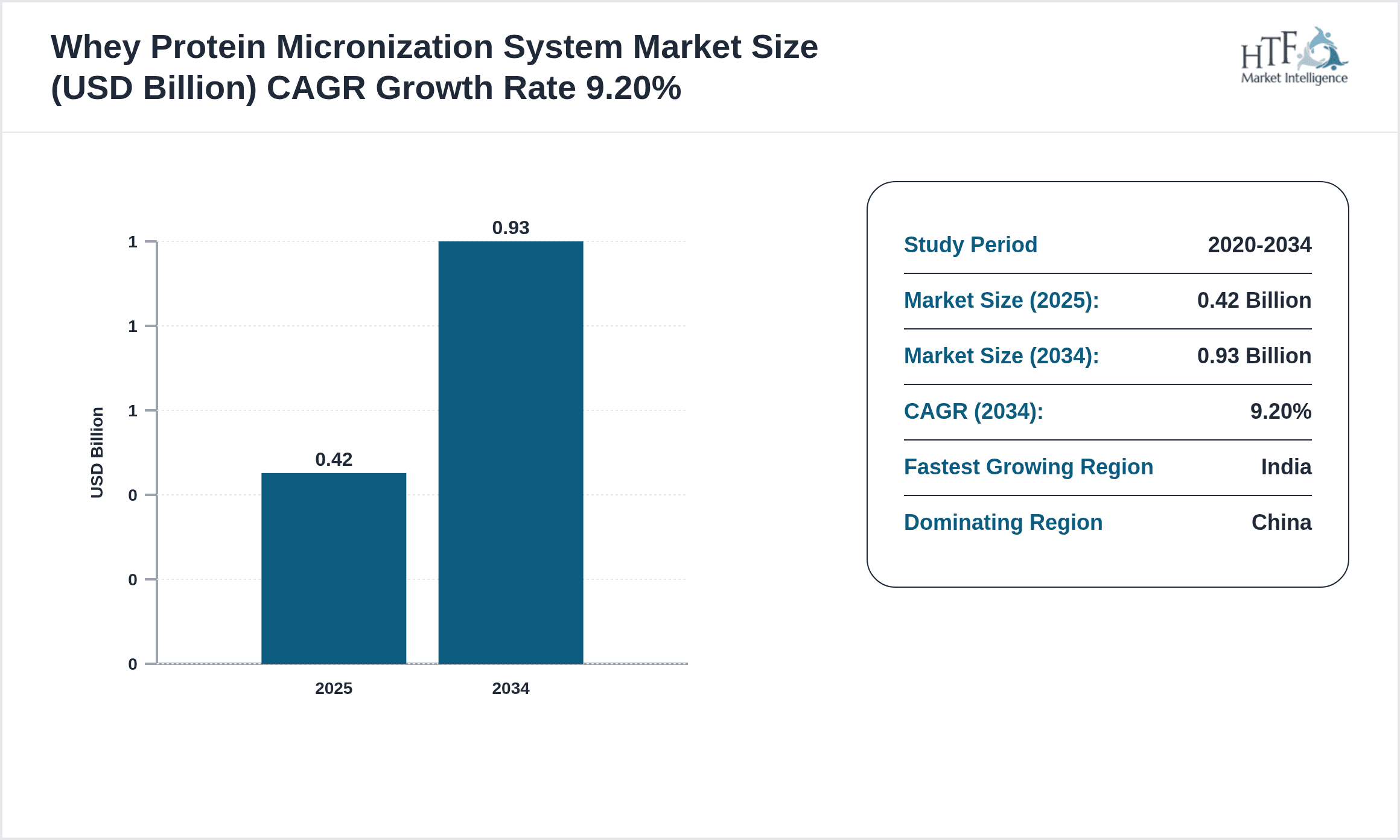
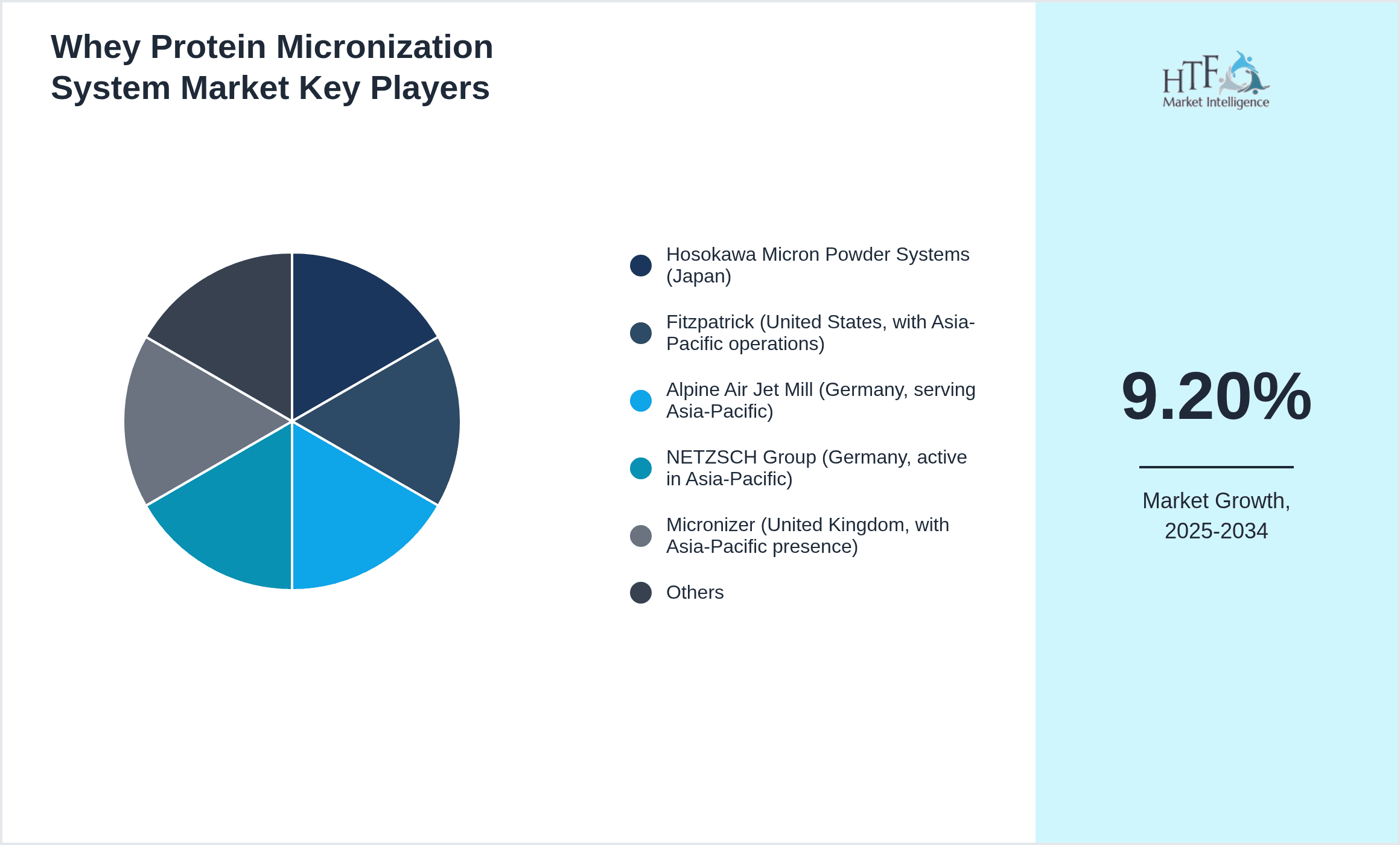
- •CAGR by 2034: 9.2%
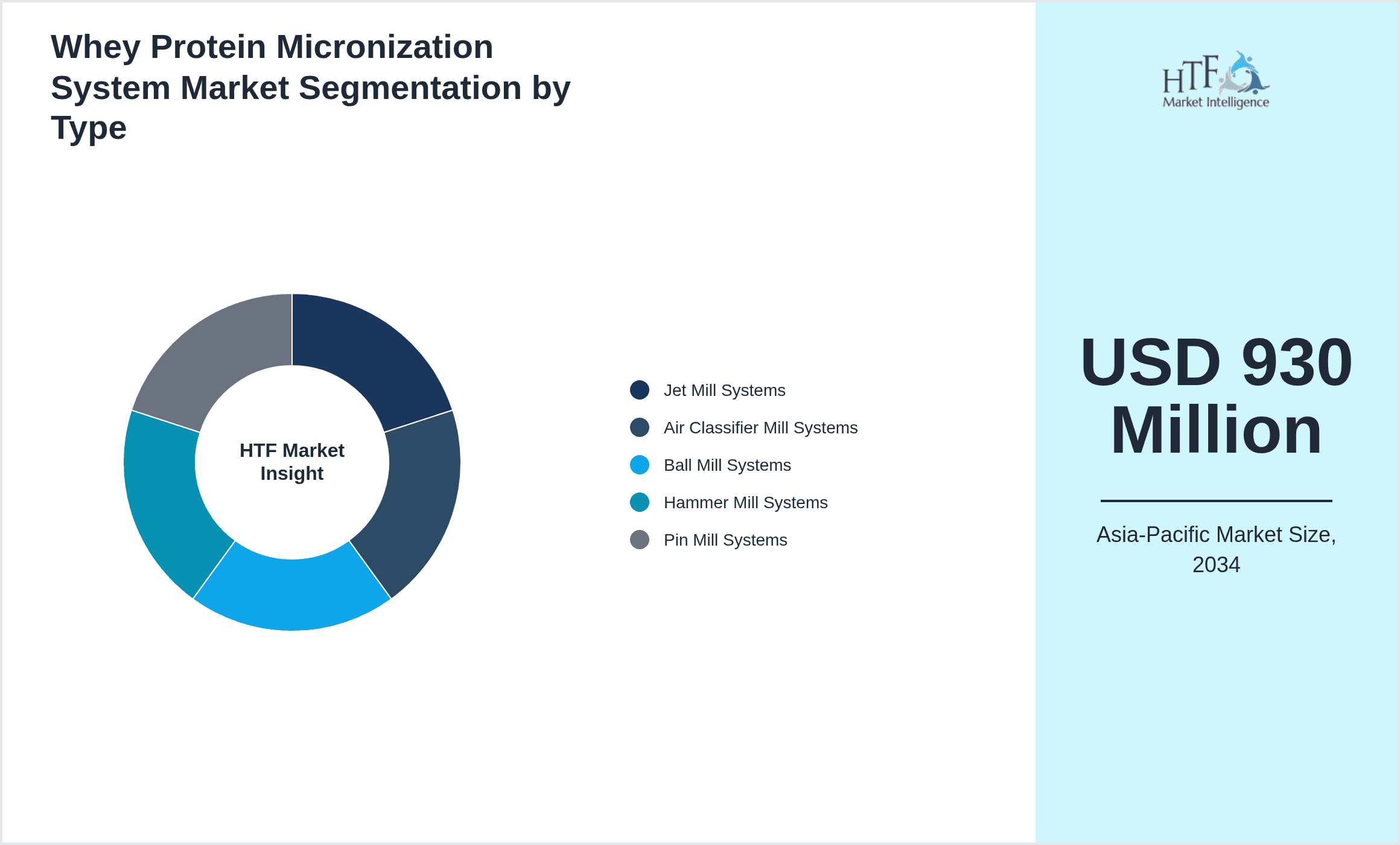
- •Market Size by 2034: USD 930 Million
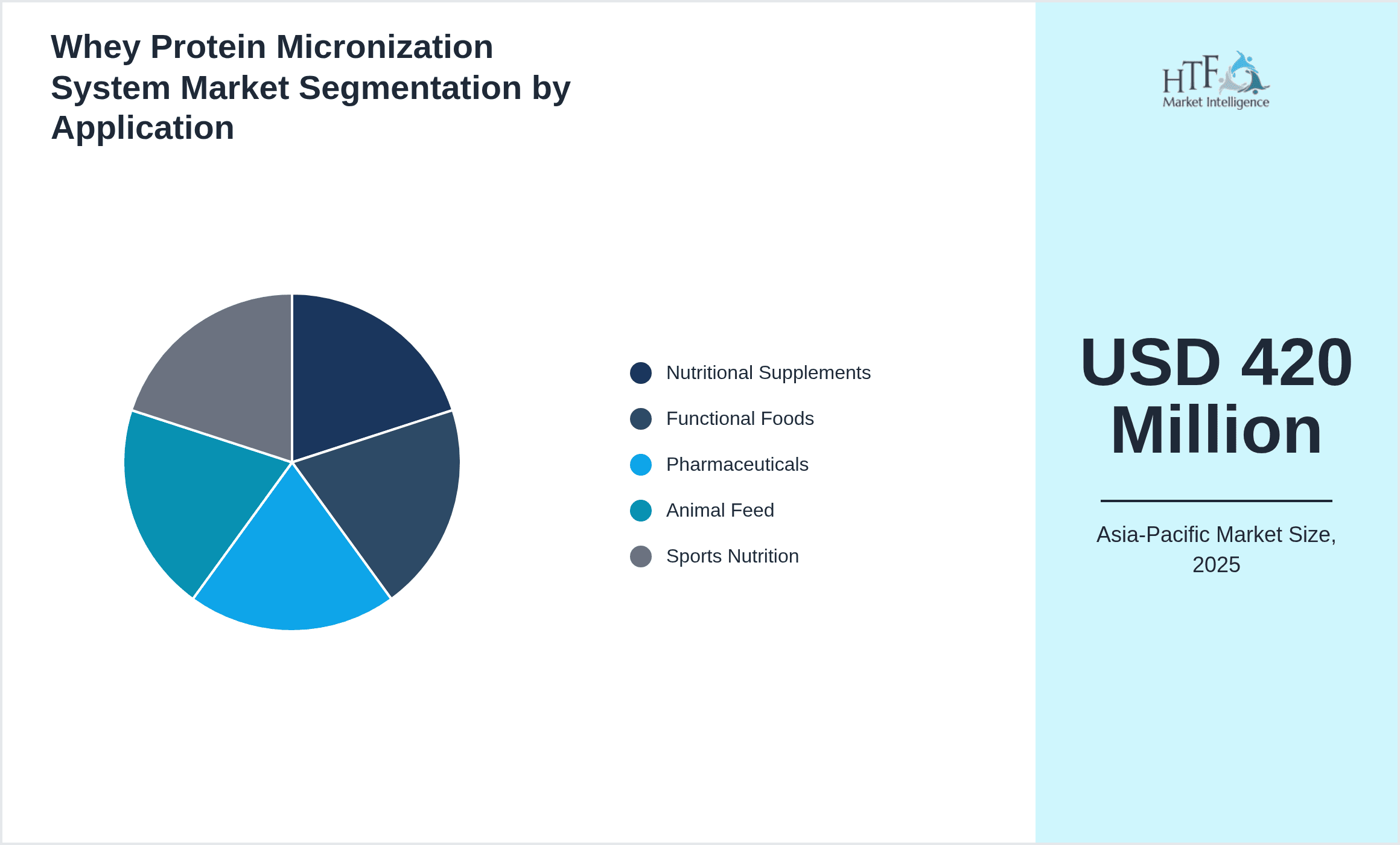
- •Market Size in 2025: USD 420 Million
- •Dominating Type: Jet Mill Systems; Next-following Type: Air Classifier Mill Systems
- •Dominating Application: Nutritional Supplements; Next-following Application: Functional Foods
- •Dominating Region: China; Second-leading Region: India
- •Region with Highest Growth Rate: India
- •Dominating Country: China
Market Share Table
- •Market Share (%) - Dominating Type (Jet Mill Systems): 42%, Followed Type (Air Classifier Mill Systems): 28%
- •Market Share (%) - Dominating Application (Nutritional Supplements): 45%, Followed Application (Functional Foods): 30%
- •Growth Rate (%) - Dominating Type (Jet Mill Systems): 8.5%, Followed Type (Air Classifier Mill Systems): 11.3%
- •Growth Rate (%) - Dominating Application (Nutritional Supplements): 9.0%, Followed Application (Functional Foods): 10.2%
Top 5 Global Players
- •Hosokawa Micron Powder Systems (Japan)
- •Fitzpatrick (United States)
- •NETZSCH Group (Germany)
- •Alpine Air Jet Mill (Germany)
- •Shanghai Jet Milling Equipment Co. (China)
Regional Outlook
The China currently holds a significant share of the market, primarily due to several key factors: increasing consumption rates, a burgeoning population, and robust economic momentum. These elements collectively drive demand, positioning this region as a leader in the market. On the other hand, India is rapidly emerging as the fastest-growing area within the industry. This remarkable growth can be attributed to swift infrastructure development, the expansion of various industrial sectors, and a marked increase in consumer demand. These dynamics make this region a crucial player in shaping future market growth.
In our report, we cover a comprehensive analysis of the following regions and countries:
- Japan
- China
- Southeast Asia
- India
- Australia
- South Korea
- Others
| Feature | Details |
|---|---|
| Base Year Market Size | USD 420 Million |
| Forecast Year Market Size | USD 930 Million |
| CAGR | 9.2% |
| Forecast Period | 2026 to 2033 |
| YoY Growth | 8.8% |
| Scope of Report | Market is segmented by Type (Jet Mill Systems, Air Classifier Mill Systems, Ball Mill Systems, Hammer Mill Systems, Pin Mill Systems), Application (Nutritional Supplements, Functional Foods, Pharmaceuticals, Animal Feed, Sports Nutrition), End User (Food & Beverage Manufacturers, Pharmaceutical Companies, Animal Feed Producers, Contract Manufacturing Organizations), Distribution Channel (Direct Sales, OEM Partnerships, Distributors, Online Platforms) |
| Regions Covered | Japan, China, Southeast Asia, India, Australia, South Korea, Others |
| Key Companies | Hosokawa Micron Powder Systems (Japan), Fitzpatrick (United States, with Asia-Pacific operations), Alpine Air Jet Mill (Germany, serving Asia-Pacific), NETZSCH Group (Germany, active in Asia-Pacific), Micronizer (United Kingdom, with Asia-Pacific presence), Shanghai Factory of Jet Pulverizer (China), Nara Machinery Co., Ltd. (Japan), Gebr. Pfeiffer SE (Germany, Asia-Pacific operations), Yamato Scientific America (Japan, regional HQ), Ishida Co., Ltd. (Japan), IKA India Pvt. Ltd. (India), Hosokawa Micron India Pvt. Ltd. (India), Micron Powder Systems Co., Ltd. (South Korea), Shanghai Jet Milling Equipment Co. (China), Kason Corporation (United States, Asia-Pacific operations), Fluid Energy Processing and Equipment Company (United States), Pneumatic Scale Angel (United States, Asia-Pacific presence), Tianjin Micron Powder Equipment Co., Ltd. (China), Mikro Pulverizer (United States, operating in Asia-Pacific), Nara Machinery Co., Ltd. (Japan) |
Asia-Pacific Whey Protein Micronization System Market - Outlook 2025-2034 - Table of Contents
Frequently Asked Questions (FAQ):
The Compact Track Loaders market is expected to see value worth 5.3 Billion in 2025.
North America currently leads the market with approximately 45% market share, followed by Europe at 28% and Asia-Pacific at 22%. The remaining regions account for 5% of the global market.
Key growth drivers include increasing construction activities, rising demand for versatile equipment in agriculture, technological advancements in track loader design, and growing preference for compact equipment in urban construction projects.