
United Kingdom Aluminum Phosphide Cas 20859 73 8 Market Scope & Changing Dynamics 2025-2034
United Kingdom Aluminum Phosphide Cas 20859 73 8 Market is segmented by Application (Fumigation, Pest Control, Grain Preservation, Structural Pest Management, Others), Type (Tablet, Granular, Pellets), and Geography (England, Scotland, Wales, Northern Ireland)
Pricing
Report Overview
Executive Summary
- •The United Kingdom Aluminum Phosphide Cas 20859 73 8 market revolves around the use of aluminum phosphide primarily as a fumigant chemical for pest control in agricultural and commercial settings. It includes various chemical forms like tablets and pellets, applied in grain storage and structural fumigation.
- •Market boundaries are shaped by regulatory frameworks focused on safety and environmental protection, making handling and usage protocols a critical part of the industry’s scope. The chemical’s high effectiveness and associated risks define its market dynamics.
- •The industry serves a vital purpose in safeguarding stored food products against pest infestations, ensuring quality retention and reducing economic losses. However, adoption and usage patterns vary considerably across UK regions due to local regulatory enforcement and operational practices.
Competitive Landscape
Competition in the United Kingdom Aluminum Phosphide Cas 20859 73 8 market is marked by a mix of established chemical manufacturers and specialized fumigation service providers. Market players focus on product reliability, safety compliance, and innovation in packaging and application methods. Rivalry intensifies around regulatory adherence and operational efficacy, with companies striving to balance cost-effectiveness and environmental responsibility. Innovation often manifests through safer formulations and improved delivery systems, though competitive edges are also gained via strategic partnerships and distribution networks. Market positioning tends to favor firms with strong UK regulatory knowledge and local operational expertise, as compliance and safe handling remain paramount. Regional competition varies, with some zones showing fragmented players while others are dominated by a few key companies. The market exhibits moderate entry barriers due to stringent safety regulations and technical know-how requirements.
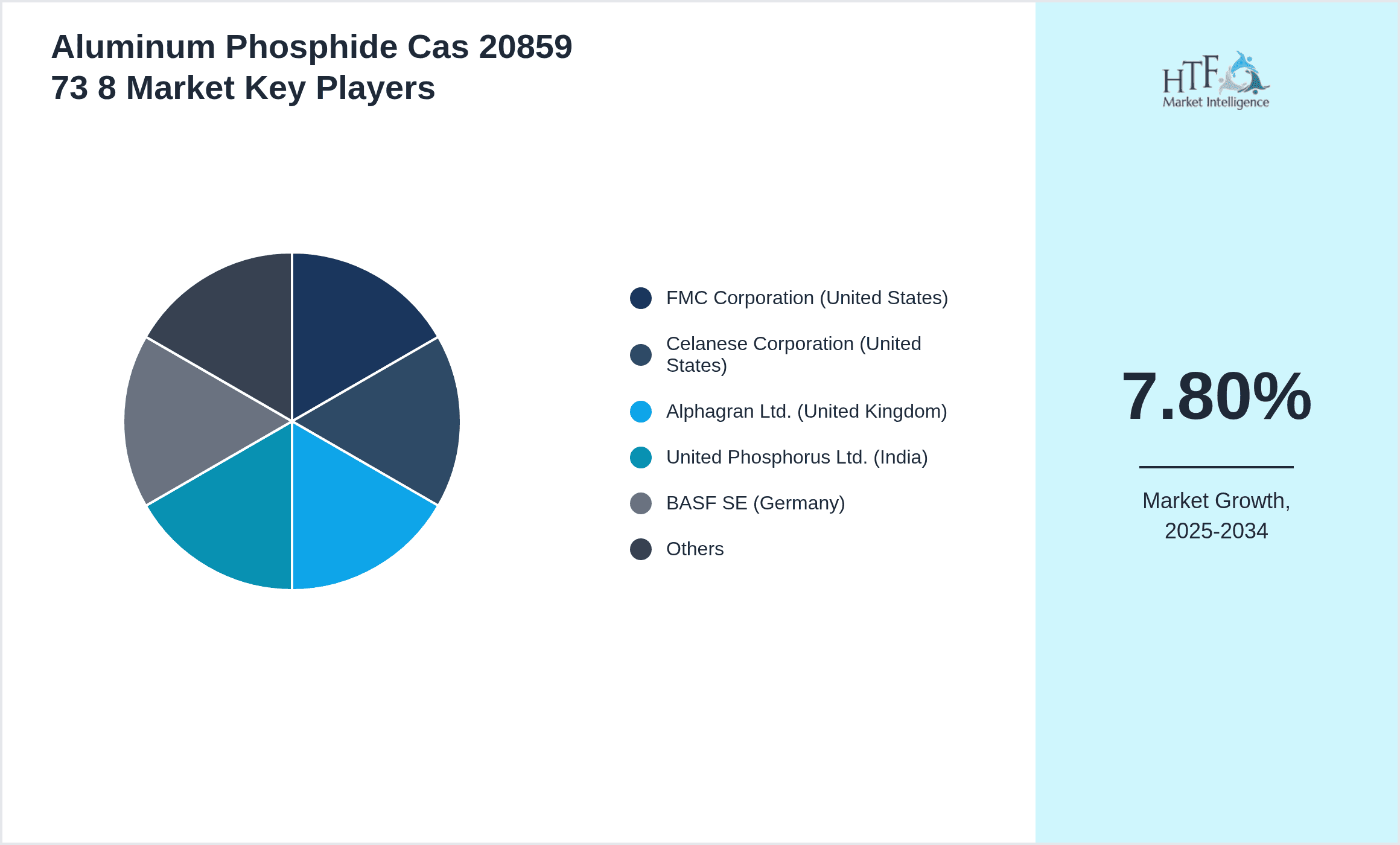
Leading Companies in United Kingdom Aluminum Phosphide Cas 20859 73 8 Market
- •FMC Corporation (United States)
- •Celanese Corporation (United States)
- •Alphagran Ltd. (United Kingdom)
- •United Phosphorus Ltd. (India)
- •BASF SE (Germany)
- •Syngenta AG (Switzerland)
- •UPL Limited (India)
- •Nufarm Limited (Australia)
- •Sumitomo Chemical Co., Ltd. (Japan)
- •Amvac Chemical Corporation (United States)
Market Breakdown
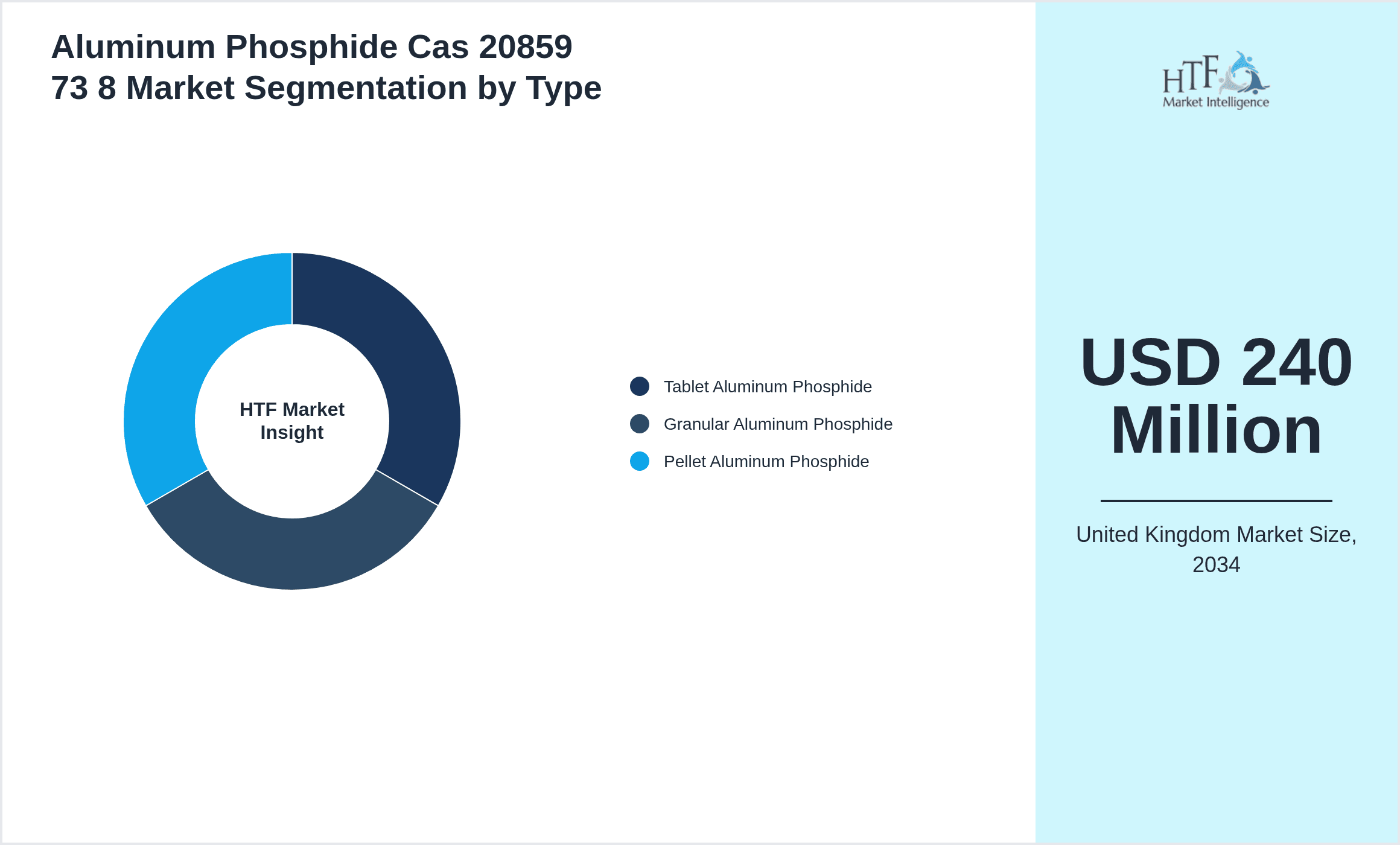
- •By Type
- ◦Tablet Aluminum Phosphide
- ◦Granular Aluminum Phosphide
- ◦Pellet Aluminum Phosphide
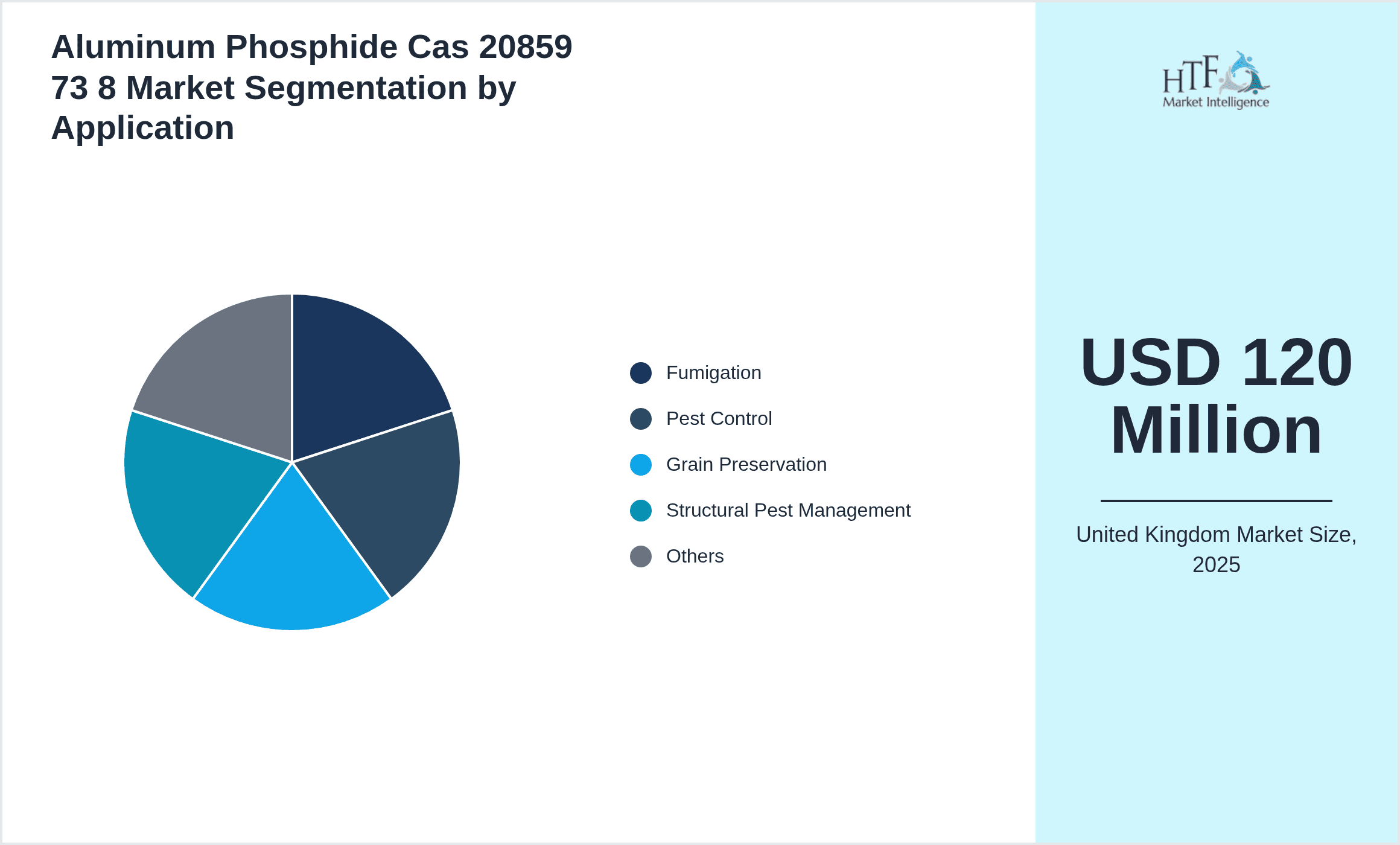
- •By Application
- ◦Fumigation
- ◦Pest Control
- ◦Grain Preservation
- ◦Structural Pest Management
- ◦Others
- •By End User
- ◦Agricultural Storage Facilities
- ◦Food Processing Plants
- ◦Commercial Pest Control Services
- ◦Warehouse Operators
- •By Distribution Channel
- ◦Direct Sales
- ◦Distributors and Dealers
- ◦Online Sales
Growth Drivers
- •Increasing demand for effective grain storage solutions in the UK due to rising agricultural produce volumes has accelerated aluminum phosphide usage despite occasional regional hesitations, especially in smaller farms where chemical handling expertise is limited.
- •Stricter government regulations on alternative fumigants like methyl bromide have indirectly boosted aluminum phosphide adoption, even though concerns around safety and environmental impact temper enthusiasm in some industrial sectors.
- •Growing awareness among UK food processors about pest-related product losses has led to more frequent use of aluminum phosphide, particularly in pellet form, which offers easier application and controlled release characteristics.
- •The rise in commercial fumigation services tailored to urban and industrial pest control has expanded market penetration beyond traditional agricultural users, though adoption rates vary widely across regions.
- •Technological improvements in packaging and safety protocols have somewhat alleviated user concerns, fostering more consistent product use despite occasional regulatory ambiguities at local authority levels.
Market Trends
- •Shift towards pellet aluminum phosphide for more precise dosing reflects a trend to improve safety and reduce chemical exposure, although tablets still dominate due to legacy use and cost factors.
- •Increasing integration of fumigation with digital monitoring and smart sensors in grain silos is emerging in the UK, but adoption is uneven and often limited by investment capacity in smaller operators.
- •Sustainability concerns have prompted some UK players to explore alternative pest control methods alongside aluminum phosphide, leading to hybrid approaches rather than outright replacement.
- •Regulatory updates have led to more rigorous training and certification requirements for applicators, causing temporary slowdowns in market growth in regions with stricter enforcement.
- •Cross-sector collaborations between chemical producers and pest control services are becoming more common, aimed at improving application efficacy and safety compliance.
Market Opportunities
- •Expanding urban pest management needs in the UK present growth opportunities for aluminum phosphide products designed specifically for structural pest control beyond traditional agricultural uses.
- •Development of safer, slow-release formulations could unlock new market segments by addressing safety concerns and enabling broader regulatory acceptance across different UK regions.
- •Increasing exports of UK-stored grains due to post-Brexit trade shifts may drive higher demand for reliable fumigation solutions to meet international phytosanitary standards.
- •Digital transformation in pest control, including remote monitoring and data analytics, may integrate with aluminum phosphide use, enhancing operational efficiencies and compliance reporting.
- •Partnerships between chemical manufacturers and agricultural cooperatives could facilitate wider adoption among small and medium farms that currently underutilize fumigation chemicals.
Market Challenges
- •Strict and sometimes regionally inconsistent UK regulations on chemical fumigants create compliance complexities that slow market expansion and increase operational costs.
- •Health and safety concerns with handling aluminum phosphide, including risks of accidental exposure, limit willingness among smaller operators to adopt these chemicals without extensive training.
- •Volatility in raw material prices and supply chain disruptions occasionally affect product availability and pricing stability, impacting market confidence.
- •The presence of alternative pest control technologies, such as controlled atmospheres and biological agents, challenges aluminum phosphide’s dominance, especially in eco-sensitive zones.
- •Public perception and environmental advocacy sometimes pressure policy makers to impose tighter restrictions, which may reduce market size or require costly reformulations.
Regulatory Overview
- •Between 2023 and 2025, the UK implemented updated regulations requiring enhanced applicator certification for aluminum phosphide use, focusing on safety training and record keeping.
- •New mandates on packaging standards to reduce accidental exposure risks were introduced in 2024, affecting manufacturers and distributors in the UK market.
- •Environmental impact assessments became mandatory for large-scale fumigation projects, influencing operational planning and permitting timelines.
- •The UK government aligned certain fumigant control policies with EU standards post-Brexit, leading to transitional compliance challenges for some operators.
- •Incentives promoting safer pest control methods indirectly impacted aluminum phosphide demand by encouraging integrated pest management approaches.
Industry Insights
- •In February 2024, Alphagran Ltd. launched a new pellet formulation of aluminum phosphide aimed at improving safety and controlled release in UK grain storage applications. This innovation targets regulatory compliance challenges and user safety concerns, expected to enhance market acceptance particularly in South England and Scotland.
- •October 2023 saw FMC Corporation expand its UK operations by partnering with local pest control firms to provide integrated fumigation services, leveraging their chemical expertise and local market knowledge to capture a larger share of the commercial pest management segment.
Mergers & Acquisitions
- •In March 2024, Celanese Corporation completed the acquisition of a UK-based specialty fumigant producer, broadening its product portfolio and enhancing distribution capabilities within the United Kingdom. This strategic move aims to consolidate market presence, improve supply chain efficiencies, and accelerate innovation in safer aluminum phosphide formulations tailored to UK regulatory demands.
- •January 2025 marked UPL Limited’s acquisition of a regional pest control service provider in the UK, enabling vertical integration of chemical supply with application services. This acquisition supports UPL’s strategy to deliver comprehensive pest management solutions and capitalize on growing demand for professional fumigation in urban and agricultural sectors.
Recent Industry News
- •15th January 2025, BASF SE announced a collaboration with a UK agricultural cooperative to pilot a new aluminum phosphide delivery system designed to reduce chemical exposure during application. The initiative focuses on improving safety protocols and operational efficiency in grain storage fumigation, with plans for broader rollout pending successful trials. Source: BASF Official Press Release.
- •10th March 2025, Syngenta AG expanded its UK distribution network by partnering with multiple local dealers specializing in fumigation products. The partnership aims to enhance product availability and customer support across North and Midlands England, targeting improved market penetration and customer education on regulatory compliance. Source: Syngenta Corporate News.
- •22nd May 2025, Amvac Chemical Corporation launched an advanced safety training program for UK fumigation applicators, incorporating virtual reality simulations to improve hazard awareness and handling skills. The program addresses regulatory demands and aims to reduce incidents related to aluminum phosphide use in commercial settings. Source: Amvac Corporate Announcement.
- •30th July 2025, Alphagran Ltd. announced expansion of its manufacturing facility in South England to increase production capacity of aluminum phosphide pellets, responding to rising demand from both agricultural and structural pest control sectors. The investment highlights confidence in sustained market growth despite regulatory complexities. Source: Alphagran Ltd. Press Release.
Market Statistics
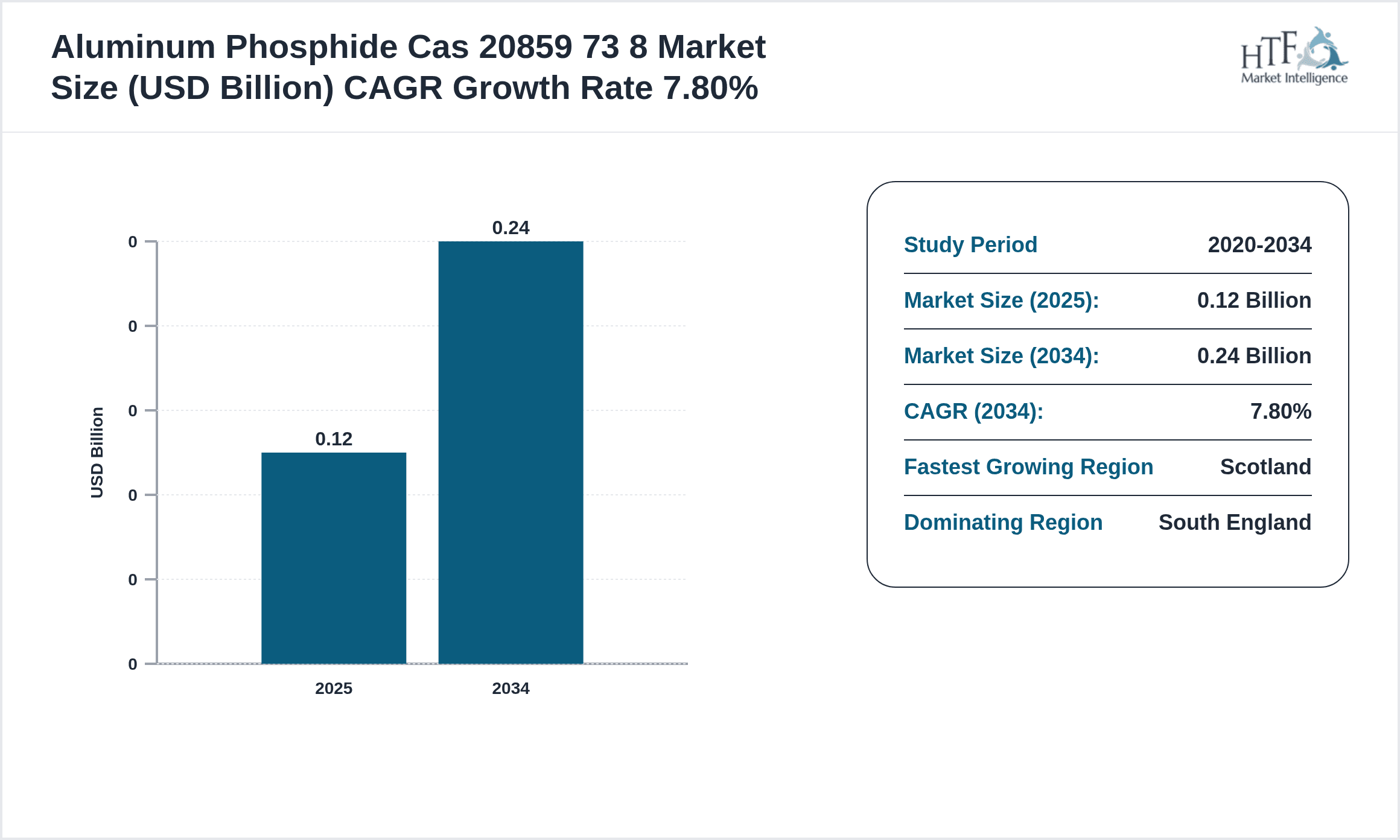
- •CAGR by 2034: 7.8%
- •Market Size by 2034: USD 240 Million
- •Market Size in 2025: USD 120 Million
- •Dominating Type: Tablet
- •Next-following Type: Pellet
- •Dominating Application: Fumigation
- •Next-following Application: Grain Preservation
- •Dominating Region: South England
- •Second-leading Region: North England
- •Region with Highest Growth Rate: Scotland
- •Dominating Country: United Kingdom
Market Share Table
- •Market Share (%) - Dominating Type (Tablet): 55%, Followed Type (Pellet): 30%
- •Market Share (%) - Dominating Application (Fumigation): 60%, Followed Application (Grain Preservation): 25%
- •Growth Rate (%) - Dominating Type (Tablet): 6.5%, Followed Type (Pellet): 10.1%
- •Growth Rate (%) - Dominating Application (Fumigation): 7.9%, Followed Application (Grain Preservation): 6.3%
Top 5 Global Players
- •FMC Corporation (United States)
- •Celanese Corporation (United States)
- •BASF SE (Germany)
- •Syngenta AG (Switzerland)
- •UPL Limited (India)
Regional Outlook
The South England currently holds a significant share of the market, primarily due to several key factors: increasing consumption rates, a burgeoning population, and robust economic momentum. These elements collectively drive demand, positioning this region as a leader in the market. On the other hand, Scotland is rapidly emerging as the fastest-growing area within the industry. This remarkable growth can be attributed to swift infrastructure development, the expansion of various industrial sectors, and a marked increase in consumer demand. These dynamics make this region a crucial player in shaping future market growth.
In our report, we cover a comprehensive analysis of the following regions and countries:
- England
- Scotland
- Wales
- Northern Ireland
| Feature | Details |
|---|---|
| Base Year Market Size | USD 120 Million |
| Forecast Year Market Size | USD 240 Million |
| CAGR | 7.8% |
| Forecast Period | 2026 to 2033 |
| YoY Growth | 7.5% |
| Regions Covered | England, Scotland, Wales, Northern Ireland |
| Key Companies | FMC Corporation (United States), Celanese Corporation (United States), Alphagran Ltd. (United Kingdom), United Phosphorus Ltd. (India), BASF SE (Germany), Syngenta AG (Switzerland), UPL Limited (India), Nufarm Limited (Australia), Sumitomo Chemical Co., Ltd. (Japan), Amvac Chemical Corporation (United States) |
United Kingdom Aluminum Phosphide Cas 20859 73 8 Market Scope & Changing Dynamics 2025-2034 - Table of Contents
Frequently Asked Questions (FAQ):
The Compact Track Loaders market is expected to see value worth 5.3 Billion in 2025.
North America currently leads the market with approximately 45% market share, followed by Europe at 28% and Asia-Pacific at 22%. The remaining regions account for 5% of the global market.
Key growth drivers include increasing construction activities, rising demand for versatile equipment in agriculture, technological advancements in track loader design, and growing preference for compact equipment in urban construction projects.