
South America Linoleum Resilient Flooring Market Size, Growth & Revenue 2024-2034
South America Linoleum Resilient Flooring Market is segmented by Application (Commercial Buildings, Residential Buildings, Healthcare Facilities, Educational Institutions, Industrial Facilities), Type (Sheet Linoleum, Tile Linoleum, Modular Linoleum, Click Linoleum, Acoustic Linoleum), and Geography (Brazil, Argentina, Chile, Peru, Colombia, Rest of South America)
Pricing
Report Overview
Executive Summary
- •The South America Linoleum Resilient Flooring market covers the manufacture and application of linoleum flooring products designed for durability, sustainability, and aesthetic appeal across commercial, residential, healthcare, educational, and industrial sectors. Key product forms include sheet, tile, modular, click, and acoustic linoleum, catering to diverse end-use requirements. The market is shaped by increasing construction activity, environmental regulations favoring natural materials, and rising consumer awareness about flooring longevity and eco-friendliness.
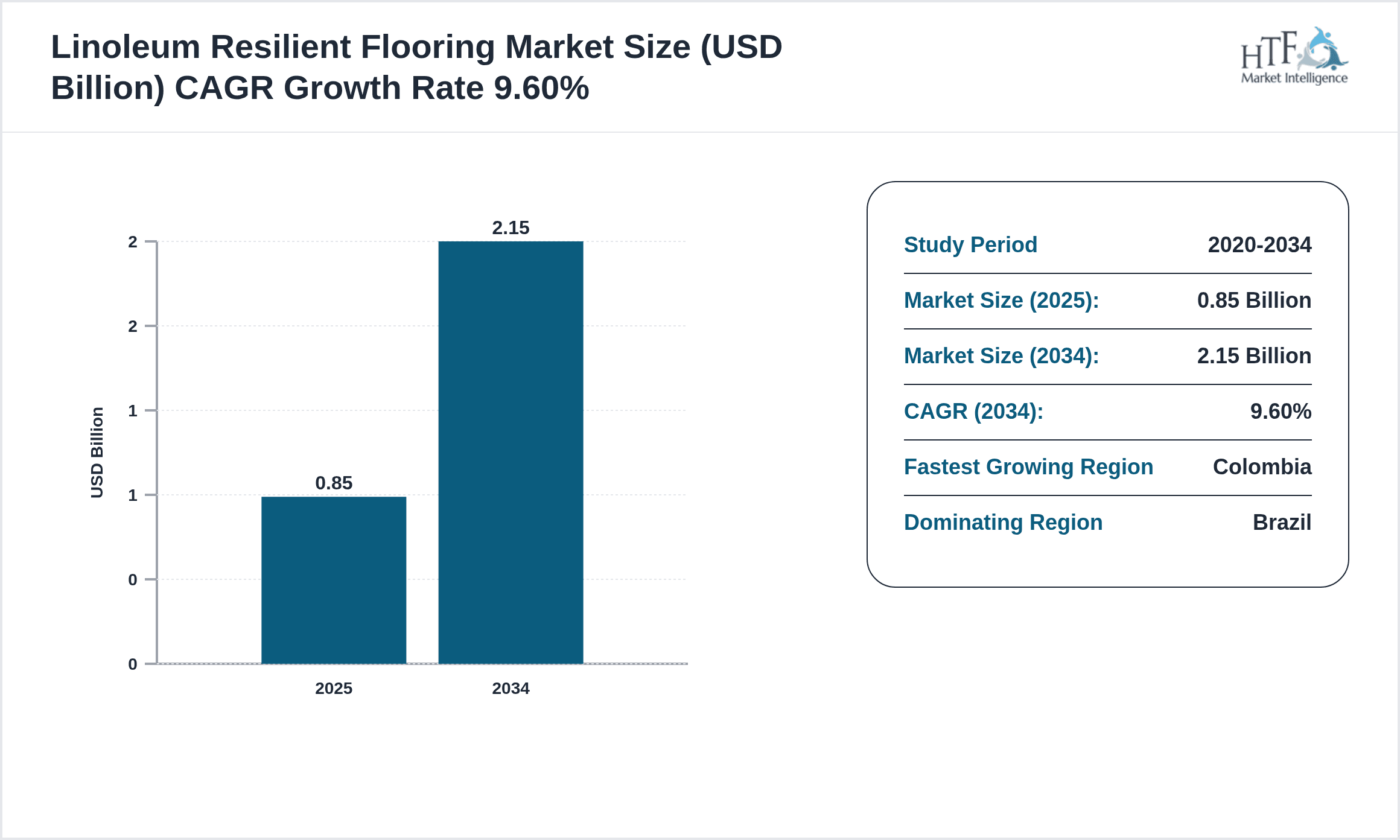
- •Key market highlights include a base market size of USD 0.85 Billion in 2024, projected to reach USD 2.15 Billion by 2034, with a CAGR of 9.6%. Brazil dominates with a 40% market share, while Colombia exhibits the highest growth rate of 12.4%. Sheet linoleum leads by product type, with click linoleum being the fastest-growing segment. Commercial and residential applications drive demand, supported by innovations in installation and acoustic properties.
- •This market holds strategic importance for manufacturers, distributors, and end-users seeking sustainable flooring solutions that align with South America’s growing infrastructure development and environmental standards. Investments in product innovation, supply chain optimization, and regional expansion offer significant growth avenues, enhancing the market’s value proposition across multiple verticals.
Competitive Landscape
The South America Linoleum Resilient Flooring market is characterized by intense competition among regional players and international manufacturers striving to strengthen their market positions through innovation and strategic partnerships. Companies focus on product differentiation by enhancing eco-friendly attributes, ease of installation, and acoustic performance. Competitive strategies include expanding distribution networks, investing in R&D for sustainable raw materials, and tailoring solutions to meet local regulatory standards. Market rivalry is amplified by the presence of well-established global firms leveraging economies of scale and emerging local companies capitalizing on niche segments. Pricing strategies and customer service quality also play critical roles in maintaining competitive advantages. The competitive environment is further influenced by collaborations with construction firms and architects to promote linoleum as a preferred resilient flooring option. Going forward, innovation in bio-based linoleum and digital printing technologies will likely shape competitive dynamics, fostering greater market penetration and customer loyalty.
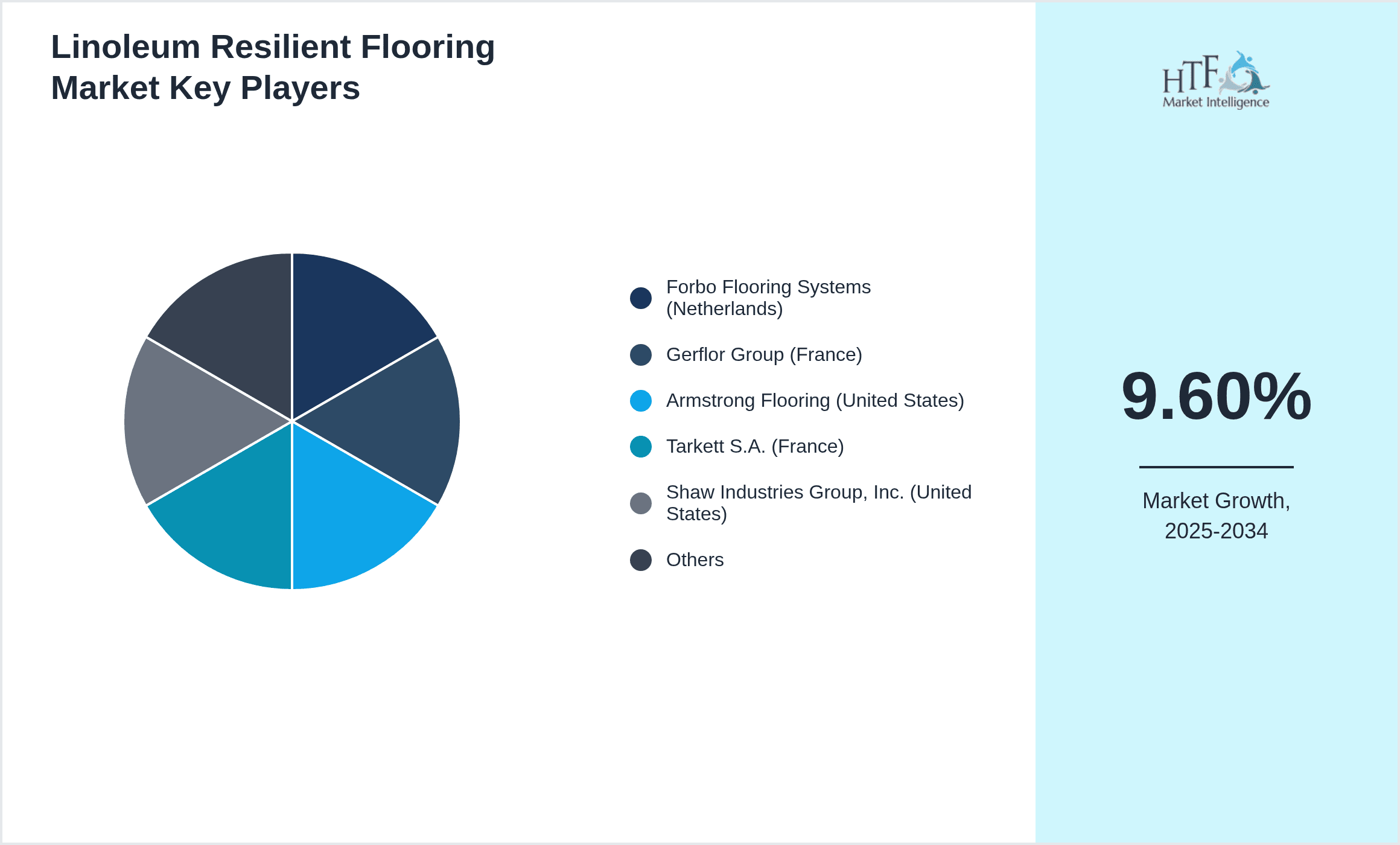
Leading Companies in South America Linoleum Resilient Flooring Market
- •Forbo Flooring Systems (Netherlands)
- •Gerflor Group (France)
- •Armstrong Flooring (United States)
- •Tarkett S.A. (France)
- •Shaw Industries Group, Inc. (United States)
- •Marmoleum (Netherlands)
- •Altro Limited (United Kingdom)
- •DLW Flooring GmbH (Germany)
- •LG Hausys Ltd. (South Korea)
- •Beaulieu International Group (Belgium)
- •Nora Systems GmbH (Germany)
- •Konrad Hornschuch AG (Germany)
- •Mondo S.p.A. (Italy)
- •Polyflor Ltd. (United Kingdom)
- •Jiangsu Guotai International Group Guomao Co., Ltd. (China)
- •Amtico International (United Kingdom)
- •Sphera Solutions (United States)
- •Beaulieu Fibres International (Belgium)
- •Eco Flooring Solutions (Brazil)
- •Floors Brasil (Brazil)
Market Breakdown
- •By Type
- ◦Sheet Linoleum
- ◦Tile Linoleum
- ◦Modular Linoleum
- ◦Click Linoleum
- ◦Acoustic Linoleum
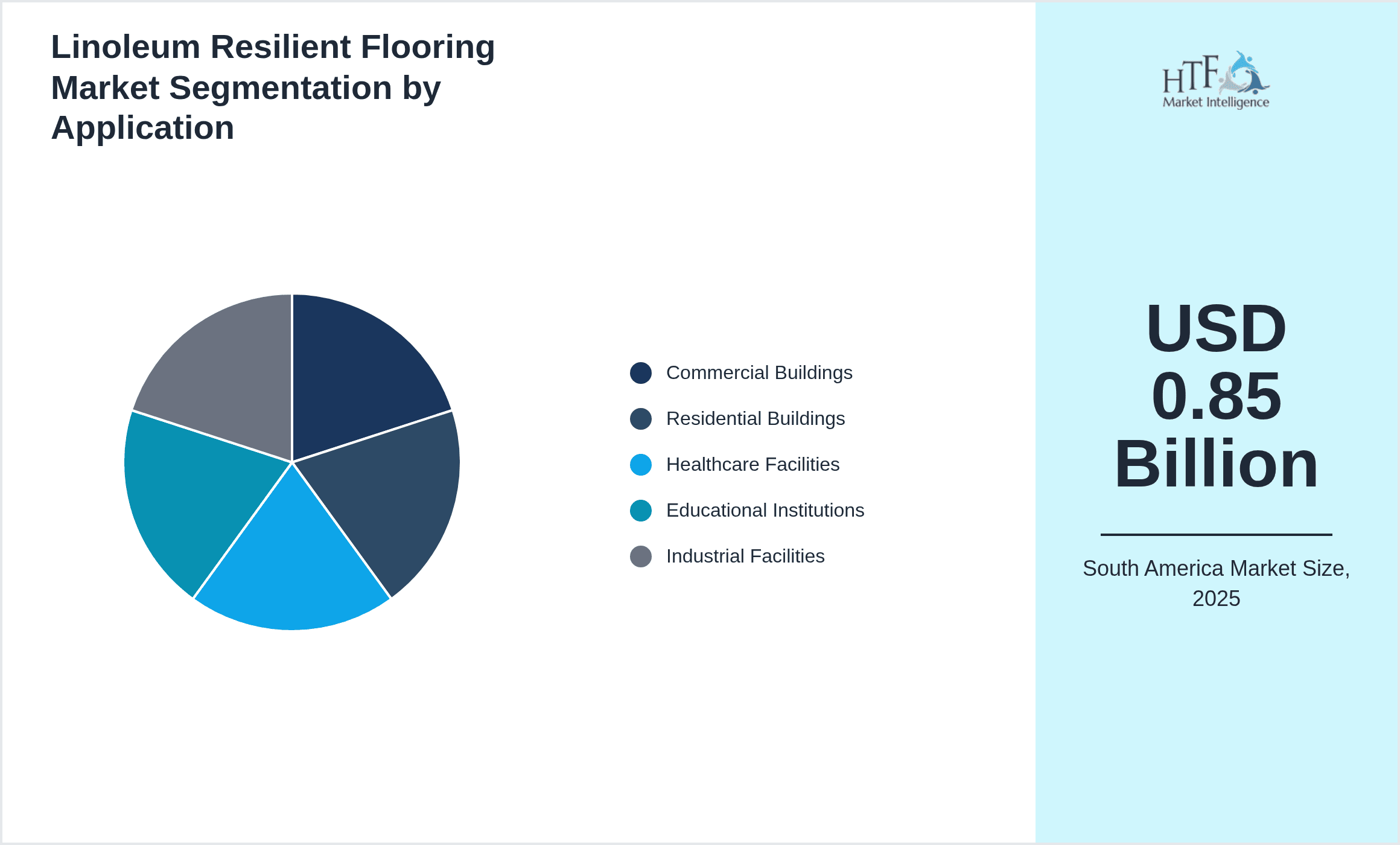
- •By Application
- ◦Commercial Buildings
- ◦Residential Buildings
- ◦Healthcare Facilities
- ◦Educational Institutions
- ◦Industrial Facilities
- •By End User
- ◦New Construction
- ◦Renovation Projects
- ◦Retail Spaces
- ◦Hospitality Sector
- •By Distribution Channel
- ◦Direct Sales
- ◦Distributors
- ◦Online Retail
- ◦Specialty Flooring Retailers
Growth Drivers
Rising urbanization and infrastructure development across South America, particularly in Brazil and Argentina, are fueling demand for resilient and sustainable flooring solutions that combine durability with eco-friendliness. Linoleum flooring’s biodegradable nature and low VOC emissions align with increasing environmental awareness and green building certifications, driving adoption in commercial and residential developments. Additionally, government initiatives supporting sustainable construction practices incentivize builders and architects to specify linoleum resilient flooring. Growth is further supported by expanding retail and hospitality sectors requiring versatile flooring that withstands high foot traffic while maintaining aesthetic appeal. Technological advancements in linoleum manufacturing, including enhanced wear resistance and acoustic properties, also contribute to market expansion by addressing diverse end-user demands. The ongoing replacement and renovation cycle in aging urban infrastructure presents continuous opportunities for linoleum resilient flooring manufacturers to capture market share.

Market Trends
The South America linoleum resilient flooring market is witnessing a trend toward eco-conscious product development, with manufacturers integrating natural raw materials and sustainable production methods to reduce environmental impact. Innovations such as click-installation systems and acoustic linoleum cater to ease of installation and enhanced user comfort, broadening application scope. There is a growing preference for linoleum flooring in healthcare and educational institutions due to its antimicrobial and hygienic properties. Digital printing technologies enable customizable designs, allowing greater aesthetic flexibility that appeals to architects and interior designers. Additionally, partnerships between linoleum producers and green building councils promote certification-driven adoption. The rise of e-commerce platforms is facilitating wider product accessibility, especially in remote South American markets, altering traditional distribution patterns.
Market Restraints
Despite its advantages, the linoleum resilient flooring market faces challenges from the higher initial installation costs compared to alternative resilient flooring materials like vinyl or laminate. Limited awareness among end-users about the long-term benefits and sustainability of linoleum hinders widespread adoption in some South American countries. The availability of cheaper imported flooring products with aggressive pricing strategies creates competitive pressure on local manufacturers. Additionally, supply chain disruptions and fluctuations in raw material costs, particularly natural oils and resins used in linoleum production, impact pricing stability. Variability in regional building codes and standards across South America complicate market entry and product certification processes, delaying project implementations and affecting overall market growth.
Market Opportunities
Expanding construction activities in emerging South American economies such as Colombia and Peru present significant growth opportunities for linoleum resilient flooring manufacturers to penetrate untapped markets. The rising trend of sustainable architecture and green building certifications is driving demand for environmentally friendly flooring solutions, encouraging product innovation and premium offerings. Investments in digital printing and modular linoleum systems allow for customized, easy-to-install products catering to varied consumer tastes and reducing installation time. Strategic collaborations with construction companies and architects to promote linoleum’s benefits can increase market acceptance. Furthermore, growth in the healthcare and educational sectors, which prioritize hygienic and durable flooring, opens niche market segments. Expanding online distribution channels also enable manufacturers to reach broader customer bases beyond traditional retail networks.
Market Challenges
The South America linoleum resilient flooring market confronts challenges including inconsistent raw material supply chains due to geopolitical and environmental factors, leading to production delays and cost fluctuations. Competition from synthetic resilient flooring alternatives offering lower upfront costs limits linoleum’s market penetration, especially in price-sensitive segments. Regulatory complexities and varying standards across South American countries create barriers for product approval and market entry. Limited technical expertise and installation skills in remote regions hinder adoption of advanced linoleum products such as click linoleum. Additionally, economic volatility and inflationary pressures affect construction budgets, slowing new projects and renovations that drive flooring demand. Companies must also address consumer misconceptions about linoleum durability and maintenance requirements to expand usage.
Regulatory Overview
Recent regulatory developments in South America emphasize sustainability and indoor air quality standards that directly impact the linoleum resilient flooring market. Brazil’s updated environmental regulations require construction materials to meet stringent VOC emission limits, favoring natural linoleum products over synthetic alternatives. Argentina and Chile have introduced green building certification frameworks encouraging use of eco-friendly flooring. Additionally, health and safety standards for flooring in healthcare and educational facilities have been tightened, mandating antimicrobial and hygienic material properties. Compliance with these regulations necessitates manufacturers to invest in certified raw materials and production processes, fostering innovation but also increasing compliance costs. The regulatory landscape supports market growth by promoting environmentally responsible building practices while challenging manufacturers to maintain product quality and certification across diverse jurisdictions.
Industry Insights
The South America linoleum resilient flooring market has seen significant technological and strategic advancements recently. In March 2023, Forbo Flooring Systems launched a new range of bio-based linoleum products in Brazil, featuring enhanced durability and customizable designs tailored for commercial and healthcare applications, strengthening its regional footprint. This launch marked a shift toward sustainable product innovation aligned with growing environmental regulations and consumer preferences. Additionally, in November 2022, Gerflor Group expanded its distribution network across Colombia and Peru, enabling faster product delivery and improved customer service. This expansion supports growing construction activities in these countries and enhances Gerflor’s competitive position by catering to local market demands more effectively. These developments signal increasing investment in product innovation and regional presence by key players, underpinning robust market growth in South America.
Mergers & Acquisitions
- •In July 2023, Tarkett S.A. completed the acquisition of a regional linoleum flooring manufacturer based in Brazil, aiming to consolidate its presence in the South American market. This strategic move enables Tarkett to leverage local manufacturing capabilities, reduce supply chain costs, and expand its product portfolio with regionally tailored offerings. The acquisition enhances Tarkett’s ability to meet increasing demand for sustainable flooring solutions in commercial and residential sectors within South America, while fostering innovation through combined R&D efforts. It also strengthens distribution channels and customer relationships, positioning Tarkett as a market leader amid intensifying competition.
- •In January 2024, Forbo Flooring Systems entered a joint venture with a Colombian flooring distributor to boost market penetration in Colombia and neighboring countries. This partnership facilitates localized product customization, quicker distribution, and enhanced after-sales service. The joint venture focuses on developing eco-friendly linoleum flooring variants designed for healthcare and educational facilities, areas with rising demand. By combining Forbo’s technological expertise with the distributor’s regional market knowledge, the collaboration aims to accelerate growth and reinforce brand presence across South America’s growing resilient flooring market.
Recent Industry News
- •15th March 2024, Eco Flooring Solutions (Brazil) launched an innovative acoustic linoleum product designed to reduce noise pollution in multi-residential complexes and commercial offices. The product uses recycled natural materials and features a click installation system for rapid deployment. This launch addresses urban demand for sustainable, noise-reducing flooring options and strengthens the company’s position in eco-conscious construction projects. Source: Eco Flooring Solutions Press Release
- •22nd September 2023, Gerflor Group announced the expansion of its manufacturing facility in Argentina, increasing production capacity by 30% to meet rising South American market demand. The upgrade incorporates advanced eco-friendly technologies to reduce carbon footprint and improve product quality. This strategic investment supports Gerflor’s growth plans in commercial and residential flooring segments across Latin America. Source: Gerflor Official Website
- •10th July 2022, Forbo Flooring Systems introduced a digitally printed linoleum flooring collection in Chile, enabling architects and designers to customize patterns and colors without compromising sustainability. The eco-friendly collection targets premium commercial spaces and educational institutions, enhancing aesthetic flexibility while maintaining environmental standards. This innovation represents a fusion of technology and sustainability tailored for South American markets. Source: Forbo Flooring Systems News
- •5th November 2021, Floors Brasil (Brazil) partnered with major construction firms to supply linoleum flooring for a large-scale government healthcare infrastructure project. The collaboration highlights growing recognition of linoleum’s hygienic properties and durability in critical public sector applications, driving demand and market visibility. Source: Floors Brasil Corporate Announcement
Market Statistics
- •CAGR by 2034: 9.6%
- •Market Size by 2034: USD 2.15 Billion
- •Market Size in 2025: USD 0.93 Billion
- •Dominating Type: Sheet Linoleum; Next-Following Type: Click Linoleum
- •Dominating Application: Commercial Buildings; Next-Following Application: Residential Buildings
- •Dominating Region: Brazil; Second-Leading Region: Argentina
- •Region with Highest Growth Rate: Colombia
- •Dominating Country: Brazil
Market Share Table
- •Market Share (%) of Dominating vs Followed Type: Sheet Linoleum 55%, Click Linoleum 20%
- •Market Share (%) of Dominating vs Followed Application: Commercial Buildings 45%, Residential Buildings 30%
- •Growth Rate (%) of Dominating vs Followed Type: Sheet Linoleum 8.5%, Click Linoleum 14.1%
- •Growth Rate (%) of Dominating vs Followed Application: Commercial Buildings 9.2%, Residential Buildings 11.3%
Top 5 Global Players
- •Forbo Flooring Systems (Netherlands)
- •Gerflor Group (France)
- •Tarkett S.A. (France)
- •Armstrong Flooring (United States)
- •Shaw Industries Group, Inc. (United States)
Regional Outlook
The Brazil currently holds a significant share of the market, primarily due to several key factors: increasing consumption rates, a burgeoning population, and robust economic momentum. These elements collectively drive demand, positioning this region as a leader in the market. On the other hand, Colombia is rapidly emerging as the fastest-growing area within the industry. This remarkable growth can be attributed to swift infrastructure development, the expansion of various industrial sectors, and a marked increase in consumer demand. These dynamics make this region a crucial player in shaping future market growth.
In our report, we cover a comprehensive analysis of the following regions and countries:
- Brazil
- Argentina
- Chile
- Peru
- Colombia
- Rest of South America
| Feature | Details |
|---|---|
| Base Year Market Size | USD 0.85 Billion |
| Forecast Year Market Size | USD 2.15 Billion |
| CAGR | 9.6% |
| Forecast Period | 2026 to 2033 |
| YoY Growth | 9.2% |
| Regions Covered | Brazil, Argentina, Chile, Peru, Colombia, Rest of South America |
| Key Companies | Forbo Flooring Systems (Netherlands), Gerflor Group (France), Armstrong Flooring (United States), Tarkett S.A. (France), Shaw Industries Group, Inc. (United States), Marmoleum (Netherlands), Altro Limited (United Kingdom), DLW Flooring GmbH (Germany), LG Hausys Ltd. (South Korea), Beaulieu International Group (Belgium), Nora Systems GmbH (Germany), Konrad Hornschuch AG (Germany), Mondo S.p.A. (Italy), Polyflor Ltd. (United Kingdom), Jiangsu Guotai International Group Guomao Co., Ltd. (China), Amtico International (United Kingdom), Sphera Solutions (United States), Beaulieu Fibres International (Belgium), Eco Flooring Solutions (Brazil), Floors Brasil (Brazil) |
South America Linoleum Resilient Flooring Market Size, Growth & Revenue 2024-2034 - Table of Contents
Frequently Asked Questions (FAQ):
The Compact Track Loaders market is expected to see value worth 5.3 Billion in 2025.
North America currently leads the market with approximately 45% market share, followed by Europe at 28% and Asia-Pacific at 22%. The remaining regions account for 5% of the global market.
Key growth drivers include increasing construction activities, rising demand for versatile equipment in agriculture, technological advancements in track loader design, and growing preference for compact equipment in urban construction projects.