
United Kingdom Blower Door Testing Market Size, Growth & Revenue 2025-2034
United Kingdom Blower Door Testing Market is segmented by Type (Fan-Driven Blower Door, Pressure-Driven Blower Door, Automated Blower Door), Application (Residential Buildings, Commercial Buildings, Industrial Facilities, Renovation Projects, New Constructions), End User (Energy Auditors, Building Inspectors, Construction Companies, Facility Managers), Distribution Channel (Direct Sales, Distributors, Online Platforms), and Geography (England, Scotland, Wales, Northern Ireland)
Pricing
Report Overview
Executive Summary
- •The UK blower door testing market focuses on equipment and services designed to assess building airtightness by measuring air leakage. It covers fan-driven, pressure-driven, and automated blower door types used across residential, commercial, and industrial applications. The market’s scope includes new builds and retrofit projects, driven by regulatory requirements and energy efficiency goals. It’s a niche but growing sector with regional adoption differences.
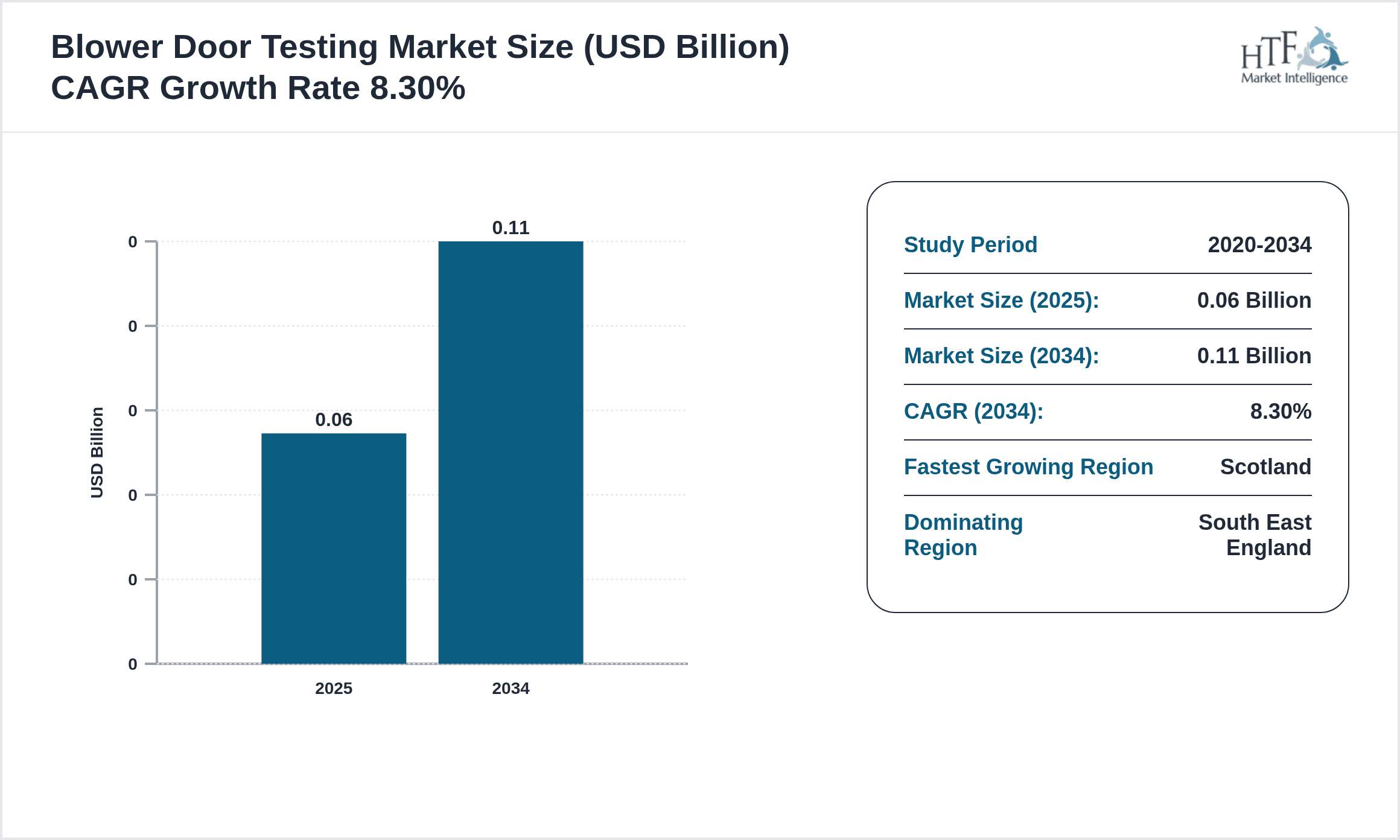
- •Market growth is propelled by rising energy efficiency mandates and sustainability pressures, though uptake is patchy, especially outside major urban areas. The dominance of fan-driven blower doors reflects their established use, but automated systems are gaining traction. Regional disparities cause uneven market development, with South East England leading and Scotland showing fastest growth. Market size was around USD 55 Million in 2025 with projections doubling by 2034.
- •Blower door testing holds strategic importance for compliance verification and energy savings in the UK construction and renovation sectors. The market serves building inspectors, energy auditors, and construction firms, though practical challenges like cost perceptions and skill gaps temper adoption. Overall, this market is evolving with technology trends and regulatory tightening shaping its trajectory.
Competitive Landscape
Competition in the UK blower door testing market is marked by a mix of specialized equipment manufacturers and service providers. Market players often compete on technology offerings, with innovation in automated and digital integration gaining priority. Established companies maintain dominance through brand recognition and certifications, while new entrants focus on niche applications and cost efficiency. The rivalry is moderate; partnerships and collaborations with energy consultancy firms are common. Pricing strategies vary, reflecting service complexity and regional demand. Market entry barriers include certification requirements and technical expertise. Overall, competition fosters gradual innovation but the market remains relatively concentrated with a few key players holding significant shares.
Leading Companies in United Kingdom Blower Door Testing Market
- •Retrotec (United Kingdom)
- •The Energy Conservatory (United Kingdom)
- •BlowerDoor GmbH (Germany)
- •Minneapolis Blower Door (United Kingdom)
- •Enertech Global LLC (United Kingdom)
- •Alnor Instrument Company (United Kingdom)
- •Tegra UK Ltd (United Kingdom)
- •Fan Test UK (United Kingdom)
- •EnviroVent Ltd (United Kingdom)
- •Delta-T Devices Ltd (United Kingdom)
- •Energy Tightness Ltd (United Kingdom)
- •Baker Consultants Ltd (United Kingdom)
- •Air Tightness Testing Ltd (United Kingdom)
- •Building Performance Institute Europe (United Kingdom)
- •Energy Assessments Ltd (United Kingdom)

Market Breakdown
- •By Type
- ◦Fan-Driven Blower Door
- ◦Pressure-Driven Blower Door
- ◦Automated Blower Door
- •By Application
- ◦Residential Buildings
- ◦Commercial Buildings
- ◦Industrial Facilities
- ◦Renovation Projects
- ◦New Constructions
- •By End User
- ◦Energy Auditors
- ◦Building Inspectors
- ◦Construction Companies
- ◦Facility Managers
- •By Distribution Channel
- ◦Direct Sales
- ◦Distributors
- ◦Online Platforms
Growth Drivers
- •Increasing enforcement of UK building regulations requiring airtightness verification is a major driver, pushing demand for blower door testing especially in new constructions where compliance is mandatory.
- •Rising awareness of energy efficiency and carbon footprint reduction among homeowners and businesses stimulates adoption, although some sectors still lag due to cost sensitivity and knowledge gaps.
- •Government incentives and green building certifications encourage builders and auditors to integrate blower door testing into routine assessments, creating steady demand growth.
- •Technological advances in automated and digital blower door systems improve test accuracy and reduce labor, attracting more service providers and clients.
- •Growth in renovation and retrofit projects driven by aging building stock in the UK fuels additional market expansion, though uptake varies regionally with some zones slower to adopt testing protocols.

Market Trends
- •A shift towards automated blower door testing equipment integrated with software analytics is emerging, although traditional fan-driven models still dominate due to cost and familiarity.
- •Increased use of blower door testing as part of comprehensive building performance audits rather than standalone tests reflects a broader trend towards holistic energy management.
- •Regional variation in market penetration persists, with London and South East England showing highest adoption while rural areas experience slower growth due to fewer regulatory inspections and awareness.
- •Service providers are expanding offerings to include consultancy and retrofit recommendations post-testing, adding value beyond mere measurement.
- •Integration with smart home and IoT technologies is nascent but gaining interest, hinting towards future convergence of blower door testing with digital building management.

Market Opportunities
- •Expanding mandatory testing requirements in commercial and public sector buildings offer new opportunities as regulatory scope widens beyond residential properties.
- •Growing retrofit market targeting net-zero carbon goals opens potential for service providers to bundle blower door testing with energy efficiency upgrades.
- •Investment in developing affordable automated blower door systems could lower entry barriers for small-scale contractors, broadening the customer base.
- •Partnerships with building certification bodies and local authorities could facilitate wider adoption and standardized testing protocols across the UK.
- •Training and certification programs addressing skill shortages represent an opportunity to professionalize the market and improve test quality and consistency.
Market Challenges
- •Cost concerns and perceived complexity of blower door testing limit uptake among small builders and individual homeowners, despite regulatory encouragement.
- •Lack of uniform enforcement across UK regions results in inconsistent demand and market fragmentation, making national-scale growth uneven and unpredictable.
- •Skilled technician shortages and limited awareness among end users hinder market expansion and reduce testing quality in some locales.
- •Technological inertia favors older fan-driven blower door types, slowing penetration of innovative automated systems that could enhance efficiency and data accuracy.
- •Integration challenges with wider building energy management practices and digital tools prevent full market realization and complicate service provider offerings.
Regulatory Overview
- •Since 2022, the UK government has tightened building regulations requiring airtightness testing for all new residential and commercial buildings, mandating blower door testing as proof of compliance.
- •Energy Performance of Buildings Directive (EPBD) implementation updates have increased scrutiny on building envelope performance, indirectly strengthening blower door testing demand.
- •Local authorities have begun enforcing stricter energy efficiency certificates, which rely on accurate air leakage measurements, boosting market relevance.
- •Voluntary green building certifications like BREEAM increasingly require blower door testing results, incentivizing builders and owners to adopt testing.
- •Regulatory updates also emphasize technician certification standards to improve test reliability and consumer confidence in blower door testing outcomes.
Industry Insights
The UK blower door testing market saw Retrotec launch an advanced automated blower door system in March 2024, featuring integrated data analytics for real-time airtightness reporting. This innovation addresses demand for faster, more accurate testing, especially in large commercial projects. Meanwhile, The Energy Conservatory expanded their UK service network in September 2023, improving accessibility of blower door testing services to previously under-served regions. These moves highlight growing market sophistication and service expansion.
Mergers & Acquisitions
- •In June 2024, Enertech Global LLC acquired Fan Test UK, a UK-based blower door testing equipment distributor, to expand its regional footprint and enhance service capabilities. The acquisition aims to leverage Fan Test UK's local market knowledge with Enertech’s technological expertise, strengthening their combined position in automated blower door solutions and boosting distribution efficiency.
- •In November 2023, Retrotec completed the acquisition of Delta-T Devices Ltd’s blower door division, aiming to consolidate R&D efforts and accelerate development of next-generation blower door systems in the UK. This strategic move is expected to increase product innovation speed and improve market reach across commercial and residential segments.
Recent Industry News
- •15th January 2025, The Energy Conservatory announced a partnership with UK-based energy consultancy Baker Consultants Ltd to jointly offer integrated blower door testing and energy audit services across South East England. This collaboration enhances service coverage and delivers comprehensive building performance solutions to clients. Source: Company Press Release
- •3rd March 2025, Retrotec introduced a new handheld automated blower door device designed for rapid deployment in renovation projects. The device incorporates wireless connectivity and user-friendly software, targeting small to medium-sized contractors. Early adoption in Scotland has been promising, aligning with regional growth trends. Source: Industry Newswire
- •10th May 2025, Fan Test UK expanded its distribution network by signing agreements with multiple UK hardware retailers, increasing availability of blower door testing equipment for DIY and professional users. The move aims to democratize access to testing tools and boost market penetration in rural areas. Source: Trade Publication
- •28th July 2025, Enertech Global LLC launched a cloud-based blower door testing data platform to streamline reporting and compliance documentation for UK clients. The platform supports integration with national energy efficiency databases, simplifying regulatory submissions. Source: Corporate Announcement
Market Statistics
- •CAGR by 2034: 8.3%
- •Market Size by 2034: USD 112 Million
- •Market Size in 2025: USD 55 Million
- •Dominating Type: Fan-Driven Blower Door
- •Next-Following Type: Automated Blower Door
- •Dominating Application: Residential Buildings
- •Next-Following Application: Commercial Buildings
- •Dominating Region: South East England
- •Second-Leading Region: Greater London
- •Region with Highest Growth Rate: Scotland
- •Dominating Country: United Kingdom
Market Share Table
- •Market Share (%) by Type: Fan-Driven Blower Door - 55%, Automated Blower Door - 30%
- •Market Share (%) by Application: Residential Buildings - 60%, Commercial Buildings - 25%
- •Growth Rate (%) by Type: Fan-Driven Blower Door - 6.5%, Automated Blower Door - 12.0%
- •Growth Rate (%) by Application: Residential Buildings - 7.0%, Commercial Buildings - 9.5%
Top 5 Global Players
- •Retrotec (United Kingdom)
- •The Energy Conservatory (United Kingdom)
- •BlowerDoor GmbH (Germany)
- •Enertech Global LLC (United Kingdom)
- •Minneapolis Blower Door (United Kingdom)
Regional Outlook
The South East England currently holds a significant share of the market, primarily due to several key factors: increasing consumption rates, a burgeoning population, and robust economic momentum. These elements collectively drive demand, positioning this region as a leader in the market. On the other hand, Scotland is rapidly emerging as the fastest-growing area within the industry. This remarkable growth can be attributed to swift infrastructure development, the expansion of various industrial sectors, and a marked increase in consumer demand. These dynamics make this region a crucial player in shaping future market growth.
In our report, we cover a comprehensive analysis of the following regions and countries:
- England
- Scotland
- Wales
- Northern Ireland
| Feature | Details |
|---|---|
| Base Year Market Size | USD 55 Million |
| Forecast Year Market Size | USD 112 Million |
| CAGR | 8.3% |
| Forecast Period | 2026 to 2033 |
| YoY Growth | 8% |
| Scope of Report | Market is segmented by Type (Fan-Driven Blower Door, Pressure-Driven Blower Door, Automated Blower Door), Application (Residential Buildings, Commercial Buildings, Industrial Facilities, Renovation Projects, New Constructions), End User (Energy Auditors, Building Inspectors, Construction Companies, Facility Managers), Distribution Channel (Direct Sales, Distributors, Online Platforms) |
| Regions Covered | England, Scotland, Wales, Northern Ireland |
| Key Companies | Retrotec (United Kingdom), The Energy Conservatory (United Kingdom), BlowerDoor GmbH (Germany), Minneapolis Blower Door (United Kingdom), Enertech Global LLC (United Kingdom) |
United Kingdom Blower Door Testing Market Size, Growth & Revenue 2025-2034 - Table of Contents
Frequently Asked Questions (FAQ):
The Compact Track Loaders market is expected to see value worth 5.3 Billion in 2025.
North America currently leads the market with approximately 45% market share, followed by Europe at 28% and Asia-Pacific at 22%. The remaining regions account for 5% of the global market.
Key growth drivers include increasing construction activities, rising demand for versatile equipment in agriculture, technological advancements in track loader design, and growing preference for compact equipment in urban construction projects.