
Asia-Pacific Vehicle Radiation Portal Monitoring System Market Size, Growth & Revenue 2025-2034
Asia-Pacific Vehicle Radiation Portal Monitoring System Market is segmented by Type (Fixed Portal Monitors, Mobile Radiation Monitors, Handheld Detectors, Vehicle-Mounted Systems, Integrated Systems), Application (Border Security, Customs Inspection, Port Monitoring, Nuclear Facility Surveillance, Critical Infrastructure Protection), Deployment Model (Permanent Installations, Temporary Deployments, Mobile Units), Technology (Gamma Radiation Detection, Neutron Detection, Mixed Radiation Detection), and Geography (Japan, China, Southeast Asia, India, Australia, South Korea, Others)
Pricing
Report Overview
Executive Summary
- •The Asia-Pacific Vehicle Radiation Portal Monitoring System market involves deployment of radiation detection technologies across transportation checkpoints to monitor and prevent unauthorized radioactive material movement. It includes fixed portal monitors, mobile detectors, and integrated systems used in border security, customs inspection, port monitoring, nuclear facility surveillance, and critical infrastructure protection. This market is critical for regional safety and compliance with international nuclear security standards.
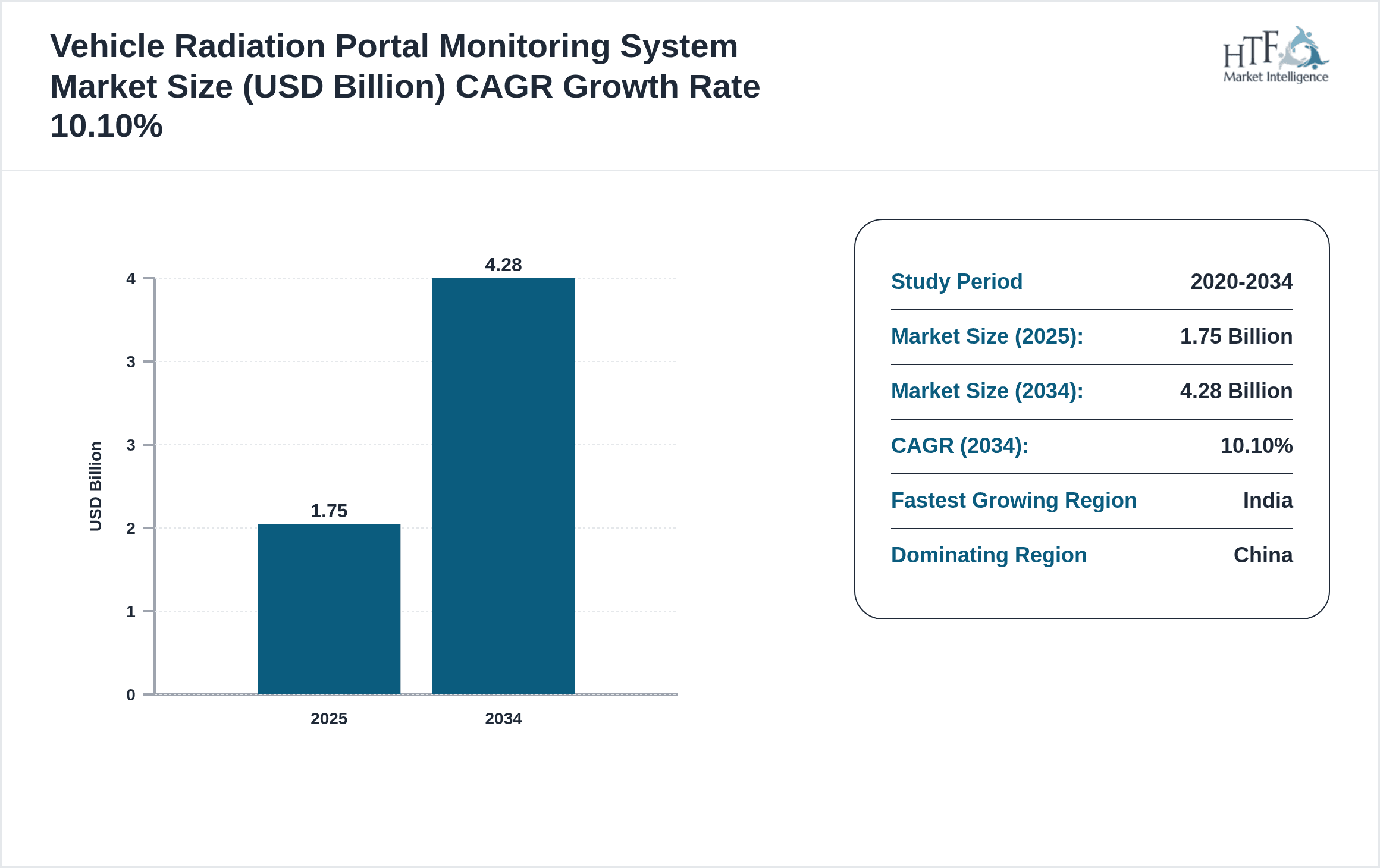
- •Key market highlights reveal a base market size of USD 1.75 Billion in 2025, projected to reach USD 4.28 Billion by 2034, reflecting a CAGR of 10.1%. China dominates the market with 35% share, while India shows the fastest growth with 14.3% CAGR. Fixed portal monitors lead product types in market share, whereas mobile radiation monitors grow at the highest rate.
- •Strategic value lies in enhancing border security and nuclear safety amid rising cross-border threats and regulatory mandates. Investments in advanced radiation detection technologies position stakeholders to mitigate risks associated with illicit radioactive material transportation, supporting national security and global non-proliferation objectives.
Competitive Landscape
Companies operating in the Asia-Pacific Vehicle Radiation Portal Monitoring System market employ multifaceted strategies including robust technological innovation, strategic partnerships, and regional expansions to strengthen market presence. Product innovation focuses on enhancing detection accuracy, reducing false alarms, and developing portable and integrated solutions tailored to diverse deployment environments. Collaborations with government agencies enable compliance with evolving regulatory standards, fostering trust and adoption. Global expansion through acquisitions and joint ventures facilitates access to emerging markets within Asia-Pacific. Emphasis on digital transformation and IoT integration enhances real-time monitoring capabilities, enabling proactive threat detection. Competitive pricing strategies and after-sales services further consolidate market position. Companies also invest in research on advanced sensor technologies and AI-enabled analytics to differentiate offerings and sustain long-term growth in a highly regulated and security-sensitive industry.
Leading Companies in Vehicle Radiation Portal Monitoring System Market
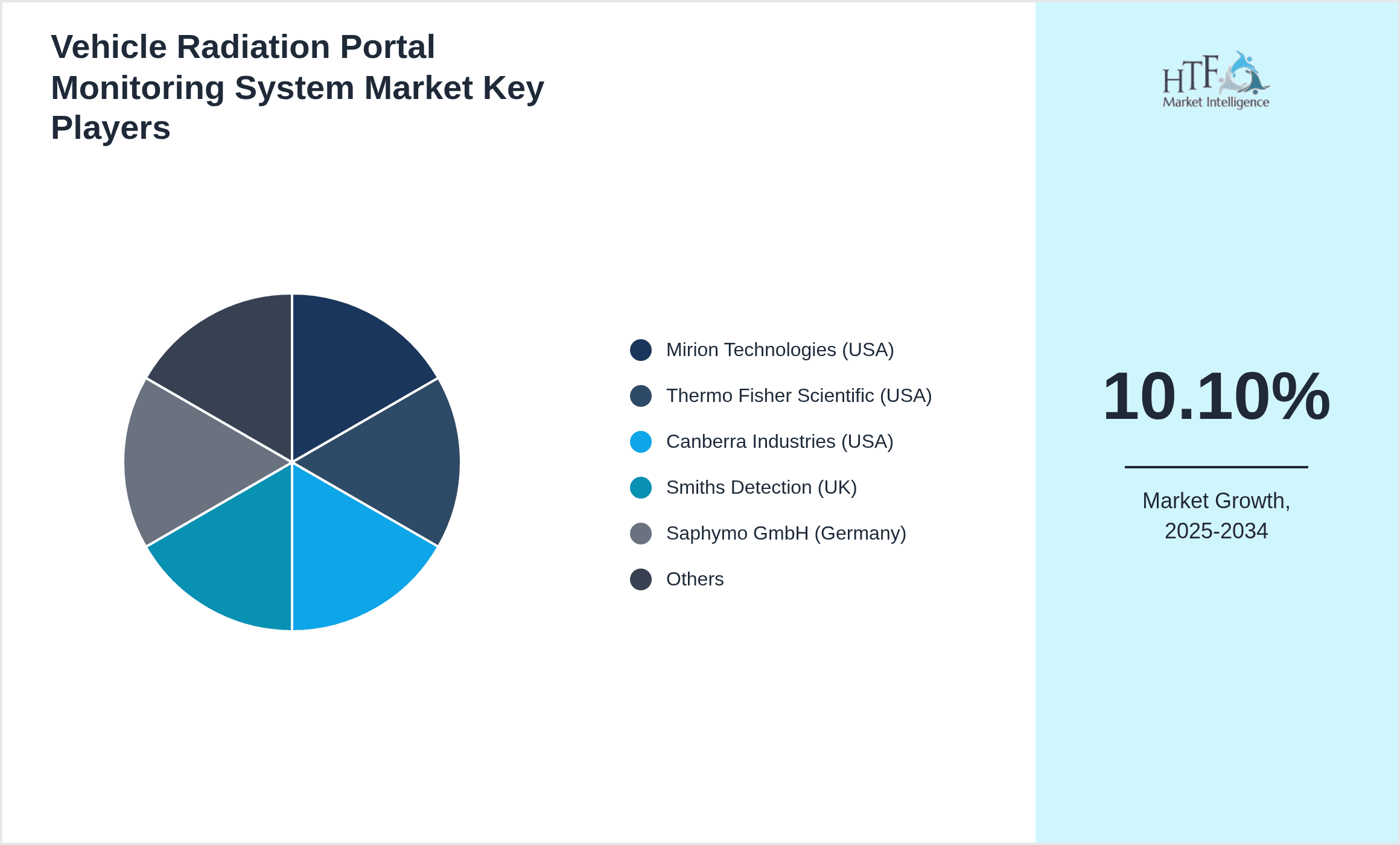
- •Mirion Technologies (USA)
- •Thermo Fisher Scientific (USA)
- •Canberra Industries (USA)
- •Smiths Detection (UK)
- •Saphymo GmbH (Germany)
- •Nuctech Company Limited (China)
- •SAIC (USA)
- •Rapiscan Systems (USA)
- •L3Harris Technologies (USA)
- •Varec, Inc. (USA)
- •Nuctech Group (China)
- •Kromek Group plc (UK)
- •QinetiQ Group plc (UK)
- •Fuzhou Nuctech Co., Ltd. (China)
- •Mirion Technologies Asia (Singapore)
- •Yokogawa Electric Corporation (Japan)
- •NEC Corporation (Japan)
- •Hitachi High-Technologies Corporation (Japan)
- •Korea Atomic Energy Research Institute (South Korea)
- •Thermo Fisher Scientific Asia Pacific (Singapore)
Market Breakdown
- •By Type
- ◦Fixed Portal Monitors
- ◦Mobile Radiation Monitors
- ◦Handheld Detectors
- ◦Vehicle-Mounted Systems
- ◦Integrated Systems
- •By Application
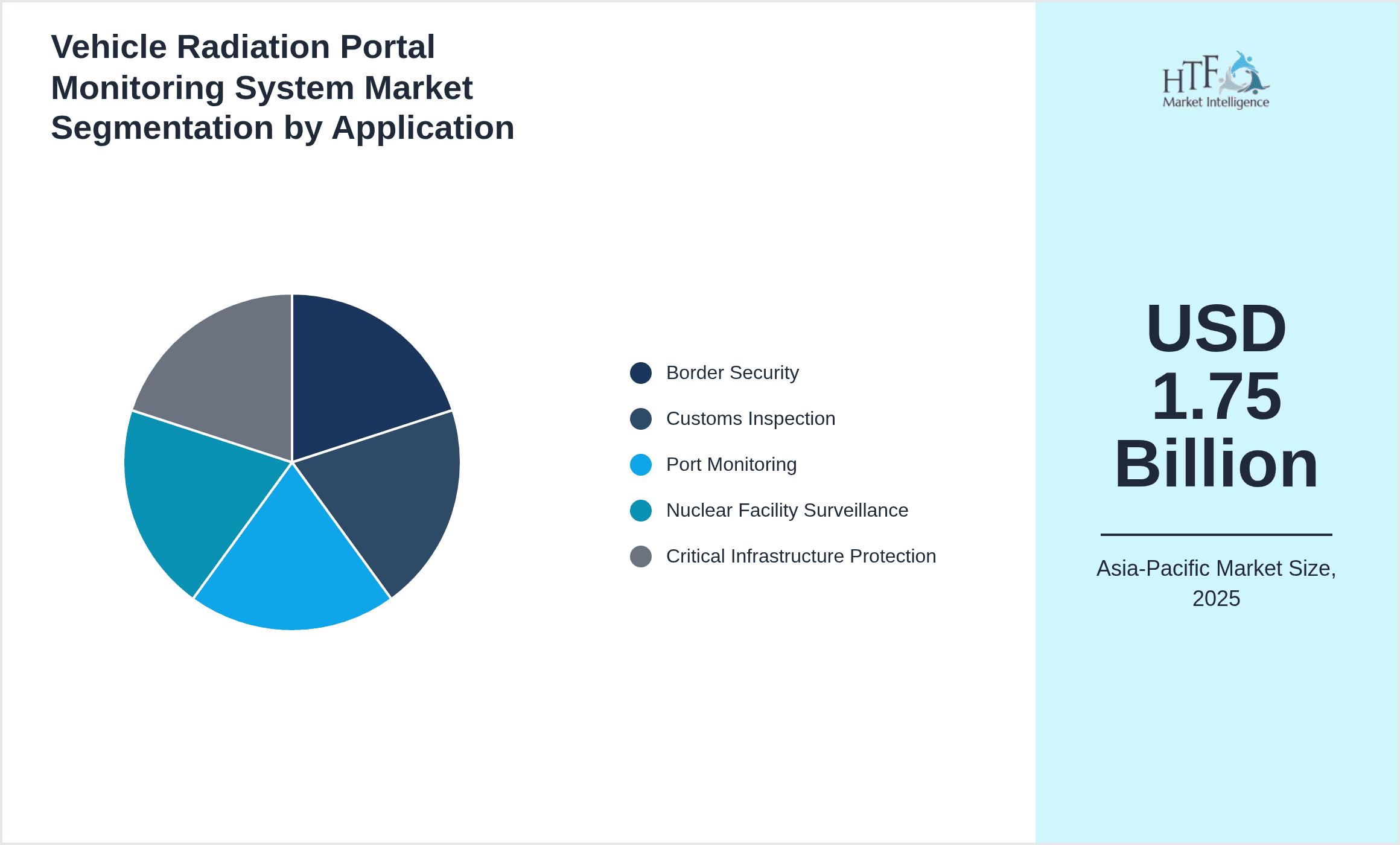
- ◦Border Security
- ◦Customs Inspection
- ◦Port Monitoring
- ◦Nuclear Facility Surveillance
- ◦Critical Infrastructure Protection
- •By Deployment Model
- ◦Permanent Installations
- ◦Temporary Deployments
- ◦Mobile Units
- •By Technology
- ◦Gamma Radiation Detection
- ◦Neutron Detection
- ◦Mixed Radiation Detection
Market Drivers
Heightened geopolitical tensions and increasing cross-border smuggling of radioactive materials significantly elevate demand for vehicle radiation portal monitoring systems across Asia-Pacific. Governments in China, India, and Southeast Asia have intensified border security measures, deploying advanced fixed and mobile radiation detection systems. For example, in 2024, India expanded its radiation portal network at critical border checkpoints, supported by enhanced funding under national security initiatives. Rising nuclear energy projects in the region further necessitate robust surveillance to prevent unauthorized radioactive material movement. Advancements in sensor technology improve detection sensitivity and reduce false alarms, encouraging wider adoption. Regulatory mandates from bodies such as the International Atomic Energy Agency compel countries to strengthen radiation monitoring infrastructure. Additionally, increasing investments in smart border technologies integrating AI and IoT bolster real-time threat detection capabilities. Recent deployments in Australian ports illustrate the integration of vehicle radiation monitoring with broader security frameworks, underscoring the strategic impetus driving market growth across Asia-Pacific.

Market Trend
Emerging trends emphasize integration of AI-powered analytics and IoT connectivity within vehicle radiation portal monitoring systems to enhance detection accuracy and operational efficiency. Asia-Pacific countries are adopting smart radiation monitoring networks enabling centralized control and rapid response to threats. Recent pilot projects in South Korea utilize machine learning algorithms to differentiate between benign and hazardous radioactive sources, reducing false positives. Development of lightweight, portable mobile radiation monitors caters to dynamic security environments, facilitating rapid deployment at temporary checkpoints and mass events. Increasing collaboration between technology providers and government agencies fuels innovation in multi-sensor systems combining gamma and neutron detection. The shift towards cloud-based data management platforms supports seamless data sharing among security stakeholders. Sustainability considerations drive adoption of energy-efficient and low-maintenance systems. Such technological advancements position the Asia-Pacific market to meet evolving security challenges while enabling scalable and cost-effective radiation monitoring infrastructures.
Market Opportunities
Expanding infrastructure development and cross-border trade growth in Asia-Pacific create substantial opportunities for vehicle radiation portal monitoring system deployment. Emerging economies like India, Indonesia, and Vietnam demonstrate increasing investments in border and port security to comply with international nuclear safety standards, opening new markets for advanced radiation detection technologies. Integration of radiation portal systems with existing surveillance and customs management platforms offers potential for seamless operational workflows, appealing to government agencies. Growth in nuclear power plant construction in China and South Korea underscores demand for enhanced facility surveillance solutions. Opportunities arise in developing affordable, scalable mobile and handheld detectors tailored to smaller border posts and remote locations. Public-private partnerships and government funding programs further facilitate market expansion. Innovation in sensor miniaturization and wireless communication supports product differentiation. Strategic collaborations with regional security organizations enable market penetration and accelerated adoption, making the Asia-Pacific region a critical growth frontier for radiation monitoring technologies.
Market Challenges
High initial investment costs and complex integration requirements pose significant challenges for widespread adoption of vehicle radiation portal monitoring systems in Asia-Pacific. Some developing countries struggle with budget constraints limiting procurement and maintenance of advanced detection equipment. Variability in regulatory frameworks across countries increases compliance complexity for multinational operators. Technology interoperability issues between legacy systems and new solutions hinder seamless data exchange and operational efficiency. Skilled workforce shortages impact effective system deployment and management, particularly in remote areas. False alarms caused by naturally occurring radioactive materials generate operational disruptions and erode stakeholder confidence. Recent reports from Southeast Asia highlight delays in radiation portal installations due to logistical and technical challenges. Cybersecurity risks associated with connected monitoring systems necessitate additional safeguards, increasing costs and operational overhead. These factors collectively restrain market growth, requiring focused efforts on cost optimization, standardization, and capacity building to overcome barriers.
Regulatory Framework
Asia-Pacific countries have implemented stringent regulations over the past five years to enhance radiation monitoring and nuclear security. China’s 2021 Radiation Safety Law mandates comprehensive deployment of portal monitors at border and port facilities with strict operational standards. India’s Atomic Energy Regulatory Board updated guidelines in 2022 to include mandatory radiation detection checkpoints for vehicular traffic near nuclear installations. Australia’s Department of Home Affairs introduced advanced compliance requirements in 2023 focusing on integration of radiation portal systems with national security infrastructure. South Korea enforced regulations in 2020 requiring periodic calibration and certification of radiation detection equipment used in public security. These regulations align with International Atomic Energy Agency (IAEA) recommendations, driving standardized practices and promoting adoption of advanced radiation monitoring technologies across Asia-Pacific. Regulatory enforcement ensures heightened public safety, security of nuclear materials, and regional non-proliferation commitments.
Recent Industry Insights
Recent market developments and strategic initiatives are continuously tracked through industry publications, company announcements, and regulatory filings. For the most current information, stakeholders are advised to monitor official corporate communications and recognized market intelligence platforms.
Recent Merger and Acquisition
Recent market developments and strategic initiatives are continuously tracked through industry publications, company announcements, and regulatory filings. For the most current information, stakeholders are advised to monitor official corporate communications and recognized market intelligence platforms.
Regional Outlook
The China currently holds a significant share of the market, primarily due to several key factors: increasing consumption rates, a burgeoning population, and robust economic momentum. These elements collectively drive demand, positioning this region as a leader in the market. On the other hand, India is rapidly emerging as the fastest-growing area within the industry. This remarkable growth can be attributed to swift infrastructure development, the expansion of various industrial sectors, and a marked increase in consumer demand. These dynamics make this region a crucial player in shaping future market growth.
In our report, we cover a comprehensive analysis of the following regions and countries:
- Japan
- China
- Southeast Asia
- India
- Australia
- South Korea
- Others
| Feature | Details |
|---|---|
| Base Year Market Size | USD 1.75 Billion |
| Forecast Year Market Size | USD 4.28 Billion |
| CAGR | 10.1% |
| Forecast Period | 2026 to 2033 |
| YoY Growth | 10.2% |
| Scope of Report | Market is segmented by Type (Fixed Portal Monitors, Mobile Radiation Monitors, Handheld Detectors, Vehicle-Mounted Systems, Integrated Systems), Application (Border Security, Customs Inspection, Port Monitoring, Nuclear Facility Surveillance, Critical Infrastructure Protection), Deployment Model (Permanent Installations, Temporary Deployments, Mobile Units), Technology (Gamma Radiation Detection, Neutron Detection, Mixed Radiation Detection) |
| Regions Covered | Japan, China, Southeast Asia, India, Australia, South Korea, Others |
| Key Companies | Mirion Technologies (USA), Thermo Fisher Scientific (USA), Canberra Industries (USA), Smiths Detection (UK), Saphymo GmbH (Germany), Nuctech Company Limited (China), SAIC (USA), Rapiscan Systems (USA), L3Harris Technologies (USA), Varec, Inc. (USA), Nuctech Group (China), Kromek Group plc (UK), QinetiQ Group plc (UK), Fuzhou Nuctech Co., Ltd. (China), Mirion Technologies Asia (Singapore), Yokogawa Electric Corporation (Japan), NEC Corporation (Japan), Hitachi High-Technologies Corporation (Japan), Korea Atomic Energy Research Institute (South Korea), Thermo Fisher Scientific Asia Pacific (Singapore) |
Asia-Pacific Vehicle Radiation Portal Monitoring System Market Size, Growth & Revenue 2025-2034 - Table of Contents
Frequently Asked Questions (FAQ):
The Compact Track Loaders market is projected to grow at a CAGR of 6.8% from 2025 to 2030, driven by increasing demand in construction and agricultural sectors.
North America currently leads the market with approximately 45% market share, followed by Europe at 28% and Asia-Pacific at 22%. The remaining regions account for 5% of the global market.
Key growth drivers include increasing construction activities, rising demand for versatile equipment in agriculture, technological advancements in track loader design, and growing preference for compact equipment in urban construction projects.