
Africa Desktop Water Purifier Market Size, Growth & Revenue 2024-2034
Africa Desktop Water Purifier Market is segmented by Type (Activated Carbon Filters, Ultraviolet (UV) Purifiers, Reverse Osmosis (RO) Systems, Ceramic Filters, Others (Ion Exchange, Distillation)), Application (Residential, Commercial, Healthcare, Hospitality, Institutional), End User (Households, Offices, Clinics & Hospitals, Hotels & Restaurants, Educational Institutions), Distribution Channel (Direct Sales, Retail Stores, Online Platforms, Distributors & Dealers), and Geography (South Africa, Nigeria, Kenya, Algeria, Zambia, Morocco, Ethiopia, Others)
Pricing
Report Overview
Executive Summary
- •The Africa Desktop Water Purifier market includes compact purification devices that utilize technologies like activated carbon, UV treatment, reverse osmosis, and ceramic filters to deliver safe drinking water across residential, commercial, healthcare, hospitality, and institutional sectors. This market addresses critical water quality issues prevalent in Africa due to contamination and inadequate sanitation infrastructure, supporting public health and sustainable water consumption.
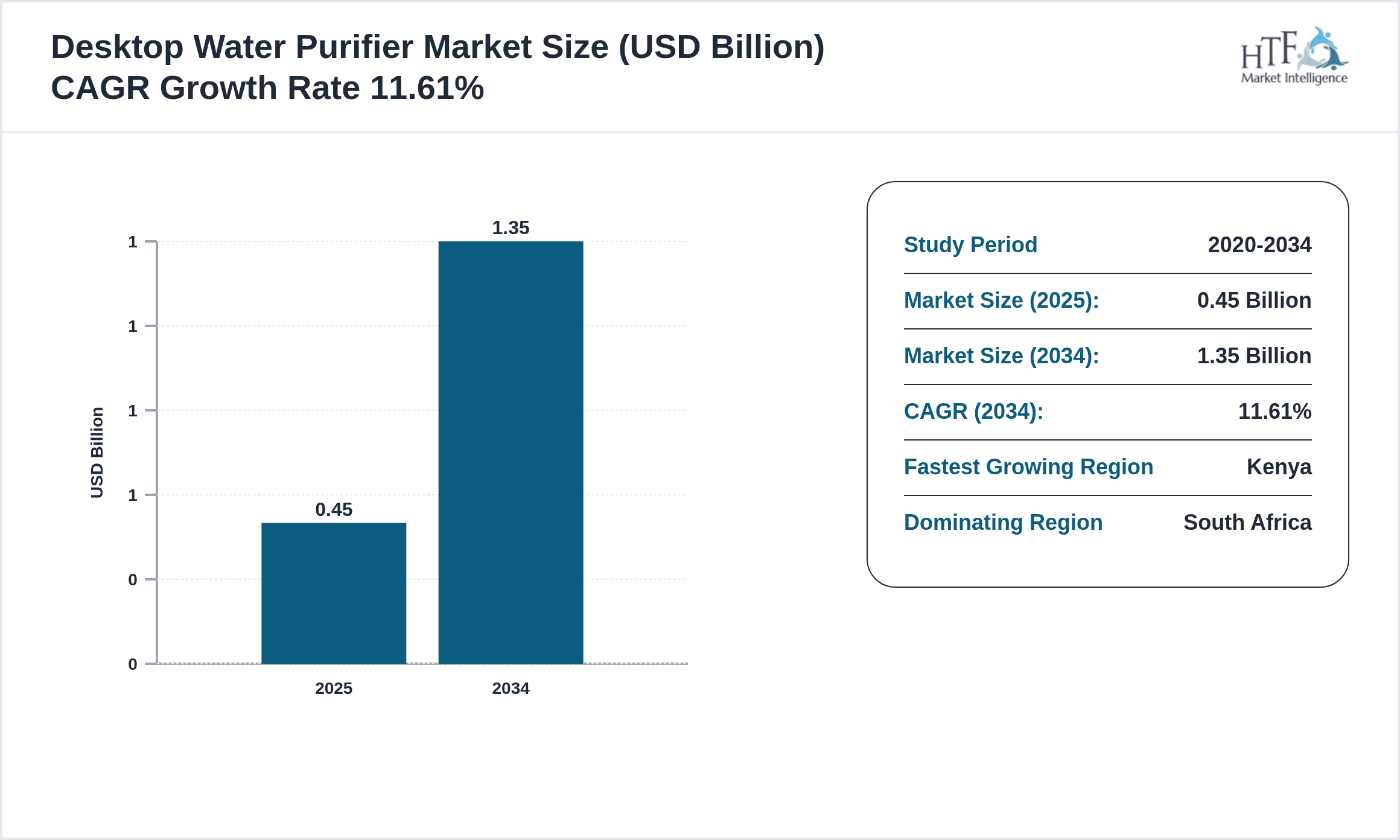
- •Market growth is propelled by rising consumer awareness of waterborne diseases, increasing urban populations, government regulations promoting clean water access, and technological advancements in purification methods. The base market size in 2024 stands at USD 0.45 Billion, forecasted to reach USD 1.35 Billion by 2034, reflecting a robust CAGR of 11.61%.
- •The Africa Desktop Water Purifier market holds strategic importance for stakeholders including manufacturers, distributors, and policymakers by enabling improved water safety, reducing healthcare costs related to waterborne illnesses, and fostering innovation in affordable purification technologies.
Competitive Landscape
Competition in the Africa Desktop Water Purifier market is characterized by a mix of global and regional companies focusing on innovation, affordability, and distribution reach. Established players emphasize product differentiation through advanced purification technologies like reverse osmosis and UV sterilization, while new entrants target underserved segments with cost-effective ceramic and activated carbon solutions. Market rivalry is intensified by the necessity to comply with evolving water quality regulations and the demand for reliable after-sales service. Companies are increasingly investing in strategic partnerships and expanding distribution networks to enhance market penetration across diverse African countries. Innovation approaches focus on sustainability, energy efficiency, and ease of use, driving product upgrades and new launches. The competitive environment encourages continuous enhancement of product portfolios and competitive pricing strategies to capture growing customer bases in urban and rural areas.
Leading Companies in Africa Desktop Water Purifier Market
- •Brita GmbH (Germany)
- •Kent RO Systems Ltd (India)
- •Pureit (Unilever) (United Kingdom)
- •A. O. Smith Corporation (United States)
- •Eureka Forbes Ltd (India)
- •Coway Co., Ltd. (South Korea)
- •LG Electronics Inc. (South Korea)
- •Panasonic Corporation (Japan)
- •Samsung Electronics Co., Ltd. (South Korea)
- •Whirlpool Corporation (United States)
- •Aqua Optima (United Kingdom)
- •Hindustan Unilever Limited (India)
- •Midea Group Co., Ltd. (China)
- •Blue Star Limited (India)
- •PurePro (Taiwan)
- •Aquasana Inc. (United States)
- •Seychelle Water Filters (United States)
- •Pentair plc (United States)
- •3M Company (United States)
- •Hansa Water Purifiers (South Africa)
Market Breakdown
- •By Type
- ◦Activated Carbon Filters
- ◦Ultraviolet (UV) Purifiers
- ◦Reverse Osmosis (RO) Systems
- ◦Ceramic Filters
- ◦Others (Ion Exchange, Distillation)
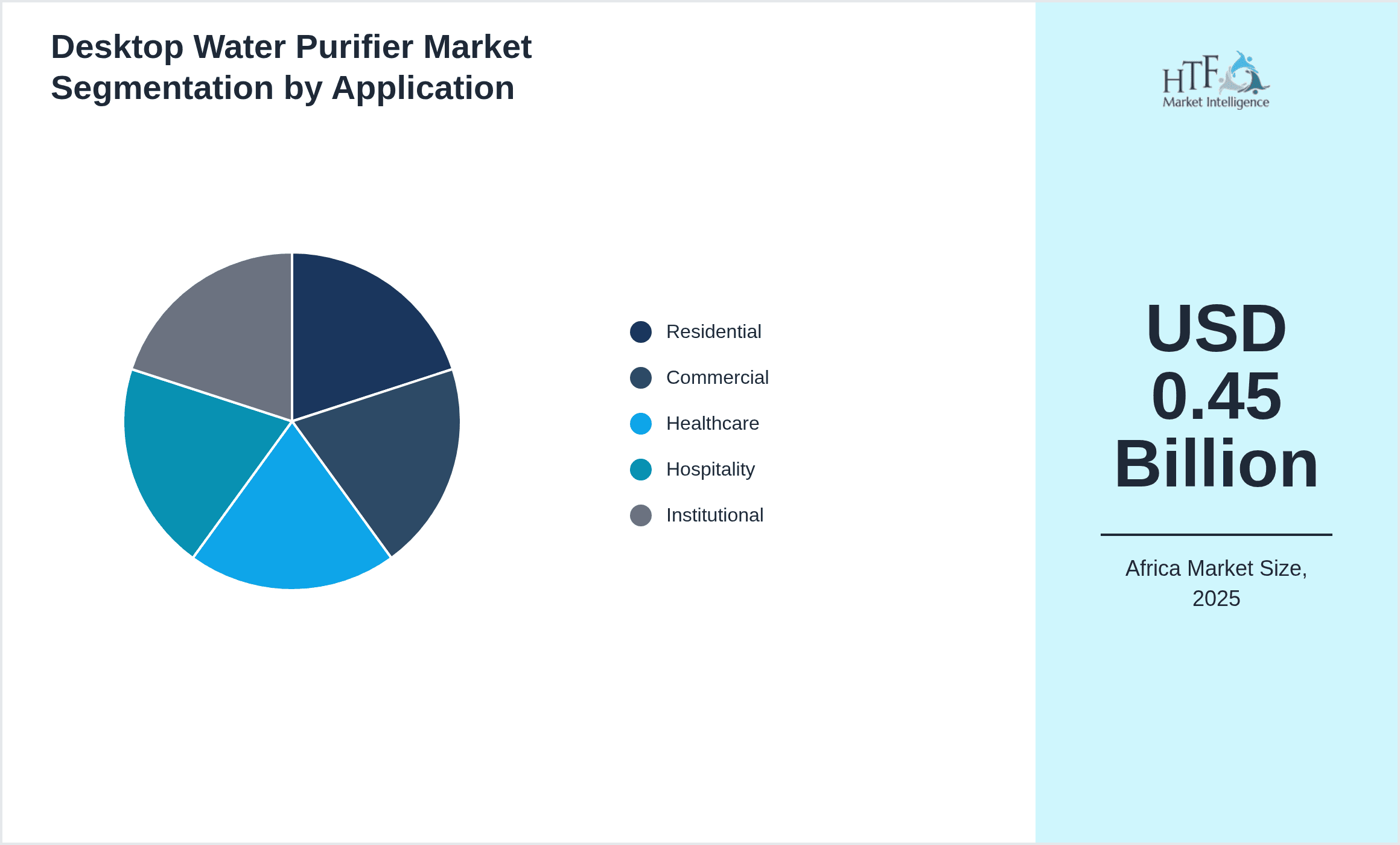
- •By Application
- ◦Residential
- ◦Commercial
- ◦Healthcare
- ◦Hospitality
- ◦Institutional
- •By End User
- ◦Households
- ◦Offices
- ◦Clinics & Hospitals
- ◦Hotels & Restaurants
- ◦Educational Institutions
- •By Distribution Channel
- ◦Direct Sales
- ◦Retail Stores
- ◦Online Platforms
- ◦Distributors & Dealers
Growth Drivers
Rapid urbanization and population growth in Africa have significantly increased demand for clean and safe drinking water, propelling growth in the desktop water purifier market. Rising awareness of waterborne diseases combined with government initiatives aimed at improving water quality infrastructure encourages adoption of advanced purification technologies such as reverse osmosis and UV purification. Increasing disposable incomes and expanding middle-class demographics further drive consumer spending on health-focused home appliances. Additionally, the scarcity of reliable municipal water supply in many regions fosters preference for portable and efficient desktop purifiers. Technological advancements enabling energy-efficient and user-friendly products also contribute to market expansion by addressing consumer convenience and environmental concerns.

Market Trends
The Africa desktop water purifier market is witnessing a growing trend towards integration of smart technologies such as IoT-enabled monitoring systems that allow remote water quality tracking and filter replacement alerts. Manufacturers are increasingly focusing on sustainable product designs utilizing eco-friendly materials and energy-efficient purification processes to meet consumer demand for environmentally responsible solutions. There is also a rising preference for multi-stage purification systems combining activated carbon, UV, and reverse osmosis technologies to ensure comprehensive contaminant removal. Expansion of e-commerce platforms and digital marketing enhances product accessibility in urban and semi-urban areas, facilitating consumer engagement and education. Partnerships between local governments and private players to promote clean water access are also shaping market dynamics.

Restraints
High initial costs associated with advanced desktop water purifiers such as reverse osmosis and UV systems limit affordability for low-income consumers across many African regions. Inadequate after-sales service infrastructure and lack of awareness about product maintenance often result in reduced consumer confidence and hinder market penetration. Variability in water quality across different regions requires customized solutions, increasing product complexity and operational costs. Furthermore, inconsistent power supply in rural and peri-urban areas restricts usage of electrically powered purifiers, limiting market growth in such zones. Regulatory fragmentation and lack of unified water quality standards across African countries create compliance challenges for manufacturers and distributors.
Market Opportunities
There is significant opportunity for growth by targeting underserved rural and semi-urban populations where access to clean water is limited but demand is rising. Development of low-cost, energy-efficient purification technologies tailored to local water conditions could unlock large untapped segments. Expansion of digital sales channels and mobile-based customer education programs can enhance brand reach and consumer trust. Collaborations with NGOs and governmental bodies for subsidized purifier distribution offer potential to scale impact and market share. Additionally, introducing modular and portable desktop water purifiers catering to small businesses and healthcare facilities can diversify revenue streams and reinforce market presence.
Market Challenges
The desktop water purifier market in Africa faces challenges such as price sensitivity among consumers, limiting adoption of premium products. Infrastructure deficits, including unreliable electricity and lack of clean water sources, complicate product usage and effectiveness. Limited consumer awareness and misinformation about water purification benefits hinder market growth, necessitating intensive educational efforts. Competition from traditional water treatment methods and informal local solutions poses market entry barriers for formal manufacturers. Supply chain disruptions and import dependency for key components increase operational risks. Additionally, fragmented regulatory environments across African countries create compliance complexities and slow product approvals.
Regulatory Framework
Between 2020 and 2024, African governments and regional bodies have progressively introduced regulations aimed at improving water quality standards and ensuring consumer safety in water purification products. These include mandatory certification requirements for filtration efficacy and material safety compliance, aligned with international benchmarks such as WHO drinking water guidelines. Countries like South Africa and Kenya have implemented stricter quality control and testing protocols for imported and locally manufactured purifiers. Regulatory initiatives also emphasize environmental sustainability, imposing standards on energy consumption and waste management. Such frameworks drive market players to innovate and maintain high-quality standards while ensuring regulatory compliance to access broader markets across Africa.
Industry Insights
The Africa Desktop Water Purifier market has experienced strategic expansions and product innovations in recent years. In March 2023, Kent RO Systems launched an energy-efficient UV-RO desktop purifier specifically tailored for African water conditions, featuring easy maintenance and smart filter replacement alerts. This product addresses common challenges related to power instability and water contamination, gaining rapid acceptance in urban markets. In September 2024, Hansa Water Purifiers (South Africa) introduced a ceramic filter-based desktop unit targeting rural consumers, emphasizing affordability without compromising purification standards. These innovations reflect a growing focus on localized solutions that balance advanced technology with cost-effectiveness, supporting market growth and wider adoption across diverse African regions.
Mergers & Acquisitions
- •In July 2023, Eureka Forbes Ltd acquired a controlling stake in a South African water technology firm specializing in compact desktop purifiers, aiming to strengthen its footprint in the Africa market. This acquisition enables Eureka Forbes to leverage local R&D capabilities and distribution networks, accelerating product customization for regional water challenges. The strategic move enhances their product portfolio with energy-efficient and IoT-enabled purification systems, positioning the company to capitalize on rising demand in both urban and rural sectors.
- •In January 2024, Pentair plc completed the acquisition of a Kenyan-based water treatment startup focused on innovative UV purification technologies. This deal supports Pentair's expansion strategy into emerging African markets by integrating cutting-edge UV sterilization solutions into their existing desktop purifier lineup. The acquisition is expected to drive technological innovation, increase market penetration, and improve service offerings across East Africa, addressing critical water safety needs.
Recent Industry News
- •In April 2021, A. O. Smith Corporation partnered with a leading African distribution company to launch a range of reverse osmosis-based desktop water purifiers tailored for the South African market. The collaboration focuses on enhancing product availability through retail and online channels, aiming to meet growing consumer demand in urban centers. This partnership strengthens A. O. Smith’s presence in Africa while promoting sustainable water solutions. Source: Official Press Release A. O. Smith Corporation
- •In August 2022, Pureit by Unilever rolled out an awareness campaign across Nigeria promoting the health benefits of using UV desktop water purifiers. The initiative includes community workshops and digital outreach to educate consumers about waterborne diseases and purification technology advantages. This move is expected to drive product adoption among middle-income households and boost market growth. Source: Pureit Corporate Website
- •In November 2023, Coway Co., Ltd. introduced a next-generation ceramic filter desktop purifier in Kenya featuring enhanced filtration capacity and energy efficiency. The product launch aims to address rural water safety challenges with a low-maintenance design, supporting Coway’s expansion in the East African region. Source: Coway Official Press Release
- •In February 2024, Brita GmbH expanded its distribution footprint in Morocco by partnering with local retailers and e-commerce platforms to increase accessibility of its activated carbon desktop purifiers. This expansion targets growing urban populations seeking convenient and reliable water purification solutions. Source: Brita Corporate Announcement
Market Statistics
- •CAGR by 2034: 11.61%
- •Market Size by 2034: USD 1.35 Billion
- •Market Size in 2025: USD 0.52 Billion
- •Dominating Type: Reverse Osmosis
- •Next-Following Type: UV Purifiers
- •Dominating Application: Residential
- •Next-Following Application: Commercial
- •Dominating Region: South Africa
- •Second-Leading Region: Nigeria
- •Region with Highest Growth Rate: Kenya
- •Dominating Country: South Africa
Market Share Table
- •Market Share (%) - Dominating Type (Reverse Osmosis): 40% vs Followed Type (UV Purifiers): 25%
- •Market Share (%) - Dominating Application (Residential): 55% vs Followed Application (Commercial): 20%
- •Growth Rate (%) - Dominating Type (Reverse Osmosis): 10.5% vs Followed Type (UV Purifiers): 15.3%
- •Growth Rate (%) - Dominating Application (Residential): 12% vs Followed Application (Commercial): 9.5%
Top 5 Global Players
- •Brita GmbH (Germany)
- •Kent RO Systems Ltd (India)
- •Pureit (Unilever) (United Kingdom)
- •A. O. Smith Corporation (United States)
- •Eureka Forbes Ltd (India)
Regional Outlook
The South Africa currently holds a significant share of the market, primarily due to several key factors: increasing consumption rates, a burgeoning population, and robust economic momentum. These elements collectively drive demand, positioning this region as a leader in the market. On the other hand, Kenya is rapidly emerging as the fastest-growing area within the industry. This remarkable growth can be attributed to swift infrastructure development, the expansion of various industrial sectors, and a marked increase in consumer demand. These dynamics make this region a crucial player in shaping future market growth.
In our report, we cover a comprehensive analysis of the following regions and countries:
- South Africa
- Nigeria
- Kenya
- Algeria
- Zambia
- Morocco
- Ethiopia
- Others
| Feature | Details |
|---|---|
| Base Year Market Size | USD 0.45 Billion |
| Forecast Year Market Size | USD 1.35 Billion |
| CAGR | 11.61% |
| Forecast Period | 2026 to 2033 |
| YoY Growth | 11.04% |
| Scope of Report | Market is segmented by Type (Activated Carbon Filters, Ultraviolet (UV) Purifiers, Reverse Osmosis (RO) Systems, Ceramic Filters, Others (Ion Exchange, Distillation)), Application (Residential, Commercial, Healthcare, Hospitality, Institutional), End User (Households, Offices, Clinics & Hospitals, Hotels & Restaurants, Educational Institutions), Distribution Channel (Direct Sales, Retail Stores, Online Platforms, Distributors & Dealers) |
| Regions Covered | South Africa, Nigeria, Kenya, Algeria, Zambia, Morocco, Ethiopia, Others |
| Key Companies | Brita GmbH (Germany), Kent RO Systems Ltd (India), Pureit (Unilever) (United Kingdom), A. O. Smith Corporation (United States), Eureka Forbes Ltd (India), Coway Co., Ltd. (South Korea), LG Electronics Inc. (South Korea), Panasonic Corporation (Japan), Samsung Electronics Co., Ltd. (South Korea), Whirlpool Corporation (United States), Aqua Optima (United Kingdom), Hindustan Unilever Limited (India), Midea Group Co., Ltd. (China), Blue Star Limited (India), PurePro (Taiwan), Aquasana Inc. (United States), Seychelle Water Filters (United States), Pentair plc (United States), 3M Company (United States), Hansa Water Purifiers (South Africa) |
Africa Desktop Water Purifier Market Size, Growth & Revenue 2024-2034 - Table of Contents
Frequently Asked Questions (FAQ):
The Compact Track Loaders market is expected to see value worth 5.3 Billion in 2025.
North America currently leads the market with approximately 45% market share, followed by Europe at 28% and Asia-Pacific at 22%. The remaining regions account for 5% of the global market.
Key growth drivers include increasing construction activities, rising demand for versatile equipment in agriculture, technological advancements in track loader design, and growing preference for compact equipment in urban construction projects.