
Sulfur-based Face Skin Care Products Market - DACH Share, Size & Changing Dynamics 2020-2034
DACH Sulfur-based Face Skin Care Products Market is segmented by Application (Acne Treatment, Anti-aging, Sensitive Skin Care, Oily Skin Care, Others), by Type (Creams, Lotions, Gels, Serums, Masks), by Distribution Channel (Pharmacies, Online Retail, Specialty Stores, Supermarkets, Others) Geography (Germany, Austria, Switzerland)
Pricing
Report Overview
Market Overview
The DACH sulfur-based face skin care products market is experiencing robust growth driven by increasing dermatological concerns such as acne and sensitive skin among consumers. The region's consumers exhibit high demand for efficacious, dermatologically tested formulations that leverage sulfur's keratolytic and antibacterial properties. Manufacturing operations in the DACH region are characterized by advanced process automation, energy-efficient purification of sulfur derivatives, and stringent quality control governed by EU and national regulatory frameworks. Supply chain systems have been optimized for reliability, incorporating just-in-time delivery and cold-chain logistics where necessary to maintain product integrity. The market benefits from a mature distribution infrastructure combining traditional retail, pharmacies, and rapidly expanding e-commerce platforms, enhancing accessibility. Investment in R&D focuses on innovative encapsulation technologies to mitigate sulfur odor and improve skin tolerability, enabling product differentiation. Pricing structures reflect premium positioning balanced against competitive pressures from alternative actives. Overall, the market presents a compelling growth trajectory with commercial and operational sophistication aligned to evolving consumer preferences and regulatory landscapes.
Key Market Takeaways
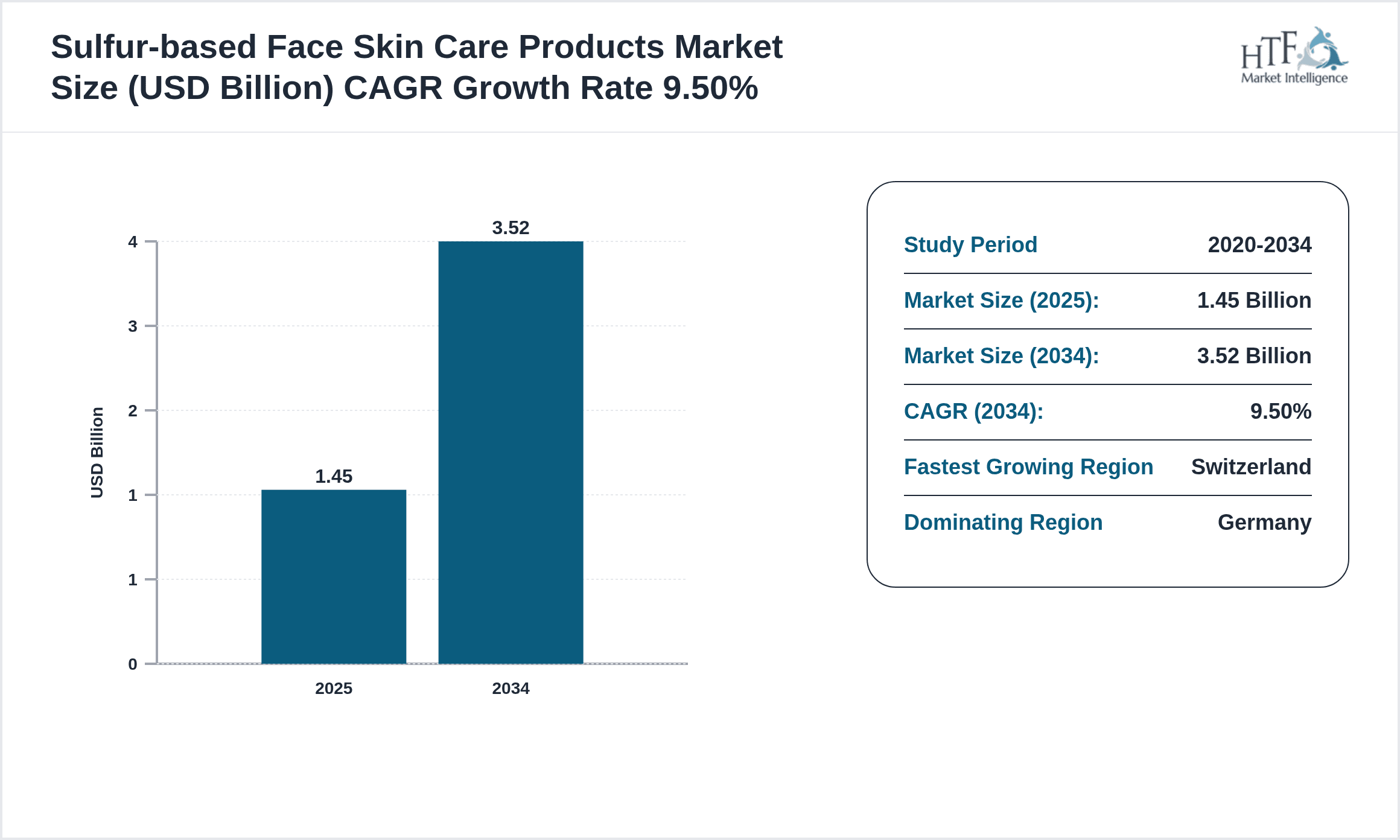
- •The DACH sulfur-based face skin care products market is projected to grow at a CAGR of approximately 9.5% from 2024 to 2034, reflecting strong demand for acne and sensitive skin treatments.
- •Germany dominates the regional market, accounting for over 50% of the share, driven by its advanced manufacturing infrastructure and high consumer acceptance.
- •Serums represent the fastest growing product type segment owing to their targeted delivery and increasing consumer preference for lightweight formulations.
- •The online retail distribution channel is expanding rapidly, supported by digital transformation and consumer inclination towards convenient purchasing options.
Segment Analysis
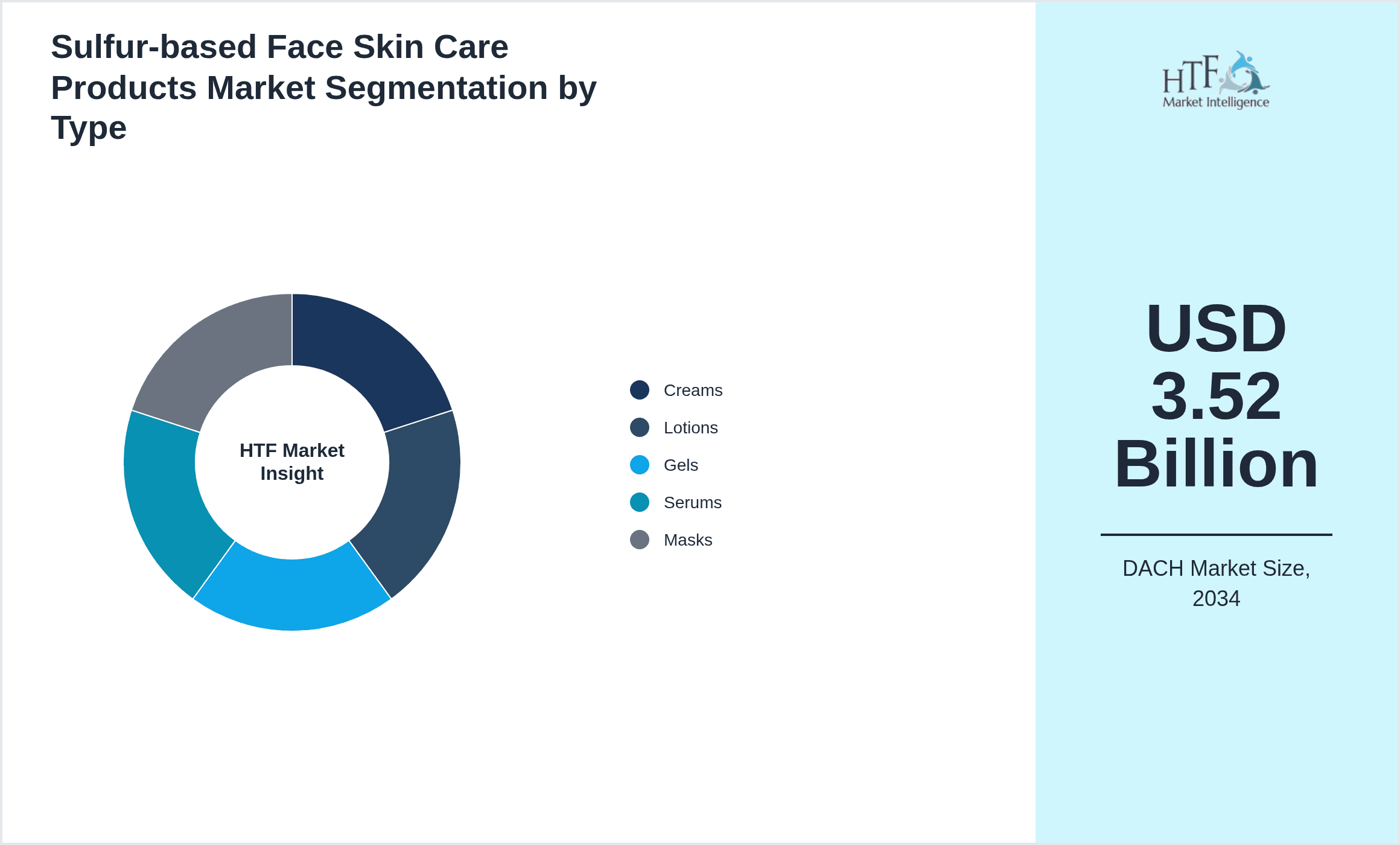
- •By Type, creams remain the leading segment due to their traditional usage and effective sulfur delivery; however, serums and gels are rapidly gaining traction driven by innovation in formulation and consumer preference for non-greasy textures. Lotions and masks serve niche therapeutic and cosmetic functions respectively, supporting portfolio diversification for manufacturers.
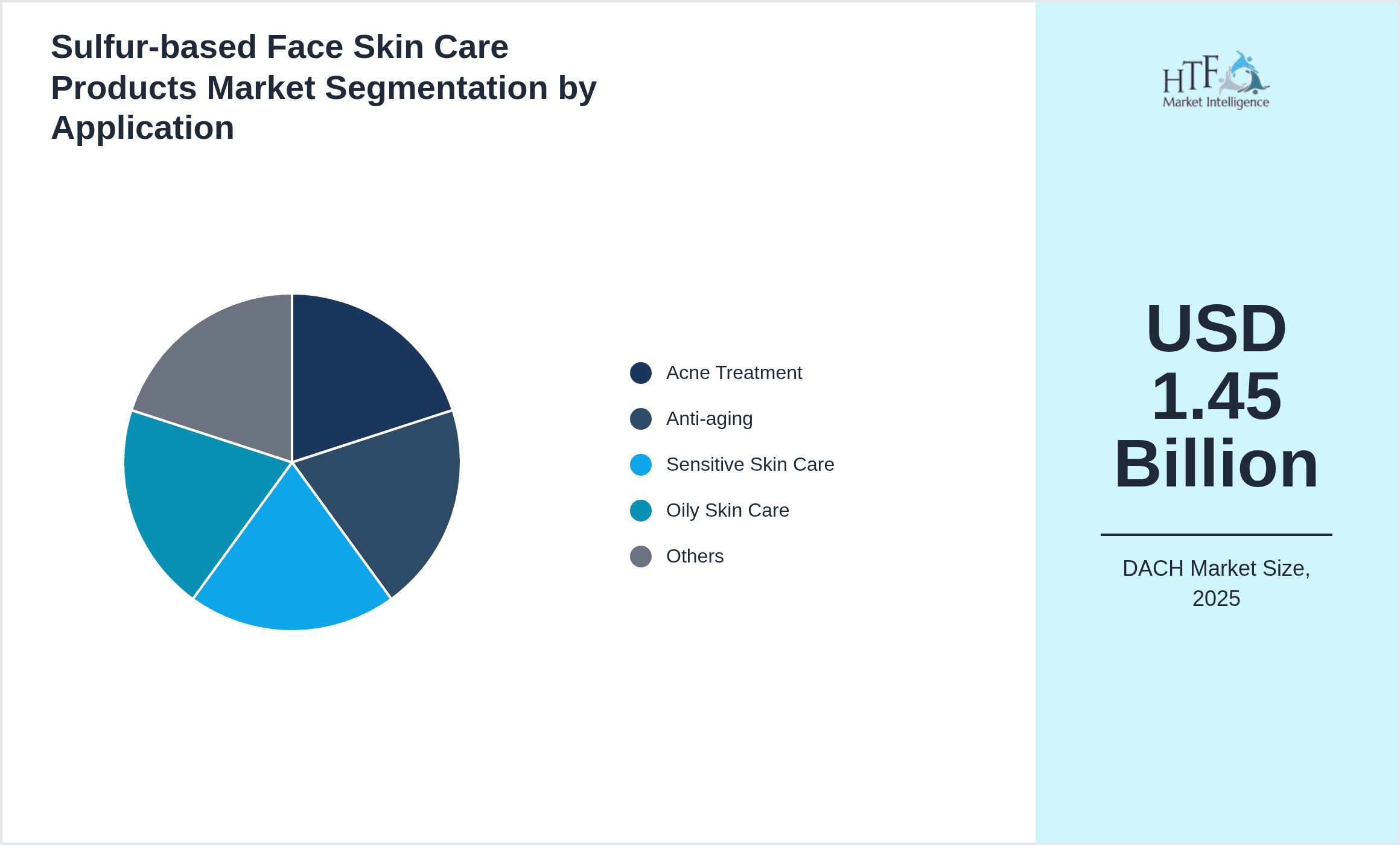
- •By Application, acne treatment is the dominant segment, propelled by high prevalence rates and dermatological endorsements. Anti-aging formulations are growing steadily as sulfur's keratolytic action aids in skin renewal. Sensitive and oily skin care applications are emerging due to increasing consumer education and demand for specialized products.
- •Distribution channels are shifting with pharmacies maintaining significant share due to consumer trust, while online retail is expanding rapidly, enabling manufacturers to leverage direct-to-consumer models and personalized marketing strategies.
Regional Analysis
- •Germany maintains a leading position in the DACH region, supported by an extensive domestic manufacturing base, high consumer spending power, and a well-established regulatory framework ensuring product safety and efficacy.
- •Switzerland is the fastest growing market within DACH, benefiting from a strong pharmaceutical and cosmetic R&D ecosystem, premium consumer segments, and proactive innovation adoption.
- •Austria shows steady growth attributed to increasing consumer awareness, growing retail penetration, and rising demand for natural and dermatologically tested sulfur-based products.
Competitive Landscape
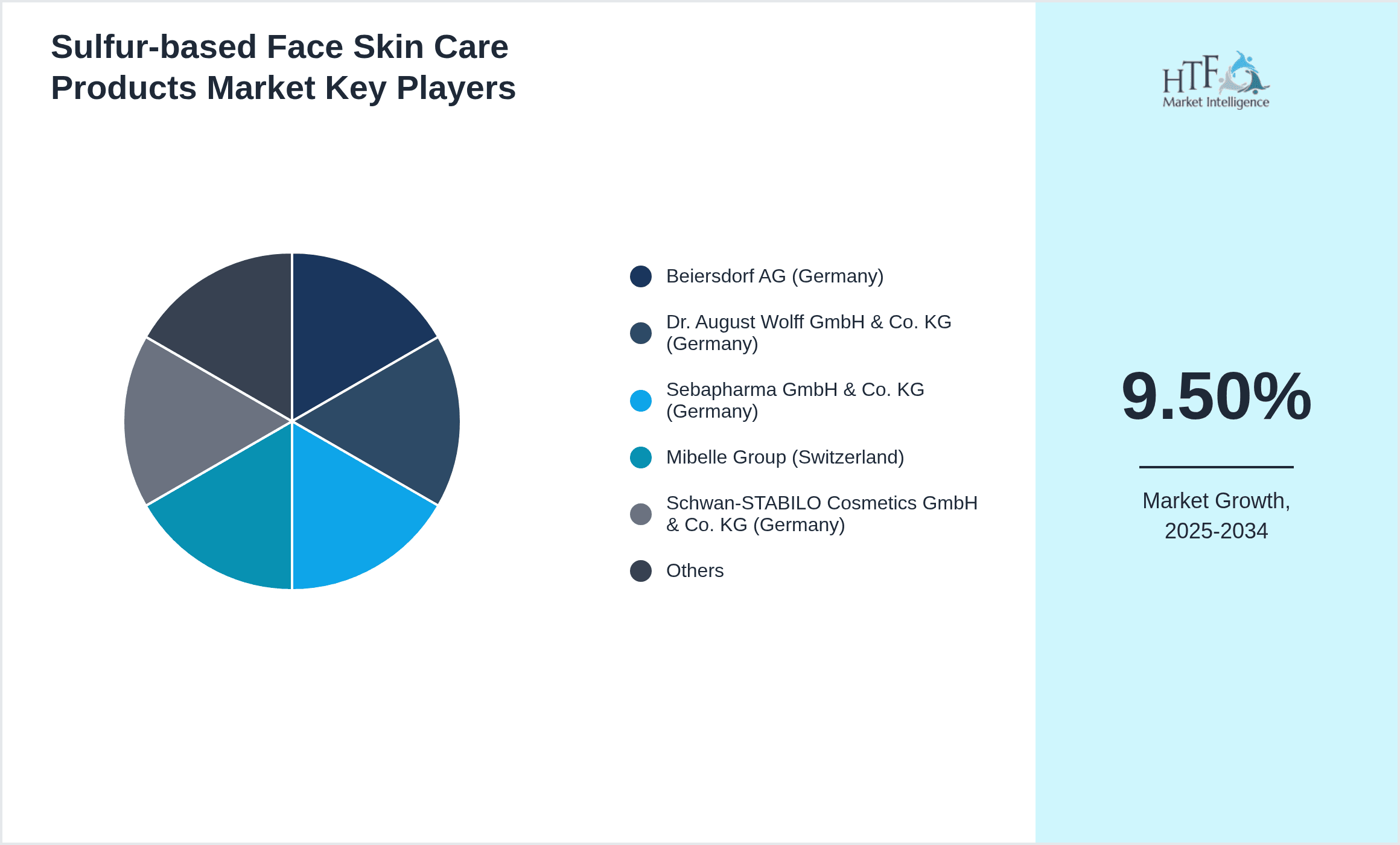
The competitive environment within the DACH sulfur-based face skin care products market is characterized by a moderate-to-high intensity rivalry among established multinational corporations and specialized regional players. Market leaders leverage vertically integrated supply chains, ensuring raw sulfur purity and consistent product quality while optimizing production costs through advanced automation and energy-efficient manufacturing techniques. Innovation remains a critical differentiator, with companies investing substantially in R&D focusing on biotechnological sulfur derivatives, encapsulation technologies to mitigate sulfur odor, and formulations tailored for sensitive skin. Distribution strategies emphasize omnichannel presence, combining traditional pharmacies with growing e-commerce platforms to maximize consumer outreach and engagement. Pricing strategies reflect a premium positioning supported by product efficacy and dermatological endorsements, though competitive pricing pressures from emerging natural and alternative actives persist. Recent strategic moves include mergers and acquisitions to consolidate R&D capabilities, expand regional footprints, and enhance supply chain resilience. Partnerships with dermatology clinics and sustainability initiatives addressing eco-friendly sourcing and packaging further solidify market positions. Barriers to entry remain significant, given regulatory complexities, capital intensity of advanced manufacturing, and entrenched brand loyalty. The outlook indicates sustained competitive dynamics with increased collaboration, innovation, and digital transformation shaping future market trajectories.
Recent Industry Developments
- •Qtr 4 2025: Mibelle Group (Switzerland) launched a novel encapsulated sulfur serum with controlled release technology, reducing odor and enhancing skin absorption. This breakthrough represents a significant advancement in consumer acceptability and product efficacy. The launch aligns with growing demand for innovative, user-friendly formulations and is expected to boost Mibelle’s market share in premium segments. Source: Mibelle Group Official Press Release, December 2025.
- •Qtr 3 2025: Beiersdorf AG (Germany) announced a sustainability milestone by integrating 100% renewable energy in its sulfur-based product manufacturing plants. This initiative reduces carbon footprint and production costs, reinforcing the company’s commitment to eco-friendly operations and appealing to environmentally conscious consumers. It enhances operational efficiency and positions Beiersdorf as a leader in sustainable cosmetics production. Source: Beiersdorf AG Sustainability Report, September 2025.
- •Qtr 2 2025: Regulatory bodies in Germany and Austria implemented updated guidelines tightening limits on sulfur concentration in over-the-counter skin care products to ensure consumer safety. Manufacturers have adapted formulations accordingly without compromising efficacy, demonstrating agility in regulatory compliance and maintaining market confidence. This regulatory update underscores the importance of continuous monitoring and proactive adaptation within the industry. Source: European Cosmetics Regulation Update, June 2025.
Market Statistics
- •CAGR by 2034: 9.5%
- •Market Size by 2034: USD 3.52 Billion
- •Market Size in 2025: USD 1.55 Billion
- •Dominating Type: Creams; Next-following Type: Serums
- •Dominating Application: Acne Treatment; Next-following Application: Anti-aging
- •Dominating Region: Germany; Second-leading Region with Highest Growth Rate: Switzerland
- •Dominating Country: Germany
Growth Drivers in Sulfur-based Face Skin Care Products
- •Increasing prevalence of acne and dermatological conditions in the DACH population necessitates effective sulfur-based therapeutic solutions, driving market expansion.
- •Technological advancements in formulation, including encapsulation and biotechnological sulfur derivatives, enhance product efficacy and consumer acceptance.
- •Rising consumer preference for dermatologically tested and natural ingredient-based skin care products bolsters demand for sulfur-based formulations.
- •Expansion of digital and omnichannel distribution networks facilitates wider market penetration and consumer accessibility.
Market Restraints
- •Stringent regulatory frameworks in the DACH region increase product development complexity and cost, potentially limiting market entry for smaller players.
- •Volatility in raw sulfur supply and purification costs affects production economics and pricing stability.
- •Consumer concerns about sulfur odor and potential skin irritation constrain broader adoption among sensitive segments.
Market Segmentation
- •By Type
- ◦Creams
- ◦Lotions
- ◦Gels
- ◦Serums
- ◦Masks
- •By Application
- ◦Acne Treatment
- ◦Anti-aging
- ◦Sensitive Skin Care
- ◦Oily Skin Care
- ◦Others
- •By Distribution Channel
- ◦Pharmacies
- ◦Online Retail
- ◦Specialty Stores
- ◦Supermarkets
- ◦Others
The Road Ahead: Sulfur-based Face Skin Care Products
- •The sulfur-based face skin care market in the DACH region is poised for transformative growth driven by technological innovation, sustainability imperatives, and evolving consumer preferences towards personalized and efficacious skin therapeutics.
- •Long-term impact will be characterized by enhanced manufacturing efficiencies, deeper integration of biotechnology, and expanded digital distribution, collectively reshaping the competitive landscape and delivering sustained value to stakeholders.
Regional Outlook
The Germany currently holds a significant share of the market, primarily due to several key factors: increasing consumption rates, a burgeoning population, and robust economic momentum. These elements collectively drive demand, positioning this region as a leader in the market. On the other hand, Switzerland is rapidly emerging as the fastest-growing area within the industry. This remarkable growth can be attributed to swift infrastructure development, the expansion of various industrial sectors, and a marked increase in consumer demand. These dynamics make this region a crucial player in shaping future market growth.
In our report, we cover a comprehensive analysis of the following regions and countries:
- Germany
- Austria
- Switzerland
| Feature | Details |
|---|---|
| Base Year Market Size | USD 1.45 Billion |
| Forecast Year Market Size | USD 3.52 Billion |
| CAGR | 9.5% |
| Forecast Period | 2026 to 2033 |
| YoY Growth | 9.1% |
| Scope of Report | The DACH sulfur-based face skin care products market is experiencing robust growth driven by increasing dermatological concerns such as acne and sensitive skin among consumers. The region's consumers exhibit high demand for efficacious, dermatologically tested formulations that leverage sulfur's keratolytic and antibacterial properties. Manufacturing operations in the DACH region are characterized by advanced process automation, energy-efficient purification of sulfur derivatives, and stringent quality control governed by EU and national regulatory frameworks. Supply chain systems have been optimized for reliability, incorporating just-in-time delivery and cold-chain logistics where necessary to maintain product integrity. The market benefits from a mature distribution infrastructure combining traditional retail, pharmacies, and rapidly expanding e-commerce platforms, enhancing accessibility. Investment in R&D focuses on innovative encapsulation technologies to mitigate sulfur odor and improve skin tolerability, enabling product differentiation. Pricing structures reflect premium positioning balanced against competitive pressures from alternative actives. Overall, the market presents a compelling growth trajectory with commercial and operational sophistication aligned to evolving consumer preferences and regulatory landscapes. |
| Regions Covered | Germany, Austria, Switzerland |
| Key Companies | Beiersdorf AG (Germany), Dr. August Wolff GmbH & Co. KG (Germany), Sebapharma GmbH & Co. KG (Germany), Mibelle Group (Switzerland), Schwan-STABILO Cosmetics GmbH & Co. KG (Germany), L’Oréal Deutschland GmbH (Germany), Weleda AG (Switzerland), Croma-Pharma GmbH (Austria), BASF SE (Germany), Symrise AG (Germany), Hauschka (Dr. Hauschka) GmbH & Co. KG (Germany), Alpinamed GmbH (Austria), Coty Germany GmbH (Germany), Balea (DM-drogerie markt) (Germany), Eucerin (Beiersdorf AG) (Germany) |
Sulfur-based Face Skin Care Products Market - DACH Share, Size & Changing Dynamics 2020-2034 - Table of Contents
Research enthusiast focused on transforming data uncovering into actionable insights through data-driven decision-making.
Frequently Asked Questions (FAQ):
The Market market is expected to see significant growth and value in 2025.
North America currently leads the market, followed by Europe and Asia-Pacific.
Key growth drivers include increasing activities, rising demand for innovative solutions, technological advancements, and growing preference for efficient products.