
Wooden Tableware Market - Nordic Size & Outlook 2020-2034
Nordic Wooden Tableware Market is segmented by Type (Cutlery, Plates, Bowls, Serving Trays, Others), Application (Residential, Commercial, Hospitality, Institutional, Others), and Distribution Channel (Online Retail, Specialty Stores, Supermarkets, Wholesale, Others) Geography (Finland, Sweden, Denmark, Norway, Iceland)
Pricing
Report Overview
Wooden Tableware Market Snapshot
The Nordic Wooden Tableware Market represents a specialized segment focusing on the manufacture and distribution of wooden dining and serving utensils across Sweden, Denmark, Norway, Finland, and Iceland. This market is defined by its emphasis on sustainable, biodegradable, and artisan-crafted wooden products including cutlery, plates, bowls, and serving trays, catering to residential, commercial, hospitality, and institutional applications. Excluded from this scope are non-wood materials and furniture-grade wood products, underscoring the market's dedication to environmentally responsible tableware. The sector is influenced heavily by regional environmental policies, consumer preferences for eco-friendly dining solutions, and innovations in wood processing technologies. Operationally, the market integrates advanced CNC machining, energy-efficient drying processes, and optimized supply chains to ensure product quality and cost competitiveness. The Nordic market is distinguished by its adherence to sustainable forestry certifications and strong design heritage, contributing to steady growth and premium pricing structures.
Wooden Tableware Market Segmentation
- •By Type
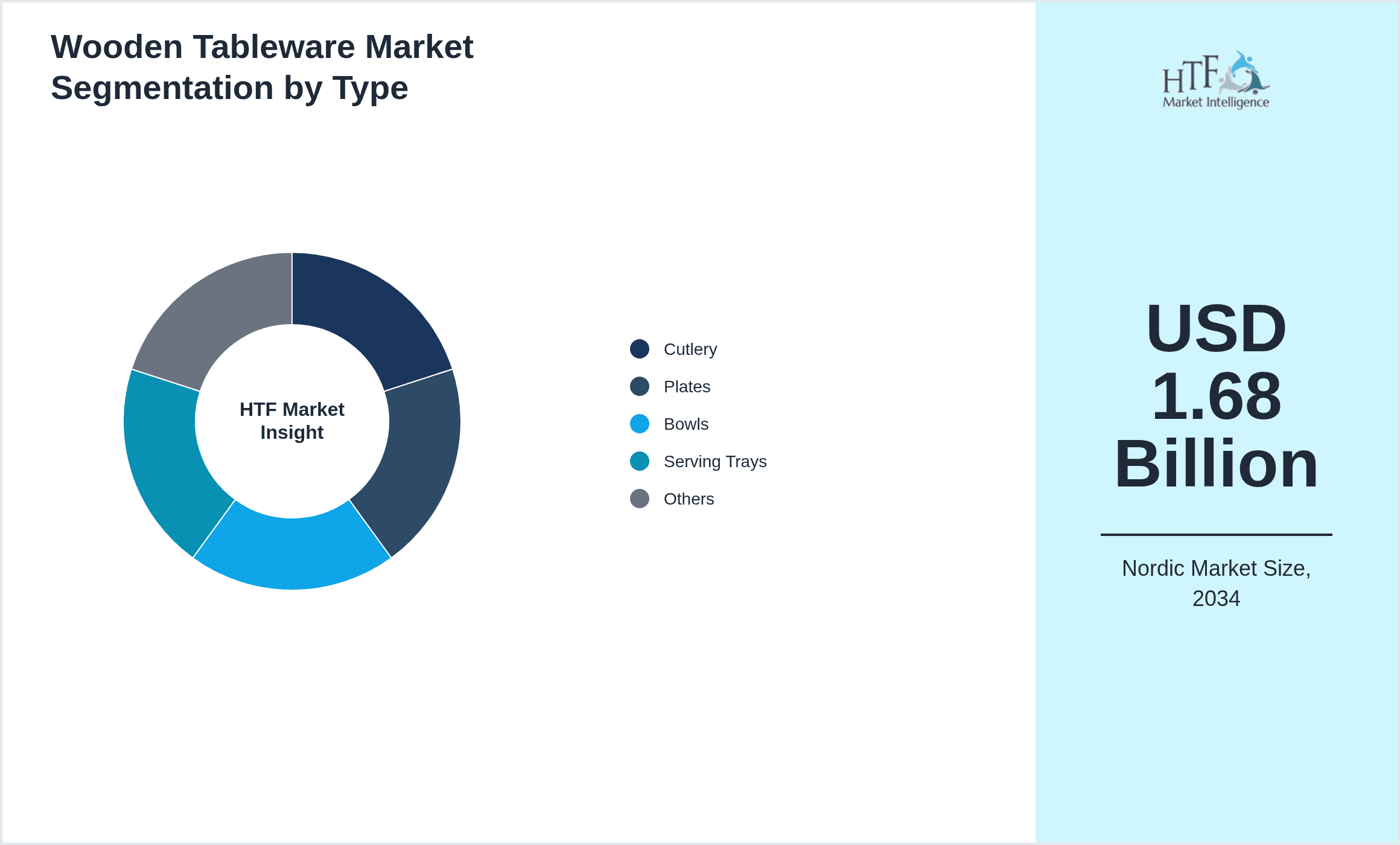
- ◦Cutlery
- ◦Plates
- ◦Bowls
- ◦Serving Trays
- ◦Others
- •By Application
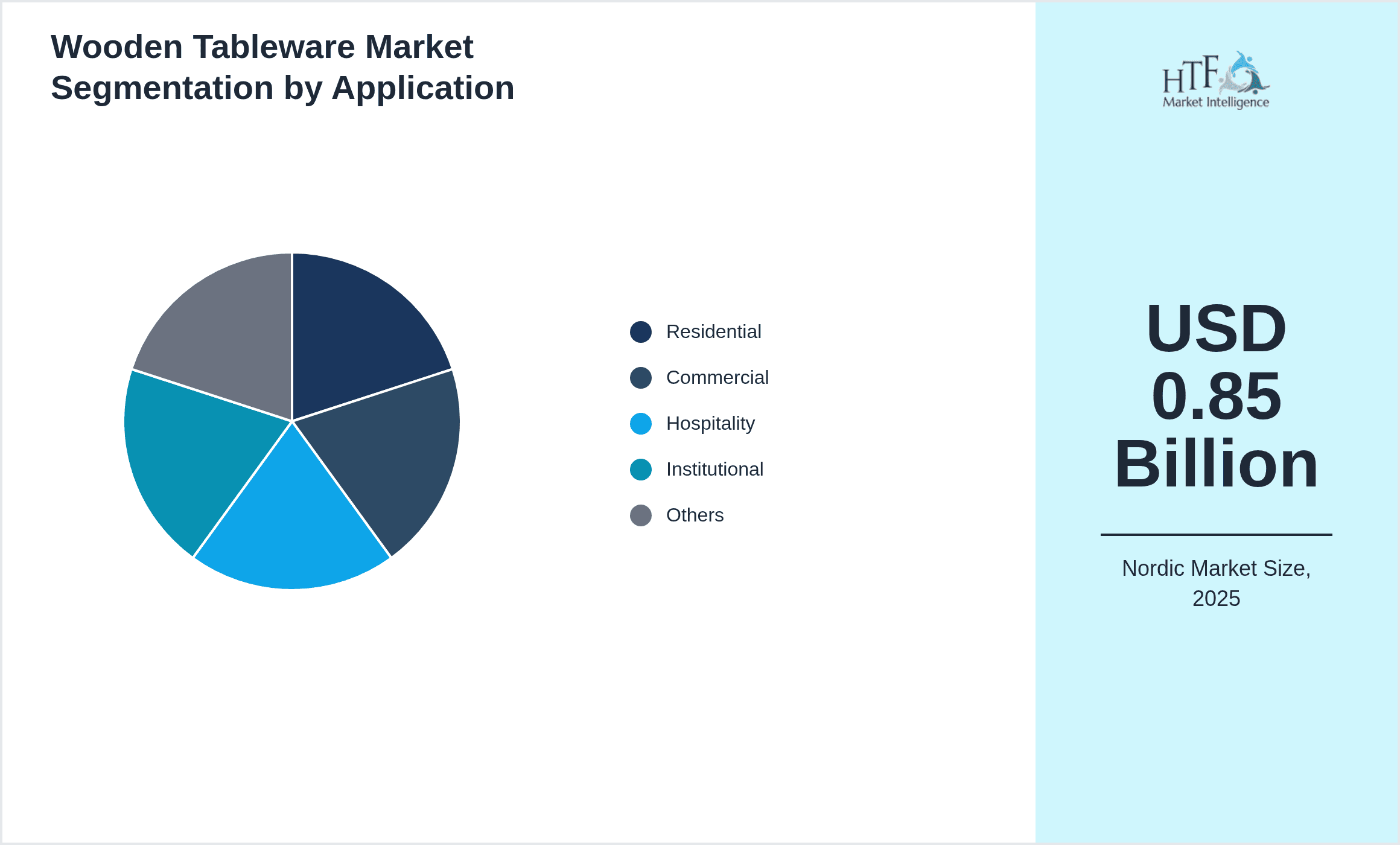
- ◦Residential
- ◦Commercial
- ◦Hospitality
- ◦Institutional
- ◦Others
- •By Distribution Channel
- ◦Online Retail
- ◦Specialty Stores
- ◦Supermarkets
- ◦Wholesale
- ◦Others
Wooden Tableware Market Dynamics
- •Growth Drivers: The Nordic wooden tableware market experiences robust growth driven primarily by increasing environmental awareness and government mandates favoring biodegradable products over plastics. Rising demand within the hospitality sector, propelled by eco-conscious consumers seeking authentic dining experiences, fuels volume expansion. Technological advancements such as automation and precision CNC machining enhance production efficiency and product consistency, reducing costs and increasing scalability. Additionally, government subsidies for sustainable forestry and manufacturing processes incentivize market participation. Elevated disposable incomes across Nordic countries further support premium product adoption, particularly in residential and commercial segments, solidifying the market's growth trajectory.
- •Trends: The market is witnessing a shift towards minimalist Scandinavian design aesthetics, emphasizing functionality combined with natural textures and finishes. Digital channels are rapidly gaining prominence, with online retail facilitating direct consumer engagement and personalized offerings. Sustainable sourcing remains paramount, with manufacturers increasingly adopting FSC-certified wood and investing in circular economy models to reduce waste. Automation integration is enabling manufacturers to optimize capacity utilization, reduce labor dependency, and improve energy efficiency. Furthermore, collaborations between designers and manufacturers are fostering innovative product lines that meet both ecological and stylistic demands.
- •Restraints: Cost pressures arising from rigorous sustainable sourcing requirements increase raw material expenditures, constraining production scalability. Complexities in supply chain management, especially ensuring FSC-certified wood availability, challenge manufacturers. Competition from lower-cost synthetic alternatives limits market penetration in price-sensitive consumer segments. Seasonal demand fluctuations within hospitality and institutional sectors lead to underutilized manufacturing capacity during off-peak periods. Additionally, stringent regulatory compliance related to manufacturing emissions and waste disposal adds to operational overheads, impacting profitability margins.
- •Opportunities: Innovation in composite wooden tableware integrating natural fibers with biodegradable resins offers durability improvements, expanding application scopes. Expansion into experiential retail formats and online marketplaces allows companies to capture wider consumer demographics. Strategic collaborations with Nordic hospitality chains enable customized product offerings and bulk supply contracts. Investments in circular economy frameworks promote product lifecycle management, reducing environmental impact and attracting sustainability-conscious customers. Digital transformation initiatives, including smart manufacturing and e-commerce platforms, facilitate efficient market penetration and personalized consumer engagement.
- •Challenges: The limited availability of premium hardwoods restricts production capacity and product diversity. Elevated price points due to sustainable sourcing and manufacturing costs limit accessibility among cost-sensitive consumers. Logistics complexities in servicing dispersed Nordic populations increase distribution costs and delivery times. Energy consumption restrictions under Nordic green policies require adoption of energy-efficient technologies, entailing capital investments. Regulatory frameworks impose strict waste management protocols, complicating disposal and recycling processes for end-of-life products, thereby increasing compliance costs.
Wooden Tableware Industry Insights
The Nordic wooden tableware industry has demonstrated resilience and innovation, driven by strong regional commitments to sustainability and design excellence. In February 2025, Iittala Group launched a new line of FSC-certified wooden cutlery featuring enhanced durability and ergonomic design, leveraging CNC machining advancements to improve production yield and reduce waste. In November 2024, Rosendahl Design Group expanded its product portfolio with biodegradable composite serving trays, aligning with circular economy principles and catering to the growing hospitality segment demand for sustainable alternatives. These developments underscore the sector's strategic focus on combining traditional craftsmanship with modern technology to meet evolving consumer and regulatory demands.
Wooden Tableware Regulatory Overview
The Nordic wooden tableware market operates under a stringent regulatory environment emphasizing sustainability, product safety, and environmental stewardship. Recent updates in 2024 require manufacturers to comply with enhanced FSC certification standards, ensuring legal and sustainable wood sourcing. The EU's Single-Use Plastics Directive has accelerated regulatory pressure to phase out plastic tableware, directly benefiting wooden alternatives. Additionally, energy efficiency mandates compel production facilities to implement renewable energy sources and reduce carbon footprints. Waste management regulations enforce strict recycling and composting guidelines for end-of-life tableware products. Compliance with REACH and food contact material safety standards further governs product formulation and manufacturing processes, ensuring consumer health and environmental protection.
Players Profiled
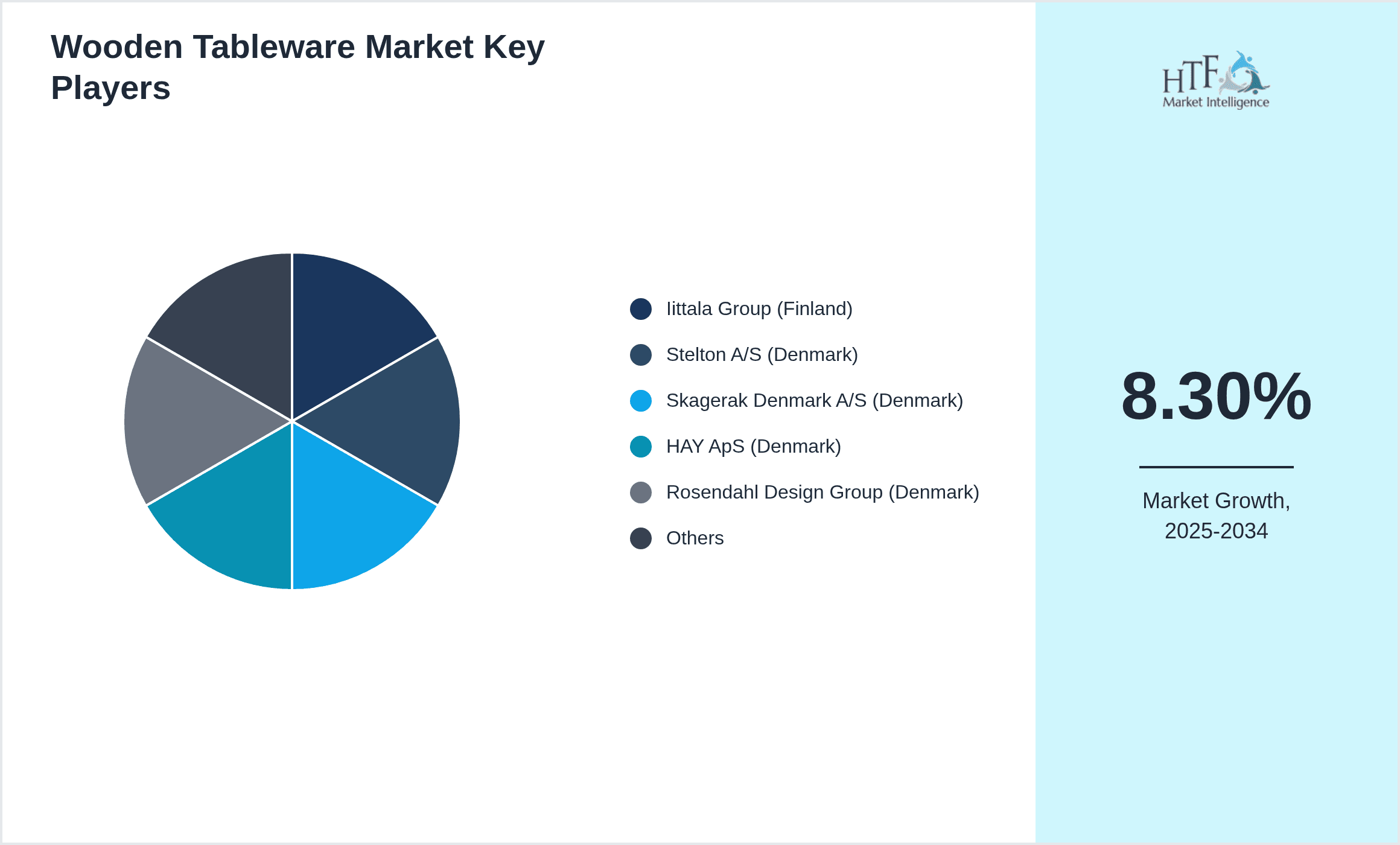
- •Iittala Group (Finland): Renowned for integrating traditional Nordic craftsmanship with modern automation technologies, leading product innovation in sustainable wooden tableware.
- •Stelton A/S (Denmark): Focused on design-driven expansion and global distribution leveraging digital retail channels to enhance market presence.
- •Skagerak Denmark A/S (Denmark): Pioneering composite wooden tableware solutions to enhance product durability and sustainability credentials.
- •HAY ApS (Denmark): Emphasizing technology adoption in manufacturing processes to optimize operational efficiency and reduce energy consumption.
- •Rosendahl Design Group (Denmark): Leading innovation in biodegradable and circular economy-aligned wooden tableware products tailored for hospitality sectors.
- •Muuto (Denmark): Expanding product portfolio with eco-friendly offerings, integrating smart design and sustainable sourcing.
- •Fiskars Group (Finland): Utilizing advanced CNC machining and automation to enhance production scalability and product consistency.
- •Marimekko Corporation (Finland): Leveraging strong brand equity and sustainable product lines to penetrate commercial and residential segments.
- •Georg Jensen (Denmark): Innovating premium wooden cutlery with ergonomic design and superior finish quality using precision manufacturing.
- •Orthex Group (Finland): Investing in digital sales platforms to expand reach and customer engagement in Nordic and international markets.
- •Normann Copenhagen (Denmark): Leading design innovation to meet evolving consumer preferences for minimalist and sustainable tableware.
- •Carl Hansen & Søn (Denmark): Combining heritage craftsmanship with modern production techniques to optimize operational efficiency.
- •Lignell & Piispanen (Finland): Innovating eco-friendly packaging and product lifecycle solutions for wooden tableware distribution.
- •Brdr. Krüger (Denmark): Expanding manufacturing footprint with automation investments to meet growing Nordic demand.
- •Design House Stockholm AB (Sweden): Developing sustainable wooden tableware lines aligned with Nordic design ethos and environmental regulations.
Competitive Landscape
The competition within the Nordic wooden tableware market is characterized by a blend of legacy companies with deep-rooted craftsmanship traditions and agile innovators leveraging automation and digitalization. Market positioning is strongly influenced by the ability to deliver sustainable, high-quality products combined with Scandinavian design aesthetics. Innovation serves as a critical differentiator, with leading players investing significantly in advanced CNC machining, composite material development, and circular economy initiatives. Competition intensity remains moderate to high, driven by rising consumer demand and stringent environmental regulations, which create barriers to entry for less compliant or lower-quality producers. Mergers and acquisitions have been selectively employed as strategies to consolidate raw material sourcing, expand geographic footprints, and enhance product portfolios. Partnerships with hospitality chains and online retail platforms form vital distribution strategies, enabling broader market access. Pricing strategies balance premium product positioning with growing pressure from synthetic alternatives, necessitating continuous operational efficiency improvements and technology differentiation. The distribution network emphasizes omni-channel approaches, integrating specialty stores, supermarkets, and e-commerce to optimize market penetration. Entry barriers include regulatory compliance, sustainable certification requirements, and capital investments in automation and energy-efficient production facilities. Looking forward, the competitive landscape anticipates increased consolidation, accelerated innovation cycles, and deeper integration of digital technologies to sustain growth and profitability amid evolving consumer preferences and regulatory frameworks.
Wooden Tableware Market Development Activities
- •In Q2 2025, Iittala Group completed the acquisition of a specialized sustainable wood processing facility in Southern Sweden, enhancing its vertical integration and ensuring a consistent supply of FSC-certified hardwood. This strategic move strengthens Iittala's operational capabilities and reinforces its commitment to environmentally responsible production, enabling quicker market responsiveness and cost containment. The acquisition also paves the way for expanded product innovation leveraging proprietary wood treatment technologies to extend tableware durability.
- •In January 2025, Rosendahl Design Group announced the launch of a new manufacturing plant in Finland equipped with state-of-the-art automated CNC machines and energy-efficient drying kilns. This operational expansion aims to increase production capacity by 30% while reducing energy consumption by 20%, aligning with Nordic green policies. The facility enhances Rosendahl’s ability to meet growing demand from hospitality and institutional sectors for sustainable wooden tableware solutions.
Recent Industry News
- •In March 2025, Muuto (Denmark) partnered with a leading Nordic hospitality chain to supply a customized line of wooden cutlery and serving trays designed for high durability and aesthetic appeal. This partnership strengthens Muuto’s footprint in the commercial segment and aligns with the chain’s sustainability goals. The initiative includes co-branded marketing campaigns and joint sustainability reporting efforts. Source: Nordic Business Daily
- •In May 2025, Fiskars Group (Finland) unveiled a new eco-friendly wooden bowl collection featuring innovative composite wood technology, reducing material waste by 15%. The launch targets premium residential consumers seeking sustainable lifestyle products, and Fiskars plans to expand distribution through online retail platforms across the Nordic region. Source: Scandinavian Design News
- •In July 2025, Stelton A/S (Denmark) expanded its geographical footprint by opening a flagship store in Oslo, Norway, showcasing its full wooden tableware lineup and integrating an experiential retail concept focused on sustainable living. This expansion supports Stelton’s strategic growth plan in the Nordic markets and enhances brand visibility among environmentally conscious consumers. Source: Retail Nordic Magazine
- •In September 2025, Normann Copenhagen (Denmark) launched a digital platform featuring customizable wooden tableware products, incorporating augmented reality tools for consumer visualization. This innovation aims to increase direct-to-consumer sales and improve customer engagement by providing personalized product options while maintaining sustainable sourcing and manufacturing practices. Source: Tech Nordic Review
Key Market Stats
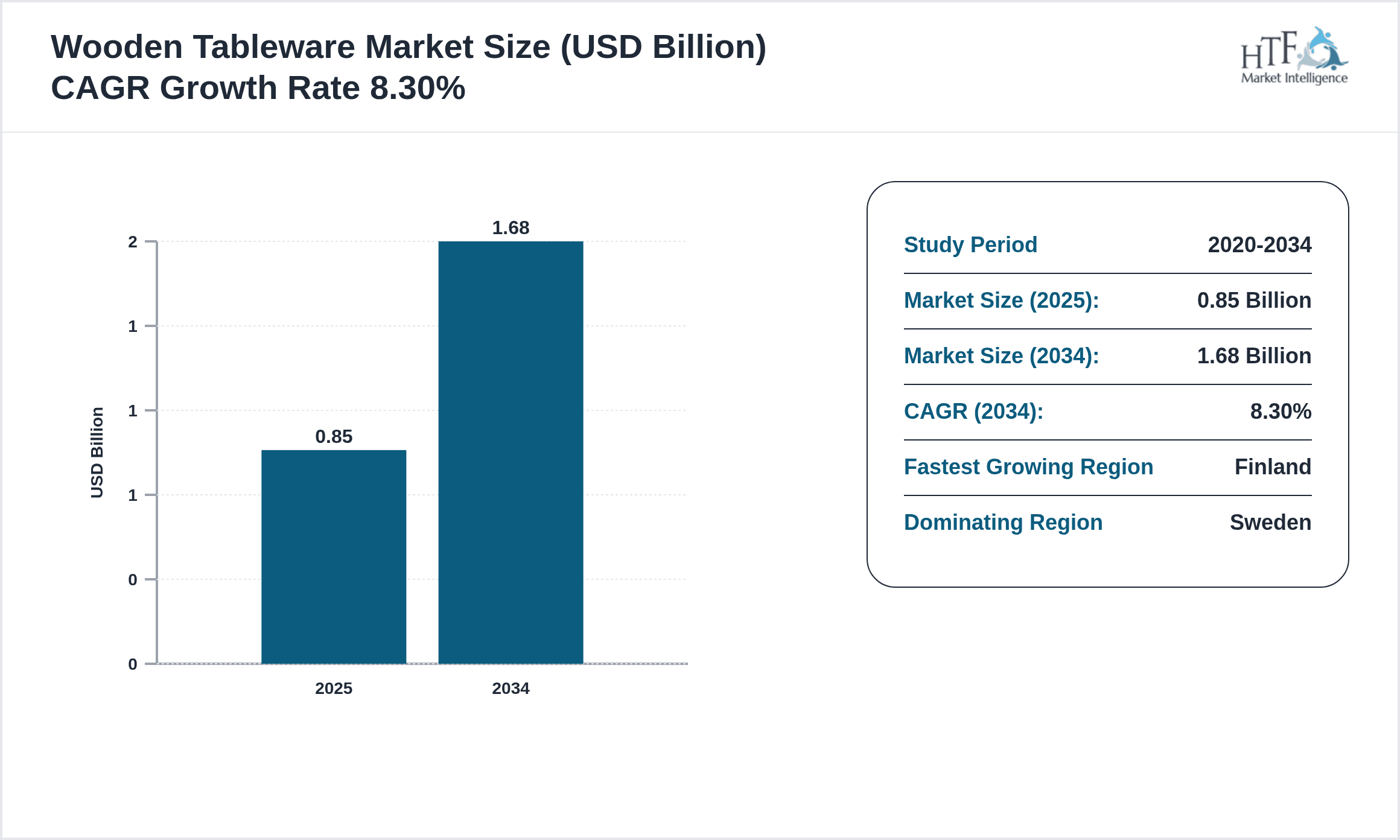
- •CAGR by 2034: 8.3%
- •Market Size by 2034: USD 1.68 Billion
- •Market Size in 2025: USD 0.85 Billion
- •Dominating Type: Cutlery; Next-following Type: Serving Trays
- •Dominating Application: Residential; Next-following Application: Hospitality
- •Dominating Region: Sweden; Second-leading Region with Highest Growth Rate: Finland
- •Market Share (%) of Dominating vs Followed Type: Cutlery 42% vs Serving Trays 18%
- •Market Share (%) of Dominating vs Followed Application: Residential 40% vs Hospitality 25%
- •Growth Rate (%) of Dominating vs Followed Type: Cutlery 7.5% vs Serving Trays 11.0%
- •Growth Rate (%) of Dominating vs Followed Application: Residential 7.0% vs Hospitality 9.5%
Analyst View on Wooden Tableware Market
- •Future expansion will focus on enhancing product innovation through composite materials and circular economy integration, targeting both residential and commercial sectors with eco-conscious offerings.
- •Sweden is forecasted to maintain dominance driven by its mature supply chain infrastructure, established manufacturers, and robust consumer demand for sustainable wooden tableware.
- •The industry will undergo long-term transformation shaped by digitalization, advanced manufacturing automation, and stringent sustainability regulations, increasing operational efficiency and market penetration.
Regional Outlook
The Sweden currently holds a significant share of the market, primarily due to several key factors: increasing consumption rates, a burgeoning population, and robust economic momentum. These elements collectively drive demand, positioning this region as a leader in the market. On the other hand, Finland is rapidly emerging as the fastest-growing area within the industry. This remarkable growth can be attributed to swift infrastructure development, the expansion of various industrial sectors, and a marked increase in consumer demand. These dynamics make this region a crucial player in shaping future market growth.
In our report, we cover a comprehensive analysis of the following regions and countries:
- Finland
- Sweden
- Denmark
- Norway
- Iceland
| Feature | Details |
|---|---|
| Base Year Market Size | USD 0.85 Billion |
| Forecast Year Market Size | USD 1.68 Billion |
| CAGR | 8.3% |
| Forecast Period | 2026 to 2033 |
| YoY Growth | 8.3% |
| Regions Covered | Finland, Sweden, Denmark, Norway, Iceland |
| Key Companies | Iittala Group (Finland), Stelton A/S (Denmark), Skagerak Denmark A/S (Denmark), HAY ApS (Denmark), Rosendahl Design Group (Denmark), Muuto (Denmark), Fiskars Group (Finland), Marimekko Corporation (Finland), Georg Jensen (Denmark), Orthex Group (Finland), Normann Copenhagen (Denmark), Carl Hansen & Søn (Denmark), Lignell & Piispanen (Finland), Brdr. Krüger (Denmark), Design House Stockholm AB (Sweden) |
Wooden Tableware Market - Nordic Size & Outlook 2020-2034 - Table of Contents
Research enthusiast focused on transforming data uncovering into actionable insights through data-driven decision-making.
Frequently Asked Questions (FAQ):
The Market market is projected to grow at a steady CAGR from 2025 to 2030, driven by increasing demand and expansion in various applications.
North America currently leads the market, followed by Europe and Asia-Pacific.
Key growth drivers include increasing activities, rising demand for innovative solutions, technological advancements, and growing preference for efficient products.