
North America Disaster Risk Finance and Insurance Market Roadmap to 2034
North America Disaster Risk Finance and Insurance Market Breakdown by Application (Property, Casualty, Flood, Earthquake, Wildfire) by Type (Insurance, Risk Transfer, Catastrophe Bonds, Parametric Insurance) by Distribution Channel (Direct, Broker, Digital Platforms) Geography (United States, Canada, Mexico)
Pricing
Report Overview
Disaster Risk Finance and Insurance Market Scope
The North America Disaster Risk Finance and Insurance market comprises financial products and services designed to provide economic protection against losses incurred from natural catastrophes and other disaster events. The market scope includes traditional insurance lines such as property and casualty coverage, as well as advanced risk transfer mechanisms including catastrophe bonds, parametric insurance, and risk pooling arrangements. These offerings are delivered through direct underwriting, brokerage, or digital platforms and serve both public and private sector entities exposed to disasters like floods, wildfires, earthquakes, hurricanes, and related perils. The scope excludes government disaster relief funds, informal community risk-sharing schemes, and insurance products unrelated to disaster risk. The market emphasizes risk quantification, capital allocation, and claims settlement processes that ensure financial resilience and liquidity post-disaster, integrating technological innovation in underwriting and distribution.
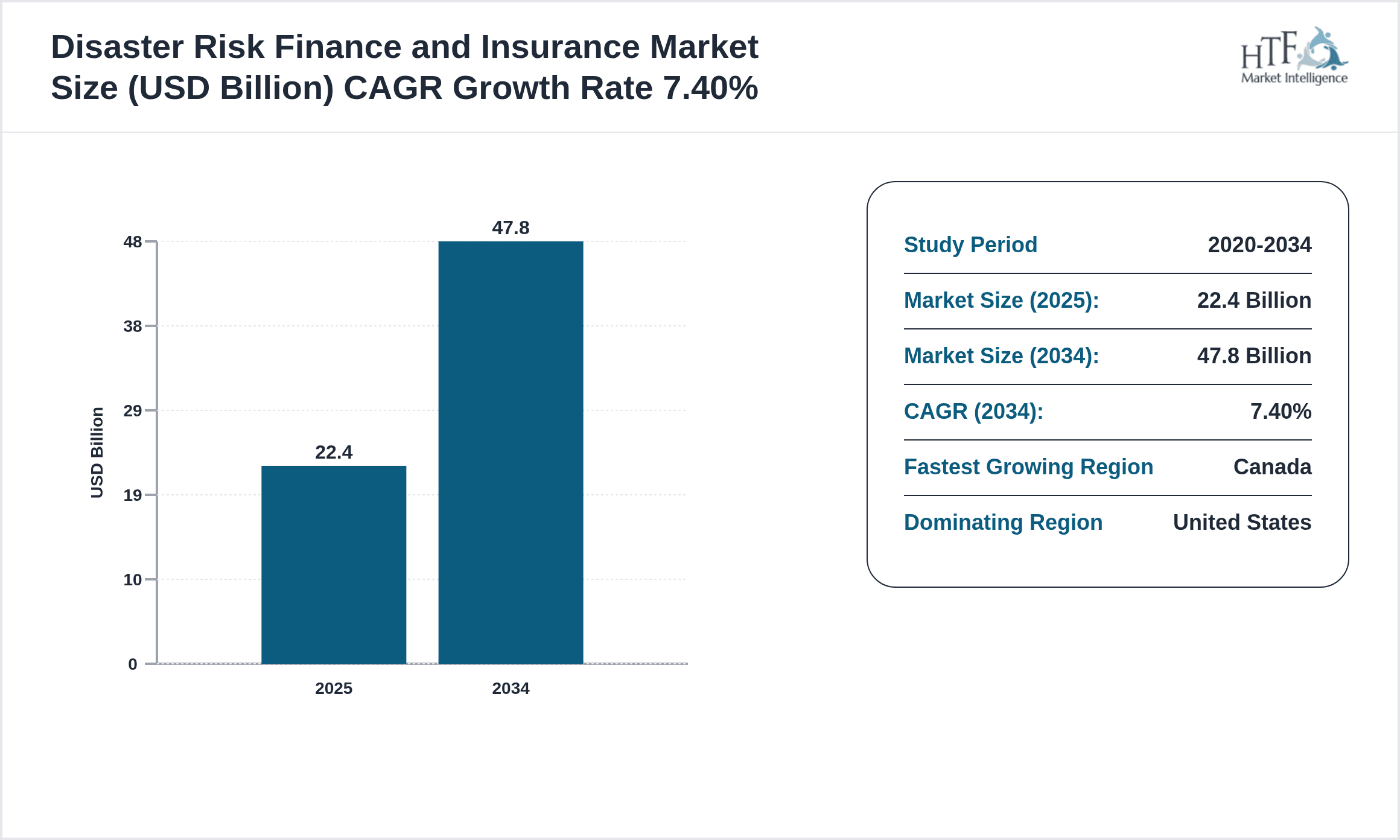
Disaster Risk Finance and Insurance Market Regional Performance Analysis
The United States dominates the North American Disaster Risk Finance and Insurance market, driven by its extensive exposure to diverse natural hazards and a mature insurance ecosystem supported by robust capital markets and regulatory frameworks. The US market benefits from advanced catastrophe modeling, substantial investment in infrastructure resilience, and a well-developed reinsurance sector, enabling comprehensive risk coverage and innovative product development. Canada exhibits the fastest growth trajectory, fueled by increasing awareness of climate change impacts, expanding wildfire and flood risks, and government initiatives promoting insurance penetration in underserved areas. Mexico's market remains nascent but exhibits potential growth opportunities linked to rising industrialization and disaster vulnerability, though it faces challenges related to regulatory harmonization and capital availability. Supply-chain infrastructure and technological adoption vary across these countries, with the US leading in digital transformation and parametric insurance uptake, while Canada focuses on expanding microinsurance and public-private partnerships. Overall, North America's disaster risk finance landscape reflects a combination of sophisticated risk assessment capabilities, evolving consumer demand, and increasing investment in innovative financial instruments.
Disaster Risk Finance and Insurance Industry Players Coverage
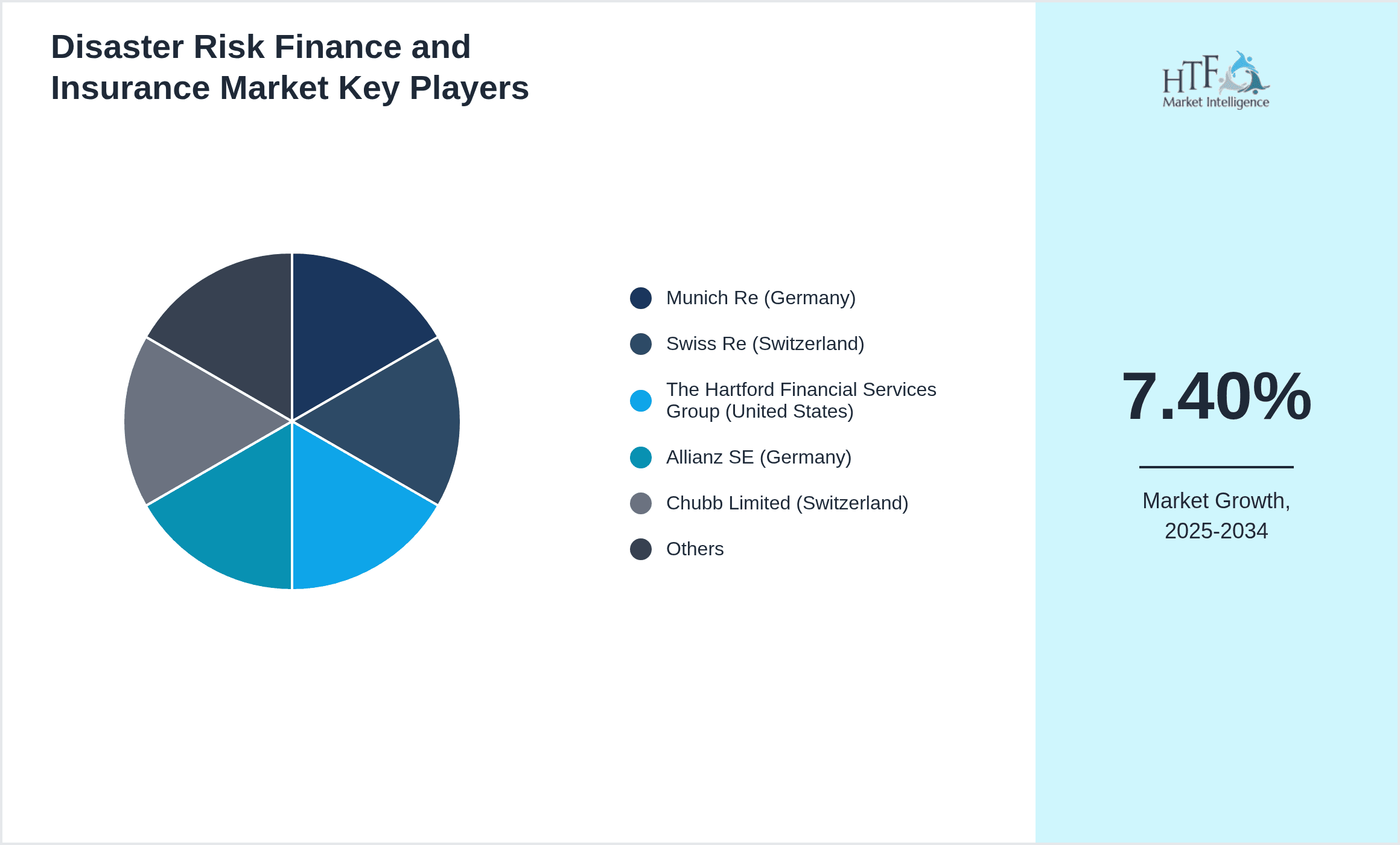
- •Munich Re (Germany)
- •Swiss Re (Switzerland)
- •The Hartford Financial Services Group (United States)
- •Allianz SE (Germany)
- •Chubb Limited (Switzerland)
- •AXA XL (France)
- •American International Group (United States)
- •RMS (United States)
- •Willis Towers Watson (United Kingdom)
- •Marsh & McLennan Companies (United States)

Disaster Risk Finance and Insurance Market Competition Analysis
The North America Disaster Risk Finance and Insurance market exhibits intense competition marked by the presence of global reinsurers, specialized insurers, and innovative financial intermediaries. Industry players are leveraging technology-driven transformations including AI-based risk modeling, blockchain-enabled claims processing, and parametric insurance platforms to differentiate their offerings and enhance operational efficiency. Strategic partnerships and mergers and acquisitions have accelerated market consolidation, enabling companies to diversify risk portfolios and expand geographic reach. Competitive pricing strategies focus on balancing risk-adjusted returns with affordability to capture emerging customer segments, especially in high-risk regions. Distribution strategies increasingly emphasize digital channels and direct-to-consumer models to improve penetration and reduce acquisition costs. The evolving regulatory landscape and capital market dynamics impose stringent capital adequacy and reporting requirements, raising entry barriers for new participants but fostering innovation among incumbents. Overall, the competitive environment is characterized by rapid innovation cycles, strategic collaborations, and a focus on sustainable growth through diversified risk transfer solutions.
Disaster Risk Finance and Insurance Market Growth Drivers & Demand Determinants
- •Government initiatives and regulatory frameworks mandating disaster risk disclosure and capital resilience are catalyzing market expansion by enforcing robust underwriting standards and encouraging public-private partnerships.
- •Strategic alliances between insurers, reinsurers, technology providers, and capital market participants are fostering product innovation and expanding the reach of advanced risk financing instruments such as catastrophe bonds and parametric insurance.
- •Advancements in data analytics, satellite monitoring, and AI-based risk modeling are enhancing pricing accuracy and claims efficiency, driving increased adoption among commercial and public sector clients.
Dominant Segments
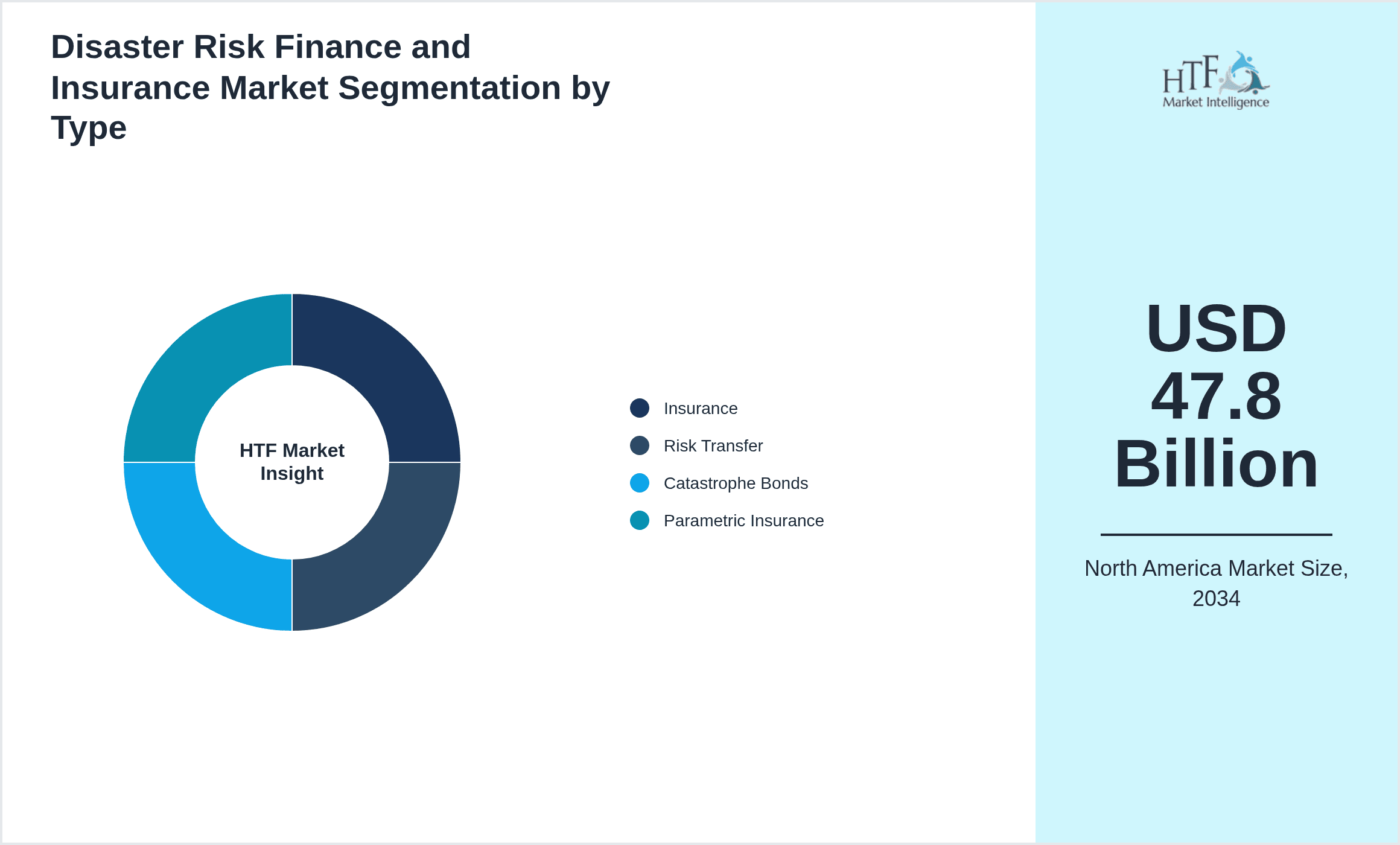
The Insurance segment remains the primary revenue generator within the North America Disaster Risk Finance and Insurance market, driven by traditional property and casualty coverage that addresses the broadest set of disaster-related exposures. Property insurance dominates due to the high asset values and concentrated disaster risks in urban and industrial zones. Risk transfer mechanisms like catastrophe bonds and parametric insurance, while smaller in market share, demonstrate the fastest growth, fueled by investor appetite for alternative risk capital and demand for rapid liquidity solutions by governments and corporations. Distribution channels have evolved with digital platforms gaining prominence, enabling direct consumer engagement and improving underwriting turnaround times. The integration of technology in underwriting and claims management has become a critical competitive differentiator, with leading players investing heavily in automation, predictive analytics, and real-time risk monitoring to optimize operational efficiency and customer experience.
Disaster Risk Finance and Insurance Market Segments & Classification
- •By Type
- ◦Insurance
- ◦Risk Transfer
- ◦Catastrophe Bonds
- ◦Parametric Insurance
- •By Application
- ◦Property
- ◦Casualty
- ◦Flood
- ◦Earthquake
- ◦Wildfire
- •By Distribution Channel
- ◦Direct
- ◦Broker
- ◦Digital Platforms
Regulatory Constraints of Disaster Risk Finance and Insurance Market
- •North America's disaster risk finance and insurance market is subject to complex regulatory frameworks involving federal and state jurisdictions that impose stringent capital adequacy, solvency, and consumer protection standards. Environmental regulations necessitate integration of climate risk assessments into underwriting, creating compliance challenges but also driving innovation in risk modeling.
- •Sustainability mandates and ESG considerations are increasingly influencing product design and investment strategies, compelling insurers to adopt green underwriting policies and transparent reporting, which can increase operational costs but improve long-term resilience.
- •Trade restrictions and certification standards impact the cross-border flow of reinsurance capital and technology solutions, while inflationary pressures and operational risks related to legacy system upgrades present ongoing challenges. Product substitution trends towards parametric and alternative risk transfer instruments reflect efforts to mitigate regulatory and capital constraints.
Future Outlook of Disaster Risk Finance and Insurance Market
- •Future expansion is expected in integrating advanced analytics and IoT-enabled risk monitoring with parametric insurance products to deliver faster, more transparent claims settlements and risk mitigation.
- •The United States will remain the dominant market within North America, driven by its large asset base, advanced capital markets, and regulatory support for innovative risk financing solutions.
- •Long-term industry transformation will be shaped by increasing climate-related risks, digital disruption, and the evolution of hybrid financial instruments combining insurance and capital market mechanisms.
The Road Ahead: Digital Transformation Revolution
The Disaster Risk Finance and Insurance market in North America is undergoing a profound digital transformation revolution characterized by integration of artificial intelligence, blockchain, and real-time data analytics into underwriting, claims processing, and risk monitoring. This transformation enhances operational efficiency, accelerates claims settlements, and improves risk transparency, enabling stakeholders to manage disaster exposure proactively. Digital platforms also facilitate access to new customer segments and foster innovation in product design, including parametric triggers and microinsurance solutions. The long-term impact of this digital revolution will be increased market resilience, optimized capital utilization, and enhanced capacity to address the escalating frequency and severity of disasters driven by climate change.
Regional Outlook
The United States currently holds a significant share of the market, primarily due to several key factors: increasing consumption rates, a burgeoning population, and robust economic momentum. These elements collectively drive demand, positioning this region as a leader in the market. On the other hand, Canada is rapidly emerging as the fastest-growing area within the industry. This remarkable growth can be attributed to swift infrastructure development, the expansion of various industrial sectors, and a marked increase in consumer demand. These dynamics make this region a crucial player in shaping future market growth.
In our report, we cover a comprehensive analysis of the following regions and countries:
- United States
- Canada
- Mexico
| Feature | Details |
|---|---|
| Base Year Market Size | USD 22.4 Billion |
| Forecast Year Market Size | USD 47.8 Billion |
| CAGR | 7.4% |
| Forecast Period | 2026 to 2033 |
| YoY Growth | 7.4% |
| Regions Covered | United States, Canada, Mexico |
| Key Companies | Munich Re (Germany), Swiss Re (Switzerland), The Hartford Financial Services Group (United States), Allianz SE (Germany), Chubb Limited (Switzerland), AXA XL (France), American International Group (United States), RMS (United States), Willis Towers Watson (United Kingdom), Marsh & McLennan Companies (United States) |
North America Disaster Risk Finance and Insurance Market Roadmap to 2034 - Table of Contents
Research enthusiast focused on transforming data uncovering into actionable insights through data-driven decision-making.
Frequently Asked Questions (FAQ):
The Market market is expected to see significant growth and value in 2025.
North America currently leads the market, followed by Europe and Asia-Pacific.
Key growth drivers include increasing activities, rising demand for innovative solutions, technological advancements, and growing preference for efficient products.