
Robot Mower Market - Global Industry Size & Growth Analysis 2019-2030
Global Robot Mower Market is segmented by Application (Residential Gardens, Commercial Landscapes, Golf Courses, Sports Fields, Public Parks), Type (Robotic Lawn Mowers, Robotic Garden Mowers, Robotic Slope Mowers, Robotic Robotic Mowers, Robotic Commercial Mowers), and Geography (North America, LATAM, West Europe, Central & Eastern Europe, Northern Europe, Southern Europe, East Asia, Southeast Asia, South Asia, Central Asia, Oceania, MEA)
Pricing
Report Overview
Key Values Provided by a Robot Mower Market
The Robot Mower market was valued at 0.5 Billion in 2023 and is expected to reach 0.8 Billion by 2019, growing at a compound annual growth rate (CAGR) of 7.00% over the forecast period.
The robot mower market deals with autonomous lawnmowers designed to maintain gardens, lawns, and landscapes without human intervention. These mowers are increasingly adopted for residential, commercial, and municipal use to reduce labor costs and enhance precision in landscaping. The market is driven by technological advancements in robotic navigation, battery efficiency, and integration with smart home systems. Innovations such as adaptive cutting patterns, weather-resistant designs, and AI-based mapping are shaping the robot mower market.
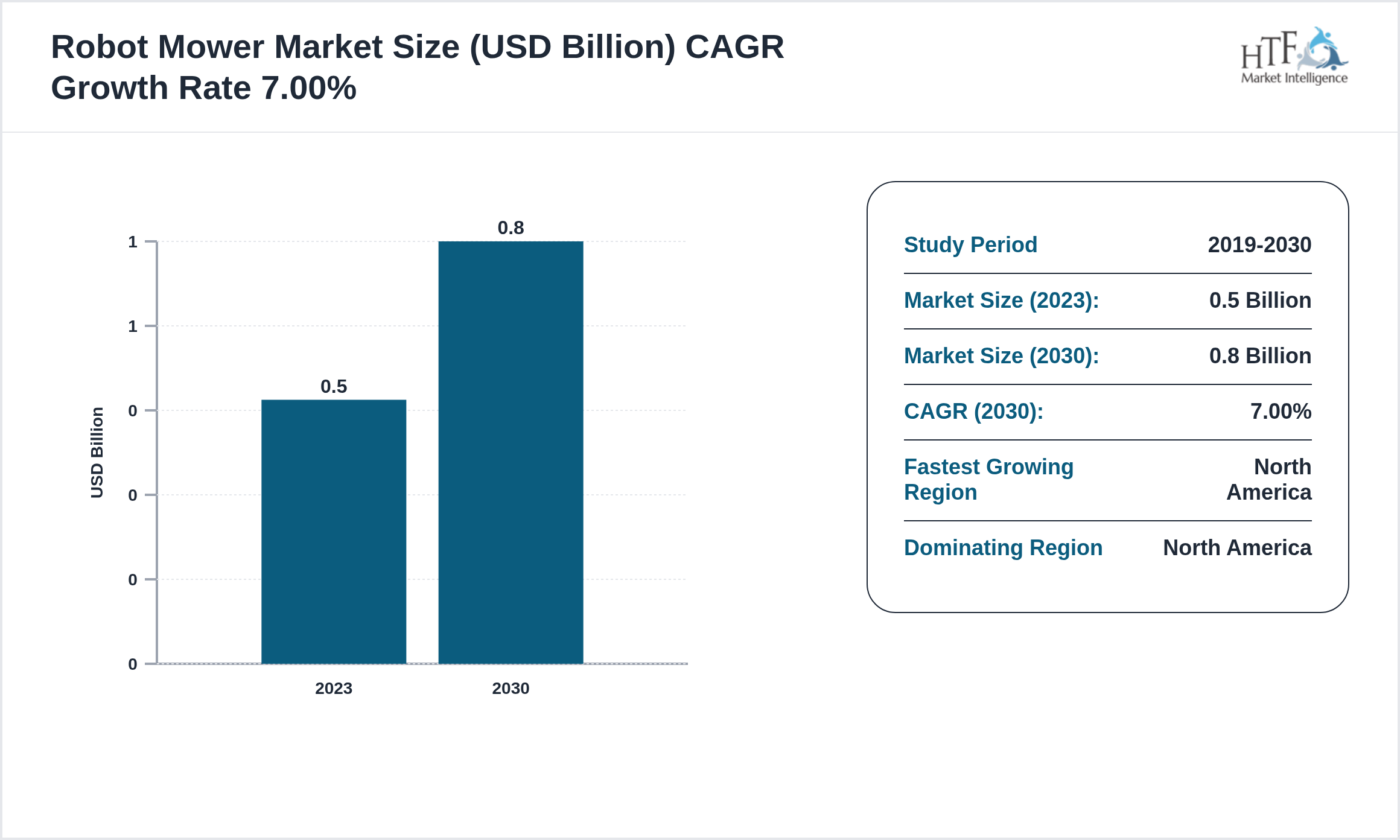
Source: HTF Market Intelligence (HTF MI)
A Robot Mower market research study provides invaluable data-driven insights that allow businesses to make informed decisions based on accurate market trends, customer behaviors, and competitor analysis. These reports help organizations better understand the evolving needs of their target audience, enabling more customer-focused strategies.
Market Dynamics
Influencing Trend:
- • Improved cutting performance
- • longer battery life
- • advanced sensors
- • AI-powered navigation
- • remote control
- • Emerging markets
- • specialized robot mowers for specific terrain and vegetation
- • innovative mowing technologies
- • High initial cost
- • maintenance requirements
- • technical complexity
- • safety concerns
- • Emerging markets
- • specialized robot mowers for specific terrain and vegetation
- • innovative mowing technologies
The North America Dominant Region currently dominates the market share, fueled by increasing consumption, population growth, and sustained economic progress, which collectively enhance market demand. Conversely, the {FASTEST GROWING REGION} is rapidly becoming the fastest-growing region, driven by significant infrastructure investments, industrial expansion, and rising consumer demand.
- North America
- LATAM
- West Europe
- Central & Eastern Europe
- Northern Europe
- Southern Europe
- East Asia
- Southeast Asia
- South Asia
- Central Asia
- Oceania
- MEA
Competitive Insights
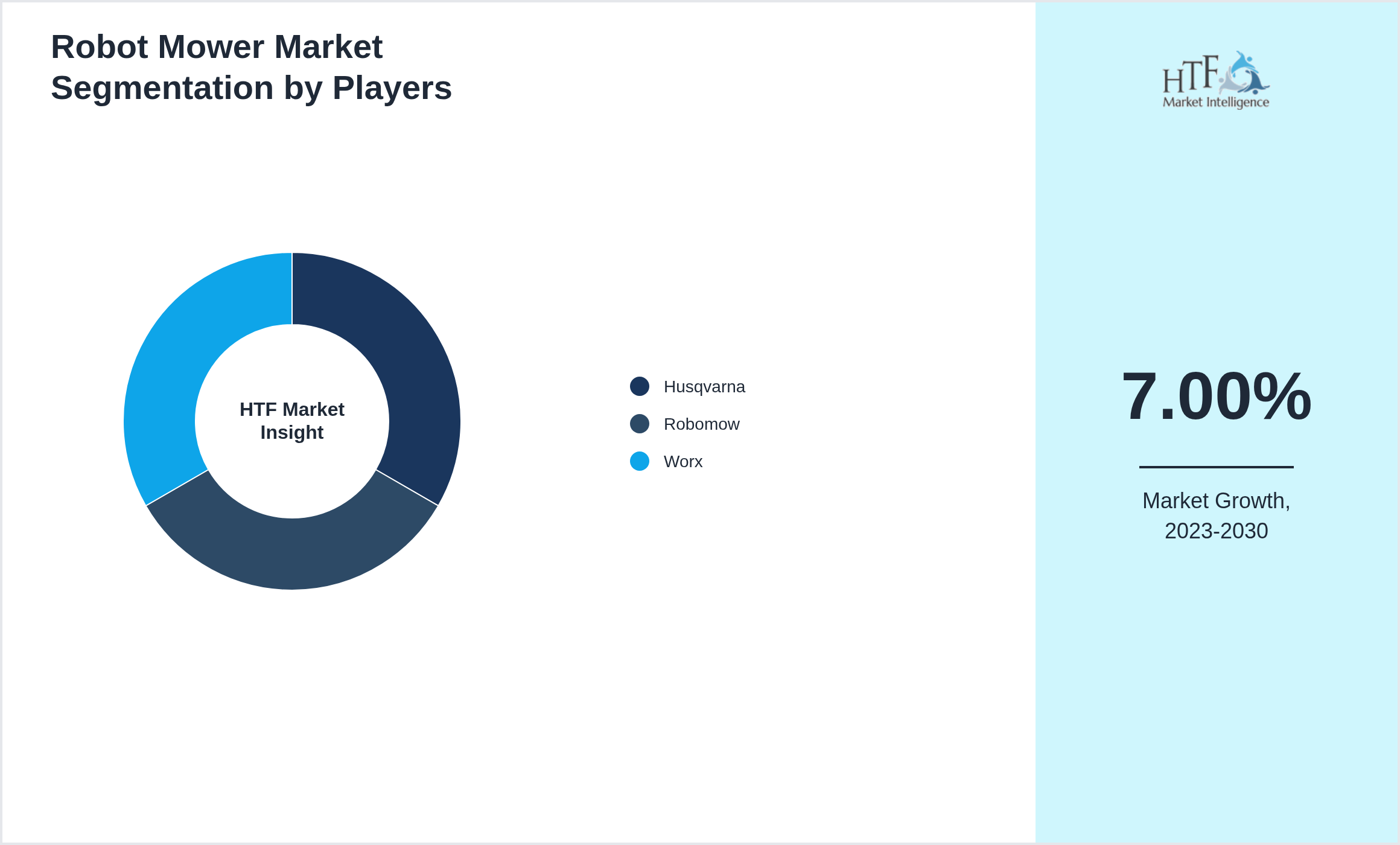
The key players in the Robot Mower are intensifying their focus on research and development (R&D) activities to innovate and stay competitive. Major companies, such as Husqvarna, Robomow, Worx, are heavily investing in R&D to develop new products and improve existing ones. This strategic emphasis on innovation drives significant advancements in product formulation and the introduction of sustainable and eco-friendly products.
Moreover, these established industry leaders are actively pursuing acquisitions of smaller companies to expand their regional presence and enhance their market share. These acquisitions not only help in diversifying their product portfolios but also provide access to new technologies and markets. This consolidation trend is a critical factor in the growth of the consumer goods industry, as it enables larger companies to streamline operations, reduce costs, and increase their competitive edge.
The companies highlighted in this profile were selected based on insights from primary experts and an evaluation of their market penetration, product offerings, and geographical reach:
- • Husqvarna
- • Robomow
- • Worx
Key Highlights
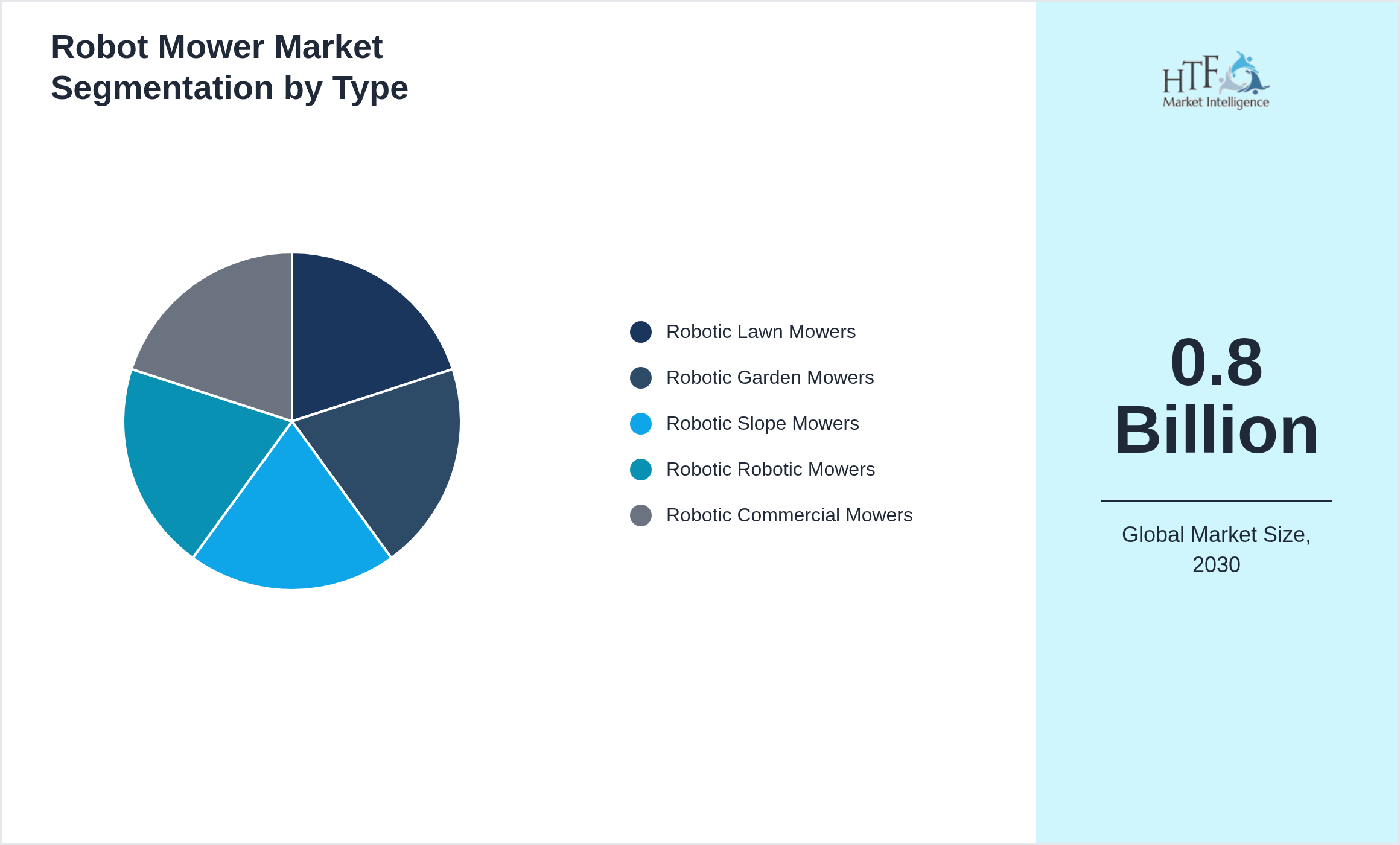
Segmentation by Type
- • Robotic Lawn Mowers
- • Robotic Garden Mowers
- • Robotic Slope Mowers
- • Robotic Robotic Mowers
- • Robotic Commercial Mowers
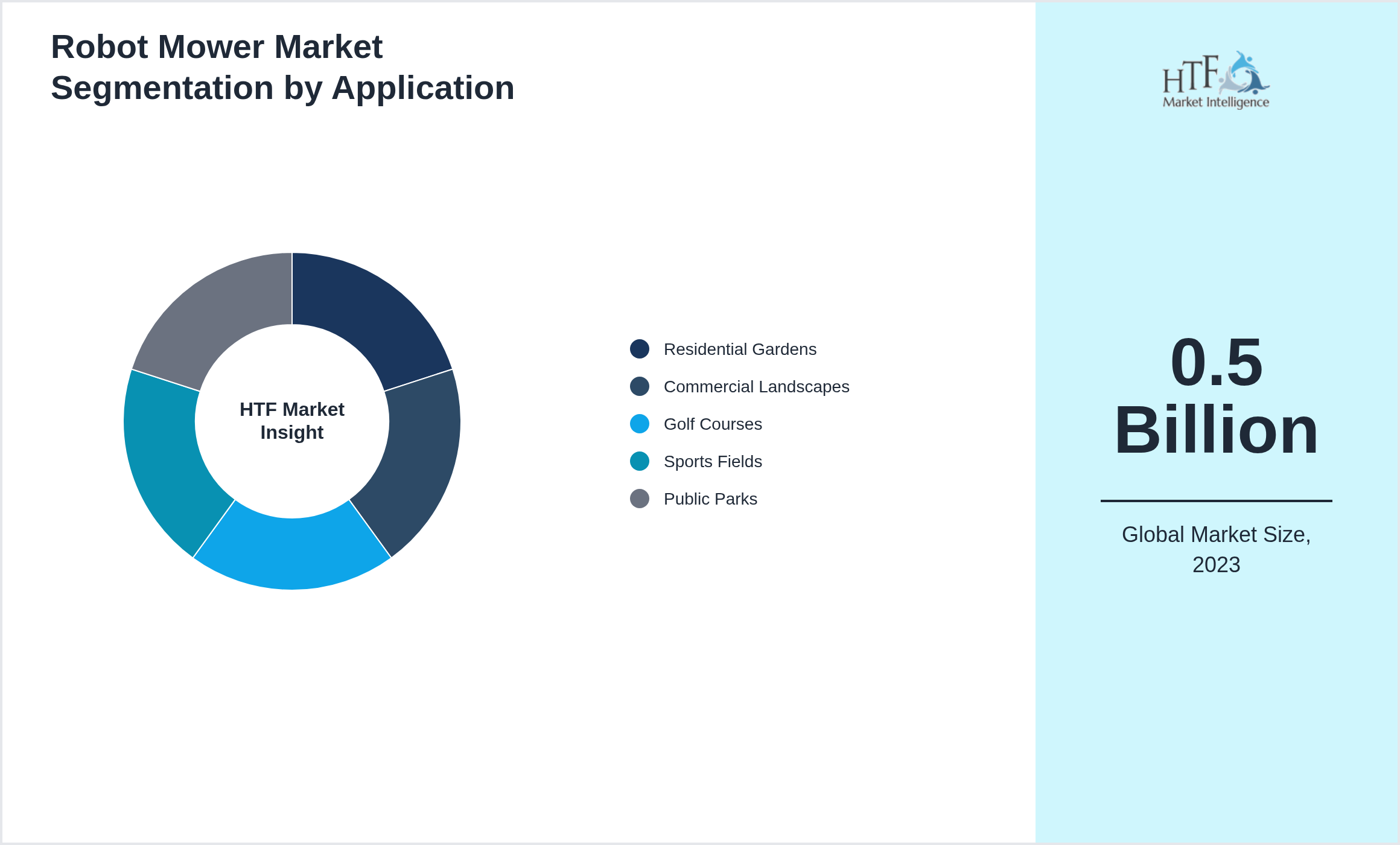
Segmentation by Application
- • Residential Gardens
- • Commercial Landscapes
- • Golf Courses
- • Sports Fields
- • Public Parks
Market Entropy
Merger & Acquisition
Regulatory Landscape
Patent Analysis
Investment and Funding Scenario
Competitive Innovation Radar
The Top-Down and Bottom-Up Approaches
The top-down approach begins with a broad theory or hypothesis and breaks it down into specific components for testing. This structured, deductive process involves developing a theory, creating hypotheses, collecting and analyzing data, and drawing conclusions. It is particularly useful when there is substantial theoretical knowledge, but it can be rigid and may overlook new phenomena.
Conversely, the bottom-up approach starts with specific data or observations, from which broader generalizations and theories are developed. This inductive process involves collecting detailed data, analyzing it for patterns, developing hypotheses, formulating theories, and validating them with additional data. While this approach is flexible and encourages the discovery of new phenomena, it can be time-consuming and less structured.
Swot and Pestel Analysis
SWOT Analysis
A SWOT analysis evaluates a company’s internal strengths and weaknesses, as well as external opportunities and threats. This Robot Mower analysis helps businesses identify their competitive advantages, address internal challenges, and seize external opportunities while mitigating potential risks. It is performed to gain a comprehensive understanding of the organization's position in the market, align strategies with its strengths, and effectively navigate competitive landscapes.
PESTEL Analysis
Political, economic, social, technological, environmental, and legal factors impacting the business environment. This analysis helps organizations anticipate external changes, adapt strategies to macroeconomic trends, and ensure compliance with regulatory requirements. It is crucial for understanding the external forces that could influence business operations and for planning long-term strategies that align with evolving market conditions.
Report Infographics:
| Report Features | Details |
| Base Year | 2023 |
| Based Year Market Size 2023 | 0.5 Billion |
| Historical Period | 2019 |
| CAGR (2023 to 2030) | 7.00% |
| Forecast Period | 2030 |
| Forecasted Period Market Size (2030) | 0.8 Billion |
| Scope of the Report | By Type, By Application, By Sales Channel, By Region |
| Quantitative Units |
Revenue in USD million/billion, volume in kilotons, and CAGR from 2023 to 2030 |
| Companies Covered | Husqvarna, Robomow, Worx |
| Customization Scope | 15% Free Customization (For example)
Want to Buy Specific Sections of This Report?
|
| Delivery Format | PDF and Excel through Email |