
AI Server Disaster Recovery Power Supply: Ensuring Uninterrupted Uptime
Discover how AI server disaster recovery power supply ensures uninterrupted uptime, boosts business resilience, and supports critical AI workloads across ind...
Introduction
In today's hyper-connected world, businesses increasingly rely on artificial intelligence (AI) servers to process vast amounts of data, power intelligent applications, and drive critical decision-making. As AI workloads become more complex, ensuring continuous uptime of these servers is paramount. This is where the concept of AI server disaster recovery power supply plays a vital role in safeguarding operations against power failures and unexpected outages.
In this article, we will explore the fundamentals of AI server disaster recovery power supply, examine its real-world applications, analyze current market trends, discuss the benefits for organizations, and address the challenges and future outlook. Whether you are an IT professional, business leader, or technology enthusiast, understanding this crucial aspect of AI infrastructure can help you enhance resilience and maintain business continuity.
Technology and Concept Overview
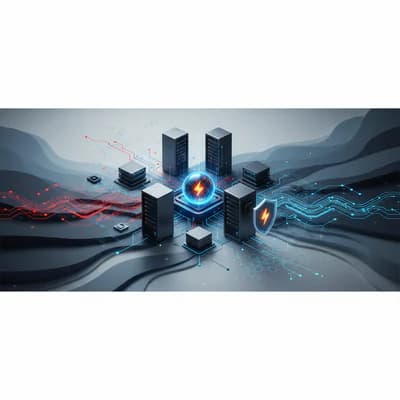
The AI server disaster recovery power supply refers to specialized energy systems designed to provide uninterrupted power to AI servers during outages or disruptions. These power supplies are integral to disaster recovery strategies that aim to minimize downtime and data loss, particularly for AI-driven infrastructures where milliseconds of delay can impact outcomes.
Key components of these power supplies include:
- Uninterruptible Power Supply (UPS): Delivers immediate backup power to servers when the main power source fails, bridging the gap until generators or other systems kick in.
- Automatic Transfer Switches (ATS): Seamlessly switch power sources from the main grid to backup generators without manual intervention.
- Backup Generators: Provide long-term power in extended outages, essential for data centers hosting AI workloads.
- Energy Storage Systems: Advanced battery technologies like lithium-ion or even emerging options such as hydrogen fuel cells that store energy efficiently for rapid deployment.
Given the sensitivity and critical nature of AI computation — including machine learning model training, real-time inference, and data analytics — maintaining a stable power environment is non-negotiable. Interruptions not only cause operational halts but can corrupt datasets, degrade models, and erode trust in AI outputs.
Industry Applications & Use Cases
The utility of AI server disaster recovery power supply spans multiple sectors where AI servers operate mission-critical workloads:
- Financial Services: AI-driven trading platforms and fraud detection systems require zero downtime. For instance, JPMorgan Chase employs robust disaster recovery power systems to keep AI risk models running in real-time during outages.
- Healthcare: Hospitals using AI for diagnostics or patient monitoring rely on continuous power. The Mayo Clinic, for example, integrates advanced UPS solutions to ensure AI-enabled imaging tools remain operational during blackouts.
- Manufacturing: Smart factories utilizing AI for predictive maintenance and automation implement disaster recovery power supplies to avoid costly production halts.
- Cloud Providers and Data Centers: Giants like Google and Microsoft invest heavily in redundant power architectures to support AI workloads with strict service-level agreements (SLAs).
Success stories highlight the importance of these solutions. In 2021, a major cloud provider avoided a potentially catastrophic AI service outage thanks to a state-of-the-art disaster recovery power supply system that kicked in within milliseconds during a grid failure.
Market Trends & Growth Drivers
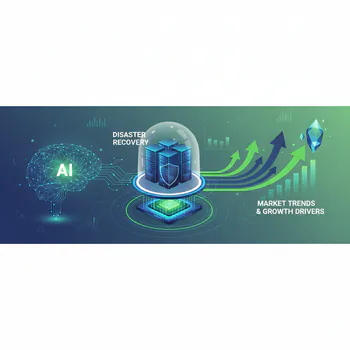
The demand for AI server disaster recovery power supply solutions is growing rapidly, fueled by several converging trends:
- Proliferation of AI Workloads: According to IDC, worldwide AI infrastructure spending is expected to surpass $100 billion by 2026, necessitating robust power backup solutions.
- Increasing Data Center Complexity: Modern AI servers require higher power density and reliability, driving innovation in energy storage and power management.
- Regulatory and Compliance Pressures: Industries such as finance and healthcare face stringent uptime and data integrity regulations that mandate disaster recovery protocols.
- Green and Sustainable Energy Integration: The rise of renewable energy sources leads to more variable power input, making reliable energy storage and backup systems critical.
Market forecasts by MarketsandMarkets estimate the global uninterruptible power supply market to grow at a CAGR of 8.5% through 2028, with AI server disaster recovery applications being a significant driver.
Market Trends & Growth Drivers
Benefits & Advantages
Implementing an effective AI server disaster recovery power supply offers numerous benefits:
- Uninterrupted AI Operations: Guarantees continuous processing power, reducing the risk of downtime-related losses.
- Data Integrity and Security: Prevents corruption or loss of critical AI models and datasets during power interruptions.
- Improved ROI: Minimizes costly downtime and ensures business continuity, protecting investments in AI infrastructure.
- Competitive Advantage: Organizations with resilient AI systems maintain customer trust and service reliability, differentiating themselves in crowded markets.
- Scalability and Flexibility: Modern power supply solutions adapt to evolving AI workloads and energy demands, supporting growth.
For example, a fintech company reported a 30% reduction in downtime-related losses after upgrading their disaster recovery power supply for AI servers, directly improving their bottom line.
Challenges & Future Outlook
Despite its importance, the deployment of AI server disaster recovery power supply systems faces several challenges:
- High Initial Costs: Advanced UPS and energy storage technologies require significant upfront investment.
- Integration Complexity: Ensuring seamless switching between power sources without affecting AI workloads demands sophisticated engineering.
- Energy Efficiency Concerns: Maintaining backup power can increase carbon footprints unless renewable solutions are integrated.
However, ongoing innovations promise to address these hurdles. Developments in solid-state batteries, AI-powered energy management systems, and hybrid renewable backup solutions are paving the way for more efficient and cost-effective disaster recovery power supplies.
Looking ahead, the future of AI server disaster recovery power supply will likely be characterized by greater automation, predictive maintenance using AI itself, and deeper integration with smart grids. This evolution will not only enhance reliability but also align with sustainability goals, creating resilient and eco-friendly AI infrastructure.
Conclusion
In summary, the AI server disaster recovery power supply stands as a cornerstone of dependable AI infrastructure. As AI continues to permeate critical business functions across industries, guaranteeing uninterrupted power to AI servers is essential to avoid costly disruptions, maintain data integrity, and uphold competitive advantage.
Organizations should prioritize investing in advanced power backup solutions tailored for AI workloads, leveraging cutting-edge energy storage and intelligent management technologies. By doing so, businesses can not only safeguard their AI operations but also position themselves for long-term growth in an increasingly digital and AI-driven world.
As the technology landscape evolves, staying ahead with resilient and sustainable disaster recovery power supplies will be key to unlocking the full potential of AI without compromise.
Need More Details on Market Players and Competitors?
Tagged in