
Aluminium Die Extrusion: Innovations, Applications & Market Growth
Discover how aluminium die extrusion revolutionizes manufacturing with versatile profiles, industry applications, market growth, and future innovations.

Introduction
In today's manufacturing landscape, Aluminium Die extrusion stands out as a revolutionary process transforming raw aluminium into complex, high-strength profiles with unmatched precision. From aerospace components to architectural frames, this technique is pivotal in enabling lightweight, durable, and cost-effective solutions across industries.
Understanding Aluminium Die extrusion is essential for engineers, manufacturers, and business leaders aiming to leverage the advantages of aluminium's versatility. This article dives deep into the technology, explores real-world applications, highlights market trends, and discusses future opportunities and challenges.
Technology and Concept Overview
Aluminium Die extrusion is a metal forming process where a heated aluminium billet is forced through a specifically designed die to create continuous shapes with fixed cross-sectional profiles. This technique allows for the production of complex geometric forms that are difficult or impossible to achieve through other manufacturing methods.
The process starts with heating aluminium billets to a plastic state, usually between 400-500°C, making the metal malleable yet strong. The billet is then pressed through a steel die—the tool that shapes the aluminium—under high hydraulic pressure. Upon exiting the die, the extruded profile is cooled, stretched to straighten, and finally cut into desired lengths.
Key terms associated with aluminium die extrusion include:
- Billet: The cylindrical aluminium block used in the process.
- Die: The precision tool that defines the shape of the extrusion.
- Hot extrusion: Extrusion performed at elevated temperatures to increase metal ductility.
- Cold extrusion: Performed at room temperature for specific alloys or shapes.
- Profile: The cross-sectional shape produced by the extrusion.
Aluminium’s excellent malleability, corrosion resistance, and strength-to-weight ratio make it ideal for die extrusion. Additionally, alloys such as 6061 and 6063 are commonly used due to their favorable mechanical properties and surface finish capabilities.
Industry Applications & Use Cases
The versatility of Aluminium Die extrusion has led to widespread adoption across numerous sectors. For instance, in the automotive industry, extruded aluminium profiles are used to manufacture lightweight chassis components, enhancing fuel efficiency and safety. Tesla’s use of aluminium extrusions for structural battery enclosures exemplifies this trend.
In the aerospace sector, companies like Boeing utilize aluminium extrusions for fuselage frames and wing ribs, where weight reduction without compromising strength is critical. These custom profiles also simplify assembly by integrating multiple functions into a single extrusion.
The construction and architectural industries rely heavily on aluminium die extrusion for window frames, curtain walls, and structural supports. The ability to create complex, energy-efficient profiles tailored to project specifications results in reduced fabrication time and lower costs.
Another notable example is the electronics industry, where extruded aluminium heat sinks help dissipate heat in devices ranging from computers to LED lighting, improving performance and longevity.
Market Trends & Growth Drivers
The global aluminium extrusion market has witnessed robust growth, driven by increasing demand across automotive, construction, and aerospace sectors. According to MarketsandMarkets, the aluminium extrusion market is projected to reach over USD 20 billion by 2027, growing at a CAGR of approximately 6% during the forecast period.
Several factors contribute to this growth:
- Lightweighting initiatives: Stringent fuel efficiency and emission norms push manufacturers to adopt lightweight materials like aluminium.
- Infrastructure development: Rapid urbanization fuels demand for aluminium extrusions in construction and transportation.
- Technological advancements: Innovations in die design and extrusion equipment improve precision and reduce production costs.
- Recycling potential: Aluminium’s recyclability supports sustainable manufacturing practices, appealing to eco-conscious industries.
Emerging markets in Asia-Pacific, particularly China and India, are also significant contributors, driven by expanding automotive production and infrastructure projects.
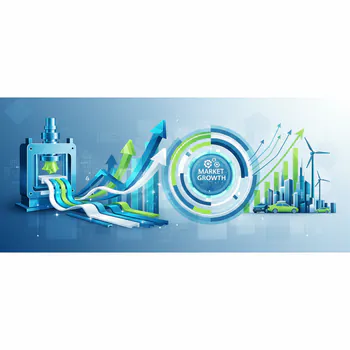
Market Trends & Growth Drivers
Benefits & Advantages of Aluminium Die Extrusion
The advantages of aluminium die extrusion are multifaceted, making it a preferred manufacturing method:
- Design flexibility: Complex and custom profiles can be produced economically, enabling innovative product designs.
- High strength-to-weight ratio: Aluminium extrusions offer significant weight savings without compromising structural integrity.
- Corrosion resistance: Naturally forming oxide layers protect extruded parts in harsh environments.
- Cost efficiency: Reduced machining and assembly requirements lead to lower production costs and faster time-to-market.
- Recyclability and sustainability: Aluminium can be recycled multiple times without loss of properties, reducing environmental impact.
For businesses, these benefits translate into competitive advantages such as improved product performance, enhanced brand reputation for sustainability, and attractive return on investment (ROI) due to material savings and production efficiencies.
Challenges & Future Outlook
Despite its many advantages, Aluminium Die extrusion faces challenges such as high initial tooling costs and limitations in extrusion size and thickness. Achieving tight tolerances on complex profiles may require secondary machining, increasing overall expenses.
Moreover, the need for energy-intensive heating and hydraulic systems raises concerns about production sustainability and operational costs. However, ongoing research in die materials, automation, and process control promises to address these issues.
Looking ahead, innovations such as additive manufacturing integration with extrusion, development of new aluminium alloys tailored for extrusion, and smart factory implementations are expected to redefine the extrusion landscape.
Industry experts forecast growing adoption of aluminium extrusions in electric vehicles, renewable energy infrastructure (like solar panel frames), and next-generation aerospace components, underscoring a strong and sustainable future.
Conclusion
Aluminium Die extrusion remains a cornerstone technology in modern manufacturing, offering unparalleled design freedom, strength, and sustainability. Its applications span automotive, aerospace, construction, and electronics, demonstrating its versatility and value.
As market demands evolve towards lightweight, eco-friendly, and cost-effective solutions, aluminium extrusion is poised for significant growth. Businesses that invest in understanding and implementing this technology can unlock competitive advantages, streamline production, and cater to future market needs.
Staying abreast of technological advancements and market trends will be crucial for leveraging the full potential of aluminium die extrusion in the coming years.
Need More Details on Market Players and Competitors?
Tagged in