
Rangefinders: Revolutionizing Precision Across Industries
Discover how rangefinders enhance precision across industries with advanced technology, market trends, benefits, and future innovations.

Introduction
In a world where accuracy and efficiency are paramount, rangefinders have emerged as indispensable tools across diverse sectors. From outdoor enthusiasts seeking to improve their aim to professionals in construction and surveying requiring exact distance measurements, rangefinders offer precise data that enhances decision-making and operational excellence.
This article delves into the fascinating technology behind rangefinders, explores their wide-ranging applications, examines current market trends, highlights the key benefits they offer, and discusses the challenges and future outlook of this innovative technology.
Technology and Concept Overview
Rangefinders are devices designed to measure the distance between the observer and a target object. Fundamentally, they employ different technologies such as laser, ultrasonic, or optical methods to deliver accurate range measurements.
The most prevalent type today is the laser rangefinder, which uses a laser beam to measure the time it takes for the light to reflect off the target and return to the device. This time-of-flight measurement is then converted into a distance reading. Other types include ultrasonic rangefinders, which use sound waves, and optical rangefinders, which rely on stereoscopic or coincidence methods.
Understanding these core concepts is crucial because the choice of technology influences the accuracy, range, portability, and cost of the device. For example, laser rangefinders typically offer higher precision and longer range capabilities compared to ultrasonic versions, making them ideal for professional applications.
Industry Applications & Use Cases
Rangefinders have become vital tools in multiple industries, each leveraging their precision for unique purposes:
- Construction and Surveying: Professionals use rangefinders to measure distances quickly on-site, enhancing mapping accuracy and reducing manual errors. For instance, Leica Geosystems’ laser rangefinders are widely adopted for land surveying, enabling fast and reliable data collection.
- Hunting and Outdoor Sports: Hunters rely on rangefinders to accurately gauge the distance to their targets, improving shot placement and safety. The Bushnell Elite 1-Mile CONX is a popular model among archers and hunters for its long-range capabilities and weatherproof design.
- Golf: Golfers use specialized rangefinders to measure distances to hazards or the green, helping with club selection and improving overall gameplay. Models like the Garmin Approach series integrate GPS and laser technology for enhanced performance.
- Military and Defense: Rangefinders are critical for targeting, reconnaissance, and navigation. Advanced tactical rangefinders provide rapid and precise distance data under challenging conditions, enhancing operational effectiveness.
- Robotics and Autonomous Systems: In robotics, rangefinders help machines perceive their environment, enabling obstacle detection and navigation. LIDAR, a form of laser rangefinding, is foundational in self-driving vehicle technologies.
These real-world implementations highlight how versatile and essential rangefinders have become.
Market Trends & Growth Drivers
The global market for rangefinders is witnessing robust growth, driven by technological advancements and expanding applications. According to recent industry reports, the market is projected to grow at a compound annual growth rate (CAGR) of around 7.5% over the next five years.
Key growth drivers include:
- Technological Innovation: Integration of advanced laser technologies, enhanced battery life, and digital interfaces have increased rangefinder accuracy and usability.
- Rising Demand in Sports and Recreation: Growing popularity of golf, hunting, and outdoor activities boosts consumer demand for portable and affordable rangefinders.
- Infrastructure Development: Expanding construction and urban development projects globally require precise surveying tools, fueling professional rangefinder sales.
- Advancement in Autonomous Vehicles: The surge in autonomous systems relies heavily on LIDAR and other rangefinding technologies for environmental sensing.
Furthermore, emerging markets in Asia-Pacific and increasing defense budgets worldwide contribute significantly to the expanding rangefinder market landscape.
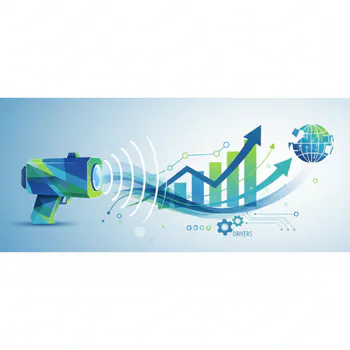
Market Trends & Growth Drivers
Benefits & Advantages
The adoption of rangefinders brings numerous benefits to businesses and end-users alike:
- Precision and Accuracy: Rangefinders deliver exact distance measurements, minimizing errors and improving outcomes in critical tasks.
- Time Efficiency: They drastically reduce the time needed for measurements compared to manual methods, enhancing productivity.
- Portability and Ease of Use: Modern rangefinders are compact, lightweight, and user-friendly, encouraging widespread adoption.
- Cost Savings: By improving accuracy and reducing rework, rangefinders offer a strong return on investment (ROI) for professionals.
- Competitive Advantage: Businesses leveraging rangefinder technology can differentiate themselves through higher quality service and operational efficiency.
Ultimately, rangefinders empower users to make informed decisions backed by reliable data, a critical factor in today’s data-driven world.
Challenges & Future Outlook
Despite their many advantages, rangefinders face certain challenges that impact their adoption and development:
- Environmental Limitations: Factors such as fog, rain, dust, or reflective surfaces can interfere with laser signals, affecting accuracy.
- Cost Barriers: High-end rangefinders with advanced features may be cost-prohibitive for casual users or small businesses.
- Technological Complexity: Integrating rangefinders with other systems, such as GPS or robotics, requires sophisticated engineering.
However, ongoing research is addressing these issues. Innovations like multi-wavelength lasers, AI-powered signal processing, and more affordable components promise to enhance performance and accessibility.
Looking ahead, the future of rangefinders appears bright, with trends pointing toward:
- Greater integration with digital ecosystems, including IoT and smart devices.
- Expansion into new fields such as virtual reality (VR) and augmented reality (AR) for immersive experiences.
- Enhanced miniaturization and energy efficiency, broadening use cases.
In summary, as technology evolves, rangefinders will continue to redefine precision and operational capabilities across industries.
Conclusion
Rangefinders are no longer niche instruments but vital tools that deliver precision, efficiency, and value across multiple sectors. From construction sites and golf courses to autonomous vehicles and defense applications, their role is integral to modern technology ecosystems.
Businesses and professionals aiming to stay competitive should consider integrating advanced rangefinder technology into their workflows to capitalize on its benefits. By understanding the current landscape, applications, and emerging trends, users can make informed decisions that drive success.
As we move forward, the continual advancement of rangefinder technologies promises exciting opportunities to enhance accuracy, streamline operations, and unlock new possibilities in the digital age.
Need More Details on Market Players and Competitors?
Tagged in