
Sensor Bearing: Revolutionizing Industrial Monitoring & Control
Discover how sensor bearings transform industrial monitoring with real-time data, boosting efficiency, reducing downtime, and driving predictive maintenance.

Introduction
In today’s fast-paced industrial landscape, efficiency and reliability have become paramount. One key innovation driving this transformation is the sensor bearing — a smart, integrated component that combines traditional bearing functions with embedded sensing technology.
Sensor bearings provide real-time monitoring of machine conditions, enabling predictive maintenance, reducing downtime, and enhancing overall operational performance. This article dives deep into the world of sensor bearings, exploring their technology, applications, market trends, benefits, and future outlook.
Technology and Concept Overview
A sensor bearing is essentially a bearing equipped with built-in sensors that monitor various parameters such as temperature, vibration, speed, and load. These bearings transform conventional mechanical components into smart devices capable of delivering actionable data.
Key technologies involved include:
- Embedded Sensors: Typically accelerometers, temperature sensors, or strain gauges integrated within bearing housings.
- Wireless Communication: Many sensor bearings use low-power wireless technologies like Bluetooth Low Energy (BLE) or Industrial IoT protocols to transmit data.
- Data Analytics: Coupled with IoT platforms, sensor bearings enable real-time analysis and predictive maintenance.
Originating from advancements in the Industrial Internet of Things (IIoT), sensor bearings are revolutionizing traditional asset monitoring by providing granular insights directly from the mechanical heart of rotating equipment.
Industry Applications & Use Cases
Sensor bearings have found widespread adoption across multiple industries, including manufacturing, automotive, aerospace, energy, and transportation.
- Manufacturing: In automated assembly lines, sensor bearings monitor machine health to prevent unexpected failures. For example, companies like SKF and Schaeffler have successfully deployed sensor bearings in production plants to reduce downtime by up to 30%.
- Wind Energy: Wind turbines often operate in harsh environments. Sensor bearings in turbine gearboxes monitor vibration and temperature, enabling early detection of wear and tear, which improves turbine reliability.
- Automotive: High-performance vehicles utilize sensor bearings in wheel hubs to enhance safety and performance by continuously monitoring wheel speed and load.
- Aerospace: Aircraft engines and landing gear systems employ sensor bearings to track operational parameters, ensuring maintenance is timely and precise.
These real-world implementations underscore how sensor bearings are becoming indispensable for ensuring uptime and safety in critical machinery.
Market Trends & Growth Drivers
The sensor bearing market is experiencing rapid growth fueled by several converging trends:
- Rising Industrial Automation: As factories embrace Industry 4.0, the demand for smart components like sensor bearings surges.
- Predictive Maintenance Adoption: Companies are shifting from reactive to predictive maintenance strategies, leveraging sensor data to avoid costly breakdowns.
- Advancements in IoT Connectivity: Improved wireless communication and edge computing enable seamless integration of sensor bearings into enterprise monitoring systems.
According to a recent market report by MarketsandMarkets, the global sensor bearing market is projected to grow at a CAGR of nearly 12% from 2023 to 2030, driven primarily by manufacturing and energy sectors.
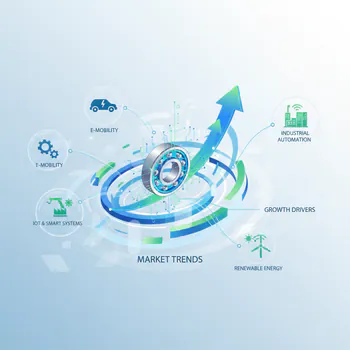
Market Trends & Growth Drivers
Benefits & Advantages
Sensor bearings offer numerous advantages for both businesses and equipment operators, including:
- Real-Time Condition Monitoring: Immediate detection of anomalies such as overheating or abnormal vibrations.
- Reduced Downtime: Predictive insights enable timely maintenance, preventing costly unplanned outages.
- Increased Equipment Lifespan: By addressing issues before failure, sensor bearings help extend machine service life.
- Cost Savings: Lower maintenance costs and reduced production stoppages improve return on investment.
- Competitive Edge: Companies adopting sensor bearings gain operational transparency, enhancing decision-making and efficiency.
For example, a major automotive manufacturer reported a 25% reduction in maintenance costs after integrating sensor bearings into their assembly robots.
Challenges & Future Outlook
Despite their promise, sensor bearings face challenges that impact widespread adoption:
- Integration Complexity: Retrofitting existing equipment can be difficult, especially in legacy systems.
- Data Management: Collecting and processing vast sensor data requires robust IT infrastructure and analytics capabilities.
- Cost Considerations: Higher upfront costs compared to traditional bearings may deter some users.
However, ongoing innovations are addressing these barriers. Developments in miniaturized sensors, energy harvesting to power sensor bearings, and advanced AI-driven analytics are shaping the future of this technology.
Looking ahead, the sensor bearing market is poised for expansion as digital transformation deepens. Integration with augmented reality (AR) for maintenance, blockchain for secure data, and enhanced wireless protocols will further enhance their value proposition.
Conclusion
In summary, sensor bearings are revolutionizing how industries monitor and maintain critical rotating equipment. By embedding sensors directly into bearings, businesses gain unprecedented visibility into machine health, enabling predictive maintenance, reducing downtime, and driving cost efficiencies.
As Industry 4.0 and IoT adoption accelerate, sensor bearings will become standard components in intelligent manufacturing and energy systems. Organizations willing to invest in this technology today stand to reap significant operational advantages and future-proof their asset management strategies.
Embracing sensor bearing technology is not just an innovation—it's a strategic imperative for businesses aiming to thrive in the era of smart industry.
Need More Details on Market Players and Competitors?
Tagged in