
Unlocking Efficiency with Commercial Dough Machines in Food Industry
Discover how commercial dough machines enhance efficiency, consistency, and growth in bakeries and food manufacturing with key trends and benefits explained.

Introduction
In the fast-paced world of baking and food production, efficiency and consistency are paramount. Enter commercial dough machines—essential tools that have revolutionized how bakeries, restaurants, and food manufacturers prepare dough at scale. Whether you're crafting artisan breads or producing thousands of pizza bases daily, these machines streamline operations while ensuring quality.
This article dives deep into the realm of commercial dough machines, exploring their technology, industry uses, market trends, benefits, and the challenges they present. By the end, you'll understand why these machines are indispensable in modern food production and how they can elevate your business.
Technology & Concept Overview
Commercial dough machines are specialized equipment designed to automate the mixing, kneading, and sometimes portioning of dough. Unlike traditional manual methods, these machines use advanced mechanical and sometimes pneumatic systems to handle large batches with precision.
Key terms to know include:
- Dough mixer: The core component that blends flour, water, yeast, and other ingredients into a uniform dough.
- Kneading mechanism: Often spiral or planetary mixers, designed to develop gluten structure efficiently.
- Divider and rounder: Machines that portion dough into equal sizes and shape them into balls ready for proofing or baking.
- Control panel: Allows operators to set mixing times, speeds, and other parameters for consistent results.
Commercial dough machines vary in size and complexity—from compact mixers suitable for small bakeries to fully automated lines for industrial food production. The integration of programmable logic controllers (PLCs) and touchscreens has made these machines more user-friendly and customizable than ever.
Industry Applications & Use Cases
The versatility of commercial dough machines enables their adoption across multiple sectors:
- Bakeries: Artisan and large-scale bakeries utilize these machines to produce bread, pastry, and specialty doughs with consistent quality and texture.
- Pizza chains: High-volume pizzerias rely on dough mixers and dividers to maintain uniform pizza bases, speeding up preparation and reducing labor costs.
- Food manufacturing: Commercial dough machines are integral in mass-producing frozen dough products like croissants, buns, and flatbreads.
- Restaurants and Cafés: Establishments with in-house baking capabilities use these machines to enhance menu offerings efficiently.
For example, a well-known pizza franchise implemented a state-of-the-art commercial dough machine line, resulting in a 30% increase in dough preparation speed and a 15% reduction in ingredient waste. Similarly, a regional bakery chain reported enhanced product consistency and reduced manual labor hours after integrating automated mixers and dividers.
Market Trends & Growth Drivers
The global market for commercial dough machines is experiencing robust growth, driven by several factors. According to industry reports, the dough processing equipment market is expected to grow at a CAGR of over 6% through 2028.
Key growth drivers include:
- Increasing demand for baked goods: Rising consumer preferences for bread, pizza, and other bakery items fuel demand for efficient dough processing.
- Automation and labor cost reduction: Businesses seek machines to minimize manual labor and improve productivity.
- Advancements in technology: Innovations such as IoT integration and AI-driven controls enhance machine capabilities and maintenance.
- Expansion of food service chains: Growing fast-food and casual dining sectors require scalable dough solutions.
Moreover, the push toward clean-label and artisanal baked goods has encouraged manufacturers to invest in machines capable of handling diverse dough formulations, including gluten-free and whole-grain options.
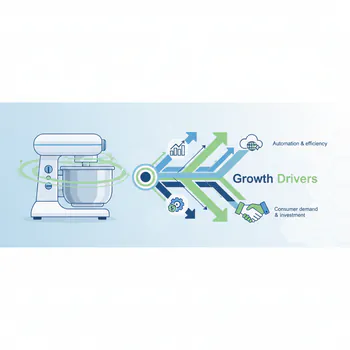
Market Trends & Growth Drivers
Benefits & Advantages
Investing in commercial dough machines offers numerous advantages for businesses:
- Consistency: Automated mixing and kneading ensure uniform dough quality batch after batch, critical for brand reputation.
- Efficiency: Commercial dough machines drastically reduce preparation time, increasing output without sacrificing quality.
- Cost savings: By reducing manual labor and minimizing ingredient wastage, businesses improve overall profitability.
- Scalability: Machines can be scaled to meet fluctuating demand, from small artisan operations to large industrial lines.
- Enhanced hygiene: Modern machines are designed with food safety in mind, featuring easy-to-clean surfaces and enclosed systems.
For example, companies have reported an average ROI within 18 months after purchasing commercial dough machines due to labor savings and increased production capacity.
Challenges & Future Outlook
Despite their benefits, commercial dough machines face certain challenges. Initial capital investment can be high, especially for advanced automated systems. Additionally, operators require training to utilize machines effectively and maintain them properly.
Maintenance and downtime can also impact productivity, making reliable after-sales support crucial. Furthermore, adapting machines to accommodate new dough recipes and formulations may require customization.
Looking ahead, the future of commercial dough machines is promising. Innovations like AI-powered predictive maintenance, remote monitoring, and energy-efficient designs are becoming standard. Integration with broader smart kitchen ecosystems allows real-time tracking and optimization.
Moreover, trends toward sustainability encourage manufacturers to develop machines that consume less energy and support alternative flours and additives. This adaptability will be key as consumer preferences continue to evolve.
Conclusion
Commercial dough machines have firmly established themselves as vital assets in the food industry, offering unparalleled consistency, efficiency, and scalability. By automating critical dough preparation processes, these machines empower businesses to meet growing market demands while maintaining product quality.
As technology advances, businesses that invest in modern dough processing equipment can expect not only operational improvements but also strategic advantages in innovation and sustainability. For bakeries, restaurants, and food manufacturers aiming to expand their footprint or improve profitability, commercial dough machines represent a smart, forward-looking investment.
To capitalize on these benefits, companies should carefully evaluate their specific production needs, seek machines with flexible features, and prioritize robust support services. Embracing commercial dough machines today sets the stage for success in the evolving world of baked goods tomorrow.
Need More Details on Market Players and Competitors?
Tagged in