
Unlocking Insights with Single-cell Analysis: Trends & Applications
Explore how single-cell analysis is revolutionizing biology with cutting-edge tech, market trends, industry applications, benefits, and future outlook insights.

Introduction
Imagine being able to explore the intricate details of individual cells—their unique characteristics, behaviors, and functions. This is no longer just a scientific dream but a reality thanks to the revolutionary technology of single-cell analysis. As biological research and personalized medicine continue to evolve, understanding cells on an individual level has become a game-changer.
In this article, we will dive deep into what single-cell analysis entails, explore its diverse industry applications, examine current market trends and growth drivers, highlight its benefits, and discuss future challenges and opportunities. Whether you are a researcher, healthcare professional, or business stakeholder, this comprehensive guide will illuminate why single-cell analysis is transforming the life sciences landscape.
What is Single-cell Analysis? Technology and Concept Overview
Single-cell analysis refers to a collection of powerful techniques that enable researchers to study the genomics, transcriptomics, proteomics, and metabolomics of individual cells rather than bulk populations. Traditionally, biological assays measure averaged signals from millions of cells, masking the heterogeneity within tissues and organisms. Single-cell technologies overcome this limitation by providing resolution at the cellular level.
Key terms to understand include:
- Single-cell RNA sequencing (scRNA-seq): A method to analyze gene expression profiles in individual cells, revealing functional diversity.
- Flow cytometry and mass cytometry: Techniques for quantifying physical and chemical characteristics of cells.
- Single-cell genomics: Sequencing DNA from single cells to detect genetic variations and mutations.
- Spatial transcriptomics: Mapping gene expression data within the spatial context of tissue architecture.
These approaches provide unparalleled insights into cell-to-cell variability, lineage trajectories, and cellular microenvironments, advancing our understanding of complex biological systems.
Industry Applications & Real-world Use Cases
The applications of single-cell analysis span multiple sectors in life sciences and healthcare, driving innovation and enabling precision medicine.
- Cancer Research: Single-cell profiling uncovers tumor heterogeneity, identifying resistant cell populations and informing targeted therapies. For example, researchers at the Broad Institute used scRNA-seq to discover rare immune cell subtypes impacting tumor responses.
- Immunology: Mapping immune cell diversity helps in vaccine development and autoimmune disease understanding. Single-cell techniques were pivotal in characterizing immune responses during the COVID-19 pandemic.
- Neuroscience: Single-cell transcriptomics is revolutionizing brain research by defining distinct neuronal types and their roles in neurodegenerative diseases.
- Drug Development: Pharmaceutical companies leverage single-cell data to identify novel drug targets and evaluate drug effects at a granular level, reducing failure rates in clinical trials.
- Regenerative Medicine: Understanding stem cell heterogeneity aids in developing effective cell therapies and tissue engineering approaches.
Market Trends & Growth Drivers
The single-cell analysis market has experienced rapid growth over the past decade, driven by technological advancements and increasing demand for personalized healthcare solutions. According to a report by Grand View Research, the global single-cell analysis market size was valued at approximately $3 billion in 2023 and is expected to grow at a CAGR of over 15% through 2030.
Several factors contribute to this expansion:
- Technological Innovation: Developments such as droplet-based sequencing and automation have enhanced throughput and reduced costs.
- Rising Prevalence of Chronic Diseases: The need to understand complex diseases at a cellular level fuels adoption.
- Increased Funding and Collaborations: Government initiatives and partnerships between academia and industry accelerate research and commercialization.
- Integration with AI and Bioinformatics: Advanced data analysis tools improve interpretation and actionable insights from single-cell data.
Consequently, the market outlook remains optimistic, with expanding applications in diagnostics, therapeutics, and biomarker discovery.
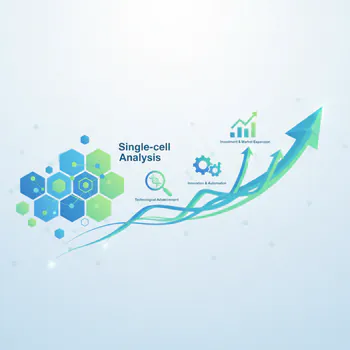
Market Trends & Growth Drivers
Benefits & Advantages of Single-cell Analysis
Adopting single-cell analysis offers significant benefits for researchers, clinicians, and businesses alike:
- Enhanced Resolution: Identifies rare cell populations and uncovers cellular heterogeneity invisible in bulk analyses.
- Improved Disease Understanding: Enables precise characterization of disease mechanisms, leading to better diagnostics and treatments.
- Personalized Medicine: Facilitates patient-specific profiling that informs tailored therapeutic strategies, boosting treatment efficacy.
- Faster Drug Discovery: Accelerates target identification and validation, optimizing drug development pipelines and reducing costs.
- Competitive Edge: Companies leveraging single-cell insights can differentiate their offerings and gain leadership in emerging biotech fields.
From a financial perspective, the return on investment is compelling, as single-cell analysis helps avoid costly clinical failures and improves overall healthcare outcomes.
Challenges & Future Outlook
Despite its transformative potential, single-cell analysis faces certain challenges that must be addressed for broader adoption:
- Data Complexity: Single-cell datasets are vast and require sophisticated computational tools and expertise to analyze accurately.
- Cost and Accessibility: High costs of instruments and reagents may limit use, especially in resource-constrained settings.
- Standardization: Variability in protocols and data interpretation can hinder reproducibility and clinical translation.
To overcome these hurdles, ongoing innovations include the development of integrated platforms, AI-powered analytics, and cost-effective workflows. Moreover, international consortia are working towards establishing standardized guidelines for single-cell experiments.
Looking ahead, single-cell analysis is poised to become a foundational tool in biology and medicine. Emerging trends such as multi-omics integration, spatial analysis, and real-time single-cell monitoring will further enhance its impact, ushering in a new era of precision health and biological discovery.
Conclusion
Single-cell analysis is reshaping our understanding of biology by unlocking the secrets hidden within individual cells. Its ability to reveal cellular diversity and dynamics offers unparalleled opportunities across research, diagnostics, and therapeutics. As technologies mature and challenges are addressed, single-cell analysis will increasingly drive innovation and personalized solutions.
For businesses and researchers, investing in single-cell capabilities now is vital to staying competitive in the evolving life sciences landscape. Embracing this cutting-edge approach not only accelerates scientific breakthroughs but also delivers tangible value through improved outcomes and reduced development risks. In essence, the future of biomedical innovation and personalized medicine is single-cell at a time.
Need More Details on Market Players and Competitors?
Tagged in