
Wearable Exoskeletons: Revolutionizing Mobility and Industry
Explore how wearable exoskeletons are transforming healthcare, industry, and military with enhanced mobility, productivity, and injury prevention.

Introduction
Imagine a future where humans can effortlessly lift heavy loads, reduce physical strain, and regain mobility after injury—all by wearing a lightweight, robotic suit. Wearable exoskeletons are turning this vision into reality, transforming how we approach physical labor, rehabilitation, and even military operations.
As technology advances at a rapid pace, wearable exoskeletons have become increasingly relevant across multiple industries. This article delves into the fundamentals of wearable exoskeleton technology, explores its diverse applications, highlights current market trends, and examines the benefits and challenges shaping its future.
Technology/Concept Overview
Wearable exoskeletons are wearable robotic devices designed to augment human strength, endurance, and mobility. These systems can be powered or passive and typically consist of a framework worn on the body that supports and enhances natural movement.
Key components include sensors, actuators, and control systems that work together seamlessly. Sensors detect the user's movement and intentions, actuators provide mechanical force, and control units coordinate these actions in real-time.
Originating from military research in the late 20th century, exoskeleton technology has evolved significantly with advances in materials science, robotics, and artificial intelligence. Today’s wearable exoskeletons are more lightweight, adaptive, and comfortable, allowing broader use beyond specialized environments.
Industry Applications & Use Cases
The versatility of wearable exoskeletons has led to practical implementations in numerous sectors:
- Healthcare and Rehabilitation: Devices like ReWalk and Ekso Bionics assist patients with spinal cord injuries or stroke to regain mobility. These exoskeletons support walking, improve muscle strength, and accelerate recovery timelines.
- Industrial and Construction: Companies such as Ford and Toyota have integrated exoskeletons to reduce worker fatigue and prevent musculoskeletal injuries. For example, Ford’s EksoVest enables assembly line workers to hold heavy tools overhead comfortably for extended periods.
- Military and Defense: The U.S. Army’s TALOS project and Lockheed Martin’s Fortis exoskeleton enhance soldier endurance during prolonged missions, supporting heavy gear and reducing strain.
- Logistics and Warehousing: Warehousing giants like DHL are testing wearable exoskeletons to assist with heavy lifting, improving workplace safety and efficiency.
- Agriculture: Farmers use exoskeletons to reduce strain during repetitive tasks like harvesting, promoting longer work hours without injury.
These examples highlight how wearable exoskeletons are already making a tangible difference in productivity and worker well-being.
Market Trends & Growth Drivers
The global wearable exoskeleton market is experiencing rapid growth, driven by technological advancements and rising demand for ergonomic solutions. According to a report by MarketsandMarkets, the exoskeleton market is projected to grow at a CAGR of over 30% between 2023 and 2030.
Several factors fuel this growth:
- Aging Workforce: As populations age worldwide, industries seek assistive technologies to maintain worker productivity and reduce injury rates.
- Increasing Workplace Injuries: High rates of musculoskeletal disorders have pushed companies to adopt preventive measures like wearable exoskeletons.
- Technological Breakthroughs: Innovations in AI, lightweight materials, and battery technologies have enhanced exoskeleton performance and usability.
- Government Support and Funding: Many countries are investing in exoskeleton research for medical and defense purposes.
These drivers position wearable exoskeletons as a key growth segment within the broader robotics and wearable tech markets.
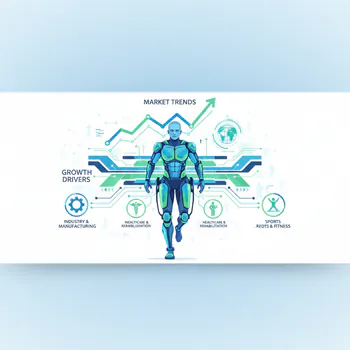
Market Trends & Growth Drivers
Benefits & Advantages
Wearable exoskeletons offer numerous benefits for both businesses and users:
- Injury Prevention: By redistributing loads and reducing muscle strain, exoskeletons lower the risk of workplace injuries, especially repetitive strain injuries.
- Enhanced Productivity: Workers equipped with exoskeletons can perform physically demanding tasks for longer durations with less fatigue.
- Improved Rehabilitation Outcomes: In medical settings, exoskeletons facilitate early mobilization and sustained therapy, leading to better recovery.
- Competitive Advantage: Companies adopting exoskeleton technology benefit from lower absenteeism, higher morale, and operational efficiency.
- ROI and Cost Savings: Although initial investments can be significant, the reduction in injury-related costs and productivity gains create strong long-term value.
These advantages underscore why wearable exoskeletons are increasingly seen as strategic tools rather than optional gadgets.
Challenges & Future Outlook
Despite promising benefits, wearable exoskeletons face several challenges:
- Cost and Accessibility: High upfront costs limit adoption among small and medium enterprises.
- Comfort and Usability: Ensuring that exoskeletons are lightweight, adaptable, and easy to use remains an ongoing engineering hurdle.
- Battery Life and Power: Extended operation requires improvements in energy efficiency and battery technology.
- Regulatory and Safety Standards: The lack of universally accepted standards slows widespread deployment.
Looking forward, innovations such as soft robotics, advanced AI integration, and customizable modular designs promise to overcome many of these obstacles. As these technologies mature, wearable exoskeletons are poised to become ubiquitous tools that empower workers, enhance quality of life, and redefine human-machine collaboration.
Conclusion
Wearable exoskeletons represent a transformative technology with the potential to revolutionize industries ranging from healthcare to manufacturing. By augmenting human capabilities, they address critical challenges related to safety, productivity, and mobility.
As market demand accelerates and technological barriers diminish, businesses that invest strategically in wearable exoskeletons will unlock significant benefits, including reduced injuries, improved workforce performance, and enhanced competitive positioning.
In short, wearable exoskeletons are not just a futuristic concept—they are an emerging reality reshaping how we work and heal. Staying informed and embracing this technology today will be key to thriving in tomorrow’s increasingly automated, human-centered industries.
Need More Details on Market Players and Competitors?
Tagged in